Blog

  • From Dubai to Saudi: One founder’s big desert bet

    From Dubai to Saudi: One founder’s big desert bet

    MUMBAI: After years riding Dubai’s growth wave, Balu Nayar, the man behind several billion-dollar businesses, is betting big on the Middle East’s next blockbuster: Saudi Arabia. And he’s doing more than cheering from the sidelines—he’s launching AraIndica, a venture platform built to plug Indian innovation into the Kingdom’s transformation story.

    “Saudi Arabia is the next in line for transformation—and a much larger economy,” says Nayar, pointing to stats that read like an investor’s dream:

    ●    $26 billion FDI in 2023, up 91 per cent year-on-year

    ●    Mega projects like Neom and Jeddah Central pumping in billions and promising thousands of jobs

    ●    Tourism up 73 per cent, VC funding leading MENA, and green energy powering toward 60 GW

    ●    A leap to 13th place on the 2025 A.T. Kearney FDI Confidence Index

    But Nayar isn’t launching yet another consultancy. “We’re not consultants. We’re builders. We have skin in the game,” he says. AraIndica’s approach is rigorous, selective, and unapologetically blunt.

    First up is market fit diagnostics. No flattery if your business doesn’t align with Saudi needs, you’ll hear a hard “no”. The platform vets Indian ventures against Saudi mega-projects, digitalisation goals, and local demand realities.

    Then comes strategic localisation, which is a regulatory fast-tracking, partner matchmaking, and investor-ready positioning tailored for Saudi dynamics. AraIndica even grooms founders on etiquette and investor psychology before hosting high-stakes roadshows.

    Post-entry, AraIndica sticks around—hiring local talent, ensuring Nitaqat compliance, and establishing advisory boards to guide long-term growth.

    With Saudi’s Vision 2030 eyeing non-oil sectors like healthcare, agri-tech, education, and green energy, Nayar says the time is ripe—but tricky. “Market entry isn’t easy. You need deep local expertise and real relationships,” he adds.

    AraIndica is out to fill that gap, with hard-earned wisdom, not PowerPoint theory. “We know what it’s like to make mistakes and still scale. That’s the edge we bring,” Nayar says.

    The bottom line is AraIndica isn’t selling maps to Saudi Arabia’s gold rush, it’s laying the roads brick by brick.

    (If you are an Anime fan and love Anime like Demon Slayer, Spy X Family, Hunter X Hunter, Tokyo Revengers, Dan Da Dan and Slime, Buy your favourite Anime merchandise on AnimeOriginals.com.)

  • NDTV India brings in new editorial trio to deepen ground reporting

    NDTV India brings in new editorial trio to deepen ground reporting

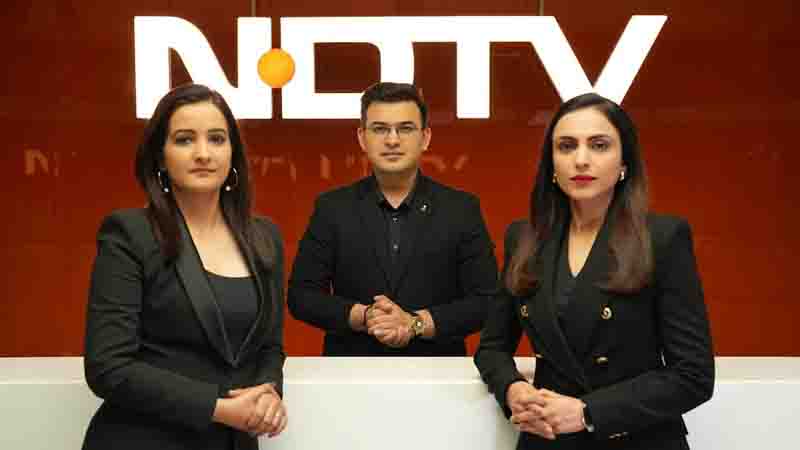
    MUMBAI: From Tiktok towns to tractor rallies NDTV India’s newsroom just got sharper, louder and closer to the ground. In a decisive move to recalibrate its editorial voice, NDTV India has announced the addition of three seasoned journalists Subhankar Mishra, Meenakshi Kandwal, and Malika Malhotra to its newsroom. The trio brings a dynamic mix of digital savvy, primetime polish, and fearless field reporting to a channel that’s realigning its compass to reflect Bharat’s heartbeat.

    Subhankar Mishra, with over 30 million followers across platforms, isn’t just a social media juggernaut, he’s one of Hindi journalism’s most recognisable digital-first reporters. Known for his consistent presence in Tier 2 and Tier 3 towns, Subhankar reports from regions often ignored by mainstream media, turning hyperlocal issues into national conversations.

    Meenakshi Kandwal brings more than a decade of anchoring and field reporting experience. From live disaster coverage to investigative field reports, her work is defined by a rare blend of composure and clarity. With a firm grip on the facts and a steady on-air presence, Kandwal is poised to add both credibility and calm to the NDTV India desk.

    Malika Malhotra is the long-hauler of the lot. Whether it was the months-long farmers’ protests at Singhu or the environmental crisis in Joshimath, she’s proven that journalism isn’t just about breaking the news but staying with it long after the headlines fade. Her brand of journalism is patient, persistent and painfully relevant.

    NDTV CEO and editor-in-chief Rahul Kanwal summed it up best saying, “Each of them brings something critical to the newsroom Subhankar’s digital-first strength, Meenakshi’s editorial steadiness, and Malika’s commitment to field reporting. They are not chasing headlines; they are building trust.”

    The appointments signal more than a staffing shuffle, it’s a deliberate editorial shift. NDTV India is increasingly aiming to serve what it calls the “changing India” with journalism rooted in credibility, consistency, and context, a rare breed in a time of manufactured noise.

    This move is part of a broader evolution at the network, as it sheds the soundbite syndrome and retools itself around deep reporting, trust-building and ground realities. From Twitter trends to tractor trails, NDTV India’s new trio looks ready to walk the talk.

    (If you are an Anime fan and love Anime like Demon Slayer, Spy X Family, Hunter X Hunter, Tokyo Revengers, Dan Da Dan and Slime, Buy your favourite Anime merchandise on AnimeOriginals.com.)

  • Kabaddi goes global with Rs 48 crore WSKL set for 2026 Dubai debut

    Kabaddi goes global with Rs 48 crore WSKL set for 2026 Dubai debut

    MUMBAI: From mud courts to the world stage Kabaddi is getting a passport stamp. SJ Uplift Kabaddi Pvt Ltd, the force behind the successful Uttar Pradesh Kabaddi League (UPKL), has announced the launch of the World Super Kabaddi League (WSKL), an international franchise-based kabaddi extravaganza set to kick off in February–March 2026 in Dubai.

    Touted as Kabaddi’s boldest global leap yet, WSKL has already received confirmations from 20 national federations, with 30 countries actively engaged in shaping the league. Backed by the International Kabaddi Federation and the South Asian Kabaddi Federation, WSKL aims to not only attract eyeballs across continents but also make a serious pitch for Olympic inclusion.

    The league’s format will feature eight franchise teams, with rosters mixing international stars and top Indian players. To match this global ambition, WSKL has committed a Rs 48 crore player purse in its debut season signalling both serious investment and serious intent.

    “With WSKL, the world becomes the playing field,” said SJ Uplift Kabaddi Pvt Ltd founder Sambhav Jain. “Our vision is Olympic-sized, we’re here not just to entertain, but to evolve the sport into a global property that thrives year-round, not just seasonally.”

    Unlike UPKL’s domestic focus under the rallying cry of Apna Bharat, Apna Khel, WSKL is all about building a borderless Kabaddi ecosystem. Participating countries already include South Korea, Iran, Japan, Thailand, Canada, Malaysia, Pakistan, and the United States, with more nations expected to come on board as the countdown begins.

    But WSKL isn’t just about the tournament weeks. It’s being positioned as a 12-month Kabaddi ecosystem, offering off-season fan engagement, long-term player development, and a pipeline of international talent. That’s a far cry from the one-off seasonal formats currently dominating the sport.

    Dubai, with its neutral ground and strategic accessibility, has been selected as the inaugural host city, a move aimed at attracting a global audience and spotlighting Kabaddi on an international scale.

    With the whistle blown for what promises to be a high-stakes power play for the sport’s future, WSKL is more than just a league, it’s a leap. And if all goes to plan, Kabaddi might just tackle its way into the Olympic fold.

    (If you are an Anime fan and love Anime like Demon Slayer, Spy X Family, Hunter X Hunter, Tokyo Revengers, Dan Da Dan and Slime, Buy your favourite Anime merchandise on AnimeOriginals.com.)

  • GTPL Hathway is gearing up to make a major HIT

    GTPL Hathway is gearing up to make a major HIT

    MUMBAI: In India’s noisy and fragmented cable TV business, where margins are wafer-thin and infrastructure is patchy, a quiet revolution is taking place above our heads. Quite literally. India’s largest cable and broadband heavyweight ) GTPL Hathway is choosing to break free from the grid by betting Rs 100 crore on a satellite-led future—launching a full-scale headend-in-the-sky (HITS) operation designed to reach the parts of India that cable lines and fibre have long ignored.

    This isn’t just an upgrade—it’s a strategic reinvention. One that could upend the rules of TV distribution across Bharat.

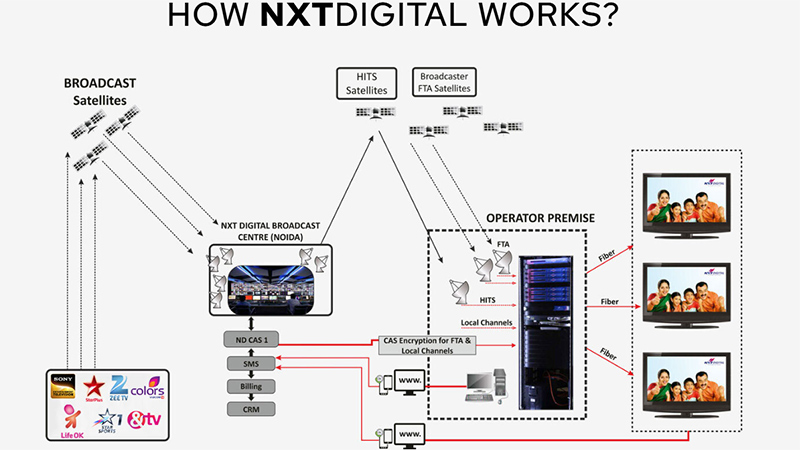
    From a sleek new uplink facility in Ahmedabad, GTPL is readying to transmit up to 900 encrypted, multiplexed channels using 12 leased C-band transponders from Indonesian satellite operator Telkomsat. The satellite signal is then beamed directly to local cable operators (LCOs), who deliver the final mile using existing coaxial or fibre lines.

    It’s a model that minimises capital investment on the ground while maximising reach—especially in India’s 130–135 million “TV-dark” homes, a figure larger than the total households of Japan and the UK combined.

    GTPL’s move brings it squarely into competition with the Hinduja-owned Nxt Digital, India’s sole HITS player until now, with a subscriber base of 2.4 million. Nxt has played a steady game—providing shared uplink infrastructure, cost-effective Cope (cable operator premises equipment) units priced between Rs 10.6–14 lakh, and STBs from Chinese OEMs like Changhong and Telesystems.

    Its model helped reduce per-subscriber costs dramatically—from Rs 17 to just Rs 7 in some cases—offering a lifeline to smaller MSOs (multi-system operators) struggling to comply with the regulatory shift to digital. But Nxt’s footprint, while impactful, has remained modest.

    GTPL is playing a different hand: scale. With 9.6 million cable TV subscribers already on its rolls and strongholds in Gujarat, Maharashtra, West Bengal and Bihar, the company intends to transition its entire base to HITS delivery over the next 24–36 months.

    The vision? To be India’s largest HITS network—leapfrogging not only NXT, but also traditional satellite and cable architectures in one swoop.

    This pivot is part of GTPL’s broader Rs 350 crore capex outlay for FY25, which also includes new broadband infrastructure and set-top boxes. The numbers make a compelling case: annual bandwidth costs, currently pegged at Rs 85–90 crore, are expected to drop by half.

    Projected revenues from the satellite platform are equally promising. At 750,000 subscribers, GTPL expects to generate Rs 99 crore annually. That rises to Rs 132 crore with 1 million users. Add Rs 12 crore more from leasing infra services to 50 smaller MSOs (each paying Rs 2 lakh per month), and the business case becomes hard to ignore. Even under conservative adoption rates, the Rs 100 crore investment could be recouped within 12 months.

    GTPL’s HITS play isn’t just about broadcast—it’s also about backend tech. The company is deploying a hybrid business model: retailing bundled TV channel packs to consumers via LCOs while offering platform-as-a-service tools to smaller MSOs. These include uplinking, encryption, conditional access system (CAS) and subscriber management system (SMS) solutions—effectively turning GTPL into a SaaS player for the cable industry.

    In a sector plagued by fragmentation, opaque billing, and outdated infrastructure, this modular model could be just the reset smaller operators need to stay compliant, competitive, and cost-efficient.

    India’s content delivery puzzle has long had three flawed pieces. OTT remains hobbled by poor last-mile broadband in rural areas, with even state-run BharatNet struggling to scale. DTH, while more pervasive, has long suffered from weather interference, installation costs, and churn. Cable TV, once the lifeline of urban India, is now chafing under regulatory pressure and infrastructure bottlenecks.

    Enter HITS—a model that combines the robustness of satellite delivery with the flexibility of LCO-based distribution. It’s weather-resistant, quick to deploy, and doesn’t require laying new wires in hard-to-reach zones.

    As a middle path, HITS may well become the delivery standard for Bharat—the vast, value-driven, and still under-connected expanse of Indian television.

    Surprisingly, GTPL’s skyward expansion has not been met with resistance. The All India Digital Cable Federation (AIDCF) has raised concerns around broader issues like OTT content regulation and fair play by broadcasters—but not specifically about the HITS model. Major networks such as Zee, Sony, and Disney Star have voiced concerns over the pricing dynamics introduced under TRAI’s NTO 3.0 framework, but formal objections to GTPL’s satellite platform are absent.

    The company, for its part, holds a valid grant of permission agreement (GOPA) from the ministry of information & broadcasting (MIB) and has participated in various TRAI and MIB consultations, signalling alignment with the regulatory ecosystem.

    GTPL’s pricing strategy will be region-specific, with affordability and adaptability built in. Final LCO-facing Cope and channel package rates will be finalised once broadcasters declare new pay channel prices. While margins may initially be tight, the long-term play is rooted in volume, retention, and backend monetisation.

    This isn’t a short-term stunt—it’s a structural realignment of India’s content delivery infrastructure.

    GTPL’s satellite push is more than just a tech upgrade—it’s a masterstroke of timing, vision, and market understanding. With one eye on underserved consumers and the other on the backend tech stack, the company is positioning itself as both a broadcaster and a platform.

    As India’s media future heads skyward, GTPL’s HITS move may well become the blueprint for digital inclusion across Bharat.

    (If you are an Anime fan and love Anime like Demon Slayer, Spy X Family, Hunter X Hunter, Tokyo Revengers, Dan Da Dan and Slime, Buy your favourite Anime merchandise on AnimeOriginals.com.)

  • P&G India rejigs tech leadership as Nikunj Jain exits, Jai Pankaj steps in

    P&G India rejigs tech leadership as Nikunj Jain exits, Jai Pankaj steps in

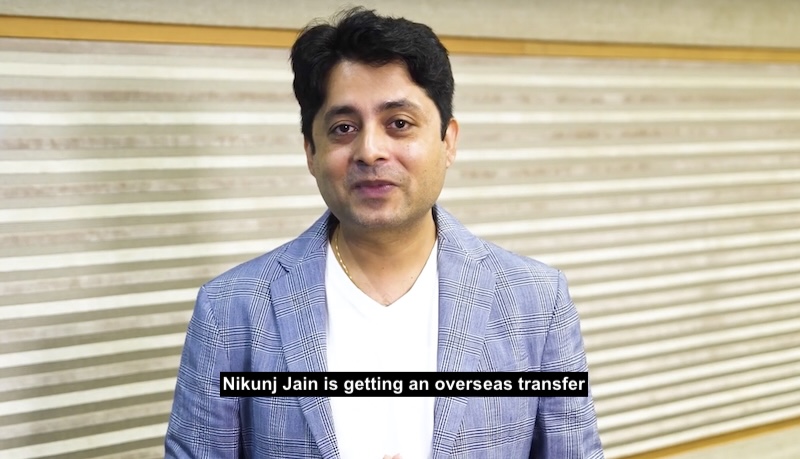
    MUMBAI — Procter & Gamble Hygiene and Health Care has announced a top-level shuffle in its technology leadership. Nikunj Jain, the current head of information technology, will step down from his role at the close of business on 30 June 2025, as he prepares to relocate overseas for a new assignment within the P&G group.

    Replacing him is Jai Pankaj, a P&G veteran with over 15 years at the company. He will assume the role of head of IT effective 1 September 2025, and relocate back to India.

    Pankaj, a B.E. in chemical engineering from NIT Karnataka and an MBA from IIM Lucknow, is currently based in Indonesia. He serves as the chief information officer for P&G’s Indonesian business as well as its e-commerce operations across Asia, the Middle East and Africa. Over the years, he has spearheaded critical IT initiatives, including Martech and data science for P&G India, and managed tech strategy across 15 markets, including Japan and Korea.

    The leadership transition was formally communicated to the National Stock Exchange and the Bombay Stock Exchange in accordance with regulatory disclosure norms.

    With Jain’s departure and Pankaj’s homecoming, the FMCG major appears to be tightening its digital strategy amid an increasingly tech-driven consumer landscape.

    (If you are an Anime fan and love Anime like Demon Slayer, Spy X Family, Hunter X Hunter, Tokyo Revengers, Dan Da Dan and Slime, Buy your favourite Anime merchandise on AnimeOriginals.com.)

  • Cutting edge film maker EiPi Media’s love affair with generative AI

    Cutting edge film maker EiPi Media’s love affair with generative AI

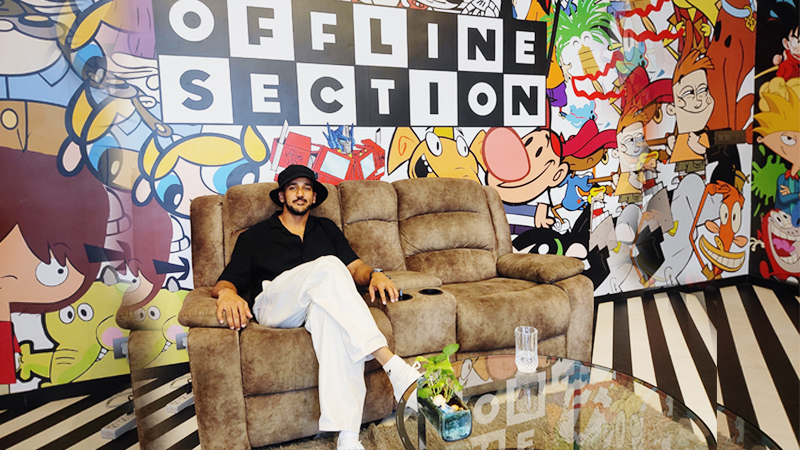
    MUMBAI: Rohit Reddy may be lounging in his monochrome threads and bucket hat like it’s a lazy Sunday, but don’t let the chill vibe fool you, this man’s schedule is more packed than a Mumbai traffic jam. From his third-floor creative bunker in the chaos capital of Mumbai, he is juggling deadlines like flaming batons. Between AI wizardry and influencer fire drills, Reddy barely has time to blink at the traffic blazing past his floor-to-ceiling windows, let alone sip his coffee while it’s still hot.

    As one is ushered into his conference room, he flashes a grin and shoots straight from the hip, “Sorry to keep you waiting! Got caught in an important business call.”

    No fluff, no filter, just the kind of honest hustle you’d expect from a man who is steering the ship as advertising agency EiPi Media’s founder & CEO. Keeping pace with him are creative brain Tapoja Roy who scripts the stories, and Nikhil Chhabria, the agency’s go-to GenAI expert.

    EiPi Media isn’t just making noise, it is orchestrating a full-blown content symphony. Whether it’s slick influencer videos, jaw-dropping CGI, or its latest AI-fueled experiments, this crew’s rewriting the rules of brand storytelling—one pixel at a time.

    Forget your preconceived notions of a typical production house. EiPi Media didn’t exactly start with cameras and a clapperboard. Instead, it kicked off as a social media marketing agency, leveraging Rohit’s wife, co-founder and actress Anita Hassanandani’s television connections to exclusively manage TV artists in 2018.

    “There was nobody managing TV stars at scale at that time,” recalls Rohit, who spent a good dozen years in finance and insurance before turning entrepreneur. “So we began the agency, but we didn’t want to onboard any talent as such. We were doing this whole brokering deal.”

    Initially, its client roster was a cosy club of four or five friends in marketing, including big names like Domino’s and Neo to whom they supplied artistes for a fee. But the pandemic, a rude awakening for many, proved to be EiPi Media’s unlikely launchpad.

    Rohit Reddy

    “In 2020, when the pandemic happened, all these clients of ours, they cancelled the POs,” the founder explains. “That time I realised that I cannot be dependent on just a few clients.”

    This realisation sparked an aggressive sales drive, leading to inroads with giants like Nestle and P&G. As brands shifted television budgets to digital, EiPi Media found itself in the sweet spot, growing a whopping 8x in 2020. The team quickly evolved from merely supplying talent to offering creative ideation and eventually a full-blown production. “Brands had a lot of comfort because they had to only talk to one person,” he notes, highlighting the firm’s end-to-end, in-house model as a key differentiator.

    EiPi Media’s ascent wasn’t just about diversification; it was about embracing cutting-edge tech. 2020 marked its  deep dive into visual effects, earning the agency a reputation as a “marketing tech company.”

    It was creating “frugal productions” at a time when big production houses wouldn’t touch small budgets.

    Then came 2021, and with it, a massive leap into CGI. EiPi Media got busy crafting dinosaurs and animations for internal projects. “I was very sure that I needed to take this CGI initiative to brands,” Reddy asserts.

    Its big break came with Adidas, which had just signed the Indian cricket team. EiPi Media delivered a CGI video for the jersey launch. Since then, it has churned out over 60 large and hundreds of smaller CGI campaigns.


    A post shared by EiPi Media (@eipimedia)


    “For us, CGI was always an extension of VFX,” he clarifies, “it was always improving the content.” This foresight gave EiPi a two-year head start on the competition.

    Just as others were jumping on the CGI bandwagon, EiPi Media was already pivoting to AI. Its first AI video dropped in October 2023, well before brands even grasped its potential.

    “We kind of saw the vision that AI would actually be a very, very strong pillar to production,” he states.

    The real game-changer with AI, he believes, is its ability to “actually replace production.” While pre-production (concept, script, storyboard, casting) and post-production (editing, music, colour grading) remain manual, the entire production phase is now happening on computers. “There is no casting. There is no hair makeup. There is no costume. There is no actor. There is no director,” he enthuses. This significantly slashes costs and turnaround times, a true relief for clients.

    Hdfc Bank and Fenesta Windows were among its first clients to embrace generative AI commercials, alongside international brands like South African noodle company Indomie and Lenovo.


    A post shared by EiPi Media (@eipimedia)


    What excites Reddy the most about generative AI?

    “There’s no limit to creativity now,” he shrugs. “Ideas that were once too expensive or physically impossible to execute in traditional or even CGI production are now within reach. Imagine a conversation on Mars, with participants levitating, becomes possible at a fraction of a cost and a fraction of a time.”

    While some might argue AI stifles creativity, he believes the current limitations lie with the nascent technology, not human ingenuity. Its viral “Mahabharata 1.0″ video, made in just six hours as an in-house project, proved the concept. The recently released “Mahabharata 2800,” an upgraded version, showcases the rapid advancements in tools.

    The decision to create a generative AI film based on the Mahabharata was driven by its boundless storytelling potential. “It has so many layers, so many characters,” he explains. The epic’s fantastical elements also play well with current AI capabilities. Though its first Mahabharata trailer went viral, sparking calls from major publications, he cautions that making a full-length film with generative AI is “not at all easy” yet, as the tools aren’t quite there for complex storytelling. Disconnected content, like trailers, is where AI shines for now.

    The demand for generative AI content is skyrocketing, but supply is scarce., points out Reddy

    “We are the only people supplying good content,” he claims, attributing the agency’s advantage to its extensive experience in traditional filmmaking. “We understand storytelling. We understand scripting. We have everything in-house.”

    This blend of creative and tech expertise positions EiPi  perfectly to ride the AI wave.

    Pic-2

    Reddy predicts a hybrid future for TV commercials, where elements like exterior shots or traffic scenes might be generated by AI, while core scenes will be traditionally filmed. Smaller budget ad films (those around Rs 10-15 lakhs) are ripe for a full AI shift, potentially reducing costs to Rs 3-4 lakhs.

    EiPi Media’s traditional filmmaking team boasts around 30 people, while its burgeoning AI team, currently eight strong, is focused on learning and experimenting. Hiring is less about age and more about interest and strong English skills for effective prompting. He laments the lack of impressive AI-generated visuals in India, partly due to the unavailability of tools like Google’s Veo 3. Fortunately, EiPi Media’s Ohio office gives the outfit early access to such innovations.

    Its creative team, a lean but experienced trio, has penned over 3,000 scripts. For CGI, it outsources to Iran and Russia when the need arises, favouring the artists’ attention to detail and quality over Indian talent, who are more often than not tied up with Hollywood projects.

    On the gen AI front, the team leverages a suite of tools, including Midjourney (now generating videos), Halo, Google Veo 3 (praised for its lip-sync function), and Runway.

    He believes the playing field for generative AI is level globally. “The only people having an advantage are people who are investing more time than the others.”

    While he foresees AI complementing and eventually replacing traditional filmmaking in genres like mythology and fantasy, he believes it will take about five years for the technology to fully mature for comprehensive storytelling.

    Rohit Reddy

    EiPi Media’s focus will remain firmly on branded content, leveraging video as the primary communication medium. Its future plans involve significant investment in an R&D department dedicated to “just experimenting tools, going crazy, basically.” He anticipates that within the next two years, directors and producers will increasingly outsource specific scenes and elements to AI, particularly those that are not cost-effective or time-consuming to shoot traditionally.

    It does not take too much intelligence to guess who will end up getting the fruits of this transition. 

    (If you are an Anime fan and love Anime like Demon Slayer, Spy X Family, Hunter X Hunter, Tokyo Revengers, Dan Da Dan and Slime, Buy your favourite Anime merchandise on AnimeOriginals.com.)
  • ITC Master Chef Creations fires up mutton mania with Jashn-e-Gosht and a Hindi cinema bite

    ITC Master Chef Creations fires up mutton mania with Jashn-e-Gosht and a Hindi cinema bite

    MUMBAI: When a slow-cooked Kosha Mangsho meets the glamour of Sara Ali Khan and the lyrics of Raghav Chaitanya, you know it’s no ordinary food festival. ITC Master Chef Creations is back with its gourmet mutton carnival, Jashn-e-Gosht, bringing a heady mix of spice, screen and sizzle to the table.

    The 45-day mutton festival begins 1 July and runs till 15 August across Bengaluru, Hyderabad, Chennai, Mumbai and Pune. ITC is offering its signature creations exclusively via Swiggy and Zomato. From Bihar’s Champaran Mutton to the fiery Punjabi Rogan Josh, the dishes echo regional pride, with each recipe steeped in hyperlocal culinary tradition and elevated to gourmet precision.

    To add more masala, ITC Master Chef Creations has inked a deal with Anurag Basu’s upcoming film Metro…In Dino, becoming its ‘Official Gourmet Food Partner’. The film, a tale of four urban romances, hits theatres worldwide on 4 July.

    The cast and crew, including Sara Ali Khan and Aditya Roy Kapur, kicked off the film’s promotions in Bengaluru at the ITC Green Centre. The actors rolled up their sleeves to whip up a few Jashn-e-Gosht recipes, while singers Raghav Chaitanya and Shashwat Singh serenaded the crowd in a live performance, stirring up as much applause as the aromas from the kitchen.

    Speaking at the event, ITC Foods – Tech VP & business head Rohit Bhalla said, “With Jashn-E-Gosht, we aim to deliver not just authentic Indian mutton dishes, but also elevate everyday dining into a celebration through a gourmet lens. With this edition, we are much more excited as we take a step further by collaborating with Metro…In Dino, a film, that much like our food, captures the emotions and experiences across urban India. At ITC Master Chef Creations, our focus remains on building a brand and being committed to delivering dishes that resonates culinary integrity and turns everyday dining into something memorable”.

    This marks a clever cross-serve of cultures — slow-simmered stories on screen and slow-cooked recipes on the plate. The event at the ITC Green Centre transformed into a pop-up film set meets gourmet kitchen, soaked in melody and mutton.

    The Jashn-e-Gosht menu reflects the festival’s theme of timeless, authentic, and flavourful indulgence. And just like the film, it promises layers of complexity, familiar warmth, and surprises in every bite.

    (If you are an Anime fan and love Anime like Demon Slayer, Spy X Family, Hunter X Hunter, Tokyo Revengers, Dan Da Dan and Slime, Buy your favourite Anime merchandise on AnimeOriginals.com.)

  • Peps Industries opens sleep-first concept store in Bengaluru, targets 50 new outlets by 2025

    Peps Industries opens sleep-first concept store in Bengaluru, targets 50 new outlets by 2025

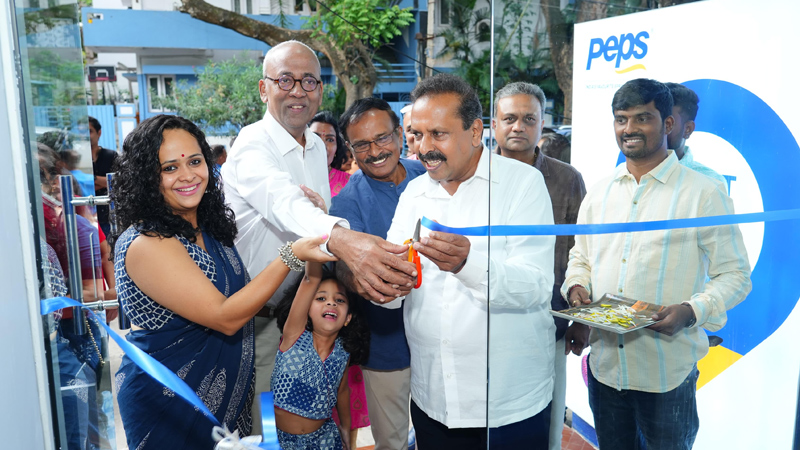
    MUMBAI: In a city where hustle never sleeps, Peps Industries has made room for those who do. The country’s best-selling spring mattress brand flung open the doors of its latest experiential Great Sleep Store in Indiranagar, Bengaluru—a neighbourhood known more for bar crawls than bedtime rituals.

    The new store aims to be more than just a mattress outlet. It invites customers to lie down, stretch out and get comfortable with sleep science. With interactive displays and hands-on consultations, Peps hopes to turn sleep shopping into something of a wellness intervention.

    “At Peps, we’ve always believed that quality sleep is the cornerstone of a healthy and fulfilling life. Our mission has never just been about selling mattresses but it has been about redefining how India sleeps. With every Great Sleep Store we open, especially in lifestyle-forward areas like Indiranagar, we’re bringing that mission to life in more meaningful ways. This store is more than a retail space; it is a sleep experience center, where customers can truly understand what their body needs and explore scientifically designed solutions that support long-term wellness”, said Peps Industries MD Shankar Ramm.

    Peps inaugurated the Indiranagar store with former corporator C.R. Lakshminarayan and The Little Dreamers franchise owner Anusha Shankar Ramm. The outlet showcases Peps’ premium spring mattress collection, engineered to enhance airflow, support spinal alignment, and boost durability—all of which the brand claims are crucial for restful sleep.

    As part of its expansion blueprint, Peps has committed to opening 50 more outlets across India by the end of 2025. This follows a significant expansion in both online and offline retail footprints in FY 2024-25. The company has embraced a hybrid retail model, recognising that even in the digital age, some customers still prefer to feel the bounce before they buy.

    From urban centres to tier two towns, Peps is betting on India’s growing awareness of sleep hygiene to fuel its growth. And if its experiential store format finds favour, bedtime may just become the next big frontier in lifestyle retail.

    (If you are an Anime fan and love Anime like Demon Slayer, Spy X Family, Hunter X Hunter, Tokyo Revengers, Dan Da Dan and Slime, Buy your favourite Anime merchandise on AnimeOriginals.com.)
  • India adds 3.2 million phone users in May, total hits 1.2 billion

    India adds 3.2 million phone users in May, total hits 1.2 billion

    MUMBAI: Dialling up its digital growth, India’s telecom sector added 3.24 million new telephone subscribers in May 2025, pushing the country’s total subscriber base to a staggering 1.207 billion. While urban India remained saturated with 131.76 per cent tele-density, rural areas rang in gains too, growing 0.14 per cent month-on-month to hit 537.39 million subscribers.

    The data, released by the Telecom Regulatory Authority of India (TRAI), also showed a strong wireline comeback with 1.25 million new connections pushing wireline growth to 3.34 per cent, led by aggressive additions from Jio and Airtel.

    India’s broadband base surged 3.37 per cent to reach 974.87 million subscribers, thanks largely to mobile broadband (up 2.92 per cent) and a 60 per cent spike in fixed wireless (5G FWA, Wi-Fi, satellite) subscriptions. However, 5G FWA itself dipped slightly from 7.50 million to 7.40 million users, indicating early volatility in the still-nascent category.

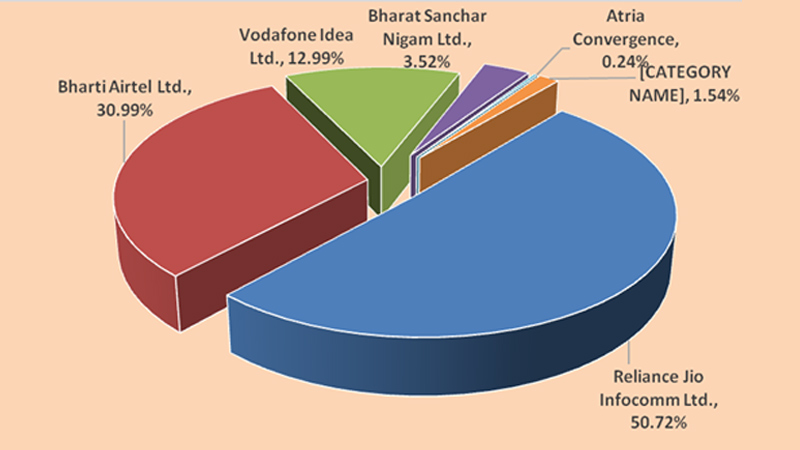
    Jio led the broadband brigade with 494.47 million subscribers, followed by Airtel (302.15 million) and Vodafone Idea (126.68 million), together accounting for a whopping 98.47 per cent of the market.

    Overall wireless subscriptions grew modestly by 0.17 per cent to 1.168 billion, with rural India contributing 0.38 million new users. Urban wireless teledensity climbed to 124.91 per cent, while rural teledensity inched up to 58.90 per cent. Wireline adoption in rural India saw a sharper surge of 10.44 per cent, albeit from a much smaller base.
    Who’s Winning the Race?

    .  Reliance Jio: 494.47 million broadband subs, 40.92 per cent mobile market share.

    .  Bharti Airtel: 302.15 million broadband subs, 33.61 per cent mobile market share.

    . Vodafone Idea: 126.68 million broadband subs, 17.61 per cent mobile market share.

    Jio also led wireline subscriber additions with 1.28 million new connections, while Vodafone Idea continued to see a decline of over 1.35 lakh users in the wireline segment.

    Indians are clearly still keen to keep their digits. 14.03 million MNP requests were made in May alone. Uttar Pradesh (East) topped the chart with 115.77 million cumulative porting requests, followed by Maharashtra at 92.72 million.

    Out of the total 1.161 billion mobile subscribers, 1.08 billion were active as per VLR (Visitor Location Register) data about 93 per cent. BSNL had the lowest active subscriber rate (63.73 per cent), while Reliance Communications registered a perfect 100 per cent, albeit on a very small base.

    With over 85.36per cent teledensity nationwide and close to a billion broadband users, India’s telecom story continues to evolve rapidly. But the future lies beyond just numbers, rural wireline expansion, M2M growth (now at 73.91 million connections), and the true test of 5G fixed wireless adoption could be the next chapters in this digital saga.

    So, whether it’s smartphones in metros or landlines in tier-3 towns, India’s telecom tune is still playing and the country’s clearly not hanging up any time soon.

    (If you are an Anime fan and love Anime like Demon Slayer, Spy X Family, Hunter X Hunter, Tokyo Revengers, Dan Da Dan and Slime, Buy your favourite Anime merchandise on AnimeOriginals.com.)
  • Game on India as govt eyes next level for digital entertainment

    Game on India as govt eyes next level for digital entertainment

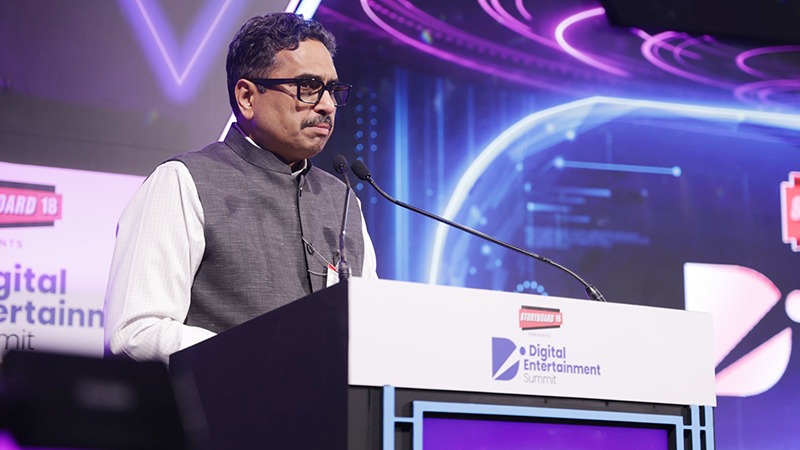
    MUMBAI: India’s digital entertainment game is levelling up. quite literally. At Storyboard18’s Digital Entertainment Summit (DES) 2025, Sanjay Jaju, Secretary, Ministry of Information and Broadcasting, made it clear that gaming is no longer a side quest but a central pillar of India’s M&E economy.

    “Gaming now forms a very important pillar and part of the overall digital media and entertainment landscape,” said Jaju, underscoring how convergence between tech, youth energy, and content is reshaping India’s global creative ambitions.

    Citing Waves 2025 India’s flagship AV and entertainment summit, Jaju said the gaming pavilion, buzzing with emerging studios and new-age IPs, showed just how far the industry has come. From immersive platforms to evolving creator economies, Jaju spotlighted gaming, animation, audio streaming, and OTT as drivers of India’s new digital narrative.

    To boost this transformation, the Ministry is launching the Indian Institute of Creative Technology (IICT) in Mumbai, operational from September 2025. The institute aims to become a breeding ground for talent and incubation hub for creative startups. “It will be a great place for people to hone their skills and for smaller companies to get incubated,” he said.

    Jaju also called for:

    . Investment in low-cost cinema halls to bring films to India’s hinterlands

     Strategic focus on making India a global production hub, leveraging cost advantages and local talent

    Nurturing digital innovation through AI, XR, and VR-led platforms

    His three-part vision?

    Creative Excellence – Turning India into a storytelling powerhouse

    Digital Innovation – Leading in immersive tech

    Inclusive Growth – Tapping talent across every corner of India

    As he urged the industry to walk and think together, Jaju wrapped with a rousing call: “Our time has come, and the future is now.”

    With a booming gaming culture, homegrown creators, and government backing, India’s entertainment sector is set to not just entertain the world but lead it.

    (If you are an Anime fan and love Anime like Demon Slayer, Spy X Family, Hunter X Hunter, Tokyo Revengers, Dan Da Dan and Slime, Buy your favourite Anime merchandise on AnimeOriginals.com.)