Blog

  • Rise of zebra striping as drinkers mix spirits with sobriety

    Rise of zebra striping as drinkers mix spirits with sobriety

    MUMBAI: Raise a glass and then a soda. The world’s latest drinking trend, dubbed “zebra striping”, is rewriting social rituals one sip at a time. According to new research by Euromonitor International, consumers are alternating between alcoholic and non-alcoholic beverages in a single evening, a mindful move that’s helping people balance indulgence with intention.

    The global alcoholic drinks industry poured out 253 billion litres in 2024, but growth is showing signs of a hangover. Enter zebra striping, a trend spreading faster than happy-hour offers, especially among Gen Z and younger millennials who are redefining what it means to “go out for a drink.”

    Euromonitor’s World Market for Alcoholic Drinks 2025 report finds that moderation is now mainstream. Only 17 per cent of consumers say they drink weekly in 2025, a sharp drop from 23 per cent in 2020 while 53 per cent are actively cutting back. The share of people who never drink at all has risen by 3 percentage points in just five years.

    Behind the shift lies a mix of health goals and pragmatism: 87 per cent of respondents cited a desire to feel healthier and avoid long-term health risks; 30 per cent said saving money mattered, while 25 per cent credited better sleep as motivation. The “sober curious” movement is making abstinence aspirational and redefining nightlife as we know it.

    Among those swapping cocktails for kombucha, Gen Z stands out with 36 per cent of legal-age respondents never having consumed alcohol at all. Hedonism, it seems, is being traded for hydration.

    Yet, while traditional booze is flatlining, India is raising the bar. The country is projected to add 357 million litres to its alcoholic drinks consumption between 2024 and 2029, making it a standout growth market. With rising incomes and evolving social norms, India along with Brazil, Mexico, and South Africa is expected to outpour mature markets where spending power remains under strain.

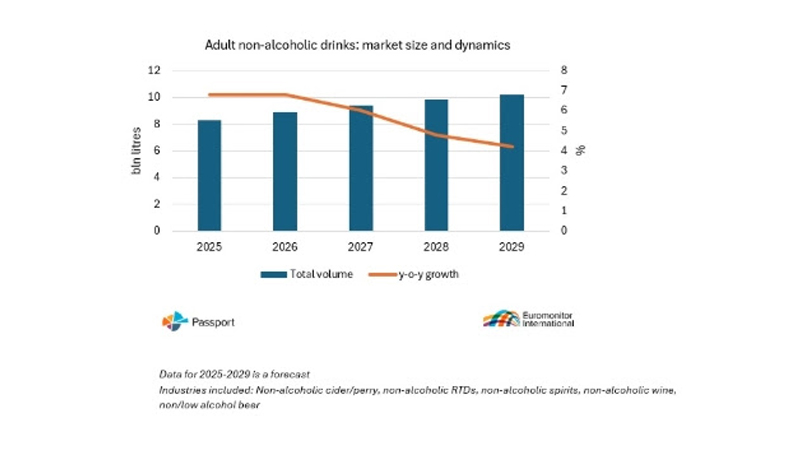
    Globally, the adult non-alcoholic category is bubbling with momentum. In 2024, total alcoholic beverage volume grew a modest 0.6 per cent, reaching a 1.7 trillion dollars market, while the no/low segment soared: non-alcoholic spirits rose 17 per cent, RTDs 14 per cent, non/low beer 11 per cent, and non-alcoholic wine 7 per cent. Between 2025 and 2029, the adult non-alcoholic drinks market is expected to swell by 24 per cent, surpassing 10.2 billion litres by 2029.

    As Euromonitor, global insight manager for alcoholic drinks Spiros Malandrakis put it: “Non-alcoholic alternatives are no longer niche, they’re becoming central to how people celebrate and connect.”

    So, the next time someone says they’re going for a drink, don’t be surprised if it’s an alcohol-free G&T. After all, in today’s world, balance is the new buzz.

  • Kaabil shines light on women who power change

    Kaabil shines light on women who power change

    MUMBAI: They came, they skilled, they conquered. Mahindra & Mahindra’s Kaabil initiative and Centum Foundation have unveiled a stirring new film that celebrates the extraordinary journeys of women who turned opportunity into empowerment.

    Conceptualised by Upgrad Enterprise’s marketing team, the short film spotlights women from across 19 states whose lives have been transformed through skill-based training and sustainable livelihoods. Told through powerful first-person stories, it’s a moving ode to resilience, dignity and the quiet revolution taking shape in rural India.

    Opening with a voiceover comparing women’s strength to ‘Shakti’, the film captures the struggles and triumphs of women finding their footing in sectors like automotive, retail and customer service. The Kaabil Initiative, Mahindra Group’s flagship CSR programme, has already trained over 20,000 women across 250 locations, with more than 9,000 placed in meaningful jobs, many for the very first time.

    Mahindra & Mahindra head of women’s empowerment Pooja Nanda said, “Kaabil aims to empower one million women by 2027 through skilling and employability. Our partnership with Centum Foundation has helped us scale our impact and foster lasting livelihoods.”

    Adding to this, Upgrad Enterprise revenue head Sunita Mohant noted, “These women aren’t just statistics, they’re stories of courage and transformation. Their ambition proves that India’s growth isn’t limited to its cities.”

    With its heartwarming visuals and purpose-led storytelling, the film goes beyond awareness to ignite inspiration, reminding viewers that true empowerment begins when skill meets opportunity.


  • India braces for a grey wave as elderly numbers set to hit 230m by 2036

    India braces for a grey wave as elderly numbers set to hit 230m by 2036

    MUMBAI India’s population is ageing fast. By 2036, roughly 230 million Indians—one in seven—will be 60 or older, more than double the 100 million recorded in 2011. It’s a demographic earthquake that will reshape everything from healthcare to housing, pensions to public transport.

    The south is greying fastest. Kerala, already home to 13 per cent elderly in 2011, will see that figure leap to 23 per cent by 2036, matching developed nations. Tamil Nadu and Himachal Pradesh aren’t far behind. 

    Meanwhile, northern states like Uttar Pradesh, though younger now, are catching up quickly—elderly numbers there will nearly double from 7 per cent to 12 per cent.

    Women dominate the demographic. They make up 58 per cent of India’s elderly, with a sex ratio of 1,065 females per 1,000 males. More than half are widows. The overall dependency ratio—62 dependents per 100 working-age people—signals mounting pressure on families and the state.

    The challenges are stacked high. Mental health stigma around dementia and Alzheimer’s persists. Geriatric infrastructure is patchy, especially in rural areas. Social security remains inadequate even as living costs climb. Traditional family support systems are fraying under the weight of urbanisation and nuclear households. And India’s infrastructure—from public transport to pavements—remains stubbornly unfriendly to the elderly.

    New Delhi is scrambling to respond. The ministry of social justice and empowerment has rolled out a raft of schemes. The Atal Pension Yojana, launched in 2015, has swelled from 15.4 million subscribers in 2019 to 82.7 million by October 2025, managing assets worth over Rs 49,000 crore. It promises monthly pensions of Rs 1,000 to Rs 5,000 after subscribers turn 60.

    The Integrated Programme for Senior Citizens runs 696 old-age homes across 29 states and union territories, with 84 more approved this year. The Rashtriya Vayoshri Yojana distributes walking sticks, hearing aids, wheelchairs and dentures to low-income seniors. A toll-free helpline—14567—offers support. The Sacred portal helps those over 60 find jobs. The SAGE portal encourages start-ups to develop elderly care solutions, offering equity support of up to Rs 1 crore per project.

    Legal muscle backs the effort. The Maintenance and Welfare of Parents and Senior Citizens Act, amended in 2019, compels children—including step-children and in-laws—to provide for parents. It scrapped the Rs 10,000 monthly maintenance cap and mandated special police units for seniors in every district. All hospitals, private included, must now provide dedicated queues, beds and geriatric care.

    Technology is pitching in too. Telemedicine platforms like e-Sanjeevani offer free home consultations. Wearable devices track vital signs. Online pharmacies deliver medicines to doorsteps. Smart home sensors let families monitor elderly relatives remotely.

    The silver economy—goods and services for those over 50—is booming. Valued at Rs 73,000 crore in 2024, it’s set for multi-fold growth. Globally, senior citizens and professionals aged 45 to 64 are the wealthiest cohort. India’s senior care market presents vast opportunities for health and wellness firms, both at home and abroad.
    Yet success hinges on more than schemes and start-ups. India needs specialised regulations for senior care, policy reforms anchored in evaluation frameworks, and better coordination across ministries. Panchayati raj institutions, urban local bodies, NGOs and private providers must work in concert. Public-private collaboration across healthcare is essential.

    The clock is ticking. By 2050, India’s elderly population will swell to 319 million, growing at three per cent annually. The country that once prided itself on youthful demographics now faces a greying future. Whether it becomes a burden or a boon depends on how swiftly India adapts. The grey wave is coming. Ready or not.

  • Fortune serves up flavour with Bhojan Bahini

    Fortune serves up flavour with Bhojan Bahini

    MUMBAI: Talk about a power play in the kitchen! Fortune, India’s leading edible oil brand from AWL Agri Business Ltd., has bowled Bengal over with its new regional campaign, Bhojan Bahini (Food Force,) a cinematic tribute to the state’s eternal love affair with food.

    Premiering on 28 October, the campaign brings together two of Bengal’s biggest icons, cricket legend Sourav Ganguly and actor Abir Chatterjee, in a deliciously entertaining film that blends humour, drama and nostalgia. Playing the witty “Food Police”, the duo set out on a flavourful mission to uncover the secret behind the perfect Bengali meal. The answer? Fortune’s unbeatable No.1 jodi, Mustard Oil and Soyabean Oil.

    Packed with the sizzling sounds of luchis and the mouth-watering aroma of kosha mangsho, Bhojan Bahini celebrates authenticity in every drop. The film’s core message, “choose quality over compromise,” reminds viewers that the essence of great taste lies in trusted ingredients, and for Bengal, that means Fortune.

    Commenting on the campaign, AWL Agri Business Ltd. joint president sales & marketing Mukesh Mishra said, “With Bhojan Bahini, we’re celebrating Bengal’s unbreakable bond with food. Sourav and Abir perfectly embody the state’s love for authenticity and quality.”

    Vibrant, witty and packed with flavour, the campaign goes beyond entertainment to strike an emotional chord, reminding Bengali homes that tradition and taste truly go hand in hand. With Bhojan Bahini, Fortune once again proves why it remains the undisputed leader on Bengal’s dining tables.

  • India’s AI ambitions hit the high note with Microsoft scholarship surge

    India’s AI ambitions hit the high note with Microsoft scholarship surge

    MUMBAI: India isn’t just coding the future, it’s rewriting it, line by line, in AI. The country has emerged as one of the top applicant nations for the 1 million dollars Microsoft AI Innovator Global Scholarships, a landmark initiative by Women in Cloud, launched alongside Opulis: Women Powering Microsoft’s Trillion-Dollar Shift.

    The collector’s edition coffee table book endorsed by Microsoft and the Microsoft Alumni Network celebrates 50 women tech leaders who have helped steer the company through its transformation into the AI era. But this is more than just glossy pages and golden stories; Opulis doubles up as a career catalyst through its Book-to-Scholarship Model, where every purchase unlocks real AI learning opportunities for aspiring professionals.

    Since its launch, the scholarship programme has drawn over 700 applications from 20-plus countries, including Brazil, the US, Nigeria, India, Australia, South Africa, Canada, Kenya, and Egypt. India’s strong showing underscores its growing momentum in AI skilling particularly among young professionals and women technologists eyeing the global digital workforce.

    “We’re ensuring that access to AI careers and education isn’t limited to a few, it belongs to everyone, especially women ready to lead India’s digital future,” said Opulis president of women in cloud and executive producer Chaitra Vedullapalli. “Electricity unlocked the industrial revolution, and AI is unlocking quantum progress.”

    Through 1,000 Opulis book pre-orders worldwide, Women in Cloud has already unlocked 100 Microsoft AI Certification Scholarships offering learners world-class credentials that can power careers worth Rs 55–60 lakh per annum. The move is projected to create over Rs 60 crore in new economic value annually, translating to about 7 million dollars in wages and an estimated 21 million dollars total economic impact.

    The ultimate goal? To ignite 1,000 AI careers by 2030, powered by book sponsorships, corporate grants, and community support proof that storytelling and access can together spark large-scale economic mobility.

    Marking Microsoft’s 50th anniversary, Opulis also spotlights five Indian-origin women leaders shaping the company’s AI journey: Chaitra Vedullapalli, Monika Mital Gupta, Aparana Gupta, Sharmila Rathinam, and Nitasha Chopra. Among them, Aparana Gupta, based in India, leads as Director of Engineering and Principal Software Engineering Manager at Microsoft embodying the homegrown excellence the programme seeks to inspire.

    Available in hardcover and digital editions across Amazon, Barnes & Noble, and over 4,000 global retailers, Opulis carries a unique promise: every 10 books sold funds one AI Innovator Scholarship, creating a virtuous loop of knowledge, opportunity, and empowerment.

    In the end, Opulis isn’t just chronicling women who powered Microsoft’s trillion-dollar shift, it’s scripting a new chapter where Indian women and technologists worldwide can claim their seat at the AI table. And this time, they’re not just participating in the revolution, they’re training it.

  • Bajaj serves up a winning shot with Chennai Open platinum play

    Bajaj serves up a winning shot with Chennai Open platinum play

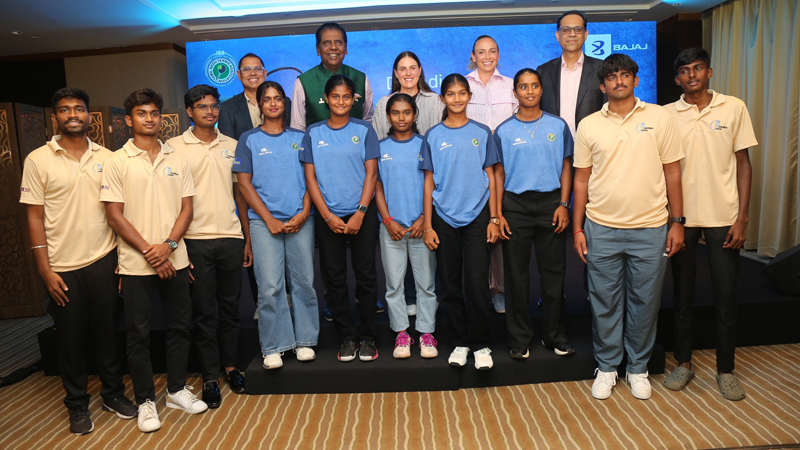
    MUMBAI: India’s court of dreams just got a new sponsor and a serious shot of power. The Bajaj Group, one of the country’s oldest and most trusted business houses, has aced its way into the tennis world as the Platinum Sponsor of the Chennai Open 2025, strengthening India’s serve in the global game.

    But this isn’t just about logos on courts and banners in stadiums. Bajaj has also teamed up with the Tamil Nadu Tennis Association (TNTA) to back its ambitious player development programme, aptly titled ‘The Next Level, ’a long-term initiative aimed at spotting, training and elevating India’s next generation of tennis stars.

    As part of the collaboration, Bajaj will initially support four young women players, offering them the training, mentorship and exposure needed to turn potential into podium finishes. Over the coming years, the partnership will evolve into a broader pathway to nurture top tennis talent across India, ensuring they get access to the right infrastructure, coaching and international experience.

    For Bajaj Finserv chairman and managing director Sanjiv Bajaj, this partnership is about more than sport. “Tennis is more than a sport for us. It reflects the Bajaj spirit of fairness, agility and resilience,” he said. “Our sponsorship of the Chennai Open 2025 brings the excitement of world-class tennis to passionate fans and deepens our connect with them. Together with TNTA, we are enabling budding talent to find the right mentorship and opportunity they need to ace the global stage.”

    TNTA president Vijay Amritraj one of India’s most celebrated tennis icons, echoed the sentiment. “We are delighted to welcome Bajaj as a Platinum Sponsor for the Chennai Open 2025,” he said. “With Bajaj’s support, The Next Level becomes a transformative platform. We look forward to seeing our young players evolve into tennis stars on the international circuit.”

    Over the next three years, Bajaj’s backing will cover everything from coaching and training camps to equipment and travel, removing barriers that often halt young talent before they hit their stride. The TNTA will handpick the top 10 promising players for intensive development under the programme.

    This move is part of Bajaj’s broader mission to empower India’s youth be it through education, employment, entrepreneurship, or now, sport. By investing in the next generation of players, the group isn’t just funding athletes; it’s fuelling ambition and creating role models who can inspire millions.

    With this ace partnership, Bajaj isn’t just making a statement, it’s changing the game. From powering engines to empowering athletes, the brand’s next rally is clearly about driving India’s tennis dreams to The Next Lev

  • McCartney hits the right note with Man on the Run

    McCartney hits the right note with Man on the Run

    MUMBAI:  He may have left The Beatles behind, but Paul McCartney never missed a beat. Man on the Run, a new documentary streaming globally on Prime Video from 25 February, takes audiences on a front-row journey through McCartney’s life after the world’s most famous band split up.

    Directed by Academy Award-winner Morgan Neville, the film charts McCartney’s creative rebirth alongside his wife Linda, as the two form Wings and redefine what it means to start again under the glare of fame. Packed with never-before-seen footage and rare archival treasures, the documentary offers an intimate glimpse at the man behind the music, facing both artistic challenges and personal triumphs.

    Produced by Tremolo in association with MPL and Polygram Entertainment, Man on the Run will first hit select cinemas before landing on Prime Video in more than 240 countries and territories.

    But that’s not all, the film headlines a larger partnership between McCartney, Universal Music Group, and Amazon, set to roll out over the coming year. Fans can look forward to exclusive music releases, limited-edition merchandise drops, and even McCartney’s own commentary on Amazon Music.

    The collaboration also coincides with the November release of Wings: The Story of a Band on the Run, his companion book, and Wings, a self-titled definitive music collection arriving on vinyl and streaming platforms. Add to that his upcoming Got Back tour across North America, and it’s clear Sir Paul’s still flying high.


  • Bite-sized drama is eating the internet: Ampere Analysis

    Bite-sized drama is eating the internet: Ampere Analysis

    MUMBAI: The attention span may be shrinking, but the audience for micro-drama is exploding. More than one in ten internet users worldwide now regularly watch drama episodes lasting ten minutes or less on social media—a format that’s turning Hollywood’s traditional playbook on its head and forcing commissioners to rethink everything from episode length to distribution strategy.

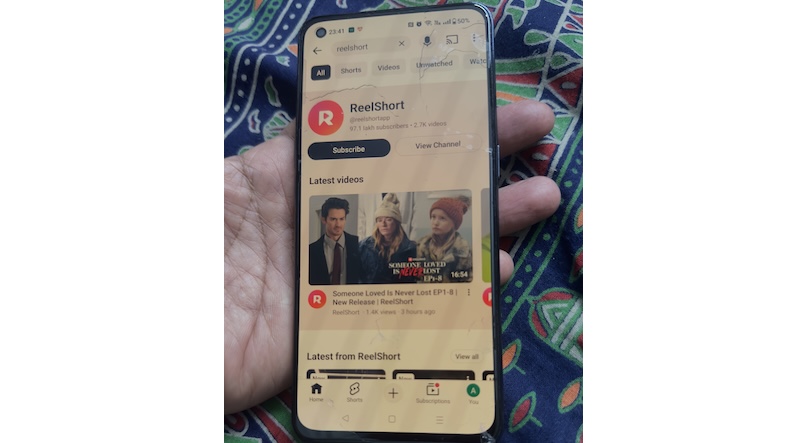
    Ampere Analysis surveyed over 100,000 consumers in two separate waves across 30 global markets, polling 56,000 internet users aged 18–64. The findings reveal that these “mini-dramas” and “micro-dramas”—the shortest clocking in at under two minutes—are thriving on YouTube and TikTok. The platforms have become both primary distribution channels and discovery engines for premium subscription apps like DramaBox and ReelShorts, which are betting big on vertical video optimised for phone viewing.

    The numbers tell a compelling story about changing consumption habits. Average internet users now spend nearly 50 minutes a day watching videos on social media. For younger audiences, that figure jumps dramatically: 18- to 34-year-olds are clocking over an hour daily, creating a captive audience for bite-sized content that fits neatly between scrolls.

    The demographic split is predictable but stark. Viewers aged 18–34 are 21 per cent more likely than average to have watched a mini-drama in the past month. Nearly half of internet users in that age bracket—46 per cent—are already hooked, consuming short-form scripted content as readily as they consume traditional social media posts.

    But the format isn’t exclusively a young person’s game. Among 35- to 44-year-olds, 23 per cent have watched a micro-drama in the past month—the highest proportion of any age group surveyed. Some 19 per cent of 18- to 24-year-olds reported the same, with the 45-to-54 cohort close behind at 18 per cent. Even the 55-to-64 demographic is getting involved, with 13 per cent tuning in. The data suggests mini-dramas are breaking out of their youth-oriented niche and moving into the mainstream.

    AGE OF VIEWERS

    Geography tells an equally revealing story. Engagement is strongest in Thailand, Malaysia and the Philippines, where mobile-first viewing habits dominate and vertical video has become the default mode of content consumption. The Asia-Pacific region leads consumption overall—hardly surprising given that nearly all existing micro-drama platforms hail from China, where the format has already matured into a lucrative industry. The market is soon to be flooded with Western competitors trying to replicate that success. European audiences, by contrast, remain largely unmoved by the format, suggesting cultural preferences or viewing habits that haven’t yet shifted to accommodate ultra-short storytelling.

    YouTube commands 44 per cent of mini-drama viewership, with TikTok capturing 38 per cent. Together, the two platforms account for a commanding 82 per cent of all short-form drama consumption on social media—Instagram picks up the scraps. YouTube’s sheer scale gives it the edge: in September, it accounted for 12.6 per cent of all television usage, according to Nielsen, compared with Netflix’s 8.3 per cent. No other service claimed even five per cent. While vertical video may feel like TikTok’s natural domain, YouTube’s reach makes it nearly impossible to overcome.

    Romance, anime and fantasy are the genres pulling the biggest crowds—commissioners would be wise to treat these as priority areas for future productions. The preference for escapist, emotionally-driven content suggests audiences are using mini-dramas for quick hits of entertainment rather than deep narrative engagement.
    Minal Modha, research director and head of sports media, sponsorship and consumer research at Ampere Analysis, says shorter scripted drama platforms are “capitalising on the increasing use of vertical videos customised for phone viewing, particularly among younger audiences”. The format’s success, she notes, stems from its perfect alignment with existing social media behaviour patterns.

    The industry is pursuing two distinct strategies, both designed to maximise the format’s commercial potential. The first: dump entire series on YouTube and monetise through advertising revenue, treating the platform like traditional broadcast television but with shorter episodes and higher frequency. The second: seed clips and teasers on TikTok or Instagram to build buzz and audience interest, then drive viewers into subscription apps such as DramaBox or ReelShorts for the full experience. It’s a funnel approach that transforms social platforms into massive marketing engines.

    The format may be miniature, but the business model is anything but. Short attention spans, it turns out, can generate long revenue streams—and potentially more reliable ones than traditional hour-long dramas. Production costs are lower, turnaround times are faster, and audiences can consume entire story arcs in a single lunch break. As Hollywood scrambles to jump into mini-drama production, the question is no longer whether bite-sized content works—it’s who can scale it fastest, and whether Western producers can crack the code that’s already minting money in Asia.

  • ITC Hotels unveils an ‘Epiq’ new chapter in luxury

    ITC Hotels unveils an ‘Epiq’ new chapter in luxury

    MUMBAI: ITC Hotels is spelling epic with a ‘q’. The hospitality giant has unveiled its newest premium brand, Epiq Collection, marking a fresh chapter in its growth story and adding sparkle to its ‘Asset-Right’ expansion strategy.

    The first destinations to host this new brand are two of India’s most culturally vibrant cities, Puri and Tirupati. The 118-key Epiq Collection Puri, an owned property, and the 201-key Epiq Collection Tirupati, a managed hotel, are set to open within the next two years, both joining the Club ITC rewards programme. Together, they signal a refined blend of modern sensibility and soulful Indian hospitality.

    “The launch of Epiq Collection marks an important milestone in the evolution of ITC Hotels’ brand architecture,” said ITC Hotels Limited managing director Anil Chadha. “We are curating experiences that are contemporary in sensibility yet timeless in their connection to place.”

    The brand aims to add around 1,000 rooms in the medium term and will feature premium hotels and resorts, each with its own distinctive character, design language and culinary identity. Staying true to ITC Hotels’ reputation for sustainability and culinary excellence, the Epiq Collection will celebrate regional cuisines with a modern twist, where local inspiration meets global sophistication.

    Designed to host both new builds and repositioned premium properties, Epiq Collection promises to be a reflection of social vitality, service finesse, and that unmistakable Indian warmth that defines ITC’s hospitality ethos.
     

  • Kabeer Biswas quits Flipkart after brief stint scaling quick-commerce arm

    Kabeer Biswas quits Flipkart after brief stint scaling quick-commerce arm

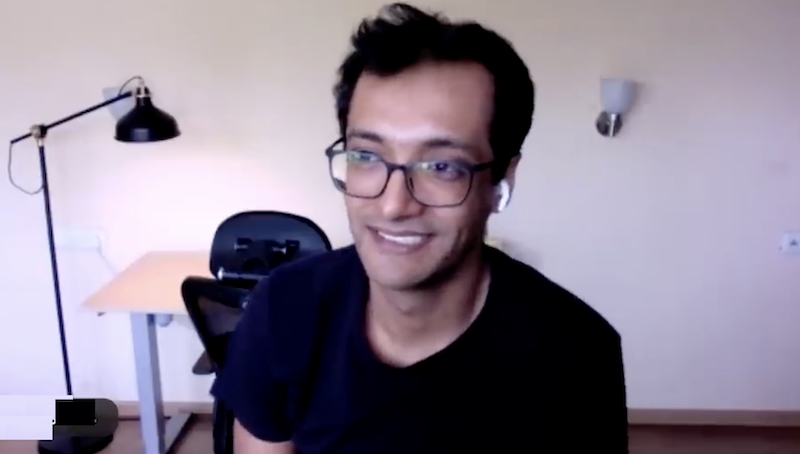
    BENGALURU: Kabeer Biswas has skipped out from Flipkart after barely ten months, leaving behind the quick-commerce outfit he helped scale to over 300,000 daily orders. The Dunzo co-founder, who joined the e-commerce behemoth in January 2024 as vice-president of Flipkart Minutes, is already eyeing his next move—likely within the cut-throat world of ten-minute delivery.

    Flipkart confirmed the exit, with company veteran Kunal Gupta, currently vice-president, taking the reins. “Biswas has contributed notably to the growth of Flipkart Minutes and strengthening of customer experience,” a spokesperson told Moneycontrol, which first reported the departure.

    During his blink-and-you’ll-miss-it tenure, Biswas expanded Flipkart Minutes to multiple cities including Guwahati, marking the firm’s deeper thrust into India’s north-east. He built out a network of roughly 800 dark stores, narrowing the gap with established rivals Blinkit, Zepto and Swiggy Instamart. Executives reckon the platform pulled in over 50  million new visitors to Flipkart’s ecosystem last year—proof that rapid delivery has become a potent customer magnet.

    Biswas founded Dunzo in 2015 before stepping down from the Reliance-backed startup ahead of his Flipkart move. Industry watchers now expect him to resurface at one of the big three quick-commerce players, either at the helm or whispering strategy from the sidelines. In India’s breakneck delivery wars, a ten-month pit stop counts as a breather.