Blog

  • JioStar rolls out the red carpet for brands with its CTV playbook

    JioStar rolls out the red carpet for brands with its CTV playbook

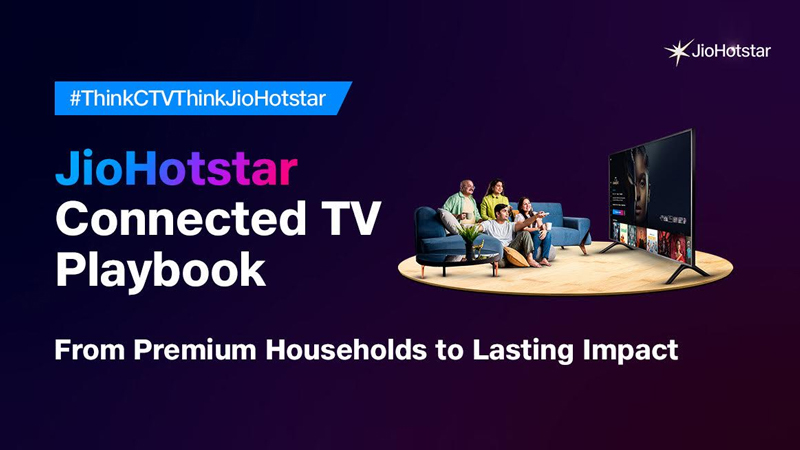
    MUMBAI: JioStar Entertainment is turning up the volume on India’s Connected TV (CTV) revolution with the launch of its first-ever CTV Playbook — a glossy, data-rich guide to decoding the premium, couch-loving consumer.

    At a time when the nation’s living rooms are morphing into digital-first, high-attention arenas, the playbook unpacks how brands can ride the CTV wave to deliver deeper stories, smarter targeting, and sharper results. Built in partnership with research giant Ipsos, the report combines national survey insights with platform analytics from June 2025 to offer a panoramic view of India’s CTV surge.

    At the heart of the playbook is the R.A.C.E. framework — Reach, Attention, Connection, and Effectiveness — a four-step mantra that helps brands move beyond vanity metrics into full-funnel firepower. Think targeted storytelling that doesn’t just get seen, but remembered and acted on.

    Watch time on JioHotstar’s CTV platform has exploded by 85 per cent, with 40 per cent of all streaming now happening on the big screen. Average daily CTV viewing stands at over 100 minutes — that’s 1.5x more than mobile. What’s more, co-viewing on JioHotstar clocks in at a staggering 3.1x, with 70 per cent of users watching with family and 66 per cent doing so together.

    And it’s not just quantity, but quality. The report reveals 90 per cent of CTV viewers come from affluent homes, 81 per cent are NCCS AB, and over 60 per cent live in India’s top 8 metros. In short, CTV is where the money is — and where the marketing should be.

    The content ecosystem packs a punch too: 22,000+ titles across 19 languages, 250+ originals, 7,000+ global hits from 10+ international studios. Impressively, 91 per cent of JioHotstar Specials’ CTV viewers are paid subscribers — that’s 50 per cent higher than the platform average.

    “Connected TV is no longer just a screen—it’s becoming the new center of gravity in India’s digital households. With co-viewing at 3.1X, 90 per cent of audiences being affluent, and an 85 per cent surge in watch time, the scale and quality of engagement on JioHotstar’s CTV platform is unmatched. This Playbook is a strategic response to this shift—built to help marketers harness the full-funnel potential of big-screen storytelling. From lean-in attention to measurable business outcomes, CTV offers an unmatched canvas for brands to move beyond impressions to impact. At JioStar, we’re excited to lead the charge in shaping this premium, intent-rich space into a high-performance marketing platform for the future”, said JioStar head of revenue, entertainment & international, Ajit Varghese.

    “The shift toward CTV within the digital ecosystem is a behavioural shift in how families consume, co-view, and even co-decide. Our research with JioHotstar supports what the data shows: CTV audiences are more premium, and more likely to recall and act on brand messaging delivered in a big-screen environment,” said Ipsos managing director – research, Jyoti Malladi.

    Regional storytelling is having its moment too. While Hindi and English dominate, regional languages especially Malayalam are breaking barriers, with over 80 per cent of Malayalam CTV viewers coming from outside the community.

    With the living room now centre stage for digital India, JioStar’s playbook gives advertisers the cues they need to own it, encouraging marketers to #ThinkCTVThinkJioHotstar.

    jiostar

    (If you are an Anime fan and love Anime like Demon Slayer, Spy X Family, Hunter X Hunter, Tokyo Revengers, Dan Da Dan and Slime, Buy your favourite Anime merchandise on AnimeOriginals.com.)

  • A Modern Men’s Guide ToMaximising Fertility

    A Modern Men’s Guide ToMaximising Fertility

    New Delhi [India], July 16: Thinking about making an addition to your family, or want to start a family? Well, it may be a wake-up call to start thinking about the health of your sperm. Interestingly, a significant number of the male population are facing male fertility issues due to poor sperm health problems, such as low sperm count and low sperm quality. These problems are caused by genetic disorders, hormonal imbalances, anatomical issues, to mention but a few. Fortunately, there are ways in which men can effectively maximise fertility, as proven by specialists from the best IVF centre in Ludhiana.

    Importance Of Maximising Fertility

    Maximising fertility is very crucial as it allows individuals and couples to fulfil their goal of parenthood by enabling them to achieve their desired family size. Not only will they experience the joy of parenthood, but they also obtain personal fulfillment. Moreover, maintaining a sustainable level of fertility ensures the continuation of lineages. Besides that, maximising fertility is crucial for population dynamics as it significantly contributes to the social, economic, and demographic attributes of society. Therefore, it is crucial for men to consult with health specialists to seek ways to maximise fertility, especially if they have been facing issues with fertility.

    How Can You Enhance Your Fertilty?

    According to the best IVF centre in Amritsar, to maximise fertility, men have to focus on the following areas:

    •    Diet – Men have to consume food that is important for sperm production and health. Their diet should consist of plenty of fruits, vegetables, and whole grains. Additionally, they also need to incorporate foods that are rich in zinc, folate, and antioxidants. Besides that, they should limit the mistake of unhealthy fats often found in processed foods, as they can negatively impact their sperm quality. Staying hydrated also helps with optimising bodily function.   
    •    Lifestyle – A few tweaks to daily habits can help to maximise fertility. By engaging in moderate physical exercise, men can encourage the production of testosterone and improve sperm quality.. Also, stress management is crucial as it helps to avoid sperm production and hormonal imbalance issues. Maintaining a healthy weight is also vital as it helps to prevent low sperm count. Habits like smoking and excessive drinking should be avoided as they can lead to poor sperm quality.

    To recapitulate – This simplistic guide can help men to maximise fertility effectively. There are also other considerations, such as the incorporation of certain supplements that may be beneficial, like vitamin B and C, zinc, and many others available; however, it is important to consult with a healthcare specialist before starting a supplement routine. IVF treatment is also highly effective for maximising fertility, and one may need to consult a specialist to inquire about IVF cost in India and other related information. Therefore, it is important for men to address lifestyle factors and look for professional guidance. Men should take bold steps to maximise their fertility and increase their chances of having children.  

    Disclaimer:This article has been published without the journalistic or editorial involvement of Indiantelevision.com. IndianTelevision.com Group, or any of its affiliated websites. IndianTelevision.com Group does not endorse, subscribe to, or take responsibility for the content, opinions, or views expressed herein.

    Readers are further advised that Online Casino, Betting, Cryptocurrency products, Financial Investments/Engagements, NFTs, and products or calls-to-action related to Health, Booking, Wellness, and Food are largely unregulated and carry significant risk. There may be no regulatory protections or avenues for recourse in the event of financial losses or health-related risks arising from engagement with such products or services.

    IndianTelevision.com Group expressly disclaims any responsibility or liability for the information, views, announcements, declarations, or affirmations presented in this article. By choosing to proceed, the reader acknowledges and agrees that they do so at their own discretion and risk, and expressly absolve indiantelevision.com (IndianTelevision.com Group) from any potential legal claims, liabilities, or actions.

    The content provided is solely for informational and awareness purposes.
        

  • Skill, thrills and compliance: Inside Zupee’s winning online game

    Skill, thrills and compliance: Inside Zupee’s winning online game

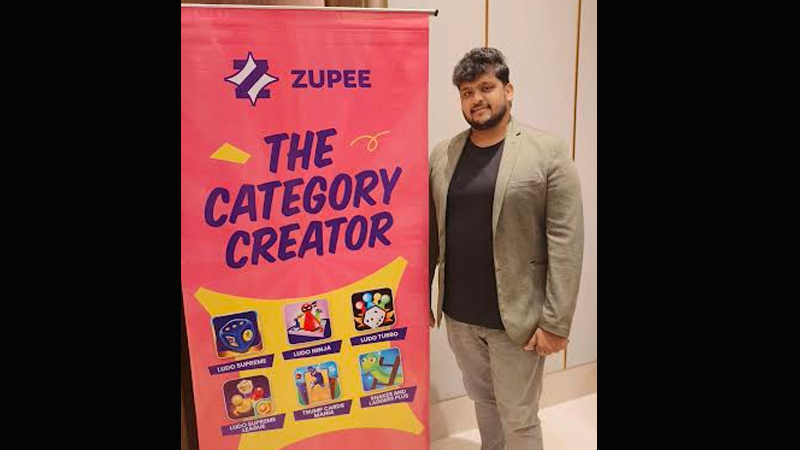
    MUMBAI: India’s online gaming world is having its “game on” moment and riding the leaderboard is Zupee, a platform that’s swapped chance for skill, raked in 150 million signups, clocked a jaw-dropping 12.5 billion gameplays, and finished financial year 2024 with a neat Rs 146 crore net profit. For an industry notorious for burning money faster than a turbo-charged console, Zupee’s win is as rare as a perfect game.

    Pull back the curtain and you’ll meet Govind Mittal, Zupee’s chief spokesperson, who’s put his chips on integrity from day one. “Compliance isn’t an afterthought for us,” he told Indiantelevision.com’s Rohin Ramesh via email. “It’s built into the very foundation of how we operate.”

    No sleight of hand here, just rigour honed across boardrooms at ITC, Rivigo, Joyy and more, plus a Chartered Accountant’s sharp eye (Mittal bagged an all-India rank of 16, first attempt, just saying). He has a record of spinning up companies like YY India, rocketing revenues from $1 million to $200 million ARR.

    Backed by heavyweight investors like WestCap, Matrix Partners, and Nepean Capital, Zupee boasts a $600 million valuation and is not just surviving but thriving with profitability in its corner. With momentum on its side, Zupee is setting its sights on joining the top tier of India’s online gaming platforms, giving its rivals a serious run for their money. 

    But don’t mistake the platform for a digital wild west. Instead, think of Swiss bank user trust being guarded more jealous than Fabergé eggs (A jewelled egg first created by the jewellery firm ‘House of Fabergé’). Every Zupee game is skill-based, luck is for lotteries.

    RNG (random number generators) are reviewed by global auditors; the firm boasts a third-party stamp from Arthur D. Little, and bots are banished. “We work closely with payment gateways to keep track of UPI IDs which have been used for fraud in the past and block payments through such IDs to ensure financial integrity of the platform,” says Mittal.

    Mittal has turned responsible gaming from a regulatory box-tick into the heart and soul of Zupee’s digital playground. KYC, age-gating, daily deposit limits, self-exclusion tools and trained support are stitched into the code. Session limits and refunds are all crystal clear. “Everything from our terms and conditions to our advertising practices is designed to be transparent and user-first. Fairness isn’t just a promise – it’s something we’ve institutionalised,” he comments.

    When risky behaviour emerges (say, a player’s wallet suddenly goes on a sugar rush), the system nudges, prompts, and if necessary, hits pause. “From day one we’ve built our platform with safeguards like spend limits, session reminders and self-exclusion tools that help users stay in control of their gameplay. Zupee offers users the ability to self-regulate through deposit limits and game locks and we actively monitor gameplay patterns to flag and assist users showing signs of excessive behavior,” he boasts.

    In an industry where “collaboration” is usually code for “let’s not tell the regulator”, Zupee takes the opposite tack. The company is a card-carrying member of the All India Gaming Federation, actively sharing its rulebook, lobbying for a central regulatory framework, and even blowing the whistle on shady offshore operators trying to sneak in through the back door.

    “We regularly engage with policy stakeholders to provide ground-level insights on gameplay behavior, tech innovation and user safety, helping ensure that emerging regulations are both practical and forward-looking,” he grins.

    Mittal bristles at the idea that revenue growth and safeguarding users are at odds. Says he, “Zupee offers users the ability to self-regulate through deposit limits and game locks and we actively monitor gameplay patterns to flag and assist users showing signs of excessive behavior. In-app nudges, direct outreach from trained counselors and temporary restrictions are applied where necessary. Our systems are designed to ensure that gaming remains a form of entertainment.”

    India’s gaming laws are a spaghetti of state-level tweaks. For industry players, it’s like playing snakes and ladders, mostly snakes. He concludes by saying, “A unified regulation is absolutely necessary for the orderly growth of this industry. Gaming has been a disruptive sector in more than one way and has the potential to engender technological innovation far beyond our imagination.”

    (If you are an Anime fan and love Anime like Demon Slayer, Spy X Family, Hunter X Hunter, Tokyo Revengers, Dan Da Dan and Slime, Buy your favourite Anime merchandise on AnimeOriginals.com.)

  • Cable TV lobby slams TRAI’s DTH licence fee waiver call

    Cable TV lobby slams TRAI’s DTH licence fee waiver call

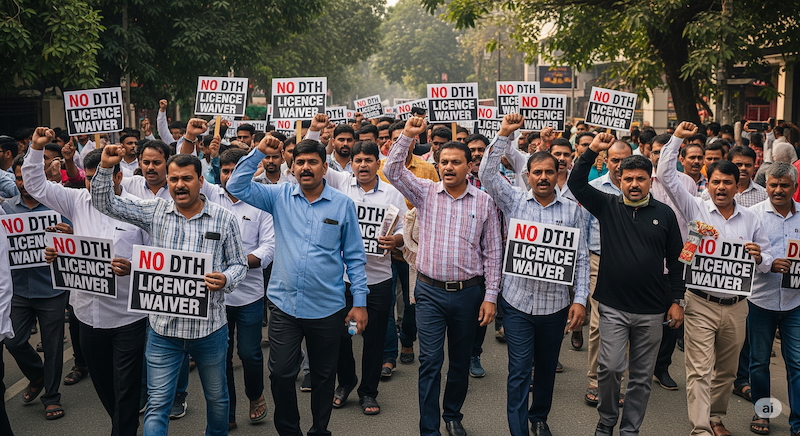
    NEW DELHI – India’s top cable lobby has sounded the alarm over TRAI’s proposal to slash and eventually scrap licence fees for Direct-to-Home (DTH) operators, warning it could wreck the delicate balance in the country’s broadcast distribution ecosystem.

    In a strongly-worded representation to the information and broadcasting ministry, the All India Digital Cable Federation (AIDCF) – which represents over 880 multi-system operators (MSOs) and 1.6 lakh local cable operators (LCOs) – said the move would “deepen regulatory inequality” and “threaten over 10 lakh livelihoods” linked to the cable TV industry.

    The AIDCF accused TRAI of tilting the scales in favour of DTH players who already enjoy “cost-free, administratively allocated spectrum” while cable operators continue to bleed under high Right of Way (RoW) charges and hefty underground infrastructure investments.

    “A DTH licence fee waiver will distort competition and violate regulatory neutrality,” an AIDCF spokesperson said, adding that any cut would hasten subscriber churn from cable to satellite platforms. The body flagged other disruptors like Free Dish, OTTs, Fast TV and digital DPOs as further stress points for the struggling cable sector.

    Rather than easing licence costs for satellite platforms, AIDCF wants the government to implement a fair cost recovery mechanism across distribution platforms, reflecting the true commercial value of spectrum. It has urged the ministry to junk TRAI’s recommendation in favour of a level playing field that safeguards the sector’s long-term viability.

  • Vishnu Kanth Gokul ‘leapfrogs’ into creative carnage

    Vishnu Kanth Gokul ‘leapfrogs’ into creative carnage

    He is not just any punter. This is the top dog with 300+ WhatsApp groups under his belt and 20 thriving communities he’s built from scratch. One man, pure genius and probably a tad knackered from all that graft!

    Need a community so strong it could win a rugby scrum? Or perhaps just a bit of a kick up the arse (aka mentorship) to get your career motoring? Vishnu Kanth Gokul’s strategic noise is the game-changer you are looking for. He’s got more tricks up his sleeve than a magician at a royal variety show.

    Over the past two decades, he’s had the smashing privilege of contributing to the growth stories of some of India’s most iconic platforms from Rediff.com, Sify.com, Rajshri.com, 123Greetings.com, Cricbuzz.com to Percept, Qoruz, FoxyMoron Sida (South Indian Digital Awards).

    Today, he’s the co-founder and chief revenue officer at The Leapfrog Network, leading the charge on growth strategy, revenue and brand partnerships. He’s blending content, media and creative innovation like a master chef, cooking up brands that actually matter. None of your wishy-washy rubbish here, just pure, unadulterated brand brilliance!

    Indiantelevision.com’s Rohin Ramesh managed to collar Gokul for a tete a tete via email. Keen as mustard, he was ready to spill the beans on his spanking new role and a whole lot more!

    Excerpts:

    On taking the leap with The Leapfrog Network whether it was love at first brand or your co-founder buddies Yash and Rishabh charmed you over a chai banter

    It was a bit of both, honestly. The vision was clear from day one, we weren’t building just another agency, we were building a cultural engine. Yash and Rishabh brought the firepower with their storytelling chops, and over multiple chai sessions, it evolved into a blueprint for something bigger. It wasn’t just about creating content but is all about shifting conversations. I knew this was the leap worth taking.

    On any original clients who jumped on early and are staying loyal

    Yes, we had a few early believers who backed us not just for the work we promised, but for the energy we brought. OTTplay was one of our first marquee collaborations, and working with a brand that already had scale gave us the chance to shape something culturally sticky. Their trust gave us the runway to experiment, fail fast, and grow sharper. We’ll always tip our hats to  early partners who saw the spark before the flame.

    On the overall team strength creative and strategy wise

    We’re a tight-knit crew of 65 today. Honestly, we don’t like boxing people into roles. One day someone’s cracking memes, and the next they’re presenting to a boardroom. That agility is our edge. We hire for mindset over resumes, people who think like strategists but execute like creators.

    On secret of brands taking the leap with The Leapfrog Network

    Our superpower is cultural intuition. We don’t chase virality, we engineer resonance. Every campaign, every post, every reel is backed by behavioral insights. We bridge brand goals with cultural fluency. And we’re not afraid to tell clients what not to do. That honesty, paired with hustle, builds trust. That’s our secret sauce.

    On juggling all the responsibilities without going wrong on creative

    There’s always a bit of creative chaos, and that’s the fun part. But I believe in systemising creativity. We’ve built ops that are robust enough to track ROI, but flexible enough to pivot when a trend shifts overnight. Delegation, clarity, and trust in the team allow me to juggle without burnout. It’s not about doing everything, it’s about empowering the right people to do the right things.

    On balancing bold commercial moves without losing the agency’s pop culture

    That’s a tightrope walk, no doubt. But for us, business growth and cultural relevance are not at odds, they’re intertwined. The brands that win today are the ones that can entertain, engage, and still convert. We ensure every growth lever we pull still speaks in the language of our audience. It’s a strategy without selling out.

    On keeping your machete sharp and staying ahead of the algorithmic anacondas

    We keep our machete sharp with a mix of curiosity and humility. Platforms evolve, but audience behavior is the constant. We’re not chasing every new feature blindly, we’re observing, testing, and iterating. Weekly trend roundups, tight feedback loops, and a very geeky media + analytics team ensure we’re not just following the algorithm, sometimes, we beat it to the punch.

    On missing the good old sales floor days at Rediff where the only strategy was hustle

    I do. There was raw energy on the floor, no decks, just drive. But those days taught me resilience and the power of showing up. Now, I bring that hustle to a more structured ecosystem. It’s still a people-first business, whether you’re selling ad slots or narratives. What’s changed is the toolkit, not the hunger.

    On TLF ever be the next Marvel of branded content

    We’re definitely building our own universe just not with capes. Thinking creator-first IPs, snackable series, and community-led platforms. We don’t just want to activate influencers, we want to co-create with them. There are a couple of IPs in stealth mode right now, and if they hit like we believe they will, we won’t just be running campaigns, we’ll be producing culture.

    On your personal mission at TLF whether it be saving the world, one meme at a time

    My mission is to make marketing more human and more honest. I want to help brands speak with people, not at them. If a meme can spark a conversation that leads to a connection, our job is done. The world doesn’t need more ads; it needs more clarity.

    On cracking ROI or decoding the Gen Z lexicon  

    Decoding Gen Z, hands down. ROI has formulas. Gen Z has feelings, filters, and a whole vocabulary that evolves faster than a budget cycle. But once you stop overthinking and start listening you realise they’re not that complex. They just want brands to show up real, not rehearsed.

    On a scale from “mild disruption” to “creative carnage,” you see TLF heading under your revenue radar

    We’re definitely mixing up with “creative carnage” but the good kind. We’re not here to play it safe. We’re scaling, yes, but not at the cost of our creative soul. We want to be the agency that launches narratives, not just ads. So expect disruption, with a healthy dose of discipline.

    On some new ripples we expect from you in the Leapfrog way of working

    Trends are table stakes. What we bring is foresight, basically the ability to spot shifts before they become mainstream. We’re building playbooks that are agile, data-rich, and culturally sharp. The goal is not to ride the wave but to shape it.

  • India’s box office collects Rs 5723 crore in blockbuster first half of 2025

    India’s box office collects Rs 5723 crore in blockbuster first half of 2025

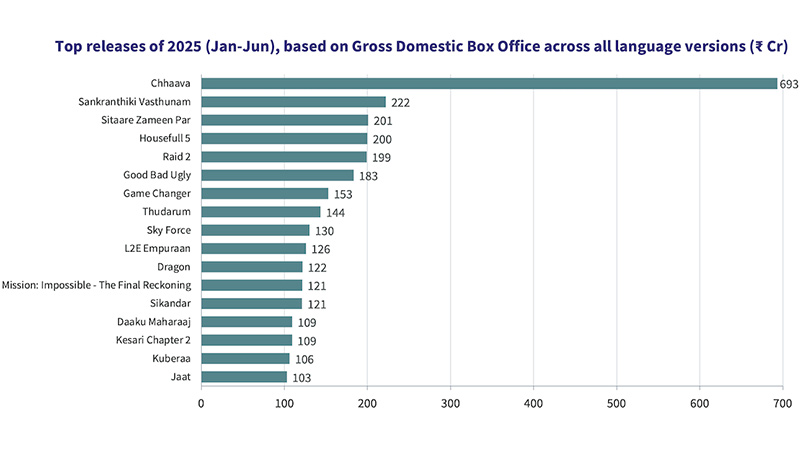
    MUMBAI: India’s cinemas have found their groove and the numbers are singing. The first half of 2025 has grossed Rs 5,723 crore at the domestic box office, marking a 14 per cent jump over the same period last year, according to the newly released India Box Office Report by Ormax Media. That puts it just Rs 12 crore short of the 2022 January–June record, signalling a cinema resurgence powered not by a few blockbusters, but a wide net of Rs 100 crore-plus earners.

    A total of 17 films crossed the Rs 100 crore threshold in the January–June window up from just 10 in the first half of 2024. Topping the charts by a wide margin was Chhaava, clocking in at a whopping Rs 693 crore, followed by the Telugu release Sankranthiki Vasthunam. Notably, only one film breached the ₹250 crore mark in this period, suggesting a shift from reliance on tentpole spectacles to consistent mid-sized performers.

    June wrapped up on a strong note, with monthly grosses topping ₹900 crore, thanks to titles like Sitaare Zameen Par and Housefull 5, both touching the ₹200 crore mark. Tamil-Telugu title Kuberaa and Hollywood’s F1: The Movie also revved up the box office engines.

    Hindi cinema continues to rule with 40 per cent of the total gross, mirroring its 2024 share. Telugu and Tamil films followed with 20 per cent and 15 per cent, respectively. In a welcome plot twist, Hollywood returned to double digits, breaching the 10 per cent mark for the first time since 2022.

    If the current pattern holds, 2025 is poised to close at Rs 13,500 crore, making it potentially the biggest box office year in Indian history. This hinges, of course, on the performance of the star-studded second half, which includes biggies like Kantara: Chapter 1, Avatar: Fire and Ash, War 2, Coolie, Akhanda 2, Thama, and OG.

    What’s especially noteworthy is the spread of success, this year is less about outlier mega-hits and more about a healthy, steady churn of solid performers. This could signal a structural rebound for Indian exhibition circuits, driven by a slate-first strategy instead of pinning hopes on a few blockbusters.

    Whether you’re team multiplex or mass single-screen, 2025’s box office is scripting a hit—and there’s plenty more showtime left.

  • Publicis Groupe smashes expectations with blistering 5.9 per cent organic growth

    Publicis Groupe smashes expectations with blistering 5.9 per cent organic growth

    PARIS: Publicis Groupe delivered a scorching second quarter that left competitors in the dust, posting 5.9 per cent organic growth that significantly outpaced expectations and cemented its position as the industry’s standout performer.

    The French advertising behemoth’s net revenue hit €3.6bn in Q2, up 4.6 per cent on a reported basis, whilst organic growth accelerated to 5.9 per cent – well ahead of the company’s five-year compound annual growth rate of 4.9 per cent for the quarter.

    Chairman & chief executive Arthur Sadoun didn’t mince words about the performance: “In a tough macroeconomic environment, Publicis had a very strong Q2 ahead of expectations,” he said, highlighting an “outperformance versus competition once again, of 800 basis points.”

    The stellar quarter was underpinned by what Sadoun called an “unprecedented new business run” of over a dozen material wins in the first six months of 2025, prompting the company to raise its full-year organic growth guidance to close to five per cent, up from the previous four to five  per cent range.

    Every major region delivered solid growth in Q2, with north America posting 5.8 per cent organic growth (5.3 per cent in the US), Europe climbing 4.6 per cent, and Asia Pacific surging 5.7 per cent. Latin America was the standout with a blistering 19.8 per cent organic growth.

    The company’s integrated model proved its worth in North America, where connected media and intelligent creativity drove “very solid growth,” whilst technology posted slight positive organic growth despite delayed capex spending across the IT consulting industry.

    Perhaps most impressively, Publicis managed to expand its operating margin to a record 17.4 per cent in the first half whilst sustaining significant investments in artificial intelligence, talent acquisition, and new business development.

    First-half net revenue reached €7.2bn, up 6.9 per cent, with organic growth of 5.4 per cent. Headline diluted earnings per share rose 3.8 per cent to €3.51, whilst free cash flow before working capital changes jumped 11.3 per cent to €828m.

    The company has been on a targeted acquisition tear, snapping up seven companies in the first half including Lotame’s identity solutions, Captiv8’s influencer technology platform, and Australia’s Atomic 212º media agency. These deals are designed to bolster Publicis’s AI-led capabilities and strengthen its “category of one” positioning.

    Despite ongoing global economic uncertainty, Publicis maintained its industry-high financial targets for 2025, expecting operating margins slightly above 18 per cent and free cash flow of around €1.9bn.

    “We are uniquely positioned to continue to win market share by bringing clients the immediate business solutions they need to grow in an uncertain global context,” Sadoun declared, signalling the company’s confidence in its ability to outmaneuver rivals in a disrupted industry.

    The results underscore Publicis’s transformation from traditional advertising agency to an integrated marketing technology powerhouse, with its data-driven approach and AI capabilities proving increasingly attractive to clients navigating digital disruption.

    With 108,000 professionals across over 100 countries, Publicis appears well-positioned to maintain its momentum through the remainder of 2025, despite anticipated client spending reductions in the second half.

  • Q1 FY26: Reliance Retail charges ahead with Rs 84,171 crore revenue blitz as profit surges 28 per cent

    Q1 FY26: Reliance Retail charges ahead with Rs 84,171 crore revenue blitz as profit surges 28 per cent

    MUMBAI: Reliance Retail has delivered a commanding first quarter performance, posting revenues of Rs 84,171 crore—an 11.3 per cent year-on-year surge—whilst profits catapulted 28.3 per cent to Rs 3,271 crore as the retail behemoth continued its relentless expansion across India’s consumer landscape.

    The company’s earnings before interest, taxes, depreciation and amortisation climbed 12.7 per cent to Rs 6,381 crore, with margins expanding 20 basis points to an industry-leading 8.7 per cent—cementing its position as India’s most profitable large-scale retailer.

    Reliance Retail’s physical footprint swelled with 388 new store openings during the quarter, taking the total count to 19,592 stores spanning 77.6 million square feet. The registered customer base hit 358 million, reinforcing the company’s claim as one of India’s most preferred retailers.

    The star performer was JioMart, which the company  described as “India’s fastest scaling digital grocery platform.” The hyperlocal delivery service registered explosive growth with daily orders surging 175 per cent year-on-year and 68 per cent quarter-on-quarter, now serving 4,290 pin codes through 2,200-plus stores across 1,000-plus cities.

    JioMart’s rapid-fire expansion included launching AJio Rush, a four-hour delivery service now live in six cities with 130,000-plus options. The initiative is delivering superior unit economics driven by higher average bill values and lower returns, according to the company.

    Fashion and lifestyle delivered robust growth, with emerging formats Gap, Azorte and Yousta registering 59 per cent year-on-year growth across 170 stores. Ajio’s new customer revenue share reached 18 per cent, up 150 basis points year-on-year, whilst average bill values jumped 17 per cent. The platform expanded its catalogue to 2.6 million options—44 per cent growth year-on-year.

    Consumer electronics faced headwinds from early monsoon onset impacting air conditioner sales, though average bill values surged 26 per cent with conversions up 200 basis points. The company bolstered its own-brand strategy by acquiring Kelvinator brand intellectual property for India.

    Grocery maintained its market leadership with broad-based growth across categories. Home and personal care grew 15 per cent year-on-year, as did fruits and vegetables, whilst packaged foods expanded 13 per cent. The Metro format delivered standout performance with home and personal care categories growing 25 per cent year-on-year.

    The quarter also saw strategic brand expansions including Shein crossing two million app downloads with 20,000 live options, whilst AJio Luxe grew its portfolio to 875 brands. Premium brands continued segment leadership with Hamleys expanding geographically and launching its Green Club sustainability programme.

    “Reliance Retail delivered resilient performance during this quarter driven by our relentless focus on operational excellence, geographical expansion and sharper product portfolio,” said executive director Isha M. Ambani “Our continued investments in cutting-edge technologies and differentiated product offerings have enabled us to serve our customers better and scale with agility.”

    The results underscore Reliance Retail’s dominance in India’s Rs 70 trillion retail market, with the company now processing 389 million transactions quarterly—a 16.5 per cent year-on-year increase—as it continues reshaping India’s retail landscape through aggressive digitisation and expansion.

  • Q1 FY26: JioStar smashes profit records as IPL juggernaut drives Rs 11,222 crore revenue surge

    Q1 FY26: JioStar smashes profit records as IPL juggernaut drives Rs 11,222 crore revenue surge

    MUMBAI: JioStar has delivered a blockbuster first quarter, posting record revenues of Rs 11,222 crore and profits that soared 154 per cent to Rs 581 crore, powered by what the company calls the “biggest ever IPL in terms of viewership and monetisation.”

    The media behemoth’s earnings before interest, taxes, depreciation and amortisation jumped to Rs 1,017 crore from Rs 774 crore in the previous period, whilst EBITDA margins expanded to 10.6 per cent from 8.1 per cent.
    The stellar performance was underpinned by IPL 2025, which shattered viewing records with 1.19 billion viewers across television and the JioHotstar platform. The tournament’s final match became the biggest T20 match ever on digital, reaching 237 million viewers with a peak concurrency of 55.2 million—obliterating the previous IPL record of 35.9 million.

    JioHotstar’s dominance was on full display during the quarter, with the app hitting 1.04 billion downloads on Android and averaging 460 million monthly active users. The platform reached 652 million viewers during IPL—a staggering 28 per cent year-on-year growth—whilst television delivered 514 billion minutes of watch-time.
    Beyond cricket, JioStar consolidated its entertainment stranglehold with a commanding 35.5 per cent share of TV entertainment viewership. Star Plus retained its Hindi general entertainment channel leadership with six of the top 10 shows, whilst regional powerhouses Star Pravah, Star Jalsha, Star Maa and Asianet maintained their number one positions in respective markets.

    The quarter also saw strategic moves in the free-to-air space, with Star Utsav and Colors Rishtey relaunching on DD Free Dish. Star Utsav became the number one channel from day one, reshaping the FTA Hindi GEC landscape.

    JioHotstar’s content strategy bore fruit beyond sports, posting its highest-ever monthly entertainment watch-time in June 2025. The latest season of Criminal Justice scored the strongest opening for any OTT original in 2025, according to Ormax Media, whilst Kesari 2 emerged as the year’s biggest movie across all languages on the platform.

    International content remained a key differentiator, with Captain America: Brave New World debuting as the quarter’s second most-watched film and Mufasa: The Lion King becoming the most-watched international movie ever on JioHotstar.

    The company’s subscriber base swelled to 287 million during IPL on JioHotstar, whilst reaching over 800 million people on television during the quarter—cementing its position as India’s undisputed entertainment colossus.

  • Reliance hits record Q1 FY26  EBITDA as Jio and retail fire on all cylinders

    Reliance hits record Q1 FY26 EBITDA as Jio and retail fire on all cylinders

    MUMBAI: Reliance Industries has kicked off FY26 with a blockbuster first quarter, posting its highest-ever consolidated quarterly EBITDA of Rs 58,024 crore ($ $6.8 billion), a sharp 35.7 per cent leap over last year, fuelled by robust performances across digital, retail and energy verticals.

    Group net profit soared 76.5 per cent year-on-year to Rs 30,783 crore ($3.6 billion), aided by operational gains and a Rs 8,924 crore windfall from its stake sale in Asian Paints. Total revenue rose 6 per cent to Rs 2.73 lakh crore ($31.9 billion), with EBITDA margins improving by a stellar 460 basis points to 21.2 per cent.

    Reliance Jio continued to dominate the digital landscape, crossing a jaw-dropping 200 million 5G subscriber milestone and 20 million home broadband connections. Jio Platforms’ revenue jumped 19 per cent to Rs 35,032 crore, while EBITDA climbed 24 per cent to Rs 18,135 crore, with margins expanding 210 basis points to a best-in-class 51.8 per cent.

    ARPU rose to Rs 208.8, driven by premium subscriber additions and deepening data consumption, which reached 54.7 billion GB this quarter. Jio also unveiled its next-gen tech stack—JioGames Cloud, JioPC, and the proprietary UBR fixed wireless platform—taking a firm aim at India’s AI and home computing future.

    Reliance Retail cemented its pole position, clocking Rs 84,171 crore in revenue (up 11.3 per cent), and EBITDA of Rs 6,381 crore (up 12.7 per cent), marking an industry-leading margin of 8.7 per cent. The business added 388 new stores, taking the total footprint to 19,592 outlets spanning 77.6 million sq ft.

    JioMart’s hyper-local push paid off with daily order volumes exploding 175 per cent year-on-year. AJIO continued to thrive in the online fashion segment with its new 4-hour delivery service and strong traction for Shein, while the FMCG arm doubled revenue to Rs 4,400 crore.

    Reliance’s Oil-to-Chemicals (O2C) segment, despite a 1.5 per cent drop in revenue due to crude price softness and planned shutdowns, posted a solid 10.8 per cent EBITDA gain at Rs 14,511 crore. Jio-bp’s aggressive retail fuel push contributed significantly, with volumes of petrol and diesel up 38.6 per cent and 34.2 per cent respectively.

    With net debt remaining flat at Rs 1.17 lakh crore and capital expenditure of Rs 29,875 crore this quarter, the group is doubling down on its “golden decade” growth strategy across tech, consumption, and energy. Chairman Mukesh Ambani said, *“Reliance will continue its stellar track record of doubling value every four to five years.”

    From superfast data to doorstep delivery and clean fuels, Reliance is firing on all fronts—and showing no signs of slowing down.