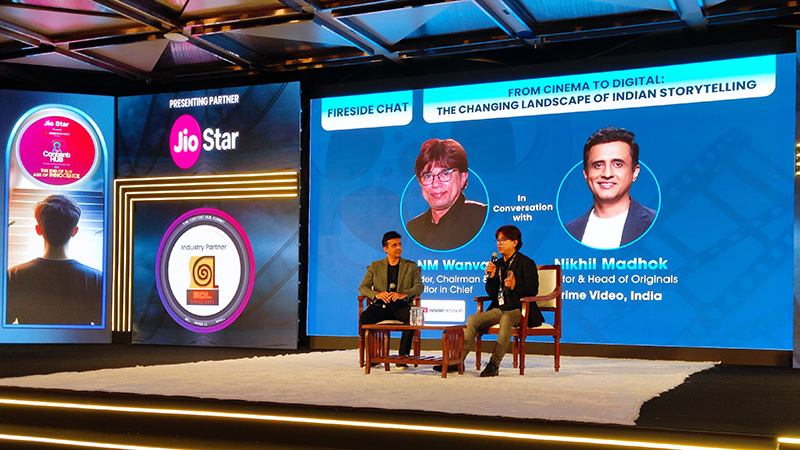
MUMBAI: As Indian content creators wrestle with legacy media’s slow fade and digital fatigue’s creeping toll, one question rules the reel: how do you keep the eyeballs glued? At the 9th edition of The Content Hub Summit 2025, that was the hot topic during a no-holds-barred fireside chat between Anil NM Wanvari, founder, chairman of Indiantelevision.com, and Nikhil Madhok, director & head of originals at Prime Video India.
When asked how Prime Video picks potential hits, Madhok laid it out: “This is still a business of creative gut instinct.” While data helps identify audience clusters (young adult horror fans, for instance), final greenlights depend on whether a pitch feels fresh, unique, and emotionally resonant. “You’ve got to spot the right story and the right creator,” he said.
Apparently, it’s working. Since Prime Video’s India debut, more than 60 per cent of its scripted shows have landed second seasons or are in production. Hits like Farzi, Call Me Bae, and Dupahiya are already queuing up for follow-ups. “We’re doing something right,” Madhok commented.
Of course, not everything sticks. “Failure teaches,” Madhok admitted. Whether due to weak casting or saggy plotlines, misses do happen. But unless there’s real love for a first season and a compelling new arc, Prime won’t risk a sequel. “It’s unfair to the audience and the legacy of the show.”
Amazon is now reversing the stream-to-cinema flow. Under its new banner Amazon MGM Studios, it’ll release 4–6 films theatrically starting 2026. “It’s come full circle,” said Madhok. “We’re backing great scripts with box-office potential.” Four titles are already filming; two are in the can.
A quarter of Prime Video’s Indian content viewership already comes from outside the country, with appearances in weekly global top-10 on Prime Video every week in 2024. But that breakout K-drama-style success? Still brewing. “We haven’t had that one global story yet, but it’s coming,” Madhok promised.
Meanwhile, Prime Video’s focus remains on home turf. Over 100 projects are in the pipeline, spanning languages, formats, and genres, from Family Man 3 and Mirzapur: The Movie, to new IP like Revolutionaries and the unscripted hit The Traitors.
AI, Madhok said, should be embraced, not feared. “Like every technology before it, AI can enable storytelling.” Prime Video is also watching the short-form and creator economy space closely though that’s currently MX Player’s turf within the Amazon family.
As Indian storytelling hits a new stride, Prime Video is betting big on creative instinct, strategic risk and the timeless power of a good story. “Stories drive civilisations forward,” Madhok said. “And that hasn’t changed in a hundred years.”
MUMBAI: Lights, camera, localisation! At the 9th edition of The Content Hub Summit 2025, the session on “The Rise and Rise of Regional Content” didn’t just capture attention, it underscored a seismic shift in what India watches and why. Gone are the days when Hindi content ruled unchallenged. From Marathi to Malayalam, Punjabi to Gujarati, regional languages are not only speaking up, they’re roaring loud across platforms and pushing boundaries with content that’s local in soul, but universal in appeal.
Karan Taurani of Elara Capital, moderating the star-studded panel, noted that the 20th-ranked Hindi film today earns just ₹20 crore, a steep fall from pre-pandemic numbers where the 20th film could clock in Rs 70–Rs 80 crore. Rabindra Narayan, MD of PTC, echoed this, citing how Punjabi film Sehra raked in Rs 100 crore just from Maharashtra, denting a mainstream release like Bhabhi by an estimated Rs 20–Rs 30 crore.
Rishi Negi of Banijay Asia pointed out that while Hindi struggles with resonance, regional films like Pushpa and KGF succeed because they tell stories rooted in emotion whether it’s a son seeking acceptance or avenging his mother. These narratives, Negi argued, transcend language and connect with audiences across demographics.
The session also touched on the economics of production. Making content in regional languages isn’t just creatively liberating, it’s cost-effective too. With South Indian films now commanding higher acquisition budgets than Hindi titles on platforms like Netflix, the tide has clearly turned.
Mamta Kamtikar from Junglee Pictures highlighted how Malayalam film Lones, produced on a modest budget, became a critical and cultural success due to strong storytelling and a buzz-worthy release strategy. “It’s not just about making a film,” she stressed, “it’s about making it travel emotionally and linguistically.”
This brings us to another hot-button topic: localisation. Avinash Mudaliar of OTTplay noted that dubbing and subtitling in India have undergone a transformation. “Earlier, South Indian action films just needed punchy dialogues. Now, dubbing is almost script-rewriting. It’s no longer a mechanical job, it’s cultural translation.”
But the challenge isn’t just about turning Tamil into Hindi. As Arpit Mankar of Shemaroo explained, a joke that lands in Delhi might bomb in Bengal. Comedy, drama, even character arcs need regional nuance something only local creators truly understand. That’s why Shemaroo has gone deep into Gujarati OTT, helping three films cross ₹10 crore in the first half of 2025 alone triple the usual annual average.
ETV Win’s Saikrishna Koinni and others agreed: regional makers have the home-field advantage. They live the language, breathe the culture, and write stories with lived authenticity that no algorithm or distant studio exec can replicate.
And there’s money on the table too. With over 33 OTTs now bundled into super-subscription packs and growing willingness to pay, regional content is not just filling the gap, it’s the main event.
In short, India’s entertainment engine is no longer fuelled solely by Bollywood dreams. It’s powered by local love, dubbed brilliance, and subtitles that speak volumes. And if this panel is anything to go by, the future of Indian content is decidedly regional and refreshingly relatable.
MUMBAI: He may have started as an “outside classroom student,” but today Deepak Dhar is scripting the biggest chapters of Asia’s content boom. At a fireside chat during the 9th Content Hub Summit 2025, the Group CEO of Banijay Asia and Endemol Shine India unpacked what it takes to run one of the most prolific content machines in the region and why India is finally poised to export formats, not just import them.
With a staggering 800 production days of Bigg Boss alone across languages like Hindi, Tamil, Telugu, Kannada, Malayalam, Bangla and Marathi, Dhar highlighted the scale and stamina needed to keep pace. “Even I don’t know how we manage to shoot 800 days in 365,” he quipped. “But that’s the opportunity India presents.”
From reality juggernauts like Bigg Boss, MasterChef, and Fear Factor, Dhar has now set his sights on fiction with shows like The Night Manager,The Good Wife, and Trial. His move from Endemol to launching Banijay Asia stemmed from a need to detox from the “reality king” tag and reinvent. “I wanted to unlearn and start again. What excites me is the fear of the unknown,” he said.
In Dhar’s view, the Indian content ecosystem has evolved dramatically from hyperlocal, broadcast-first formats to stories that now aim for global resonance. “Streaming has been the biggest shake-up in a good way. It’s democratised content and shrunk the world,” he said, citing the rise of global formats from countries like Israel, Korea, and Scandinavia. “Now it’s India’s turn.”
But why haven’t Indian formats gone global yet? Dhar believes the answer lies in legacy TV habits. “Twenty years ago, we weren’t designing shows for export. Now, with OTT, that’s changing. It’s the right time,” he asserted. His goal? To see an original Indian format go global. “We’ve imported so many shows successfully. Now we need one of ours out there and we’re working on it.”
Dhar also shared an anecdote that captures how dramatically content consumption has changed. “One Sunday, I asked my 15-year-old daughter to watch a movie. I picked up the TV remote, she picked up her laptop. That was the moment it hit me my business model was evolving in my own living room.”
Despite the shifts, Dhar is clear-eyed about the fundamentals. “None of us knows what will click. But what we can control is the process find the right story, the right people to shoot and edit it, and the right home for it.”
In a fragmented world of content, formats and platforms, Dhar’s formula is refreshingly simple: trust the team, stick to the process, and don’t overthink. The only real script for success, it seems, is being ready to rewrite it again and again.
MUMBAI: The 9th edition of the Content Hub Summit 2025 came roaring into Mumbai this week, promising answers to a question plaguing the media world: how do you stay original when the world’s drowning in content?
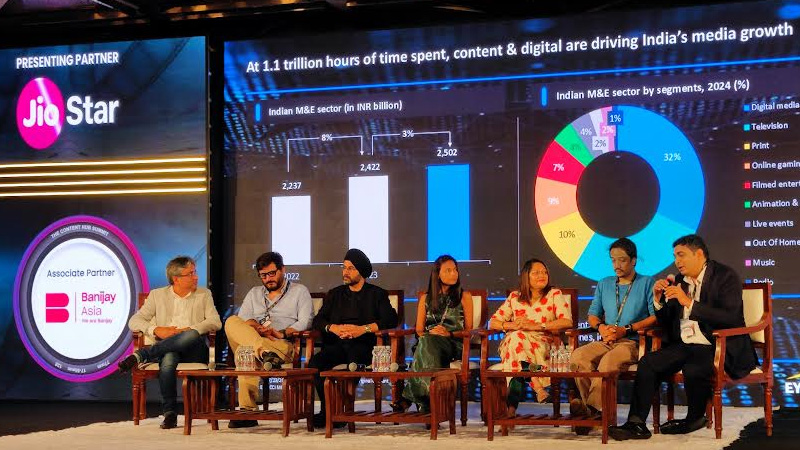
Raghav Anand, partner at Ernst & Young LLP, kicked things off with some eye-watering numbers: the Indian media and entertainment (M&E) sector is now worth Rs 2.5bn, fuelled by 1.1trn hours of content consumption. “That’s a massive amount of attention,” said Anand. But with time spent on platforms now plateauing, he warned the next battleground will be retention, not reach.
And yet, India’s churning out a gobsmacking 200,000 hours of original content a year—leading globally in volume. TV still dominates, but OTT, film and music are closing in fast. What’s changing is how and why content is made and the growing shadow of generative AI has everyone both curious and cautious.
Goldie Behl, founder of Rose Audio Visuals, dismissed the obsession with “originality” as misplaced. “There’s nothing truly original. Everything’s borrowed, lived, or inspired. What matters is conviction,” he said, adding that content made with honesty and emotional depth is what ultimately cuts through.
Aditi Shrivastava, co-founder and CEO of Pocket Aces, echoed the point, emphasising that her studio’s approach is to test stories at micro-scale before scaling up. “We find communities not demographics on social platforms. We create short, relatable pieces and build from there,” she said, adding that this modular testing lets them co-create with audiences in real time.
Saugata Mukherjee, head of content at SonyLIV, was clear-eyed about what makes content stick: identity and consistency. “We built the platform on shows rooted in Indian culture. Our audience knows what we stand for, and that’s why they return.” Originals, he said, drive both customer acquisition and retention, with long-running franchises offering a steady heartbeat.
Tejkarran Singh Bajaj, SVP and head of originals at Jio Studios, admitted times are “exciting but very difficult”. His team resists trend-chasing and instead banks on instinct: “We don’t make franchises. We find stories worth telling, ones that feel truly Indian.” That means even adaptations are reworked with a cultural lens, not just scene-by-scene lifts.
Anuj Gosalia, founder of Terribly Tiny Tales, described today’s attention economy as “weaponised dopamine”, calling short-form ‘TV minus minus’—and still wildly effective. “People used to mock reels and TikToks. Now every A-lister’s on them. Micro-dramas will be the same,” he predicted.
Swati Patnaik, creative director at Applause Entertainment, argued that the secret sauce of global success is local flavour. “The more rooted the story, the more it travels,” she said. “It’s not about the plot; it’s the point of view. That’s what cuts across borders.”
As for AI, the mood was one of cautious intrigue rather than full-blown enthusiasm. Behl questioned whether AI can ever replicate emotional depth. “When an actor cries on screen, can AI make us feel that? I’ve yet to see it,” he said.
Still, Anand noted that GenAI is already driving 20–25 per cent cost savings and slashing production time. The challenge, then, is less whether AI will be used and more how ethically and meaningfully it will be integrated.
India’s original content scene is at a thrilling and slightly terrifying crossroads. The audience is fragmented, hungry, and overloaded. AI is knocking. Attention spans are plummeting. But as this year’s Content Hub Summit showed, the real winners will be those who tell deeply human stories with cultural authenticity, creative courage, and a sharp eye on what viewers really want.
MUMBAI: VML India has announced the appointment of Dhruv Warrior as executive creative director. With over 17 years of experience in advertising and brand communication, Warrior brings a strong mix of creativity, strategy, and cultural inclusion.
An internationally awarded creative leader, Warrior has held various positions with JWT, VMLY&R Dubai, and FoxyMoron. He has consistently delivered bold, award-winning campaigns, integrating technology, emerging trends, and precise craft to bring evocative and culturally inclusive campaigns to life.
VML India CEO Babita Baruah said, “We are excited to have Dhruv join our team. Dhruv’s commitment to infusing creativity with culture will continue to elevate VML’s ethos. Dhruv will work closely with Kalpesh Patankar and Sachin Dhir to continue driving our best work for our clients.”
VML India CCO, Kalpesh Patankar said, “Dhruv brings in the creativity that understands both global ambitions and local nuances. He has a keen cultural sensibility and a strong command of modern storytelling. VML is constantly evolving to be creatively bold, strategically relevant, and deeply connected to the audiences we serve. We are excited to have Dhruv join us and we look forward to doing some great work.”
“I am thrilled to join VML India,” said Warrior. “I firmly believe that creative thinking is the engine of transformation, driving strategy, media, engagement, and innovation. VML has set a benchmark in merging insights, strategy, technology, and innovation in their work, and I look forward to continuing to build the strategic acumen to further strengthen the agency’s creative vision. I would like to thank the leadership for this opportunity, and I am certain we are going to continue to bring out great work for our brands.”
Warrior will be based out of VML’s Bangalore office and will report into Kalpesh Patankar.
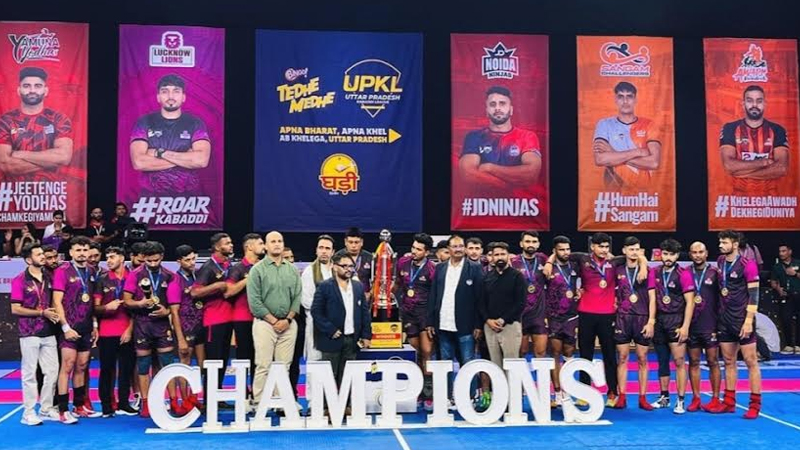
MUMBAI: Mat talk turns money talk and UPKL is wrestling its way to the top of India’s sports scene. The Uttar Pradesh Kabaddi League (UPKL) has thrown down the gauntlet and picked up a valuation tag of Rs 238 crore, cementing its status as one of India’s fastest-growing sports properties. Its creator and operator, SJ Uplift Kabaddi Pvt Ltd, has not only built a regional league, but a nationwide movement with global potential all in its very first season.
Launched in 2024, the debut edition of UPKL featured eight franchise-based teams, capturing hearts in small towns and big cities alike. The data tells the story: according to BARC, over 30 million television viewers tuned in across India, while digital platforms clocked 300 million impressions.
Sony Sports Network (on Sports Ten 1 and Ten 3), DD Sports, and Fancode collectively broadcast the matches, ensuring a multi-platform footprint that reached deep into Tier 2 and Tier 3 cities.
SJ Uplift’s Founder and Director Sambhav Jain attributes the league’s soaring valuation to “the growing popularity and resonance” of the UPKL format. He added, “This valuation reaffirms our belief in grassroots sports and the immense, untapped potential of regional talent. The overwhelming response from fans, franchises and brands proves we’re building something bigger than just a league.”
Backed by a vision to scale kabaddi into a globally recognised sport, Jain sees UPKL not just as a commercial vehicle but as a cultural movement. With plans to build a sustainable ecosystem for athletes, fans and sponsors, SJ Uplift is already eyeing expansion, new partnerships, and greater professionalisation in the seasons ahead.
UPKL’s debut season is not just a sporting win, it’s a statement. With a Rs 238 crore valuation, deep-rooted audience traction, and a hyperlocal-to-global narrative, it’s making regional kabaddi not just prime-time entertainment, but premium IP.
From dusty courts to digital charts the future of Indian kabaddi is looking like a full-body slam dunk.
MUMBAI: It was one of those soggy Sunday evenings, monsoon mayhem outside, and kids along with their parents, would storm towards their nearest stationery shop as if exam season was a national emergency to buy the good old Navneet Digest, the cheat sheet without the cheating.
For generations across Maharashtra and Gujarat, Navneet wasn’t just a brand, it was the revision whisperer, the syllabus shrink, and every student’s pre-exam partner-in-cram. It didn’t just fill pages, it filled panic-shaped gaps in every school kid’s memory.
Navneet Digest –
But somewhere between the fading charm of Doordarshan-era jingles and the algorithmic assault of edtech startups, Navneet had gone quiet. Readers would still remember their ads from the ’90s and early 2000s—TV, newspaper, radio. It all flipped the page when Devish Gala, scion of the illustrious Gala family and head of branding at Navneet Education, stepped into the frame. A digital native with ink in his veins and WiFi in his soul, Gala grew up straddling textbooks and tech toys. Now, he’s rewriting Navneet’s brand story with a millennial flair, giving the staid education giant a much-needed syllabus upgrade. He’s not just playing the branding game, he’s setting the curriculum.
Founded in 1959, Navneet has long enjoyed a rock-solid presence in India’s academic publishing and stationery market, especially in its home turfs of Maharashtra and Gujarat. With a consolidated revenue of Rs 1,693 crore in FY24, the company is now flexing its marketing muscle, rolling out campaign after campaign post-2019, each more eye-catching than the last.
Over a breezy lunch at the brand’s plush campus, Indiantelevision.com’s Rohin Ramesh caught up with him in a glassy boardroom that oozes new-age ambition. He’s as comfortable talking about campaign metrics as he is reminiscing about that old-school Navneet nostalgia. Armed with a digital-first mindset and a firm grasp of brand storytelling, he has been spearheading Navneet’s makeover, without alienating its loyalists.
In a land obsessed with marks and where print isn’t dead, Navneet Education is proving that even a seasoned publishing house can teach an old dog new tricks – especially when that dog is an AI. While the rest of India’s education sector is chasing digital rainbows and AI-powered unicorns, Navneet Education is firmly planting its flag in a different kind of digital-first future. One where the trusty book remains king, but with a seriously smart sidekick.
For decades, Navneet has been the quiet force behind countless Indian success stories, their digests and textbooks forming the backbone of academic ambition. But as Gala reveals, their vision extends far beyond just ink and paper. Two to three years ago, a “very conscious decision” was made: social responsibility is just as crucial as business growth.
“Tr for Teacher” campaign isn’t your average pat on the back. Since its inception in 2022, Navneet’s success has been built on teacher feedback. “The teachers thought it was their book,” Gala explains, leading to strong recommendations. This campaign is the company’s loud and proud “thank you” – acknowledging teachers as their “biggest stakeholder” and fostering a sense of pride within the teaching community. It’s about giving back to the bedrock of Navneet’s business, ensuring teachers feel valued and equipped with resources like sample copies and resource books.
Tr. for Teachers-
Leveraging their expertise in education and a surprising tie-in with their existing medical social responsibility efforts, Navneet in their more recent campaign in 2025, ‘Color Blindness Book’ tackles the colour deficiency disorder in children. A simple test, often incorporated into pre-primary books, allows for early, discreet identification. This ingenious approach ensures that as schools and parents unknowingly use their products, a crucial health check is seamlessly integrated. It’s about proactive care, allowing parents to “quietly go to the doctor” for corrective measures.
Colour Blindness Book-
This upcoming campaign in 2027 aims to shift focus to parents, particularly mothers. Gala, a new father himself, observes a societal trend where despite calls for equality, the mother still plays a “much larger role” in a child’s early education and nurturing. Navneet wants to challenge the stereotype of the overburdened mother by showcasing her “key interest” in the child’s education, even amidst household responsibilities. It’s a nod to the silent, tireless efforts of mothers, aiming to empower and acknowledge their vital contribution.
When it comes to emotional intelligence in educational content, Navneet isn’t fumbling for fluffy after-school specials. It is aligning with the New Education Policy’s emphasis on practical learning. This means activity-based learning and inter-subject connectivity. Think counting cows in math, then learning about farm animals in science, and perhaps penning a story about them in English – all designed to give a holistic understanding and engage a child’s emotions. It’s about making learning a lived experience, not just rote-by-hearting.
In a content-crazed, digitally-disrupting India, how does the “good old Navneet Digest” survive? Gala is unequivocal: “Paper book, paper, pencil, pen, all of that is going nowhere.” Digital solutions, he stresses, are purely supplementary. Navneet seamlessly integrates QR codes into its books, offering animated videos, quizzes, and question papers at a scan. It has even got “smart books” – digital versions of their content accessible on various devices, complete with highlighting and note-taking features. It’s always “book first, technology next.”
Perhaps the bookmaker’s most audacious move is Navneet AI. While global giants like ChatGPT, Perplexity, and Google Gemini offer generic answers, Navneet has taken a different path. The company has spent “four to six months” teaching its AI the nuances of the Indian education system, from CBSE to state boards, the weightage of questions in exams, and the accepted language of definitions. It has also claimed to give “100 per cent accurate and quality response based on Navneet’s content.”
This bespoke AI empowers teachers to create powerpoint presentations, 3D models, and quizzes in minutes, all tailored to the Indian context. If an answer isn’t in Navneet’s extensive content, the AI pulls from “fully trustworthy” external websites. It’s a game-changer for educators, transforming preparation time from hours to mere minutes.
While some of the other chaps in the EdTech playground are still fiddling with their abacuses, Navneet’s already teaching quantum physics with their cutting-edge ‘Navneet Nxt’ digital platforms while S Chand & Co. and Repro India might be trying to catch a glimpse of their homework, Navneet so far is staying ahead.
India’s EdTech market is expecting a colossal leap from a hefty $7.5 billion to a staggering $29 billion by 2030, according to a report by the Internet and Mobile Association of India (IAMAI) and Grant Thornton Bharat. In a market bustling with stationery suppliers and textbook peddlers, Navneet isn’t just selling pens and paper, they’re crafting entire learning universes. While Kokuyo Camlin might offer a decent pencil, Navneet’s got the whole kit and caboodle, from brain-busting guides to digital wizardry that leaves the others looking a bit analog.
It makes sense. While the ICSE and IB crowd might be sipping almond lattes and learning through iPads, most of India’s academic fuel is still being burned in CBSE classrooms.
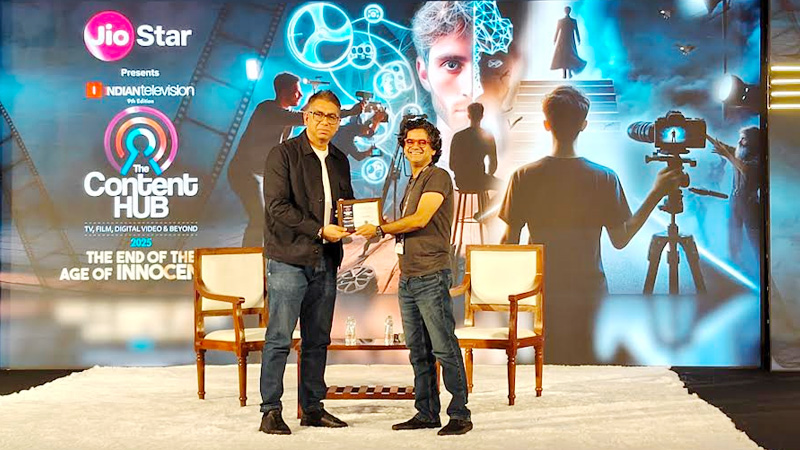
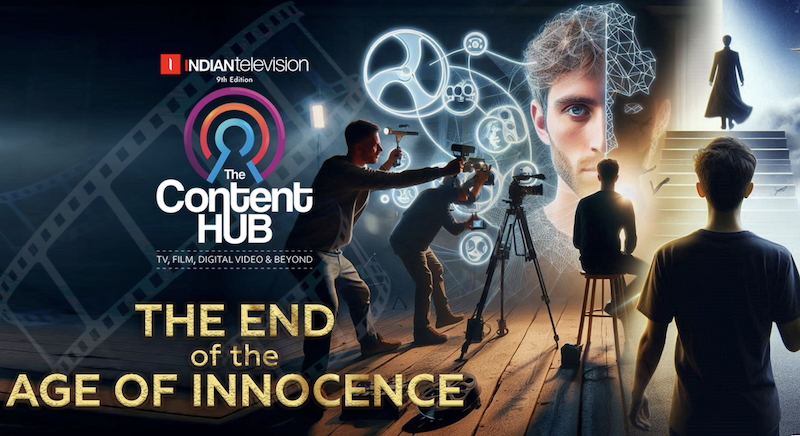
MUMBAI: The floodgates of content may be open, but India’s audience has evolved—and she’s no longer easily pleased. That’s the sharp message echoing through the plush halls of JW Marriott, Juhu on 23 July as the ninth edition of Indiantelevision.com’s The Content Hub Summit gets underway.
The theme, The End of the Age of Innocence, captures the new reality: streamers, broadcasters, and filmmakers can no longer afford to shoot in the dark. With 47 of the industry’s sharpest minds in attendance, it’s a day packed with soul-searching, strategy, and storytelling pivots.
The curtain-raiser is a heavyweight panel on The Future of Original Content, featuring SonyLiv’s Saugata Mukherjee, JioStudios’ Tejkarran Singh Bajaj, Rose Audiovisuals’ Goldie Behl, Pocket Aces’ Aditi Shrivastava, Applause Entertainment’s Swati Patnaik, and Terribly Tiny Tales’ Anuj Gosalia, moderated by E&Y’s Raghav Anand.
That’s followed by a fireside chat between Prime Video’s Nikhil Madhok and Indiantelevision.com’s founder Anil Wanvari, diving deep into how platforms are rewriting playbooks.
Next up: Mindset Change: You are not making for a single screen, a spirited panel on diversifying content, with Fremantle’s Aradhna Bhola, Applause’s Sunil Chainani, Juggernaut Productions’ Samar Khan, Sri Adhikari Brothers’ Kailash Adhikari, Marigold Studios’ Hemal Thakkar, and Balaji Telefilms’ Nitin Burman. Chairing the discussion is Bodhitree Multimedia’s Sukesh Motwani.
JioStar’s Alok Jain is slated to stir things up with a solo presentation, Reclaiming Bold – Why Indian Entertainment Must Dare Again.
A burning issue up next: the inconsistent fortunes of Hindi cinema at the box office. A high-stakes panel, Getting the Business Model Right, features Panorama Studios’ Abhishek Pathak, Red Chillies’ Aashish Singh, Ormax Media’s Sailesh Kapoor, Friday Filmworks’ Devendra Deshpande, and Zee Studios’ Pragati Deshmukh, with film critic Mayank Shekhar at the helm.
Regional powerhouses take centre stage in The Rise of Regional Content, chaired by Elara Capital’s Karan Taurani. Speakers include PTC’s Rabindra Narayan, Shemaroo’s Arpit Mankar, Junglee Pictures’ Mamta Kamitkar, ETV Win’s Saikrishna Koinni, OTT Play’s Avinash Mudaliar, and Banijay Asia’s Rishi Negi. A rare fireside chat follows, with Banijay Asia CEO Deepak Dhar in conversation with Shekhar, setting the tone for a deeper dive into genre-bending creativity.
That’s precisely what the next panel explores—Pushing Genre Boundaries. Writer-director Kussh S Sinha, producer-director Ravindra Gautam, Banijay’s Mrinalini Jain, Applause’s Rahul Ved Prakash, and director Vishal Furia spar with trade analyst Saurabh Varma moderating.
The day wraps up with two back-to-back masterclasses. The first, on Rana Naidu, sees actor Sushant Singh, director Suparn Varma, and screenwriter Vaibhav Vishal join film critic Stutee Ghosh. The second, on Mandala Murders, features actor Vaani Kapoor, Netflix’s Tania Bami, and directors Gopi Puthran and Manan Rawat, with editor Swati Chopra in the chair.
In a market where content is no longer king unless it resonates, The Content Hub Summit has one message: India’s audiences have grown up—and the industry must too.
A cross-section of India’s content powerhouses has lined up in support of The Content Hub Summit, signalling the growing importance of storytelling as a strategic business lever.
JioStar leads the pack as presenting partner, while Applause Entertainment and Banijay Asia have come on board as associate partners. Fremantle is the lanyard partner, ensuring high visibility with every badge flash.
The industry partners roster reads like a who’s who of television and digital production: Contiloe Films, Sol Productions, and OTT Play have lent their support, amplifying the summit’s reach and relevance.
The show of strength from across the ecosystem—studios, streamers, and production houses—underscores the summit’s sharp focus on content strategy in a market where the audience is now firmly in the driver’s seat.
MUMBAI: In a move that fuses fashion flair with sonic innovation, London-based tech disruptor Nothing has joined forces with acclaimed photographer and filmmaker Jordan Hemingway to launch the portrait-led campaign for its first over-ear headphones, the Headphone (1). Known for his gritty, cinematic style and collaborations with the likes of Louis Vuitton, Chanel and FKA Twigs, Hemingway brings his visceral visual language to Nothing’s latest foray into audio.
Jordan said of the collaboration, “I first found myself at Nothing’s office a few years ago for an unrelated meeting to the Headphone (1) project. Even then, their spirit of innovation and fearless exploration left a mark on me. To return now, years later, to build something together is not just exciting, it’s an honour.”
Nothing’s Senior Director of Brand & Creative (Global) Ryan Latham said, “Working with Jordan was an instinctive fit, the team was drawn to his signature aesthetic that blends honesty, beauty, and raw brutality with innovation. His ability to challenge the traditional norms in the fashion space felt like an alignment to how we wanted to convey Headphone (1).”
As Nothing continues to blur the lines between tech and taste, this stylish rendezvous with Hemingway is proof that sound and style aren’t mutually exclusive, they’re just getting started.
MUMBAI: Prime Video clearly had its popcorn moment. For its Prime Day 2025 bonanza (July 12–14), the streamer rolled out 17 titles across Indian and global languages—and the world hit play hard.
From the narrow lanes of Nagpur to Netflix’s home turf, Amazon’s homegrown content made noise everywhere. Viewers across 4,400+ Indian towns and cities and in 224 countries and territories lapped up titles like Panchayat season 4, the edgy reality drama The Traitors, and Priyanka Chopra-Idris Elba-John Cena action flick Heads of State.
Panchayat’s fourth outing hit record numbers, marking the biggest launch in the franchise’s history. Audiences from 180+ countries tuned in during its launch week, with viewership spread across 95 per cent of India’s pin codes. The show even bagged a spot in the Top 10 trending list in 42 countries on day one.
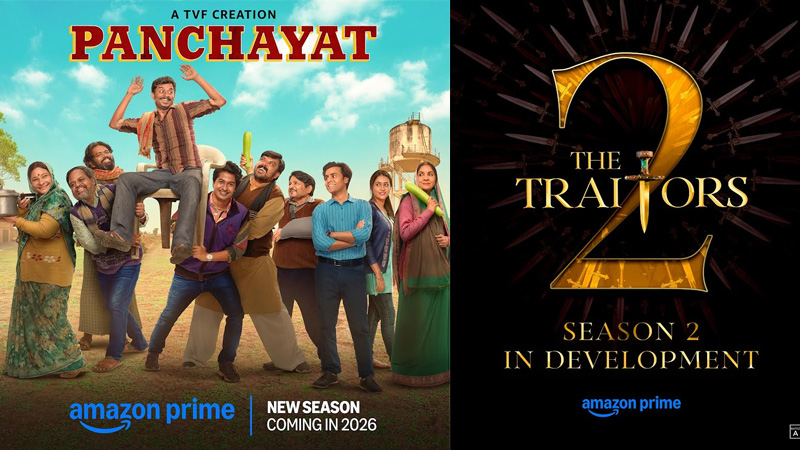
The unscripted nail-biter The Traitors held fans hostage in 88 per cent of pin codes across India. So naturally, Prime has greenlit season 2. Panchayat season 5 is already in the works and slated for a 2026 premiere.
But it wasn’t all about desi delights. Prime Video’s international Prime Day slate—featuring Korean romances like Good Boy and Head Over Heels, and Japanese anime like City and the Animation—struck gold too. American heavy-hitters like Dexter: Resurrections, Ballard, and Deep Cover kept screens sizzling.
“Through our spectacular content line-up, we delivered one of the most engaging experiences for our customers this Prime Day,” said Prime Video, India director & head of SVOD business, Shilangi Mukherji. “While our content resonated deeply and strongly across India, the exceptional response from global audiences to our Indian titles demonstrates the growing influence of Indian entertainment on the world stage. As we continue to take Indian stories global, we’re equally dedicated to bringing premium international content to our Indian audiences, ensuring a truly borderless entertainment experience.”
It’s not just what you stream, it’s how. With subtitles and dubs in Indian languages, Prime Video’s “global meets local” mantra is clearly paying off. From Uppu Kappurambu to Heads of State, it was a full house at the world’s biggest virtual cinema.