Blog

  • Tedhe Medhe goes viral with a reel-y snackable content masterclass

    Tedhe Medhe goes viral with a reel-y snackable content masterclass

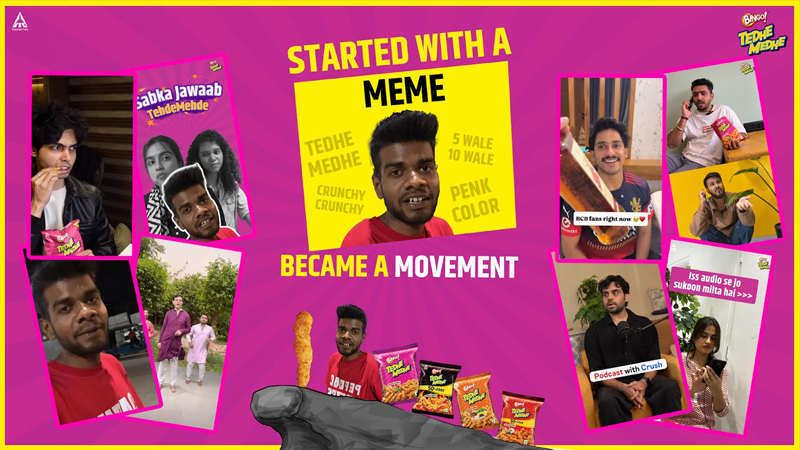
    MUMBAI: What do you get when a snack brand embraces meme culture, musical flair, and internet spontaneity? A full-blown digital dhamaka, that’s what. Bingo! Tedhe Medhe’s latest campaign, Sabkajawaabtedhemedhe, has turned into one of the biggest organic internet moments of the year, proving that the best marketing isn’t always cooked up in a boardroom, sometimes it’s born in a spontaneous Instagram reel.

    The spark? A reel by creator Deepankar Koshta casually declaring, “Tedhe Medhe bhi acche lagte hain.” With over 3 million organic views, the line struck a chord. Sensing its viral potential, Bingo! responded not with a brand plug, but a personal touch, a Tedhe Medhe hamper and handwritten note prompting 7 plus organic follow-up reels and another 1.5 million views.

    Then came the beat drop. Bingo! roped in music producer Anshuman Sharma, turning the catchphrase into an irresistibly quirky anthem. The result? A social media juggernaut with over 68 million views, 122k shares, and 3.5x engagement compared to the brand’s regular content making it Bingo!’s second-most shared post ever.

    The virality spiced up further when content creator Parveen Sharma crafted a meme-dance routine to the anthem, clocking 44 million views and 225k shares breaking records to become the brand’s most shared content to date.

    Not one to miss a beat, Bingo! then launched the SabkaJawaabTedheMedhe contest with comedian Satish Ray, asking users to respond to life’s oddball questions using Deepankar’s reel audio. The challenge garnered over 1.7 million views, 14k shares, and hundreds of user remixes.

    The ripple effect snowballed with influencers like Purav Jha and even brands like Swiggy joining in. Daily meme-style posts generated between 1.4 to 5 million views each. In total, the campaign racked up over 112 million views, 21 million in reach, and nearly 1 million engagements all largely organic.

    More than just a quirky campaign, Bingo!’s digital blitz shows how embracing real-time culture, giving credit to creators, and speaking the internet’s native language can turn a single unscripted moment into a nationwide snack sensation.

    Because in the age of reels and relatability Tedhe is the new straight.

    (If you are an Anime fan and love Anime like Demon Slayer, Spy X Family, Hunter X Hunter, Tokyo Revengers, Dan Da Dan and Slime, Buy your favourite Anime merchandise on AnimeOriginals.com.)

  • Amagi files for Rs 1,020 crore IPO to boost tech and cloud expansion

    Amagi files for Rs 1,020 crore IPO to boost tech and cloud expansion

    MUMBAI: Clouds, cash, and content Amagi’s IPO play is streaming towards Dalal Street. Amagi Media Labs, the Bengaluru-based SaaS powerhouse fuelling global streaming, has filed its draft red herring prospectus (DRHP) with SEBI for a blockbuster IPO combining fresh equity of up to Rs 1,020 crore and an offer for sale (OFS) of 3.41 crore equity shares.

    The fresh issue will fund Rs 667 crore in tech and cloud infrastructure, while also financing future acquisitions and corporate purposes. The IPO will also give early backers including Premji Invest, Norwest Venture Partners, Accel, and Avataar Ventures, a chance to partially exit via the OFS route.

    Founded in 2008 by Baskar Subramanian, Srividhya Srinivasan, and Arunachalam Srinivasan Karapattu, Amagi has emerged as a global player in the Media & Entertainment (M&E) technology landscape. Its AI-powered, cloud-native platform supports content providers, OTT distributors, and advertisers in uploading, managing, and monetising video content whether it’s on smartphones, smart TVs, or streaming platforms.

    Today, Amagi works with over 45 per cent of the top 50 listed media and entertainment companies by revenue, cementing its position as the go-to “industry cloud” for streaming.

    The company is structured into three verticals Cloud Modernisation, Streaming Unification, and Monetisation & Marketplace serving television networks, film studios, production houses, telecom operators, OTT giants, and advertising platforms.

    Financially, the company is turning the corner with impressive top-line growth. In FY25, Amagi clocked Rs 1,162 crore in revenue from operations, posting a CAGR of 30.70 per cent from FY23 to FY25. Even more notably, its adjusted EBITDA margin turned positive at 2.02 per cent, bouncing back from -17.69 per cent in FY24 and -20.62 per cent in FY23, a strong indicator of improved operational leverage.

    Amagi may also explore a Pre-IPO placement of up to Rs 204 crore, which would reduce the fresh issue proportionally.

    Leading the IPO charge are Kotak Mahindra Capital, Goldman Sachs India, Citigroup Global Markets, IIFL Capital, and Avendus Capital, with the listing proposed on both the BSE and NSE.

    For a company that started out serving satellite TV channels, Amagi has now become a global cloud-streaming disruptor poised to write its next big chapter on India’s public markets. With video streaming only growing and cloud infrastructure becoming critical, Amagi’s IPO could be the signal investors have been waiting to tune into.

    (If you are an Anime fan and love Anime like Demon Slayer, Spy X Family, Hunter X Hunter, Tokyo Revengers, Dan Da Dan and Slime, Buy your favourite Anime merchandise on AnimeOriginals.com.)

  • Richard Gere opens up to Wion in rare and powerful new interview

    Richard Gere opens up to Wion in rare and powerful new interview

    MUMBAI: In a world short on substance and long on noise, leave it to Richard Gere to centre the conversation, not on celebrity, but on compassion. The global film icon sits down with Wion for an unmissable interview airing this Saturday, 26 july at 7:30 pm IST, with repeat telecasts on Sunday, 27 July at 8:00 AM and 2:30 pm IST. Forget red carpets and glitzy premieres. This one’s about red robes, resistance, and the resilience of a people. Gere opens up to Wion’s Molly Gambhir in a conversation that spans decades of spiritual discovery, activism for Tibet, and the moral compass that’s kept him grounded in the midst of stardom.

    From his first encounter with His Holiness the Dalai Lama to championing Tibetan freedom on the world stage, Gere’s words are a masterclass in mindful living. “Spirituality isn’t something you wear, it’s how you move through the world,” he reflects in the episode, part of Wion’s signature series The Interview.

    He reminisces about monsoon evenings in Tibetan homes and dives into personal stories rarely shared of navigating Hollywood with intent, of standing firm in his beliefs when it wasn’t fashionable, and of advocating for truth even when it came at a cost.

    The special also serves as a deeper call to action. “In an age of distraction, we need moral clarity,” says Wion managing editor Rabin Sharma. “This isn’t just an interview. It’s a mirror held up to a world in flux and Gere’s voice cuts through the clutter with startling grace and honesty.”

    As the conversation shifts from spiritual identity to global solidarity, Gere champions the voices of those often ignored. His compassion doesn’t preach, it pulses with authenticity. Whether you’re tuning in for his thoughts on Tibetan freedom or just seeking a rare moment of calm wisdom, this is one interview you won’t want to miss.

    Catch Richard Gere: Unfiltered on Wion this weekend. Because sometimes, it takes a silver fox to deliver golden truths.

    (If you are an Anime fan and love Anime like Demon Slayer, Spy X Family, Hunter X Hunter, Tokyo Revengers, Dan Da Dan and Slime, Buy your favourite Anime merchandise on AnimeOriginals.com.)

  • Ekta Kapoor distances herself from Altt after Centre bans OTT app for obscene content

    Ekta Kapoor distances herself from Altt after Centre bans OTT app for obscene content

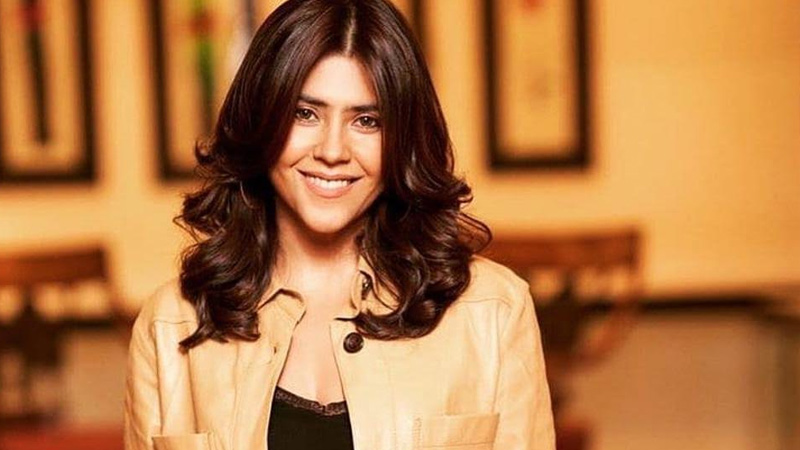
    MUMBAI: Ekta Kapoor on Saturday issued a sharp clarification, asserting she has no links with Altt—the OTT platform recently blacklisted by the Ministry of Information and Broadcasting for streaming “obscene and vulgar content.” 

    The Centre earlier this week banned 25 websites and apps, including Altt, Ullu, Desiflix and Big Shots, citing repeated violations of The Indecent Representation of Women (Prohibition) Act, Section 67 of the IT Act, and Section 292 of the Indian Penal Code. The ministry said the banned platforms hosted content with “sexual innuendos” and “long portions of sexually explicit scenes involving nudity,” crossing the threshold into pornographic territory. 

    In a detailed statement, Kapoor clarified that although she runs Balaji Telefilms, she has had no role at Altt since June 2021. “Contrary to reports, I am not associated in any capacity whatsoever with Altt I stepped down from any involvement over three years ago,” she stated.  


    A post shared by EktaaRkapoor (@ektarkapoor)

    She further added that Altt is now operated by Balaji Telefilms Ltd, following the merger of ALT Digital Media Entertainment Ltd.—earlier its wholly owned subsidiary—approved by the National Company Law Tribunal. The merger officially came into effect on  20 June  2025. 

    “Balaji Telefilms Ltd, listed on the BSE and NSE, is a professionally managed media company and fully compliant with all applicable laws. It continues to uphold the highest standards of corporate governance,” the statement read. 
    Kapoor’s comments come amid a media frenzy linking her to the now-banned Altt. “Any insinuation contrary to the above facts is strongly denied. The media is requested to report accurately,” she concluded.

    (If you are an Anime fan and love Anime like Demon Slayer, Spy X Family, Hunter X Hunter, Tokyo Revengers, Dan Da Dan and Slime, Buy your favourite Anime merchandise on AnimeOriginals.com.)

  • TV Today buys Romesh Films for Rs 200 crore to acquire Noida property

    TV Today buys Romesh Films for Rs 200 crore to acquire Noida property

    MUMBAI: In a deal that’s more location than storyline, TV Today Network has greenlit a blockbuster acquisition not of a production house with a hit filmography, but of a shell company sitting on prime land. At its board meeting on 25 July, the India Today Group-owned broadcaster approved the Rs 200 crore acquisition of Romesh Films Private Limited, a company with zero revenue, a modest net worth of Rs 5.93 crore, and one marquee asset: an immovable property in Noida. The company posted a profit after tax of Rs 2.82 crore in FY25 despite no turnover, a neat little plot twist that reflects its sole function as a property holder.

    Rather than purchase the property outright, TV Today has opted to buy 100 per cent equity 4,65,010 shares of face value Rs 100 each of Romesh Films from existing shareholders. The deal excludes any net assets other than the land and building and is subject to due diligence, stamp duty, registration charges, and other transfer-related costs.

    Once completed, Romesh Films will become a wholly owned subsidiary of TV Today Network. The company says the acquisition will aid operational convenience and support long-term expansion, given its proximity to the group’s corporate office in Noida.

    TV Today Network reported revenue from operations of Rs 197.19 crore for the quarter ended June 2025, navigating a quarter of industry-wide recalibration following last year’s election-related ad spike. Profit from continuing operations stood at Rs 7.39 crore, while the company posted a net profit of Rs 7.35 crore for the period, reflecting a stable performance in a non-election cycle.

    The radio business now treated as a discontinued operation dragged further, reporting a loss before tax of Rs 0.05 crore, contributing to a cumulative drag of Rs 7.89 crore for FY25.

    But the company isn’t tuning out yet. In February, it signed an MoU to sell its three radio stations in Delhi, Mumbai and Kolkata (104.8 FM) for Rs 20 crore. The transaction, pending MIB approvals, will be routed through its wholly owned subsidiary, Vibgyor Broadcasting.

    The net result? A strategic shift from frequencies to fixed assets, with an eye on solid ground even if it comes with no script.


  • Shemaroo posts Rs 45.8 crore Q1 loss as revenue and margins dip sharply

    Shemaroo posts Rs 45.8 crore Q1 loss as revenue and margins dip sharply

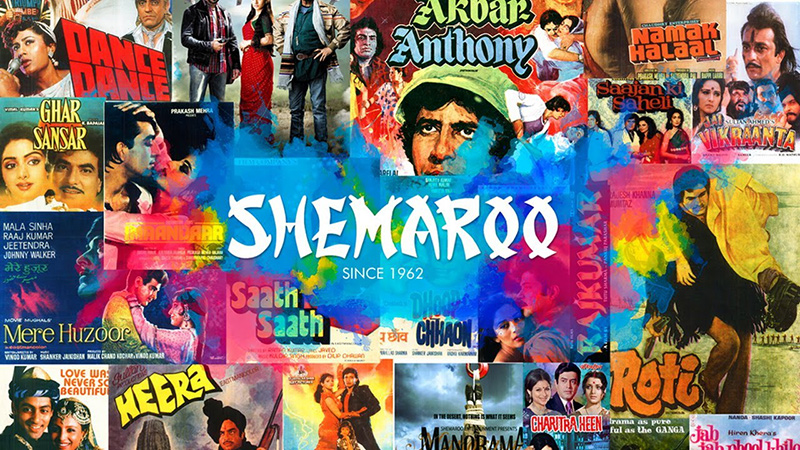
    MUMBAI: Drama, but no dividends Shemaroo’s first quarter script writes itself into the red. The veteran media and entertainment company reported a consolidated net loss of Rs 45.8 crore for Q1 FY25, ballooning from Rs 17.2 crore in the same quarter last year. Even standalone losses were sharper, at Rs 46.9 crore versus Rs 17.5 crore year-on-year. Despite total income standing at Rs 143.2 crore, a steep rise in expenses especially operational and employee-related pushed the firm into deeper losses.

    Revenue from operations dropped 9.6 per cent year-on-year to Rs 139.5 crore (from Rs 154.4 crore), and sank over 31.7 per cent from Rs 204.3 crore in the previous quarter (Q4 FY24). Employee costs rose marginally to Rs 31.2 crore, while operational costs climbed significantly to Rs 152.3 crore, overtaking revenue altogether.

    Shemaroo’s loss before tax stood at Rs 60.9 crore for the quarter, compared to Rs 22.8 crore in Q1 FY24. The company’s total comprehensive loss now stands at Rs 45.8 crore for Q1 FY25, compared to Rs 17.2 crore a year earlier and Rs 5.1 crore last quarter.

    The board, however, remained busy beyond the balance sheet. It approved the reappointment of three top Shemaroo executives Raman Maroo as managing director, Atul Maroo as Joint MD, and Hiren Gada as CEO for another three-year term beginning January 2026. Additionally, Namrata Shinde was appointed compliance officer, effective immediately.

    But the real plot twist comes from the GST front. The company is entangled in a legal showdown after the GST department demanded recovery of inadmissible input tax credit (ITC) of Rs 70.3 crore, interest, and penalties totalling a staggering Rs 133.6 crore each on the Joint MD, CEO, and CFO. Shemaroo has challenged the order in the Bombay High Court and secured an interim stay on proceedings.

    In another strategic move, the company plans to transfer the broadcasting license of Mango TV to Mango Mass Media Pvt Ltd for at least Rs 25 lakh, subject to MIB approval.

    From VHS tapes to digital platforms, Shemaroo has seen the industry’s highs and lows. But if Q1 FY25 is any indicator, the road ahead might call for some tight editing and serious plot development both financial and regulatory.

  • Reclaiming bold – Why Indian entertainment must dare again: Alok Jain, JioStar

    Reclaiming bold – Why Indian entertainment must dare again: Alok Jain, JioStar

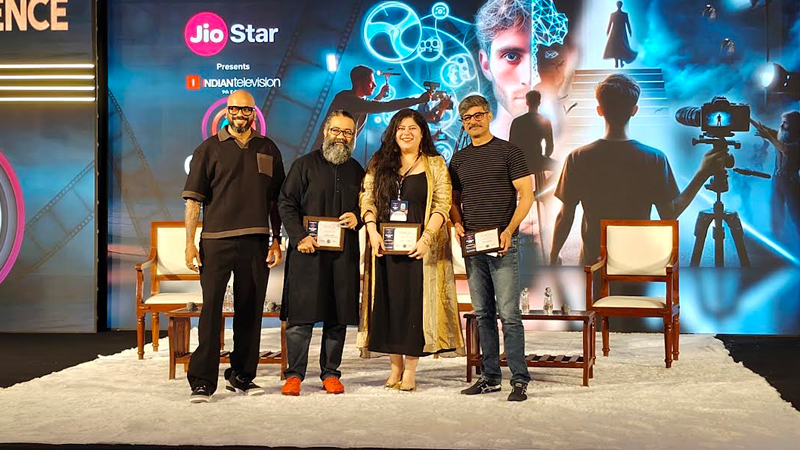
    MUMBAI: The 9th Content Hub Summit 2025 opened with momentum, bringing together leaders from across the entertainment landscape to explore what’s driving the industry forward. From the surge in local content and continued growth of television, to the rise of the creator economy and the growing influence of AI in storytelling, the discussions reflected a fast-evolving and opportunity-rich ecosystem.

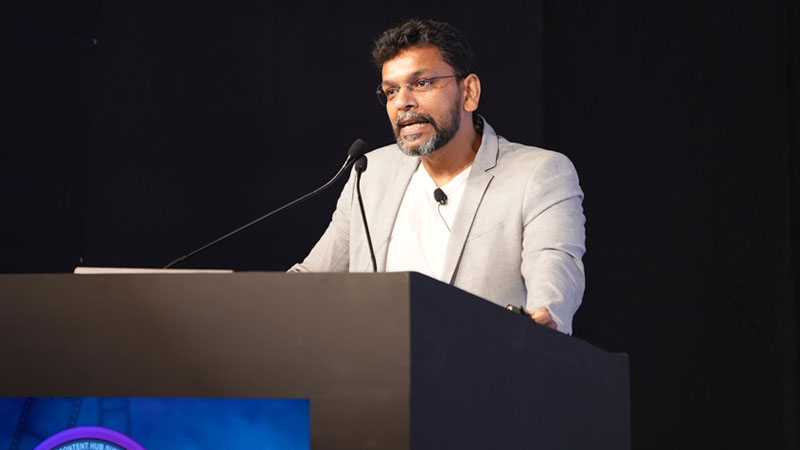
    In a keynote address that surely stirred the chai, Alok Jain from JioStar insisted that the only path forward is to be bold. First up, challenging the industry’s penchant for playing it safe. “We have mistakenly assumed that the only way of making great content in the future is by following what has worked in the past.” While acknowledging the relevance of history, Jain stressed that in this industry, “the past will not always define the future.” Bold content needs a “big leap of faith”. Every time the industry has seen great stories emerge across TV, digital or movies, it’s been because we dared to reimagine.

    Jain didn’t mince words, highlighting several hurdles stifling the industry’s boldness. The “I am the world” phenomenon. One of the most powerful moments in the keynote was Jain’s critique of creative myopia – he cited Ormax, which notes a staggering 49 per cent of OTT content is based in Delhi and Mumbai. “We all think our immediate surroundings, our friends, our family – is the entire world.. but that’s not true,” Jain said, urging content creators to look beyond their metropolitan bubbles. He painted a vibrant picture of a nation of 1.4 billion people, 60 per cent of whom are under 35 years, highlighting unparalleled diversity across states, territories, languages, and dialects – insisting that this “scale along with diversity is our true strength.”

    Jain touched upon access for emerging talent being restricted, with systemic walls blocking their entry—an issue that urgently needs to be addressed. He says, “it is extremely difficult for anyone new with a creative voice to come and pitch a great piece of content.” In an age where technology has democratized content creation and “every consumer is also… a creator,” such barriers are not just outdated, but detrimental. If we don’t actively dismantle these walls, we risk missing out on the next generation of storytellers who are already shaping culture from the margins.

    Jain critiqued the industry’s habit of asking “what have you done before?” when new talent approaches them. He advocated for “betting more on the potential the person can have,” even if it’s a riskier approach. He highlighted successes like Taaza Khabar which was Bhuvan Bam’s first OTT show, Thukra Ke Mera Pyaar helmed by new makers and a fresh cast, and 4 successful seasons of MTV Hustle as examples of fostering new talent.

    And then there’s the elephant in the room: Economics. “As an industry we tend to believe that big means big budget only,” Jain lamented. He delivered a line that truly hit home: “Not everything that costs a lot is worth a lot.”

    Despite these headwinds, Jain expressed bullish optimism about India’s potential. Our digital prowess is undeniable – the largest e-commerce market, ubiquitous UPI transactions, and a thriving startup ecosystem with a plethora of unicorns. And entertainment leads the charge of this growth story : the largest TV viewer base globally, highest movie production, and half a billion streaming users. With 200,000 hours of professionally generated content annually, India is a “creative powerhouse.” And we are only getting started, there is “significant headroom for growth to be achieved across TV (70% penetration), Movies (Only 1 theater for every 140,000 people) and Digital (65% internet penetration). What’s truly remarkable about India is that no single medium is growing at the cost of another; instead, all are evolving and thriving side by side, creating a uniquely dynamic media landscape.”

    In fact, Jain directly challenged two prevailing industry myths: “No one watches TV anymore”, and “theatres are dead.”

    “Around 850 million viewers tune into linear TV every month, and watch ~3 hours of content daily – which is almost 4 times greater than average OTT consumption. 190,000 hours out of 200,000 of original content created in India is made for TV and it continues to be the bedrock of the entertainment landscape in India.” Citing BARC data, he pointed out that TV viewership has remained steady for the last 17 years. “TV is not dying,” he declared, urging the audience to look beyond their “I am the world” bubble.

    Similarly, for cinema, he spoke about recent examples like Saiyaara and Chhaava, proving that “if we make great content, people will come to the theatres.”

    JioStar, as India’s largest broadcaster, digital platform, and content studio, is taking on the mantle of being bold in form and voice. The company’s success stories demonstrate their commitment to understanding and serving diverse consumer needs – with shows like Anupamaa (unshackling from patriarchy), Taali, Shakti – Astitva Ke Ehsaas Ki (LGBTQ+ themes) and the enduring popularity of MTV Roadies, which just concluded its 20th season, constantly innovating and staying close to its audience.

    Acknowledging that consumers are screen-agnostic, moving seamlessly between TV, digital, and cinema, JioStar is backing bold formats across all mediums. Their show Laughter Chefs is a prime example, topping viewership charts on both television and JioHotstar.

    Jain concluded with a clarion call for the Indian entertainment industry: “The world is watching India, and we must give them more than just the volume. Need of the hour is innovation across the entire value chain, from understanding consumers and crafting compelling stories to smart budgeting, production, marketing, and embracing technology like Gen AI.
     

  • Spot The Scam: NDTV Profit’s new series digs deep

    Spot The Scam: NDTV Profit’s new series digs deep

    MUMBAI: Every investor, who has faith in the India growth story, wants to believe the market is fair; it is safe. But behind the flashing tickers and shiny promises, there are shadows – scamsters waiting to exploit trust and ambition of a new India.

    NDTV Profit chose not to look away. It chose to light up those hidden corners and show viewers what really lies beneath. That is how Spot the Scam was born – a promise to watch over the markets, cut through its noise and stand by those who trade in good faith.

    The very first investigation showed why this matters. In Delhi, a firm called Trade Dost boldly placed a full front‑page ad in a leading Hindi daily on July 13, offering intraday margins of 500 times, carry‑forward margins of 60 times, zero brokerage, instant deposits and withdrawals, and trading accounts without any paperwork. None of it had SEBI approval.

    NDTV Profit’s intrepid reporters followed the trail and exposed the truth. Within days, the National Stock Exchange warned investors to stay away from Trade Dost and others like it. Soon after, the Securities and Exchange Board of India sent a formal notice to the newspaper that carried the illegal ad.

    NDTV Profit managing editor, Tamanna Inamdar summed it up, “As more investors put their faith in India’s markets, scamsters are finding new tricks – AI, phishing, ever sharper tactics. Our job is not just to report, but to reveal. We will keep exposing, keep educating, and keep standing with those who invest with trust.”

  • Aayush Ailawadi joins NDTV as editor – technology & AI

    Aayush Ailawadi joins NDTV as editor – technology & AI

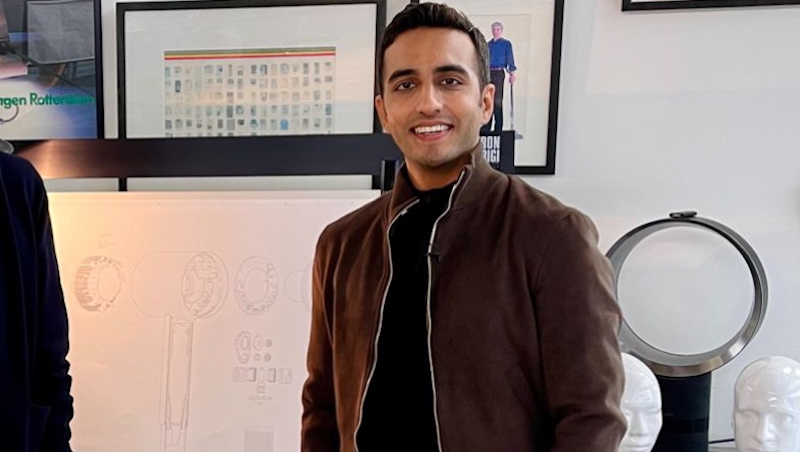
    NEW DELHI:  One of India’s most recognisable voices in tech and AI journalism, Aayush Ailawadi, has joined NDTV as editor – technology & AI, adding another marquee name to the broadcaster’s expanding digital-first arsenal.

    Ailawadi made the announcement with characteristic flair, calling NDTV his “ultimate playground” and teasing followers to expect “maximum screens, maximum geek-outs and more surprises.”

    With a career that spans BloombergQuint, India Today, CNBC-TV18, and even All India Radio, Ailawadi is known for making tech talk relatable and fun — whether it’s AI, gadgets, fintech or cybersecurity. His current podcast, Let’s Tech About It, co-produced between LA and Mumbai, has built a loyal community of enthusiasts.

    Before this, he served as consulting editor at the RP Sanjiv Goenka Group and was technology editor and anchor at India Today, where he became a staple for millennial viewers tuning in for smart, jargon-free commentary.

    In his freelance avatar, Ailawadi has also lent his voice to Discovery, Netflix (Bad Boy Billionaires), and dozens of corporate films — all while doubling up as a scriptwriter, strategist and voiceover artist.

    His appointment underscores NDTV’s clear push into the tech vertical — aiming not just to inform, but to entertain, engage and, most of all, translate the complex for India’s growing digital citizenry.

  • Rana Naidu 2 team opens up on backlash, bold themes and big wins

    Rana Naidu 2 team opens up on backlash, bold themes and big wins

    MUMBAI: When your lead actor jokes, “I’ve mastered dying on screen,” you know a show isn’t playing it safe. At the 9th edition of The Content Hub Summit 2025, the spotlight fell on Netflix’s Rana Naidu’s second season, an audacious blend of blood, baggage, and brutal family dynamics that’s got everyone talking (and watching).

    Director Suparn Verma, screenwriter Vaibhav Vishal, and actor Sushant Singh were joined by session chair and RJ Stutee Ghosh for a frank, no-holds-barred conversation on the show’s gritty new season where the emotions run as high as the body count.

    “Reaching the heart is the real win,” said Verma. “The kind of emotional and thematic depth we’ve explored this season, I genuinely believe it hasn’t been done before in Indian storytelling.”

    Indeed, the father-son conflict, explored with near-mythological gravitas, was framed by Verma in classic archetypes: “There’s a Shakti, a Vishnu… and now, with Angam, we’ve created a force that’s just as primal and layered.”

    But it hasn’t all been smooth sailing. The team faced backlash after Season 1 for its raw language and depiction of abuse. Vaibhav Vishal admitted that it did prompt some introspection and even self-censorship but only to widen the show’s reach without diluting its essence.

    “There was a lot of criticism, and I’d be lying if I said it didn’t affect me,” he said. “But then came the numbers. That’s when we knew we weren’t off-track Rana Naidu shot up to become the number one show.”

    Sushant Singh, whose character meets a dramatic end in the new season, brought humour to the session. “He told me during the loop test, ‘You’re going to die.’ I just smiled and said, ‘I’ve mastered dying on screen by now.’”

    The team also addressed representation especially of women with intention. Vishal noted that Arya’s character this season wasn’t written as a love interest or sidekick. “In her mind and ours, she’s the main character.”

    This season also marked a shift in tonal choices. While the violence has intensified, the language has been consciously restrained. “We created narrative solutions,” said Vishal. “Like Venkatesh’s character doing Angoom Gilo to avoid abusing, it was all thought through.”

    The makers are clear-eyed about the creative trade-offs involved in storytelling for a broad OTT audience. “You adapt, learn, evolve,” said Vishal. “Once Season 1 was out and we saw how the family dynamic resonated, we layered it back in for Season 2.”

    OTT, for actors like Sushant Singh, has also offered meatier roles than cinema ever did. “It’s given me hope,” he said. “The kind of characters I’ve gotten on streaming platforms are far richer than most I got in films.”

    The Netflix show creators didn’t shy away from controversy, but they also didn’t pander. Their belief? Let the characters be flawed, the dialogue be daring, and the women be unapologetic.

    And if a few heads roll in the process well, that’s just part of the Naidu family tradition.

    (If you are an Anime fan and love Anime like Demon Slayer, Spy X Family, Hunter X Hunter, Tokyo Revengers, Dan Da Dan and Slime, Buy your favourite Anime merchandise on AnimeOriginals.com.)