Blog

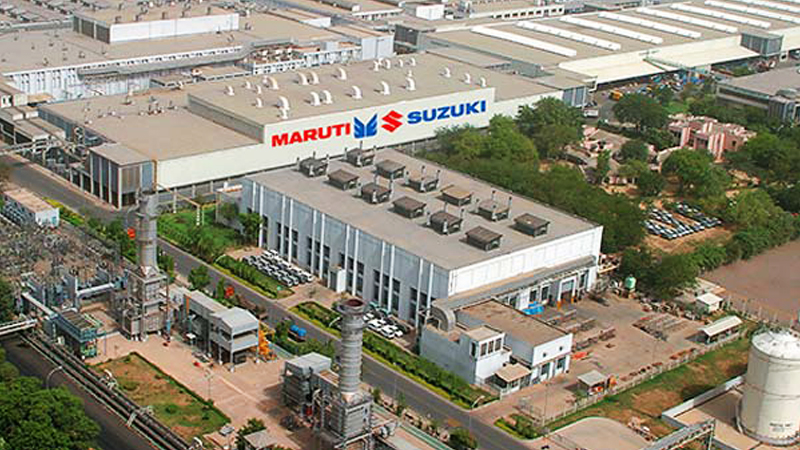
  • Maruti clocks Rs 4,943 crore Q1 profit on strong sales and margins

    Maruti clocks Rs 4,943 crore Q1 profit on strong sales and margins

    MUMBAI: India’s favourite carmaker isn’t just fuelling roads, it’s firing up the financials too. Maruti Suzuki India cruised through the first quarter of FY26 with a consolidated net profit of Rs 37,924 million, accelerating past last year’s Rs 37,597 million.

    Total consolidated income hit Rs 404,934 million in the quarter ended 30 June 2025, driven by Rs 386,052 million in revenue from operations marking a healthy bump from Rs 357,794 million a year ago. Other income also revved up to Rs 18,882 million from Rs 10,605 million.

    The company’s consolidated profit before tax reached Rs 49,435 million, with a tax outgo of Rs 11,511 million. What truly put Maruti in overdrive was its tight grip on costs. Material consumption stood at Rs 219,368 million, while purchases of stock-in-trade clocked in at Rs 57,038 million. A modest Rs 2,794 million gain from inventory changes also helped balance the books.

    Employee costs rose to Rs 20,483 million, and depreciation nudged up to Rs 15,560 million, but overall expense discipline kept total costs at Rs 355,854 million leaving room for a tidy operating margin.

    While the company didn’t pull any handbrakes this quarter, its joint ventures and associates chipped in too, contributing Rs 296 million and Rs 59 million respectively.

    On a standalone basis, the picture looked equally polished. Standalone profit came in at Rs 37,117 million, up from Rs 36,499 million a year ago, with revenue from operations at Rs 384,136 million. The basic and diluted earnings per share stood at Rs 118.06.

    Maruti’s quarterly detour into comprehensive income saw a gain of Rs 3,465 million from re-measurements and fair value adjustments despite a minor speed bump from actuarial losses on pension liabilities.

    For a company with Rs 960,827 million in other equity and a paid-up capital of just Rs 1,572 million, Maruti continues to steer shareholder value with turbocharged confidence. If Q1 is any indicator, the full-year drive promises more pit stops of profit.
  • Dabur dishes out growth with a healthy Q1 dose of profits

    Dabur dishes out growth with a healthy Q1 dose of profits

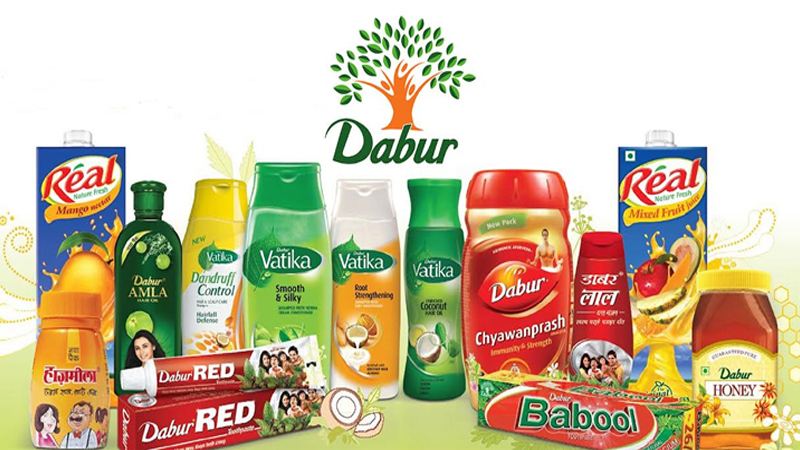
    MUMBAI: Dabur’s Q1 results are proof that nature’s remedies still pack a punch on the balance sheet. The homegrown FMCG major reported a consolidated net profit of Rs 508 crore for the quarter ended 30 June 2025, registering a robust year-on-year jump from Rs 494 crore in Q1 last year and Rs 313 crore in the preceding quarter.

    Riding on a wave of resilient demand and smart cost management, Dabur clocked Rs 3,405 crore in consolidated revenue from operations up from Rs 3,349 crore in the same period last year and a sharp rise from Rs 2,830 crore in the March quarter.

    The company’s profit before tax stood at Rs 663 crore, up from Rs 642 crore in Q1FY25 and Rs 412 crore in Q4FY25. Total expenses were contained at Rs 2,886 crore for the June quarter. Of this, Rs 1,424 crore went into raw materials, Rs 344 crore into stock-in-trade, and Rs 338 crore into employee benefits.

    Advertising and publicity remained a priority with Rs 394 crore spent, even as other operating costs totalled Rs 202 crore. Dabur’s focus on product innovation and brand-building clearly continues at pace.

    From a segmental perspective, the Consumer Care division led the pack, raking in Rs 2,705 crore in revenue, followed by the Foods segment at Rs 621 crore. Retail and other businesses brought in Rs 26 crore and Rs 44 crore respectively. Segment profit from Consumer Care alone stood at Rs 644 crore.

    On the balance sheet, Dabur reported total consolidated assets of Rs 17,244 crore, with liabilities at Rs 5,493 crore. Debt remained in check, with the debt-to-equity ratio at 0.13 and current ratio at 1.74. Net worth stood at Rs 11,230 crore.

    Meanwhile, the company continues to back its global playbook, with subsidiaries ranging from Dabur Egypt and Naturelle LLC to Dermoviva in the US and Namaste Laboratories. The international business continues to be a strategic growth engine.

    In terms of shareholder return, Dabur’s basic and diluted earnings per share for Q1 stood at Rs 2.90, a notable jump from Rs 1.81 in Q4FY25.

    With the monsoon season known to fuel demand for healthcare and personal care items, Dabur’s green shoots are likely to blossom further in the quarters ahead.

  • Swiggy feels the pinch as losses deepen despite revenue rise

    Swiggy feels the pinch as losses deepen despite revenue rise

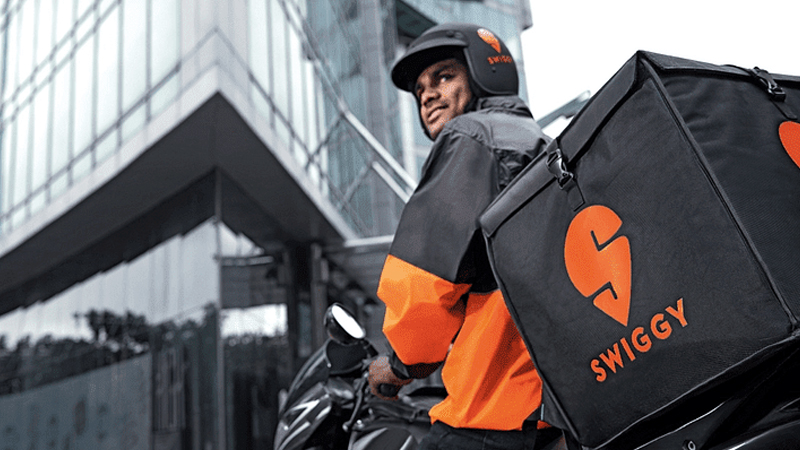
    MUMBAI: Swiggy may be whipping up record revenues, but it’s still nursing a sizeable financial hangover. The food delivery giant reported a consolidated net loss of Rs 1,197 crore for the quarter ended 30 June 2025, widening from Rs 611 crore in the same quarter last year even as its operating revenue jumped 54 per cent year-on-year to Rs 4,961 crore.

    This comes just a quarter after its IPO, which fetched fresh proceeds of Rs 4,359 crore. The company, now publicly listed on both NSE and BSE, seems to be in no mood to tighten the purse strings yet.

    Swiggy’s quick commerce and supply chain businesses were the biggest revenue drivers this quarter, clocking Rs 806 crore and Rs 2,259 crore respectively. Its core food delivery vertical followed at Rs 1,799 crore. However, not all lines were profitable in fact, far from it. Quick commerce alone posted a loss of Rs 797 crore, and the supply chain and distribution business added another Rs 47 crore to the red. Platform Innovations, including experiments like Swiggy Sports, Genie and Minis, lost Rs 52 crore.

    Even the bright spot food delivery wasn’t enough to offset expenses across the board. Swiggy spent Rs 1,036 crore on advertising and promotions, Rs 1,313 crore on delivery and related charges, and Rs 816 crore on other operating costs. Employee expenses stood at Rs 686 crore, while depreciation and amortisation costs rose to Rs 288 crore.

    Total expenses for the quarter reached Rs 6,244 crore more than Rs 1,280 crore higher than total income, which came in at Rs 5,048 crore (including Rs 87 crore in other income). No tax was recorded for the quarter.

    Swiggy also booked an additional Rs 1 crore loss from its associate company and reported Rs 2 crore in other comprehensive loss, resulting in a total comprehensive loss of Rs 1,199 crore for the quarter.

    The company’s paid-up share capital stood at Rs 230 crore. Earnings per share for the quarter came in at a negative Rs 5.04.

    Swiggy’s consolidated results include wholly owned subsidiaries like Scootsy Logistics, Supr Infotech, Lynks Logistics, and Swiggy Sports, along with the Swiggy Employee Stock Option Trust and associate Loyal Hospitality.

    While the company continues to spend big across verticals, investors and analysts will be watching closely to see if Swiggy’s scale can eventually serve up a path to profitability or if it’s still biting off more than it can chew.

  • Cigarettes and Surplus: ITC lights up with Rs 4912 crore Q1 profit

    Cigarettes and Surplus: ITC lights up with Rs 4912 crore Q1 profit

    MUMBAI: No smoke without earnings and this quarter, ITC puffed its way to a Rs 4,912 crore net profit. The diversified conglomerate reported a strong start to FY26, with standalone net profit from continuing operations hitting Rs 4,912.36 crore in Q1 (ended June 2025), slightly ahead of last year’s Rs 4,819.93 crore. There were no exceptional items this time, making the growth all the more clean-cut unlike Q4 FY25’s massive Rs 15,179 crore gain from discontinued operations (read: the hotel demerger windfall).

    Revenue from operations stood at Rs 21,058.98 crore, up 20 per cent from Rs 17,593 crore in the same quarter last year. Total income, including other income, touched Rs 21,721 crore. Operating margins remained strong with profit before tax (PBT) at Rs 6,545 crore, while tax expenses stood at Rs 1,633 crore.

    The star of the pack? FMCG – Cigarettes, contributing Rs 8,520 crore in revenue, up from Rs 7,918 crore in Q1 FY25. Agri business shot up impressively too, clocking Rs 9,685 crore compared to Rs 6,973 crore a year ago, partly due to favourable trade opportunities. Meanwhile, FMCG – Others (staples, snacks, personal care) delivered Rs 5,777 crore. The segment’s EBITDA for the quarter came in at Rs 546 crore, down from Rs 619 crore in Q1 FY25.

    Despite facing inflationary pressure, employee costs remained stable at Rs 915 crore, and excise duty inched up slightly to Rs 1,309 crore. The company’s cost of materials consumed rose to Rs 6,171 crore, up from Rs 5,351 crore in Q1 FY25 reflecting both volume and price hikes.

    On a consolidated basis, the picture was equally robust. ITC posted a net profit of Rs 5,343 crore (continuing operations), with group revenues touching Rs 23,129 crore. The discontinued hotel business (now housed in ITC Hotels Ltd post-demerger) reported nil operations for the quarter, closing the chapter on an era that brought Rs 15,016 crore profit in FY25.

    Segment-wise, consolidated FMCG revenues totalled Rs 15,354 crore, with cigarettes delivering Rs 9,554 crore. Paperboards, paper and packaging clocked Rs 2,117 crore, while agri continued its sharp rise.

    The group also onboarded subsidiaries such as Sresta Natural Bioproducts, making room in its books for future-ready green growth.

    Earnings per share for the quarter stood at Rs 3.93 (basic), with reserves at Rs 66,649 crore. Total assets stood at Rs 90,513 crore, with liabilities under check at Rs 17,385 crore.

    With no hotel baggage and a consistent run across core verticals, ITC appears to be in cruise control mode puffing profits, planting purpose, and packing numbers that speak for themselves.

  • UFO Moviez posts Rs 6.52 crore Q1 profit as box office bounces back

    UFO Moviez posts Rs 6.52 crore Q1 profit as box office bounces back

    MUMBAI: Lights, camera, profit UFO Moviez has kicked off the fiscal year on a blockbuster note, posting a consolidated net profit of Rs 652 lakh for Q1FY26, marking a sharp turnaround from a loss of Rs 414 lakh in the same quarter last year. The homegrown digital cinema distribution major reported a 16 per cent rise in consolidated revenue at Rs 10,903 lakh, up from Rs 9,451 lakh in Q1FY25. EBITDA also saw a healthy jump to Rs 1,929 lakh from Rs 658 lakh a year ago.

    Standalone profit came in at Rs 365 lakh versus a loss of Rs 267 lakh in the previous year’s comparable quarter. Notably, this improvement comes despite a 7 per cent drop in standalone net sales compared to the same quarter last year.

    The boost in profitability was helped by a sharp reduction in impairment provisions down to zero from Rs 365 lakh last year as well as higher other income and steady cost control across verticals.

    Employee costs for the quarter stood at Rs 2,111 lakh (up from Rs 2,191 lakh last year), while ad revenue share expenses held steady at Rs 1,848 lakh. Equipment and lamp purchases jumped significantly to Rs 2,252 lakh, signalling investment in expanding or upgrading the network.

    UFO’s Q1 earnings per share stood at Rs 1.68, compared to a loss per share of Rs 1.07 last year.

    The company had earlier received NCLT approval for the amalgamation of its two wholly owned subsidiaries Scrabble Digital Limited and UFO Software Technologies Pvt Ltd effective April 1, 2024. As a result, the Q1FY25 numbers have been restated to reflect this merger.

    The board meeting to approve the results concluded at 3:50 p.m. on July 31, 2025.

    With the film exhibition and cinema tech segments bouncing back post-pandemic, UFO Moviez appears set for a sequel of steady growth.


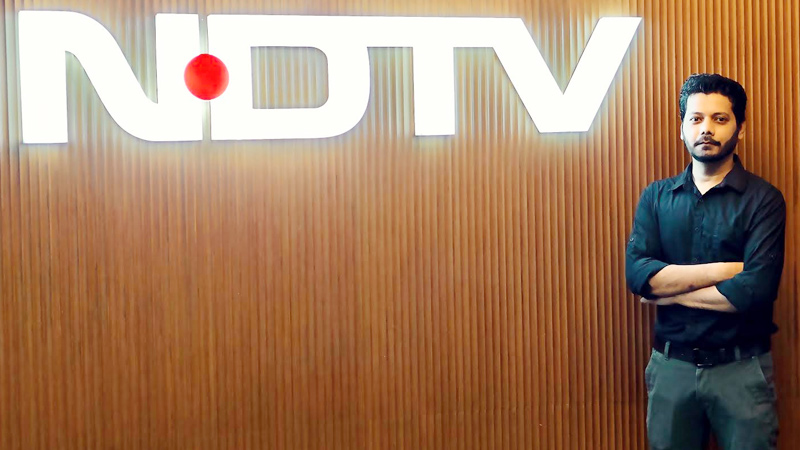
  • NDTV Profit Digital recasts its editorial future: Nazim Khan joins as editor

    NDTV Profit Digital recasts its editorial future: Nazim Khan joins as editor

    MUMBAI: NDTV has appointed Nazim Khan as Editor, NDTV Profit Digital, as the platform enters a new phase of editorial and digital growth. The appointment underscores NDTV’s commitment to building a sharper, more agile business news offering – rooted in clarity, credibility, and journalistic depth.

    Nazim brings over 15 years of experience across India’s most respected financial news platforms, including Moneycontrol, CNBCTV18.com, and Morningstar. His work spans newsroom leadership, content innovation, and digital strategy – shaping coverage that blends market insight with audience intelligence.

    In his previous role as Vice President – Business and Content at Quantent, Nazim led digital initiatives for leading financial institutions and fintechs. From investor education platforms to high-performance content formats, he has consistently delivered strategies that are both editorially sound and digitally effective.

    ‘NDTV Profit Digital is evolving to meet a new kind of business audience – one that is faster and more discerning. Nazim understands the intersection of editorial purpose and execution for a digital platform. He brings both newsroom instinct and strategic clarity’, said Rahul Kanwal, CEO and Editor-in-Chief of NDTV.

    At NDTV Profit Digital, Nazim will oversee editorial direction and content strategy, with a focus on deepening market coverage, launching original IPs, and broadening investor engagement across platforms and formats.

    ‘NDTV has always stood for thoughtful, trustworthy journalism. I am excited to build on that legacy and help shape a platform that is intelligent, accessible, and aligned with the way modern India consumes business news’, said Nazim Khan on his appointment. Nazim’s appointment signals a renewed editorial vision for NDTV Profit Digital – one that meets the demands of today’s audience while anticipating the shifts of the future.
     

  • Eros finds some relief with Rs 13 lakh profit in rocky first half

    Eros finds some relief with Rs 13 lakh profit in rocky first half

    MUMBAI: Loss to gloss? Eros Media scrapes into the black, thanks to a property sale. From a cinematic cliffhanger to a financial plot twist, Eros International Media has posted a modest standalone profit of Rs 13 lakh for the half year ended 30 September 2024 thanks almost entirely to a Rs 2,303 lakh gain from selling office premises. But behind the positive headline figure lies a tangled script of unpaid dues, regulatory heat, and an eroded net worth.

    As per the company’s unaudited results approved on 31 July 2025, total income stood at Rs 5,390 lakh for the April–September period, of which only Rs 3,079 lakh came from actual operations. The remaining Rs 2,311 lakh largely stemmed from the one-time property deal, bumping up the bottom line just enough to dodge a red mark. For context, Eros had reported a loss of Rs 9,970 lakh in the same period last year and a full-year loss of Rs 47,973 lakh in FY24.

    Despite this slim profit, Eros continues to operate under significant financial strain. Its net worth remains negative at Rs (48,572) lakh, and liabilities exceed assets. The company is staring at long-overdue receivables of Rs 14,893 lakh from Eros Worldwide FZE, its former parent, apart from another Rs 7,303 lakh from Eros UK and Rs 3,183 lakh from Eros USA. A provision of Rs 25,150 lakh has been made towards these in FY24.

    Moreover, the company is entangled in a regulatory saga. The Securities and Exchange Board of India (SEBI) issued an ex-parte order in June 2023 and later a confirmatory order in October 2023, citing irregularities including suspect content advances. These advances Rs 5,253 lakh (net of impairment) out of a whopping Rs 1,07,201 lakh remain under SEBI scrutiny. The watchdog has since issued a show-cause notice, and the next Securities Appellate Tribunal (SAT) hearing is slated for 22 September 2025.

    Adding to the drama, the Enforcement Directorate conducted a search at Eros’ Mumbai office earlier this year under the Foreign Exchange Management Act, with proceedings still pending.

    Eros’ auditors, Haribhakti & Co LLP, have flagged a “material uncertainty” over its ability to continue as a going concern. While the company says it’s pursuing overdue collections, restructuring loans, and exploring long-term monetisation of its film and music library, the road ahead is anything but smooth.

    Despite the small profit reprieve, this may not be the interval, let alone the climax. Eros still needs a major plot twist to turn the tide. For now, it’s banking more on nostalgia and asset sales than a strong box office-style comeback.

  • Godrej Yummiez brings Protein to the everyday plate

    Godrej Yummiez brings Protein to the everyday plate

    MUMBAI: Godrej Yummiez has launched a campaign “Protein to bahana hai, Godrej Yummiez khaana hai”. Focused on the increasing need for everyday protein consumption, the campaign is rooted in a cultural shift we’ve been observing, Chicken Nuggets are fast becoming a fan favourite in Indian households, not just for their taste, but also for their versatility. At the same time, children are no longer passive eaters. They’re increasingly influencing family food choices and asking sharper questions about what’s on their plate. Recognising this change, the campaign takes a playful yet purposeful approach to showcase how kids today are becoming the biggest champions of smarter snacking.


    In a refreshing twist, the campaign flips the traditional parent-child dynamic. Here, it’s the kids schooling their parents on protein and smart eating. With humour, affection and a bit of reverse psychology, the two ad films show children leading the conversation rejecting low-protein snacks and guiding their parents toward a smarter fix that doesn’t compromise on taste: Godrej Yummiez Chicken Nuggets with 16g of protein per serving. In one film, a young boy climbs onto a stool, flexes in the mirror, and proudly shows off abs he’s drawn on his stomach with a marker, setting the stage for his mission to find a proper protein fix. In the second, a spirited daughter throws playful protein facts at her dad during a push-up session, declaring her intent to grow stronger, only if she gets her share of protein-packed nuggets.

    According to the India Snacking Report Volume 2 (STTEM 2.0), 59% of parents believe that frozen snacks are a convenient fix for hungry children. Both films are anchored in themes of nutrition, convenience, and the changing vocabulary of families who are becoming more aware of nutritional choices.

    Speaking on the campaign, Godrej Foods Ltd head of marketing & innovation, Anushree Dewen said, “Today’s parents want snacks they can feel good about – ones that are fun, nutritious, and made with care. With 16g of protein per serve, our Godrej Yummiez Chicken Nuggets deliver just that. It’s made better with our commitment to clean-label and advanced IQF technology that locks in freshness without compromise. This campaign celebrates the clever ‘bahanas’ kids come up with – all in the name of getting their favorite protein fix: Chicken Nuggets.”

    Swati Bhattacharya, Head of Lightbox Creative Lab, who led the campaign’s creative direction, added, “The world is fried with ‘taste bhi health bh’i campaigns. So, we knew we wanted to do something different, something that delivers the promise of 16 gm protein in every serving and 100% entertainment with every viewing”

  • Yes Securities launches ‘What’s your Investyle?’

    Yes Securities launches ‘What’s your Investyle?’

    MUMBAI: Yes Securities, a subsidiary of Yes Bank, has announced the launch of ‘What’s your Investyle?’ an interactive Snapchat AR Lens, set to go live on Friendship Day (3 August 2025). This is the first time a BFSI brand in India is leveraging Snapchat’s AR platform to drive financial awareness among younger audiences in a format they love—fun, social, and highly shareable.

    The filter helps users discover their Investyle—such as the Bold Tiger or the Cautious Turtle—each representing a distinct investment style and risk appetite. It encourages users to tag friends, share their results, and engage in friendly conversations about money, behaviour, and investing.

    This latest campaign is part of Yes Securities’ ongoing commitment to making finance more accessible, inclusive, and engaging for India’s youth. From promoting personalized investing through the OMNI app with the Invest KaroApne Style Me campaign, to encouraging women to start their financial journeys through the #ExtraordiNARI initiative, the brand has consistently pushed for inclusion. Its Wonga Wits financial literacy program aims to reach one million students by FY28, while The Wize Whispers brings money concepts to life through comics, quizzes, and characters like Mr. Turt—making finance fun for first-time investors.

    Yes Securities head – marketing and corporate communications Amit Bhandare shared, “The ‘What’s Your Investyle?’ campaign is a strategic initiative to engage with the Gen Z audience by aligning with their digital behaviour and personal expression. Through this campaign on Snapchat, we aim to create meaningful awareness about our newly launched Omni App, which empowers users to invest in a manner that is intuitive, seamless and reflective of their individual style.”


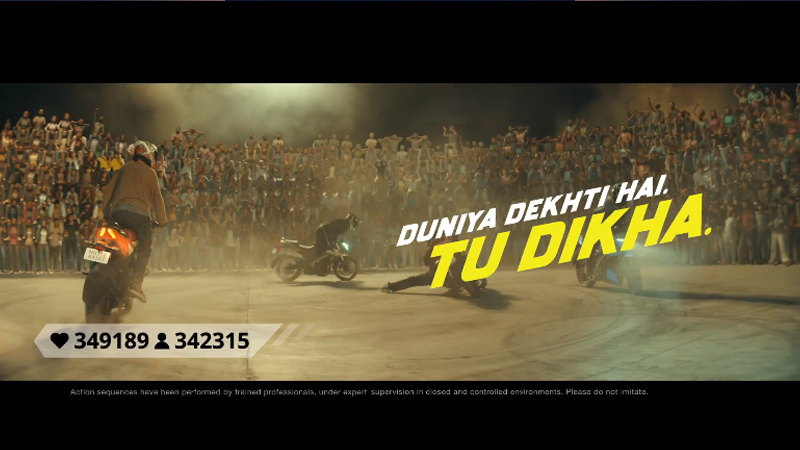
  • Bajaj Pulsar rides into spotlight with a bold new message, Duniya Dekhti Hai. Tu Dikha

    Bajaj Pulsar rides into spotlight with a bold new message, Duniya Dekhti Hai. Tu Dikha

    MUMBAI – Bajaj Auto Ltd. has launched its latest campaign for Pulsar with a bold message for India’s youth: Duniya Dekhti Hai. Tu Dikha.

    Today’s youth are surrounded by secondhand experiences, be it through AI-generated content, influencer lives, or gamified thrills. But deep inside, they crave something real, raw, and felt first-hand.

    They don’t just want to watch someone else take risks. They want to feel the rush themselves. Because authenticity isn’t just a buzzword, it’s a rebellion.

    In a world chasing synthetic highs — reels, simulations, virtual thrills — Pulsar reignites the raw, unfiltered joy of real performance and real power. With every ride, it reminds riders what it feels like to achieve something genuinely thrilling — not virtually viewed, but physically conquered.

    The campaign urges viewers to break out of the spectator mindset – to put down their phones and pick up their imaginations. Because for this generation, the ease of consumption is a trap. It’s in the discomfort of creation that they come alive. Whether it’s content, ideas or identity, what it boils down to is that it’s new and unapologetically theirs.

    The film’s powerful imagery is supported by a compelling story: Pulsarmaniacs do not merely follow trends, they create them. Equipped with unparalleled power and precise performance, the Pulsar becomes more than a machine – it is a declaration; a call to action to join forces with those willing to take a stand, get noticed and assert themselves.

    Speaking on the occasion, Sumeet Narang, president, marketing, Bajaj Auto Ltd., said, “With ‘Duniya Dekhti Hai. Tu Dikha,’ we’re speaking to a generation that’s tired of borrowed experiences and filtered realities. Today’s youth crave the real rush — something raw, personal, and unfiltered. Pulsar has always stood with those who don’t just watch from the sidelines but choose to feel the thrill first-hand. This campaign is a tribute to that spirit — bold, original, and fiercely authentic.”

    At a time when blending in is easy and standing out takes guts, Pulsar refuses to settle for the ordinary. It stands against passivity, conformity, and being just another face in the crowd. It champions those who lead with originality, who create instead of copy and who ride not just to move but to make a mark. Because, Duniya Dekhti Hai. Tu Dikha.