Blog

  • Fyno Appoints Ali Lightwalla as vice president – sales & partnerships

    Fyno Appoints Ali Lightwalla as vice president – sales & partnerships

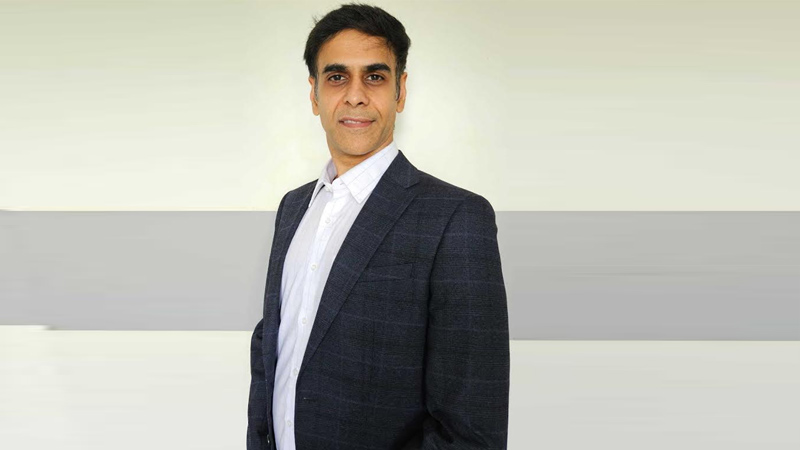
    MUMBAI: Fyno announced the appointment of Ali Lightwalla as its Vice President.  In this new role, Ali will lead Fyno’s go-to-market strategy, expand its presence across the BFSI sector, and build long-term strategic alliances.

    Ali brings with him over 22 years of robust experience in sales leadership, strategic partnerships, and business development across the financial services and enterprise technology space. His extensive experience across emerging technologies and global enterprises gives him deep insights into the changing needs of large organizations, especially in the BFSI sector. With his partnership-driven mindset and strategic foresight, Ali is poised to significantly contribute to Fyno’s next phase of growth.

    Prior to joining Fyno, he was associated with Gupshup, where he played a key role in boosting customer engagement and driving platform adoption. Previously, as AGM – Digital Sales at IDEMIA, Ali spearheaded multiple successful digital transformation initiatives. His tenure at Broadcom as Account Director – BFSI further strengthened his expertise in enterprise technology sales. Ali drove impactful sales strategies for the banking sector as Area Director – Banking Sales (West & North India) at Oracle Financial Services Software. At Ernst & Young’s subsidiary C Centric, he enhanced CRM strategy and client engagement, reinforcing his customer-first approach.

    Fyno co-founder & CEO Aniketh Jain said, “Ali’s wealth of experience in enterprise technology and the BFSI sector makes him a valuable addition to our leadership team. His proven ability to drive strategic partnerships, deliver impactful go-to-market strategies, and foster customer success aligns perfectly with our vision of enabling enterprises to take complete control of their customer communication. I’m confident that Ali’s leadership will play a pivotal role in accelerating Fyno’s growth trajectory and expanding our market footprint.”

    Commenting on his appointment, Lightwalla said, “I’m excited to join Fyno at such a transformative stage in its journey. The company’s innovative approach to help regulated enterprises take control of their customer communication while staying fully compliant, combined with its strong focus on delivering value to enterprises, presents tremendous opportunities for growth. I look forward to working closely with the team to strengthen our BFSI presence, build lasting partnerships, and help customers unlock the full potential of their communication strategies.”

  • Fashion house in the red as ABFRL posts Rs 233.7 crore quarterly loss

    Fashion house in the red as ABFRL posts Rs 233.7 crore quarterly loss

    MUMBAI: Loss is the new black and ABFRL is wearing it this quarter. Aditya Birla Fashion & Retail Ltd (ABFRL) has stitched together a tough start to FY26, posting a consolidated net loss of Rs 233.73 crore for the quarter ended 30 June 2025 deeper than the Rs 144.18 crore loss in the March quarter and the Rs 237.86 crore red ink from the same period last year.

    Revenue from continuing operations inched up 9.4 per cent year-on-year to Rs 1,831.46 crore, with the Pantaloons arm contributing Rs 1,094.13 crore and the Ethnic & Others segment adding Rs 754.57 crore. But rising costs from Rs 742.49 crore worth of stock-in-trade purchases last quarter to Rs 449.90 crore this time and finance charges of Rs 113.36 crore kept the bottom line under pressure.

    The quarter also included discontinued operations from the recently demerged Madura Fashion & Lifestyle unit, which brought in Rs 1,877.50 crore in revenue and Rs 140.61 crore profit after tax. Even with this boost, the overall loss for continuing and discontinued operations stood at Rs 212.81 crore.

    Operating margins from continuing business slipped into the negative at -0.26 per cent compared to 2.84 per cent in Q1 FY25, while net profit margin was -4.30 per cent. Total expenses surged to Rs 2,148.75 crore, with depreciation and amortisation costs rising to Rs 303.14 crore and rent expense hitting Rs 55.74 crore.

    On the balance sheet, ABFRL’s total assets stood at Rs 16,696.52 crore, with segment liabilities at Rs 9,628.52 crore. Net worth came in at Rs 8,239.51 crore. The company’s debt service coverage ratio remained negative at -3.52 times, signalling ongoing financial strain.

    Earnings per share from continuing operations came in at a loss of Rs 1.74, versus a Rs 0.49 loss a year ago. The Ethnic & Others segment, despite revenue growth, recorded a Rs 178.82 crore loss for the quarter, while Pantaloons barely broke even with Rs 3.67 crore in profit.

    While ABFRL continues to face cost headwinds and margin pressure, it is banking on its mass-market and ethnic portfolios to ride out the turbulence. For now, though, this quarter’s fashion statement is all about survival chic.
     

  • Game of Change: A New Cinematic Blueprint for Education, Leadership & Social Impact

    Game of Change: A New Cinematic Blueprint for Education, Leadership & Social Impact

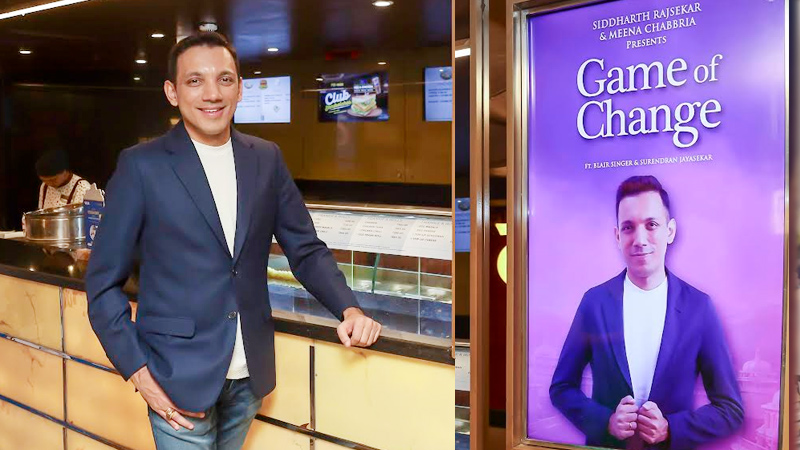
    In a media landscape dominated by fiction and celebrity, Game of Change is flipping the script. Premiered across Mumbai, Hyderabad, and Chennai, this new-age docufilm series brings real stories, real people, and real transformation to the big screen. But this isn’t just a movie — it’s the beginning of a movement.

    Helmed by Siddharth Rajsekar, digital coach and founder of the Internet Lifestyle Hub, Game of Change blends documentary realism with cinematic storytelling to deliver what mainstream cinema rarely attempts: authenticity. The first installment, featuring eight powerful stories of personal and community-based transformation, is already being hailed as a genre-defining moment in Indian content creation.

    “We’re not here to entertain alone,” said Siddharth Rajsekar at his annual online event Reboot 2025, where he unveiled a video with his long-term vision for Game of Change. “We’re here to remind India how to learn — by returning to purpose, community, and inner alignment.”

    Rewriting the Script of Education

    At the heart of Game of Change lies a critique — and a call to action. The current education system, digital reformer Siddharth Rajsekar argues, is a colonial relic that trains compliance, not creativity. In contrast, the film series draws on India’s ancient learning heritage — from Nalanda, Takshashila, Kanchipuram, Madurai, Nabadwip to Udupi — where knowledge was passed down through community interaction, mentorship, and lived experience.

    The docufilm envisions a modern-day gurukul for the digital age: a hybrid model that fuses storytelling with technology, personal growth with AI-powered scalability.

    From Documentary to Docu-Movement

    The cinematic format of Game of Change is deliberately unconventional. It features real-life individuals — not actors — who’ve risen above circumstances to lead, serve, and inspire. These are stories of educators, entrepreneurs, and community leaders who’ve become modern role models in an age of celebrity saturation.

    “Gen Z and Gen Alpha don’t just want to be entertained. They want to see themselves in the story,” said Siddharth Rajsekar. “They’re not looking for fantasy. They’re looking for alignment.”

    Strategic Rollout, Cultural Relevance
    The decision to premiere the film in three major metros wasn’t just for visibility — it was part of a place-based strategy to ignite community-led action. Each screening was followed by emotional applause and discussions, underscoring the film’s power to spark real dialogue and introspection.

    With versions already dubbed in Hindi, Tamil, Telugu, and English — and others like Kannada underway — the creators are preparing for a nationwide theatrical rollout and a subsequent OTT release.

    Cinema Meets Community

    Perhaps the most striking aspect of Game of Change is how it turns viewers into participants. Through its growing online ecosystem — including webinars, learning journeys, and coaching communities — the film invites its audience to move beyond passive consumption.

    “We’re not building fans,” Siddharth noted. “We’re building a family of change-makers.”

    This model aligns with current trends in participatory media, where communities around content become more valuable than the content itself. It also reflects a shift in youth media engagement — from binge-watching to belonging.

    What’s Next: Scaling the Movement

    Building on the momentum, the team announced plans for the next installment of Game of Change — a full-length feature film currently in production. While the current version serves as a pilot with a modest budget of 1.5 CR, the upcoming film will expand on its core themes in a 90–120 minute cinematic journey.

    Looking ahead, Game of Change plans to integrate AI and emerging tech into future installments — not for spectacle, but to explore how technology and ancient wisdom can co-exist. This narrative isn’t about resisting innovation; it’s about humanizing it.

    With this vision, Game of Change enters the rare space where storytelling becomes system-building — offering not just inspiration but infrastructure for social transformation.

  • Ormax launches sports tracker to measure marketing punch

    Ormax launches sports tracker to measure marketing punch

    MUMBAI: Ormax Media has unveiled Ormax Sports Track, a syndicated research tool that measures how well sports tournaments perform among India’s digital audience. The Mumbai-based media research firm already tracks theatrical films, streaming originals and television launches—now it is turning its attention to the lucrative world of sports content.

    The timing is shrewd. Streaming platforms are splashing serious cash on sports rights, treating them as tentpole content to drive subscriptions and advertising revenue. With 678.2m sports fans in India, the prize is substantial. At any given moment, 25-30 sports properties are either live or preparing to launch across various over-the-top (OTT) platforms, spanning cricket, football, kabaddi, tennis and wrestling.

    Ormax Sports Track measures four key parameters on a 0-100 scale. “Buzz” captures unaided recall—how many viewers spontaneously remember a tournament when asked about current or upcoming sports events. “Reach” tracks aided awareness—the percentage who recognise a tournament’s name when prompted. “Appeal” measures definite viewing intent among those aware of the property. “Potency” gauges how many would subscribe to a paid platform specifically to watch the tournament.

    The tool is powered by weekly online surveys of 600-plus regular OTT sports viewers. The sample mirrors demographics from Ormax’s Sports Audience Report 2024, split equally between metros (Mumbai, Delhi NCR, southern metros and Kolkata) and non-metros (west-central, north and south regions).

    Subscribers receive reports twice weekly: a mid-week update every Tuesday and an end-of-week summary every Friday, complete with target group trends for properties on their platforms. Each tournament is tracked from launch announcement through to the final whistle.

    For sports marketers and streaming executives, the service promises to decode which campaigns cut through the noise in India’s crowded digital sports arena. With millions riding on rights deals, knowing what resonates with audiences could prove invaluable.

  • Indian police crack cross-border TV piracy ring run via WhatsApp

    Indian police crack cross-border TV piracy ring run via WhatsApp

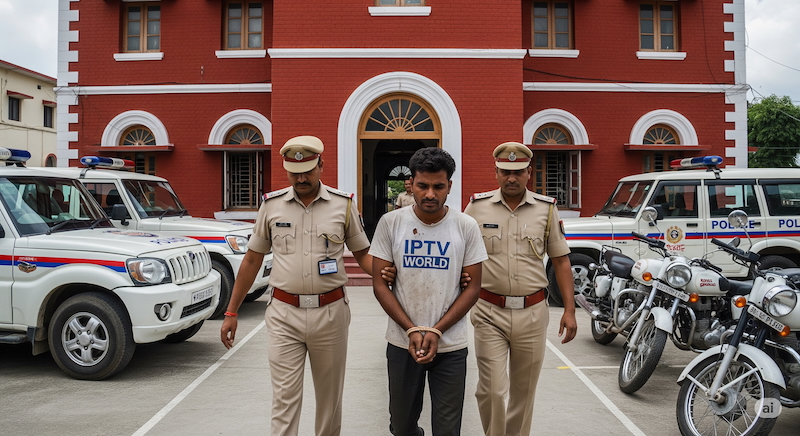
    MUMBAI: Indian authorities have dismantled an international television piracy network that streamed over 10,000 channels—including banned Pakistani networks—to customers via WhatsApp groups, in what investigators describe as the first fully exposed cross-border content theft operation.

    Police in Ghaziabad registered a case against a 35-year-old businessman accused of running the illicit internet protocol television (IPTV) service in collaboration with handlers across the border, according to StoryBoard18, which first reported the investigation.

    The probe began when officers from Tilamod Police Station traced a suspicious WhatsApp group facilitating illegal access to premium television channels. The investigation led to the blocking of 53 domains distributing pirated content under the “IPTV World” brand name.

    According to the First Information Report filed on 27 July, the accused illegally streamed copyrighted content from JioStar India Pvt Ltd and its OTT platform JioHotstar without authorisation. The pirated catalogue included popular Indian channels such as Star Plus HD, Star Bharat HD and Colors HD, alongside Pakistani networks Hadi TV and Noor TV—the latter raising national security concerns.

    Investigators discovered the accused coordinated with a Pakistan-based pirate, paying in cryptocurrency to obtain copyrighted material. The service reached customers primarily through WhatsApp groups, with payments processed via UPI accounts.

    “The modus operandi of the accused was to provide services through WhatsApp groups, which became the key lead in our investigation,” said a senior officer involved in the probe.

    The complaint filed by JioStar accused IPTV World of bypassing technical protection measures and hosting pirated content on servers linked to providers including Hostinger and GoDaddy, violating copyright, information technology and criminal laws.

    The case represents a breakthrough in understanding digital piracy’s mechanics. JioStar’s John Doe lawsuit before the Delhi high court led to the voluntary appearance of the service provider’s owner, who agreed to a permanent injunction and disclosed the network’s complete operations, including business associates, 300 infringing URLs, and distribution platforms.

    These disclosures revealed coordinated cross-border collaboration, cryptocurrency payments, and systematic circumvention of content protection measures. The entire operation—from content sourcing to distribution via WhatsApp and Facebook—was organised from Pakistan.

    The investigation marks the first time authorities have fully mapped premium content piracy’s complete lifecycle, from origin to delivery. It exposes how digital platforms initially designed for communication have become conduits for large-scale intellectual property theft.

    The case highlights broader challenges facing India’s digital entertainment industry as streaming services proliferate. Content owners face sophisticated piracy networks that exploit encrypted messaging platforms and cryptocurrency payments to evade traditional enforcement mechanisms.

    In a related development, police in Rajasthan have registered a separate case against cable operator Hazi Ali for allegedly broadcasting JioStar channels without proper licensing. The ministry of information and broadcasting had cancelled his broadcasting licence in 2024 for regulatory violations, yet he reportedly continued transmitting copyrighted content.

    The crackdown reflects heightened enforcement efforts as India’s entertainment industry pushes authorities to tackle digital piracy more aggressively. With streaming revenues at stake and national security concerns over unauthorised Pakistani content, expect more coordinated action against cross-border piracy networks.

    Whether these enforcement successes can meaningfully dent the broader piracy ecosystem remains uncertain. As investigators shut down established networks, new operators typically emerge using evolved techniques to evade detection.

    The cat-and-mouse game between content owners and pirates continues, now with WhatsApp groups as the unlikely battlefield.

  • Hindi cinema royalty’s and fintech mogul’s bid to shake up India’s spirits trade

    Hindi cinema royalty’s and fintech mogul’s bid to shake up India’s spirits trade

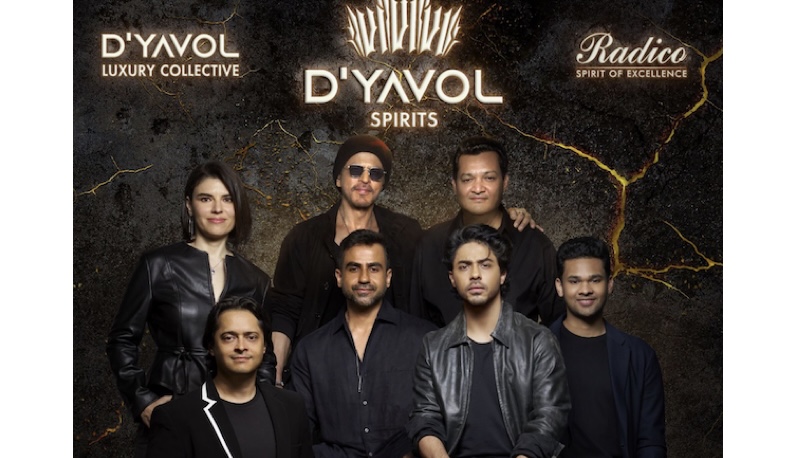
    MUMBAI: India’s premium spirits market has attracted an unlikely trio: Hindi cinema superstar Shah Rukh Khan, Zerodha co-founder Nikhil Kamath, and established liquor manufacturer Radico Khaitan. Their joint venture, D’yavol Spirits, promises to blur the lines between celebrity endorsement and serious entrepreneurship in India’s rapidly premiumising alcohol sector.

    The partnership announced on  12 August brings together  SRK’s  global star power,  Kamath’s disruptive business instincts, and Radico Khaitan’s manufacturing prowess. The venture will launch with a luxury tequila, targeting both domestic consumers and international markets with what the partners describe as “bottled-in-origin” products carrying “rich regional provenance.”

    The collaboration reflects India’s evolving relationship with premium alcohol. Domestic consumption has shifted dramatically upmarket as disposable incomes rise and social attitudes liberalise. Premium spirits now command growing shelf space in urban markets, whilst younger consumers increasingly view expensive liquor as lifestyle statements rather than mere intoxicants.

    For Radico Khaitan, the partnership represents a calculated bet on celebrity-backed brands. The Uttar Pradesh-based company has built a portfolio around traditional Indian spirits like whisky and rum, but faces intensifying competition from international brands and craft distilleries. Abhishek Khaitan, the company’s managing director, frames the venture as combining “proven expertise in blending, marketing and distribution” with celebrity charisma.

    SRK’s involvement extends beyond typical endorsement deals. His son Aryan Khan co-founded D’yavol  Luxury Collective, which already produces award-winning spirits in smaller quantities. The family’s deeper engagement suggests genuine entrepreneurial ambition rather than mere brand licensing.

    More intriguing is Kamath’s participation. The Zerodha co-founder has emerged as one of India’s most prominent fintech entrepreneurs, building a discount brokerage that democratised stock trading for millions of Indians. His pivot into premium alcohol signals confidence in India’s luxury consumption trends.

    “Tomorrow’s best brands will be built on history, culture, and craftsmanship,”  Kamath said, positioning D’yavol as an “Indian brand with the intent and ability to compete anywhere in the world.”

    Such ambitions face considerable hurdles. India’s alcohol market remains heavily regulated, with individual states controlling distribution and taxation. Export opportunities exist but require navigating complex international regulations and established brand loyalties.

    Moreover, celebrity-backed spirit brands have mixed track records globally. Whilst some achieve genuine commercial success, others struggle once initial publicity fades. The key lies in building authentic brand narratives beyond celebrity association.

    D’yavol’s emphasis on “cultural resonance” and “globally-sourced bottled-in-origin products” suggests awareness of these challenges. The brand promises to combine international production standards with Indian creative vision, potentially appealing to both domestic premium consumers and diaspora markets.

    The timing appears favourable. India’s premium spirits segment is growing rapidly, driven by urbanisation and generational change. Meanwhile, Indian brands are gaining international recognition across categories from fashion to technology.

    Whether D’yavol can translate celebrity star power and entrepreneurial expertise into sustained commercial success remains uncertain. The spirits industry demands patience, consistency, and deep market understanding—qualities that don’t always align with celebrity timelines or disruptive business models.

    For now, the partnership represents another data point in India’s premiumisation story. As domestic consumers develop more sophisticated tastes and global ambitions, expect more unlikely collaborations between entertainment, technology, and traditional industries.

    The proof, as always in the spirits trade, will be in the drinking.

  • Digital media veteran climbs WPP ladder in Indonesia’s booming ad market

    Digital media veteran climbs WPP ladder in Indonesia’s booming ad market

    JAKARTA: WPP Media has promoted Mohit Sharma to president of client solutions, elevating a digital media specialist who has spent nearly three years navigating Indonesia’s rapidly evolving advertising landscape.

    Sharma’s ascent reflects the growing strategic importance of southeast Asia’s largest economy for global advertising conglomerates. Indonesia’s digital advertising market has exploded in recent years, driven by rising smartphone penetration and the dominance of platforms like TikTok and Instagram among the country’s 270m inhabitants.

    Since joining WPP Media in October 2022, Sharma has led the Beauty Tech Labs unit, overseeing a 120-person team delivering integrated media solutions spanning traditional planning, performance marketing, e-commerce and influencer communications. His primary client has been L’Oréal, the French cosmetics giant that has made Indonesia a key battleground in its Asian expansion strategy.

    The appointment caps a career trajectory that mirrors Indonesia’s digital transformation. Sharma spent nearly eight years at MEC (now part of GroupM) in India before moving to Essence and then MediaCom, where he served as partner and head of digital and e-commerce for the Indonesian operation.

    His promotion comes as western advertising agencies grapple with shifting client demands and the rise of local competitors across southeast Asia. Traditional agencies have struggled to adapt to the region’s unique social commerce ecosystems, where platforms like Shopee and TikTok Shop blur the lines between entertainment, social networking and retail.

    Sharma’s expertise in e-commerce integration may prove crucial as brands increasingly demand seamless pathways from awareness to purchase. Indonesia’s social commerce market is projected to reach $43 billion by 2025, according to consulting firm Bain & Company, making it a critical testing ground for advertising strategies.

    The move also signals WPP’s confidence in its Indonesian operations at a time when many multinational corporations are reassessing their Southeast Asian strategies amid economic uncertainties and regulatory changes. Indonesia’s advertising market, worth approximately $4.2 billion annually, remains one of the region’s most attractive despite periodic challenges from currency volatility and political shifts.

    For Sharma, the promotion represents validation of a bet on Indonesia’s long-term growth potential. His focus on data-driven strategies and digital-first approaches has aligned with local market dynamics, where mobile-first consumers have largely bypassed traditional desktop experiences.

    Whether his success can be replicated across WPP’s broader southeast Asian operations remains to be seen. The region’s fragmented markets, diverse regulatory environments and varying levels of digital maturity present ongoing challenges for global agencies seeking scalable solutions.

    Yet Indonesia’s importance to WPP’s Asian growth strategy seems assured. With the country’s advertising market expected to grow by 8-10 per cent annually over the next three years, elevating local expertise makes strategic sense—even if it means promoting from within rather than importing talent from established markets.

  • Indian startup claims to solve Bollywood’s dubbing dilemma with AI lip-syncing

    Indian startup claims to solve Bollywood’s dubbing dilemma with AI lip-syncing

    MUMBAI: An Indian artificial intelligence startup reckons it has cracked one of cinema’s most vexing problems: making dubbed films look authentic. NeuralGarage’s VisualDub technology has been deployed on War 2, releasing on 14 August, to create what the company claims is the world’s first film visually transformed from one language to another whilst maintaining the illusion of native production.

    The Bollywood sequel, originally shot in Hindi, has secured a straight film certificate for Telugu distribution—not as a dubbed version but as an ostensibly original Telugu production. Neural Garage co-founder & chief executive Mandar Natekar describes this as a “fundamental shift” in content production and distribution.

    The technology addresses a chronic irritant in global film distribution: poorly synchronised dubbing that breaks audience immersion. Traditional dubbing overlays foreign-language audio whilst retaining the original actor’s mouth movements, creating a jarring disconnect that many viewers find off-putting.

    VisualDub purports to solve this by digitally altering actors’ facial movements to match the target language’s phonetic patterns, creating the visual impression that performers originally spoke in the dubbed tongue. The result, Natekar claims, allows producers to sell multilingual versions as distinct original films rather than mere translations.

    The commercial implications could be substantial. Indian cinema’s linguistic fragmentation has long constrained box office potential, with Hindi films struggling in southern states where Telugu, Tamil and other regional languages dominate. Conversely, southern blockbusters rarely achieve pan-Indian success without extensive dubbing campaigns.

    If VisualDub delivers on its promises, producers could command premium pricing for what appears to be multiple “native” productions whilst incurring costs for just one shoot. Natekar suggests this could double or treble pre-release distribution revenues.

    The startup, which has garnered backing from Google’s GenAI Accelerator and AWS’s Global GenAI programme, also won TechCrunch’s Battlefield competition in 2024 and this year’s SXSW innovation award. Such endorsements suggest the technology has impressed seasoned investors and technologists.

    Yet scepticism is warranted. Previous attempts to digitally manipulate actor performances—from CGI de-aging to deepfake technology—have often fallen into the “uncanny valley”, where near-human animations feel disturbingly artificial. Moreover, the cultural nuances embedded in regional cinema extend far beyond language, encompassing gestures, expressions and performance styles that may prove difficult to algorithmically adjust.

    The broader implications stretch beyond Bollywood. Hollywood studios spend millions dubbing blockbusters for international markets, whilst streaming platforms like Netflix invest heavily in local-language content production. A reliable visual dubbing solution could dramatically reduce these costs whilst expanding addressable audiences.

    Natekar envisions actors transcending linguistic boundaries entirely: “Hrithik Roshan can now be a Telugu, Tamil, or even a Spanish actor. Tom Cruise in Bhojpuri? Now possible.”

    Such grandiose claims invite scrutiny. The proof will lie not in technical demonstrations but in audience acceptance. If War 2 performs strongly in Telugu markets without viewers detecting artificial manipulation, VisualDub may indeed herald a new era in global content distribution.

    For now, the technology represents another front in artificial intelligence’s assault on creative industries. Whether it liberates content from linguistic constraints or merely creates more sophisticated fakery remains to be seen. What’s certain is that traditional dubbing studios should be paying attention.

  • Media veteran Sudhir Syal swaps storytelling for cheque-writing at Orios Venture Partners

    Media veteran Sudhir Syal swaps storytelling for cheque-writing at Orios Venture Partners

    DUBAI: Sudhir Syal, the creator of arguably India’s first startup television programme, has crossed to the other side of the table. The media entrepreneur has joined Orios Venture Partners as president, where he will spearhead the fund’s expansion across the UAE-India corridor whilst hunting for consumer and media investment opportunities.

    Syal’s appointment marks a neat full circle. Over a decade ago, he chronicled India’s fledgling venture capital story as host of Starting Up, profiling more than 500 startups across 150 episodes—many of which later achieved unicorn status. Now he joins the very ecosystem he helped popularise, partnering with Orios’s team including Rehan Yar Khan, Madhav Tandan and Sukhmani Bedi.

    The move caps a peripatetic career that has seen  Syal launch and scale businesses across three continents. Most recently, he founded Startify, a Dubai-based growth consultancy that helped scale five brands across beauty, fashion and fintech, building revenues to over $200,000 with a lean five-person team.

    Before that, he served as chief business officer for Lenskart’s Middle East operations, scaling the eyewear giant from zero to over $500,000 in monthly recurring revenue within 18 months. He opened 13 retail stores across major UAE malls and built a 100-member team, earning the company “New Market Entrant of the Year” honours in 2022.

    His entertainment industry credentials run deep. As chief executive of BookMyShow’s UAE operations, he established the platform as the region’s leading Indian-origin live entertainment promoter, brokering deals with Coca-Cola Arena and promoting acts including Westlife and Alan Walker. The business achieved over $7 million in gross merchandise value (GMV) within 18 months.

    Earlier still, Syal led BookMyShow’s first international expansion into Indonesia, building a 60-person team and establishing the platform as the country’s second-largest ticketing service with over $10 million in GMV.

    The trajectory reflects India’s startup ecosystem maturation—from a cottage industry requiring television evangelism to a sophisticated market generating billion-dollar exits. Syal’s transition from storyteller to capital allocator suggests the Indian venture landscape has finally come of age.

    At Orios, he will focus on three mandates: building strategic capital partnerships with family offices and institutions, identifying high-growth consumer and media opportunities, and amplifying the fund’s thought leadership across both markets.

    “After years as an ecosystem builder, operator, and entrepreneur, it’s energising to be on the other side of the table,”  Syal posted on LinkedIn, announcing his appointment.

    The hire signals Orios’s ambitions to capture cross-border investment flows between India’s mature startup ecosystem and the Gulf’s expanding venture appetite. With Dubai positioning itself as a bridge between East and West, funds are increasingly seeking operators who understand both markets intimately.

    For Syal, who holds an MBA from Insead and has worked across 10 countries, the role represents a homecoming of sorts—returning to the venture capital story he first helped narrate, but now with the power to write its next chapter.

  • Loss signal as Dish TV Q1 net loss widens and revenue falls 27.6 percent

    Loss signal as Dish TV Q1 net loss widens and revenue falls 27.6 percent

    MUMBAI: Dish TV is still buffering and this time, the picture is far from rosy. The DTH operator reported a consolidated net loss of Rs 94.53 crore for the quarter ended 30 June 2025, a sharp plunge from the mere Rs 1.56 crore loss logged in the same period last year. Revenue from operations shrank 27.6 per cent year-on-year to Rs 329.36 crore, down from Rs 455.29 crore, while total income stood at Rs 334.11 crore, aided by Rs 4.75 crore in other income.

    Costs, however, went in the opposite direction. Total expenses climbed to Rs 425.92 crore, led by operating costs of Rs 142.10 crore, employee benefits of Rs 42.16 crore, and finance costs of Rs 64.12 crore. Depreciation and amortisation weighed in at Rs 105.28 crore.

    The company’s balance sheet remains under heavy strain, with accumulated losses now exceeding equity share capital, pushing net worth into the negative. Adding to the pressure is a long-running license fee battle with the Ministry of Information and Broadcasting (MIB) Dish TV has set aside Rs 4,680.24 crore for the dispute, even as the MIB slapped a fresh Rs 8,735.67 crore demand (including interest) in April, which the operator is contesting in court.

    For FY25, Dish TV’s annual loss narrowed to Rs 487 crore from a massive Rs 1,966 crore in FY24, but total revenue slid 15.6 per cent to Rs 1,567.6 crore, hit by falling Pay TV subscriber numbers and stagnant ARPU. EBITDA came in at Rs 529.1 crore, with margins easing to 33.75 per cent from last year’s 40.6 per cent.

    While exceptional items of Rs 335.4 crore, a pre-tax loss of Rs 152.3 crore, and mounting competition from DTH rivals, cable, telecom, and OTT players dimmed the outlook, the company is leaning on its digital play. Watcho, its OTT arm, crossed the 10 million paid subscriber mark, thanks to premium content aggregation from Jiocinema, Zee5, Sonyliv and others, the launch of Watcho Fliqs for creator-led IP, and smart set-top boxes like the Dish Smrt Hub.

    The strategy now is clear: retain quality subscribers, push regional content, and keep hybrid offerings in the mix because in today’s entertainment market, staying in the game might just be about playing on every screen available.