Blog

  • Indian cinema turns to artificial intelligence for epic Hanuman film

    Indian cinema turns to artificial intelligence for epic Hanuman film

    MUMBAI: Indian cinema is preparing to push the boundaries of filmmaking with what producers claim will be India’s first theatrically released motion picture created entirely using artificial intelligence (AI), centred on the Hindu deity Hanuman.

    Chiranjeevi Hanuman – The Eternal, scheduled for worldwide release on Hanuman Jayanti in 2026, represents an ambitious fusion of ancient mythology and cutting-edge technology that could reshape how religious epics are brought to the screen.

    Abundantia Entertainment, the production house behind hits including Airlift and Ram Setu, is partnering with Collective Media Network’s Historyverse division on the project, which draws from the Ramayana and Puranic texts to create what they describe as a “visual odyssey.”

    The film is being developed by more than 50 engineers from Galleri5, the technology arm of Collective Artists Network, working alongside cultural scholars and literary experts to ensure narrative authenticity. Even the soundtrack will break new ground, composed by Trilok, billed as the world’s first AI-powered band that blends Indian spiritual traditions with contemporary sound.

    “We constantly push boundaries of storytelling possibilities, and I am delighted that we are partnering with Vijay and his amazing team at Collective to harness cutting-edge tech and tools to tell one of India’s most iconic stories,” said Abundantia Entertainment founder & CEO Vikram Malhotra.

    The project reflects growing confidence in AI’s creative potential within India’s entertainment industry, which has traditionally relied on star power and elaborate song-and-dance sequences to draw audiences. By choosing Hanuman—revered by hundreds of millions as a symbol of devotion, strength and faith—the producers are making a bold statement about technology’s role in preserving and reinterpreting cultural heritage.

    Collective Artists Network founder & chief executive Vijay Subramaniam emphasised the company’s commitment to “authenticity and cultural stewardship”, promising “complete transparency about the role of AI in the creative process.” This approach addresses potential concerns from religious groups about technological interpretation of sacred stories.

    The timing is significant, as India’s film industry grapples with rising production costs and increasing competition from streaming platforms. AI-generated content could potentially reduce expenses while enabling more spectacular visual effects than traditional methods allow.

    Abundantia, founded in 2013 by former Viacom18 Motion Pictures chief operating officer Malhotra, has built its reputation on “uniquely Indian stories”, from the patriotic thriller Airlift to the biographical drama Shakuntala Devi. The company’s upcoming slate includes Subedaar starring Anil Kapoor and collaborations with acclaimed directors including Hansal Mehta.

    Collective Artists Network has expanded rapidly through acquisitions including Under 25 Universe and Terribly Tiny Tales, positioning itself at what Subramaniam calls the convergence of “culture, creators, and technology”. The company operates Big Bang Social, a platform for brand-creator collaborations, and has launched Collective Media Network to broaden its content reach.

    The Hanuman project represents more than technological experimentation—it’s a test of whether Indian audiences will embrace AI-generated storytelling for their most cherished cultural narratives. Success could open the floodgates for similar projects, while failure might reinforce traditional approaches to mythological cinema.

    The 2026 release date on Hanuman Jayanti, the festival celebrating the deity’s birth, suggests producers are confident in their ability to create something worthy of such a significant cultural moment. Whether audiences agree will determine if this marks the beginning of a new era in Indian filmmaking or merely an expensive experiment.

  • Digital marketing veteran leaves Reckitt after nine-year stint

    Digital marketing veteran leaves Reckitt after nine-year stint

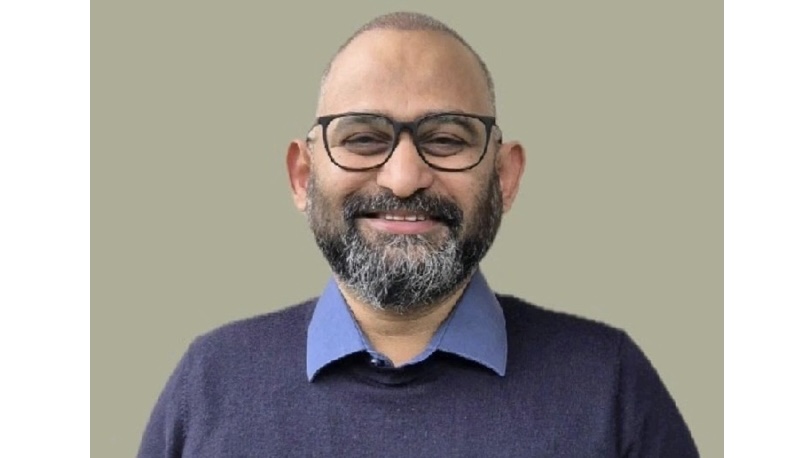
    MUMBAI: Shashishekhar Mukherjee, one of India’s most decorated digital marketing executives, has ended his nine-year tenure as head of digital marketing at Reckitt, the British consumer health and hygiene giant behind brands including Dettol, Durex and Veet.

    The departure of the 18-year industry veteran, announced on LinkedIn this week, marks another high-profile exit from the fast-moving consumer goods sector as companies grapple with rapid digital transformation and fierce competition for top talent.

    Mukherjee, who joined Reckitt in April 2016, spearheaded the company’s data-driven marketing strategy across its marquee portfolio, which also includes Moov pain relief gel. His campaigns earned recognition at prestigious industry awards including the APAC Effies, Asian Warc and Emvies.

    The executive’s credentials include being named among Brand Equity’s top 30 digital marketers. He currently serves as a board advisor to the India Influencer Governing Council and is a member of the Mobile Marketing Association’s APAC retail media network.

    “After nine incredible years, I recently bid farewell to my team, coworkers, and friends at Reckitt,” Mukherjee wrote in his LinkedIn post, describing the role as having “profoundly shaped me both personally and professionally.”

    His exit comes as multinational consumer goods companies face intensifying pressure to digitise their operations and connect with younger consumers across India’s diverse markets. The sector has witnessed a wave of senior departures as executives seek new opportunities in the rapidly evolving landscape.

    Mukherjee’s departure follows a distinguished career spanning blue-chip agencies and brands. Before Reckitt, he served stints at GSK (now Haleon), where he led digital initiatives for wellness brands including Sensodyne toothpaste and Eno antacid, and at Mindshare, where he headed digital strategy for PepsiCo’s portfolio.
    His early career included roles at GroupM, handling accounts for Twinings tea, Kurkure snacks and Domino’s Pizza, and at Publicis Groupe, managing digital offerings for Hewlett-Packard and telecom operator MTS.

  • Indian film producer loses copyright battle over Lootere title

    Indian film producer loses copyright battle over Lootere title

    MUMBAI: A Hindi film producer who made a 1993 film starring Sunny Deol has lost his bid to stop Disney+ Hotstar from streaming a digital series with the same title, after a Bombay high court judge ruled that film titles cannot be copyrighted.

    Sunil Darshan Saberwal, who produced the Hindi feature film Lootere three decades ago, sued Star India (now JioStar India) and others in March 2024, seeking to prevent them from using what he claimed was his registered title for their piracy-themed web series.

    But justice Sandeep Marne dismissed Saberwal’s application for a temporary injunction on 18 August, delivering a comprehensive rejection of his copyright claims and dealing a significant blow to long-standing industry practices around title registration.

    The judge ruled that “there cannot be a copyright in mere title of a film”, citing Supreme Court precedent that titles are “incomplete in themselves” and do not qualify as literary works under India’s Copyright Act of 1957. The ruling follows the apex court’s 2016 decision in Krishika Lulla v Shyam Vithalrao Devkatta, which established that commonplace words like Desi Boys lack the originality required for copyright protection.

    Saberwal’s 1993 romantic drama bears no resemblance to Star India’s eight-episode series about Somalian pirates hijacking an Indian vessel. The court noted that “except similarity in the title, plaintiff’s cinematograph film Lootere admittedly does not have any similarity in terms of story with the series.”

    The producer had registered the title Lootere with film industry associations including the Western India Film Producers Association, arguing this gave him exclusive rights. But the court dismissed such registrations as “purely private arrangements having no sanctity in law,” enforceable only between association members through contract.

    “The associations formed by film producers and registrations granted by such associations are nothing but an internal contractual arrangement between the members,” justice Marne stated. Since Star India was not a member of the relevant association, it could not be bound by Saberwal’s registration.

    The judgment highlighted how Bollywood routinely produces multiple films with identical titles—citing examples including Hera Pheri, Aankhen and Dilwale —without legal challenge, provided the underlying stories differ.

    The court also criticised Saberwal’s lengthy delay in pursuing legal action. Though he first noticed the series trailer in September 2022, he waited until March 2024 to file suit—by which time the series had already been streaming on Disney+ Hotstar for months.

    “Plaintiff has whiled away substantial time of about two years despite acquiring knowledge of plans,” the judge observed, noting this delay was “fatal” to claims for emergency relief.

    The decision undermines the film industry’s practice of treating title registrations as conferring legal rights, potentially opening the door to more disputes over popular names. Industry associations have historically operated these registration systems to prevent conflicts between producers, but the ruling clarifies they carry no statutory weight against non-members.

    Saberwal’s legal team had argued that Star India’s own attempts to secure clearance for the title from producer Boney Kapoor proved the industry recognises such rights. But the court found this irrelevant since it was undertaken by a production services company, not Star India itself.

    The series Lootere continues streaming on Disney+ Hotstar, having premiered in March 2024. Saberwal retains the option to pursue damages rather than injunctive relief, though his suit contains no such claim.

    The ruling reinforces that while films and their underlying literary works enjoy copyright protection, titles remain in the public domain unless they achieve trademark status or generate sufficient goodwill for passing-off claims—a much higher bar than simple registration with industry bodies.

  • India bans online betting as gaming crackdown intensifies

    India bans online betting as gaming crackdown intensifies

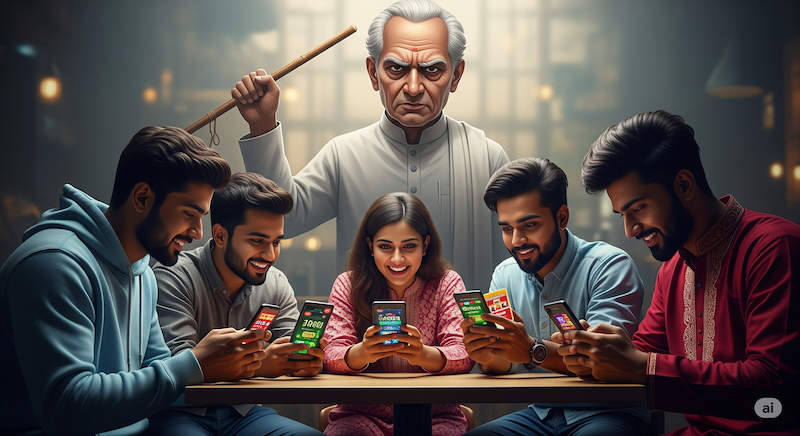
    MUMBAI: India’s cabinet approved sweeping legislation on Tuesday that will make online betting a criminal offence, dealing a severe blow to the country’s booming digital gaming sector. The Online Gaming Bill, set to be introduced in parliament on Wednesday, represents the government’s most aggressive move yet to regulate an industry projected to reach $9.1 billion by 2029.

    Under the new law, banks and financial institutions will be barred from processing payments for real-money gaming platforms, effectively choking off funding to betting operations. The legislation also prohibits advertisements promoting monetary gaming whilst encouraging skill-based games and e-sports.

    The crackdown follows a surge in fraud cases linked to offshore betting platforms and their celebrity endorsers. Unauthorised betting already carries penalties of up to seven years in prison under existing criminal provisions, but the new bill strengthens enforcement mechanisms and expands the scope of punishable offences.

    Real-money games currently account for 86 per cent of revenues in India’s online gaming market, valued at $3.7 billion in 2024. The sector has been under increasing scrutiny since the government imposed a 28 per cent goods and services tax in October 2023, followed by a 30 per cent levy on net winnings.

    The ministry of electronics and information technology is expected to serve as the central regulator, with powers to block unregistered or illegal gaming sites. Since 2022, authorities have already blocked more than 1,400 betting and gambling websites.

    The legislation aims to create uniform regulations across states whilst preserving their constitutional authority over gambling matters. The government has issued advisories warning parents and teachers about gaming addiction, whilst broadcasters must now carry disclaimers about financial risks in gaming advertisements.
    Industry observers warn the ban could drive the sector underground, potentially exposing users to greater fraud risks. However, officials argue the measures are essential to protect consumers from addiction and financial exploitation in an increasingly unregulated digital landscape.

  • Brake it to make it Times Now hits the brakes on India’s reckless driving

    Brake it to make it Times Now hits the brakes on India’s reckless driving

    MUMBAI: On India’s 79th Independence Day, Times Now chose to free the roads from a different kind of tyranny, the chaos of reckless driving. Through its auto vertical, Times Drive, the channel flagged off ‘Brake The Habit’, a nationwide road safety initiative that’s turning bus shelters and billboards into stern speed-breakers for public conscience.

    The campaign was officially unveiled by union minister for Road Transport and Highways Nitin Gadkari, who praised the effort as a timely nudge against habits that kill. The statistics are chilling   according to the MORTH 2022 report, India sees over 4.61 lakh accidents annually, most linked to over-speeding, drunk driving, red-light jumping, and increasingly, the deadly distraction of mobile phones behind the wheel.

    Planned as a six-month drive culminating in Road Safety Week in January 2026, the campaign goes beyond finger-wagging. It blends print, outdoor, digital, and Times Network’s broadcast platforms to hammer home the message. Billboards across metros bark warnings against overspeeding, while digital activations invite citizens to vote, opine, and even share stories of lifesaving interventions that prove responsible driving is cool, not boring.

    Young drivers are firmly in the crosshairs. With colleges and universities as key partners, the campaign is designed to catch drivers before bad habits harden into deadly reflexes. Early phases focus on online and on-air pushes, building towards a big on-ground crescendo during Road Safety Week.

    But this isn’t just about scare tactics. ‘Brake The Habit’ also celebrates empathy spotlighting acts of road courtesy, timely rescues, and human kindness that too often go unrecognised. It reframes road safety not as a chore but as a shared responsibility and even a source of pride.

    As Gadkari reminded, and as Times Now underlines: safety starts with the driver, not the car. With one reckless swipe or a single overshoot of the speedometer, lives can change forever. By hitting the brakes on bad habits, the campaign hopes India’s drivers can accelerate towards something far more liberating roads that are safe for all.


  • Spirits marketer Renu Yadav swaps Grey Goose for homegrown gin

    Spirits marketer Renu Yadav swaps Grey Goose for homegrown gin

    MUMBAI: Renu Yadav has traded the global sophistication of Grey Goose and Bombay Sapphire for the patriotic promise of Vanaha Gin, becoming marketing lead at Revelry Distillery in a bet that Indian spirits can conquer international palates.

    Yadav’s departure from Only Much Louder, where she shepherded premium Bacardi brands including Patron tequila, signals her confidence in homegrown distilling. At Revelry, she will champion Vanaha Gin, a craft spirit that founders Vaniitha Jaiin and Navvin Jaiin position as India’s answer to the global gin renaissance.

    The move caps a decade-long love affair with the spirits industry that began somewhat accidentally.  Yadav’s immersion in the alcoholic beverages world through Bacardi’s portfolio awakened what she describes as her “passion for building brands that create not just products, but experiences.”

    Her career trajectory reads like a route map in modern marketing evolution. From co-founding agency Notch It UP to producing content for Condé Nast India, Yadav has bounced between entrepreneurship and corporate roles with characteristic restlessness. A stint at Extento Experiences, where she managed experiential marketing for premium alcohol and lifestyle clients, provided the final polish to her spirits credentials.

    Yadav’s appointment comes as Indian craft distilleries eye international expansion, riding a wave of global curiosity about subcontinental flavours. Her dream of opening her own bar remains on hold, but this role represents what she calls “a big step in that direction.”

    Revelry Distillery will be banking on her knack for creating memorable brand experiences—a skill honed through years of managing everything from live activations to trade marketing. Whether Vanaha Gin can match the marketing panache of its international rivals remains to be seen, but Yadav’s track record suggests the spirit has found a formidable champion.

  • Gaming veteran Rahul Razdan launches Giga to blur entertainment boundaries

    Gaming veteran Rahul Razdan launches Giga to blur entertainment boundaries

    MUMBAI: Rahul Razdan, the architect behind some of India’s most audacious digital ventures, has emerged from Reliance Jio’s corridors to launch Giga, his latest gambit to reshape gaming and entertainment. The 51-year-old, who spent nearly a decade building JioChat into a multimedia powerhouse, now promises to deploy artificial intelligence to revolutionise how humans engage with games.

    Razdan’s pedigree reads like a who’s who of India’s digital transformation. As president of Tencent’s Indian operations between 2012 and 2014, he orchestrated WeChat’s meteoric rise, briefly dethroning established messaging giants. The app’s coup de grâce came via an audacious marketing blitz featuring Bollywood stars and a record-breaking QR code cake made from 7,500 individual cakes.

    His tenure at Jio proved equally theatrical. JioChat became the first app to bear the Jio brand, even predating the network itself. Under his stewardship, the platform birthed India’s pioneering vertical video ecosystem and hosted the award-winning KBC Play Along game, where users played alongside television’s prime-time quiz show in real time.

    Before his corporate conquests, Razdan co-founded ibibo.com, crafting what he claims was India’s first internet business with multiple revenue streams firmly embedded. The venture, backed by South Africa’s Naspers and China’s Tencent, pioneered social gaming with local flavour and real-money integration.

    Giga’s cryptic website teases that “the 400 pound gorilla is coming soon,” offering little beyond Razdan’s promise to blur traditional entertainment boundaries. His track record suggests punters should pay attention. After all, this is the same executive who recently pivoted to filmmaking at 51, producing an award-winning animated short that swept international festivals from London to Buenos Aires.

    Armed with degrees from the School of Planning and Architecture and IIM Indore, plus two decades navigating India’s digital rapids, Razdan appears intent on proving that gaming’s next act has only just begun.

  • Pavan Kumar Allada to lead corporate strategy at Sun TV Network

    Pavan Kumar Allada to lead corporate strategy at Sun TV Network

    CHENNAI: Sun TV network has appointed Pavan Kumar Allada as head of corporate strategy, strengthening its leadership bench at a time when the southern broadcaster is sharpening its digital and growth ambitions.

    Allada joins from Disney Star, where he spent over ten years in key strategy roles at Star Sports. His remit spanned business planning, consumer insights, acquisitions, scheduling and partnerships. Most recently, he served as senior manager for content and acquisition strategy, consumer insights and scheduling, shaping programming and growth decisions for the network’s sports business.

    Earlier roles at Star Sports included business strategy and sales revenue planning, giving him a front-row seat to India’s booming sports broadcasting market.

    An MBA in marketing and strategy from IIM Lucknow and a BTech from IIT Madras, Allada also co-founded an entrepreneurial food venture, Gossip N Bite, early in his career.

    At Sun TV network, he will be responsible for driving corporate strategy, business growth initiatives and acquisition plays, while embedding consumer-first thinking into the company’s long-term plans. The move underscores Sun’s intent to fortify its position not just as a dominant regional broadcaster, but also as a player navigating the shifting media and digital consumption landscape.

  • Roshan Salian joins Magnon Group as associate vice president – key accounts

    Roshan Salian joins Magnon Group as associate vice president – key accounts

    MUMBAI: Roshan Salian has been appointed associate vice president – key accounts at Magnon group, marking the latest step in a 15-year career in digital marketing.

    Salian, who has previously held leadership roles at Social Panga, Ogilvy, Schbang, Tonic Media and Gozoop, is known for crafting customer-first campaigns and building collaborative partnerships with digital-first brands.
    At Social Panga, he spent over three years as group head – brand solutions, overseeing client relations, creative strategy and integrated marketing. Earlier stints include account director at Ogilvy and group solutions manager at Schbang.

    With his new mandate, Salian is expected to drive strategic growth for key accounts at Magnon group, leveraging his expertise in campaign strategy, operations and brand development.

  • Hero worship 62 per cent of Indian dads see themselves as family protectors

    Hero worship 62 per cent of Indian dads see themselves as family protectors

    MUMBAI:  Looks like Indian fathers are donning more than just their Sunday cap, they’re putting on superhero capes too. A new PNB Metlife India Insurance survey, conducted across the country, finds that 62 per cent of fathers identify as “Hero Dads” guardians who see themselves as the primary protectors of their family’s financial security.

    The nationwide study, launched on Father’s Day and spread over June, July and August, engaged more than 6000 fathers across urban and semi-urban India through microsites and QR-code activations. The exercise grouped dads into three personas:

    Hero Dads: 62 per cent, the protectors of family finances.

    Thoughtful Dads: 29 per cent, cautious long-term planners.

    Disciplined Dads: 9 per cent, methodical savers with a love for structure.

    Beyond the labels, the survey painted a clear picture of evolving priorities. Children’s education remains the top concern for 51 per cent, but fathers are now increasingly thinking about themselves too. 14 per cent prioritise retirement planning and another 14 per cent dream of a big family holiday hinting at a shift towards security paired with experience-led living.

    What’s striking is the long-term lens fathers now wear. 53 per cent are willing to invest for 10–15 years, 14 per cent for 15–20 years, and 13 per cent for 20–30 years. Perhaps most telling, 20 per cent are in it for the very long haul over 30 years cementing a cultural tilt towards sustained wealth-building.

    When it comes to parking their money, dads are showing a clear preference for stability: 30 per cent opt for fixed deposits, 22 per cent choose life insurance, while 17 per cent favour mutual funds. The pattern points to a generation more comfortable with low-risk, predictable instruments that align with their extended horizons.

    PNB Metlife chief marketing & communications officer Sourabh Lohtia summed it up: “Today’s father is a provider, protector, and nurturer financially savvy and emotionally present. The ‘Dad Type’ survey shows how deeply fathers are committed to building secure futures for their families.”

    Turns out, the new-age Indian dad is not just about quick fixes or cautious saving, he’s evolving into a blend of protector, planner, and provider. And with nearly two-thirds proudly wearing the ‘Hero’ tag, it seems India’s dads are scripting their own blockbuster sequel in the financial universe.