Blog

  • A.R. Rahman to serenade the Ganga in Varanasi

    A.R. Rahman to serenade the Ganga in Varanasi

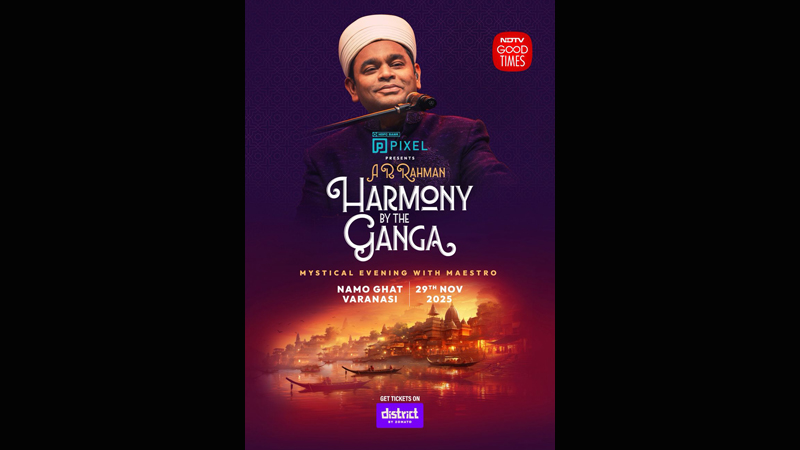
    MUMBAI: The Ganga is set to hum to a new tune this November, one composed by none other than A.R. Rahman. On 29 November, NDTV Good Times will host Harmony by the Ganga at Namo Ghat, Varanasi, where the maestro’s melodies will meet the river’s timeless rhythm.

    Performing in Varanasi for the very first time, Rahman will bring his signature fusion of classical roots and contemporary sound to India’s oldest living city. The evening promises to be a spiritual symphony, where ragas, reverence and Rahman’s genius flow together in perfect harmony.

    Joining him on stage will be Jhalaa, a band handpicked by the composer himself. Their collaboration will create a musical bridge between tradition and modernity, filling the ghats with notes that echo long after the final chord fades.

    Preparations at Namo Ghat are already in full swing, with a grand stage, cutting-edge sound design and lights choreographed to complement the sacred setting. Every detail is being fine-tuned to ensure the night feels as immersive as the music itself.

    The event follows NDTV Good Times’ much-lauded Sonu Nigam by Dal Lake concert in Srinagar, which revived large-scale cultural celebrations in the Valley. With Harmony by the Ganga, the channel continues its journey of crafting landmark musical moments that unite art, heritage and emotion.

    When Rahman’s notes rise over the Ganga’s gentle flow, Varanasi will witness not just a concert, but a confluence of sound, soul and centuries of tradition.

  • Netflix rolls the YRF reel worldwide

    Netflix rolls the YRF reel worldwide

    MUMBAI: Lights, camera, nostalgia! Netflix and Yash Raj Films (YRF) hit play on a golden reel of Hindi cinema memories, bringing five decades of cinematic gems to screens around the world. The streaming giant sealed a landmark partnership with India’s iconic studio, opening its vault of classics, blockbusters and heart-throbs for global audiences to binge on.  

    The celebration began with a star-studded line-up. Shah Rukh Khan fans were treated to nine of his biggest hits, including Dilwale Dulhania Le Jayenge, Veer-Zaara and Chak De! India, which dropped on November 1, marking the superstar’s birthday weekend. Salman Khan’s action-packed trio Ek Tha Tiger, Sultan and Tiger Zinda Hai will roar onto Netflix on December 27, his birthday.

    Romance buffs can look forward to November 14, when timeless Yash Chopra classics like Chandni, Lamhe and Silsila begin streaming. Ranveer Singh’s infectious energy arrives on December 5 with Band Baaja Baaraat and Gunday. The festive season gets even brighter with 34 YRF crowd-pleasers, including Hum Tum, Bunty Aur Babli and Mujhse Dosti Karoge, set to stream two at a time between December 12 and 28.

    The reel keeps rolling into 2026, with the Dhoom trilogy revving up from November 28 and the Mardaani series joining on January 22. Valentine’s week will see eight heart-fluttering romances like Saathiya and Bachna Ae Haseeno streaming from February 7.

    “For over 50 years, Yash Raj Films has shaped the heart of Indian cinema,” said YRF CEO Akshaye Widhani. “Bringing this legacy to Netflix lets the world experience the colour, the music and the magic of India.”

    Netflix India vice president of content Monika Shergill added, “This partnership celebrates Indian cinema in all its glory, allowing fans to relive the magic while new audiences discover its timeless charm.”

    Whether you’re chasing Dhoom-style thrills or humming Tujhe Dekha To in your living room, Netflix’s latest drop has turned every night into a Hindi cinema blockbuster.


  • India’s World Cup heroines set for brand bonanza

    India’s World Cup heroines set for brand bonanza

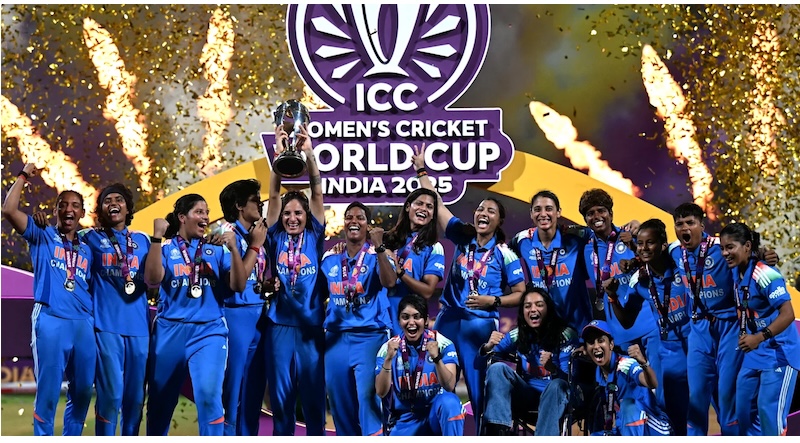
    MUMBAI: The tears, the tricolour, the trophy. When Harmanpreet Kaur’s side defeated South Africa by 52 runs on Sunday night to claim India’s first-ever women’s World Cup , they didn’t just etch their names in cricket history—they opened the door to a commercial windfall that could redefine women’s sport in the country.
    With a packed stadium erupting as the final wicket fell, and millions more watching across the nation, the brand equity of several players is set to soar. Marketers and advertising agencies are already sharpening their pencils. Amongst the players who look to be front-runners in this dash for sign ups figure: 

    Smriti Mandhana: There’s no denying her talent or her appeal. Good looks, certainly, but above all, world-class batting skills have made her a hero for millions. Mandhana is second in the tournament’s run charts. The World Cup triumph will only cement her cult status.  Her endorsement portfolio includes giants like Hero MotoCorp, Hyundai, Red Bull, Garnier, Wrangler, and PNB MetLife, but expect it  to expand dramatically.

    Harmanpreet Kaur: She showed tenacity as captain, leading from the front and taking a fantastic catch to end the South African innings. More importantly, she steered her team through three losses during the tournament—defeats that could have derailed any side. But not Harmanpreet. She kept the team’s belief intact, insisting they weren’t looking left or right, only at their end goal. That grit under pressure is precisely what brand managers look for. She has done endorsement for brands like HDFC Life, ITC, Boost, Ceat, Puma, Tata Safari, Asian Paints, Jaipur Rugs, The Omaxe State, Big Flex, and Hapipola.  That surely is set to balloon exponentially now.

    Jemimah Rodrigues: This bundle of talent is energy personified on the field, whether fielding or batting. Her unbeaten 127 in the semifinal showed she’s a match-winner, forming a crucial 167-run partnership with Harmanpreet that swung the tie against Australia  Her transparency about emotional upheavals after being dropped earlier brought out her determination. She plays the guitar and has an excellent sense of theatre—the perfect combination for brand campaigns seeking authenticity. Her endorsement portfolion includes Red Bull, Hyundai, Gillette, Dream11, HMD (Human Mobile Devices), boAT and Platinum Evara.

    Pratika Rawal: The 25-year-old became the joint-fastest cricketer to score 1,000 runs in ODIs (23 innings) and was the tournament’s second-highest run-scorer with 308 runs before injury ruled her out ahead of the knockouts. The image of her in a wheelchair, draped in the tricolour, celebrating with teammates became one of the most powerful moments in Indian sporting history. That resilience and passion will resonate deeply with brands seeking emotional connect.

    Shafali Verma: She scored a blistering 87 in the final and picked two crucial wickets, becoming the first player to score 50-plus runs and take two wickets in a World Cup final Recalled after Rawal’s injury, she had been out of the ODI side for nearly a year Her extraordinary display capped an extraordinary week. The 21-year-old’s redemption arc makes her a natural choice for brands focused on perseverance and comeback stories. She has featured as a brand ambassador for the likes of Bank of Baroda and Ceat. In a few months this will surely swell. 

    Radha Yadav: The left-arm spinner grabbed her opportunity in the final league match against Bangladesh after warming the bench for six games, ending with a three-wicket spell. She was part of the playing eleven in the final. Her steady bowling alongside Shree Charani helped contain South Africa’s dangerous middle order. Her journey from twelfth player to World Cup winner embodies the team ethic that brands increasingly value.

    The World Cup win  isn’t just a trophy. It’s a watershed moment for women’s cricket and for Indian cricket as whole.

    And for these players, the real game—the endorsement game—is only just beginning.

  • Brewing Kerala’s pride, one sip at a time

    Brewing Kerala’s pride, one sip at a time

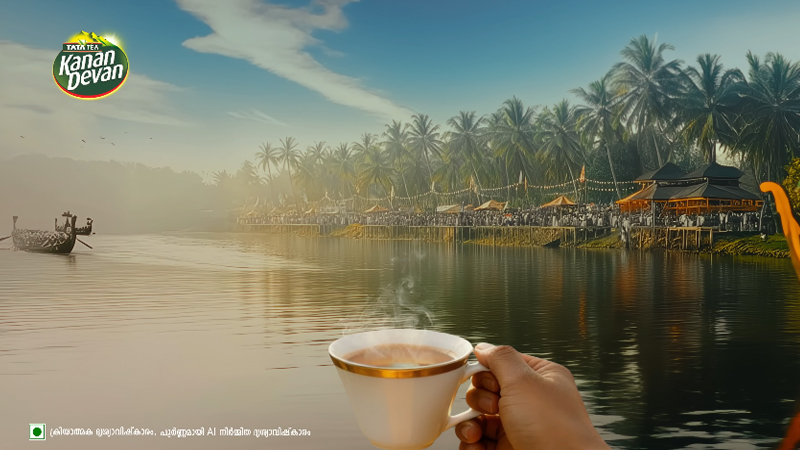
    MUMBAI: This Kerala Piravi, Tata Tea Kanan Devan poured out a cinematic tribute to its home state, blending culture, nature and nostalgia into one flavourful celebration.

    The new brand film opens with a single dewy tea leaf, shimmering in the morning light, a quiet nod to the Kanan Devan hills where the brand was born. In a heartbeat, the leaf unfurls into sweeping drone shots of emerald plantations, gliding boats on tranquil backwaters, and the rhythmic grace of Kathakali, Kalari, and classical dance. It’s a montage that captures Kerala’s rhythm, strength and serenity, brewed with a filmmaker’s finesse.

    But Tata Tea Kanan Devan isn’t stopping at the screen. The brand has extended its celebration into the real world with a 3D anamorphic installation at Lulu Mall, Trivandrum (October 30–November 2), where visitors can walk into Kerala’s symbols brought vividly to life. Across Trivandrum, Kochi, Thrissur and Kozhikode, bold outdoor displays add another layer of pride and colour to the campaign.

    “Tata Tea Kanan Devan has always been more than just a brand, it’s part of Kerala’s story,” said Tata consumer products president – packaged beverages, India & South Asia Puneet Das. “This Kerala Piravi, we wanted to celebrate the state’s essence in a way that feels cinematic yet deeply personal.”

    Echoing the sentiment, Monks India head, business & integration Sonali Khanna added, “Our film brings Kerala’s iconic motifs to life, giving viewers a dazzling glimpse of God’s Own Country.”

    With each frame, sip and swirl, Tata Tea Kanan Devan proves that homegrown pride, much like good tea, tastes best when brewed from the heart.


  • India launches its heftiest satellite yet

    India launches its heftiest satellite yet

    SRIHARIKOTA: India just flexed its space muscles. On 2 November, the Indian Space Research Organisation (Isro) hurled its heaviest communications satellite ever into orbit from home soil—a 4,400 kg behemoth called CMS-03 that will keep the navy’s ships, submarines and aircraft chattering across the Indian Ocean. The launch from Sriharikota at 5:26 pm marked the end of an embarrassing era: no longer must India send its bulkiest satellites abroad for a lift.

    The rocket doing the heavy lifting was LVM3, ISRO’s most powerful launcher and now nicknamed “Bahubali” for its Herculean payload capacity. This souped-up version sports a beefier cryogenic upper stage—the C32, carrying 32,000kg of fuel and belching 22 tonnes of thrust, a 10 per cent upgrade on the previous model. It can now haul 4,000kg to geosynchronous orbit and 8,000kg to low Earth orbit without breaking a sweat.

    Until now, India’s chunkier satellites hitched rides with foreigners. France’s Arianespace launched the 5,854kg GSAT-11 and 4,181kg GSAT-24. Elon Musk’s SpaceX ferried the 4,700kg GSAT-20. No more. Isro chairman V Narayanan crowed about the mission being “a shining example of Atmanirbhar Bharat”—self-reliant India, in case the point wasn’t clear enough.

    The CMS-03, also known as GSAT-7R, isn’t just heavy; it’s clever. Bristling with indigenous components, the multiband satellite will provide encrypted voice, data and video links for 15 years, giving the Indian Navy real-time situational awareness across a vast oceanic region. The navy called it a testament to national self-sufficiency in maritime defence.

    This was LVM3’s eighth consecutive successful launch, following triumphs like Chandrayaan-2, Chandrayaan-3 (which made India the first nation to land near the lunar south pole), and OneWeb satellite deployments. The upgraded rocket also feeds directly into Isro’s Gaganyaan programme, which aims to send astronauts into space. Three uncrewed missions are planned first, including one carrying Vyommitra, a robotic astronaut, later this year.

    Narayanan said the space organisation is eyeing seven more launches by March 2026, with another LVM3 mission slated for December. India’s space sector, he declared, is “soaring high.

    With launches this meaty, it’s hard to argue.

  • Krafton plots India’s path to esports glory

    Krafton plots India’s path to esports glory

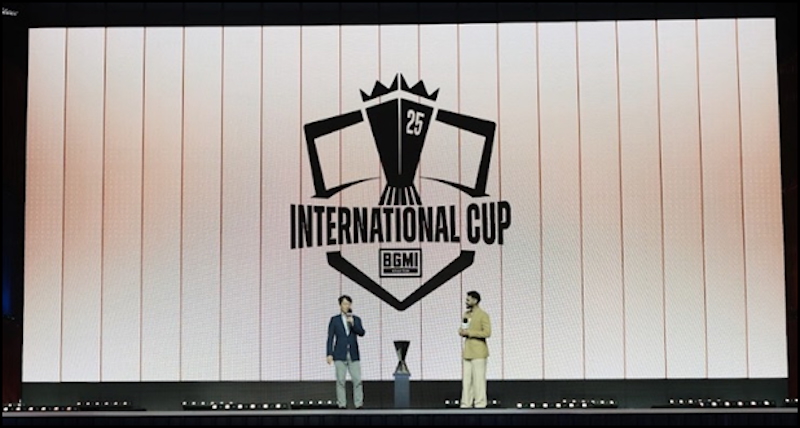
    MUMBAI: Indian esports just got its marching orders. Krafton India chief executive Sean Hyunil Sohn has rolled out an ambitious 2026 roadmap designed to transform bedroom gamers into international champions. Speaking before thousands at the BGMI International Cup 2025 in New Delhi, Sohn unveiled an expanded tournament calendar spanning multiple cities—and a new awards ceremony to boot.

    The plan is deliciously simple: build a ladder. At the bottom sits BGMIS (Battlegrounds Mobile India Series), open to anyone with thumbs and ambition. Registrations open in late December 2025, with battles running January through March 2026. Survive that gauntlet and you graduate to BMPS (Pro Series) in May and June, where the winner bags a ticket to the Esports World Cup in Riyadh come July. Then comes BMSD (Showdown), a high-octane LAN slugfest running August to October. The cherry on top: BMIC (International Cup) in October, where India squares off against Korea and Japan on home turf.

    “This is more than a tournament calendar—it’s a structured pathway for Indian gamers to rise from grassroots to the global podium,” Sohn declared. The company is putting its money where its mouth is. In 2025 alone, Krafton’s tournaments offered a collective prize pool exceeding Rs 4 crore.

    The timing couldn’t be better. India’s esports scene has shed its scrappy underdog skin. Stadium-scale events now replace dingy internet cafés. Government recognition and corporate cash are flowing in. Krafton’s BGMI has racked up 240 million downloads, and the company has sunk over $200 million into Indian startups since 2021.

    Krafton India  associate director for esports Karan Pathak reckons the roadmap will democratise opportunity. “We want to give every player—from underdogs to champions—a platform to showcase their skill and represent India on the global stage,” he said.

    Krafton is also launching the inaugural Krafton India Awards on 9 January 2026 in Mumbai, a new annual bash to recognise the country’s gaming talent.

    The message is clear: India isn’t just playing anymore. It’s coming to win.

  • Celebrating Piyush: Mumbai’s ad world gathers to remember the maestro who made advertising human

    Celebrating Piyush: Mumbai’s ad world gathers to remember the maestro who made advertising human

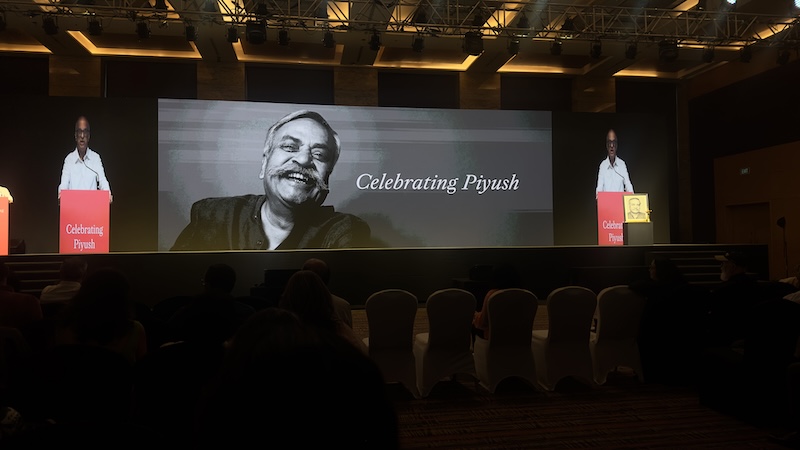
    MUMBAI: At 10am on a Sunday morning, 1,500 of India’s advertising elite crammed into Mumbai’s Grand Hyatt to do what the industry does best: tell stories. This time, though, the subject was one of their own. Piyush Pandey, the creative titan who died last week, got the send-off befitting a man who transformed Indian advertising from borrowed jingles and forced sophistication into raw, real-life observation. The numbers would have swelled far higher had Ogilvy thrown open the doors, but this was an invitation-only affair—a gathering of those who’d worked alongside, been mentored by, or simply marvelled at the man who made “front foot pe khelo” the rallying cry of an entire generation.

    The two-hour tribute played out like a masterclass in the man himself—equal parts emotion, irreverence and creative brilliance. Hepzibah Pathak, Ogilvy India’s executive chairperson, took the stage visibly shaken, setting the tone for what would become an outpouring of stories that captured Pandey’s essence better than any obituary could. She was followed by a caravan of speakers: WPP’s chief operating officer Devika Bulchandani, Ogilvy India group chief executive Rajesh VR, chief strategy officer Prem Narayan, chief creative officers Kainaz Karmakar and Harshad Rajadhyaksha, vice-chairman and director client relations Madhukar Sabnavis, the legendary R Balki, McCann Erickson’s Prasoon Joshi, Pidilite director Madhukar Parekh, marketing guru Suhel Seth, his nephew and agency boss Abhijit Avasthi, and Asian Paints chief executive and managing director Amit Syngle. Even commerce minister Piyush Goyal made time to pay tribute, underscoring the breadth of Pandey’s influence beyond advertising’s narrow confines.

    PIYUSH GOYALThe 6:30am phone calls became the event’s leitmotif. Most speakers wore them as badges of honour—those dawn raids when Pandey would ring, sometimes to share a creative idea that had struck him in the shower, other times to help them excavate their own. His Ogilvy team recalled in granular detail how he mentored them: kind words when they delivered good work, sharp rebukes when they didn’t push hard enough. “Front foot pe khelo,” he’d say, deploying his favourite cricket analogy to urge aggression over timidity. Karmakar captured the bittersweet mood: “Who will make those 6:30am calls now?” she asked, confessing she’d hated being woken but lived for those conversations. Others complained they’d been left out of the dawn club, wondering aloud why Pandey’s Rolodex of early-morning confidants hadn’t included them.

    His creative team peeled back the curtain on his teaching methods. At a Cannes Lions masterclass, he’d begun not with case studies or charts but with meditative breathing. Inhale deeply and slowly, he’d instructed global participants. That’s observation—riding trains, chatting with taxi drivers, watching life unfold in its messy, unscripted glory. Exhale. That’s the creative work that connects with real audiences, not the manufactured personas of focus groups. It was vintage Pandey: grounding the lofty business of advertising in the quotidian rituals of simply paying attention.

    Syngle, who worked with Pandey for 37 years across Cadbury, Pidilite and Asian Paints, painted a portrait of a man allergic to pretence. He recalled being dragged from formal dinners during overseas trips—the kind with white tablecloths and wine lists—to eat dal chawal and bhindi at hole-in-the-wall Nepalese joints. “That was Piyush,” Syngle said. “Authentic. You got what you saw.” When invited to join the Pidilite board, Pandey made clear he wouldn’t wear formal clothes to meetings. Not as rebellion, but as declaration: this is who I am. Take it or leave it.

    Friends and cricketers Amit Mathur and Arun Lal delivered the comic relief Pandey would have demanded. They shared his joke about why actress Sridevi wouldn’t marry Lal: “Because she wouldn’t want to be called Sridevi Lal”—a reference to politician Chaudhary Devi Lal that sent Pandey into his trademark loud guffaws. The joke was terrible. The memory was priceless.

    PRASOON PANDEYGoyal’s recollection offered a window into Pandey’s principles. In 2014, the minister spent six hours at Pandey’s Shivaji Park home trying to convince him to handle BJP’s election advertising. “Despite years of friendship, he was stubborn every time I approached him for days,” Goyal explained. “I thought I’d failed. Next morning, relief: he called saying he’d do it.” The result was “Ab ki baar, Modi Sarkar”—a slogan that became the soundtrack of that election. What persuaded him remains unclear, but the episode revealed a man who wouldn’t be rushed or arm-twisted, even by friends in high places.

    Balki and Joshi traded admiration for Pandey’s work, but Balki’s anecdote cut deeper. They’d once decided to quit smoking together after visiting a hypnotherapist. Pandey called daily to compare notes—until he didn’t. When Balki rang, Pandey admitted he’d started smoking again. Balki lasted longer, then folded too. But Balki struck a defiant, almost evangelical note: at a time when advertising has become dreary—all performance metrics and programmatic buying and jargon-stuffed decks—Pandey’s death has ironically handed the industry its biggest campaign. “To bring advertising back into focus,” he said. “No amount of jargon, no amount of people trying to distract us from the fact that we have to do great stuff will work now. People are looking and saying: this is advertising. We’ve got the best opportunity for great work.” It was a call to arms wrapped in a eulogy.

    Prasoon Pandey, Piyush’s younger brother and an accomplished film-maker, delivered perhaps the most wrenching tribute. After seeing the industry’s outpouring, he wondered if his own love had been enough. “He was my elder brother, my father, my hero,” he said. “We’d speak six or seven times a day—not about work, but jokes, vicious pranks he wanted to pull on family or friends.” On work, the dynamic was pure Piyush: he’d hand Prasoon the soul of an idea in three or four words and expect execution. “We were drinking beer on our balcony when he asked: how strong would eggs be from a hen that feeds from a Fevicol container?” Prasoon recalled. “I thought it brilliant. He told me to go do it.” The result was one of Indian advertising’s most memorable campaigns—born not in a conference room but over beers and brotherly banter.

    The event was interspersed with screenings of Pandey’s greatest ads—the Fevicol campaigns, the Cadbury work that made Indians fall in love with chocolate again, the Asian Paints spots that turned home décor into emotion. The audience responded with applause, oohs, ahs, and more than a few tears.

    Lunch followed the stories: a spread of his favourite Indian dishes, the kind he’d have sought out in that Nepalese eatery instead of rubber chicken at a five-star buffet. Attendees left smiling, bellies and hearts full, having spent two hours remembering a man who’d taught them that the best advertising doesn’t sell products—it celebrates life.

    Piyush would have approved: tears, laughter, great work on screen, and damn good food to finish. Front foot pe khelo, indeed.

  • BonV Aero takes flight with defence honours

    BonV Aero takes flight with defence honours

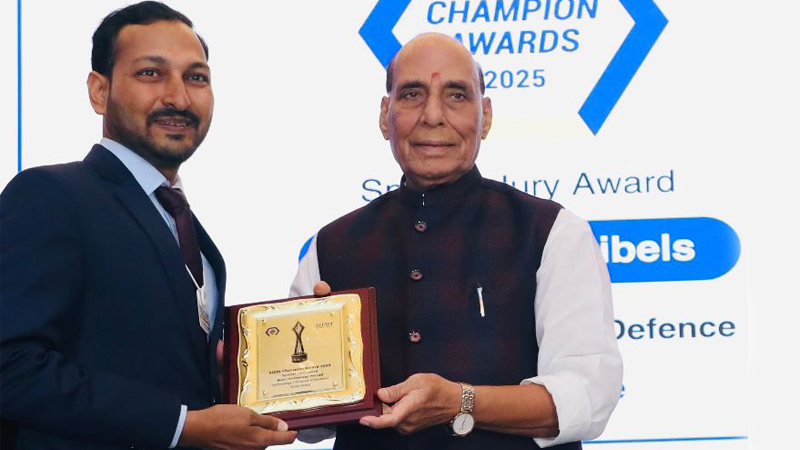
    MUMBAI: When it comes to innovation, this startup isn’t just flying high, it’s soaring into the nation’s defence hall of fame. Odisha-based aerospace firm BonV Aero has clinched the SIDM Champion Award (Special Jury) under technology/product innovation to address defence capabilities gap, a proud recognition of its indigenous advances in aerial systems.

    The award was presented by defence minister Rajnath Singh to BonV Aero co-founder and CEO Satyabrata Satapathy, who dedicated the win to the nation and the armed forces. The Society of Indian Defence Manufacturers (SIDM) instituted the awards to honour excellence in home-grown defence manufacturing and technology breakthroughs.

    BonV Aero’s work in high-altitude, heavy-payload, and autonomous aerial systems has drawn national attention for expanding what unmanned aircraft can achieve in India’s tactical and logistics landscapes. The startup’s indigenous propulsion systems, rugged airframes, and self-flying technologies enable these drones to carry heavy loads, operate independently in complex terrains, and adapt to mission-critical defence operations.

    As the only Odisha-based startup to receive this recognition, BonV Aero has put the state’s deep-tech ambitions on the national map. The company’s blend of design precision and operational reliability is creating aerospace solutions that are as strategic as they are self-reliant, aligning seamlessly with India’s Aatmanirbhar Bharat vision.

    “This recognition from SIDM and the Ministry of Defence is a proud moment not just for BonV Aero, but for Odisha’s entire innovation community,” said Satyabrata Satapathy, adding that the firm’s mission is to “build systems that perform where it matters most, from high-altitude frontiers to rapid-response tactical environments.”

    The awards jury, chaired by Satheesh Reddy, former DRDO chairman and scientific adviser to the Defence Minister, featured a distinguished panel including Prahlada Ramarao (padma shri), air marshal Anil Chopra (retd.), vice admiral S.K.N. Ghormade (retd.), and maj gen P.K. Saini (retd.), among others.

    Endorsed by defence minister Rajnath Singh, the SIDM Champion Awards continue to highlight the power of collaboration between industry and the armed forces, spotlighting innovation as the new arsenal of modern defence.

    With this recognition, BonV Aero has not just lifted off, it’s redefining flight itself, positioning India for a future where indigenous ingenuity leads the way in aerospace and defence technology.

  • Making sense of success, one click at a time

    Making sense of success, one click at a time

    MUMBAI: If taste had a strategy and smell could sell, brands would already be halfway to market glory. At a Mumbai session titled “Winning With The Senses: How Sensory Science Drives Market Success”, industry experts dived nose-first into the subtle science of sight, sound, touch, taste, and smell, and how these sensations can turn ordinary products into emotional experiences.

    The panel brought together Supriya Dang, independent consultant and ex-Unilever strategist; Sandeep Budhiraja, director and promoter of Spark Sensory; and Nirmala Metwal, consumer sensory insights leader at Mondelez International. Moderated by Sunder, the discussion explored how brands can quite literally strike the right chord, or scent, with consumers.

    Supriya opened the floor by showing how sensory design acts as a bridge between product and perception. She cited Surf Excel’s packaging “click,” the lid’s sound mimicking a washing machine shutting, as a clever cue for reliability and completion. Touch also took the spotlight, with tactile beads in handwash formulations creating a more interactive, premium experience. And who could ignore the irresistible pull of freshly baked cookies? Their aroma, Supriya said, doesn’t just smell good, it sells.

    Sandeep followed with a more technical look at how sensory science replaces guesswork with data. From quantitative descriptive analysis to temporal dominance tests, he explained how trained sensory panels map out taste, texture and aroma, turning subjective preferences into measurable insights. He noted that in a market flooded with “me-too” products, sensory cues are the secret ingredient for differentiation. “When brands blend science with storytelling, loyalty follows,” he said.

    Nirmala brought in the brand perspective, sharing how her Mondelez team cracked what “refreshing” really means for an orange drink. It wasn’t just about flavour, it was about the right hue of orange, a balanced sweet-sour taste, and a smooth mouthfeel that left a clean finish. Aligning sensory cues with consumer expectations, she said, is what keeps products both loved and remembered.

    As the discussion wrapped up, all agreed that in today’s cluttered market, sensory science is no longer just about testing, it’s about translating feelings into formulas. From the satisfying click of a cap to the comfort of a familiar scent, brands that appeal to the senses are the ones that make sense to consumers.

  • Candyman gives Halloween a tangy desi twist

    Candyman gives Halloween a tangy desi twist

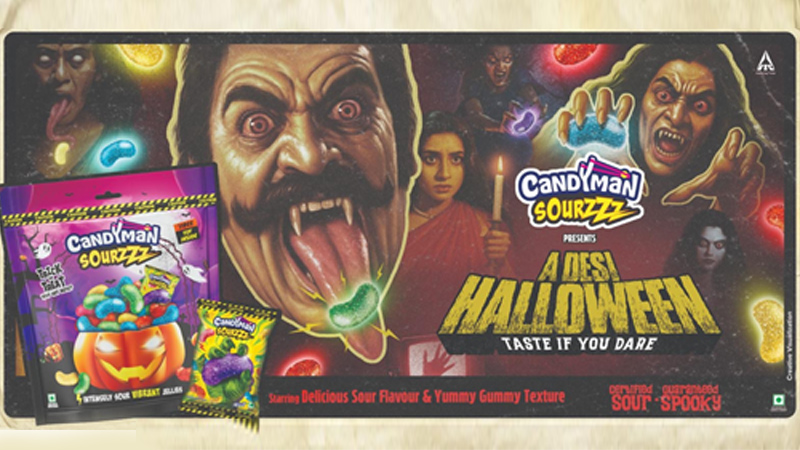
    MUMBAI: This Halloween, ITC’s Candyman Sourzzz is serving up scares with a splash of sour. The candy brand’s new campaign, “A Desi Halloween,” swaps haunted mansions and carved pumpkins for eerie banyan trees, bhoot banglas and Indian-style mischief, all packed with its signature lip-puckering twist.

    While the world celebrates Halloween with witches and werewolves, Candyman Sourzzz has resurrected a trio of homegrown legends, tangy tantrik, sour sundari and meetha khatkula, to reclaim India’s own folklore of fright. These zesty spirits star in a digital-first campaign that unfolds like a mini Hindi cinema horror flick, complete with neon chaos, comic chills and nostalgia-laced spookiness.

    “With Candyman Sourzzz, we’ve always aimed to make sourness fun for young India,” said ITC Limited vice president and head of marketing – chocolates, coffee and confectionery, foods division Anuj Bansal. “This Halloween, we wanted to localise the thrill by celebrating our own folklore in a playful, modern way.”

    Candy man

    Conceptualised by FCB India, the campaign takes inspiration from the delightfully campy Hindi cinema horror of the 90s, think smoky graveyards, echoing laughter, and a bhoot with attitude. “Halloween may be new to India, but horror isn’t,” said FCB India national creative director Suchitra Gahlot. “We wanted kids to meet our own spooky icons, tantriks, daayans and bhoot banglas, and make ITC Candyman the brand that owns Halloween, desi style.”

    The fun doesn’t stop on screen. The brand’s special edition Halloween pack, complete with a mask that doubles up as a candy bag, is now available on quick-commerce platforms in Bengaluru. Meanwhile, the desi Halloween spirit is spilling into the streets with RWA activations, vibrant OOH displays and influencer collaborations featuring spooky storytellers and GRWM content inspired by the campaign’s folklore icons.

    With its mix of flavour, folklore and fright, Candyman Sourzzz has turned Halloween into a deliciously desi affair, where every scare comes with a splash of sour.