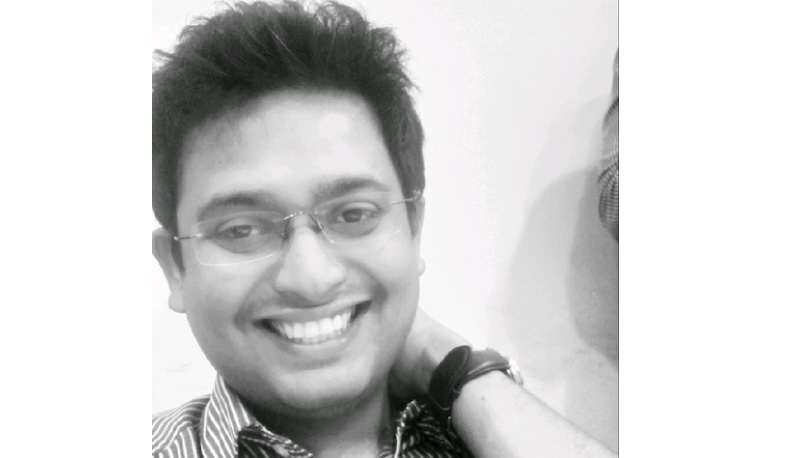
JAIPUR: Swapnil Mishra has joined Adani Group as lead, corporate communications, after a career spanning pharmaceuticals, airports, and heavy industry. He leads communications for Jaipur International Airport under Adani Airport Holdings Ltd.
A Bits Pilani alumnus and trained journalist from the Indian Institute of Mass Communication, Mishra has built his career across marquee firms. He held senior communications roles at Glenmark Pharmaceuticals, Dr Reddy’s Laboratories, Zydus Group, TDK and JSW Steel, besides a stint in journalism with Hindustan Times. “I believe the dynamics of media may have changed, but content remains king,” Mishra said. “My aim is to craft communication that is succinct, sharp and trusted.”
With over a decade in corporate communications, Mishra now takes on the task of shaping brand trust and strategy for one of India’s most visible conglomerates.
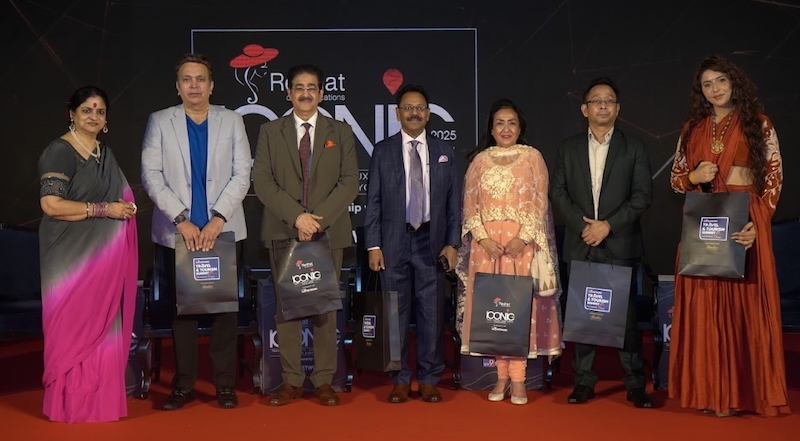
NEW DELHI: The Iconic Tourism Summit 2025, staged by Redhat Communications in collaboration with TV9 Network, drew policymakers, diplomats, industry bosses and cultural figures to ITC Maurya for a day of discussion and recognition of excellence in tourism.
The morning sessions, under the banner “Innovation, Transformation and Impact”, tackled themes from content-driven travel to building “iconic experiences”. Speakers included Niharika Rai, tourism secretary, Delhi; Rajesh Magow, co-founder and group chief executive of MakeMyTrip; Mugdha Sinha, managing director of ITDC; Shriji Huzur Dr Lakshyaraj Singh Mewar of Udaipur; Sandeep Dwivedi of Amadeus; Anshul Sethi of Indigo; and Yummi Talwar of VFS Global.
The evening climaxed with the Iconic Awards, presented by culture minister Gajendra Singh Shekhawat, who shared the stage with Amitabh Kant, Jyotsna Suri, Ishika Taneja, Manoj Adlakha, Suman Billa and Sandeep Marwah. Ambassadors from Kenya, South Africa, Egypt, Greece, Serbia, Seychelles and Malta lent an international sheen.
Awards spanned aviation, hospitality, travel tech and cultural achievement. Indigo, Emirates, Oberoi Hotels & Resorts, ITC Hotels, Accor, Amadeus and VFS Global were among the corporate winners. Individual honours went to hoteliers, innovators and cultural figures—from Rajesh Magow, named Iconic Technology Innovator, to Dr Ruby Makhija for sustainability and Kavita Bhartia for fashion. Jyotsna Suri was hailed as the Iconic Beacon of Brilliance 2025, while Suman Billa was named Changemaker of Indian Tourism.
The jury boasted luminaries such as former governor Vinod Kumar Duggal, BJP spokesperson Shazia Ilmi, former ITC director Nakul Anand, craft revivalist Madhu Jain and PR veteran Dilip Cherian.
With its mix of policy talk and high-profile awards, the summit underscored India’s ambition to position tourism as both a growth engine and a soft-power asset.
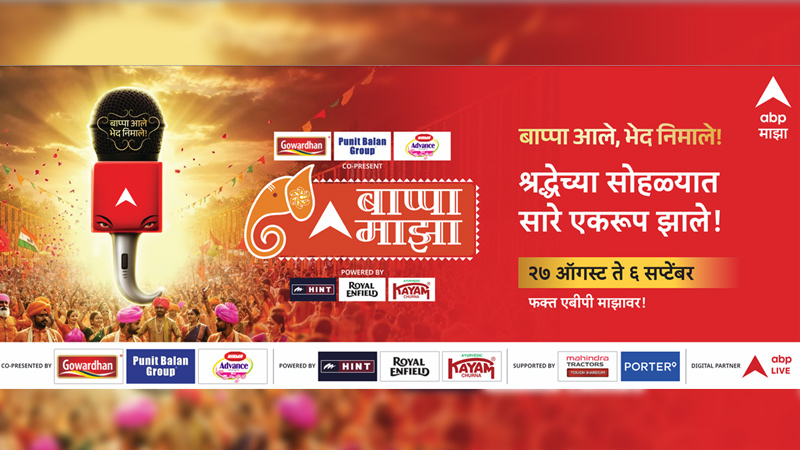
MUMBAI: When Bappa arrives, even differences take a holiday. This Ganesh Chaturthi, ABP Majha is once again turning television screens into pandals with its flagship festive programming Bappa Majha, celebrating Maharashtra’s favourite season of devotion, spectacle, and unity.
Carrying the theme “Bappa Ale, Bhed Nimale” (As Bappa arrives, differences disappear), Bappa Majha is more than just programming, it’s a 10-day cultural immersion. From the grandeur of Mumbai’s iconic pandals to the intimacy of household traditions, the channel promises to capture every beat of Ganeshotsav.
The line-up is as elaborate as a traditional sadhya:
. Live Aartis from Maharashtra’s most renowned temples and pandals at 6:30 am and 6:30 pm daily ( 27 Aug – 5 Sept).
. Ganesh Pujan at ABP Majha’s office on Aug 27 at 9:30 am, giving viewers a peek into the channel’s own festive rituals.
. Kaladhipati at 2:30 pm, where celebrities bring personal stories of devotion and celebration.
. Daily festival bulletins, Bappa Majha, at 5:30 pm (repeat at 11:30 am), offering updates and stories from every corner of Maharashtra.
. Maha Ganesh Mandal Contest (7 – 16 Sept), spotlighting the three most spectacular pandals from each of the state’s eight regions.
. Anant Chaturdashi Special (Sept 6 from 7 am onwards), capturing the emotional farewell as Bappa is immersed with pomp and tears.
With Ganeshotsav being Maharashtra’s most widely celebrated festival, the numbers tell their own story: over 10 days of immersive coverage, across 8 regions, spotlighting thousands of pandals and lakhs of devotees, all brought home by ABP Majha.
ABP Majha’s Bappa Majha is co-presented by Gowardhan, Punit Balan group and Nirma Advance; powered by Hint, Royal Enfield and Kayam Churna; with Mahindra Tractor and Porter as supporting partners, and ABP Live as digital partner.
In a state where Ganeshotsav is less a festival and more a way of life, ABP Majha has once again positioned itself as not just a broadcaster, but a cultural companion telling the stories, sharing the chants, and ensuring that when Maharashtra says “Ganpati Bappa Morya”, the whole state says it together.
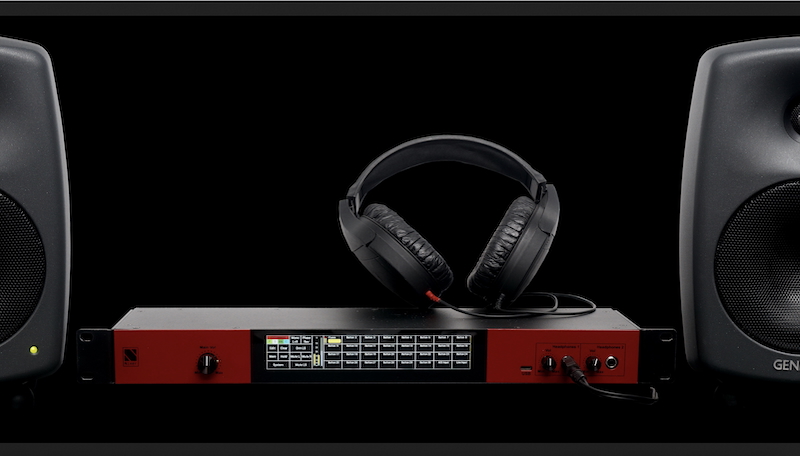
AMSTERDAM: Nixer Pro Audio has lifted the lid on its latest innovation at IBC 2025: the CV1, an all-in-one audio-over-IP monitoring unit aimed squarely at broadcast control rooms, production suites, recording studios and live performance setups.
Modelled on its RLC64 rackmount, the CV1 has been overhauled following requests from a national broadcaster, and is pitched as a fast, flexible and integration-friendly solution.
The speaker-free box is designed to slot neatly into high-end workflows, working with premium external loudspeakers and loudness meters via dedicated AES and line outputs. It supports Dante, Ravenna/AES67 and ST 2110 out of the box, with AVB-Milan waiting in the wings.
“In live broadcast operations and recording studios, sound quality is paramount,” said Nixer Pro Audio founder & chief executive Nick Fletcher. “Being able to hear everything through proper external monitors gives audio professionals greater assurance and control.”
The CV1 packs in dual headphone outputs with independent level controls, access to 32 stereo inputs—including 30 AoIP channels plus AES and line—and touchscreen switching. Output tools include individual channel mutes and a dim function with attenuation from 0 to 30 dB. Engineers also get phase reverse, mono sum and monitoring trims for quick fault-checking.
Eight AoIP outputs allow routing flexibility across complex setups, while the unit can natively return AES, line or AoIP sources back to the network—cutting out format converters and extra rack gear. Engineers can rename source buttons directly on-screen and tailor meter and output behaviour to suit.
Distributors and integrators are already eyeing the CV1 for live broadcast, radio, music production, post, and remote gallery work. Optional upgrades in 2026 will open up wireless AoIP monitoring via iPads and web UI. “The CV1 reflects our core philosophy: listen to customers and give them exactly what they need,” Fletcher said.
The unit is now shipping worldwide, with Nixer showing it off at stand 8.F96 at IBC 2025.
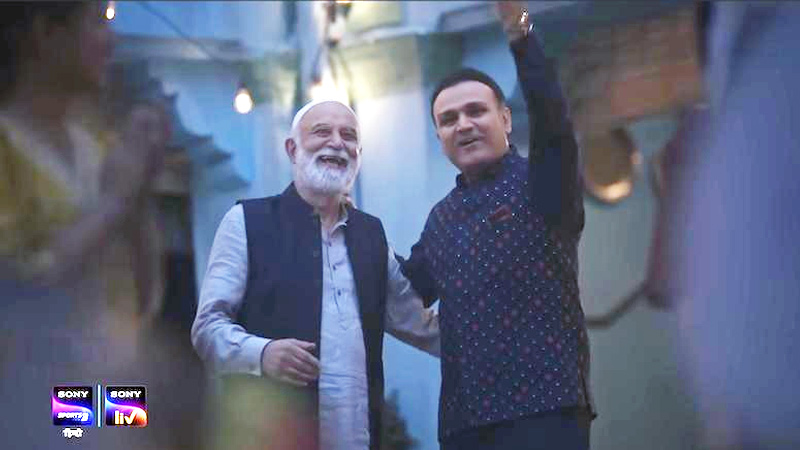
MUMBAI: Cricket advertising in India is a genre unto itself, but Sony Pictures Networks India may have just served up one of its most affecting innings yet. Its new Asia Cup promotional TVC, titled Asia Cup ka maha-muqabla, does not rely on pyrotechnics or overblown jingoism. Instead, it leans into something far more powerful: the lived reality of a billion-strong cricket nation.
The spot opens in a middle-class household, the sort instantly recognisable to viewers across India — compact, cluttered, warm. A multi-generational family, representing the classic Indian joint household, is gathered around a television set. Their emotions run the gamut from tense expectation to barely-suppressed hope. In their midst sits Virender Sehwag, the retired swashbuckler whose effortless stroke play once embodied India’s batting swagger. His presence is casual, yet symbolic: cricket is family.
On screen unfolds the ultimate cliché of Indian sport — a last-ball thriller against Pakistan. Suryakumar Yadav, known for his 360-degree stroke-making but carrying the weight of a poor run against Pakistan, takes guard against Shaheen Shah Afridi, Pakistan’s fiery left-arm quick. India need three off the final delivery. The room holds its breath. Yadav unfurls his trademark flick-sweep off his pads. The ball soars over fine-leg, lands in the stands. India have won.
The family erupts. So do, by implication, the millions watching at home across the country. The genius of the commercial is that the victory is not just India’s, not just Yadav’s redemption, not just a nod to the India–Pakistan rivalry that remains cricket’s greatest theatre. It is framed as a shared triumph of nationhood.
Sony has laced the narrative with subtle social cues. The family members are deliberately cast without overt religious markers — no heavy-handed signifiers of Hindu, Muslim, Sikh, or Christian identities. Instead, their togetherness suggests an anonymous universality, a blend of every Indian home. When one family member remarks, “God has listened to your prayers,” the phrase resonates across religions. It could as easily be said in a temple, mosque, church, or gurdwara.
This inclusivity crystallises in the closing voiceover: “When it comes to Team India, 140 crore hearts beat as one.” It is more than a tagline; it is an assertion of secular nationalism, packaged through the one institution that cuts across fault lines of caste, creed, and community — cricket.
The choice of Sehwag is inspired. His image has long been that of the approachable great: less demi-god than street-cricketer made good. Sehwag in a living room, laughing along with ordinary Indians, works as shorthand for the collapsing of boundaries between the game’s elite and its fans. In a country where cricket stars are often deified, here is one being human.
The film also plays on nostalgia. For decades, Indian households have arranged their routines around cricket matches. The image of families huddled before television sets — chai cups rattling, grandparents muttering prayers, children imitating shots in the cramped corridor — is imprinted in the national psyche. By invoking that memory, Sony makes the Asia Cup not just about live sport, but about reliving a tradition.
The timing of the TVC is astute. The Asia Cup kicks off on 9 September, with India–Pakistan ties expected to draw record ratings. This is also India’s first major tournament after the passage of the Online Gaming Bill 2025, which banned betting and fantasy sports with cash stakes but emphasised “safe online gaming” and esports as cultural exports. Sony’s film neatly dovetails with the government’s rhetoric: cricket as a unifying, wholesome national obsession rather than a site of division.
Advertising scholars will note how Asia Cup ka maha-muqabla breaks from older tropes. Previous India–Pakistan promos often thrived on antagonism: taunts, satire, chest-thumping. Sony, by contrast, softens the edges. The rivalry remains fierce — the six off Afridi is fantasy fulfilment — but the messaging is inward-looking. The focus is not beating Pakistan as much as celebrating India.
For a tournament where sport often becomes geopolitics, this is a nuanced turn. In less than a minute, the campaign positions cricket as faith, family, catharsis, and national glue.
That, in the end, is why the spot works. It is not simply flogging a match, or a tournament. It is selling the idea that India itself is best understood when a billion-plus citizens are praying for the same thing, shouting at the same screen, and rejoicing together when the ball sails into the stands.
MUMBAI: The cards have been reshuffled in India’s online gaming arena and this time, it’s the law dealing the hand. Following the enactment of the Promotion and Regulation of Online Gaming Bill, 2025, which prohibits all real-money games, skill or chance, Gameskraft has announced a full stop to gameplay and cash deposits on its Rummy platforms from 21 August 2025.
While users can no longer add money or play, the company stressed that withdrawal services remain active, with all account balances “safe and secure.” Gameskraft said it is working with banking partners, auditors, and legal advisors to ensure a seamless process for players cashing out.
Unlike previous flashpoints between gaming companies and regulators, Gameskraft made it clear there would be no legal challenge this time. “We fully respect the legislative process and remain committed to operating within the framework of the law,” the company stated.
The focus now shifts to the future. The company revealed it has begun structured internal discussions to explore new business models in line with the bill, guided by what it calls its pillars of responsible innovation, player protection, and regulatory alignment.
Gameskraft has also reassured stakeholders that it has cleared all regulatory dues, proactively communicated with employees, partners, vendors, and service providers, and safeguarded their interests during this transition.
Calling compliance “non-negotiable”, the company said the moment, while disruptive, is also an opportunity to “reimagine what’s next responsibly, lawfully, and for long-term value creation.”
With the ban cutting across India’s booming real-money gaming sector, the industry is now in reset mode. For Gameskraft, once a major player in the Rummy space, the challenge is no longer just winning the game, it’s reinventing it.
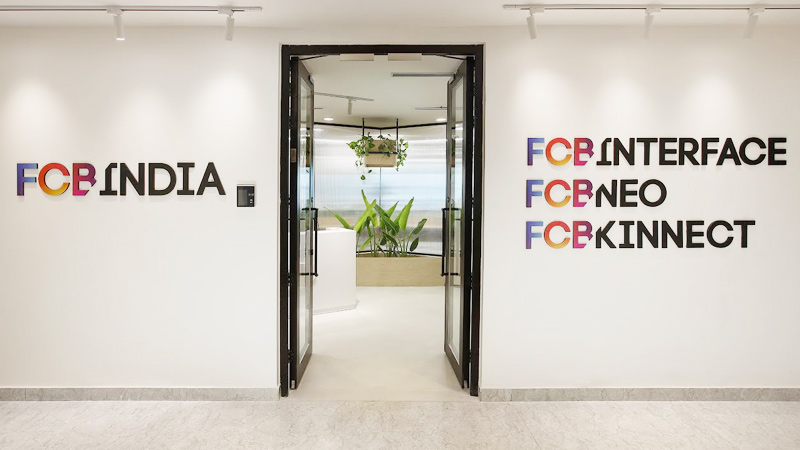
MUMBAI: Jungle fever has hit Gurugram — not in the streets, but inside FCB India’s brand-new office.
The creative agency has swung into its freshly minted 28,000 sq. ft. space, designed and built by Brawn Globus, and it’s anything but a corporate cage. Themed “The Urban Jungle”, the workspace is a leafy, raw-edged playground where bold ideas are meant to grow as freely as the potted palms.
Gone are the grey cubicles and hushed hallways. In their place stand open zones, nature-inspired corners and collaborative layouts that blur the line between imagination and reality. From biophilic design details symbolising growth to textures that invite conversation, every inch of the office feels less like a workplace and more like a living concept.
“We are proud to have partnered with FCB India in creating a space that is as bold and inventive as the brand itself,” said Brawn Globus, managing director, Sandeep Singh. “The Urban Jungle office demonstrates our philosophy of blending design innovation with flawless delivery. Advertising thrives on imagination without boundaries. We wanted the workplace to be as inspiring as the ideas the FCB team creates every day”.
For Brawn Globus, a heavyweight in design-and-build, the project is another feather in its architectural cap. For FCB, it’s a physical reminder of its ethos: fearless, inventive and always ready to colour outside the lines.
MUMBAI: Popcorn and a movie? That’s yesterday’s script. Cinépolis has rolled out Foovies, a lifestyle-first concept that lets audiences savour freshly made meals while watching their favourite films.
For decades, cinema snacking meant popcorn and cola. Foovies rips up that script, offering freshly prepared wraps, pizzas, fries, nachos, samosas and even in-house desserts, all served in-theatre. The idea is simple: turn a regular movie outing into a full-fledged foodie destination.
Speaking on the launch, Cinépolis India, managing director, Devang Sampat said, “At Cinépolis, we don’t just showcase films, we craft experiences. Foovies is our bold step to make every movie visit an immersive lifestyle indulgence, blending the joy of cinema with the comfort of world-class food.”
The launch is backed by special offers like Foovies25: 25 per cent off food and tickets and integration with Club Cinépolis loyalty rewards.
Since arriving in India in 2009, Cinépolis has pioneered luxury recliners, Dolby surround, cutting-edge projection and its globally famous popcorn.
MUMBAI: Clickonomics at work. Advertising is no longer just a sideshow to the economy; it is fast becoming one of its main acts. Global ad spend, worth about one trillion dollars in 2024, is set to swell to nearly one per cent of global GDP by 2029, says Bain & Company. The digital slice of the pie, already dominant, will account for 80-85 per cent of all spend within five years.
India is emerging as one of the liveliest markets in this story. Valued at 16-18 billion dollars in 2024, its ad market is growing at 10-15 per cent annually and is expected to hit 17-19 billion dollars by 2029. That will lift advertising’s share of GDP from 0.4-0.5 per cent. More than half of the country’s ad rupees already go online, a share that will only rise as smartphones, OTT platforms and fast data spread deeper into towns and villages.
Small firms and direct-to-consumer brands are doing much of the heavy lifting. Their share of India’s digital ad wallet has crept up to 37 per cent in 2024 and could hit 42 per cent by 2029. They are pouring money into mobile-first campaigns, e-commerce tie-ins and performance marketing, all with a sharp eye on returns.
Globally, mobile screens are soaking up around 70 per cent of digital budgets, with India leaning even harder on handsets. Newer channels like connected TV are gaining ground, too. India already has 45 million CTV households, up from 20 million in 2022, and brands are chasing their premium eyeballs with contextual ads and cricket-season splurges.
“India’s digital advertising market is at an inflection point,” said Prabhav Kashyap, partner at Bain & Company. “The convergence of mobile-led consumption, the rapid rise of video formats, and the integration of AI into every stage of the advertising process is reshaping how brands connect with consumers. As audiences spread their attention across more devices and platforms, the leaders will be those who diversify beyond mega platforms, design content for each channel from the ground up, and harness AI and first-party data to deliver personalised, high-impact campaigns. Over the next five years, the ability to combine creativity, data, and technology will be the defining factor in who captures the most value.”
AI is changing the business from top to bottom. No longer just a tool for faster ad copy, it is now steering media plans, testing creative variations, allocating spend and measuring incremental returns. Global players such as InMobi, The Trade Desk and AppLovin are racing to embed machine learning into every step of the process.
Publishers are also sprucing up their platforms with less intrusive formats, smarter data and loyalty-driven engagement. Adtech firms, meanwhile, are bulking up into full-stack operations, stitching together demand- and supply-side platforms with exchanges. The industry is consolidating around those who can offer sharper targeting and better ROI.
Bain & Company, associate partner, Devika Mittal said, “To unlock stronger ROI, brands and publishers need to work in closer sync. Compared to just a few years ago, we are seeing the emergence of scaled adtech players (like InMobi and The Trade Desk) who are playing a pivotal role in driving more precise targeting and performance, maturing the ecosystem significantly and enabling brands to continuously sharpen their digital advertising strategies.”
Advertising has always followed the eyeballs. Now, with eyeballs glued to mobile screens, streaming apps and AI-powered feeds, the money is moving faster than ever. By 2029, ads will not just be selling soap, they will be helping steer the world’s economy.
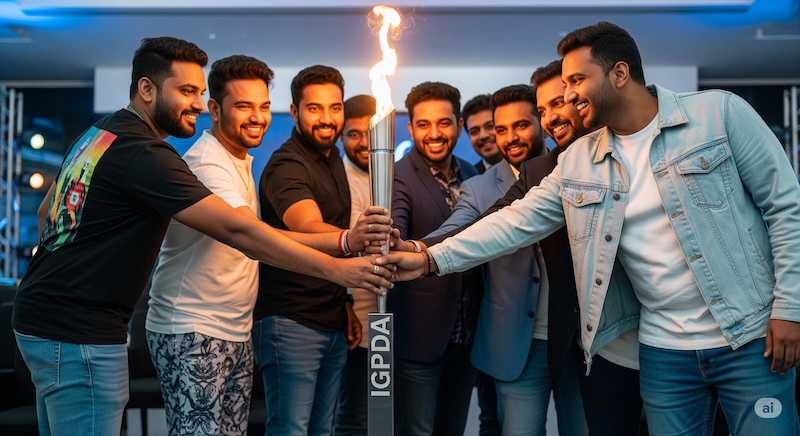
MUMBAI: India’s game publishers and developers have found a single banner. A new industry body, the Indian Game Publishers and Developers Association (IGPDA), has been launched to give the sector a unified voice and global ambition.
The association brings together studios, publishers, training outfits, facility providers, and investors. Its brief: to champion homegrown intellectual property, showcase Indian stories, and build skills across animation, VFX, gaming, and comics.
Nine firms are on the founding roster, from Nazara Technologies (World Cricket Championship) and Gametion (Ludo King) to nCore Games (FAU-G: Domination), Reliance Games (WWE Mayhem), SuperGaming (Indus Battle Royale), Tara Gaming (The Age of Bhaarat), underDOGS Studio (Mukti), Aeos Games (Unleash the Avatar), and Dot9 Games (Apna Games).
“For the first time, India’s developers and publishers have a unified voice,” said NCore founder and IGPDA chairman Vishal Gondal. “This is about more than games — it’s about building iconic IP and creating a cultural legacy for India.”
IGPDA has already pitched a partnership with the Maharashtra government to position Mumbai as a global gaming hub through policy incentives. Its first event is slated for later this year in Mumbai.
The launch comes hard on the heels of the Online Gaming Bill, which won presidential assent on 22 August. The law bans real-money platforms — betting, gambling, lotteries, card games with cash stakes, and fantasy sports — but draws a clear line between those and what it calls “online social games.”
The government says it will promote esports and safe online gaming as a job creator, export booster, and innovation driver.