Blog

  • LiveU powers seamless streaming of Rolex Fastnet Race centenary sail

    LiveU powers seamless streaming of Rolex Fastnet Race centenary sail

    MUMBAI: To fully immerse sailing fans in the world’s biggest offshore yacht race, production company, Optical Media turned to LiveU’s On-site Production solution to provide live streamed coverage of the Rolex Fastnet Race. Starting in Cowes on the Isle of Wight, on 26th July and finishing in Cherbourg, France, after rounding the Fastnet Rock off the southwest coast of Ireland, the 2025 biennial event marked its Centenary year and saw more boats participating than ever before. Building on the successful broadcast of the start of the race in 2023, Optical Media further extended its use of LiveU’s live production solutions with the addition of LiveU IQ (LIQ™) to deliver the best available cellular connectivity in this most challenging environment.

    In order to fully capture the excitement as the 3,000 sailors prepared to take on this immense endeavour, Optical Media produced a 15-minute build-up show. The team then live streamed the start of each class, showing the many challenges the crews have to manage, as these huge boats jostle to get the best position at the Royal Yacht Squadron start line – without colliding or accruing a two-hour penalty for setting sail too early. Coverage of the race was broadcast live to the Royal Ocean Racing Club’s YouTube channel and to two European broadcasters.

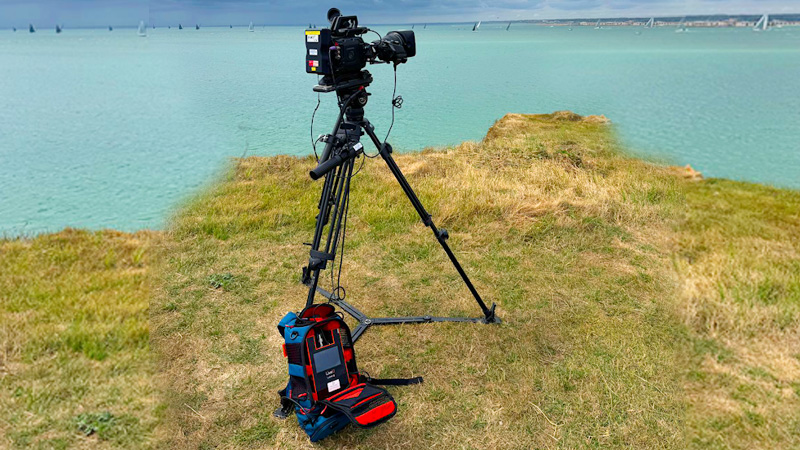
    Optical Media deployed several LiveU LU600 units to live stream in 4K including one on a high-speed RIB (Rigid Inflatable Boat) equipped with a specialised stabilised camera system. The RIB followed the fleet as they powered across the Solent delivering close-up footage of crews pushing to secure prime positions. LiveU’s LIQ, which dynamically and intelligently switches mobile network operators to provide the highest performing set of cellular connections available, was used on the RIB to ensure a reliable signal would be maintained in these most demanding circumstances chasing the fleet at up to 15-20 knots.

    Optical Media director James Light says, “We certainly never lost the connection on the RIB. I think the LIQ service is very strong and to put it in these challenging conditions proves to me that it really works. It was able to identify whatever key network was there and present it the whole time. I think part of the success this year must go down to LIQ’s capability to react in real-time to changes in network conditions. It’s a weather-proof solution that gives you the best set of options.”

    To complement this dynamic coverage, a second LiveU unit was strategically placed at Egypt Point, which is a pivotal vantage near to the start line, while a third unit provided elevated shots from a hilltop framed with the picturesque Hurst Castle in the background.

    Optical Media also used LiveU’s LU-Link, which enables a plug-and-play cloud service as part of LiveU’s on-site production solution. LU-Link eliminates the need for a custom firewall configuration, enabling the LiveU server to be hosted seamlessly on an unmanaged network. Light adds, “It’s like magic. Using LU-Link we can plug into any network, we just pop the rack in the OB van, which is parked next to the Royal Squadron Building, and off we go. It just works.”

    For the first time Optical Media deployed LiveU’s Audio Connect intercom system.

    Light explains, “The team could plug in their headphone ports connected via a jack extender onboard the RIB, at Egypt Point and Hurst Castle and they were able to hear crystal clear director comms in real-time. There was no messing around with phones or other more complicated audio systems, which was critical for me. It was a big help and I certainly wouldn’t do this project without it in future.”

    He concludes, “I believe our methodology as a production business is to find the best available tools for the job in hand, based on a range of factors including budget, complexity and scenario. Together with the LiveU team we find solutions that work in challenging environments so that we can bring viewers closer to the action. LiveU opens opportunities for us to talk to clients about how we can tell stories in different ways.”

    LiveU sales director for UK Matthew Stringer adds, “This project is one of the more challenging real-world deployments of LiveU IQ, which demonstrated the unmatched power and real-time network diversity LIQ can deliver. Live streaming from the Solent is notoriously challenging due to network conditions, yet LIQ delivered a rock-solid signal throughout. The Rolex Fastnet Race is a prestigious event and by working closely with James and his team, we ensured they had simple plug-and-play LiveU production tools that maximize both productivity and creative freedom no matter how difficult the conditions.”

  • Power Shift as She Shakti 2025 celebrates women driving Bharat forward

    Power Shift as She Shakti 2025 celebrates women driving Bharat forward

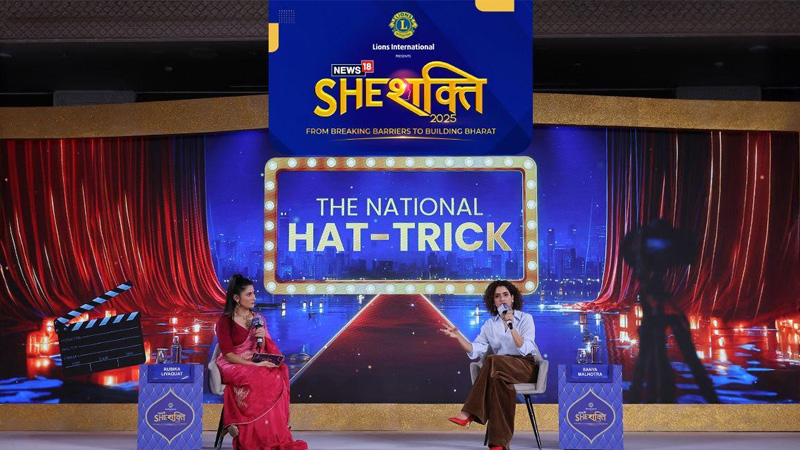
    MUMBAI: Who runs the world? At She Shakti 2025, the answer was loud and clear women, and on their own terms. News18 flagship platform, presented by Lions International, returned in Delhi with its grand finale under the theme “From Breaking Barriers to Building Bharat.” From policy corridors to cinema screens, women leaders, changemakers and stars gathered to showcase how they’re rewriting India’s growth story.

    The line-up sparkled with names across domains Smriti Irani, former cabinet minister and founder of The Alliance for Global Good; Nidhi Khare, secretary at the department of consumer affairs; Lindy Cameron, British high commissioner to India; Mallika Srinivasan, chairman & MD of Tractors and Farm Equipment; actors Kriti Sanon and Sanya Malhotra; JNU vice-chancellor Santishree Dhulipudi Pandit; and playback legend Kavita Krishnamurti Subramaniam, among others.

    President Droupadi Murmu set the tone with a powerful video message: “As scientists, engineers, doctors, soldiers, artists, entrepreneurs, athletes, academicians, social workers, policy makers, and in many other roles, women are consistently reaching new heights… In reality, this is not just a change, but a revolution.”

    Smriti Irani, recalling her rise to becoming the highest-paid television actor 25 years ago, urged women to “scream out loud” about their pay cheques. “Today, women don’t just want a seat at the table; they want the capital, the confidence, and a clear pathway to scale their capacities,” she said.

    Kriti Sanon brought an entrepreneurial lens, stressing women’s “problem-solving mindset” in business. Sanya Malhotra drew on her acclaimed film Mrs. to highlight the quiet but seismic fight for freedom at home. “The problem started when she wanted to do something else,” Sanya said of her character, “and wasn’t allowed to.”

    Over the years, She Shakti has grown into more than an event, it’s become a stage where stories of resilience, ambition, and leadership converge. This year’s edition underlined that gender diversity isn’t just about inclusion; it’s about powering Bharat’s future with grit, grace, and an unstoppable revolution.
     

  • Netflix sets guardrails for AI in film and TV productions

    Netflix sets guardrails for AI in film and TV productions

    MUMBAI: Netflix has moved to head off potential controversy over the creeping use of artificial intelligence in film and television, issuing sweeping new guidance for filmmakers, vendors and production partners. The rules, circulated globally this week, make clear that while generative AI (GenAI) can be deployed as a creative aide, it must not slip quietly into final cuts without disclosure, scrutiny and, in some cases, written approval.

    The streamer has stressed that AI is welcome for ideation — moodboards, concept sketches, mock posters — but warns of red lines when it comes to intellectual property, talent likeness and story-critical material. In other words, it’s one thing to ask an algorithm to imagine a dystopian cityscape for a pitch deck; quite another to use it to conjure a new character, rewrite an actor’s performance, or mimic a celebrity’s voice.

    The dos and don’ts

    The 20-page guidance has outlined a hierarchy of acceptable uses. Low-risk experiments that are non-final, non-identifiable and non-copyrighted can usually proceed with a simple “socialise and share” approach. But any GenAI-generated material that:
    * incorporates Netflix’s proprietary assets (scripts, footage, unreleased stills),
    * alters talent performances beyond cosmetic fixes,
    * relies on copyrighted datasets (such as celebrity faces or artistic styles), or
    * appears as final on-screen deliverables,
    must be escalated to the company for legal review and explicit sign-off.

    Perhaps the sharpest line the guidelines draw is around talent. Synthetic replicas of performers — whether de-aged faces, digital bodies or AI-generated voices — require documented consent, in line with union rules. Even subtle digital alterations, such as tweaking lip-sync or emotional delivery, are flagged as reputationally sensitive. Netflix says it permits the use of AI for minor industry-standard post-production tweaks (noise reduction, continuity fixes, cosmetic adjustments), but not for material changes that could distort intent or replace union-covered work.

    The streamer, says it is acutely aware of the reputational stakes. It warns against AI-generated content that could mislead viewers into believing fabricated events are real — such as fake news clips or invented statements attributed to journalists. It has also cautioned against undermining union jobs, an especially hot-button issue after last year’s strikes in Hollywood over the threat posed by AI.

    Vendors and AI studios delivering to Netflix are being told to adhere to the same standards, even if they build custom workflows by stitching multiple tools together. Confidentiality remains non-negotiable: all inputs — from scripts to actor headshots — must be protected inside secure, enterprise-level tools that prevent reuse or resale of data. Production partners have been reminded that they are personally responsible for checking licences, terms and conditions of any third-party AI software.

    The guidance draws a hard distinction between temporary AI-assisted mock-ups and content that makes it into the final cut. A background prop generated by AI may appear harmless, but if a character reads it aloud, it becomes story-relevant and must undergo rights clearance. Netflix insists partners flag such cases early to avoid last-minute legal headaches.

    Why now?
    The move reflects the industry’s jittery embrace of GenAI. While many creatives are already experimenting with it in design, concept art and even scriptwriting, studios are scrambling to balance innovation with ethics, copyright law and union agreements. Netflix is positioning itself as neither a Luddite nor a cheerleader — encouraging experimentation, but within guardrails designed to protect talent, data and audience trust.
    The message from Los Gatos is blunt: AI may be the new toy in the toolbox, but when it comes to finished stories and performers’ rights, the humans are still in charge.

    You can find the detailed guidelines here.
     

  • Ashish Sehgal quits Zee, replaced by old hand Laxmi Shetty

    Ashish Sehgal quits Zee, replaced by old hand Laxmi Shetty

    MUMBAI: Old Zee timer Ashish Sehgal is moving on. Sehgal who was with the Zee group for nearly 20 years was designated as the chief growth officer, advertisement revenue and was known to be very close to promoter Subhash Chandra.

    It was just last month that he had been inducted into the Indian Telly Awards hall of fame for his contribution to the entertainment behemoth. He was also on the board of directors of The Indian Broadcasting & Digital Foundation.

    The company made the announcement through a regulatory filing with the Bombay stock exchange. It said that Sehgal was moving out for personal reasons and the parting was mutual.

    In his resignation note Ashish Sehgal said: “After much reflection, I have decided to step down from my role at Zee Entertainment Enterprise Ltd, marking the end of a truly enriching chapter in my professional journey. It has been an incredible experience spanning almost 20 years, during which I’ve had the privilege to learn every nuance of the trade, grow through challenges, and contribute meaningfully to our shared goals.”

    “Working under your leadership and alongside such talented colleagues has been both an honour and a learning experience. The culture of excellence, collaboration, and innovation here has shaped me in ways I will always carry forward. As I move on to explore new horizons, I do so with immense respect and appreciation for everything this organisation has given me.” 

    The company also announced the elevation of Laxmi Shetty as the head of advertisement revenue, broadcast & digital. Shetty has been part of the leadership team for 20 years, the company said.

    In a press note, Zee highlighted that Laxmi will lead the company’s efforts to enhance monetisation across the linear and digital businesses, further strengthening its financial foundation by maximising revenue generation. In this role, Laxmi will report directly to the CEO, Punit Goenka.

    “Laxmi has been an integral part of the leadership team and a strong pillar of the revenue vertical for over 20 years and has rich experience in the overall advertising landscape. She has been recognized for successfully implementing sustainable creative solutions, enhancing revenue generation opportunities. Her expertise lies in driving strategic excellence across the sales ecosystem through innovative cross-platform solutions, capitalising on newer opportunities, leading to enhanced value delivery to advertisers. In this new role, Laxmi would be responsible for driving a holistic monetization strategy across the business by tapping into newer revenue streams and enhancing the advertiser base by delivering unique solutions at the intersection of content and technology.”

  • Zee5’s ‘Tehran’ races to 100 million minutes in record-breaking debut

    Zee5’s ‘Tehran’ races to 100 million minutes in record-breaking debut

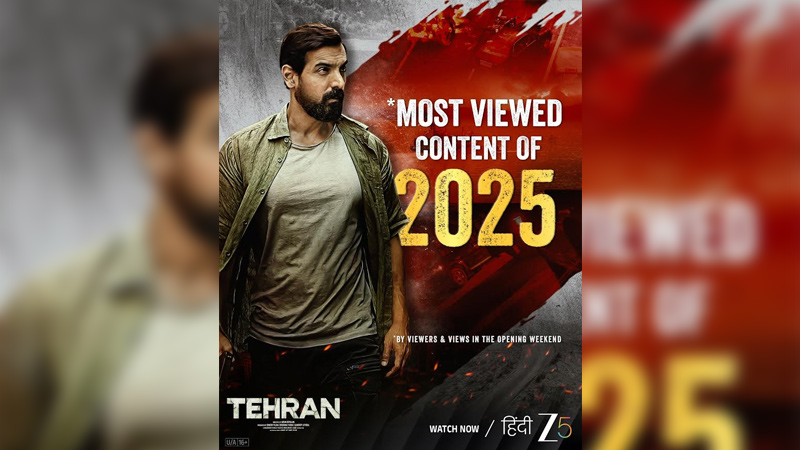
    MUMBAI: The John Abraham-starrer became the fastest Hindi film of 2025 to cross the 100 million streaming minutes mark on Zee5 and it did so in just 72 hours of its Independence Day weekend premiere. By the end of its launch week, the geo-political thriller had clocked up a staggering 200 million minutes, securing its place as the platform’s most-watched Hindi release of the year.

    The film didn’t just win over Indian audiences. Streaming across 190 plus countries, Tehran broke into Zee5’s global Top 5 for 2025, trending in the US, UK, MENA and APAC proof that its tense narrative struck a chord with the diaspora.

    A slick marketing blitz only added to the spectacle. From a visual projection on Mumbai’s Bandra-Worli Sea Link to hoardings across UP, MP and Mumbai, Tehran was unmissable. The promotions even included Zee5’s first-ever exclusive screening at the Sushma Swaraj Institute of Foreign Service in Delhi, capped with a candid Q&A session with John Abraham himself.

    Zee5 business head (Hindi), Kaveri Das, credited the success to the film’s “intelligent narrative” and said the response reflects the appetite for “stories that entertain while sparking conversations.”

    Meanwhile, Abraham called the audience’s love “truly overwhelming” and said the film reinforced his belief in pushing boundaries and said, “Geo-political thrillers are a genre I truly believe in, and this proves viewers want stories that go beyond entertainment, bold films that stay with you long after the credits roll.”

    Directed by Dinesh Vijan, the thriller stars John Abraham, Neeru Bajwa, Manushi Chhillar and Madhurima Tuli, and is set against the backdrop of the 2012 magnetic bomb blast near the Israeli Embassy in Delhi. With its blockbuster premiere, Tehran has firmly joined the ranks of Zee5’s most successful titles, reaffirming the streamer’s grip on premium homegrown content.


  • Lowe Lintas & Google Gemini put AI to test in everyday moments

    Lowe Lintas & Google Gemini put AI to test in everyday moments

    MUMBAI: That’s the playful pitch behind a new campaign by Lowe Lintas for Google Gemini, designed to take artificial intelligence out of the lab coat and into everyday life. Instead of talking about algorithms and tech jargon, the series of short films makes AI look like the friend who helps you file your expenses, revise for exams, or even sharpen your sports game.

    The campaign spans nine snappy 20-second films, each capturing simple scenarios where Gemini comes to the rescue, whether you’re a student juggling assignments, a professional under pressure, or someone just trying to fix that stubborn office projector.

    By rooting AI in real-world quirks rather than sci-fi fantasy, Gemini is positioned as ‘Your Everyday AI Assistant’, a guide for students, a productivity hack for busy professionals, and a time-saver for anyone stuck in life’s little muddles.

    Sharing her thoughts on the campaign, Lowe Lintas, president (Creative),  Vasudha Misra said, “AI often feels like a big, complex idea, but we wanted to show just how simple it can be. With Google Gemini, all it takes is one press of a button on your Android phone. No complicated setups, no jargon, just real help in real moments, whether it’s fixing a projector that won’t connect or revising for an exam. Suddenly, AI isn’t abstract anymore, it’s an everyday ally, ready when you need it most.”

    The films carry a lightness of touch: relatable, quick, and quietly persuasive, encouraging viewers not just to admire the technology but to try it for themselves. The campaign is now live across digital and offline platforms. 

  • Game over? Gaming giants roll the dice on life after India’s RMG ban

    Game over? Gaming giants roll the dice on life after India’s RMG ban

    MUMBAI: When the house always wins, sometimes the only move left is to change the game. That’s exactly what India’s biggest online gaming giants are scrambling to do after the Promotion and Regulation of Online Gaming Bill, 2025 pulled the plug on all real-money contests skill or chance alike.

    Fantasy sports kingpin Dream11, India’s largest operator, is preparing to close its real-money business. CEO Harsh Jain told employees there was “no legal pathway to continue operations once the law takes effect.” In public remarks, Jain added, “We have always been a law-abiding company and have always conducted our business in compliance with the law. While we believe that progressive law would have been the way forward, we will respect the law and fully comply with the Promotion and Regulation of Online Gaming Bill 2025.”

    Winzo has officially launched in the United States, following its Brazil entry in 2023. With this, the company now straddles three of the world’s top four mobile gaming markets India, Brazil, and the US together worth 65–70 billion dollars. Positioned as a Tech Exports 2.0 story, Winzo aims to take Indian gaming IP, talent, and culturally relevant content global through its plug-and-launch distribution model. Backed by 250 million users, 100 plus games, 15 languages, 100 plus patents, and its 50 million dollars Zo Fund, Winzo is scaling innovation beyond India while responsibly exiting real-money formats at home.

    “The launch of Winzo in the United States is a proud milestone for us and for India’s digital entertainment ecosystem. Our vision has always been to empower Indian game developers to reach global audiences. Entering the U.S., the world’s largest and most influential gaming market, is a decisive step towards that mission. We are equally excited to introduce ZO TV, our new short video format, which further diversifies our content offerings and strengthens Winzo’s position as a global hub and one stop destination for interactive entertainment,” said Winzo co-founders Saumya Singh Rathore and Paavan Nanda.

    The financial impact was immediate. Jain revealed that after the bill’s enactment, “95 per cent of revenues disappeared,” describing the legislation as a “knockout blow.” Still, he struck a note of resilience, insisting Dream Sports has “sufficient reserves to sustain its business during this transition” and can adapt by leaning on other ventures like Fancode, Dreametgo and Dream Game Studios.

    The pivot is not just about apps. Dream Sports is now pushing an AI-first strategy, with Jain saying the technology could disrupt “every part of sports: content, commerce, performance, and coaching.” Beyond tech, it is doubling down on grassroots development. At the first Telangana Sports Conclave, COO Sumit Pandey highlighted how the Dream Sports Foundation is backing long-term athlete journeys. “By investing in inclusivity and accessibility,” he noted, the company hopes to carve a sustainable role in India’s sporting ecosystem beyond gaming.

    Meanwhile, Zupee has pulled the plug on its cash contests, but insists the fun isn’t over. Announcing the withdrawal of its RMG offerings, the Gurugram-based company reassured its 150 million-strong user base that its platform will continue to host fan favourites like Ludo Supreme, Ludo Turbo, Snakes & Ladders and Trump Card Mania.

    “Our foremost priority has always been our users, and we remain committed to offering them innovative, responsible, and joyful gaming experiences,” the company said in a statement. “We will continue to focus on engaging, and culturally rooted free-to-play gaming formats…” It added that the aim now is to serve players with entertainment that is “fun, engaging and responsible.”

    MPL (Mobile Premier League), backed by Sequoia and Pegasus, has also hit pause on money-based offerings in India. The platform is funnelling resources into free-to-play titles at home, while going aggressively global with eyes on Europe, the US, and Latin America.

    Games24x7, operator of Rummycircle and My11circle, has stopped accepting deposits and shut its real-money engine. While tight-lipped publicly, industry watchers note the company’s focus may shift towards broader tech plays such as Techxpedite, its accelerator for AI, gaming and tech startups.

    For some, the ban was simply the end of the road. Flutter Entertainment, the global gambling powerhouse behind Junglee Rummy, announced a full India exit, cutting off over 1,100 employees and chalking up a 200 million dollars revenue loss for 2025. CEO Peter Jackson voiced frustration: “We were disappointed… this regulation might push users toward unregulated markets lacking consumer protection and economic contributions.”

    Gameskraft, one of India’s biggest rummy operators, also chose compliance over confrontation. “As a responsible and law-abiding corporate entity, Gameskraft has no intention of pursuing any legal challenge to the legislation. We fully respect the legislative process and remain committed to operating within the framework of the law…” a spokesperson said. They stressed the company’s ongoing commitment to “constructive dialogue with policymakers and stakeholders, responsible innovation, player protection, and regulatory alignment.” Gameskraft noted it had stopped all ‘Gameplay’ and ‘Add Cash’ services as of August 21.

    Not every player was equally exposed. Nazara Technologies, whose stock briefly dipped seven per cent on the news, clarified that it has no direct involvement in real-money gaming and therefore faces little business impact. “The bill is unlikely to significantly affect our financial performance,” the company said.

    Industry associations, however, remain combative. AIGF, EGF and FIFS warned in a letter to home minister Amit Shah that a blanket ban could wipe out Rs 20,000 crore in annual tax revenue and drive players to offshore platforms raising risks of fraud, money laundering and data breaches.

    Delta Corp’s Adda52, India’s top poker platform, is also feeling the squeeze. Its stock has plunged nearly 34 per cent in a year, with an additional nine per cent shaved off after the Bill passed. But unlike pure-play fantasy or rummy firms, Delta still has chips left on the table, its casinos in Goa, Sikkim and Daman remain unaffected. Even before the ban, Delta had lined up a demerger of its hospitality and real estate arms, ring-fencing casino operations for the long haul.

    Between AI-powered sports labs, grassroots investments, free-to-play contests and casino strongholds, the industry is scattering in every possible direction. The only certainty? Real money has left the building but the game is far from over.

  • Live Times turns one: a year of truth-telling in a noisy news era

    Live Times turns one: a year of truth-telling in a noisy news era

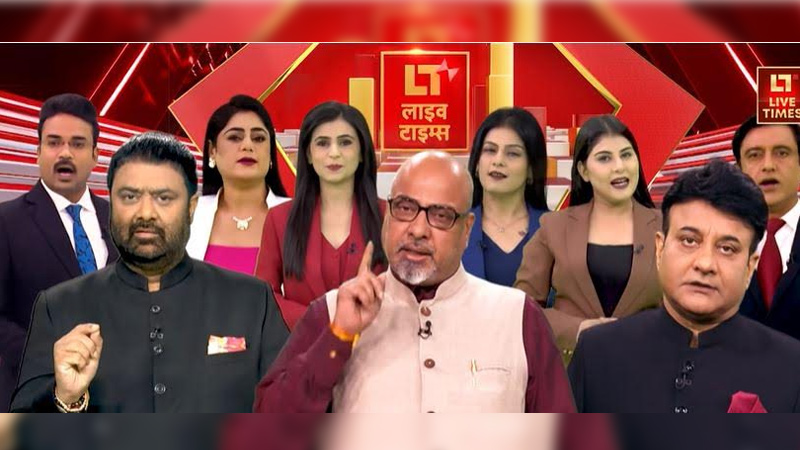
    MUMBAI:  India’s first global multicast news hub has just blown out its first birthday candle, celebrating 12 months of fearless journalism, bold scoops, and a no-nonsense approach to facts in an era where sensationalism often grabs the mic.

    Launched on 23 August 2024 with the unapologetic motto “Complete Truth, Whatever It Takes,” the channel has spent the past year prying open stories others left untouched. From exposing the bone-chilling horrors of Operation Murda to on-ground exclusives during the Delhi Assembly elections, Live Times has made a habit of rattling cages and raising questions.

    Healthcare too came under its lens: reports on Bihar’s crumbling hospitals, Chhattisgarh’s fragile medical system, and mass migration in Madhya Pradesh revealed the gaps between policy and reality. One expose on patients denied treatment despite holding Ayushman health cards made it all the way to the state Assembly, proving that journalism still has teeth.

    With exclusive drone visuals, Live Times captured India’s evolving counter-terror strategy, setting fresh benchmarks in both technology and reporting grit.

    But it hasn’t stopped at newsbreaks. To mark its anniversary, Live Times launched “Voices of Experience: Advice for Future Journalists” , a campaign that tapped India’s veteran reporters for wisdom nuggets. The advice? Double down on fact-checking, stay fearless, work hard, and always keep credibility intact. In other words: journalism has no shortcuts.

    One year on, Live Times isn’t just patting itself on the back; it’s holding up a mirror to the profession. Its message is clear: truth is timeless, and in the race for eyeballs, integrity still wins the day.


  • Deepali Saini steps up as global chief experience design officer at Havas CX

    Deepali Saini steps up as global chief experience design officer at Havas CX

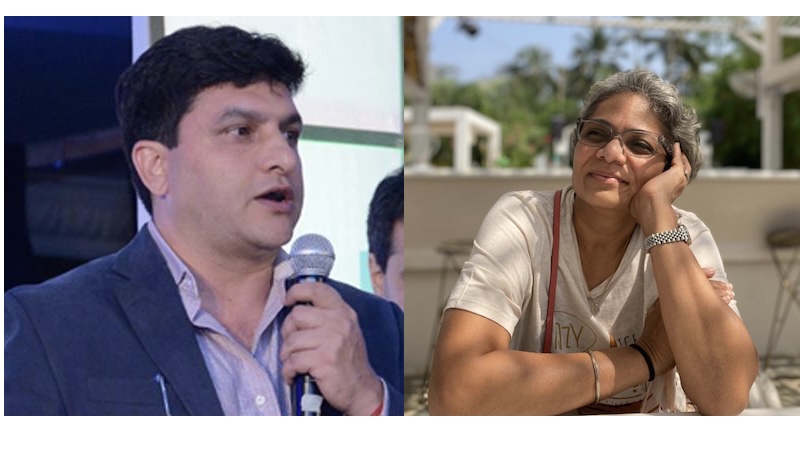
    BENGALURU: Think Design chief executive Deepali Saini has been elevated to global chief experience design officer at Havas CX, the customer experience arm of Havas Group. In her expanded brief, Saini will continue to run Think Design in India while shaping the network’s worldwide experience design (XD) practice.

    The move signals Havas CX’s ambition to place design leadership from India at the centre of its international growth. Saini now joins the global CX leadership board, where she will be responsible for harmonising experience design standards across markets, deepening integration with client programmes, and accelerating growth in new service areas.

    Her mandate also includes strengthening design methodologies across geographies, mentoring talent, building proprietary frameworks, and setting ethical guidelines for deploying artificial intelligence in the design process — a theme gaining urgency across global networks.

    Saini, who co-founded Think Design in 2004, has spent over two decades shaping design-led strategies for organisations in healthcare, banking, telecom, and public services. A graduate of NID Ahmedabad and ENSCI Paris, she is known for championing research-driven design and has taught methodology at NID.

    “This is an opportunity to both honour the foundations we have laid in India and push the boundaries of what experience design can achieve globally,” Saini said. She credited Havas India chief Rana Barua and Havas CX global chief David Shulman for their backing in creating what she called “a truly borderless design practice.”

    Her appointment underscores a wider trend of Indian design talent gaining global prominence within multinational networks, with Havas signalling that southeast Asia, India, and the middle east will be pivotal growth regions for its CX portfolio.

  • Brazil’s Visom Digital and India’s Karman Unlimited partner on drama Love is a Stranger

    Brazil’s Visom Digital and India’s Karman Unlimited partner on drama Love is a Stranger

    MUMBAI:  The Ripple Effect has brokered a cross-continental partnership between Brazil’s Visom Digital and India’s Karman Unlimited to adapt the acclaimed Brazilian drama Love is a Stranger for the Indian market. The latter has optioned the series from Visom Digital. 

    The series, created by Ingrid Zavarezzi and Carlos de Andrade, centres on Vânia Jardim, a Rio police officer investigating domestic violence cases while battling her own trauma. . Inspired by true stories, the series intertwines real cases ofdomestic violence with Vânia’s   battle against a ruthless media campaign led by digital influencer Branca Lemos. Ultimately, the narrative transcends crime drama to deliver a socially impactful message about resilience, justice, and hope.

    Originally airing on AXN Brazil since 2024, it drew praise for its raw realism and won the lead Juliana Knust a Golden Panda Award nomination. A wider rollout on Record TV is due in late 2025.

    “Love is a Stranger is more than a police drama—it is a call to action against gender-based violence,” said The Ripple Effect executive vice-president Viviana Hadid.

    Carlos de Andrade of Visom Digital called the story “a responsibility to shine light on issues society too often ignores”, while Karman Unlimited chief executive Sunita Uchil said the remake would reaffirm “the power of entertainment to inspire awareness and change.”

    The Indian version is in early development, with further international adaptations expected across Latin America.