Blog

  • Easy Trip Planners makes changes at the top

    Easy Trip Planners makes changes at the top

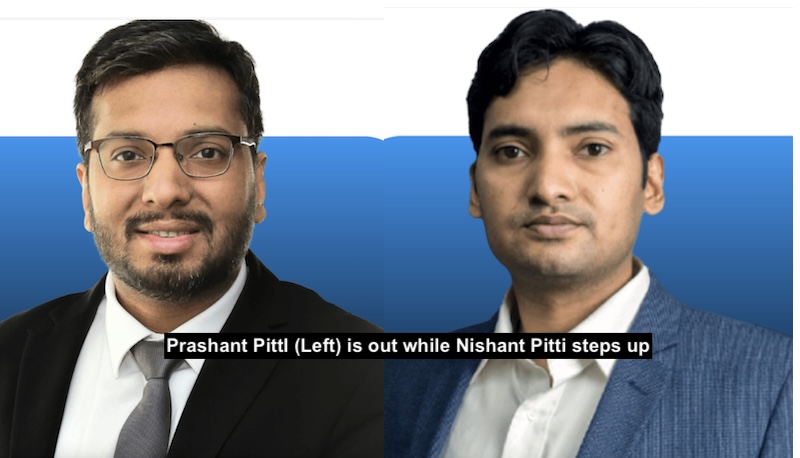
    MUMBAI: Ease My Trip has announced a sweeping boardroom reshuffle. The online travel agency’s board, meeting on 29 August, cleared the elevation of Nishant Pitti from whole time director to chairman-cum-managing director for a five-year term, subject to shareholder approval. Nishant, who co-founded the company, will now steer the business with expanded authority as it eyes growth in a competitive market.

    Alongside, the board appointed Vikas Bansal as whole time director, also for five years, signalling a fresh push to strengthen management bandwidth. Bansal’s induction marks a key addition to the leadership bench as the company looks to broaden its strategic play beyond flight and hotel bookings.

    The shuffle also saw a notable exit. Prashant Pitti, another co-founder, resigned as managing director with immediate effect. His departure trims the Pitti family’s active leadership presence, leaving Nishant firmly at the helm.

    The moves, cleared under SEBI’s listing norms, underline a generational shift in Ease My Trip’s governance and a sharper delineation of roles at a time when India’s online travel sector is recovering momentum post-pandemic and intensifying its battle for market share.

  • Bengaluru gets a smashing serve with Pickleball Now Grand Prix debut

    Bengaluru gets a smashing serve with Pickleball Now Grand Prix debut

    MUMBAI: Game, set… and smash! Bengaluru is all set to witness a sporting spectacle with a twist as Times Network serves up the Pickleball Now Grand Prix on 30 August 2025 at Gorally, Whitefield. Billed as India’s first premium lifestyle pickleball showcase, the daylong event promises a fiery mix of sport, community, and high-energy fun. Over 250 registered players will battle it out across 7 dedicated courts, cheered on by more than 500 attendees. With a Rs 2 lakh prize pool, 14 winners and 14 runners-up will take home medals, trophies, and bragging rights, all backed by official Pickleball World Rankings (PWR) points to up their global standing.

    The format caters to both seasoned pros and rising enthusiasts, with Men’s, Women’s, and Mixed Doubles in Intermediate and Open categories, plus a cheeky Mystery Partner draw where teammates are paired at random ensuring unpredictable rallies and plenty of laughs.

    Backing the Grand Prix is a power-packed sponsor roster, led by Hell Energy Drink (presenting partner) and MG Motors (driving partner), with big names like Skechers, Just In Time, Aris Perfumes, River Bikes, Amity University, Coindcx, Radico, Zoho, Acerpure, Assetz Builders, Airavat, and Stayvista all jumping on board.

    With booming brand power, rising player numbers, and a sport that’s fast becoming India’s newest obsession, the Pickleball Now Grand Prix looks set to ace its debut not just as a tournament, but as a lifestyle statement that Bengaluru won’t stop talking about.

  • Reliance AGM: Mukesh Ambani unveils JioHotstar’s new AI-led features

    Reliance AGM: Mukesh Ambani unveils JioHotstar’s new AI-led features

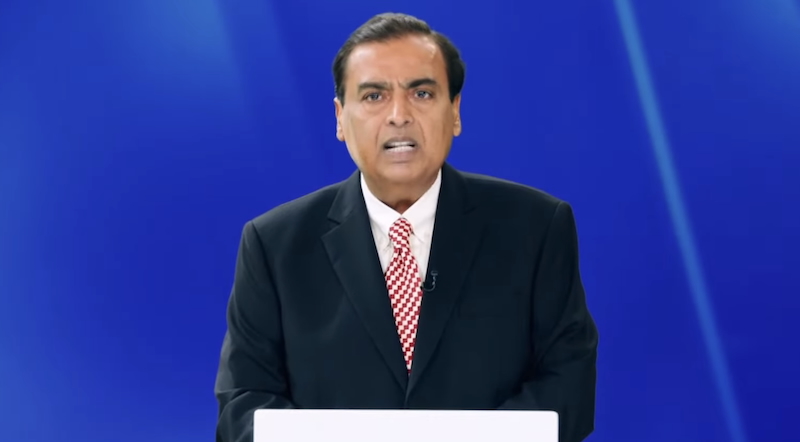
    MUMBAI: Reliance Industries chairman Mukesh Ambani  declared at the firm’s annual general meeting held today that JioStar has reshaped India’s media landscape within months of launch. The media and entertainment arm now boasts over 3.2 lakh hours of programming—six times more than its nearest rivals—with 30,000 hours added annually.

    The JioHotstar app has surged to 600m users in just three months, including 75m connected TVs. With 300m paying subscribers, Ambani claimed it has become the world’s second-largest streaming platform, achieved entirely in India. Reliance also commands a 34 per cent share of India’s TV market, equal to the next three networks combined.

    To cement its lead, Ambani unveiled a trio of AI-driven features. Riya, a voice-enabled assistant, promises effortless content discovery across shows, films and sports. Voice Print uses AI voice cloning and lip-sync to let stars “speak” in viewers’ own languages without losing authenticity. And JioLenZ offers multiple, personalised viewing options at the click of a button.

    “We have created an experience that combines the best of content, software and AI,” said Ambani. “JioStar will continue to expand across platforms and geographies as we serve a billion screens.”

  • ICC teams up with Google to turbocharge women’s cricket

    ICC teams up with Google to turbocharge women’s cricket

    LONDON: The International Cricket Council (ICC) has inked a landmark global partnership with Google to accelerate the growth of women’s cricket, betting that technology can turbocharge fan engagement at a moment when the sport is reaching critical mass.

    The tie-up, unveiled on Friday, comes just as the women’s game prepares for its two biggest stages: the ICC Women’s Cricket World Cup 2025, to be split between India and Sri Lanka, and the ICC Women’s T20 World Cup 2026 in England and Wales.

    For the ICC, the partnership signals a decisive push to make women’s cricket more visible, accessible and lucrative. Earlier this year, Unilever became the ICC’s first global partner for the women’s game. Now, Google’s entry adds the sheen of Silicon Valley to cricket’s most ambitious attempt yet at elevating women’s sport to parity with the men’s version.

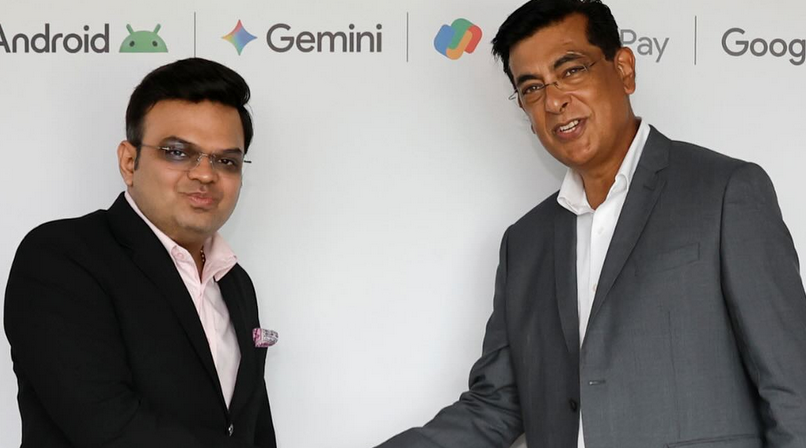
    ICC chairman Jay Shah called the deal “a landmark moment” that would help take women’s cricket “to even greater heights” by inspiring new generations and strengthening the sport’s global reach. “Together with Google, we aim to make women’s cricket a truly global force, resonating with fans in both established and emerging markets,” he said.

    Google’s arsenal of consumer products—Android, Google Pay, Gemini AI, and Pixel smartphones—will form the backbone of this strategy. The idea is to create an integrated ecosystem that enhances every stage of the fan journey: discovering match schedules, watching highlights, engaging with players’ stories, making seamless payments for tickets or merchandise, and celebrating wins online.

    “This alliance is not just about a single tournament; it’s about building deeper engagement,” said Google India vice-president of marketing Shekar Khosla. “We want to make the sport more accessible and enable fans to feel a stronger connection with what they care about.”

    The ICC hopes this “always-on” digital presence will not only expand the fan base but also attract new advertisers eager to reach younger, more digital-native audiences.

    Women’s cricket has been growing rapidly, buoyed by marquee tournaments like the Women’s Premier League (WPL) in India, the Big Bash in Australia, and increasing broadcast commitments. Audience numbers are rising, sponsorship is flowing in, and players such as Smriti Mandhana, Alyssa Healy, and Nat Sciver-Brunt are becoming household names.

    But the economics still lag far behind the men’s game. Rights packages, sponsorship valuations and player salaries remain a fraction of men’s cricket. By hitching the sport to Google’s technology stack, the ICC is signalling it wants to fast-track the commercialisation curve, making women’s cricket a product that broadcasters, advertisers and fans cannot ignore.

    The deal also reflects the growing entanglement of global tech platforms with sport. From Amazon streaming tennis to Apple bankrolling Major League Soccer, Silicon Valley is embedding itself in the sporting ecosystem. For Google, cricket is a natural fit: it is India’s most-followed sport and one of the most powerful cultural exports across the commonwealth. By associating with women’s cricket, Google also gets to position itself as a champion of inclusion and representation—values that resonate with global consumers.

    For the ICC, this is as much about geopolitics as sport. The women’s World Cup in 2025 will be staged in India and Sri Lanka, markets where Google dominates digital infrastructure but where competition from local players like Paytm, PhonePe and Jio is fierce. Embedding its brand through cricket is a way to reinforce dominance at a cultural level.

    For women’s cricket, the timing could not be better. With two World Cups in less than a year, unprecedented visibility is guaranteed. The challenge will be to convert eyeballs into habit, passion into loyalty, and novelty into permanence.

    Cricket’s men’s World Cups have long been billion-dollar properties. The women’s version has so far lived in their shadow, but that is changing. The 2022 Women’s World Cup drew record viewership globally, and the inaugural WPL auction stunned observers with player valuations that rivalled established men’s leagues. The ICC now wants to seize this momentum and institutionalise women’s cricket as a commercially viable product on its own terms.

    The Google alliance, then, is more than a sponsorship. It is an attempt to rewire how women’s cricket is consumed, blending sport with technology to create experiences that transcend stadiums and television screens. If successful, it could turn the women’s game into a global sporting phenomenon, not just a promising sideshow.

    If it fails, critics will dismiss it as another flashy announcement without structural change. But for now, women’s cricket has the wind at its back, the ICC has its boldest partner yet, and Google has found a new pitch to play on.

  • Gitika Sharan takes charge of marketing at Wadhwani AI Global

    Gitika Sharan takes charge of marketing at Wadhwani AI Global

    MUMBAI: Gitika Sharan has been appointed head of marketing and communications at Wadhwani AI Global, the artificial intelligence non-profit applying technology to solve challenges in the Global South.

    Sharan joins from Welspun World, where she was general manager martech. Before that, she spent over four years at Indira IVF group, heading internal and external communications, CSR and ESG initiatives, and franchisee operations. Her earlier stints included senior communications roles at Platinum Guild International, MSL Group, Ogilvy PR and Burson.

    In her new role, Sharan will shape Wadhwani AI Global’s brand voice and outreach as it works on AI-led interventions in agriculture, public health and other development priorities. 

    “We are applying AI to address some of the most pressing challenges in the Global South… the focus is on ensuring technology truly serves communities and creates sustainable impact,” she said.


  • Formula 1 races into record books with blockbuster first half of 2025

    Formula 1 races into record books with blockbuster first half of 2025

    MUMBAI: Full throttle, no pit stops! Formula 1’s 2025 season hasn’t just been about roaring engines and tight overtakes, it’s been a spectacle both on and off the track. From Brad Pitt’s F1: The Movie smashing box office records to sold-out Grands Prix pulling in millions of fans, the sport has hit top gear in its 75th anniversary year.

    The season opened with F1 75 Live at London’s O2, where 16,000 fans watched all ten teams unveil their new cars alongside live music from global stars like MGK, Tems and Take That. The livestream drew 7.5 million viewers worldwide, setting Youtube records and proving that F1 knows how to put on a show as much as a race.

    Hollywood soon joined the grid. Pitt’s racing blockbuster has already grossed more than 600 million dollars, making it the highest-earning sports film ever and his biggest box-office hit. Premieres in New York and London drew A-listers from Tom Cruise and Naomi Campbell to Lewis Hamilton and Charles Leclerc, not to mention Formula 1’s biggest names behind the wheel.

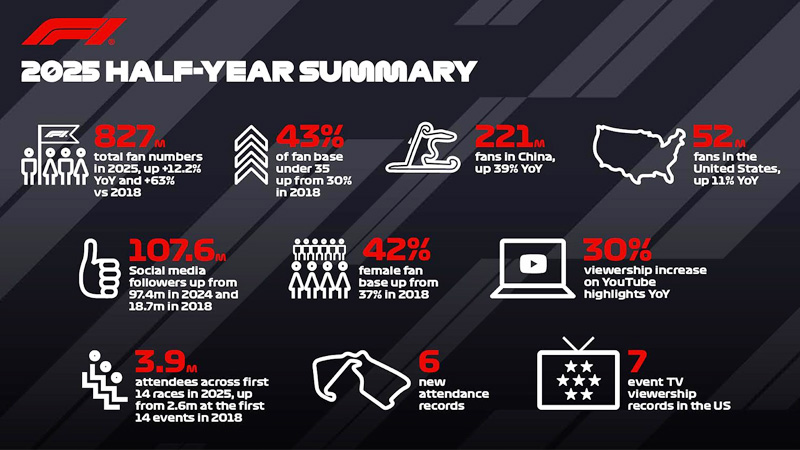
    On track, the numbers are just as electrifying. More than 3.9 million fans attended the first 14 races, which is the highest ever mid-season tally, with Australia and Britain each topping 400,000. 11 of the 14 events sold out, while record-breaking crowds turned up in Spain, Canada and Belgium.

    Digital reach is also flying. Formula 1’s social media following has surged past 107 million, up 21 percent year-on-year, with Tiktok and YouTube highlights pulling in record views. Younger fans are driving the growth too: 43 percent of F1’s global fanbase is now under 35, and nearly half are women.

    Commercially, the grid is just as busy as the paddock. Partnerships with Disney, Pepsico, LEGO, Barilla and luxury powerhouse LVMH have broadened F1’s global appeal, while quirky activations such as LEGO driver parades and gourmet pasta pop-ups, have kept fans talking.

    And the best part? There’s still half a season left. With Zandvoort kicking things off this weekend, F1’s second act promises more drama, more speed and, if the first half is anything to go by, more records smashed.
     

  • Campus laces up with Kriti Sanon to kickstart women’s sneaker revolution

    Campus laces up with Kriti Sanon to kickstart women’s sneaker revolution

    MUMBAI: Sneakerheads, meet your new style captain Kriti Sanon. Campus Activewear, one of India’s biggest sports and athleisure footwear brands, has signed on the National Award-winning actress as the face of its women’s category, a move that cements the brand’s ambitions to step up its game in the fast-growing segment.

    For Campus, women’s sports and athleisure is no sidekick, it’s become one of the biggest growth drivers over the past year, fuelling the brand’s rise in India’s sneaker story. Now, with Kriti Sanon, an engineering graduate turned Bollywood star and entrepreneur fronting the campaign, the brand is tying its laces for the next lap: making sneakers bolder, trend-forward, and uncompromisingly comfortable for women who juggle multiple roles.

    Nikhil Aggarwal, CEO and Whole Time Director of Campus Activewear, called the women’s portfolio “one of the most significant growth engines,” noting that Kriti’s ambition and versatility make her the perfect match. Kriti, meanwhile, says she’s drawn to Campus’ belief that style should reflect who you are “designing footwear as versatile as the roles women play.”

    With athleisure booming and Campus eyeing bigger strides, Kriti’s arrival signals more than just another celebrity face on a billboard. It’s a sneaker statement: India’s women are not just walking in style, they’re sprinting ahead.

  • Bengaluru’s hoardings go missing in action with wives at the centre

    Bengaluru’s hoardings go missing in action with wives at the centre

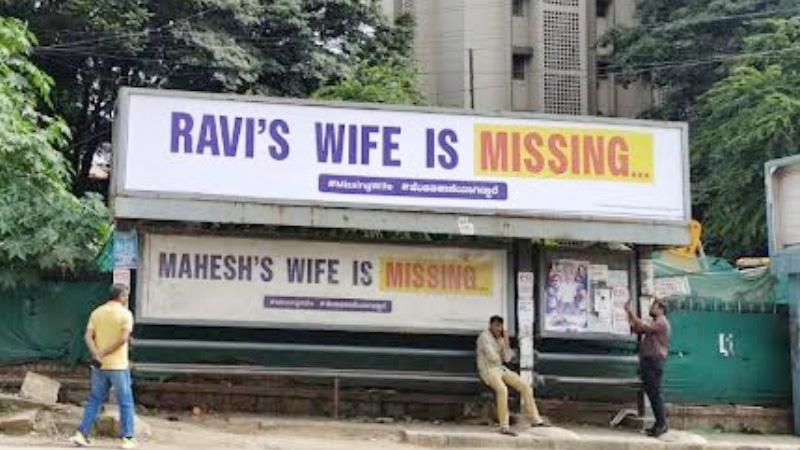
    MUMBAI: Bengaluru is having a missing persons crisis on hoardings, not in homes. Over the past few days, the city has been plastered with giant posters screaming, “Atul’s wife is missing”, “Senthil’s wife is missing”, “Ravi’s wife is missing” and the list keeps growing. The stark black-and-white designs, with no logos, hashtags or explanations, have thrown the city into a frenzy. Commuters stuck at signals, social media scrollers, and even seasoned ad-watchers are scratching their heads. What started as a handful of sightings has snowballed into a full-blown urban mystery, with new “missing wives” appearing every passing day.

    Famed photographer Atul Kasbekar joined the fun on Instagram, posting the hoarding with a tongue-in-cheek plea for help and a “suitable reward.” Influencers including Eshwar Go, Haripriaa Kulkarni, and Sariflog have also jumped into the conversation, their posts amplifying the intrigue to thousands of followers.

    From Koramangala to MG Road, speculation is rife: is this a cheeky ad campaign, a guerrilla social message, or a true-blue whodunnit? While Instagram threads and WhatsApp forwards are brimming with theories, nobody has cracked the code just yet.

    For now, Bengaluru’s skyline is dominated by the mysterious “missing wives” and the only thing multiplying faster than the hoardings is the curiosity. One thing’s for sure: until the reveal, the city won’t be missing this story.
     

  • Reliance joins hands with Google Cloud to put India’s AI future on steroids

    Reliance joins hands with Google Cloud to put India’s AI future on steroids

    MUMBAI: Reliance Industries has never done things by halves. On 29 August, India’s largest private company unfurled its latest grand project: a sweeping expansion of its alliance with Google Cloud, centred on a new, dedicated AI-first cloud region in Jamnagar, Gujarat. The ambition is as audacious as it is familiar. Having once upended India’s telecoms industry with Reliance Jio and cheap data, Mukesh Ambani is now training his firepower on artificial intelligence, promising to democratise access to computing muscle for the world’s most populous country.

    The project is being pitched as India’s “AI leapfrog moment.” Reliance will design, build, and power state-of-the-art cloud facilities, all running on renewable energy and plugged into Jio’s sprawling fibre and digital network. Google will provide the brains: its AI hyper computer, a secure and integrated generative AI stack, and the know-how to run workloads of breath taking intensity. The facility, Reliance says, will meet global service-level standards and support the most demanding AI use cases—from training large models to building next-generation applications for consumers and enterprises.

    Why Jamnagar? The coastal city is already the beating heart of Reliance’s refining and petrochemicals empire. It is also becoming a symbol of the company’s reinvention: its green energy giga factory is rising there, and now the AI cloud campus will sit alongside it. Running on renewable power, the project ticks boxes for sustainability even as it scales to hyper speed. Jio, meanwhile, will string high-capacity fibre links connecting Jamnagar to metros like Mumbai and Delhi, effectively wiring India’s AI ambitions to its business and political capitals.

    Mukesh Ambani cast the partnership in almost civilisational terms: “Just as Jio and Google came together to democratise the internet for every Indian, we will now democratise intelligence for every Indian,” he declared. The subtext was clear: Reliance does not want to merely be a customer of AI; it wants to be the platform on which India builds its AI future.

    For Google, the tie-up is equally strategic. The American giant has long struggled to monetise India at scale, despite Android’s dominance. Its alliance with Reliance, first forged through a $4.5bn investment in Jio Platforms in 2020, has been its best bet. Sundar Pichai, Google’s boss, was almost wistful: “Our work together over the last decade has helped bring affordable internet access to millions. And now, we are building on this to help shape the next leap with AI. This is only the beginning.”

    The beginning it may be, but the context is fiercer. Microsoft has partnered with the Adani group to push Azure into Indian enterprises. Amazon Web Services (AWS) has invested heavily in local data centres. By anchoring Google Cloud in Reliance’s infrastructure, Ambani is offering it the biggest distribution muscle in the country—from India’s biggest retailer to its mightiest mobile operator.

    Reliance has always built moats around scale and integration. Hydrocarbons fed petrochemicals; petrochemicals funded telecoms; telecoms birthed digital platforms; retail wrapped around them. Now AI is being woven into every strand. Reliance’s retail arm, one of the world’s fastest-growing, will be powered by predictive analytics and AI-first services. Its digital platforms can churn out generative-AI-powered customer tools. Even its energy and refining business can tap AI for predictive maintenance, efficiency, and emissions management.

    The bet is as much about geopolitics as economics. AI compute has become a strategic resource, akin to oil in the 20th century. By hosting a dedicated, hyperscale AI cloud region in India, Reliance and Google are hedging against global bottlenecks in semiconductors and compute availability. They are also offering Indian enterprises and the government a “sovereign-flavoured” cloud alternative to relying wholly on Western or Chinese platforms.

    The entire project will be underpinned by Reliance’s push into renewable power. The AI data centres, notorious for their energy hunger, will be fed through Reliance’s green energy parks and hydrogen initiatives. Jio’s high-capacity fibre, spanning metros and regions, adds the digital sinew to match the green muscle. The combination allows Reliance to brand the initiative not merely as profitable, but as sustainable—a key card to play with regulators, policymakers, and global investors.

    For India, the stakes are towering. Domestic enterprises, startups, and public sector organisations often face prohibitive costs in accessing cutting-edge AI compute. By pooling Reliance’s infrastructure with Google’s stack, the hope is to lower barriers and accelerate adoption. Small businesses may soon have access to AI tools that were once the preserve of Silicon Valley. Universities and research institutes could run high-performance AI models without prohibitive cost. And the government could scale citizen-facing AI services in health, education, and agriculture.

    But challenges remain. Building AI facilities is one thing; ensuring India has the talent, regulation, and guardrails to use them responsibly is another. AI also raises thorny issues of bias, surveillance, and security. Reliance’s ambition to become India’s AI backbone will inevitably attract scrutiny—whether from privacy hawks, antitrust watchdogs, or foreign competitors.

    Yet, if history is a guide, Reliance has a knack for bending markets to its will. When Jio entered telecoms in 2016, it offered free calls and dirt-cheap data, triggering a brutal price war that wiped out rivals and left India with the world’s cheapest mobile internet. Now, Ambani appears ready to repeat the trick with AI: offer access at scale, bundle services across Reliance’s ecosystem, and set the floor so low that competitors struggle to keep up.

    The Jamnagar AI cloud, then, is not just about servers and software. It is about a new architecture of power: technological, economic, and political. If it works, Reliance and Google may indeed make India a global leader in artificial intelligence. If it fails, it could end up as another white elephant in the deserts of Jamnagar.
    For now, though, one thing is certain. India’s AI race has just been given a jolt of steroids—and Mukesh Ambani is holding the syringe.

    (The picture featured above is representational of two businessmen joining hands and there is no intention to insinuate that it  resembles either Mukesh Ambani or Sunder Pichai. It is an AI generated image)
  • Motorola turns up the volume with Bose-tuned Loop and bass-heavy buds

    Motorola turns up the volume with Bose-tuned Loop and bass-heavy buds

    MUMBAI: When it comes to sound, Motorola just dropped the bass, literally. The smartphone giant, now calling itself India’s leading AI phone brand, has launched two true wireless earbuds designed to take on every mood, beat and playlist: the moto buds Loop powered by Bose Audio, and the moto buds Bass with segment-best 50db active noise cancellation.

    Priced at Rs 7,999 (with a bank offer cutting Lop to Rs 6,999) and Rs 1,999 for Bass, the earbuds go on sale 1st September and 8 September respectively, across Flipkart, Motorola.in, and retail stores. Both arrive armed with features aimed squarely at India’s growing tribe of music junkies, gamers, and on-the-go professionals.

    The moto buds Loop stand out with an open-ear design tuned by Bose, 12mm ironless drivers, and spatial sound for 3D-like immersion. They deliver 8 hours on a single charge and 39 hours with the case, plus a quick 10-minute top-up for 3 hours of playback. Add IP54 water resistance, a memory alloy frame, and trekking green finish, and Loop is more style statement than accessory.

    For bass-heads, the moto buds Bass promise Super Bass tuning, Hi-Res LDAC audio, and 12.4mm composite dynamic drivers. With 50db ANC across a 4kHz range, users can toggle between Adaptive, Transparency, or Noise Cancelling modes at will. Battery life stretches to 7 hours (ANC off) plus 41 hours with the case, totalling a marathon 48 hours. Quick cadds 2 hours of playback in 10 minutes. At just 51g, with triple-mics on each bud and finishes like dark shadow, blue jewel, and posy green, these are built for marathon listening sessions without compromise.

    Connectivity gets a boost too both models feature Bluetooth 5.3, Google fast Pair, and Crystaltalk AI to cut through background chaos on calls. With smart connect and moto ai integration, users can switch devices or trigger commands (“Catch me up”) hands-free, making them lifestyle companions as much as audio gear.

    Motorola India MD T.M. Narasimhan summed it up: “With Loop and Bass, we’re blending technology, design and usability to create audio experiences that resonate with evolving lifestyles.” Translation? Whether you crave Bose-tuned clarity or chest-thumping bass, Motorola now has a bud for every beat.