Blog

  • Vidaa partners with RunnTV to launch free streaming service in India

    Vidaa partners with RunnTV to launch free streaming service in India

    MUMBAI: Vidaa, the global smart television operating system powering millions of connected devices worldwide, has struck a strategic partnership with India’s RunnTV to launch TV Channels, its free ad-supported streaming television (Fast) service, across the subcontinent this September.

    The collaboration marks Vidaa’s most significant push into one of the world’s fastest-expanding streaming markets, where ad-supported platforms are experiencing meteoric growth as viewers increasingly abandon traditional pay-television models in favour of free, on-demand content.

    TV Channels will offer Indian audiences an extensive lineup of premium international content alongside carefully curated regional programming spanning entertainment, films, music, lifestyle, children’s shows and infotainment—all delivered at zero cost to viewers through Vidaa-powered smart televisions.

    RunnTV, the streaming technology platform founded by Manish Sinha, brings crucial local market intelligence to the venture. The company will leverage its deep understanding of India’s complex linguistic and cultural landscape to help Vidaa localise its offering, secure partnerships with top regional content creators and maximise advertising revenues through sophisticated programmatic integrations and precision-targeted campaigns.

    The partnership extends far beyond simple content aggregation. Both companies will collaborate extensively on technology integration, distribution strategies and advanced monetisation models designed to capture and retain audiences in a market where free, advertiser-supported content is rapidly displacing subscription-based services.

    Industry observers note that India’s Fast ecosystem has reached an inflection point, with viewership patterns shifting dramatically as consumers embrace connected television experiences. The entry of established global players like Vidaa signals growing confidence in the market’s potential, particularly as smartphone penetration and affordable broadband access continue expanding across tier-two and tier-three cities.

    For advertisers, the platform promises unprecedented reach and sophisticated targeting capabilities, enabling brands to connect with specific demographic segments through data-driven campaign optimisation. Content creators and channel partners, meanwhile, gain access to new revenue streams through Vidaa’s established global advertising network.

    Viewers can expect a premium experience featuring seamless channel switching, intuitive navigation and high-quality streaming performance—all integrated directly into their smart television interface without requiring additional subscriptions or hardware investments.

    The launch comes as traditional broadcasting models face increasing pressure from streaming alternatives, with Fast services emerging as a compelling middle ground between expensive subscription platforms and conventional linear television. Industry analysts predict the segment could capture a substantial share of India’s entertainment consumption within the next two years, driven by rising data affordability and changing viewer preferences.

    Vidaa’s decision to partner with a local technology specialist rather than launching independently reflects the complexity of India’s media landscape, where success often depends on nuanced understanding of regional content preferences, regulatory requirements and advertiser expectations across diverse markets.

    The collaboration positions both companies to capitalise on what many consider the next major wave in India’s digital entertainment evolution, as millions of households transition from traditional cable and satellite services toward internet-connected viewing experiences that offer greater choice, convenience and cost savings.

  • Anker sets bold new course with AI, robotics and solar at IFA Berlin

    Anker sets bold new course with AI, robotics and solar at IFA Berlin

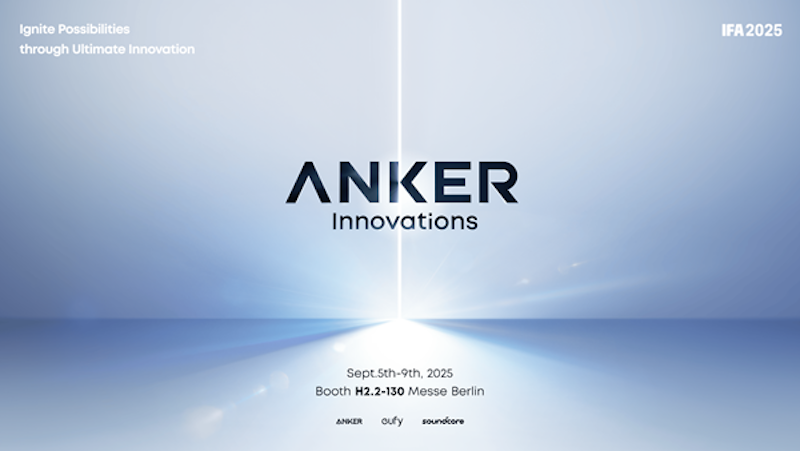
    BERLIN: Anker Innovations, the Chinese consumer-tech firm best known for power banks and chargers, is no longer content with cables and batteries. At IFA 2025 in Berlin, chief executive Steven Yang unveiled a sweeping new brand direction, positioning the group as a global leader in “smart hardware” and pledging to “ignite new possibilities through ultimate innovation.”

    The company will now operate under three unified marques: Anker for charging and energy, Eufy for home and security, and Soundcore for audio and entertainment. Yang told the audience that the pivot is rooted in three principles: break problems down to fundamentals, pursue higher standards rather than easy wins, and grow together with partners and users. The rhetoric, he said, would drive a “maker spirit” across the group — more workshop than corporate HQ.

    IFA saw the debut of the EufyMake UV Printer E1, marketed as the world’s first personal 3D-texture UV printer. Already the most funded Kickstarter hardware project ever — raising $46m from 17,000 backers — it ships to early adopters now and will reach retail in December at $2,499 / €2,499. Bundled with upgraded AI design tools, it promises to turn sketches or photos into textured prints on wood, leather or metal.

    Eufy’s Omni S2 robot vacuum introduced HydroJet 2.0 scrubbing and a 30kPa AeroTurbo cleaning system capable of deep-cleaning carpets and crossing five-centimetre obstacles. More eye-catching was Marswalker, a robotic carrier that lugs the S2 up and down stairs — a long-standing Achilles’ heel of robot vacuums. Marswalker will ship in the first half of 2026.

    In security, Eufy announced AI Core, a large-model agent running locally in the home to detect over 100 scenarios, from package deliveries to trespassers, while keeping data off the cloud. Its companion, the eufyCam S4, is a hybrid 4K/2K PTZ camera promising panoramic views and facial detail up to 15 metres.
    Soundcore meanwhile stretched from earbuds into wellness and theatre. The Sleep A30, a pair of ANC sleep buds already selling in the US, has reached Europe. They adaptively cancel noise and play AI-generated brainwave audio to tackle snoring and other disruptions.

    The brand also introduced a coin-sized wearable voice recorder with real-time transcription and 97 per cent accuracy across more than 100 languages, aimed at students, professionals and journalists.

    Perhaps the boldest move was absorbing Anker’s Nebula projector business, reborn as Soundcore Nebula. The flagship X1 Pro projector, launching on Kickstarter on 23 September, combines a 4K triple-laser engine with Dolby Vision video and Dolby Atmos multi-channel audio. Its detachable wireless speakers and powered subwoofers turn it into what Soundcore dubs the world’s first “mobile theatre station.”

    Anker’s own division doubled down on power. Its new Prime line adds AnkerSense View smart displays to show charging speeds and temperatures. The Prime 160W charger, Prime 300W power bank, Qi2 wireless charging station and triple-display docking station all pitch efficiency and compact design as their edge.

    The group’s energy arm, Anker Solix, launched the Solarbank Multisystem, a modular kit linking up to four Solarbank units with 14kW solar input and 4.8kW output. Targeted squarely at Europe’s high-tariff households, it promises up to 80 per cent savings on energy bills and a four-year payback period. Its semi-DIY installation is marketed as 85 per cent cheaper than conventional solar. Complementing it is the V1 Smart EV Charger with gesture-based control and tariff-synchronised charging. The starter kit begins at €1,898, with the EV charger priced at €499. Germany gets it first, with France and the Netherlands following on 11 September.

    The showcase in Berlin marked more than another tech fair launch. Anker is re-casting itself as a systems company, fusing AI, robotics and renewable energy into everyday hardware. If successful, Yang’s bet could move the firm up from niche accessories into the ranks of household consumer-tech giants. The risk is execution: a vacuum that climbs stairs and a solar charger that pays for itself in four years are promises the market will hold him to.

  • The Hype Studio teams up with Kaydence to amplify advocacy in PR

    The Hype Studio teams up with Kaydence to amplify advocacy in PR

    MUMBAI: The Hype Studio is adding fresh firepower to its advocacy game. The fast-growing communications consultancy has struck a strategic partnership with Kaydence Media Ventures to sharpen its leadership in bespoke PR while unlocking new frontiers in the Middle East, Africa and Asia-Pacific.

    Known for its agile, insight-driven approach, The Hype Studio has carved a reputation as one of India’s most ambitious players in public relations. By aligning with Kaydence Media Ventures, the firm says it is ready to blend creativity with precision-led execution to deliver campaigns that cut through policy, business and cultural complexity.

    “At Kaydence Media Ventures, we believe in aligning with partners who share our commitment to excellence and innovation in storytelling,” said Kaydence Media Ventures, managing director and chief executive, Savio Rodrigues. “Our partnership with The Hype Studio reflects a shared vision to elevate advocacy communications with a balance of creativity, strategy and measurable impact.”

    For The Hype Studio, the tie-up is more than a handshake. “This partnership marks a significant milestone in our journey,” said director of business and strategic partnerships, Aman Uppal. “Kaydence Media Ventures’ proven expertise perfectly complements our own, enabling us to craft campaigns that champion causes, drive conversations and deliver transformative results.”

    The consultancy has made its name by fusing agility with polish, consistently setting benchmarks in client-centric advocacy and communications. With this deal, it looks set to widen its canvas, scale its influence, and entrench its position as a trusted counsel for brands seeking not just visibility but impact.


  • Samsung fires up IFA with Galaxy S25 FE and party-ready sound towers

    Samsung fires up IFA with Galaxy S25 FE and party-ready sound towers

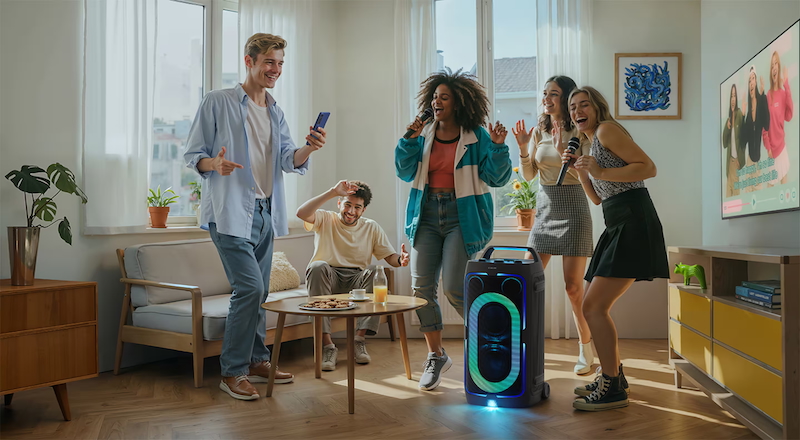
    BERLIN: Samsung used its IFA stage in Berlin to show it is not done with surprises. Alongside a fresh midrange smartphone, the Galaxy S25 FE, it rolled out two hulking new sound towers — the ST50F and ST40F — aimed squarely at back-garden DJs and living-room party fiends.

    The Galaxy S25 FE, on sale now from $650, gives a lower-cost route into this year’s S25 line-up. It comes in four colours and runs on the firm’s new One UI 8 software — a step ahead of the S25, S25 Plus, S25 Ultra and ultra-slim S25 Edge, all of which debuted earlier in the year with One UI 7. The refresh brings a sleeker interface, smoother animations, tighter split-screen multitasking and more AI smarts baked in.

    Under the bonnet sits Samsung’s in-house Exynos 2400 processor, which lacks the punch of Qualcomm’s Snapdragon 8 Elite used in the pricier S25 models, but should hold its own. The handset features a 6.7-inch Amoled screen peaking at 1,900 nits, and a camera array built around a 50MP main sensor, with 12MP ultra-wide and 8MP telephoto lenses, plus a 12MP selfie snapper. Despite its mid-tier engine, the phone still runs Samsung’s full suite of Galaxy AI tools — including its Generative Edit photo wizardry and on-device assistant — making it the cheapest ticket into the AI-laced Galaxy ecosystem.

    If the phone is about keeping your life in order, the speakers are about blowing it apart. The flagship ST50F sound tower, priced around $700, delivers 240 watts of power, dual 165mm woofers with adjustable bass modes (Deep, Punchy or Gentle), and twin 25mm tweeters for crisp treble. It comes with four sound profiles — from “Standard” to “Stadium” — and can sync wirelessly with others for multi-speaker mayhem. Battery life stretches to 18 hours, the casing is splash-proof, and party lights — embedded in the tweeters, woofers, housing and even the handle — blink, pulse, or strobe in sync with the beat.

    The smaller ST40F, expected at $500, is built for patios and garden barbecues. It pushes 160 watts, carries dual 133mm woofers and 20mm tweeters, and offers up to 12 hours’ battery life. Both models have karaoke modes, guitar inputs, Bluetooth, USB and AUX ports, and replaceable batteries for those who fear the lights going out before the party does.

    With the S25 FE, Samsung is giving its smartphone base a cheaper AI-driven option. With the sound towers, it is giving them a reason never to sleep.

  • From MATIC to magic, Polygon’s POL powers next decade of blockchain

    From MATIC to magic, Polygon’s POL powers next decade of blockchain

    MUMBAI: What’s in a name? For Polygon, everything. India’s homegrown blockchain giant has officially retired MATIC and ushered in POL, its biggest upgrade yet, one designed not just for a single chain, but to fuel an entire Web3 universe.

    POL isn’t a cosmetic makeover, it’s the gas, the security and the governance token of Polygon’s rapidly expanding ecosystem. It powers every transaction, secures the network through staking rewards, and drives Agglayer, Polygon’s cross-chain settlement layer that makes liquidity move seamlessly between blockchains. For millions of users from tokenised asset traders to stablecoin enthusiasts POL becomes the invisible fuel behind the future of decentralised finance.

    The ambition is staggering. Polygon’s Gigagas roadmap aims for 100,000 transactions per second, eclipsing even today’s fastest financial networks. Early upgrades such as Heimdall v2 have already cut settlement times to just five seconds, making stablecoin payments feel almost instant. “MATIC put India on the global blockchain map. POL is the next step built to power not just one chain, but an entire ecosystem for the next decade of growth,” said Polygon co-founder Sandeep Nailwal.

    For India’s young investors, POL isn’t just a token, it’s a ticket into a financial future being shaped in their backyard but adopted worldwide. Fortune 500s, global payment players and Web3 startups already run on Polygon, but with POL, the network promises even more scalability, security and cost efficiency. For brands and enterprises eyeing Web3 adoption, the message is clear: the future rails of global finance may well be running on Indian code.

  • MRSI puts the power of ‘and’ at centre of 33rd annual seminar

    MRSI puts the power of ‘and’ at centre of 33rd annual seminar

    MUMBAI: The Market Research Society of India (MRSI) is set to bring fresh energy to Gurugram this month, with its 33rd annual market research seminar promising a heady mix of data, ideas and debate under the banner “The Power of And”.

    Dr Saurabh Garg, secretary at the ministry of statistics and programme implementation, will deliver the opening keynote on “Driving impact through data insights: harnessing public-private synergies for a Viksit Bharat at 2047”. His address will anchor two days of panels, papers and provocations at The Leela Ambience on 11–12 September.

    The line-up features Karthik Nagarajan of Hogarth, Aradhana Lal of Lemon Tree Hotels and Aditya Kasyap of Unilever, alongside sessions on navigating “many Indias” and a panel on the “joys and dilemmas of insight in the age of technology” with senior voices from HUL, Nestlé, Airtel, Kantar, Smytten and more.

    This year drew over 100 research paper submissions, with 22 shortlisted across four themes: bending and breaking methodologies, innovating at the edges, technology as an intersection, and the human mosaic of future leaders.

    “The seminar has long been the cornerstone of India’s research and insights industry,” said Rituparna Dasgupta, chairperson of the 33rd edition and EVP at Zee entertainment. “This year’s theme captures how our world is being shaped.”

    With Smytten Pulse AI as lead partner and heavyweights such as Kantar, Nestlé, ITC and Hindustan Unilever backing sessions, MRSI is positioning its flagship gathering as more than a talking shop.
     

  • Samsung bets big on AI Home at IFA 2025

    Samsung bets big on AI Home at IFA 2025

    BERLIN: At Innovation For All (IFA) 2025, Samsung Electronics took centre stage with one message: artificial intelligence has moved out of the lab and into the living room. Under the banner “AI Home: Future Living, Now,” the South Korean conglomerate unveiled its vision of domestic life powered by adaptive technology — one that it claims is already attainable and accessible to millions.

    Executive vice president and head of digital appliances Cheolgi Kim framed the pitch as a shift in how technology should exist within human life. “At Samsung, we’re not just imagining the future of AI; we’re building it into everyday life,” he said. “This is the beginning of a new era — where technology supports your life in the background so that you can live it more fully.”

    The ambition is bold: move beyond the fragmented world of “smart” gadgets towards a seamless ecosystem that not only responds but anticipates. The stakes are equally high. With AI now the battleground for Big Tech and consumer electronics, Samsung is vying to prove that homes are where AI will have its most profound — and profitable — impact.

    Samsung’s SmartThings platform lies at the heart of this proposition. Once marketed as a connected-home app, it is now evolving into what the company describes as a “home operating system.” AI routines automate lighting, temperature and shading; blinds align with the weather forecast; heating systems learn daily habits; and appliances self-optimise without prompting.

    Consumer appetite, Samsung insists, is real. A global survey commissioned by the company shows two-thirds of respondents find the concept of an AI-enabled home appealing. Forty-four per cent cited streamlined chores, while 45 per cent liked the idea of controlling devices by phone or voice. More tellingly, 93 per cent described the home as a sanctuary, and 80 per cent saw it as a social hub — a place where technology should enhance human connection, not interfere with it.

    Samsung’s pitch, then, is about invisibility. The AI Home is not meant to dazzle with futuristic gimmicks but to fade into the background, adjusting conditions subtly to improve comfort and efficiency.

    The company knows that energy bills remain top of mind worldwide. According to its research, 66 per cent of consumers believe AI can help reduce costs. The SmartThings Energy service provides real-time monitoring, nudging households towards savings. Samsung claims it can cut washing-machine power use by up to 70 per cent — a figure it highlights repeatedly.

    AI SMART HOME BY Samsubng

    The emphasis on energy efficiency is strategic. Unlike voice assistants or robotic gadgets that risk being dismissed as novelties, tangible cost savings could be the lever that convinces consumers to invest in AI-enabled ecosystems. It also aligns with regulatory pressures in Europe, where energy performance standards are tightening.

    With smart homes comes a perennial concern: security. Four in ten consumers surveyed by Samsung expect AI to enhance home safety. The firm has responded with Knox Vault, a hardware-level data safeguard, and Knox Matrix, which provides cross-device protection across its ecosystem. The language here is deliberate: “vaults” and “matrices” are meant to signal seriousness, reassuring customers that AI will not become a Trojan horse for hackers.

    In a market where trust is fragile — particularly in Europe, where data privacy is heavily policed — Samsung’s ability to frame AI as safe as well as smart may determine adoption.

    Perhaps the most visible manifestation of Samsung’s AI strategy is its Bespoke AI appliance line. This year’s models showcase a shift from novelty to genuine utility:
    * Jet Bot Steam Ultra: now equipped with enhanced object recognition that can detect even transparent liquids — addressing one of the biggest challenges in robotic cleaning.
    * Bespoke AI Washer: featuring AI Wash+, it analyses fabric load and dirt levels to adjust cycles. It surpasses the threshold for Grade A energy efficiency by 65 per cent.
    * Bespoke AI Dishwasher: dynamically optimises cycles based on how dirty the dishes are, then pops its door open to accelerate drying.
    * Extractor Induction Hob: integrates the extractor into the hob itself, maximising kitchen space — a design nod to compact European apartments.

    These are not futuristic concept devices but commercial products. Samsung is betting that incremental intelligence built into everyday machines will persuade consumers to trade up.

    Samsung’s push is not confined to the kitchen or laundry. The company is embedding what it calls Vision AI Companion into larger displays, positioning it as a natural, almost human-like presence that can converse, guide and entertain. Unlike voice assistants locked into narrow commands, Vision AI is pitched as a trusted “companion” — a word chosen to evoke emotional connection.

    Hardware remains a showstopper. The 115-inch Micro RGB display delivers cinema-quality visuals with striking depth and vibrancy, while the Movingstyle TV, a portable touchscreen with a built-in battery, targets younger consumers with flexible living spaces. The Samsung Sound Tower, meanwhile, promises 18 hours of portable battery life, customisable lighting and app-controlled sound effects — signalling that AI is also about fun.

    Samsung’s AI story extends beyond the home and into its most recognisable product line: Galaxy smartphones. Having rolled out Galaxy AI to more than 200m devices in 2024, the firm now aims to double that reach, targeting 400m devices by end-2025.

    The company frames this as “democratising AI”. Features once reserved for flagships will trickle down to mid-range devices, creating a seamless experience across phones, tablets and wearables. With rivals from Apple to Huawei making similar plays, scale will be crucial.

    IFA, Europe’s premier consumer electronics show, is as much about theatre as technology. Samsung embraced the spectacle with a 50-metre-wide media art installation at Berlin’s CityCube entrance. Created with French digital artist Maotik, the piece visualises “wind” as flowing data waves — an abstract metaphor for AI’s invisible yet transformative role.

    The exhibition itself, running from 5–9 September, invites visitors to walk through fully staged AI Home environments. The message is clear: AI is not a far-off dream. It is a present-day reality to be touched, tested and bought.

    Why such a push now? First, competition. Apple, Amazon, and Chinese firms such as Xiaomi are all racing to dominate the home AI market. Google and Microsoft are extending their reach through partnerships and cloud AI services. For Samsung, whose strength lies in hardware, the opportunity is to integrate AI deeply into devices that already sit in millions of homes.

    Second, consumer economics. Global demand for white goods is relatively flat. By adding intelligence, Samsung hopes to revive upgrade cycles and command premium prices. Energy savings and convenience are framed as justifications for those higher upfront costs.

    Finally, brand positioning. By declaring that “AI is here”, Samsung differentiates itself from rivals still speaking of AI in aspirational terms. It wants to own the narrative that artificial intelligence is not just about chatbots or productivity tools, but about life’s most intimate space: the home.

    Samsung’s pitch is compelling but not without hurdles. Convincing sceptical consumers that AI is worth paying for will require more than glossy demos. Regulatory scrutiny around data will intensify. And rivals will not cede the living room easily.

    Yet if Samsung is right, the next frontier for AI is not in boardrooms or studios but kitchens and bedrooms. The company’s IFA showcase was a declaration of intent: to weave AI so seamlessly into daily life that, eventually, people may stop noticing it at all.

    For now, the AI Home is a vision Samsung insists you can live in today. The test will be whether the world believes it — and buys it.
  • Gujarati gamers get their lingo fix as BGMS streams in local style

    Gujarati gamers get their lingo fix as BGMS streams in local style

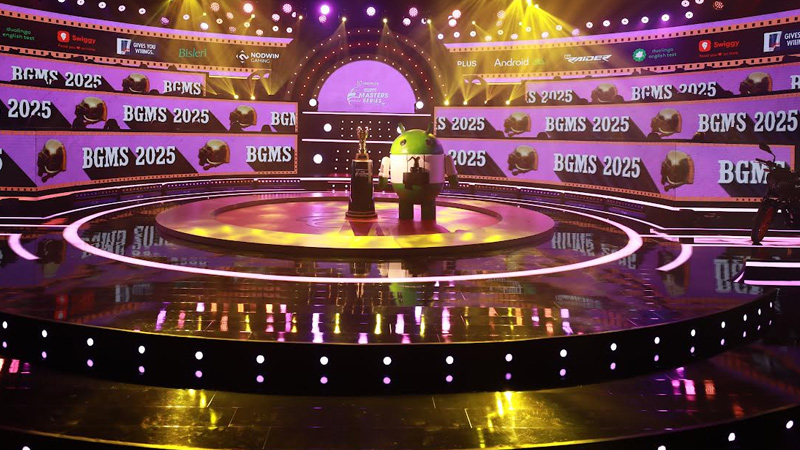
    MUMBAI: When Battlegrounds Mobile India Masters Series (BGMS) Season 4 kicked off this week, it wasn’t just the 48 teams vying for a share of the Rs 1.5 crore prize pool that had fans buzzing, it was the voice. For the first time, the action came alive in Gujarati, with a co-produced feed by Nodwin Gaming and the Duolingo English Test (DET), opening to a roaring 165,000 views on Day 1.

    Running from 18 August to 14 September, the season features 164 matches streamed with Gujarati commentary from popular casters Jayesh Prajapati (Engineer The Gamer), Vinod Keshwala (Firestar) and Jitendra Patel. Fans can also dive deeper through exclusive watch parties hosted by Gujarati streamers, adding local flavour to the high-stakes drama. The initiative signals a big leap in esports’ regional push, making the digital battlefield more relatable for Gujarat’s swelling community of players and spectators.

    DET’s role in the collaboration reflects its knack for speaking the language of Gen Z literally and figuratively. With its English proficiency test already accepted by nearly 6,000 universities worldwide, DET has become a go-to for Gujarat’s study-abroad aspirants. Now, by stepping into esports, it taps into a state that is both a powerhouse of gaming viewership and one of India’s top markets for global education. By blending entertainment and opportunity, BGMS and DET are proving that whether it’s cracking headshots or cracking admissions, Gujarat’s youth like to play and win in their own language.

  • French Bloom races ahead as Formula 1’s first alcohol-free fizz partner

    French Bloom races ahead as Formula 1’s first alcohol-free fizz partner

    MUMBAI: Formula 1 has uncorked a new kind of partnership, naming French Bloom its first official non-alcoholic sparkling wine partner. The collaboration brings bubbles without the buzz to Grand Prix weekends, offering an inclusive and elevated way to toast every lap, podium and party.

    From the 2025 season, French Bloom’s award-winning cuvées will be served across Paddock clubs, the F1 Garage and hospitality spaces, marking a milestone in the sport’s partnership with LVMH. The maison, co-founded by Maggie Frerejean-Taittinger and model Constance Jablonski, is the first alcohol-free brand backed by Moët Hennessy, which acquired a minority stake last year.

    “Our sparkling cuvées unite centuries of French winemaking savoir-faire with cutting-edge innovation,” said Frerejean-Taittinger. “This partnership celebrates intention, sophistication and the future of how we raise a glass.”

    With Netflix’s Drive to Survive fuelling global fandom and a surge of younger, more diverse audiences, the move reflects changing tastes. Millennials, gen z and female fans are driving demand for luxury choices that balance indulgence with moderation. French Bloom, crafted from organic Chardonnay and refined through an innovative dealcoholisation process, answers that call with style.

    Formula 1’s chief commercial officer, Emily Prazer, added, “The addition of French Bloom brings variety to our hospitality portfolio and ensures every guest experiences true luxury at our races.”

    Beyond bubbles, the tie-up carries a green note. French Bloom’s commitment to organic ingredients and reduced production impact dovetails with F1’s net zero carbon by 2030 goal.


  • Re’equil turns 7 with a virtual birthday bash, giveaways and good skin vibes

    Re’equil turns 7 with a virtual birthday bash, giveaways and good skin vibes

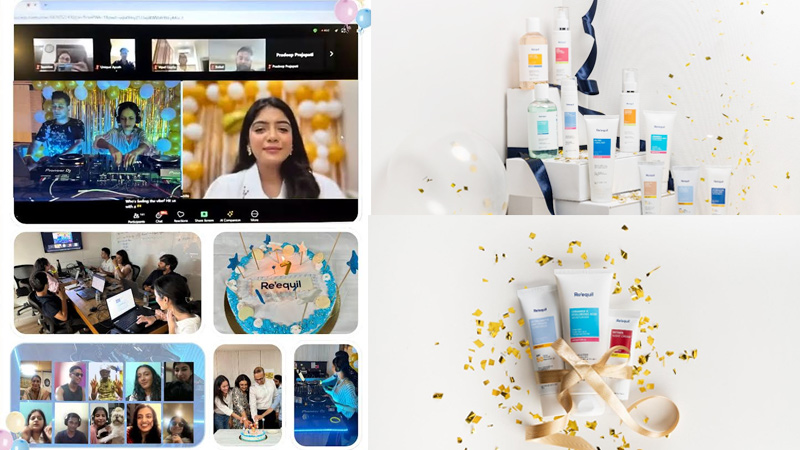
    MUMBAI: Seven years, zero wrinkles! Skincare brand Re’equil proved that anniversaries can glow as much as their products, marking its seventh year with a virtual birthday party that blended fun, gratitude and community.

    From 26 to 28 August, fans were treated to an anniversary sale with exclusive discounts. But the real showstopper came on 28 August, when more than 300 people logged into a live zoom celebration. Complete with a DJ set, bollywood-themed games, trivia and riddles, the bash felt less like a marketing event and more like a night in with friends.

    Prizes added extra sparkle to the evening. Lucky winners took home Re’equil vouchers worth Rs 5,000, a Rs 30,000 travel voucher and an Apple ipad. The giveaways underscored the brand’s message: skincare is serious, but celebrations can be playful.

    Re’equil began its journey with a simple promise of science-backed, dermatologically tested solutions for skin and hair. Seven years on, it has grown into a household name while staying true to its founding belief in real science, real people and real results.