Blog

  • ITV Network strikes a festive chord with Rasrang ad engagement platform

    ITV Network strikes a festive chord with Rasrang ad engagement platform

    MUMBAI: Festivals in India aren’t just about lights, laddoos and laughter, they’re also prime time for brands to shine. ITV Network has now rolled out Rasrang, a festive-special ad engagement platform designed to help advertisers hit the right note with over 100 million users across India. With Navratri, Diwali and Christmas just around the corner, the timing is more than auspicious.

    Rasrang blends data-driven targeting with editorial storytelling, giving brands both cultural resonance and measurable impact. Built on the scale of ITV’s flagship platforms including Newsx, Newsx World, India News, Inkhabar, The Daily Guardian and The Sunday Guardian the offering provides a multi-platform push across web, social, video and marquee live events. Brands can tap into 8,500 plus audience cohorts spanning entertainment, auto, BFSI, health, fitness, fashion, travel, sports and tech, while leveraging premium ad formats like Display, Video, Spotlight and AdTalk.

    What sets Rasrang apart is its promise to deliver not just eyeballs, but ROI with recall. According to iTV, its digital properties already generate 100 million impressions monthly across websites, social media, YouTube and events. This reach, paired with Rasrang’s precision, positions campaigns to ride India’s festive frenzy while staying relevant to regional cultures and consumer aspirations.

    The ethos remains rooted in iTV’s DNA of fearless journalism, incisive analysis and credible storytelling, now extended to brand partnerships. As the festive calendar kicks into high gear, Rasrang pitches itself as the stage where advertisers can not just be seen, but remembered, a platform where data meets diya, and campaigns celebrate alongside the country.
     

  • TVS shifts gears with NTORQ 150, India’s first hyper sport scooter

    TVS shifts gears with NTORQ 150, India’s first hyper sport scooter

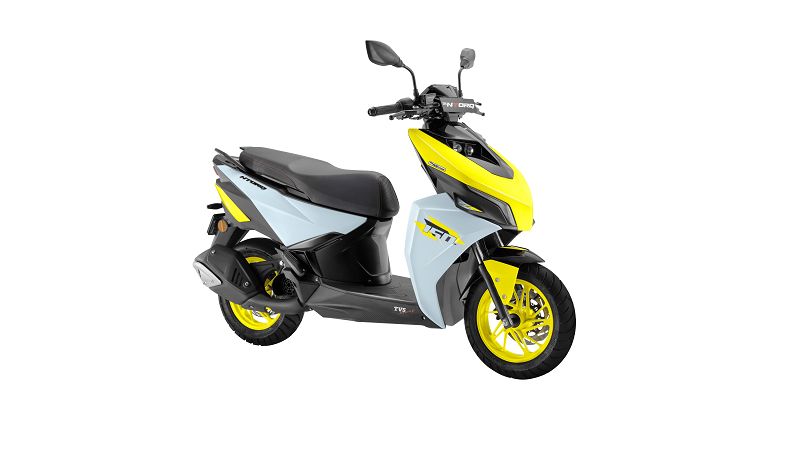
    MUMBAI: TVS Motor Company has blurred the lines with the launch of the NTORQ 150, billed as India’s first hyper sport scooter. Unveiled in Bengaluru at a starting price of Rs 1.19 lakh (ex-showroom, all India), the NTORQ 150 promises to give riders more than just a daily commute. It offers acceleration, attitude and Alexa.

    Powered by a 149.7cc race-tuned engine, the scooter rockets from 0 to 60 km/h in just 6.3 seconds, topping out at 104 km/h. Add in ABS, traction control and a racy muffler note, and it makes a strong case as the quickest scooter in its class.

    Design-wise, TVS has gone full stealth mode. Inspired by fighter jets, the NTORQ 150 comes with Multipoint projector headlamps, aerodynamic winglets, a naked handlebar and a distinctive ‘T’ tail lamp. The forward-biased stance and arrowhead front give it the look of a machine always ready for take-off.

    But performance isn’t the only talking point. Riders get a hi-res TFT cluster packed with over 50 connected features, including Alexa and smartwatch integration, live vehicle tracking, turn-by-turn navigation and even social media alerts. The adaptive display, styled like a gaming console, underscores its Gen Z appeal.

    Safety hasn’t been left in the rear-view either. ABS, traction control, hazard lamps, theft alerts and an emergency brake warning all feature as segment firsts. Comfort is boosted with telescopic suspension, adjustable brake levers, a patented EZ centre stand and roomy 22-litre under-seat storage.

    The NTORQ 150 comes in two variants, with colourways like Stealth Silver, Racing Red, Turbo Blue and Nitro Green ensuring riders won’t go unnoticed on city streets.

    Speaking at the launch, TVS Motor Company, president of India 2W business, Gaurav Gupta said the new scooter combines “race-inspired performance, advanced connectivity, and first-in-segment safety features” to delight a new generation of riders.


  • MOMS and Mother Dairy serve festive flavour at Lalbaugcha Raja

    MOMS and Mother Dairy serve festive flavour at Lalbaugcha Raja

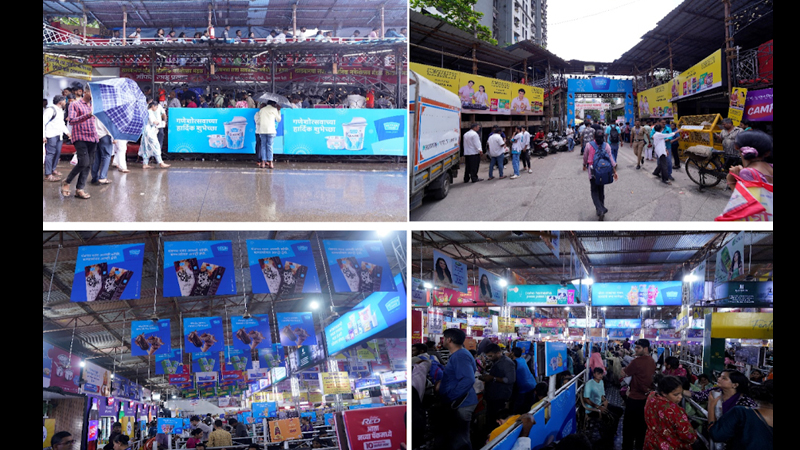
    MUMBAI; MOMS, part of Madison World’s expansive communications stable, has teamed up with Mother Dairy to light up Ganeshotsav at Lalbaugcha Raja with a splash of colour and clever branding. The campaign turned one of Mumbai’s most visited pandals into a canvas of festive cheer, weaving the dairy giant’s identity into the city’s biggest celebration.

    The takeover stretched across the pandal’s busiest touchpoints, from the Mannat line outdoor to the Lalbaug exit milestone gate. Each installation fused devotional spirit with Mother Dairy’s warm, everyday ethos, ensuring the brand stood tall in the swirl of faith, festivity and footfall.

    “Lalbaugcha Raja isn’t just an event, it’s an emotion for millions,” said MOMS, chief executive, Jayesh Yagnik. “Our goal was simple: to respect the cultural sentiment while creating a memorable brand presence.”

    Mother Dairy echoed the sentiment, noting that the campaign gave the brand a chance to engage directly with devotees. “Festivals are about joy and togetherness, and this celebration reaffirmed the bond we share with Mumbai,” said a company spokesperson.

    MOMS has built a reputation for scale and precision. With clients ranging from Asian Paints to Maruti Suzuki, its latest splash at Lalbaug shows that in the right hands, out-of-home can be as heartfelt as it is high-impact.

  • Acer flexes Predator power with AI laptops, monster desktops and more

    Acer flexes Predator power with AI laptops, monster desktops and more

    MUMBAI: Gamers, creators and AI developers, brace yourselves Acer just dropped a tech arsenal that roars as loud as its name. From AI-powered laptops to monster desktops, lightning-fast monitors and even a keyboard that can outlast your weekend grind, the Predator lineup is here to push the limits of power, speed and play.

    Leading the charge is the Predator Helios 18P AI, a hybrid beast that blends gaming brawn with workstation brains. Powered by up to an Intel Core Ultra 9 Processor 285HX with Intel vPro, the system supports a jaw-dropping 192 GB EEC memory critical for error-free performance where every byte counts. Graphics duty falls to the Nvidia Geforce RTX 5090 Laptop GPU with DLSS 4, paired with 6 TB PCIe Gen 5 SSD storage, Thunderbolt 5, and Wi-Fi 7. Its 18-inch Mini LED 4K panel hits 1,000 nits HDR brightness and covers 100 per cent of the DCI-P3 colour gamut, perfect for creators. Keeping the monster cool are Acer’s 6th Gen Aeroblade fans and liquid metal thermal grease. Price tag? 3,999 dollars in North America and EUR 4,999 in EMEA, starting early 2026.

    For desktop warriors, the Predator Orion 7000 is a liquid-cooled powerhouse, packing up to an Intel Core Ultra 9 285K CPU with integrated AI acceleration, paired with an Nvidia RTX 5090 GPU. Gamers get access to Nvdia NIM Microservices for cutting-edge AI assistant development. Cooling is handled by the Cyclonex 360 system, improving efficiency by 15 per cent and cutting motherboard temps by 9°C, while up to 128 GB DDR5 RAM and 6 TB SSD storage keep things screaming fast. Prices start at EUR 3,999 in EMEA and AUD 8,199 in Australia. Its sibling, the Predator Orion 5000, offers a slightly leaner build with an Intel Core Ultra 7 265F, NVIDIA RTX 5080 graphics, up to 2 TB SSD and 4 TB HDD storage, starting at EUR 2,999. Both sit inside ARGB-lit, eco-friendly 45L recycled-plastic chassis.

    Display junkies can feast their eyes on the Predator X27U F8 monitor. At 720 Hz refresh rate, it’s one of the fastest on the planet. The 26.5-inch OLED IPS panel runs at WQHD (2560×1440) and switches to 1280×720 at 720 Hz for pro-level esports. HDR 500 True Black and 99% DCI-P3 colour ensure visuals pop, while AMD FreeSync Premium Pro smooths the ride. Launch prices: 1,299 dollars in North America, 1,199 euros in EMEA, and RMB 9,999 in China.

    And for the finishing touch, Acer introduced the Predator Aethon 550 TKL keyboard, priced at USD 129 / EUR 129. With tri-mode connectivity (wired, Bluetooth, 2.4 GHz), a battery life of 150 hours, hot-swappable switches, and customisable per-key RGB, it’s built for both precision and flair.

    Acer’s Predator lineup isn’t just flexing, it’s redefining what next-gen gaming and AI machines can do. Whether you’re dropping headshots, training models, or cutting 4K edits, this is hardware that doesn’t just keep up; it dares you to push harder.

  • Truecaller dials up AI to reveal why they’re calling, not just who it is

    Truecaller dials up AI to reveal why they’re calling, not just who it is

    MUMBAI: Call of the wild unknown may finally be tamed. Truecaller, the caller ID app that has become a lifeline for over 450 million users across 190 countries, has unveiled a fresh AI upgrade that promises to answer the question that nags us all when the phone rings: not just who’s calling, but why.

    The new AI-powered Caller ID goes beyond flashing a name on screen. It analyses billions of signals from calls, messages and community feedback to deliver instant context whether the number belongs to a delivery rider, a customer support desk, or a scammer lurking in the shadows. With AI-summarised user comments now popping up in real time, users can see a one-line digest of hundreds of reports before deciding whether to swipe green or red.

    And the timing couldn’t be sharper. Phone scams are no longer just nuisance calls, they’re an economic menace. In 2024 alone, Truecaller flagged over 56 billion spam and fraud calls, while the Global Anti-Scam Alliance and Feedzai pegged worldwide scam losses at a staggering 1.03 trillion dollars. With fraud networks evolving faster than telecom operators’ static spam tags, Truecaller’s adaptive AI acts as a global early-warning system: a number flagged for impersonation in one region can now be proactively labelled elsewhere, thanks to shared intelligence and behavioural modelling.

    “People hesitate to answer unknown calls because they lack context, and in today’s world, context is everything,” said Truecaller global CEO Rishit Jhunjhunwala,  of . “Truecaller was built to solve this: not just to identify who’s calling, but to help you understand why. Is it someone from your network, a delivery, a business or a scam? Our AI uses real-time data and contextual signals to give you clarity the moment your phone rings, turning uncertainty into informed choice.”

    Unlike traditional caller ID systems that depend on delayed telecom databases, Truecaller’s intelligence is dynamic and continuously enriched by its engaged user community. Every day, millions of reports feed into its models, sharpening its ability to detect suspicious behaviour even before numbers have been widely reported. The AI can also indicate when a number is “likely a business” or “likely important” despite limited history, a key feature in regions where formal business verification lags behind.

    For brands, Truecaller already offers a verified business badge to mark official identities. But the majority of insights shown to users come from its AI engine meaning no manual labelling or registration is required. From identifying spoofed calls to spotting robocall campaigns in their infancy, the system is designed to stay one step ahead of fraudsters.

    The platform’s greatest edge, though, may be its scale. With a global community of 450 million active users across 190 plus countries, Truecaller has turned into a real-time safety net. Its AI doesn’t just learn from local spam reports; it cross-pollinates intelligence globally. A fraudster shut down in one country can’t simply resurface in another without detection, as the system shares behavioural cues across markets.

    In an era where attention spans are shrinking but threats are multiplying, Truecaller is positioning itself as more than a caller ID, it’s a context engine. The company says it wants to move users from hesitation to confidence, ensuring that every buzz in your pocket comes with an informed choice attached. And in a world where scams are growing more sophisticated by the minute, that context might just be the most valuable ring tone of all.

  • Icubeswire Films takes a short cut with new 15 second ad studio

    Icubeswire Films takes a short cut with new 15 second ad studio

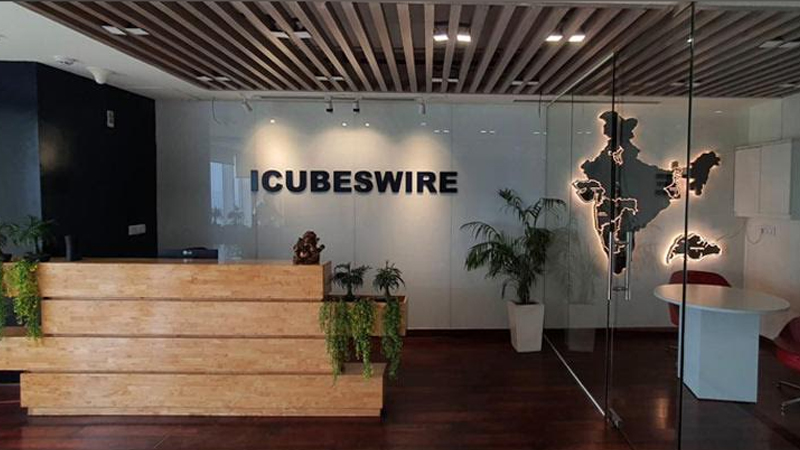
    MUMBAI: Blink and you’ll miss it or maybe that’s the point. Icubeswire Films, part of the Icubeswire Martech group, has launched Stop Shots, a new creative studio dedicated to crafting ad films that last just 10–15 seconds but aim to leave a lasting impact.

    In an era where Instagram Reels, Youtube Shorts, and shrinking attention spans dominate consumption patterns, the studio is betting big on the power of brevity. Stop Shots will harness data intelligence and consumer trend analysis to create mini cinematic spots that are not just visually arresting but also culturally rooted. The aim: deliver emotionally resonant, hyper-localised stories that spark recall and engagement in seconds.

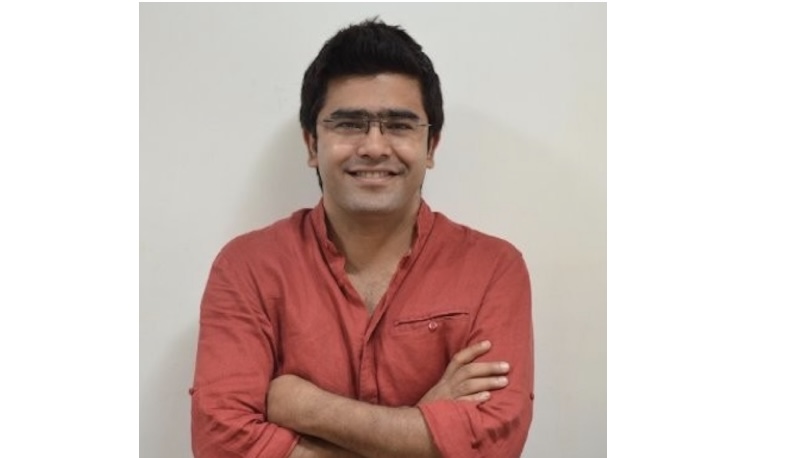
    The demand is already there. According to Icubeswire, over a dozen brands have begun experimenting with the short-format model, citing stronger resonance than traditional one-minute commercials. “Today’s consumer navigates to what’s short and crisp, and attention spans have fallen drastically,” said  Icubeswire co-founder & CEO Sahil Chopra at the launch. From regional slang to cultural quirks, the studio sees a 10-second hyper-local ad connecting more deeply than longer TV spots. In a noisy, fragmented content landscape, Stop Shots is hoping to prove that less really can be more.

  • Bigg Boss19 plays it twice, wins big on JioHotstar and late-night TV

    Bigg Boss19 plays it twice, wins big on JioHotstar and late-night TV

    MUMBAI: Lights, cameras, and double drama Bigg Boss19 is proving that once just isn’t enough. The reality juggernaut has not only set records on JioHotstar but also flexed its muscles on late-night television, drawing audiences well past prime time.

    On its TV run at 10.30 pm on Colors, the launch episode clocked a robust 1.6 TVR, with the show settling at an average 1.3 TVR through the week. What makes the feat stand out is the staggered release strategy all episodes premiere at 9 pm on JioHotstar before airing on TV an hour and a half later. For most shows, that would mean diminished television numbers. For Bigg Boss, it means twice the buzz.

    Online, the format is already a phenomenon. On JioHotstar, Bigg Boss19 has delivered 2.3 times higher reach and 2.4 times more watch-time than last season, smashing every benchmark. With double platforms, double audiences and double drama, the show has proved that in India’s entertainment universe, Bigg Boss remains the undisputed master of the house.

  • Publicis promotes Krishna Mothey to senior vice president

    Publicis promotes Krishna Mothey to senior vice president

    MUMBAI: Publicis Groupe India has elevated Krishna Mothey to senior vice president after six years with the agency. Mothey, who joined in 2019 to establish its commerce practice, has overseen its expansion from a two-member team into a 300-strong unit.

    In his new role, Mothey will continue as practice lead for commerce, steering strategy across e-commerce, direct-to-consumer channels, content, analytics and marketplaces.

    “I’m proud of the journey we’ve taken. When I started, it was with a vision to create the commerce practice, and it’s been a phenomenal experience to watch the team grow,” Mothey said in a note marking the promotion. He credited the support of Publicis leadership, internal teams, brand partners and clients, adding that he was “energised for the future.”

    Mothey’s promotion caps a career spanning more than 15 years in digital marketing and e-commerce. He has previously held senior roles at GroupM, iProspect and Ybrant Digital, and is also a founding member of The Digital Brunch, a training initiative.

  • AI dominates IFA’s ShowStoppers showcase

    AI dominates IFA’s ShowStoppers showcase

    BERLIN: Artificial intelligence was the undisputed headline act at ShowStoppers, IFA Berlin’s official press preview held on 4 September. Over 80 exhibitors packed the three-hour session, giving journalists and influencers an early glimpse of the products set to crowd Europe’s largest tech fair. While the categories stretched from household appliances to personal devices, one theme was inescapable: the wholesale integration of AI.

    Rugged garden mowers, once defined by brute force, now tout autonomous navigation and weather-proofing. Wet-and-dry vacuum cleaners use AI to map, learn and optimise cleaning routes. Gimbals offer intelligent tracking for creators on the go, while rugged smartphones double up as portable projectors. Energy-saving household devices market themselves as “self-learning”, promising to trim electricity bills through adaptive use.

    Hardware makers leaned on portability as well. A 14-inch laptop weighing a mere 800 grams drew attention, billed as a featherweight workhorse. Gesture-following mini-drones pitched themselves as toys and tools in equal measure. Even the stubbornly unpopular 3D tablet resurfaced—evidence that manufacturers, though faced with consumer apathy, remain unwilling to abandon the technology. A neat surprise came in the form of badge-shaped AI translators—clip-on devices priced for the mass market and small enough to stick onto the back of a phone.

    Phone translator

    But the boldest leap was not practical utility but companionship. One company showcased devices capable of generating anime-style characters that converse with their owners, others displayed cute little creatures sold as “digital friends.” The trend hints at a market where technology is less about solving chores and more about filling social and emotional gaps. AI-driven lighting systems and solar solutions underscored how deeply the technology has permeated the design ethos: AI is no longer a bolt-on, it is the organising principle.

    Beyond the gadgets themselves, the origins told their own story. By some estimates, nearly two-thirds of the exhibits could be traced back to China, with Shenzhen firms leading the charge. Their formula—affordable prices married to rapid product cycles and nimble manufacturing—has become hard to beat. For European consumer electronics firms, this dominance is a looming worry. Once the bastions of innovation, many now risk being outpriced and outpaced by their Chinese rivals.

    phones as projectors

    The prevalence of Chinese exhibitors at ShowStoppers reflects a wider shift in the global electronics market, where Asia increasingly dictates both the direction and the speed of innovation. The question for Europe is whether design and brand heritage can offset the brute force of Shenzhen’s cost efficiency.

    For IFA itself, the preview doubled as a stage for a strategic announcement. Organisers confirmed a fresh deal with Berlin authorities, extending the trade show’s stay in the city until 2034. That decision quells speculation that IFA might become a travelling exhibition, rotating between global capitals. Instead, Berlin remains the fair’s long-term anchor—a boon for the city’s tech ecosystem, hotels and conference economy.

    The main event kicks off on 5 September and runs until 9 September. If ShowStoppers was any guide, the halls will be thick with AI, from the mundane to the fantastical. 

  • Social media influencers are reshaping India’s wellness culture, Ipsos finds

    Social media influencers are reshaping India’s wellness culture, Ipsos finds

    MUMBAI: Social media influencers are no longer just selling protein shakes and yoga mats. They are increasingly setting the tone for how Indians think about diet, fitness and mental health. A new Ipsos Market Essentials study shows that across generations, people are tuning into influencers for health advice, from smoothie recipes to sleep hacks.

    Millennials top the charts, with 81 per cent saying they pick up health and dietary trends from influencers, closely followed by Gen X (76 per cent) and Gen Z (74 per cent). Even among boomers—traditionally thought sceptical of online chatter—a striking 57 per cent admitted to drawing wellness cues from influencer feeds.
    “Influencers with credible qualifications and relevant expertise have cemented their position as trusted voices in health and wellness,” said  MSU Global Ipsos senior vice president Allyson Leavy.

    Yet the same platforms that dispense health wisdom are also fuelling unease. More than half of Gen Z (54 per cent) confessed to feeling anxious about the negative effects of social media on wellbeing. The worry is less pronounced among millennials (47 per cent), Gen X (37 per cent) and boomers (28 per cent). The tension underlines the double-edged nature of social media: a source of connection and information, but also of misinformation, comparison and stress.

    India paints a paradoxical picture. A robust 71 per cent of Indians say they feel good about themselves mentally and physically—far higher than the global average, where only one in two citizens express such satisfaction. But optimism coexists with strain. Nearly half (47 per cent) of Indians report that stress is embedded in their daily lives, mirroring global patterns where 50 per cent of respondents feel the same.

    Helplessness in the face of global crises is another unifying theme. 61 per cent of Indians, identical to the global average, admitted to anguish over challenges that feel too large to solve—whether climate change, geopolitical turmoil or economic uncertainty.

    Asked about their biggest health concerns, Indians singled out “mental vitality”—a catch-all for sharper focus, resilience and energy. Some 59 per cent cited it as their top priority. The specific complaints: low energy (32 per cent), mental health struggles (29 per cent), fatigue (16 per cent) and insomnia (13 per cent).

    Global citizens echoed these worries, with 57 per cent prioritising mental vitality. But fatigue (26 per cent) and insomnia (29 per cent) registered at higher levels globally than in India, suggesting that Indians, while stressed, may be faring marginally better on rest and recovery.

    “The July edition of our tracker offers a deep dive into health and wellness by age group and consumer cohort—a goldmine for marketers tailoring their communication,” said Ipsos India group service line leader market strategy and understanding Archana Gupta. She added that previous editions explored leisure travel, examining motivations, preferred destinations and the very definition of leisure—whether adventure, luxury or immersive experiences.

    Ipsos conducts the Market Essentials survey across 15 countries including India, the US, the UK, Germany, China, Japan and Brazil. Around 1,000 respondents are sampled in large markets, 500 in smaller ones. In India, the sample skews more urban, affluent and connected than the general population.

    Results are presented as a “global country average” rather than a world total, since large parts of the global population remain outside the survey. Ipsos notes that its online polls carry a credibility interval of +/-3.5 percentage points.