Blog

  • AI joins the comms party as M37Labs launches Ebic.ai to fix workflow chaos

    AI joins the comms party as M37Labs launches Ebic.ai to fix workflow chaos

    MUMBAI: When brands lose the plot, it’s often not the story but the spreadsheet. M37Labs has unveiled Ebic.ai (Enterprise Brand Intelligence Console), a first-of-its-kind vertical AI platform designed to overhaul the 100 billion dollars global marketing, PR, and communications industry by unifying its notoriously fragmented workflows.

    The numbers tell the story: industry research shows communications professionals juggle an average of 11 different tools daily, with 68 per cent citing disjointed workflows as their top productivity hurdle. Ebic.ai claims to end this chaos by consolidating everything from monitoring to narrative-building into a single adaptive console.

    Early deployments across enterprise clients in India and Malaysia have been striking. Teams reported up to 15x productivity gains and 3x time savings thanks to unified dashboard management. In just two months of use, Ebic.ai’s predictive algorithms identified and helped avert three potential brand crises, shifting communications from reactive firefighting to proactive strategy.

    At its core, the platform integrates four AI-driven modules:

    ●    Real-time Omnichannel Brand Monitoring: A contextual AI co-pilot that delivers global updates and enables 3x faster strategic decision-making.

    ●    Predictive Crisis Detector: Scans millions of data points to flag risks early; in trials, it spotted emerging threats weeks before reputational damage could occur.

    ●    Strategic Narrative Engine: Uses reinforcement learning to co-create compelling content while maintaining brand voice, with users reporting 3x more efficient output.

    ●    Intelligence Hub: Goes beyond mention tracking with competitor positioning and opportunity mapping.

    “The biggest bottleneck in communications isn’t ideas, it’s execution trapped in disconnected systems. EBIC.AI is the intelligent co-pilot that finally unifies these workflows,” said M37Labs co-founder & CEO Prashant Shivram Iyer.

    Adding to this, M37Labs CAIO & co-founder Zorawar Purohit noted: “Other tools monitor; Ebic.ai comprehends and acts. It learns from every interaction, continuously protecting and enhancing brand value. This isn’t an incremental step, it’s a new operating model for brand management.”

    Built by a world-class developer team out of India for global adoption, Ebic.ai runs on a cloud-native, multi-language architecture. Its early success with multinational clients underscores both its scalability and its ambition: to replace the patchwork of single-point services with a single, intelligent hub for enterprise brand management.

    In a world where attention spans are shrinking and crises can explode in minutes, Ebic.ai is pitching itself as the difference between scrambling and strategising and for an industry fuelled by reputation, that’s a shift worth more than a headline.

  • Delhi dreams big as Live Times Xchange charts vision for 2047 future

    Delhi dreams big as Live Times Xchange charts vision for 2047 future

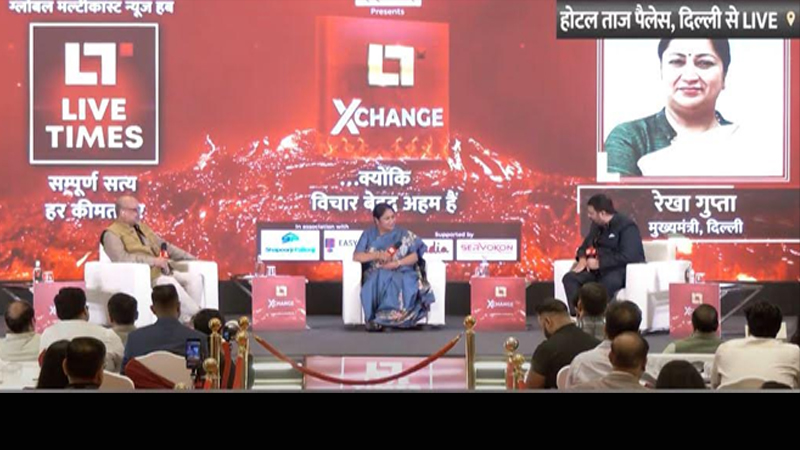
    MUMBAI: When the capital talks, the country listens jkand Live Times Xchange made sure Delhi’s voice roared loud and clear at its 4th flagship conclave on 10 September 2025 at the Taj Palace, New Delhi. Centred on ‘Mission Delhi @2047: Reinvent India’s Capital’, the event gathered an eclectic mix of powerbrokers, policymakers, and public voices to reimagine the city’s future.

    The line-up was nothing short of formidable: chief minister Rekha Gupta, MPs Sanjay Singh and Manoj Tiwari, ministers Kapil Mishra, Ashish Sood, Parvesh Verma, AAP Delhi president Saurabh Bhardwaj, Congress leaders Devendra Yadav and Alka Lamba, Delhi mayor Raja Iqbal Singh, JNU vice-chancellor Prof. Santishree Dhulipudi, former AIIMS director Dr. M.C. Mishra, and justice Sudheer Aggarwal. Together, they debated the policies, politics, and pathways to transform Delhi into a global, citizen-first capital by 2047.

    Rekha Gupta unveiled an ambitious blueprint: complete electrification of public transport, seven million new trees to expand Delhi’s green cover, and a renewed push to restore the city’s healthcare credibility. “Delhi will not only see change in infrastructure but also in intent, as governance becomes truly people-first,” she assured.

    Ashish Sood spotlighted futuristic education reforms, from 75 CM Shri Schools teaching AI, robotics, and data science to a Rs 900 crore allocation for 21,000 smart classrooms, alongside the clean yamuna Mission. Alka Lamba, reflecting on her 30 years in politics, credited Sheila Dikshit’s legacy of flyovers, metros, schools, and hospitals, and urged today’s leaders to carry forward long-term, responsible governance.

    Manoj Tiwari brought personal grit to the table, recalling his journey from Bhojpuri cinema to Parliament and defending Delhi’s migrants. He touted initiatives like Rs 1 lakh free healthcare for the poor, Ayushman Arogya centres, GPS-tracked water tankers, Yamuna clean-up drives, and the UVR-2 road project as proof of development with intent.

    The conclave distilled five big pillars for Mission Delhi @2047:

    ●    Smart, transparent governance

    ●    Sustainable green infrastructure

    ●    EV-led future mobility

    ●    Knowledge and innovation hubs

    ●    Inclusive healthcare, housing, and citizen services

    For Live Times founder & editor-in-chief Dilip Kumar Singh the gathering epitomised the brand’s ethos: “Sampoorna Satya, Har Keemat Par is not just a slogan, it is our responsibility. LT Xchange shows that when leadership and media collaborate on facts, democracy thrives.”

    As the curtains fell, the message was unmistakable: Delhi’s reinvention rests on collaboration, innovation, and accountability. With optimism and determination in the air, the conclave left one lingering thought, if politics, policy, and people can pull together, Delhi 2047 won’t just be a capital, it’ll be a global benchmark.

  • Sony tunes into new voice with Gaurav Laghate as comms head

    Sony tunes into new voice with Gaurav Laghate as comms head

    MUMBAI: When the newsroom meets the boardroom, sparks are bound to fly. Sony Pictures Networks India (SPNI) has tapped journalist-turned-communications strategist Gaurav Laghate as its new head of PR and corporate communications, effective September 2025.

    Reporting directly to Gaurav Banerjee, MD & CEO of SPNI, Laghate will be tasked with steering the company’s communications blueprint shaping narratives, sharpening reputation, and strengthening engagement with stakeholders across its diverse media businesses.

    Armed with 17 years of newsroom experience, Laghate is no stranger to storytelling at scale. Until recently, he was senior editor and head of the consumer bureau at Mint, where he became one of India’s most authoritative voices on the media and entertainment sector. His portfolio spanned linear TV, OTT platforms, advertising, and regulatory affairs, making him a familiar face across the industry’s power corridors.

    From tracking the rise of streaming wars to decoding regulatory shake-ups, Laghate built a reputation for analytical accuracy, deep domain knowledge, and sharp editorial instincts.  He began his career at indiantelevision.com and is prized for analytical rigour and a contact book that spans studios, regulators and agencies. Now, he crosses over to the corporate side, bringing with him the credibility of journalism and the strategic perspective needed to shape SPNI’s narrative in a fast-evolving media landscape.

    For SPNI, the appointment underscores a renewed push to build authentic storytelling and stakeholder trust as it eyes its next growth chapter in India’s hyper-competitive content market.

    Welcoming him onboard, Gaurav Banerjee said: “Gaurav’s deep domain knowledge and strategic perspective make him a valuable addition to our leadership team. His transition from a journalist to a communications leader will bring a unique perspective on how we shape our narrative and engage with multiple stakeholders. We are excited to have him onboard as we aim to strengthen our position as a leading content powerhouse.”

    With the shift from penning headlines to making them, Laghate now faces the challenge of ensuring Sony’s stories resonate not just with viewers, but with every corner of the media and entertainment ecosystem. And if his track record is any indicator, this will be one headline worth watching.

  • Nestlé appoints Anisha Tandon as global content manager for Maggi

    Nestlé appoints Anisha Tandon as global content manager for Maggi

    AMSTERDAM: Nestlé has named Anisha Tandon global content manager for Maggi, giving the FMCG veteran the mandate to scale storytelling for one of the world’s most recognisable food brands. Based in Vevey, Switzerland, Tandon takes on the role as part of a mission assignment after leading digital transformation for Maggi across Asia, Oceania and Africa.

    Tandon, an MBA from Mica, cut her teeth at Hindustan Times and Naukri.com before moving through senior marketing roles at Flipkart and cult.fit. At Nestlé she has spent more than four years building the digital playbook for Maggi, consolidating content studios across 14 key markets, pushing martech integration, and experimenting with generative AI to sharpen consumer engagement.

    She has been credited with driving efficiency in content production, building ecommerce depth, and crafting digital-first campaigns that marry cultural nuance with operational scale.

    “My focus has always been consumer-first storytelling that delivers business results,” Tandon wrote in a LinkedIn post announcing her new role.

    With experience spanning e-commerce growth, brand campaigns, content ecosystems and performance marketing, Tandon’s appointment signals Nestlé’s intent to double down on platform-native, insight-driven content for Maggi’s global growth.

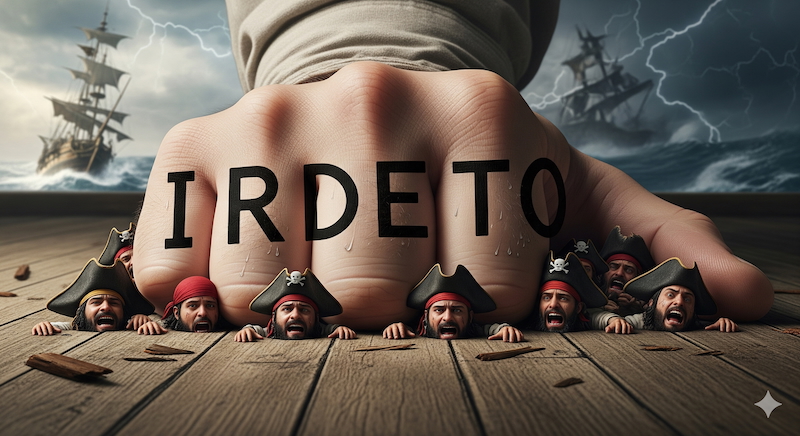
  • Irdeto tightens the screws on sports pirates with high-frequency key rotation

    Irdeto tightens the screws on sports pirates with high-frequency key rotation

    AMSTERDAM:  Live sport is the crown jewel of streaming — and the favourite target of pirates. The digital-security specialist Irdeto has launched a new feature for its cloud-based multi-DRM platform, Irdeto Control, designed to make life harder for stream hijackers and easier for broadcasters under pressure from rights holders.

    The enhancement centres on high-frequency key rotation: a technique that shrinks the exposure window for encryption keys, forcing frequent re-authentication. Each cycle destabilises pirate streams by disrupting the stolen keys they rely on, making common tricks such as key extraction and CDN leeching far less effective. The result, says Irdeto, is the gradual degradation of illegal feeds — a frustrating user experience that pushes fans back towards legitimate platforms.

    Irdeto Control already delivers more than 15 billion DRM transactions monthly, protecting content for over 200m users. It supports Widevine, FairPlay and PlayReady, while layering on piracy countermeasures such as concurrency management, vulnerable-device blocking, emulator detection and geo/VPN enforcement. The new key-rotation capability slots into existing multi-DRM workflows without requiring changes to players or packagers — a crucial point for operators wary of integration headaches.

    “Piracy in live sports continues to evolve rapidly, and rights holders are demanding tougher security standards that don’t hinder operational efficiency,” said  Irdeto chief operating officer for video entertainment Andrew Bunten. “This is a major step forward in protecting the value of live content.”

    The economics of piracy are sobering: for broadcasters, unauthorised streaming of premium leagues erodes subscription revenues; for rights holders, it undermines billion-dollar licensing deals. Regulators, too, have begun pressing platforms to prove they can safeguard live streams against theft.

    Irdeto, which has long positioned itself at the intersection of video platforms and security, hopes its latest upgrade will strengthen its pitch to both camps. By degrading pirate feeds rather than merely chasing them offline, it aims to tilt the balance in favour of legal distribution.

    The announcement comes ahead of IBC 2025 in Amsterdam, where Irdeto will showcase its full suite of video-protection tools. In a marketplace where streaming platforms compete as much on content security as on user experience, the company is betting that tougher defences can help keep live sport the revenue engine it has always been.

  • Billions still offline despite mobile internet surge: GSMA

    Billions still offline despite mobile internet surge: GSMA

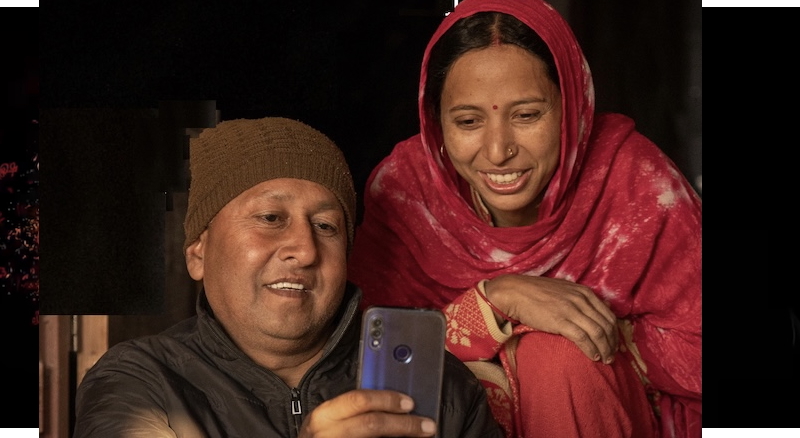
    LONDON: The world is more connected than ever, yet the digital divide stubbornly persists. According to the GSMA’s State of Mobile Internet Connectivity 2025 report, some 4.7 billion people – 58 per cent of the global population – now use mobile internet on their own device, with another 710 million (9 per cent) getting online via shared phones. The leap in 2024, when 200 million joined the ranks of mobile internet users, was the fastest growth since 2021.

    Still, that leaves 3.4 bIllion people offline. Just 4 per cent of the global population, around 300 million individuals, live in areas with no mobile coverage – the “coverage gap”. Far more troubling is the “usage gap”: 3.1 billion people, or 38 per cent of humanity, live under a signal but remain disconnected. The problem is not technology but barriers like high handset costs, poor digital literacy, low awareness of the internet’s uses, and patchy electricity supply.

    The divide is starkest in low- and middle-income countries (LMICs), which account for 93 per cent of the unconnected. In these regions, adults in rural areas are 25 per cent less likely to be online than their urban counterparts, while women are 14 per cent less likely than men to use mobile internet. Sub-Saharan Africa lags furthest behind, with only one in four people online and a coverage gap of 10 per cent.

    Affordability remains the single biggest brake. Entry-level internet-enabled handsets cost 16 per cent of monthly income in LMICs and nearly half the earnings of the poorest quintile. , GSMA director general Vivek Badrinath argues that a $30 handset could transform access for up to 1.6 billion people. To that end, the GSMA last year launched a Handset Affordability Coalition with backing from operators, device-makers, multilateral lenders and development agencies.

    Connectivity infrastructure, meanwhile, has reached maturity in many markets. 4G networks now cover 93 per cent of the world’s population and 5G more than half, though 4G rollout is slowing as investment shifts to 5G. The real obstacle is adoption: most of the offline live within coverage zones but either lack a device or the ability to use it effectively. Two-thirds of the usage gap stems from people without a handset at all.

    Even among those connected, “meaningful use” remains elusive. Many people restrict their mobile internet activity to a narrow band of services such as messaging or social media, barely scratching the surface of what digital access can offer in healthcare, education, commerce or banking.

    The economic stakes are high. Closing the usage gap, the GSMA estimates, could unlock $3.5trn in additional global GDP by 2030. But that will require not only affordable handsets and cheaper data, but also policy action to address gender disparities, build digital skills, improve electricity access, and generate locally relevant content.

    “Although the digital divide has been on the agenda for over a decade, the time has come for meaningful progress,” Badrinath said. “Infrastructure is no longer the main barrier. The challenge now is ensuring billions more can actually use it.”

  • NDTV Profit sharpens focus with new identity ‘For Your Profit’

    NDTV Profit sharpens focus with new identity ‘For Your Profit’

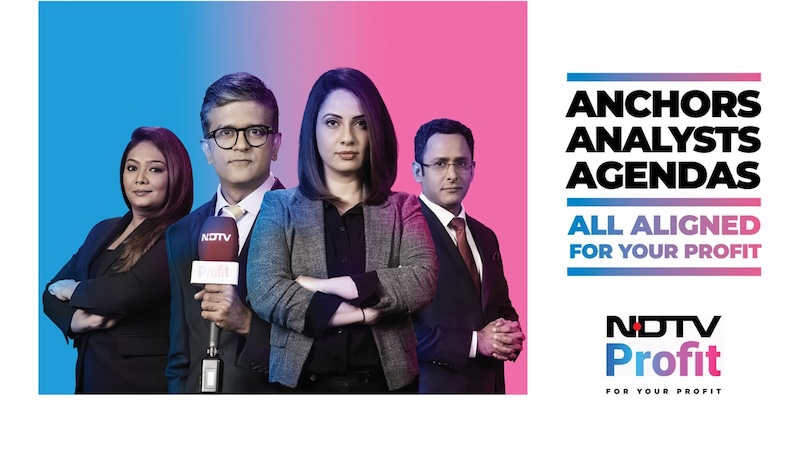
    NEW DELHI: The Adani-owned NDTV is on a reinvention spree. At its GST Conclave on 9 September, NDTV Profit unveiled a new positioning—‘For Your Profit’—signalling its ambition to become more than a market ticker and instead a platform that helps every Indian plug into the country’s growth story.

    The campaign, created with Creativeland Asia, rests on the idea that profit is no longer the privilege of the few but the possibility of the many. As equity participation rises, digital entrepreneurship flourishes, and financial awareness spreads, the channel wants to bridge knowledge gaps and spotlight opportunities for shopkeepers, homemakers, first-time investors and start-up founders alike.

    NDTV chief executive & editor in chief Rahul Kanwal, chief executive put it simply: “Profit begins with people—with their aspirations, their tomorrow. Progress holds meaning only when it empowers lives. That is the essence of our new identity.”

    Creativeland Asia  founder & chairman Sajan Raj Kurup was more lyrical: “From Dalal Street to every street, democracy is now demat. Profit is no longer a solitary pursuit. With ‘For Your Profit’, NDTV Profit steps into this moment of democratisation to make profit the possibility of the many.”

    With its refreshed identity, NDTV Profit promises sharper insights, meaningful conversations and decisive analysis—aiming to be less a broadcaster and more a catalyst in India’s economic journey.

  • Coolberg brews ‘jugaaro’ with Prime Video’s ‘Do You Wanna Partner’

    Coolberg brews ‘jugaaro’ with Prime Video’s ‘Do You Wanna Partner’

    MUMBAI:  When life gives you lemons, Coolberg adds ginger and calls it jugaaro! Prime Video and Coolberg have teamed up for a first-of-its-kind collaboration, bringing fiction off the screen and into people’s hands with a limited-edition drink inspired by Amazon Original series Do You Wanna Partner. Ahead of the show’s launch on 12 September, the duo unveiled the Coolberg ‘jugaaro’ lemon-ginger non-alcoholic malt beverage, designed to bottle up the show’s quirky, entrepreneurial spirit.

    The parallel is uncanny. Just as the series follows two women who hustle their way through the male-dominated world of craft beer, Coolberg itself is led by three trailblazing women: Ghodawat Consumer Limited, ceo, Salloni Ghodawat, co-founder Yashika Keswani, and brand lead Ritika Agrawal. Together, they have carved out Coolberg as India’s number one non-alcoholic beer brand and a flag-bearer for mindful drinking among Gen Z and millennials.

    “This collaboration isn’t just about a product, it is about a story,” said Ghodawat. “Coolberg’s journey mirrors the series about breaking barriers, challenging conventions, and showing that the future of FMCG belongs to diverse voices and fearless ideas.”

    The special-edition Jugaaro will be stocked across 3,500 plus general trade stores, 50 modern trade outlets including Nature’s Basket and Walmart, 800 plus Horeca destinations like Absolute BBQ and Wow Momo, and leading quick commerce apps including Blinkit, Zepto and Swiggy.

    Produced by Dharmatic Entertainment, Do You Wanna Partner stars Tamannaah Bhatia and Diana Penty as best friends chasing their dream of a beer start-up, alongside Jaaved Jaafery, Nakuul Mehta, Shweta Tiwari and Rannvijay Singha. The series promises a fizzy mix of comedy, heart, and jugaad, while Coolberg Jugaaro serves as the perfect real-world chaser. 

  • Shilpa and Shamita Shetty light up Diwali with BGFA’s ‘gift of inner light’

    Shilpa and Shamita Shetty light up Diwali with BGFA’s ‘gift of inner light’

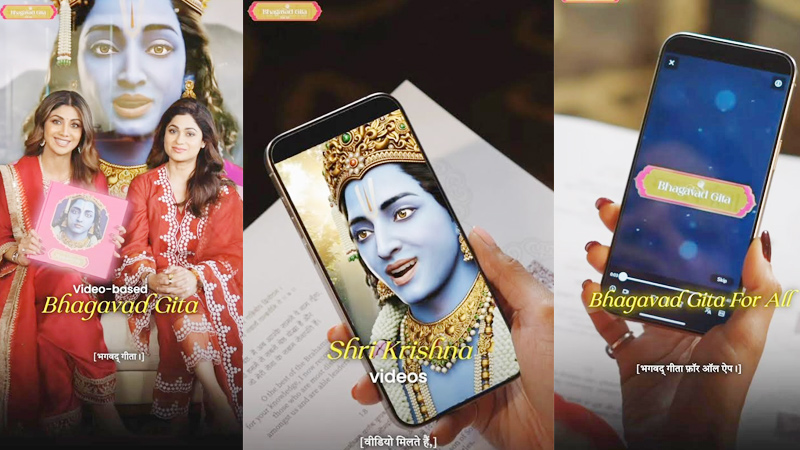
    MUMBAI:  Bhagavad Gita for All (BGFA) has unveiled its first festive campaign, “Gift of Inner Light,” starring sisters Shilpa Shetty and Shamita Shetty.

    Launched in Mumbai on 9 September, the campaign urges families to see the festival as more than a celebration of sparkle and sweets, inviting them instead to embrace the timeless wisdom of the Bhagavad Gita. The initiative positions the gita as a modern-day guidebook for peace, resilience and harmony at home, making it as essential as the lights that brighten Indian households during the festive season.

    Founder Prithviraaj Shetty said Shilpa was a natural fit for the campaign, describing her as someone who bridges tradition with modern wellness. “Her journey of balance mirrors what BGFA stands for: bringing the timeless wisdom of the gita into today’s homes in a way that feels both relevant and inspiring,” he added.

    Shilpa Shetty echoed the sentiment, noting, “Yoga connects us with our inner self, offering clarity and peace. The gita deepens that journey, showing us how to live with wisdom, balance and strength. This Diwali, I truly believe the most meaningful gift we can share with our loved ones is the Bhagavad Gita. To gift the gita is to gift light, harmony and inner strength.”

    Her sister Shamita highlighted how BGFA’s design and storytelling make the gita relatable for younger audiences, calling it “a gift of inspiration that transcends generations.”