Blog

  • “Indian broadcasters need to look at solutions not just products to get real value” – Ross Video’s David Ross

    “Indian broadcasters need to look at solutions not just products to get real value” – Ross Video’s David Ross

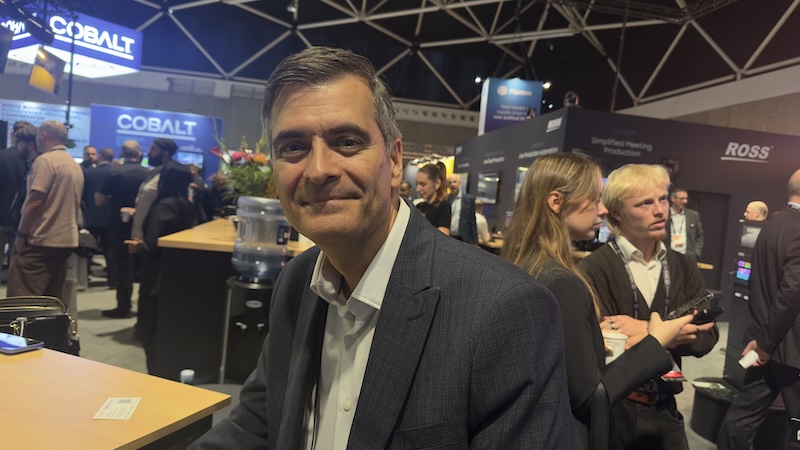
    At around 10 am on 12 September, long before the espresso machines hit their stride, Hall 8 of Amsterdam’s RAI convention centre throbbed with an unexpected chant: “Go Ross Go!” The source was not a marketing stunt but the chairman and chief executive himself. David Ross, head of Ontario-based Ross Video, stood shoulder-to-shoulder with his crew on the IBC show floor,  voice carrying across the cavernous hall. While rival executives do their glad-handing from glassy suites, David prefers to start the day in the trenches, rallying the troops like a regimental captain before battle.
    Engineering and enterprise run in his circuitry. He began programming at the age of nine, scooped up national engineering prizes as a teenager and left university with a computer-engineering degree heavy on business. Before joining the family firm in 1991 he cut his teeth at the CBC and Electrohome, fiddling with projectors and video-effects units. From product manager to head of R&D, then president in 2004 and chief executive two years later, his climb was brisk and unshowy at Ross Video.
    The numbers are anything but modest. Under his watch Ross Video has posted roughly 15 per cent compound growth every year since 1991—without a single downturn, recession or not. He owns more than four-fifths of the company yet has kept it employee-friendly, structuring it as an ESOP and keeping private equity at bay. The mantle of respect is heavy: an honorary doctorate from the University of Ottawa, fellowships from Canada’s Academy of Engineering and from the Society of Motion Picture and Television Engineers, and a trophy cabinet of industry awards.
    For all the laurels, David remains a kinetic learner. He trades ideas with fellow chiefs through TEC (Vistage in America) and gulps down management audiobooks while pounding out marathon miles. It is this mix of technical curiosity, fiscal discipline and boyish gusto that has made Ross Video one of broadcasting’s quiet powerhouses.
    When Indiantelevision.com founder and editor in chief Anil Wanvari caught up with him at IBC, the conversation roamed from the science of sustaining perpetual growth to the sheer pleasure of building kit that makes television sparkle—proof that the man leading the cheer is also the engineer behind the magic. Excerpts from the tete a tete:

    On what’s exciting him about IBC 2025.
    To start off we just bought a company. And we just had some fun with it. We are talking about, you know, peanut butter goes with jelly, movies go with popcorn and you know video goes with audio. So we bought Lama (Lean and Mean Audio) – a company that does audio entirely software-based in the cloud and on-prem. It’s quite a comprehensive feature set. It’s also got automix and things like that. They did 16,000 streams of audio for the Paris Olympics where they needed to match up commentators with crowd noise – and to have it automatically set up. They were doing hundreds and hundreds of them a day.  We are going to sell what we have and over time we are going to do more with it.

    On whether Ross Video’s acquisition streak is going to continue. 
    Lama was our twenty second acquisition. Acquisition number 23 is almost done. We can’t talk about that, But watch this space. We also do organic growth. If all we were going to do is grow through acquisition, we would not have 500 people in R&D like we do today. So that’s a major investment, especially when you consider that Ross Video is only about 1500 people. One in three are designing new products. And also considering we have our own manufacturing in-house. That  is a major commitment to new product development.  But we look at everything that is adjacent to- complimentary to – what we do. Everything has to connect with what we do in multiple ways.

    The first robot I actually bought was in house, and we bought it out. It was the Furio, which is on tracks. I did that around 2011 or so. It was a bit of a shock when I came back and said: “Stop everything. Let’s start building robots.” Then we did Cambotics three months later, and then we did an organic product, which was SkyDolly and and just last year, we launched Artimo, which was an organic product based upon acquisitions. So, how much is acquisition? How much is organic? It kind of gets all blurred after a while, because we’re doing brand new innovations, but because we are already in the market. Now we have that technology that we brought in house. You’re going to see the same sort of thing again, with Lama, you know, bringing in audio in house. Great. What’s next? That’ll be organic,

    On whether Ross Video will consider outsourcing production to cheaper locations such as India or China
    What we make in our industry is generally not interesting to make in India or China. They want to make a million of something. We make hundreds or thousands of something. Very, very complex products at lower volumes than the mass market. There’s a lot of enhancements and back and forth of R&D. It all makes sense to have all of that in-house. It might be more expensive for us to do the manufacturing in China as there’s a lot inefficiencies in working with an outside company and also it’s just not interesting to them. Our factories are designed to make studio robotics or routers or production switchers.
    On the product gaps in the company’s portfolio and how will Ross fill those.
    We’re already in broadcast, we’re in sports and live events, we’re in OB vans, we’re in mega churches, we’re in government, we’re in corporate, high end type production. We’re already in stadiums that’s actually our biggest market. What else can we do? I know there’s there’s other adjacencies. So I can’t quite tell you where our gaps are. You could say that we’ve got a great portfolio, and we can create some really great end-to-end solutions. I can also tell you that there’s 1000 companies that aren’t part of Ross; they do stuff that we don’t do. So you could say that we’ve got a thousand gaps. In other words, lots of opportunity in the future.

    On how long can the motivated and family like culture continue at Ross Video now that it is expanding aggressively.
    I think I enhanced it a little bit coming forward from what my father John had put in place. You know, there was a day when I had to move from the Iroquois in Canada  location, where we really started, and to Ottawa, an hour north. And not being in the factory, things started to go wrong, and culture started to change. And I’d hear stories about people not working well together and so on. That was only when we were around about 75 people, and I thought to myself  how are we going to get to 100 people and keep the culture? It’s already falling apart, so we sat down and wrote up the Ross Video code of ethics. We wrote down the Ross Video culture. We put it in everybody’s, you know, walls or their cubes and their offices, their home offices. We put it on the website. It sits on the doors of our meeting rooms. Here we live it. And when you do that, it’s a culture that can extend potentially indefinitely, because I’m already not in every location, but we’re able to bring people on. They understand what it is. We got a lot of people that live this culture and love it. And people who don’t match that culture, that don’t respect each other, that don’t help each other, that aren’t focused on customers, that sort of thing. They don’t last very long at Ross Video, sometimes they self-select and out they go. They just don’t fit. So how big can we go? I know, as big as you want.

    On how Ross Video deals  with a market like India where price plays a very important role in closing a deal and negotiations can be endless as compared to other countries.

    Well,  the thing is I am unaware of a major manufacturer of routers or production switchers or sports analysis tools or robotics out of India. We’re competing with the same players, for the most part, in India that we do with in the rest of the world. So really, the question is figuring out the right solution for the job and sharpening your pencil for India is but in the end, you know, it’s the same products. So I would love to be able to discount our products to 90 per cent but then it would be cheaper for us to just shovel money and not sell products, because we’d have been losing money on everything we sell.

    So, so from the point of view of price, I think India, like everybody else as well, does have certain minimum requirements for what they want. I mean, I was looking at a bid from Doordarshan just yesterday, actually,  “they didn’t just say we would need a production switcher. We want the lowest price.” They had, you know, a couple of dozen criteria the product. Before you can bid, you must have all of these high end features. And if you qualify for that, then we want to see the best price. So it’s not just a race to the bottom.

    These features are important to our customers in India like everywhere else, because they provide value. And I think what we need to start doing in India as well, like we have been doing everywhere else, that is not just talk about a product, its features and its price, but also the ecosystem and the solution that we provide.

    For example, you know, OverDrive works really well with our Carbonite production switchers. Carbonite production switchers work really well triggering XPression graphics. XPression graphics work really, really well with our with our weather system Raiden. Xpression workflows work really well with Voyager, which ties in sports analysis, which talk  to our instant replay systems and so forth. So you can see there’s a thread that goes through everything that we do that also has value. And I think if one of the things you have to have a conversation with locally is discuss the system that you want, the solution that you want, and not just bid for individual products. Because I think if India continues to just look at one product at a time, some features and a price, they’re missing out on unlocking real value and real savings in workflow and efficiencies.

    On whether Ross Video will consider serving the individual creator community at some stage.
    I’m going to say only at the highest end, yeah, one of the most important things when you have a company of any sort is the path to market. How are you going to be communicating with a market, and how are you going to service that market? Ross Video is very intentionally set up to have a close relationship with its customers. When somebody comes onto our booth in an exhibition, we know who they are, we know what they need. We understand their company, their needs. We often know the person, even have a relationship with that person, maybe over many years.

    When you’re talking about the creator community, and you say there’s a million creators out there, we can’t do that. That is a different type of a sale. It’s a sale where it’s about marketing, it’s about lead generation. It’s about no price negotiation. It’s about clicking and buying it on a website. We’re not set up for that. And also it’s about a larger mass market.

    And in the mass market as well is that’s where you have to build in millions at a very, very low price, very little customisation, if any. That’s not what we do either. We do more expensive products. That’s what our factory is set up to do. And we have, we would say, a more expensive but more intimate connection with our customers. When the creator community, you know, gets to a certain point, if you have one that’s making it, you know, has a lot of eyeballs, therefore making a lot of money, they want to transform from to a more professional look, and they want to create a studio, then we’re there for them. So we don’t need to move into the content creator business to be able to get to the billion dollars in revenue from the 500 million we have now, but to get to $2 billion in revenue, maybe, maybe that’s next. But right now, I think the way we want to leverage our customers and our brand and our go to market and our manufacturing capability and our design expertise, more so to be able to double the size of the company.

    On the role that AI is playing at Ross Video and in its products.
    AI is a really, really big topic. It’s everything like it’s interesting inside the company. You could say there’s inside, there is outside the products, and then there’s many types of AI as well. Inside the company, there’s AI everywhere. Pretty much everybody that wants chatgpt gets an enterprise copy of it inside of Ross video, so we’ve got like, 1000 copies of chatgpt running at any given time. We’re using it, developing our software. We’re using it developing our manuals. We’re using it to drive our website, our manuals. We’re using it writing our specifications, our market research, internal communications. We’re using it everywhere, and that’s on purpose, because I want to make sure that all of our employees, in all ways, become very, very familiar with AI and be able to get more ideas of how can it affect workflows and get that comfort.

    Now, inside of Ross Video, we have something called Ross Research Labs, and that is different and separate. Ross Research Labs is different and separate from all the product groups. So we got, you know, R and D team for production switches, another for routers, another for graphics, another for robots and so forth.

    Ross Research Labs is there for all of the different groups. So for example, recently, they were using AI to do player tracking for our Piero system, our sports analysis system, and be able to make sure that when one player goes through another player and comes out the other side, it doesn’t suddenly get identified as a new player. It can track them properly they had to go through we actually worked with universities to figure out the very best algorithms to be able to make player tracking work.

    We also take a look at the pitch, say for cricket or football or something like that, where we can look at that, and we can now use AI to calculate where the camera is that’s taking that image and what the zoom setting is on the lens and everything else, and understand where it is. The camera is in a three dimensional space, so we can overlay graphics with it. That was another thing that came out of Ross Research Labs.

    Another thing that we’re doing is Ross voice control. So this is speech to text, but we have examples of major broadcasters. I’ll say that that I’ve done hour long productions where the presenter is speaking, controlling the graphics, running maps and creating all these animations behind them. There is no one in the control room following this and pressing any buttons. It is all speech to text. That text goes into an engine that then drives through an API our products to be able to do the production. And when we did it, there was only one time that somebody had to reach in and press a button over a one hour or two hour production, which is just amazing, and it was running faster than  any human operator could could run in real time.

    There’s another thing that we’re just starting to work with as well, which we’re starting to do in stadiums where we’re doing closed captioning, basically, but for the big screen. So people who can’t hear that, or maybe the crowd is too loud they want to hear what a commentator said. We’re actually putting that up on the screen. We can also do it in real time. Translations. We’ve compared that to human translators, and we’re faster by like, five seconds, and more accurate as well. So that’s another use of AI that we’re starting to roll out, and that came out of some of our other R and D teams. There’s more going in that direction. The next side of things as well. Oh, of course, our Artimo, you know, has all sorts of facial tracking and body tracking and things like that for our cameras to be able to keep talent centered in a production quality way, but there’s more
  • ShemarooMe premieres ‘Sanghavi and Sons’, a warm tale of family and bonds

    ShemarooMe premieres ‘Sanghavi and Sons’, a warm tale of family and bonds

    MUMBAI: Some films are meant to be experienced together. With Sanghavi and Sons, ShemarooMe invites audiences to enjoy a story that honours family, love and the ties that keep us close. This world digital premiere offers a chance to gather with loved ones, celebrate a heartfelt entertainer and revisit the values that make everyday life worth cherishing.

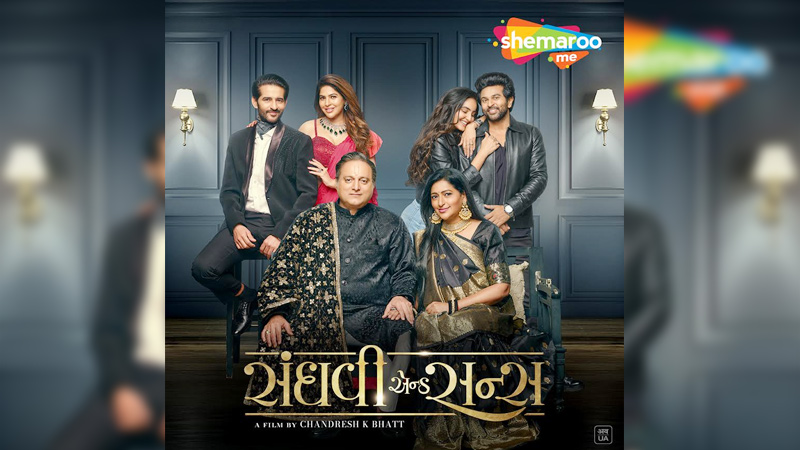
    Directed by Chandresh Bhatt, the film features Manoj Joshi, Dharmesh Vyas, Hiten Tejwani, Komal Thacker and more. At its heart is Navneet Rai Sanghavi, the guiding presence of his household, who navigates the balance between tradition and change. Alongside him are his sons Asmit and Aditya and daughter-in-law Komal, with the shifting family dynamics forming the emotional core of the narrative. The story unfolds through small yet powerful moments such as disagreements, reconciliations and gestures of quiet care that hold a family together.

    On the film’s world digital premiere, Manoj Joshi shared, “I believe our family makes us who we are. Parents often provide the calm when everything else feels unstable. I was moved after hearing the story and was excited to play this role as it reminded me of my own experiences. I immediately knew the audience would connect with this, as every viewer will see a part of their own family in this story.”

    Hiten Tejwani added, “We all have differences and arguments with those closest to us, but it is these very moments that make our relationships stronger. In uncertain times, it is our loved ones who give us strength. Sanghavi and Sons is special because it shows how generations can think differently yet still stay united.”

    Sanghavi and Sons is a reminder that the greatest moments are the ones we share. Celebrate the joy, challenges and unbreakable ties that make every family unique and watch the world digital premiere only on ShemarooMe.


  • Soframycin brings care to Lalbaugcha Raja with ‘Bhakti Aapki Care Hamari’

    Soframycin brings care to Lalbaugcha Raja with ‘Bhakti Aapki Care Hamari’

    MUMBAI: Every year, lakhs of devotees walk barefoot, stand in long queues, and brave crowded lanes for a glimpse of Bappa at Lalbaugcha Raja. In this journey of faith, cuts, blisters, and skin discomforts often become companions.

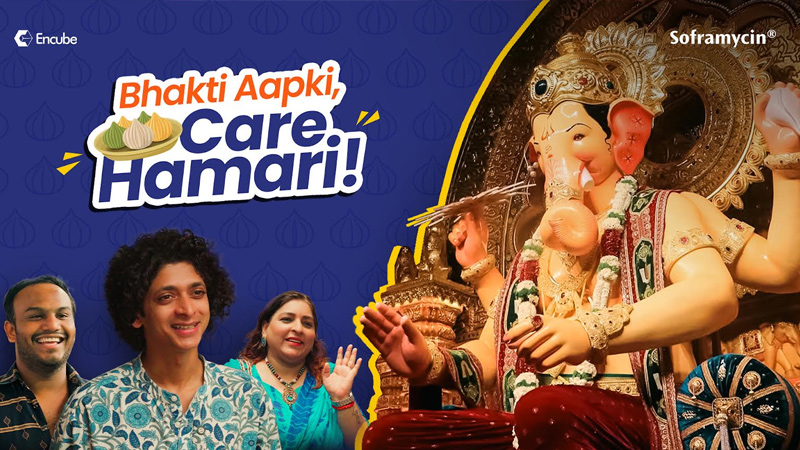
    Encube Ethicals’ trusted antiseptic brand, Soframycin, brought its purpose-driven campaign Bhakti Aapki Care Hamari to life during Ganesh Chaturthi 2025 at one of India’s most iconic and revered pandals. At a festival where faith draws millions, Soframycin stepped in to ensure that devotion could continue without interruption, by caring for the small injuries and discomforts devotees faced along the way.

    This year’s initiative created a truly integrated experience, from a heartfelt campaign film shot at Lalbaugcha Raja capturing devotees’ journeys, to the on-ground distribution of over 25,000 care samples supported by Look-walker teams and a giant Soframycin inflatable, along with special product gifting for karyakartas and volunteers, and a digital layer of comic-style posts, contests, and vox pops that raised awareness about festive injuries while highlighting Soframycin’s quick healing promise.

    The campaign brought Soframycin’s new message Bhakti Aapki Care Hamari alive at Lalbaug, evolving the brand from a trusted antiseptic to a cultural companion during one of India’s most cherished spiritual gatherings.

    With a 1.9 milion plus digital reach and direct engagement with lakhs of devotees, the initiative amplified Soframycin’s presence while deepening its emotional connect with communities of faith.

    “Ganesh Chaturthi is about devotion, community, and care. With Bhakti Aapki Care Hamari at Lalbaugcha Raja, we extended Soframycin’s promise of protection and healing directly to devotees. Seeing thousands walk barefoot with faith, and being able to provide comfort through our care kits, was truly fulfilling,” said business head – India formulations, Encube Ethicals, business head – India formulations, Dinar Mhatre.

    The campaign was conceptualized and executed by BigTrunk Communications, Soframycin’s digital marketing partner. “This campaign shows how tradition and modern engagement can come together. From on-ground activations to amplification across Instagram, Facebook, and YouTube, we created a holistic experience that celebrated both devotion and care, reaching nearly 2 million people,” said BigTrunk Communications, founder & md, Bharat Subramanian .


  • Battle royale hits prime time as BGMS Season 4 Grand Finals go live

    Battle royale hits prime time as BGMS Season 4 Grand Finals go live

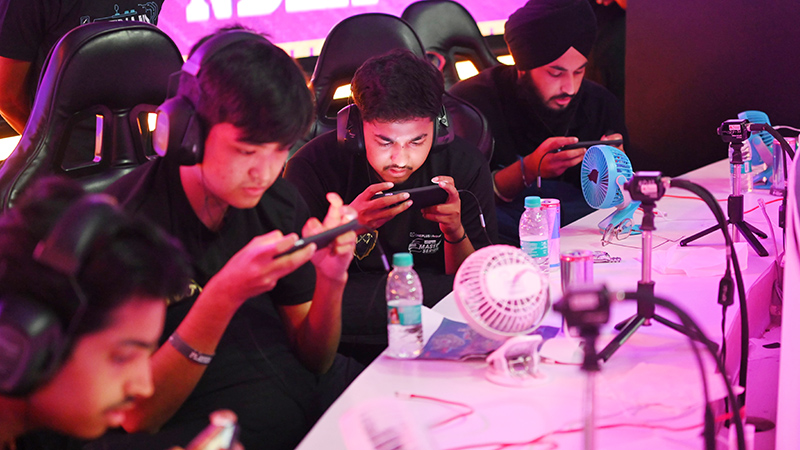
    MUMBAI: The battleground has shifted from mobile screens to the big stage, literally. The Oneplus Android Battlegrounds Mobile India Masters Series (BGMS) Season 4 Grand Finals fire up today at the Nodwin Gaming Arena in Delhi, where 16 of India’s finest esports teams will fight it out across 12 matches from 12–14 September for the championship crown and a cool Rs 1.5 crore prize pool.

    This isn’t just another LAN event; it’s India’s only esports tournament with national TV presence, beaming live on Star Sports Khel and JioHotstar from 5 pm to 8 pm. For fans, that means three days of adrenaline-fuelled prime-time action.

    The star-studded line-up includes league toppers Revenant Xspark, Team SouL, Gods Reign, and Nonx Esports, who qualified directly, joined by 12 hungry challengers from the semi-finals among them Godlike Esports, K9 Esports, Medal Esports, Phoenix Esports, Nebula Esports, and Sinewy Esports. Phoenix stole the show in the Playoffs with 58 points, while Godlike led the semi-finals with 92, setting up a tantalising clash of momentum and pedigree.

    The season has been equally dramatic off the battleground. Oneplus returns as title sponsor and official smartphone partner, Android steps in as co-title sponsor, TVS Motor revs into its third consecutive year, while Red Bull, Swiggy, and Bisleri keep players fuelled. Duolingo English Test makes its debut as official learning partner, and Tesla will showcase its Model Y at the finals because why not add some horsepower to the firepower?

    Nodwin Gaming co-founder and MD Akshat Rathee framed it as a milestone moment: “The fact that teams from the BGMI Challenger Series made it to the Grand Finals is proof that our grassroots-to-pro vision is working. Now, it’s time to see the very best of Indian esports on the biggest stage.”

    With legacy orgs, rising stars, and the world watching, BGMS Season 4 is more than a tournament, it’s proof that Indian esports has levelled up. The only question is: who will drop in, loot up, and walk away with the crown?

  • Indiantelevision.com, mFilterIt co-host Bengaluru roundtable on AI-led app marketing

    Indiantelevision.com, mFilterIt co-host Bengaluru roundtable on AI-led app marketing

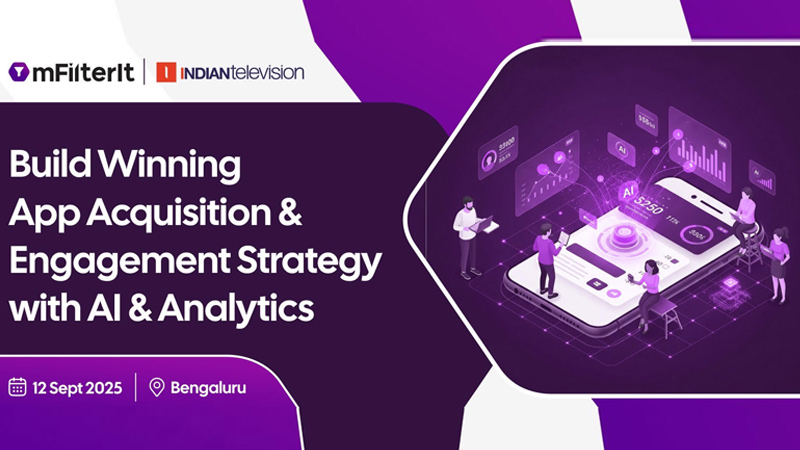
    BENGALURU: With India’s app economy mushrooming and companies locked in a race for clicks and engagement in an era of attention deficit, the question is no longer just about investing in app marketing, it’s about making every install count. To address this challenge, Indiantelevision.com Group and mFilterIt co-hosted a closed-door roundtable in Bengaluru on September 12, themed Build Winning App Acquisition & Engagement Strategy Using AI & Analytics.”

    “In an ecosystem, where installs alone no longer define success, it is critical to focus on cleaner traffic, sharper strategies, and genuine engagement. That’s why we are delighted to co-host this forum with mFilterIt—a partner whose expertise in AI and analytics has been pivotal in redefining transparency and trust in the digital ecosystem. By co-hosting this forum with mFilterIt, we aim to equip marketers with insights that go beyond the numbers and help shape sustainable, growth-focused approaches for the industry,” noted Indiantelevision.com, chief business officer, Soumitra Sahu.

    The invite-only forum brought together senior voices from leading brands to discuss sharper strategies for app marketers. The focus was not only on driving installs but also on ensuring genuine user engagement, maintaining cleaner traffic, and improving key efficiency measures such as cost per install (CPI) and cost per engagement (CPE). 

    The shifting ground of app acquisition

    With user acquisition campaigns increasingly driven by affiliates, India’s top brands are beginning to face blind spots in their frameworks. Attribution platforms may be able to measure installs, but optimisation and bot detection often fall outside their scope. This is where independent validators such as mfilterit have entered the picture, deploying AI-powered algorithms and layered checks that uncover wasted ad spend and fraud patterns usually missed by traditional systems. 

    A powerhouse panel

    The discussion was moderated by WPP Media, national head – performance marketing, Satheesh Kumar and featured senior leaders including Rohit Utmani of Phonepe’s Indus app store, Manas Prakash of Ajio, Pawandip Singh of Rapido, Akansha Kumari of Pocket FM, Utkarsh Garg of Jar, Satheesh Chinnappan of redbus, Saravanan G of Payrupik, Kirtiman Phadke of Stable Money, Rajat Srivastava of My Growth Club, Durgesh Rathore of mfilterit, and Jagmeet Singh of mfilterit. Together, they brought perspectives from diverse verticals of India’s booming app economy.

    Cracking the code

    The agenda stressed on some of the toughest questions in app marketing today. Among them was how brands can detect wasted ad spend and improve ROI, what critical metrics validate app ad traffic and highlight potential risks, and how incent walls distort campaign outcomes. A key theme: why marketers must challenge the data they receive from platforms and affiliates instead of taking it at face value. Fraud samples, like unusual CTIT patterns, installs from invalid OS versions, click hijacking, incent traffic, and even fake orders, further demonstrated how affiliate monitoring and real-time validation can uncover non-compliant activities and wasted spend. By highlighting these real-world patterns, the session demonstrated how independent checks bring more rigour, transparency, and efficiency to app marketing campaigns. 

    Why it matters

    By the end of the session, participants gained a clearer view of the blind spots in user acquisition and a sharper understanding of how AI and big data can improve campaign outcomes. They also walked away with a roadmap to elevate their strategies with real-time insights, helping ensure that every install delivers value rather than vanity. For Indiantelevision.com group, co-hosting the event reinforces its role as a knowledge partner to the industry. Together with mfilterit, it aims to provide marketers with a forward-looking agenda at a time when the quality of engagement, rather than sheer quantity, defines sustainable growth.

  • Akzo Nobel India marks five years of ‘Dulux Assurance’ with witty new campaign

    Akzo Nobel India marks five years of ‘Dulux Assurance’ with witty new campaign

    MUMBAI: Akzo Nobel India, the maker of Dulux paints, is celebrating five years of its ‘Dulux Assurance’ programme with a new campaign that asks a cheeky question: What’s better? The unmatchable quality of Dulux paints or the unbeatable Dulux Assurance warranty.

    Conceptualised by Lowe Lintas and directed by acclaimed filmmaker Prasoon Pandey, the “Lage Shaandaar, Chale Shaandaar” TVC plays out this dilemma in a lighthearted banter between characters, only to conclude that Dulux homeowners get the best of both worlds.

    “For over 70 years in India, Dulux has been synonymous with world-class quality. The assurance programme reflects both our confidence in that quality and the trust consumers place in us,” said Akzo Nobel India Limited, chairman and managing director, Rajiv Rajgopal.

    Adding to this, Akzo Nobel India, executive director, Rohit Totla noted that Dulux Assurance was introduced in 2021 as the industry’s first promise for colour, finish, and coverage, and was later expanded into a comprehensive warranty programme in 2023. “In just five years, Dulux Assurance has infused new confidence and is helping families across India, from Vellikulangara in Kerala to Nalbari in Assam, flourish with the magic of Dulux,” he said.

    The Dulux Assurance journey has grown from its original “A coat of trust in every stroke” positioning to today’s celebratory “Lage shaandaar, chale shaandaar.” Pandey’s direction brings the story to life with trademark humour and visual charm.

    Lowe Lintas, president – creative, Vasudha Misra added, “Some projects drain you, but this one re-energised us. Finding a fresh take on the warranty conversation and bringing it alive with Prasoon’s vision was an inspiring process.”

    The integrated campaign launches with the TVC and will expand across connected TV, social media, digital platforms, and festive activations, reinforcing Dulux’s message of quality, durability, and peace of mind.

  • Sania serves up a bold shot with Boldfit as athlete, investor, and designer

    Sania serves up a bold shot with Boldfit as athlete, investor, and designer

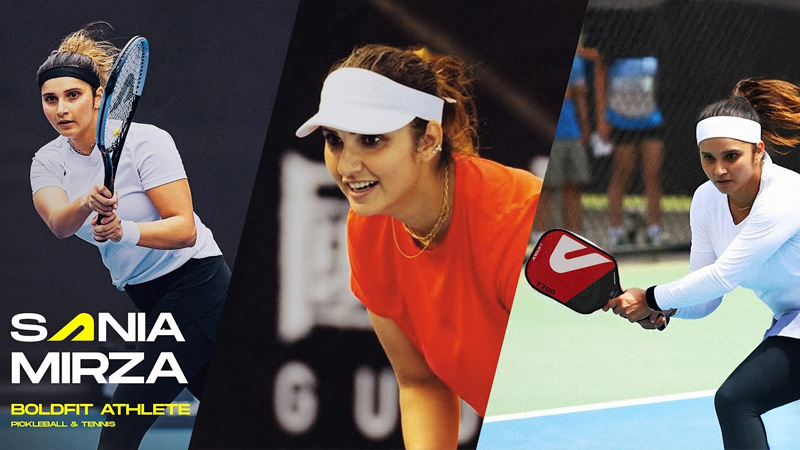
    MUMBAI: When Sania Mirza picks up a racket, history follows. Now, the six-time Grand Slam champion is turning her legendary forehand toward the boardroom, joining Boldfit not just as an athlete, but also as an investor and co-creator of its newest range of tennis rackets and pickleball paddles.

    The Bengaluru-headquartered sports and fitness brand, founded in 2018, has built its name on high-performance apparel, footwear, and equipment. With Sania on board, Boldfit is swinging into racket sports with fresh ambition, aiming to make tennis and pickleball more accessible to India’s 1.4 billion-strong sporting population.

    “Pickleball is exploding across all age groups, while tennis has always been my first love,” Sania said. “Partnering with Boldfit lets me bring my years of experience into designing gear that’s lighter, durable, and truly built for Indian players. My hope is to inspire more people to pick up a racket and fall in love with these sports.”

    Boldfit’s “Boldfit Athlete” roster already boasts names like cricketer KL Rahul, and Sania’s addition signals its intent to become a multi-sport powerhouse. Rahul summed it up: “Her joining Boldfit goes beyond equipment, it’s about inspiring millions to embrace sport as part of life itself.”

    The tie-up also puts pickleball, the world’s fastest-growing sport firmly in Boldfit’s sights. By developing performance-driven paddles alongside Sania, the brand hopes to capitalise on the sport’s surging popularity, supported by new courts and a growing community.

    For Boldfit founder and CEO Pallav Bihani the partnership reflects the company’s broader mission. “Sania isn’t done making history, and we’re thrilled she’s starting this bold chapter with us,” he said. “This is about giving aspiring Indian players access to products designed with the insight of a legend.”

    With tennis, table tennis, pickleball, and cricket already in its portfolio, Boldfit is steadily cementing its reputation as the sporting glue of modern India. And with Sania’s backing, the brand seems set to rally an entire generation toward sport as lifestyle not just pastime.

  • The Sancy cuts a fine figure as Chandan Allen brings label home to India

    The Sancy cuts a fine figure as Chandan Allen brings label home to India

    MUMBAI: Fashion, when stitched with purpose, always fits better. Mumbai-born, California-based designer Chandan Allen has brought her ready-to-wear label The Sancy to India, unveiling a debut collection that reimagines accessible luxury through the lens of craftsmanship and cultural depth.

    Launched as a digital-first brand, The Sancy offers a curated range of tops, tailored bottoms, dresses, and jumpsuits designed for women who crave elegance without excess. Priced between Rs 3,500 and Rs 8,500, the collection positions itself firmly in the premium yet attainable bracket, balancing refinement with responsibility. Each garment is crafted in Allen’s Mumbai atelier using sustainable practices, turning everyday pieces into lasting wardrobe investments.

    Among the early favourites are the Teres Shift Dress, Linearis Shift Lace Dress, Encelia Wrap Skirt, and Carissa Printed Dress. With clean silhouettes, heritage-inspired detailing, and a muted colour palette, the line promises both versatility and timeless appeal.

    Allen’s own journey reads like a global design itinerary. Trained at Central Saint Martins in London, she honed her skills blending Indian handcraft with European precision. Years spent in Cape Town and California sharpened her eye for lifestyle-driven fashion, and in 2009 she set up Chandan Allen Designs Pvt. Ltd. in Mumbai. The Sancy, born out of this trajectory, is her answer to fast fashion’s fleetingness: garments built to last, imbued with artistry and meaning.

    “The Sancy is not just a fashion label, it’s a conversation between heritage and modernity,” Allen says. “My Indian roots anchor me in craft, while my global exposure sharpens the silhouettes. Together, it’s about creating pieces with longevity, not just seasonal appeal.”

    Currently available only through thesancy.com, the label will soon expand offline with a flagship Mumbai store, the first step in a larger retail rollout across India’s metros. The strategy mirrors the evolution of Indian fashion retail itself, where consumers increasingly seek story-driven, conscious luxury.

    With sustainability stitched into its seams and style woven into its fabric, The Sancy’s arrival signals that India’s fashion-forward needn’t choose between meaning and modernity, they can now wear both.

  • Half CA adds up as ClearTax joins Amazon MX Player with AI tax twist

    Half CA adds up as ClearTax joins Amazon MX Player with AI tax twist

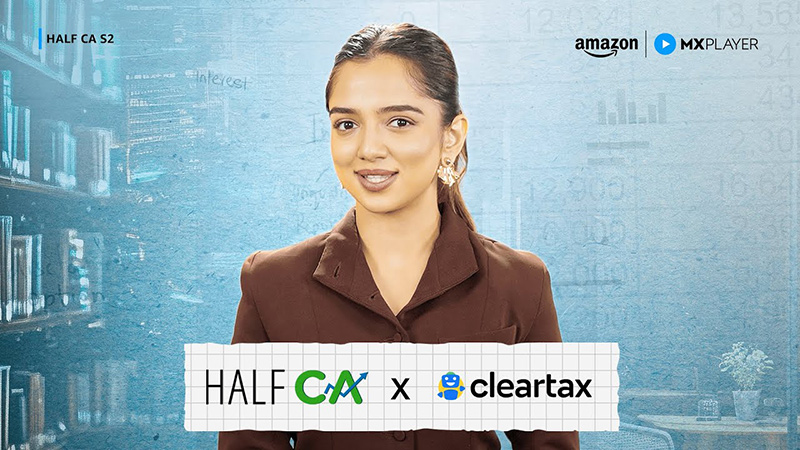
    MUMBAI: When taxes meet television, even filing feels binge-worthy. Amazon MX Player’s hit series Half CA Season 2 has inked a smart partnership with fintech leader Cleartax, blending reel drama with real-life financial wisdom.

    The tie-up rolled out with a special video starring Ahsaas Channa and Gyanendra Tripathi, introducing Cleartax’s Agentic AI pitched as India’s first 24×7 AI-powered tax expert on Whatsapp. From auto-computing taxes with just a PAN number to answering queries instantly in multiple languages, the tool aims to take the sting out of tax season while speaking the language of Gen Z.

    The collaboration clicks neatly with Half CA’s storyline. The series produced by The Viral Fever (TVF) and now streaming free on Amazon MX Player follows CA aspirants Archie and Niraj as they juggle ambition, academic pressure, and adulthood’s curveballs. Just as the show champions perseverance, the partnership underscores financial literacy as a real-world survival skill.

    Amazon MX Player director Aruna Daryanani said the move was about impact beyond entertainment: “Millions relate to the struggles of CA students. Our partnership with ClearTax simplifies financial literacy in a way that feels authentic and engaging.”

    Cleartax founder Archit Gupta echoed the sentiment, pointing to its AI leap: “By automating complex tax processes on Whatsapp, we’re making planning and filing seamless. Teaming with Half CA lets us connect with a new generation, combining entertainment with tools to build confidence for the future.”

    Half CA S2 brings back favourites Ahsaas Channa, Prit Kamani, Aishwarya Ojha, Anmol Kajani, Gyanendra Tripathi, and Rohan Joshi. The show streams across MX Player’s footprint from mobile apps and Connected TVs to Amazon’s shopping app, Prime Video, Fire TV, Google TV, Xiaomi TV, and Airtel Xtreme.

    For viewers, it’s not just about watching dreams unfold on screen, it’s also about learning to add up in real life.

  • After Khalasi, Coke Studio Bharat drops Meetha Khaara this festive season

    After Khalasi, Coke Studio Bharat drops Meetha Khaara this festive season

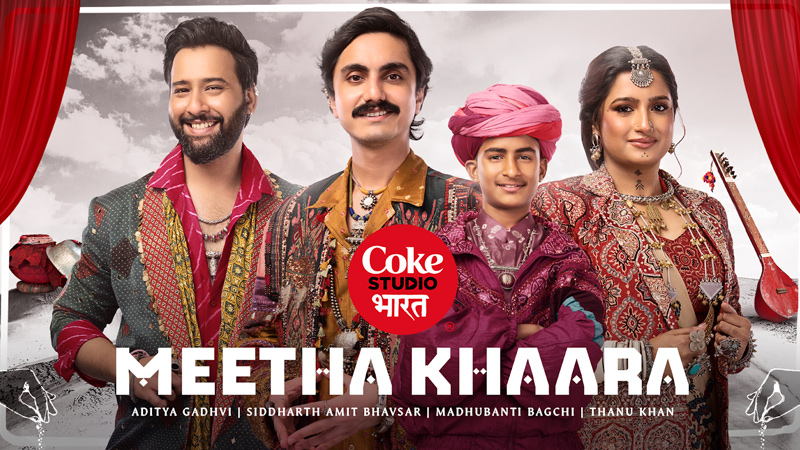
    MUMBAI: After the runaway success of Khalasi, Coke Studio Bharat is back with another soulful folk offering, Meetha Khaara. Released as part of Season 3, the track arrives in time for the Navratri festivities and celebrates the enduring spirit of Gujarat’s Agariya community.

    Curated, composed and produced by Siddharth Amit Bhavsar, Meetha Khaara brings together a powerhouse of talent: the folk brilliance of Aditya Gadhvi, the tenderness of Madhubanti Bagchi, and the fresh notes of Thanu Khan.

    Rooted in a 600-year-old legacy, the song draws from the Agariya community’s life around salt farming. In Gujarati, “meethu” means salt, a substance born from hardship yet vital and sweet in its inheritance. The track captures this paradox, portraying resilience, pride and identity through music that blends earthy folk rhythms with contemporary sounds.

    Coca-Cola INSWA, imx lead, Shantanu Gangane said, “Festivals are occasions when music serves as a cultural connector. With Meetha Khaara, our intent is to create a bridge between tradition and the youth’s passion for music. Coke Studio Bharat unites legendary voices with fresh talent to create authentic stories that connect music, culture and people across India.”

    The song’s foundation lies in Bhargav Purohit’s evocative lyrics, which were then transformed into a layered musical narrative by Bhavsar. Gadhvi’s powerful vocals anchor the track, Bagchi adds emotional depth, and Khan ties it all together with his distinct sound.

    For Aditya Gadhvi, the song continues the journey begun with Khalasi. “With Meetha Khaara, we’re carrying forward Gujarat’s folk stories in a fresh way. Making this song was pure joy, as it carries the pride of our people,” he added. 

    Echoing him, lyricist Bhargav Purohit said, “Writing this song was an honour. I wanted the words to reflect resilience and tradition with simplicity and honesty.”

    Singer Madhubanti Bagchi shared, “It allowed me to merge technique with emotion, tradition with individuality. The result felt deeply authentic.”

    And for emerging artist Thanu Khan, the experience was nothing short of a dream. “Being part of Coke Studio Bharat and contributing to *Meetha Khaara* will always be an honour,” he shared.