Blog

  • Deutsche Telecom to use Microsoft’s IPTV technology in Germany

    Deutsche Telecom to use Microsoft’s IPTV technology in Germany

    MUMBAI: Europe’s biggest telecommunications group Deutsche Telekom will use Microsoft software to power new internet-based television services it plans to offer in Germany before the end of 2006.

    The tie up will see the service launched across Deutsche Telekom’s VDSL network using a Microsoft IPTV platform. The companies have promised a range of entertainment products, including regular programming in standard and high-definition formats, as well as interactive TV, digital video recording and video on demand. The latter feature will allow viewers to access selected feature films, TV series or documentaries at the touch of a button.

    The deal cements Microsoft’s position as the leading supplier to providers of internet protocol TV, with 13 telecoms groups now installing or testing its IPTV software. It also represents a milestone for Deutsche Telekom in its bid to be one of the first telecoms groups to offer high-definition TV, voice and data services on new, ultra-fast internet lines.

    Deutsche Telecom previously had been conducting a trial of the Microsoft IPTV software. The service is planned for launch in mid 2006 in 10 major German cities including Berlin, Hamburg, Cologne and Munich. Other Microsoft IPTV customers include AT&T, Telecom Italia and Swisscom.

  • Maharashtra Budget; tax levied on cable TV up by 50 per cent

    Maharashtra Budget; tax levied on cable TV up by 50 per cent

    MUMBAI: Get set to pay more for your cable TV connection. The state finance minister Jayant Patil presented a surplus budget of Rs 305.85 crore for 2006-2007 in the Assembly. With a view to mop up an additional revenue of Rs 500 crore, Patil proposed a hike in taxes which included a 50 per cent hike in entertainment duty levied on cable operators, among other items.

    Unchanged since the year 2000, this increase means that your monthly cable bills could rise anywhere between Rs 5 to Rs 15.The amount would differ from place to place, as specified by the state government.

    According to news reports, those areas under municipal corporations, such as Mumbai, Navi Mumbai, Thane and Nagpur, would see their tax rise from Rs 30 to Rs 45. Also, Grade-A municipal council areas would now pay Rs30 instead of Rs 20, while Grade-B & C municipal council zones would pay Rs15 instead of Rs10.

    “This hike will pinch the consumer. This is extremely unfair, especially, when the government recently reduced the tax on DTH services from Rs90 to Rs30 per connection,” said a Sena MLC Anil Parab to a Mumbai newspaper.

    “We cannot charge our customers in slums an exorbitant amount. They can’t even pay Rs30 as tax. So, we subsidise the rate by charging other customers more. We are likely to do the same to implement this hike,” said Cable Operators & Distributors’ Association president Ganesh Naidu in the same news report.

    The Budget also proposes a hike in taxes on other items like liquor, motor vehicle tax on four wheelers and water charges. But, the Budget does bring some cheer for state finances. Apart from a revenue surpus for the second year in a row, this year’s total plan outlay is Rs 14, 829 crore and growth is projected to be 8.6 per cent.

  • I&B ministry finalizing terms of law on broadcast regulator

    I&B ministry finalizing terms of law on broadcast regulator

    MUMBAI: The terms of reference of a law that will bring about a separate broadcast regulator are almost ready.
    This was revealed to Indiantelevision.com by Information & Broadcasting secretary SK Arora on the sidelines of the convention for the business of entertainment, Ficci Frames, this morning in Mumbai.

    Once the framework of the law is finalized, it would be distributed among the interministerial committee for comments and any possible fine tuning, Arora said,”From here, the document would have to be scrutinized for a final say by the Union cabinet, after which it would then be presented before Parliament.”

    While Arora declined to give a time frame under which this process would move forward, he expressed confidence that from his ministry’s end, the law would be ready “at the soonest”.

    Queried about the role of the current regulator for both the telecom and broadcast sector, Telecom Regulatory Authority of India (Trai), Arora noted that the challenges for the broadcast industry and telecom are different. First, it is important that convergence is facilitated within the broadcast sector. After that one can look at facilitating convergence between sectors i.e. broadcast and telecom. The regulatory body will work towards ensuring that the fruits of development are not vitiated by adversarial relations. “The aim of regulation is to preserve development. We will also be coming out with a regulation on content code,” he said.

    Ficci is assisting in formulating the draft of the regulation. The Group of Ministers (GoM) who concentrate on the Ice industry will fine-tune it. Then it will be sent to the cabinet. It will be passed when the cabinet approves of it. A further announcement on this regulation is expected in the coming weeks.

    Basically it is aimed at being a self regulatory mechanism. Arora however conceded that regulation always lags behind technological changes. The broadcast industry has been no exception. He also stressed the importance of content providers and creators reaching remote areas of the country. “Whether it is cable, DTH, cinema halls, no villager should be left behind. If we work on this, then the potential will be double than what has already been achieved.”

    Arora also highlighted the concern of piracy. He said that the government has been working with Ficci on the Optical Disc Law and this work will continue in the months ahead. “The reason why we approach the industry is that we want to have a regulatory framework that helps the industry move forward.”

    “Another important area that is growing is animation and gaming. We need investment from foreign players and leaders in this area. The challenge for us is to attract foreign firms in this area. At this time, there are foreign firms coming into India while Indian firms travel abroad. Foreign firms bring their brand in. However, Indian firms when they go abroad do so under an international brand. The exception is the Indian film industry and for this I want to congratulate them,” said Arora.

  • Convergence 2006: tech & trends galore

    Convergence 2006: tech & trends galore

    NEW DELHI: The 14th Convergence India 2006, which was inaugurated yesterday by the minister of state for telecommunications Shakeel Ahmed, saw over 60,000 visitors on day two, clamouring to have a peep at new technology on display.

    The event also hosted a high-powered round table conference comprising infotech secretaries from the states of Uttar Pradesh, West Bengal, Uttaranchal, Himachal Pradesh and Karnataka (that has been the home to some of the biggest Indian infotech success stories).

    The round table meet focussed on bridging the digital divide and a host of other issues.

    The three-day event, boasting of 386 exhibitors, 1,500 delegates and 23 countries, is aimed at highlighting India’s information, communications and telecom (ICT) prowess.
    Designed around the theme of `ushering the ICT revolution’, Convergence 2006 has global and Indian corporates showcasing technology and equipment in the field of mobility, broadcasting, infotech and network security.

    The event is jointly organized by the Cellular Operators Association of India (COAI) and Exhibitions India.

    According to Exhibitions India MD Prem Behl, “Alongside the display of latest technologies and innovations in telecom, India’s leading mobile service providers are showcasing innovations being brought into the market.”

    Director-general of COAI TV Ramachandran said that the organization is confident such an event will bring additional focus to the needs of the industry that are essential for the overall growth of the sector.

    “The B2C and B2B environment at the event will translate into extensive exhibitor coverage converging into genuine business opportunities,” he added.

    Known for facilitating business deals and throwing up new ideas for discussion during conferences that are held simultaneously, the event is also being used by companies to launch new products.

    For example, Chinese telecom major Huawei today launched eight new CDMA handsets and it is also showcasing its globally award-winning exhibit booth at the Convergence 2006.

    Some of the participating companies include 3M Electro & Communication India Pvt Ltd, A&P Technologies of Korea, Accelink China, Acceltree Software Pvt Ltd India, Ace Marketing China , AFL Telecommunications of the US, Canada’s Aheeva Technology Inc, Ai-Logix APAC of China, ALV Arion of Israel, Andrew Telecommunications India and Avitec of Sweden.

    Also, taking part in the event are Beijing Fibridge Co Ltd, Bharat Sanchar Nigam Limited, BindView Corporation of the UK, Biometrics Direct of the US, China Broadcasting Journal, Consumer Electronics & TV Manufacturers’ Association (CETMA) India, department of IT, India, Enterprise Networks Asia of Hong Kong, Euromedia of the UK, Lucent Technologies Hindustan Pvt Ltd, Scientific-Atlanta (HK) Ltd, Shenzhen HXT Technology Co Ltd of China, Shin Satellite of Thailand and ZTE Corporation.


  • IT, Entertainment industries complement each other:Premji

    IT, Entertainment industries complement each other:Premji

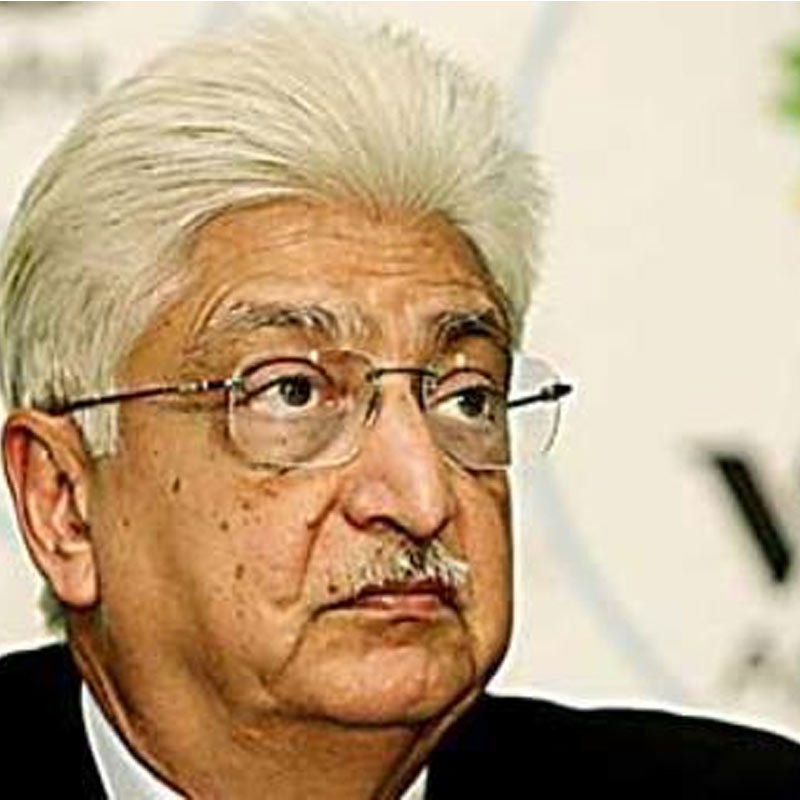
    MUMBAI: A keynote address on the first day of Frames, the convention for the business of entertainment, was given by Wipro’s Azim Premji. He spoke about how technology benefits the entertainment industry and how they complement each other.

    Wipro chairman and managing director Azim Premji and United International Pictures CEO and chairman and UK Films Council export and import chairman Stewart Till gave the keynote address at the plenary session of FICCI Frames.

    “Entertainment and IT complement each other. There is convergence happening between entertainment, IT and communications industries. This is good as all three can be economic growth drivers. Entertainment has to reinvent itself. While entertainment has been about telling stories whether on film or television, the variety and quality of those stories as well as the delivery platforms will change,” said Premji.

    While Premji spoke on ‘The coming of the ICE age,’ Till spoke on how Indian films can enjoy more success around the world and how can Hollywood films increase their box office in India.

    “The overseas market for Indian films is around $150 million from the 20 million NRIs abroad. Producers should be encouraged to make cross over films to cater to address people from other ethnicities,” Till said.

    He listed out five points that producers should keep in mind to cater to a larger audience. They are as follows:

    Adopt the Chinese model, wherein films like Crouching Tiger Hidden Dragon were made.
    Adopt the Korean and Japanese model to achieve excellence in a specific genre like horror.
    Add American and European actors in the film
    Improve production quality
    Build close relationships with American and European companies.

    “The time is right to raise your horizons to the faraway horizons,” he emphasized. Elaborating on how Hollywood films can increase their box office in India¸ he said “The Hollywood movie titles should be released aggressively and the focus should be on marketing as many Hollywood titles as possible. Apart from that, producers should take advantage of the current multiplex scenario.”

    He concluded, “In the next decade, Indian audiences will embrace more and more American and European films and Indian producers will realize the full potential of the worldwide market.”

    Premji said that LPS were replaced by CDs. Colour TV sets replaced the black and white ones. In the film world, DVDs have replaced VCRs. News channels, he noted, have altered how newspapers function. “Apple’s success with the iPod has shown the convergence of entertainment and IT.

    Technological changes have meant that the relationship between the content creators and consumers is changing. Consumers want better stories and a better reception. Digitisation in terms of bits and bytes allows them to get a better reception and also affords more choices. The influence of technology on animation and gaming is also being felt.

    “As IT and entertainment continue to complement each other, interactivity will become increasingly important. One is already seeing this in the mobile realm where viewers can participate in game shows.

    Mobility is becoming important. Studio employees need to communicate with each other while they are on the move. They need to talk on script plans etc.

    One problem for the entertainment industry lies in getting trained people. Premji says that they need to touch base with colleges at the final year. Said he, “They could offer courses with guranteed jobs for those who show promise. India has benefited from the animation field as it has a cost advantage vis-a-vis the US. This has helped India become an outsourcing hub.”

    Digitsation, he added, has helped the remastering of classics like Mughal E-Azham.

  • Hong Kong Music Fair kicks off

    Hong Kong Music Fair kicks off

    HONG KONG: Another initative has been included for the Hong Kong Festival by the Hong Kong Trade Development Council (HKTDC). Seeking to provide an ideal business platform for music industry players to network, promote and explore business opportunities, a separate fair has been instituted by the HKTDC, together with IFPI Hong Kong Group, to cater to the earlier ignored sector of the entertainment industry.

    Running concurrently with the tenth anniversary of the Hong Kong Filmart, the the Hong Kong Music fair was inaugurated here at the Hong Kong Convention Centre yesterday .

    Recoginising the importance of the music industry, which is a major component of the entertainment business, The Hong Music fair saw a huge turnout from the music Industry.

    The pace was set by an endearing song sung by Alan Tham followed by speeches by various dignitaries including Dr Patrick CP Ho, the island’s secretary of home affairs.

    Over 65 exhibitors, including record companies, music publishers, mobile phone makers and service providers, portable music device manufacturers and vendors, internet music service providers, technology support companies, artist management and concert promoters industry associations as well as systems providers and Karoke operators.

    Though quite well attended at the launch by media and visitors, the fair saw a poor response on the second day.

  • Decision on CAS appeal after stakeholders meeting 27 March: Arora

    Decision on CAS appeal after stakeholders meeting 27 March: Arora

    MUMBAI: The uncertainty over the implementation of conditional access system (CAS) is not over yet. The government will take a call on whether it should move the Supreme Court only after a meeting with the broadcasters, multi system operators (MSOs), cable TV operators and consumers on 27 March.

    “We have invited all the stakeholders for a meeting on 27 March. We will take into consideration their views before deciding whether we should approach the court,” I&B secretary S K Arora told Indiantelevision.com.

    Early this month, the Delhi High Court had ordered the government to enforce the rollout of addressability in cable pay television (conditional access system or CAS) in India within four weeks. After reserving the judgement for several months, the court had delivered the verdict on a writ petition filed by a bunch of MSOs.

    On being queried whether one month was too short a time to implement CAS, Arora said the government’s argument in the court was that three months would be needed.

    Was the old notification on CAS good enough? “We will discuss all this in the meeting. Only then can we take a stance on whether modifications are necessary,” Arora said.

    The scheme as it was structured in 2003 ran into rough weather with some of the stakeholders opposing it, Arora added. “We need to resolve these issues. Consumers were opposing it because they felt they were forced to buy the set-top box (STB). Broadcasters came out with a pricing that wasn’t serious in intent.”

    Arora also pointed out that the government was yet to receive the Delhi High court judgment. “We believe the implementation of CAS would come into effect one month from the date of receiving the certified judgment,” he said.

  • Siemens expands Music2You platform to enable music video downloads

    Siemens expands Music2You platform to enable music video downloads

    MUMBAI: AOL Germany subscribers will soon be able to download music videos, thanks to the “Music2You” (M2Y) service from Siemens. M2Y is an innovative service for the provision of free content such as music and is already used by many Internet and telecommunications providers.

    AOL Germany has been using the M2Y platform, which is managed and hosted by Siemens, since 2004 and now offers 850,000 downloadable songs with this service. In this time, the Internet provider has established itself as one of the three leading music portals in the German market.

    This cooperation has now been extended with the addition of a download service for music videos. Partners who are providing AOL with content for the launch are Warner Music, EMI and SonyBMG.

    The music videos are offered by M2Y in Microsoft’s WMV format and are characterized by high bit rates and high-quality resolution.

    “We are expanding our download offering so as to address our customers’ needs even better. Video downloads are an ideal complement to our music video offering. We will deliver a premium quality product that meets the needs of home entertainment users rather than limiting usage exclusively to portable players”, said Director Entertainment & eCommerce at AOL Germany Boris Rogosch, describing the launch of the new download service for music videos.

    “This new deal with AOL highlights the many and varied possibilities in the growing managed applications market”, explained Senior Vice President for Value Added Services at Siemens Communications Carrier Services Christian Hopf.

    “Having begun by offering music to our carrier and Internet provider clients, we are now intensifying our efforts in diversifying our content portfolio with music video downloads, streaming delivery, ringback tones and ringtones via fixed and mobile networks,” added Hopf.

  • Viacom looking to co-produce films in India: Freston

    Viacom looking to co-produce films in India: Freston

    MUMBAI: The start of something new! That is what Viacom president and CEO Tom Freston is looking to achieve in India. The company is looking to co-produce films in India instead of merely exporting its films in to the country though its partner United International Pictures (UIP).

    Speaking this morning at the convention for the business of entertainment Frames Freston said, “It is no secret that Paramount has seen a struggle over the past few years. It is now going through a process of reinvention and while changes are not going to happen overnight we are excited about the future. We are expanding our global portfolio through acquisitions.Viacom was split into two entities last year. This has allowed us to be more focussed and not get distracted by areas like parks and distribution.”

    “The area of intellectual property is one that we are looking at. We want to co-produce films in India. We want our relationship to be a two way street. We strengthened our films business by acquiring Dreamworks. Steven Spielberg will make four to five films a year for us. Mission Impossible III will release in India in June.

    “Another area that we are looking at growing our business is in the home entertainment arena. Where there are many television sets there will also be a huge avenue for DVDs. We are also looking to take Indian and Asian culture to the US. We are doing this through a new New York based channel MTV Desi. This showcases Indian and Asian music and caters to the South Asian population in the US.”

    Freston pointed out that by operating MTV India, Viacom learnt a lot. “When we came in, we partnered with Star in the early 1990’s. Then we re-launched on our own and stumbled badly at first. The audience was simply not interested in Pearl Jam and Beastie Boys. We went back to the drawing board and came out with a channel that showcases Hindi pop. Our VJ’s speak in Hindi and English. This way we express local culture while at the same time exposing the audience to what is going on elsewhere.

    “This strategy was followed elsewhere. Hence, no MTV channel is like the other. In China, it reflects family values. In Indonesia, it is a call to religion. In Italy, it is stylish while in Brazil, it is sensuous. In India, it is colourful and street savvy. When I got a job in the early 1980’s as marketing director at MTV, I knew that it was the beginning of a trend of having a branded channel for specific audiences.”

    Not many readers may know that Freston came to India in the 1970’s and set up a clothes company. “It was a way for me to bring Indian culture to the world. India at the time was the one country outside the US that had a thriving local pop culture. The film stars were larger than life. Today, when I am in India I see my past and future.

    “India has had a huge influence on me personally and my perspective certainly changed those days. I hope that in five years time, Indians see Viacom as a good partner and a better friend. India has 700 million people below the age of 35. This is twice the population in America. This population is multi spiced and is used to accessing information from different platforms like the small screen – the mobile. It is the promised land for content creators and distributors.”

  • BBC outlines online strategy

    BBC outlines online strategy

    MUMBAI: Speaking at the MIX06 conference in Las Vegas, the director of the BBC’s new media and technology division Ashley Highfield, outlined the public broadcaster’s online strategy.

    At the Microsoft-organized event for web developers, designers and business professionals, Highfield stressed that the BBC has to be technologically innovative, and key to that strategy is working with partners like Microsoft.

    Highfield said, “We have a duty of universality. So it’s vital that we innovate through a number of strategic partnerships with technology companies and distributors such as Microsoft, Apple, Sony, Homechoice, NTL and Telewest. Both the BBC and Microsoft are ultimately looking for ways to empower our audiences; to put them in control, and in this we have an alignment of strategic objectives.”

    He added, “The challenge is to create an end-to-end infrastructure for all our programming, to deliver content to all our audiences in the most cost-effective, simple and flexible way possible. The last ten yards of railway track-seamless delivery from the PC to the TV-is still to be built within the home.”

    Highfield also used the keynote to showcase BBC’s iMP (Integrated Media Player), which just completed a five-month trial. The technology allows users to download programs onto their PCs and is “aimed at putting our audience in the driving seat,” he said.