Blog

  • Sahara One plans to raise up to $50 million

    Sahara One plans to raise up to $50 million

    MUMBAI: Sahara One Media & Entertainment Ltd has plans to raise up to $50 million in one or more tranches. The board, which met on 5 April, has given the green signal to offer and allot in foreign markets equity shares or other instruments like foreign currency convertible bonds (FCCBs).

    Sahara had bid around $176.25 million for the telecast rights to 25 one-day matches played by India at neutral venues for the next five years ($ 7.05 million per match). This means Sahara would have had to cough out $14.1 million for the two Indo-Pak Friendship Series matches to be held in Abu Dhabi later this month. But since Zee Telefilms bagged the rights, Sahara’s fund requirement would be less than $50 million in the immediate run.

    “It is just an enabling resolution for us to raise up to $50 million. If cricket rights would have come to us, our requirement to raise money would have been more immediate. We may raise the money in tranches. We haven’t decided when and how much money we are going to raise. All this will depend on how the business rolls out for us,” said an official in the company.

    Sahara has informed the BSE that its board has approved the issue, offer and allot in course of International offering, in one or more trenches and in foreign markets equity shares / preference shares / convertible debentures / convertible notes / FCCBs / secured premium notes (SPNs) and / or any securities convertible into equity shares at the option of the company and / or holder of the securities and / or securities linked to equity shares through American Depositary Receipts (ADRs) and / or Global Depositary Receipts (GDRs) up to a maximum amount of $ 50 million.”

    The board has also approved the calling of Extra Ordinary General Meeting of the company on 8 May to get the consent of shareholders.

  • CAS: Gloves off as IBF, cable frat hurl charges

    CAS: Gloves off as IBF, cable frat hurl charges

    NEW DELHI: The game of ping-pong being played in the name of Conditional Access System (CAS) took another turn today with the broadcasters and cable fraternity hitting out against each other as the government reserved its verdict on the issue of rollout of addressability.

    The Indian Broadcasting Foundation today made it clear in a submission to the information and broadcasting ministry that all addressable systems should be mandated like CAS and providing a la carte pricing of channels would not be in the interest of consumers. Indiantelevision.com had reported on Wednesday that this was the stand the IBF would be taking on the CAS imbroglio.

    While the government is yet to firm up its stand from the wide-ranging industry feedback, which, if taken into account, would push CAS rollout to fourth quarter of 2006, the Hinduja-owned IndusInd Media Communication Ltd has said that the government should honour the court verdict in the light of CAS being operational in Chennai since 2003 without any objections being raised by stakeholders.

    The Delhi High Court on 10 March had directed the government to implement CAS in Kolkata, Mumbai and Delhi within one month’s time, which is about to get over technically this month. But it needs to be seen when the government received a certified copy of the court order.

    Interestingly, at a meeting that the government had with industry stakeholders today on CAS, the issue of registering of CAS operators with the government and the whole process of doing it, is likely to add to the delay.

    A new sequencing of CAS rollout submitted by Siti Cable at the meeting, according to government sources, states the date of implementation should 14 November 2006 with the time in between used for getting ready for a CAS-enabled regime.

    The IBF’s submission has not only created more confusion, but has enraged a certain section of the cable industry too.

    At one place in its letter to the I&B ministry, the IBF has said that the government should stop the cable industry from charging huge amount of carriage fees, which raised the hackles of cable ops present during today’s meeting.

    In a separate submission to the ministry, the Delhi-based National Cable & Telecommunications Association has, in turn, requested the government to direct the pay broadcasters not to play tough.

    “If the pay channels demand more time for the implementation of conditional access system in Delhi, Mumbai and Kolkata, then it is imperative that they must be directed to immediately stop collecting monthly subscription from the cable service providers till CAS comes into force,” NCTA has said.

    Though the NCTA letter exhorts the government to “exercise its powers” and direct the pay channels to declare rates of their individual channels and fix an upper limit for pricing of individual; channels and bouquets, the I&B ministry representatives at the meeting today did not utter any word on these issues.

  • NGCI, CCTV consolidate partnership

    NGCI, CCTV consolidate partnership

    CANNES: National Geographic Channels International (NGCI) and China Central Television (CCTV) have announced the completion of a two-part high-definition television documentary Inside the Forbidden City.

    NGCI CEO David Haslingden says, “We are delighted to partner with CCTV in producing a historically and culturally rich film for our global viewers this fall. It is a valuable step forward as part of NGCI’s commitment to developing local content everywhere and expanding our collaboration with CCTV”.

    Inside the Forbidden City brings the epic tale of China’s Forbidden City to a vast global audience. Until the early 20th Century, any commoner who dared enter the palace would pay with his or her life. Now, this historic two part series gives viewers unparallel access to the Forbidden Palace.

  • Motorola makes TV shows available from DVR to mobile phone

    Motorola makes TV shows available from DVR to mobile phone

    MUMBAI: Expanding on the Follow Me TV experience of room-to-room media sharing, Motorola, Inc. will demonstrate a new technology that can move recorded shows from a Motorola digital video recorder (DVR) set-top directly to a Motorola mobile device like the next-generation RAZR V3x.

    This new ability to move content can expand Motorola’s existing whole-home video platform to meet the video needs of consumers anywhere and everywhere.

    A live demonstration of this new feature will be on display at both the CTIA Wireless 2006 and the 2006 National Show. The explosion of digital video technologies in recent years is leading the demand for ever-greater control over TV at home and on the go.

    Starting with a Motorola set-top, consumers can now create a multimedia network that sends content not only to other rooms in the home, but to mobile devices with storage-card capacity. In addition, Motorola mobile devices can be used to program a Motorola DVR remotely. No more worries about forgetting to record your favorite show – control your television wherever you are.

    “By combining the reliability and clarity of Motorola video products with the style of Motorola cell phones, we can deliver a truly personalized television experience. Consumers get the chance to enjoy seamless, mobile entertainment, and service providers get the opportunity to extend their reach beyond the home,” said Motorola corporate vice president and general manager of digital video solutions John Burke.

    The full Follow Me TV experience is enabled by Motorola DVR set-tops and the company’s OCAP software solution. This software solution includes powerful tools designed to offer home media networking using the Multimedia over Cable Alliance (MoCA) standard.

  • TWI to acquire independent production firm Darlow Smithson

    TWI to acquire independent production firm Darlow Smithson

    MUMBAI: Sports content producer and distributor TWI has acquired the London based factual independent production company Darlow Smithson Productions (DSP).
    TWI, will finance the acquisition entirely with capital from parent company IMG. The acquisition significantly expands TWI’s non-sports production output, enabling it to become a market leader in high quality factual programming, as part of its continuing growth strategy.

    For DSP, the agreement enhances its position as one of the top global factual production companies and gives access to new opportunities and new technologies.

    Key to the acquisition is DSP’s outstanding worldwide reputation as an innovative, factual programming leader, delivering ground-breaking documentaries, series and docu-dramas with a growing annual output of more than 100 hours and an annual turnover of £20 million. In a global peer poll just released, DSP has been named as one of the seven most notable companies in the world in non-fiction production, selected for its inspirational and trendsetting programmes.
    DSP’s programme portfolio includes multi episode returning series I Shouldn’t Be Alive (Channel 4, Discovery US), Seconds From Disaster (NGC/NGCI) and Channel 4 documentaries The Falling Man, Blitz: London’s Firestorm and The Somme. DSP’s Touching the Void was the UK’s most successful ever theatrical documentary.

    TWI senior VP production and business development Alastair Waddington said, “We are delighted to acquire such a prestigious company as Darlow Smithson Productions, whose reputation in the factual arena inspires admiration all over the world. The respect that DSP commands from global broadcasters and clients is reflected in its growing stature, increased turnover year on year and more than 25 international awards to date. DSP harnesses some of the industry’s most creative and technical talent, and we look forward to its continued success and growth, while maintaining its distinctive identity as a producer of top quality programming.”

    DSP executive chairman and creative director John Smithson said, “This is an exciting opportunity for us at the right time in the growth of our company. The Darlow Smithson name remains – same people, same creativity, same editorial standards. But going forward, it will bring much more. TWI and IMG Media will provide us with an extensive international structure to help us grow DSP, including areas like new media where it has significant experience, strengthening our relationships with clients and enhancing our creative development.”

    IMG chairman and CEO Ted Forstmann said, “IMG is already a major player in worldwide distribution, rights management and multi-platform exploitation including new media, and the acquisition of Darlow Smithson Productions will enhance the company’s global assets and help us achieve our growth ambitions. Going forward, we are prepared to invest in development and production of content, and intend to pursue additional innovative business partnerships in order to maximise those goals.”

  • Foxtel, Mark Burnett Productions sign deal

    Foxtel, Mark Burnett Productions sign deal

    MUMBAI: Mark Burnett Productions (MBP) which specialises in reality shows has signed an output deal with Australian pay TV platform Foxtel.

    Foxtel will be able to show shows like the second season of Rock Star.

    The deal also covers seasons two and three of the boxing based reality show The Contender and season six of The Apprentice.

    Foxtel will also assist MBP in the Australian audition process for contestants to participate in Rock Star 2. Foxtel executive director of television and marketing Brian Walsh says, “Mark Burnett is truly a giant of television and Foxtel will now be the home to his hit series Rock Star, The Contender and The Apprentice. This deal will continue Foxtel’s ongoing strategy to offer our subscribers an increasing choice of exclusive content that is only available on our platform.”

  • South Korean service wins interactive Emmy

    South Korean service wins interactive Emmy

    MUMBAI: The International Academy of Television Arts and Sciences (Iatas) has announced the winners for the first International Interactive Emmy Awards.

    This was organised in partnership with Reed Midem, at the television event MipTV in Cannes, France. A channel, an interactive service and a programme from the UK, South Korea and France respectively won the first ever International Interactive Emmy Award in their category. The inaugural Pioneer Prize was presented to AOL chairman and CEO Jonathan Miller, for his contributions to the field of interactive television.

    The award for the best interactive television service went to Hello D, a service provided by CJ CableNet in South Korea. Hello D was the world’s first digital cable broadcasting to succeed in the OCAP. Hello D, a simple and convenient form of interactive digital broadcasting, offers over 100 different channels, 30 high quality audio channels, 21 PPV channels, and a VOD service.

    It is CJ CableNet’s digital cable service that offers a variety of information as well as interactive television. Hello D is Korea’s leading digital broadcasting that centers on high quality, easy navigation, and easy access. CJ CableNet is opening the door to a richer lifestyle and is ushering in a new tomorrow in the digital world.

    The best programme went to France 5’s Cult. It is a daily interactive one-hour live TV show dedicated to urban culture. Hosted by Ray Cokes, Cult targets the 15 to 35 year old demographic and offers a fast-paced anti-conformist show with a never-seen-before-in-France interactivity. Every viewer equipped with a webcam and a high-speed Internet connection could contribute, participate and react live from their homes during and after the show through the website.

    Cult also offers blogging, local news and live video messaging from concert halls using 3G phones. Cult provides an uplifting place for urban young adults and teens where their opinions are taken seriously and interactivity supports multiculturalism.

    Scamp in the UK was voted the best channel. It is the first and only dedicated interactive on-demand kids channel in the UK. Kids can view all their favorite shows back-to-back, work their way through all the episodes of a series or add any show to a personal favorites list with a simple button press. For those who haven’t yet learnt their ABCs, Scamp incorporates easy-to-navigate video walls, linking them to programming through all their favorite characters.

    Parents can also manage their kids’ viewing in the ‘Scamp for Grown Ups’ area, and the unique ‘Time for Bed’ feature automatically schedules 10 minutes of viewing interspersed with time-for-bed messages to help children wind down.

    Iatas president and CEO Bruce Paisner says, “We are proud to be at the forefront of the television industry with these three new International Interactive Emmy Awards”.

    The sold-out black-tie ceremony was attended by over 250 international key-players from the television, Internet and mobile industries including sponsors: AETN, AOL, Bold and Beautiful, Colorchips, Ericcson, Homechoice, Intel, KBS, Open TV and Sky.

    The International Interactive Emmy Awards at Mip TV was the first ever Emmy Awards ceremony held outside the US.

  • TV over the net could change the face of broadcasting: BBC

    TV over the net could change the face of broadcasting: BBC

    MUMBAI: UK pubcaster The BBC says that the consumer trial of the BBC’s Integrated Media Player (iMP) in the UK reveals that television over the internet could revolutionise broadcasting.

    Research indicates that it increased the viewing of BBC programmes, extended peak-time and built loyalty. BBC director of new media and technology Ashley Highfield revealed key findings from the consumer trial research of iMP in a keynote speech at Milia, the audiovisual and digital content market.

    During the trial, iMP offered downloadable BBC television and radio programmes on a catch-up basis via the PC to a closed panel of 5,000 people for four months between November 2005 and February 2006. Highfield says: “This research gives us the first glimpse into viewing behaviour in the on-demand future. It provides the first significant clues as to how TV programmes over the internet could revolutionise broadcasting, and prompt a wider, cultural shift in television consumption.”

    The panel consistently watched on an average two programmes a week via iMP during the period of the trial, the equivalent of an hour’s viewing per week, despite a limited range of content. “This is equivalent to six per cent of a typical household’s BBC viewing in a week. Consumption was consistent over the period of the trial, and the iMP appealed equally to men and women.”

    While the main reason for usage was to catch up on favourite programmes, iMP also introduced users to new titles and, in doing so, unlocked the ‘long-tail effect.’ “Niche programmes that would have struggled in a mainstream linear schedule performed consistently well throughout the period of the trial.

    “While the top five programmes accounted for a quarter of all the viewing, some niche programming performed disproportionately well. The Amazon ‘long-tail effect’ – seen in the publishing and music industries – indicates that there is significant value in a broadcaster’s archive” he adds.

    Research showed that most viewing took place between 10.00 and 11.00pm, thus potentially extending peak time usage for an hour after the traditional linear peak time of 7.00 to 10.00pm. “This apparent shift in television consumption is consistent with the results of early video-on-demand trials with NTL and Telewest,” added Highfield.

    The results of the research into iMP will underpin the development of the proposed MyBBCPlayer, which “aims to put the audience in the driving seat” by offering users live streamed television and radio as well as a downloadable seven-day catch-up service of TVand radio programmes.

    The launch of MyBBCPlayer will be subject to the necessary public value test and approvals as outlined in the Government’s White Paper on the BBC Charter.

    The BBC says that iMP received a good positive response. 74 per cent of respondents said that they would recommend it to a friend. The key benefits were that it offered genuine flexibility (to watch and to listen to programmes when they wanted), greater control and genuine, added value

    iMP was perceived primarily as a TV service: 92% claimed that they used it most to watch television programmes rather than to listen to radio. This is explained by the established success of Radio Player which leads the charge in the BBC’s on demand offerings, recording over 10 million requests for radio programmes on demand per month (11 million in January) The total number of TV downloads during the trial was 150,000, and the total number of viewings and listenings was 70,000

    The most popular reason for using the iMP was when a favourite programme had been missed and to watch a programme at a more convenient time. 77 per cent of the respondents used it to watch a favourite programme that they had missed, while 64% used it to watch or listen to a programme at a more convenient time; and 32% used it to watch a programme they had never heard of .

    Throughout the trial there was continuous interest in all programmes: more than 85% of titles available were downloaded, with comedy, drama and documentaries being the most popular genres. Programmes from the BBC’s digital channels performed well during the trial – BBC THREE programmes were nearly as popular as those on BBC TWO and BBC 7 programmes performed as well as those on BBC Radio 1 and BBC Radio 2

    The top five TV titles watched by the 5,000 triallists represented a quarter of all iMP TV viewing. The most popular TV programmes (with the total number of viewings) were EastEnders, Little Britain, Two Pints Of Lager And A Packet Of Crisps, Bleak House and Top Gear.

    The average number of TV downloads per active user per month was 13, and the average number of requests-to-view per active user per month was eight. The average number of radio downloads per active user per month was six, and the average number of requests-to-listen per active user per month was three.

    The majority of iMP usage (66 per cent) was for an hour or less at a time; usage mainly took place in the study and living room. 70 per cent of the respondents claimed that one of the reasons for their failure to watch was tied to the seven-day viewing limit. 27% said that the download speed could be improved; 78 per cent of panellists, however, said that they would not compromise on screen size or picture quality for quicker downloads.

    76 per cent said that it was important to be able to view iMP via the television screen, and roughly 30 per cent of panellists said that portability was important (particularly for radio). 94 per cent said that increasing the number of programme titles would improve the iMP.

    The BBC says that the original challenge was to produce a robust media-on-demand internet-based application which offered an entire television and radio schedule on a catch-up, rolling basis. The technical trial of iMP won the RTS Technical Innovation Award and was nominated for an Interactive Bafta.

    iMP was created and developed by the BBC’s New Media & Technology Division in partnership with Siemens, Red Bee Media, Kontiki and Miscrosoft, and Internet Service Providers AOL, Wanadoo, NTL, Tiscali, Telewest and Bulldog.

    Siemens, as lead consultant on the project, were service architects responsible for the delivery of the whole service and for delivery of the Digital Rights Management download system. Siemens managed sub-contractors Red Bee Media and Kontiki; Red Bee Media were responsible for ingesting, encoding and playing out BBC TV content in the Broadcast Centre (and, through their partnership with Autonomy, they were able to provide a search and recommendation facility).

    Red Bee also provided the metadata that drove the Electronic Programme Guide, enabling the user to search content and book downloads. Kontiki developed the peer-to-peer technology and back-end infrastructure.

    The iMP trial panel of 5,000 people represented the full range of all demographics within the UK. Research data was weighted towards the broadband universe, taking into account age, gender and availability of multi-channel TV.


  • MSO’s should be marketing CAS now: Sameer Nair

    MSO’s should be marketing CAS now: Sameer Nair

    MUMBAI: The cable fraternity is wasting the huge first mover advantage they already have in hand vis-a-vis pushing addressability in chasing the mandating of CAS, feels Star Entertainment India CEO Sameer Nair.

    Reiterating Star’s well documented opposition to mandated CAS, Nair asserts that the MSOs are seriously missing a trick on the matter in their “all-consuming” focus on getting a mandate out that will fix a time frame for the rollout of CAS.
    Nair drew attention to the latest reports circulating indicating that it could be anywhere between six to eight months at the minimum for the mandated CAS rollout to take off (if at all).

    According to Nair, even as big corporate players were preparing the ground for different addressable delivery platforms to roll out, the cable fraternity were only focussed on getting a cut-off date in place for the rollout of CAS.

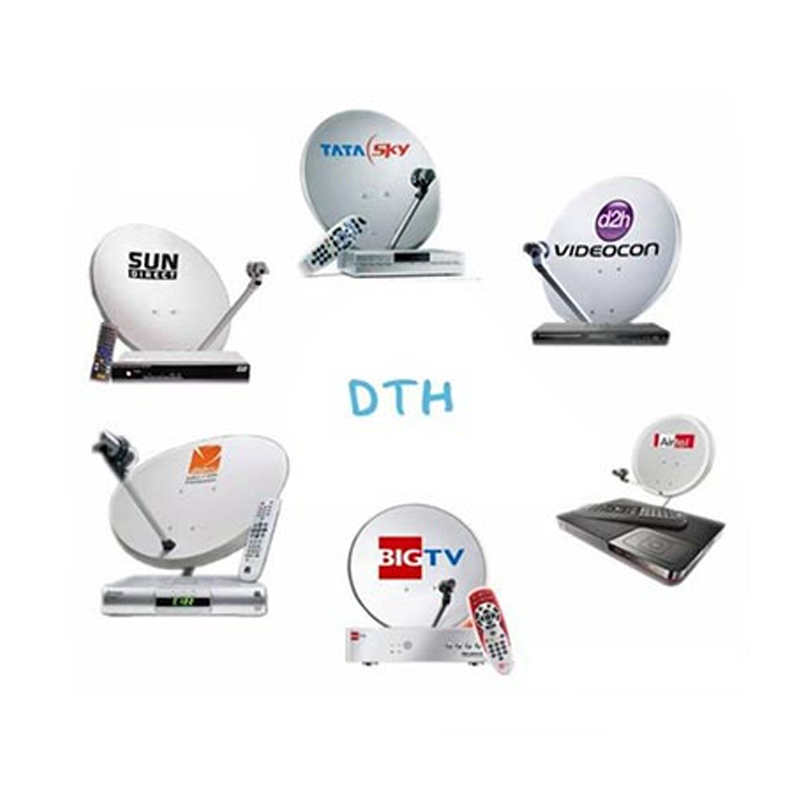
    Nair is of the view that with the imminent arrival of Tata-Sky DTH, Zee’s Dish TV ramping up and the big telecom players aggressively pushing ahead with IPTV, market forces would soon make the whole debate irrelevant and the MSOs may well end up “missing the addressability bus”.

    Nair averred that MSOs should instead be focussing their efforts on attractively packaging and marketing CAS to their direct points to begin with and concurrently convincing their franchisees of the need to get CAS going, government or no government.

    Another issue he raised was on the inability of many cable ops to deliver on CAS even if it was mandated. He said that barring a few big MSOs, most operators were simply not ready for CAS. Neither did they have the set top boxes nor the subscriber management systems in place to get it off the ground.

    According to Nair, in such a scenario, the likely result would be a blackout of pay channels in many areas, as had been witnessed in Chennai. But the difference here, he pointed out, was that unlike in Chennai, where there was no great demand for pay channels, in this case it would more likely be because of inability to deliver.