CANNES: The Cannes Film Mart kicked off on 17 May at the French Rivera and one Indian distributor who was all smiles on Day Three was Sunstone Entertainment’s Sanjay Jumani.
Reason: In all, he had sold three of his in two markets. Jumani’s Chicken Tika Masala and Husn have been sold to Kuwait with five prints, while Kaizad Gustad’s Boom was sold to China with an order for five prints.
Jumani was unwilling to reveal the price he got for the sale. However, he informed that the deal would run for a period of three years.
CANNES: Indian animation film maker Gitanjali Rao clad in a beautiful sari was accompanied in Cannes by her mother and designer K Muralidharan.
Rao says she was pretty happy when her film Printed Rainbow got through in the Critics Week competition. “First of all it was an animation film,” she says. “I was surprised yet pleasantly delighted.”
Rao is keeping her fingers crossed for the moment when the winners will be announced.
MUMBAI: R Russell Hampton Jr., has been named president of Disney Publishing Worldwide (DPW). The announcement was made by Disney Consumer Products chairman Andy Mooney.
Hampton will be replacing Deborah Dugan who announced her resignation earlier this week. In this capacity, he will be responsible for overseeing DPW‘s various book imprints and magazines around the world. Based in New York City, he will report to Mooney.
Mooney said, “Russell is taking over Disney Publishing at a time when its reputation for creating exciting new entertainment is flourishing. His leadership in turning Baby Einstein from a small video company to a significant multi-media infant developmental brand is well suited to overseeing DPW‘s positive momentum.”
Hampton was named executive vice president of DCP‘s global Home and Infant business in 2005 in addition to being general manager of The Baby Einstein Company, which he held since 2001 when The Walt Disney Company (TWDC) bought it.
“I‘m honored to be given the responsibility of overseeing a division of The Walt Disney Company, which has such a rich history of extending and creating great stories for families around the globe,” said Hampton.
Disney Publishing Worldwide celebrates its 75th year in 2006 and is the largest publisher of children‘s books and magazines in the world, selling 160 million books in 2005 and publishing 222 million magazine copies. DPW also publishes Family Fun magazine and the new Wondertime magazine for adults.
“The Disney treasure chest of characters and stories is much fuller today thanks to Deb‘s oversight. The comic book series W.I.T.C.H. that has sold over 20 million copies and became a TV series and the creation of the Disney Fairies franchise are just two examples of Deb‘s legacy at Disney Publishing,” said Mooney.
Previously, Hampton served as vice president of strategic planning and corporate development for TWDC. He joined TWDC in 1996 as manager of strategic planning.
Before joining Disney, Hampton was vice president of J.P. Morgan & Co. in New York.
CANNES: At the Cannes Film Mart, the Confederation of Indian Industries (CII) threw a producers networking party yesterday in the International Village. Attended by many Indians from all over the world, the party also had some producers and distributors from Canada in attendance.
The Indian brigade who attended comprised Sudhir Mishra, Ruchika Narain, Krishna Shah, Amit Bhatnagar, Sahara One’s Sandeep Bhargava, Celluloid Dreams’ Kanad Kashyap and Divya Seengal, iDream CEO Ashish Bhatnagar and Rohit Sharma, Aditya Bhattacharya and Saregama CEO Subroto Chattopadhya.
The party, a good initiative from CII, provided a chance for Indians the world over to network together. What would help is if many more international producers, financiers, distributors, buyers would also make it to such parties.
CANNES: What has Dharma Productions boss Karan Johar been up to? According to sources in Cannes, he has been having meetings with several distributors and directors the world over. He came into the Palais des Festivals for a very short while yesterday. What’s more actor Preity Zinta has been accompanying him to many a premieres and screenings.
What is really striking is the popularity that Karan Johar has in this part of the world. Sample this, a young girl came up to this scribe on the croisette outside the India pavilion in the International Village, asking where Karan Johar and Preity Zinta were? She said she had watched all his movies. “Mujhe bahoot acchi lagti hain dono,” she said. She had been waiting outside the pavilion for three hours and she said would continue waiting until she met up with the duo.
This morning Johar made a lighting visit to the India pavilion in the International Village along with producer-director Sunil Darshan and UK-based TipTop Films Sunil Shah. He also spent some time talking with Ian Smith the maker of the film The City of Joy.
MUMBAI: Fox Interactive Media (FIM) has completed two acquisitions of early stage companies, Newroo Inc. and kSolo.com. Newroo has developed an intelligent tool that scans the web and finds the most relevant information for users from thousands of websites, enabling them to easily create their own web sites by aggregating and remixing content from third-party websites and blogs.
kSolo.com is a user-generated music service that enables its community to easily create, share and rate their own recorded music and connect around shared tastes in music genre and style.
“Fox Interactive Media’s acquisitions of Newroo and kSolo demonstrate our commitment to empowering users with interesting tools that they can use to further enhance their online experience and online identity,” says Fox Interactive Media president Ross Levinsohn. “The acquisitions further validate FIM’s ability to unearth early stage, technically savvy web 2.0 companies led by entrepreneurial, forward-thinking management teams.”
“We are excited to bring both our technology and music community to the Fox Interactive Media family of web companies. We look forward to working with them to build the next generation of online music experiences for consumers,” said Nimrod Lev, founder and CEO of kSolo.com.
“We were attracted to Fox Interactive Media because they quickly grasped our vision to provide web users with a powerful tool set to create decentralized vertical content websites around people’s passions and interests,” added Dan Gould and Brian Norgard, co-founders of Newroo.
Financial terms of the deals were not disclosed. Both technologies will be deployed across relevant sites in the growing FIM Network, said a company statement.
FIM is building an integrated network of sites that offer its more than 70 million worldwide users socially rich media experiences centered on entertainment, news, information and self-expression. The company’s network includes internet assets from News Corp. divisions, including Foxsports.com, Americanidol.com and Fox.com. Other online portals FIM also owns and operates include social networking portal MySpace.com, gaming and entertainment site IGN.com, collegiate and pro sports network Scout.com and men’s lifestyle portal AskMen.com.
MUMBAI: Arbitron Inc. and CBS Radio have entered into a seven year agreement for Portable People Meter (PPM) radio ratings when the new audience ratings technology is deployed in the 35 CBS Radio markets encompassed in Arbitron’s previously announced PPM rollout plan.
Arbitron plans to launch the PPM system as its radio ratings service to the top 50 markets, beginning with Houston in July 2006.
CBS Radio chairman and CEO Joel Hollander said, “CBS Radio is counting on the PPM to enhance the value of both our programming and the audiences we reach in the eyes of our advertisers. We’re pleased to be the first major broadcaster to embrace the future by signing a contract for Arbitron’s next-generation electronic audience measurement system. Radio has been searching for a more accountable method to provide advertisers with valuable information about its listeners, and I’m confident that the PPM will be supported throughout the industry.”
“We are pleased that CBS Radio has signed a long-term agreement with Arbitron for PPM radio ratings. We view this agreement as an endorsement of our electronic measurement technology from one of our largest and most sophisticated customers. We look forward to continuing to provide CBS Radio with the information services to help it grow and manage its business for years to come,” said Arbitron Inc president and CEO Steve Morris.
The Portable People Meter, an electronic audience measurement technology that has been in US market trials since 2001, is scheduled to be used in the top 50 markets in place of the current paper and pencil diary method that the company has employed to collect radio audience estimates since 1965.
CANNES: You have got to hand it to the guys from Goa. The entire team of the international film festival has winged it down to Cannes to pick up the best practices from Cannes. They have been talking to all and sundry trying to find out how they can develop Goa along the lines of the French Riviera resort, which plays host to several events throughout the year.
Entertainment Society of Goa head Anju Timblo said, “We will stop short of nothing less than making the Goa International Film Festival amongst the most prized destination for filmmakers the world over.”
Among those who have come in include the Goa festival director Sahay, chief secretary J.P. Singh, commissioner and secretary tourism Ramesh Negi.
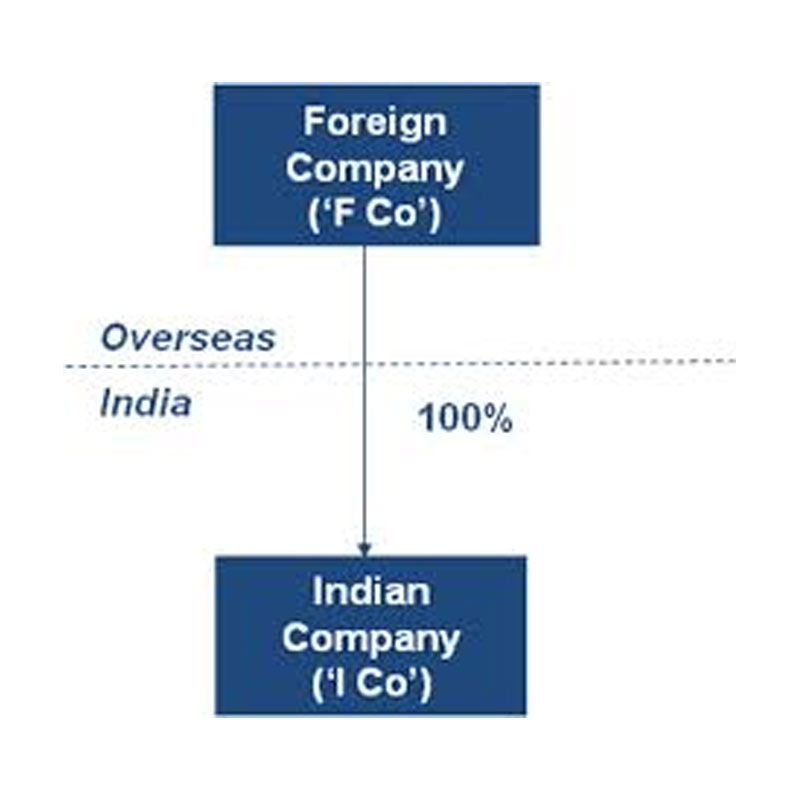
MUMBAI: Zee Telefilms Ltd. (ZTL) chairman Subhash Chandra will be transferring his foreign holdings to an investment company in India. Under ZTL’s demerged restructuring into separate entities, this is seen as a move to comply with the uplinking regulations on foreign holdings in news channels which are capped at 26 per cent.
The total foreign shareholding in Zee Telefilms is 54.69 per cent. While the holding of foreign promoters is 22.77 per cent, foreign institutional investors (FIIs) have 31.51 per cent.
As part of the corporate restructuring, ZTL is spinning off its news and regional channels into Zee News Ltd (ZNL). According to the formula that has been worked out, 137 ZNL shares will fetch 100 shares in ZTL.
“Chandra will be transferring his foreign holdings to an Indian registered investment company. This will help Zee comply with the uplinking guidelines for the news business,” says Essel Group chief executive officer of corporate strategy and finance Rajiv Garg.
The shares to be issued to FIIs in ZNL will have to fall within the 26 per cent cap. Foreign shareholders will, thus, be given preference shares of equivalent value to bring it under limit. Along with this, the promoters’ foreign holding will be transferred to an investment vehicle in India.
The foreign holding of promoters is primarily through Delgrada Ltd. which has 19.98 per cent stake in Zee Telefilms. Delgrada is an overseas corporate body (OCB) owned by Chandra. The balance 2.79 per cent is held by Lazarus Investments Ltd.
In the fiscal ended 31 March 2006, Zee posted a turnover of Rs 2 billion from its news and regional channels line of business and a net profit of Rs 161 million. “Zee News Ltd targets a turnover of Rs 2.5 billion in FY07 and Rs 2.9 in FY08,” says Garg.
“What I have done is not what is interesting… what I will do next is what holds promise.”
Gone are the times when the thought of women heading media firms and production houses are greeted with sniggers behind closed boardroom doors. In India, K Sera Sera CEO Kacon Sethi, proves that her accomplishments represent significant milestones – not just for women in business – but for women making career choices.
Sethi is clearly one who believes in the dictum that if one wants to be a leader, look for places where there are huge challenges and huge obstacles. Her career graph has not only served to consolidate her position but also earned her the trust and admiration of a wide spectrum of people in the industry.
She has spent the last 17 years in the corporate advertising, marketing and communications world. She has worked in a style that has naked aggression loaded with intellect. Today, she is dedicated to telling stories that matter in film and television. Here, Sethi speaks of her journey in life so far.
The pain of her parent’s untimely death in an accident still lives with her, though she was barely six months old then. This curse of destiny hurts her even now. “My biggest sadness is that I don’t have even a picture of me with my parents,” she remarks.
The tragedy, though, has not stopped her from being a woman who could steer a course of her own and grasp things unimagined by others. Growing up at her maternal grandparents home in Bihar, she was a mix and match of two cultures. As she says, “I am a Bengali who thinks and dreams in Hindi.”
But her childhood years were quintessentially Bengali. She learnt Rabindra Sangeet, played the harmonium, took kathak classes and participated in dance drama performances during Durga Puja. “I did my first play Paglaa Baba when I was five years old. It was a story of a five-year-old girl who befriends an insane man,” she recalls.
The image stuck on her and she started nursing dreams of writing songs for Bollywood. “Like any other teenager Hindi film music happened to me through an older cousin. I hadn’t seen a Hindi movie till I was 10 years old,” she says.
It was rather the old fashioned medium of radio that had a deeper and early impression upon her. “The radio became a great source of learning. And, my family didn’t look kindly upon this craze,” smiles Sethi.
She was obsessed with writing poetry and songs in Hindi. “As an 18-year-old, I used to fill up pages of many diaries writing poetry and songs in Hindi. My friends told me they were quite good. Yes, it is true, I actually wanted to be a songwriter for movies and look where I landed,” she confesses.
EARLY YEARS IN MEDIA
Kacon attributes the decision to join media as being backed by some sound logic and good mentoring. The initial years were grueling. She recalls, “At that time, advertising was still ok, but not media planning and buying. There was awareness about advertising as a profession and the key functions were clearly creative and account management. The media department in HTA, Kolkatta [now JWT] where it all started was full of older gentlemen and ladies, some more than twice my age. With all due respect, I still felt like a fish out of water.”
The environment, however, was changing in the late ’80s. “I knew that it was not going to be long when advertisers would demand a savvier approach towards assessing return on media investments. With proliferation of media options being fait accompli, the media function had to enrich itself to provide these answers. I wanted to be at the forefront of these changes and be equipped to ride the crest of that wave,” she says.
Mumbai was where she would ride that wave. She demanded a transfer to the commercial capital after spending less than two years at HTA Kolkatta where she was working on ITC, Emami and other accounts. “I wanted to spread my wings. Khoon garam tha and within a week, I got the transfer.”
Like millions of people who come to this city to realise a dream, she came too. She had few friends, but no family here. “The big city vibe, the sheer number of people on the streets, my first train ride to Churchgate station, my first day at HTA Mumbai – these are cherished imprints in my mind… never to be erased,” she says, remembering her initial days in the city.
Sethi was quick to learn the tricks of the trade. “I soon realised that to really live in Mumbai you need attitude. Simple things, like where you need to position yourself on the platform, so that you can easily get into the ladies compartment without being crushed. All in all, Mumbai was WOW.”
The tougher task was getting people to understand media not the way it had grown but to tune it to modern requirements. She does not subscribe to the conventional, bottom-up, media-focused approach to media buying. Instead, she makes sure that media decisions are driven by one’s marketing goals.
She handled the Levers, Godrej and Blowplast accounts at JWT and learnt a lot from Ketaki Gupte. “She was a great teacher,” says Sethi.
At JWT, Sethi defied the common habit among media planners of analyzing numbers. “There is need to go beyond the numbers, understand audiences and look for out of the box solutions,” she says.
MEDIA PLANNING AND BUYING
Chilling out in South Africa
Sethi knew that she could communicate effectively and with a passion. “I hated status quo situations and was innately curious. I also dug deep into myself to come up with my best, nothing ever landed in my lap by luck or chance. The toughest part was that everybody was not as enthusiastic to understand the new world of media and what could be achieved with it. Media was a Pandora’s box for me, everyday was a new discovery. I am one of those mad people who get totally consumed by what they are doing. It was a dog’s life, but I enjoyed it and most importantly, soaked it up like a sponge,” she says.
In this entire hullabaloo, her Bollywood song writing trip was totally forgotten. Soon, Sethi was charting her course to become a media director.
She became senior planner in the third year of being with HTA. During that time, Pradeep Guha’s [of Bennett & Coleman’s Times Of India] office got in touch with her, “because he liked the sound of what I was doing in HTA and saw a role for me in his Response department on the strategy side.” Sethi saw an opportunity of being at the heart of the print business and a “chance to get a first hand feel of the medium” in the biggest media house.
Though she joined with tremendous hope and enthusiasm, she soon realized it wasn’t her kind of place at all. “I vibed with Guha, he is a genius, but the environment around me totally bogged me down. I was apolitical, I always called a spade a spade, I couldn’t suffer fools gladly and in a place full of good looking women I wore glasses.”
In no time, she apologized to Guha for cutting short her visit and went back to what she knew best – media planning and buying. She joined Lynn de Souza as media group head at Grey in 1993.
“It was a great place. Lynn was a media goddess and the team was fabulous. Jasmine, Harish (Shriyan) and LV (Krishnan) still continue to be good friends. My most significant achievement here was my ability to manage people. This is the place where I grew as a team leader and this later created one of the most unusual situations for me.”
In early 1995 Lynn quit Grey. The news was “all hush hush” because her successor had not been announced. Then came the big surprise. When Sethi was offered Lynn’s job, she had expressed conflicting emotions saying, “It was exhilarating and traumatic.”
Sethi remembers the afternoon that she was called to Ravi Gupta’s office and Lynn was there too. “I thought to myself that, here comes the personalized announcement. Never in my wildest dreams was I prepared for what happened next. Here was another imprint, never to be erased. My mouth fell open, literally, on hearing that Jasmine was headed to New York and I was to be the new national media director – planning,” she recalls.
“I mean… take Lynn’s place! I could find no reason why somebody would think me capable of this task. I literally thought of Lynn as a guru. At that moment, what Ravi, bless his soul, and Lynn were saying in the background was going completely over my head.”
Little did Sethi realize how quickly she was acquiring leadership qualities. “One, that I myself did not realize when I had become ready for the task and second, that others around me had realized that I was ready. I did a lot of growing up around that time.”
When the news had finally sunk in, Sethi decided to chart a path that would be “more Kacon” and not just a replacement. “Lynn’s shoes were too big and I had decided that it would be a fatal mistake to try to step into them. People expected me to make mistakes and I knew I would make them. So, I got everybody to help me achieve my goals for the company. I marshaled my inner resources,” she says.
Sethi set herself the first task: don’t lose people and accounts. She didn’t. A firm believer in developing and retaining people, Sethi created a seamless interaction between the various divisions in the company. “I produced some of my finest works on the Procter & Gamble account and went on to build a significant amount of equity,” says she.
CHALLENGING STINT AT SONY
Even as Sethi was creating waves as the youngest media director in the country, another huge opportunity knocked on her door. Arun Arora, William Pfeiffer and the team at Sony Entertainment Television (SET), which was to launch in October 1995, had come to make a presentation to her. An hour after it was over, she received a call from Arora’s office asking whether she was free for lunch. “I said sure. I thought it would be to talk about founder advertisers for the channel. But, instead, he wanted me to join the channel as head of sales.”
“This time I didn’t freak out because though I was not strictly a salesperson it was an interesting proposition. In all these years, personally, I never felt like my neck was on the block. It was a relatively safe existence. I really had no adrenalin rush. Advertising has seen a sea change. There was more accountability than ever before yet, but frankly speaking, it wasn’t. I realized that I secretly wanted more pressure. I wanted risk and turmoil. And here was a position where it would be all of that and believe me it was,” says Sethi.
That move had its critics. She encountered strong resistance from well wishers who advised her to rethink as she was doing well. “The late Ravi Gupta had then asked me what my heart said. I replied I would take up the assignment as it was a risk,” she says.
Sethi joined SET in October 1995 just a few days before the channel’s launch. As the channel grew in popularity, revenues surged. And in five years, the company’s turnover touched Rs 5 billion. “It would be immodest to say that Rs 5 billion happened in five years and I was the architect of it. Yes, I was the leader of the team that made it happen and it was one of the proudest moments of my life.”
She had won the eye of SET India CEO Kunal Dasgupta. “Kacon is my best goalie. Our job is to get the ball to her and she kicks it into the net. If she fails, we will all fail,” Dasgupta had remarked in a Business India story on Sony.
Within Sony, Sethi grew in stature. Along with sales, she also added marketing to her portfolio. “With these two portfolios I also became the business head of Max, SET’s second channel. And, I was working round the clock. I did nothing but eat, drink and sleep television.”
Like most working women, Sethi also had to manage career and home. “My personal life really suffered, I was never home. It’s a miracle that my marriage survived, partly due to a real need to be together… no matter what. And the fact is that he is the only man I really love.”
Life in Sony was also getting difficult. As Star Plus catapulted into leadership position with the Amitabh Bachchan-hosted gameshow Kaun Banega Crorepati, rival channels were feeling the heat. With audiences dipping, Sethi had quite a task cut out for her to bring the monies in. “SET was reeling under the onslaught of Star, we did not have a programming head, and the sales team was under severe pressure,” she admits.
It was at this time that Sethi decided to abandon it all. “I could not be deaf to my inner calling,” she says. “Out of the blue, my life caught up with me. I woke up one day to this divine urge to be a mother. Over time, the urge consumed me, just like everything else. I told the company that I would like to take time off because I wanted to start a family.”
Some called it a cop out and others said that she had lost focus. “Only I know that I just needed that time, which I didn’t have earlier. And I decided to succumb without a fight because I wanted to do it with as much grace as I could muster in the given circumstances.”
Looking back she says, “It was the best thing to happen to me. Ruhin, our daughter is the centre of our life and I know that both my husband and I are happier for it.”
So how does she rate her Sony days? “I could write a book on my experiences there. Much of what I am today is because of that association. Seven years is a long time for a passionate dalliance. I was like a tiger there, even in my weakest moments, I felt infallible. It was my turf and my passion for it only grew every year.”
NEW TURF
Sethi turned to a new turf after two years of mothering her child. The offer came from K Sera Sera and she returned to work as CEO of a company that was not into television business at all. Though she was involved with movies as head of Max channel, she had no exposure to the production side of the business. But she had management and organizational skills and K Sera Sera was making efforts to imbibe a corporate image. “That I wanted to explore a broader canvas in entertainment was very much part of my come back strategy. I took almost a year to decide since K Sera Sera first offered me the position.”
One of Sethi’s primary tasks was to prepare the company for the follow on public issue that would take place a year from the time she joined. Also on the agenda was a foray into TV content business.
The blue print took shape. She was given the task of assembling, developing and leading the best creative minds in the business. K Sera Sera signed up deals with noted filmmakers like David Dhawan and designed strategies to scale up the movie business.
Sethi also set up Twenty Twenty, the television and new media subsidiary of K Sera Sera, in December 2004. Darna Mana Hai is a product which aired on Star One. “With Twenty Twenty I seem to have, fairly and squarely, stepped into the content game seamlessly. I was the creative director for close to 100 episodes of Darna Mana Hai.”
What draws her to television, “Perhaps it’s the organized structure and my knowledge of the television business that compels me or the innate strength of the medium to impact lives of millions of people, that it will be the cheapest entertainment option, there is measurement. I am drawn to television even more powerfully than ever before.”
Sethi expects to air three shows on different channels this fiscal. “This year, my first co-written story will be on air as also my first non fiction format concept. I am working on more formats, stories and concepts. I want to backend Twenty Twenty with a talent management structure, new faces, existing actors and writers.”
The “knowledge is power” approach that Sethi follows allows greater flexibility and creativity in thinking as well as stronger negotiation positions with creative media partners. Just like with clients, she strives for long term relationships with partners. Being tough, but fair, negotiators, and gaining their respect providing maximum benefit for their plan is Sethi’s gameplan.
But most importantly for her, K Sera Sera has emerged as an entertainment company with a sound and interesting business proposition. “On the film side, we opened our doors to creative talent and to ideas. Our distribution strengths became more robust. We structured ourselves to become the managers of the creative process, where a creative product would be delivered within the scheduled time and budget. It is much like a studio model.”
HONEST CONFESSIONS
On which current issues are top of her agenda, Sethi says, “I am drawn to the possibilities that landscape changes bring about. Also, the retail’s interest in the content pipeline and the predictability model for small and medium sized films are other issues. I am also deeply interested in the intellectual property rights (IPR) scenario in television. There is a need to break out of this myopic existence. There is a need to create formats that can travel globally. Only then will a producer have the reason and the belief not to part with IPR. At the same time, the formulaic approach to television programming is annoying and a detriment.”
Which stint has been most challenging and enjoyable for her? Sethi is honest, “I am partial to my SET stint and I regret nothing.”
On whether it is a challenge being a woman in this industry and does she fight male dominance, Sethi says, “Bollywood is a boys club. So it is challenging for a woman to earn her respect and in my personal journey I have earned it. Bollywood has never really had CEOs, COOs and CFOs. There is a paradigm shift taking place. Business and creative calls have to be taken by separate people. Both, men and women, are insecure so why blame the men. I have faced insecurity from both genders. So, I just forgive the nasty women and blame only the men for dominance.”
Listing her biggest strength and weakness, she says, “Depending on the situation, is my ability to speak my mind. With age, my arrogance and ego has mellowed. Life has taught me humility. Yet, my passion for whatever I do remains young. I am still consumed by what I do… I persevere till I get it.”
Coming from IIM and with the wealth of experience she has, she gives lectures to young minds at various forums and institutes. “I have always had the opportunity to interact with young minds. At SET, I was in charge of pre-placement talks at all the business schools. Recently, I enjoyed my interactions at FTII.”
Sethi is involved with a charity called Project Crayons. On this, she only says, “I like what my husband says… be grateful that you are in a position to give.”
Spending time with her daughter has a calming effect on her. “Coming back home to a four-year-old is the best stress buster. Ruhin is so animated, so full of discovery that being with her washes away all the stress. She makes me laugh with her amazing sense of humour. The first time she saw a transvestite at a signal, she urgently tapped me and said, “Mama, look, a boy aunty.” I feel 10 years younger in her company.” Adding that, “Its amazing how so many people touch your life. I am not a religious person but I thank the divine being everyday for the center of my being – my family.”
She loves traveling, especially to historical places and driving around Europe. She had an amazing sense of déjà vu when she visited Chittorgarh, as if she had been there before in another lifetime. And as expected, she is deeply into Bollywood – films, music, scripts et al.
On exploring other mediums, she says, “Media planning and buying, television channel management, Bollywood production company, television content producer… who knows where I will go next. There is no glass ceiling in my life.”
Sethi’s career graph should inspire many young women. As she puts it simply, “I would live to come back another day and what I will do next is always more promising.”








 Kacon attributes the decision to join media as being backed by some sound logic and good mentoring. The initial years were grueling. She recalls, “At that time, advertising was still ok, but not media planning and buying. There was awareness about advertising as a profession and the key functions were clearly creative and account management. The media department in HTA, Kolkatta [now JWT] where it all started was full of older gentlemen and ladies, some more than twice my age. With all due respect, I still felt like a fish out of water.”
 Even as Sethi was creating waves as the youngest media director in the country, another huge opportunity knocked on her door. Arun Arora, William Pfeiffer and the team at Sony Entertainment Television (SET), which was to launch in October 1995, had come to make a presentation to her. An hour after it was over, she received a call from Arora’s office asking whether she was free for lunch. “I said sure. I thought it would be to talk about founder advertisers for the channel. But, instead, he wanted me to join the channel as head of sales.”
 Like most working women, Sethi also had to manage career and home. “My personal life really suffered, I was never home. It’s a miracle that my marriage survived, partly due to a real need to be together… no matter what. And the fact is that he is the only man I really love.”