Blog

  • Animation & Visual Effects seminar discusses industry challenges

    Animation & Visual Effects seminar discusses industry challenges

    SINGAPORE: There’s an animated atmosphere here at the third day of BroadcastAsia 2006. Besides sessions on the new broadcasting technologies, Day 3 saw a special session on animation called – Animation and Visual Effects seminar. 

    The speakers for the morning session comprised Crest Animation Studios CEO A K Madhavan, Blackmagic Design Singapore director of creative services Peter Barber, Rhythm & Hues USA visual effects supervisor Bill Westenhofer and Intense Animation Studio managing director Tony Sealy. Throwing light on the success of Crest Animation Studios in the last four years or so in the space, Madhavan said, “We began as a production house for TV commercials 14 years ago, and then moved on to providing post production facility. Four years back, we decided to get into animation; acquired an American company – Rich Animation and I think we have done a fairly decent job.” 

    What’s more, Crest has progressed from providing animation content on the television platform, to the DVD platform and now is moving on to the theatrical space. One of it’s 3D show, Arthur, is going to release in the US next month as a DVD feature. The company has also signed a deal with renowned French producer Marathon for a new 3D animated series and it’s DVD feature Casper is also due to launch. Crest also inked a deal with Lion’s Gate International for Silvester and the Magic Pebble, which will hit the screens in the summer of 2008.
    “One needs to understand the sensibilities, likes and dislikes of various markets to create a show for them. There is a lot of background research that goes behind making shows for various international markets,” Madhavan said. 

    When queried as to whether the company was doing enough more for the local Indian market, he said, “We are providing some amount of content locally but the market has not yet developed. Apart from that, the budgets are very low and the animation industry still hasn’t got the push. But, I see the Indian animation industry exploding in the next 10 years’ time.” 

    Over the last three years, Crest Animation Studios has delivered over 126 series to broadcasters like PBS, Fox and Cartoon Network. Some of the series that Madhavan spoke about were – Jakers, Pet Alien and Bratz. 

    Rhythm & Hues’ Westenhofer explained in detail the process of the making of The Chronicles of Narnia: The Lion, The Witch and The Wardrobe. “It was a huge challenge especially where hybrid characters like the Centaurs were concerned. We extensively used pre-visualisation in this. It took us six months of motion capture, which included eight weeks of horse capture as every creature has it’s own unique fighting style,” he said.

    “With all the new technology coming in, it becomes imperative for filmmakers to know what the tools are. Digital photography is going to change the paradigm of how we do things,” he added.

    Intense Animation Studio managing director Tony Sealy, whose company has conceptualised -11 – an animation soccer comedy show for broadband television, threw light on the various challenges that the animation industry faces in Singapore. 

    “Originally, Intense Animation Studio was intended to be a creative agency, but there was a serious lack of talent in Singapore. So, I first opened a training center and we were the first company in Singapore to teach Maya. We also conduct seminars and workshops to teach people more about computer animation,” Sealy said. 

    The show 11 was pitched to M2B World, which is a leader in broadband media entertainment business, and a major provider of interactive entertainment-on-demand, education-on-demand and e-commerce streaming over broadband channels, internet portals, and 3G devices. “With M2B, we had a far wider reach over broadband on-demand, 3G and internet. Broadband TV provides a great diversity of delivery,” Sealy said. 

    Pointing out the difficulties that the animation industry in Singapore faces, Sealy said, “One needs to address the lack of private investment in the creative projects and educate the investors about the scope of animation. We also need to lift the training standards and address the current subsidies for training and internships. Apart from this, studios must develop their own IP.”

  • Europe leads the world in the interactive TV trial

    Europe leads the world in the interactive TV trial

    SINGAPORE: While some parts of the world are still trying to understand what interactive TV means, and some other markets are still in its infancy as in the Asia Pacific region; it looks like Europe will set the rules of the new game. With more than 380 interactive services on air in 2006, Europe clearly leads the way.

    As of now there are more than 50 million digital households across Europe and experts predict the number will go up to 125 million by 2010. Also, with growing consumer spend the gross margins (not turnover) is expected to cross 700 million Euros by 2010 with growing consumer spend.

    Quoting from a study conducted by AFDESI (The French professional organization for interactive television), delegate Jean Dacie said, “Europe is definitely leading the way on the ITV market with most of the technologies developed there since the first trials which started in the UK in 1994/95 and first commercial ITV services which began in France in 97.

    Just a look the figures reveals that UK is the largest market with 17.8 million subscribers followed by Germany, 11.2 million and France with about 8.7 million. In recent times, France has recorded the fastest ever technology adoption by users, with about 2 million DTT households one year after its launch. While BSkyB is the most profitable platform in the world for interactive services (660 million Euros in 2005) and UK is the country that has generated the highest revenues from interactivity yet.

    The study reveals that with the analog switch-off planned by national governments by around 2010, UK will perhaps emerge as the only country with the near objective with 69 per cent of digital homes, which means 125 million households in western Europe will have digital TV.

    With the standalone and enhanced TV services offered by ITV, consumers are already benefiting with the use of interactive services via TV like messaging, video conferencing, on demand extension of linear advertising breaks, betting live on broadcast sports and participating in quiz shows live apart from using utilities like bank services and shopping. The study says that there are more than 150 interactive services available in the UK. While advertisers are benefiting through well-executed interactive advertisements that can deliver benefits for brands.

    So, what are the business models that are driving the European digital market.

    “Premium calls (calls via the return path line of the set top box are charged a premium rate)
    ” Subscription (users contract a monthly subscription to services)
    ” advertisement and sponsorship
    ” Indirect profitability (the service cost is entirely supported by the operator)

    In the UK, with more than 8 million set top boxes at the beginning of 2006, BSkyB records an average annual revenue per user of 33 Euros for its interactive services with a long term objective of 70 euros. With the growing number of digital TV homes, this is bound to go up by leaps and bounds

  • Shekhar Kapur- on BBC World’s ‘HardTalk Extra’

    Shekhar Kapur- on BBC World’s ‘HardTalk Extra’

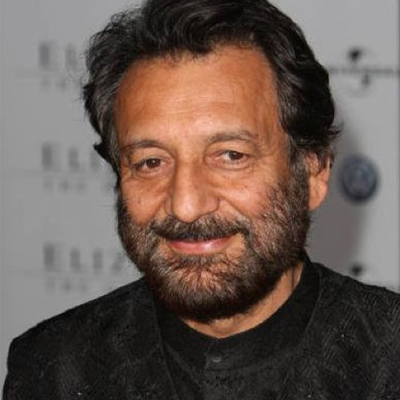
    Shekhar Kapur is one of the elite club of Asian film directors who have cracked Hollywood. He talks to Mishal Husain about his early films in Bollywood, controversy around his film ‘ Bandit Queen’ , his breakthrough ‘ Elizabeth’ which gained seven Oscar nominations, including one for Best Picture . He also tells Mishal that Hollywood as we know it, is seriously under threat, as asian culture becomes a force to be reckoned with on the global stage.

    HARDtalk Extra is the BBC’s most widely broadcast arts and entertainment interview programme. Each Friday, the programme profiles leading personalities in the arts, entertainment, science, culture and the media. This edition of HARDtalk Extra will be broadcast on BBC World on Friday 3rd February @ 1000 with additional appointments to view @ 1400, 1700 and 2100 IST.

    Further information:
    Deeptie Sethi/ Neha Sharma
    Tel: 91 11 2341 2672/73 Extn. 102
    Fax: 91 11 2341 1109
    Email: deeptie.sethi@bbc.co.uk

    Notes to Editors: BBC World, the BBC’s commercially funded international 24-hour news and information channel, is owned and operated by BBC World Ltd, a member of the BBC’s commercial group of companies. BBC World is available in more than 200 countries and territories worldwide, and reaches 280 million households (136 million 24-hour homes) and more than one million hotel rooms. BBC World launched in its present format in 1995 and is funded by advertising and subscription. For further information on how to receive BBC World, download schedules or find out more about the channel, visit bbcworld.com.

  • 2,339 companies mark presence as overseas participation hits new highs

    2,339 companies mark presence as overseas participation hits new highs

    SINGAPORE: BroadcastAsia 2006, which kickstarted on 19 June, has attracted more than 847 exhibiting companies (88.5 per cent from overseas) from 46 countries. The conference saw 5,000 pre-registered visitors, out of which 48 per cent were from overseas. 

    All in all, BroadcastAsia 2006 and CommunicAsia/EnterpriseIT has attracted 2,339 companies from 67 countries this year as compared to last year’s 2,238 exhibiting companies from 55 countries.

    The opening ceremony of the conference was held this morning with Singapore’s information, communications and arts minister Dr Lee Boon Yang as guest of honour.

    While 33 Indian companies are participating in BroadcastAsia 2006, 47 are participating in CommunicAsia/ EnterpriseIT.

    The highest number of participating companies are, not surprisingly, from Singapore, with 276 companies participating in CommunicAsia/ EnterpriseIT and 97 in BroadcastAsia 2006. Countries like China, Korea, USA, Taiwan, Indonesia, Australia, Malaysia, the Philippines and Thailand also saw a large number of participating companies.

    In addition, delegations from China, Indonesia, Malaysia, Thailand and Vietnam are also expected at this year’s BroadcastAsia.

    Keeping in mind the new digital age and the boom in this sector, this year, BroadcastAsia and CommunicAsia will also launch a new event – DME – The International Digital Media and Entertainment Exhibition and conference.

    Exhibitors from India at BroadcastAsia2006 include: ADI-Media Pvt Ltd represented by Madhu Gupta, All India Radio (AIR) represented by RR Prasad, Cable Quest represented by KK Sharma, Essel Shyam Technologies Pvt Ltd represented by Pankaj Agrawal, IndiaSign represented by Anoop Bhatia, Monarch Computers Pvt Ltd represented by Bhushan Motiani, Satellite and Cable TV Magazine represented by Dinyar Contractor, Studio Systems represented by Manoj Madhavan and Indian Television Dot Com Pvt Ltd.

    BroadcastAsia 2007 will be held from 19 to 22 June 2007 at the Singapore Expo.

  • Aamir Vs Aamir

    Aamir Vs Aamir

    Let me begin with a disclaimer. This is not a piece about how celebrities should conduct themselves in public or in media. It is not about whether or not they should get involved with or voice their opinions on politically or socially sensitive matters. It is not about whether they should do research on a controversial subject, acquaint themselves with ‘facts’ from both sides, and only then form an opinion instead of forming lazy opinions.

    Enough and more has been written or spoken on these subjects. We have heard Aamir and his supporters from the ‘industry’ and elsewhere. We have seen other celebrities such as Arundhati Roy and Rahul Bose share their opinion with us on several news TV stations. In fact, only recently, I read a beautifully written piece by Rahul Bose on intentblog, one of the best open blogs I have seen.

    It’s Aamir the actor who acts for a living versus Aamir the brand whose equity must be protected, grown and leveraged
    _____****_____

    My goal here is a little different. A little less selfless and more commercial, if you may. As a practitioner of marketing and communication, I am intrigued by the issues the Aamir-Narmada-Fanaa episode raises, even after the episode itself seems to have blown over.

    If you try to simplify an otherwise multi-textural issue, it’s Aamir the celebrity that endorses half a dozen high profile brands versus Aamir the concerned citizen who is compelled to raise his voice against seeming injustice. In fact, even more importantly, it’s Aamir the actor who acts for a living versus Aamir the brand whose equity must be protected, grown and leveraged.

    Now look at what the brand did. It [doesn’t sound right to refer to Aamir, as ‘it’, does it?] jumped out of its popularly accepted, rather linear domain of acting-to-entertain, into uncharted territory. Out of the larger-than-life fantasy world of the big screen, Dolby sound, and carefully directed retakes, into the grimy and sweaty world that millions live in every day. It could not have been an easy choice. Particularly when a brand extension [Fanaa] was weeks away from its launch. I know there are people out there who believe Aamir’s Narmada outburst and rather ‘suddenly’ found social conscience were part of a carefully orchestrated bridge strategy between Rang De Basanti and Fanaa. If that is true, I wonder how many product or service marketing managers would take such a risk before a launch. In fact, whether Aamir’s Narmada voice was a marketing tactic is not the real issue here.

    To me, the issue is whether brands need to learn a new lesson on how to communicate with their customers. Ever since brand management started as a discipline, most brands have tried to create and maintain a squeaky clean image, polished regularly by advertising. They have lived in a fantasy world where problems always disappear at the end of 30 seconds, ‘ordinary’ names always fail, rivals draw blood on an imaginary street. They have stood on pedestals and delivered sermons about the good and the evil, while obedient disciples listened with patience. Not unlike how Aamir and others in his profession talk to us in a theatre, if you think about it.

    But the truth is, brands live in our minds and hearts and we live in a society. The society isn’t a fantasy world; it’s where we return when the three hours of fantasy are over. It’s where parents take interviews, so that kids can get admission into a school, where neighbors fight over relatively trivial issues, where corruption is something we practice in day time and watch on TV at night.

    Do brands live in our society? With us? Should they?

    If we want to move from an era where consumers move from just knowing our brand to liking it, a thought that is finding increasing acceptance amongst seasoned brand marketers, we should perhaps think of brands as social beings.

    Should brands take a social stance? Or should they avoid any kind of controversy and stay sanitized and clean?
    _____****_____

    Not everyone in our society is our friend. Some people whose ideas and opinions are similar to ours, who have interests and hobbies common to ours, who help us face a challenge or leverage an opportunity, become our friends. Others become someone else’s friends. People fight normal fights, but we are most often loyal to our friends regardless of who is fighting against them. And while we might have many types of friends and sometimes we lose touch with some of them, we don’t change with friends very frequently.

    Do we see our brand as a friend like this?

    Here comes the provocation. In a world where people [consumers?] are getting increasingly cynical of marketing, advertising and brands, should we start breaking down some of the practices that built our powerful brands yesterday? Should we attempt to make the simple principles of friendship and social relationship work to create a relationship between our brand and attention challenged consumers?

    Should our brands step down from the hallowed pedestal and mingle with the masses? Should they take stances on issues of social importance and urgency, even if some of them might be controversial and ‘politically’ sensitive?

    Net, should brands take a social stance? Or should they avoid any kind of controversy and stay sanitized and clean?

    How come Aamir thought of doing something that Shah Rukh, Amitabh, Aishwarya, Lataji and Hritik haven’t done? Is Aamir the only one? How about Shabana? How about Gere?

    How come we regard Benetton, Bullet, MTV, Diesel, Harley, Zippo, Apple, Red Bull differently from countless others?

    If we think of brands broadly as mainstream and leading-edge, how they have built themselves, what chances they have taken, who owns them and how they behave, we might find some directions and explanations. But, then, that’s a broader subject, isn’t it?

    Do you have an opinion on brands taking a social stance. Help Ravi Kiran write the next chapter. Post your thoughts to editor@indiantelevision.com

    (The author is South Asia CEO Starcom MediaVest Group)

  • Changing media scenario a challenge for broadcast training institutes

    Changing media scenario a challenge for broadcast training institutes

    SINGAPORE: As the downpour continues in Singapore, Day 2 of Broadcast Asia 2006 kickstarts at the Expo City. The first session addressed the issue of capacity building of the broadcast sector.

    In the fast changing world of technology, broadcasters have to move twice as fast just to keep to where they are. The question then arises – How will they keep up with the explosion of new technologies and report on a world that is changing so fast? Engineers, programmers and managers in a broadcasting company are quite similar. The answer to this lies in training!

    Asia-Pacific Institute for Broadcasting Development (AIBD) in Malaysia has been training broadcasters for the last 30 years. According to AIBD programme manager K P Madhu, there are five core components to training. These are:

    1) Need assessments – Current deficiencies, future requirements, assessment of training readiness, training objectives and training needs analysis.

    2) Design – Courses/programmes, media – methods/needs, planned activities, evaluation schemes, target group specific training.

    3) Preparation – Presentations, leading discussion, management of practical session, evaluation of feedback, logistics.

    4) Training Evaluation – Training appraisals by trainees, analysis of adequacy, results.

    5) Feedback to Management – Human resources, assessment of future training needs.

    “We need to look at the developmental needs of broadcasters and there has to be sustained action for capacity building of broadcasters in the region. These need to be revisited and revised every year. Summits, conferences, workshops, courses, dialogues to address different group of people like managers, programmers, executives, producers etc need to be held for capacity building of broadcasters,” said Madhu.

    However, one of the major challenges that AIBD faces in training is that there has been a huge boom in the media space and training needs have multiplied manifold. Hence, in spite of all the facilities and training requirements that AIBD has, it has been difficult to keep pace with the ever changing media scenario. “The needs are much more than we can meet,” said Madhu.

    He further added, “One of the biggest hindrance for us here is funds. While the government and the broadcasters are ready to pump in money in a whole lot of other things, they are not very keen on investing in training. To convince them to put in funds for training is our biggest challenge.”

  • Dishtv selects Scopus Video Networks to increase transponder capacity

    Dishtv selects Scopus Video Networks to increase transponder capacity

    MUMBAI: Subhash Chandra’s Dishtv has expressed serious intent to increase its channel offerings on the direct-to-home (DTH) platform. The company has selected Scopus Video Networks, a provider of digital video networking products, to support this expansion.

    The technology will help Dishtv pack up 28 channels per transponder, eight more than its current capacity. “We will be implementing this technology within a month. It is a better compression system without sacrificing the quality,” Essel Group director technology Amitabh Kumar tells Indiantelevision.com.

    Dishtv has seven transponders on NSS-6, offering a total of 130 channels. “We are building up the capability to offer more channels on our DTH platform,” Kumar says.

    Dishtv will use Scopus products to enhance its transponders’ utilization and expand its already fast growing DTH market share throughout the Indian subcontinent. The decision to tie up with Scopus comes ahead of Tata Sky’s DTH launch expected in July.

    The deal brings to Dishtv’s headend Scopus’ full line of products including E-1200 encoders, IRD-2900 decoders, IVG-7100 intelligent video gateway (IVG) platforms and network management system software. Scopus is a Nasdaq-listed company.

    Scopus’ IVG platform will provide advanced video processing capabilities including joint transrating, grooming and bit rate shaping. 

    India is beginning its transition to digital TV in which the number of digital subscribers is expected to grow ten-fold within the next five years.

    Says Kumar commented, “We operate in a complex web of multiple satellites and multiple carriers and the unique capabilities offered by Scopus’ product line such as the Intelligent Video Gateway will help us optimize operations while minimizing cost and enhancing reliability in our operations. Scopus has also helped Dish TV achieve very high satellite utilization and bring down costs on a per channel basis.”

    Scopus VP sales Eitan Koter stated, “We are honoured and delighted to continue doing business with the Essel Group, India’s leading media conglomerate. This achievement is a testimony to our on-going commitment to our customers’ success. Scopus is the only vendor that offers a full product portfolio under one roof, enabling us to provide simple solutions to complex requirements such as the ones posed by Dishtv.”

  • Dishtv selects Scopus Video Networks to increase transponder capacity

    MUMBAI: Subhash Chandra‘s Dishtv has expressed serious intent to increase its channel offerings on the direct-to-home (DTH) platform. The company has selected Scopus Video Networks, a provider of digital video networking products, to support this expansion.


    The technology will help Dishtv pack up 28 channels per transponder, eight more than its current capacity. “We will be implementing this technology within a month. It is a better compression system without sacrificing the quality,” Essel Group director technology Amitabh Kumar tells Indiantelevision.com.


    Dishtv has seven transponders on NSS-6, offering a total of 130 channels. “We are building up the capability to offer more channels on our DTH platform,” Kumar says.


    Dishtv will use Scopus products to enhance its transponders‘ utilization and expand its already fast growing DTH market share throughout the Indian subcontinent. The decision to tie up with Scopus comes ahead of Tata Sky‘s DTH launch expected in July.


    The deal brings to Dishtv‘s headend Scopus‘ full line of products including E-1200 encoders, IRD-2900 decoders, IVG-7100 intelligent video gateway (IVG) platforms and network management system software. Scopus is a Nasdaq-listed company.


    Scopus‘ IVG platform will provide advanced video processing capabilities including joint transrating, grooming and bit rate shaping.


    India is beginning its transition to digital TV in which the number of digital subscribers is expected to grow ten-fold within the next five years.


    Says Kumar commented, “We operate in a complex web of multiple satellites and multiple carriers and the unique capabilities offered by Scopus‘ product line such as the Intelligent Video Gateway will help us optimize operations while minimizing cost and enhancing reliability in our operations. Scopus has also helped Dish TV achieve very high satellite utilization and bring down costs on a per channel basis.”


    Scopus VP sales Eitan Koter stated, “We are honoured and delighted to continue doing business with the Essel Group, India‘s leading media conglomerate. This achievement is a testimony to our on-going commitment to our customers‘ success. Scopus is the only vendor that offers a full product portfolio under one roof, enabling us to provide simple solutions to complex requirements such as the ones posed by Dishtv.”

  • Toonskool signs MOU with Karnataka State Open University for animation course

    Toonskool signs MOU with Karnataka State Open University for animation course

    MUMBAI: Karnataka State Open University (KSOU) signed an MOU with Toonskool Advanced Animation Academy Bangalore yesterday for a three year degree program in Animation. 

    With the signing of this MOU, Toonskool becomes the first accredited institute in the country to train students for a B.Sc. Degree to be awarded by KSOU in the field of Animation.

    Announcing the program, KSOU vice chancellor Prof. K. Sudha Rao said, “India has tremendous opportunity to be an animation outsourced country. This Degree program in Animation has been thoughtfully and timely launched by KSOU to enable the students to be a part of the growing animation industry. Even if one student from each village becomes an accredited animator it will add to the pool of much needed reservoir and bring in financial support. Besides the advent of this programme adds to the avenues available to them and they can now look beyond the traditional B.A, B.Com degree courses.”

    Explaining the nature of animation, KSOU IT director Viswanatha Rao said,” Animation is both an art and science. While the end result achieved can be defined as art, the process of achieving it is science.” He added, ” From $250 million in 2005, the Indian animation industry is anticipated to soar upto $950 million by 2009. With the industry flourishing at such a rapid pace, by 2008, a minimum of 3,00,000 animation professionals will be required to fill the vacuum.” He also commended the efforts of Shri Govardhan CTO Toonskool in spreading animation awareness in the country.

    Speaking at the occasion, Toonskool MD Ashwin Ajila said, “In India, animation today is no longer merely a pursuit. Animation has globally evolved into a $70 billion industry, playing a vital role in all disciplines of life ranging from medicine, to sports, interactive media to defence. It entails systematic academic procedures and studies to attain a professional level as demanded by the industry. India has begun to attract high end, complex animation projects that can only be executed by highly qualified animators. It is therefore essential for aspiring animators to go through a long term industry-supported course in animation. With this MOU, aspirants can become graduates and attain the desired level of proficiency to face the competitive global market in animation.”

    This joint programme facilitating B.Sc. Degree in Animation will be made available through the KSOU approved study centres all over the country. To begin with the first degree program will be launched from August 2006 in three colleges; NITTE Education Trust-NITTE Institute of Technology-Bangalore, Thakur College- Kandivli Mumbai and H L Sonawane College- Kalyan Maharashtra who are already the approved Study Centres, states an official release.

    The content devised by Toonskool comprises script to screen processes. The course is holistic in nature and covers all the aspects ranging from identification of individual aptitude to specialization in the areas of interest. The program structure is academically and professionally streamlined to put the student on a definite growth path through the semesters. The course curriculum involves foundation art, classical animation, production process, digital techniques and creative ideation.

  • Toonskool signs MOU with Karnataka State Open University for animation course

    MUMBAI: Karnataka State Open University (KSOU) signed an MOU with Toonskool Advanced Animation Academy Bangalore yesterday for a three year degree program in Animation.


    With the signing of this MOU, Toonskool becomes the first accredited institute in the country to train students for a B.Sc. Degree to be awarded by KSOU in the field of Animation.


    Announcing the program, KSOU vice chancellor Prof. K. Sudha Rao said, “India has tremendous opportunity to be an animation outsourced country. This Degree program in Animation has been thoughtfully and timely launched by KSOU to enable the students to be a part of the growing animation industry. Even if one student from each village becomes an accredited animator it will add to the pool of much needed reservoir and bring in financial support. Besides the advent of this programme adds to the avenues available to them and they can now look beyond the traditional B.A, B.Com degree courses.”


    Explaining the nature of animation, KSOU IT director Viswanatha Rao said,” Animation is both an art and science. While the end result achieved can be defined as art, the process of achieving it is science.” He added, ” From $250 million in 2005, the Indian animation industry is anticipated to soar upto $950 million by 2009. With the industry flourishing at such a rapid pace, by 2008, a minimum of 3,00,000 animation professionals will be required to fill the vacuum.” He also commended the efforts of Shri Govardhan CTO Toonskool in spreading animation awareness in the country.


    Speaking at the occasion, Toonskool MD Ashwin Ajila said, “In India, animation today is no longer merely a pursuit. Animation has globally evolved into a $70 billion industry, playing a vital role in all disciplines of life ranging from medicine, to sports, interactive media to defence. It entails systematic academic procedures and studies to attain a professional level as demanded by the industry. India has begun to attract high end, complex animation projects that can only be executed by highly qualified animators. It is therefore essential for aspiring animators to go through a long term industry-supported course in animation. With this MOU, aspirants can become graduates and attain the desired level of proficiency to face the competitive global market in animation.”


    This joint programme facilitating B.Sc. Degree in Animation will be made available through the KSOU approved study centres all over the country. To begin with the first degree program will be launched from August 2006 in three colleges; NITTE Education Trust-NITTE Institute of Technology-Bangalore, Thakur College- Kandivli Mumbai and H L Sonawane College- Kalyan Maharashtra who are already the approved Study Centres, states an official release.


    The content devised by Toonskool comprises script to screen processes. The course is holistic in nature and covers all the aspects ranging from identification of individual aptitude to specialization in the areas of interest. The program structure is academically and professionally streamlined to put the student on a definite growth path through the semesters. The course curriculum involves foundation art, classical animation, production process, digital techniques and creative ideation.