Blog

  • ‘Our expansion plans are not too dependent on CAS or DTH or any other new technology’ : Sameer Manchanda – Global Broadcast News Jt. MD

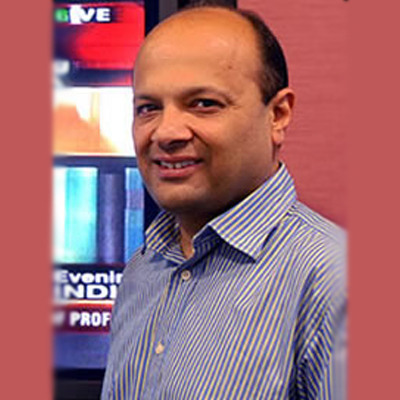
    ‘Our expansion plans are not too dependent on CAS or DTH or any other new technology’ : Sameer Manchanda – Global Broadcast News Jt. MD

    He is credited with having stitched some lucrative deals for NDTV — rather it’s said that the so-called one-sided deal that NDTV had with Star for content on Star News for five years was a combination of his ability to draft agreements and talk foreign partners into deals and NDTV promoter Prannoy Roy’s charm and credibility. In certain quarters, he is also described as the merciless corporate honcho who leaves no stone unturned to achieve success.
    Whichever way you look at it,
    Sameer Manchanda is a go-getter, easily moulding himself according to varied situations. A Fellow of the Institute of Chartered Accountants of India, he has been with the television industry since 1984 — NDTV to be precise — and has seen major stages of evolution in this sector. He has considerable and varied experience and expertise in distribution, strategic and financial planning, capital structuring and restructuring, funding, business valuations, mergers and acquisitions, collaborations and joint ventures.
    No wonder, in 2005 the entrepreneurial bug bit him when Manchanda set up Global Broadcast News Ltd along with Television Eighteen Group promoter Raghav Bahl, TV18 CEO Haresh Chawla and managing editor of NDTV Rajdeep Sardesai. He was also instrumental in formulating and finalizing the alliances with CNN and Channel7.
    In a rare interview with
    Indiantelevision.com’s Anjan Mitra, Manchanda, the joint MD of GBN (managers of English news channel CNN IBN and its Hindi sibling Channel7), looks at the industry, peers into the crystal ball for the changes taking place, the challenges ahead and what makes him tick.
    Excerpts:

    What’s the big picture in the television industry as you see it?
    Digital television and various delivery platforms for content are certain to make things exciting. The new digital wave is going to change the consumption patterns of electronic content. Platforms like DTH, IPTV, mobile TV, podcast and broadband will all happen and audiences would not be just passive onlookers, but participants and partners in the business of packaging, delivering and consuming content.

    We will need to be ready for all these. For example, mobile video is going to be a big thing in India too in the near future.

    At a time when all these things are poised to happen — and happening — the biggest challenge for any management is to figure out ways to cope with technological advances. In India, there are over 100 million mobile phones, over 100 million TV homes out of which approximately 60 million are cable and satellite homes. Just look at the consumer power of these various platforms. I see this as the future.

    Any management that could figure out ways to make its content consumable worthy for people on such different platforms would be the real winner. In the next five years, I foresee Indian media companies scaling up their operations.

    Do you foresee multi-billion dollar Indian media companies, especially broadcasting companies, coming about in future?
    Why not? If they can do it in other parts of the globe, why not in India? With ramping up of operations, valuations too would go up. If you can have a Viacom being valued at $25 billion, CBS at $20 billion, Walt Disney at $65 billion, News Corp at $20 billion and NTL at $ 7 billion (all valuations mentioned are approximate), why not a multi-billion India broadcaster?

    As India globalises and broadcasters scale up operations, in the next five to six years we could see several multi-billion dollar media companies in India.

    How is Global Broadcast Network, managing CNN IBN and Channel 7, gearing up to take advantage of the developing scenario?
    The first thing for us was to get CNN IBN on track and build it up as a strong, credible news source. After having done that, we are going in for increased interactivity as audiences are our partners and their involvement is very necessary. The programme Citizen Journalist is just one such initiative. Once people get used to that, then the advertising revenue will follow.

    Second, as a news company we decided not only do we have to be present in the English space, but also in the Hindi segment. For this we decided to go the acquisition route for Channel7. From a management perspective, while CNN IBN is on a growth path — our ratings have been good — Channel7 gives us presence in the vast Hindi market. In future, we’ll launch more channels, but getting Channel7 up there with the big boys and increasing its market share is the big task ahead of us all.

    Getting Channel7 up there with the big boys is the big task ahead of us all

    How do you want to consolidate your position as a company?
    As a group — GBN is part of the Television Eighteen Group — we do have synergies and from the management’s perspective it’s to build up an organization that would be present in all spheres of general and business news in both English and Hindi. (Television Eighteen runs CNBC TV18 and Hindi channel Awaaz).

    As a bouquet of channels, over a period of time we’d go pay to exploit the various distribution platforms. When that happens, we would also tie-up with one of the existing distribution bouquets (Zee Turner, Star, and One Alliance).

    When will the group channels actually align with an existing distribution bouquet?
    Pretty soon. We would engage in a dialogue and tie up with one of the existing distribution platforms. All such platforms need good content and we feel that our channels make compelling viewing. Within a year you’d see developments on this front.

    Would that mean both CNN IBN and Channel7 become pay channels?
    CNN IBN certainly would as all other English news channels are. CNBC TV18 draws in a substantial amount of subscription revenue. We’d keep Channel7 free to air (like other Hindi news channels) till the time leaders in this space decide to make some radical moves.

    Has GBN given up altogether an option of foraying into non-news segment of TV broadcasting?
    AT GBN, the charter is to concentrate on the news segment. Over a year’s time, we’d continue to launch more channels, but within the news segment. News is not just as we see it. It can be lifestyle and sports too as news encompass all these things. GBN would continue to operate within its core strength and there I don’t see an entertainment channel fitting in.

    How much of the expansion will depend on technologies like CAS and DTH proliferating in the Indian industry?
    Our expansion plans are not too dependent on CAS or DTH or any other new technology. Things like CAS and DTH are already making their presence felt. However, we do assume that newer technologies will come in and we should be ready for the situation. But if the future doesn’t also arrive over the next 12-18 months, our expansion plans are unlikely to get affected.

    How would you describe the present distribution scenario? You are considered a wiz in that field having, reportedly, done wonders in your previous organisation, NDTV?
    At this point of time distribution is an important component of the business. It’s like having good content. Look at FMCG companies like Coke and Pepsi. They are doing well because not only do they have popular products, but also great distribution and marketing strategies. The television business too is like that; at least evolving into one where it is important to not only have compelling content, but also good distribution. People are realizing this and have started investing in distribution to have the right mix.

    Distribution will also play a key role as the TV business goes forward with newer technologies and platforms coming up. Whether a TV channel needs to be on all platforms, whether podcast is good for only news and not entertainment, whether long term deals are good…questions like these would have to be asked by a management and answered.

    At GBN, we have decided that our channels should be on all platforms and available everywhere with the final aim of building up a rapport with the consumer in whichever way he wants to consume news. With India presently facing bandwidth problems where one TV channel is less clear than the other on a cable network, for example, it’s very important to be available on other platforms too. It’s all about building relationships with consumers, distribution partner(s) and clients.

    Though you said the company is planning to join hands with an existing distribution partner, there are reports that GBN and TV18 Group would like to build up a distribution team of its own. Comment.
    As far as GBN is concerned, we’d join a bouquet as of now. We do have an in-house distribution team, which services the clients. But that’s more from the point of view of relationship building. You need a different arm to collect money from the market and a different set-up to build relationships. We feel it’s better to have two arms doing (seemingly) separate work.

    Star, One Alliance and Zee Turner have built up an expertise in the area of collecting money and the feeling at GBN is that we should go along with it, even as an in-house team works on affiliates and relationships with them. Both can be complementary to each other.

    You mean to say the in-house distribution team would just concentrate on building relationships, while the actual work is outsourced. Seems a bit strange to me, but what do you feel? That’s how the Indian market has developed so far and we are not here to change things overnight. Our distribution team may help a foreign client, which we are doing. We have just signed up to be the Indian agent of Australian Broadcasting Corporation (ABC), an infotainment channel with large doses of news and travel shows. We don’t mind forging relationships with such foreign channels.

    Did GBN pay carriage fee when it launched its first channel?
    We did pay some amount, but that’s a standard practice. Whenever a new product is launched, one pays for visibility. Even abroad TV channels pay for visibility in the initial stage. These are considered part of the overall expenses.

    Would GBN go in for CNN-type of licensing deals as it expands its portfolio?
    We are very clear that we want to build on our existing relationships and forge new ones. We have learnt a lot from CNN at CNN IBN. Would we do similar deals as we move ahead? It depends on the value a foreign partner, or for that matter any partner, brings on the table. If for a future channel, we feel a partner can bring some value on the table, we’d explore all possibilities.

    We have just signed up to be the Indian agent of the Australian Broadcasting Corporation

    Was it a tough task integrating the working of Channel7 with the group?
    Some of the integration process is still on, but on the whole the exercise has been smooth and quite seamless. People have been busy with the re-launch, but over a period of time the management would concentrate on the integration in its entirety. The former owners understand our goals and appreciate that a lot of effort is being put in to build value.

    How did GBN/TV18 Group zero down on Channel7 for acquisition?
    I think it just happened. But two things contributed to the deal going through. One, the promoters of Jagran (which formerly owned Channel7) were professionals and, second, there was hardly any baggage in the sense that the channel was barely one- year old. We felt that the management expertise at GBN and TV18 Group could do wonders with Channel7 and, as I said, it just happened.

    What’s the next stage for Channel7?
    When we took it over, Channel7’s market share was between 6-7 per cent. Not bad for a year-old channel, but Hindi is a very competitive market. That it’s also big, makes us optimistic. So, we started off with 6-7 per cent market share of Channel7 and have managed to ramp up the share up to slightly over 10 (based on data of a week before the interview took place). The need is to carry on growing.

    From a management perspective, do you foresee any trend emerging in the mass Hindi news market?
    Aaj Tak continues to be the leader, remarkably hanging on to the advantage it took when it started several years back, but the viewership pattern for other channels are changing. In recent times, Star News has occupied the No. 2 slot, which was earlier ruled by NDTV India. This changing viewership pattern gives us some hope. It’s a long haul for Channel7, but we would certainly like to build it up as the next most credible platform for news in Hindi.

    As subsets of the TV business, what are the other revenue streams being tapped by GBN?
    Making content enabled and customized for different platforms is certainly one. Syndication of programming from the archives is another. And, taking the channels international would be a big thing. Especially if we can manage to strike lucrative deals abroad in markets like the Middle East, the US and the UK.

    We have signed a non-exclusive pact with a telecom major to make mobile handset-enabled content and feel that such relationships with other telecom companies would bring in substantial revenue over the years.

    I also feel the company needs to have a separate division where people think and make customized content for various delivery platforms. It’s not easy to encapsulate 30-minute news bulletins into one and two-minute capsules. All over the world, people are experimenting and so are we on various aspects of this business like which content will work on mobile TV, for example, and what will not.

    What percentage of the overall revenue do you think is likely to accrue from such subsets of the business?
    Quite significant over the years. In the next five to six years about 10-12 per cent of the revenue would come from content tailored for various platforms. At the moment, we are trying to form relationships for the convenience of the consumer. Going forward, this would increase also. It’s all in the future, but for that we need to be prepared. We are very clear that we are doing it and that’s why we are also building up a strong tech team.

    What sort of investment has gone into GBN up till now?
    I think in the excess of Rs 100 crore (Rs 1 billion), excluding the acquisition cost of Channel7).

    As the management head of a young company what’s your priority — the topline growth or would you rather watch the bottomline?
    We would do both. First, we’d build value, which we are doing. Second, we are also focused on the balance sheet. We are very clear that apart from building values and credibility, we are here to do business too.

    It’s too early to comment on the topline growth, but it’s picking up and doing better than our expectations. By the time we complete a year around January 2007, as a company our financials should be healthy. Unless, of course, something very dramatic happens with the economy and it goes into a tailspin over the next six months.

    When do you think the company would reach a breakeven point?
    Very soon. I am confident that by March 2007, we should be in a position to tell our shareholders some good news. Presently, we are doing well quarter-wise and the company is fairly comfortable even now. We have got the viewership, which will lead to revenues. It’s amplified in the fact that we have about 80-100 brands on our channels.

    What made you get into the entrepreneurial mode? Was it lack of due recognition at NDTV where you spent almost two decades engineering lucrative deals for the company?
    It was a combination of various factors. As a distribution and finance person, I could foresee the changes that would take place in India — changes where you need to move in and be part of. Such opportunities don’t come every day.

    Moreover, the equation and mix was just perfect to try taking advantages of the changes happening in the Indian industry. Rajdeep (Sardesai) brings in the editorial strength, I bring in the business acumen, while Raghav (Bahl, the promoter of TV18 Group) and Haresh (Chawla, the CEO of TV18) bring in the group synergies and infrastructure. It was a combination of like-minded people.

    Let me make things clear that it was not that NDTV was giving me a short shrift or not agreeing with my vision. NDTV is a fantastic company. It was pure entrepreneurial spirit where one wanted to chart out one’s own path and take some risks. It has worked fairly well till now and let’s hope that in future also it does so.

  • Broadcast Worldwide to rework on Tara Bengali programming

    Broadcast Worldwide to rework on Tara Bengali programming

    The Rathikant Basu promoted Broadcast Worldwide’s Tara Bengali channel is being rejigged by its programming team.

    This decision comes in the wake of the recent survey conducted by IMRB at the behest of BWW for its regional channels (read: Broadcast Worldwide initiates broad-based research programmes). The survey found out that the viewers were overall satisfied with the kind of programmes being shown on the channel, but said that the programming was “too intellectual”. Tara Bengali officials claim that the channel enjoys 100% awareness in the Bengali audience.

    Speaking about the Tara Marathi channel, the channel officials said that they were expecting the results of the IMRB research in a short time. As far as the awareness about the channel was concerned, officials said that Tara Marathi has been accepted and appreciated in areas like Pune and Nashik. As far as Mumbai was concerned, the channel is not being received by too many households because the Hinduja-run InCablenet is proving a hurdle. It is reportedly demanding high carriage fees for retransmitting the signal.

    It can be mentioned here that Star TV has been roped in as the distribution partner for Broadcast Worldwide but the details of the deal are still being worked out.

    Meanwhile BWW also has plans to launch a comprehensive regional cultural portal aimed exclusively at the NRI audience. Webcasting its original television software on the Internet will be one of its activities.

  • HBO presents ‘Troy’– a classic tale of triumph and tragedy this April

    Mumbai, March 31, 2006: HBO, the world’s leading movie channel welcomes the summer with a cool and captivating line-up all through April. The eventful month with Blockbuster of the Month, HBO Saturday Nights, Sunday Super Hits, will also feature the all new HBO Cruise Control, premiere of HBO Original Movie along with HBO original series and a collection of comedy, action, drama and romance.


    Watch Brad Pitt in one of his finest performances ever as Achilles, the great warrior, go to war for power, honor and love in the griping classic TROY in the HBO Blockbuster of the Month on Friday 21st April at 9:00 pm.


    All time favorite movies lined up on HBO Saturday Nights at 9:00 pm every Saturday. The breezy, fun-filled “Looney Tunes: Back In Action”, on 1st April, will have both kids and adults rolling with laughter. In the suspense thriller on 8th April, “The Forgotten” starring Julianne Moore as a single mother, who after losing her 8-year-old son, seeks psychiatric help and is told that her son is merely a figment of her imagination – or is this all a mysterious conspiracy! Tim Burton brings an enchanting, fantasy-filled adventure on 15th April, “Big Fish” that garnered an Oscar and 4 Golden Globe nominations including Best Picture. Enjoy the family adventure “Second Hand Lions”, described as a “comedic fantasy with a big heart” on 22nd April. Will Ferrell stars as the big and clumsy elf in “ELF”, who journeys to New York City in search of his father, played by the legendary James Caan, and stepmother, Mary Steenburgen on 27th April.


    HBO Sunday Super Hits on Sundays 8:00 pm brings “Anger Management”, on 2nd April, which might just be the movie to blow your blues away. In “The River Wild”, on 9th April, a troubled couple, on a vacation face a nightmare as they run into two escaped convicts. “Lethal Weapon 3” sees sparks fly as the unforgettable duo, Mel Gibson and Danny Glover, team up in the dynamic, action-packed movie on 16th April. “Romeo Must Die”, on 23rd April, is an electrifying new version of the Romeo and Juliet tale set in the backdrop of a gangster between the American Mob Boss. “The Chambers”, on 30th April, based on Grisham’s bestseller, is a griping film on the compelling tale of an idealistic lawyer who’s forced to confront the secrets of his family’s dark past.


    HBO Original Movie “American Splendor”, to be showcased on Tuesday, April 4th at 9:00 pm, is the true saga of a working-class Everyman who pursues self-expression without self-censorship – and finds a grateful audience, critical admiration and that most remarkable of happy endings, a loving family.


    He’s cool, he’s good looking and the most sought after actor in Hollywood. He’s also making a big presence in the highly anticipated “Mission: Impossible 3” coming to your theaters next month. Catch him this month first when we bring you a selection of his top box office hits including the hit that started it all – “Mission Impossible” on April 17th. Also catch “The Last Samurai”, on April 24th, the all time favourite “Top Gun” on 3rd April & the latest release “Collateral”, on April 10th, in HBO’s ‘Cruise Control’, every Monday night at 9:00 pm.


    HBO brings the best of Hollywood by premiering the top blockbuster movies on television first in South Asia through exclusive licensing deals with four major Hollywood studios – Paramount, Sony Pictures Entertainment (Columbia/ TriStar), Universal and Warner Bros.


    Prime time viewing on HBO includes HBO Blockbuster Of The Month, a special television event that premieres a mega blockbuster movie every month, HBO Saturday Nights, which premieres a new box office hit each week throughout the year; HBO Superstar Sunday, which showcases outstanding performances by Hollywood’s hottest stars in their most memorable roles. In addition, HBO features at least 3- 4 new movie showcases every month to offer viewers an interesting mix of Hollywood movies based on exciting themes.


    For further information, please contact:
    Aparna Arora, Communications HBO Asia
    Tel: 011 – 51668405
    E-mail: arora_aparna@hboasia.com.sg

    Nimisha Bhargava, CMCG India
    Tel-fax: 022– 24450991-6
    Email: nimisha.bhargava@cmcgindia.com

  • PR firm The Communique to shut shop; promoter Kalra to join Rajshri Media

    PR firm The Communique to shut shop; promoter Kalra to join Rajshri Media

    MUMBAI: Public Relations firm The Communique will close operations on 31 March. This is in the wake of the company’s proprietor, media person Nitin Kalra’s decision to join Rajshri Media (P) Limited as VP-content sales and marketing from the next financial year.

    Kalra will join Rajshri Media on 1 April. Rajshri Media is the digital company of Rajshri Productions (P) Limited. Kalra has been involved with the company as a consultant – content development since February 2005 and drives the mobile business of the company at present, the release adds.

    The Communique was started in January 2003 as a PR company. During its tenure, the company catered to over 85 clients including Rajshri Productions, Nimbus Communications, CRU India, FreeSpirit Entertainment, T-Series and singer Anu Malik.

    The company’s existing clients, besides others, include Sony Entertainment Television, Universal Music and Pankaj Udhas, states an official release.

  • CAS switchover modalities will hit broadcasters, MSOs hard; Trai to have final say

    CAS switchover modalities will hit broadcasters, MSOs hard; Trai to have final say

    MUMBAI: A day after the government issued a notification setting 31 December, 2006 as the deadline for the three metros of Delhi, Mumbai and Kolkata to be fully “CAS delivered”, it fired the real bombshell – the framework under which addressability would be introduced in the notified areas.

    The backdated (31 July) notification covers a whole range of conditions that impact all constituents of the cable service delivery chain – broadcasters, cable MSOs, last mile operators. It even delves into issues of advertising.

    Interestingly, embedded in the fine print of the notification is a clause that allows the government to extend the time frame for the CAS switchover if it believes that the arrangements made by MSOs are inadequate and therefore “likely to be against the interests of a substantial portion of the subscribers in any notified area.”

    Tasked with overseeing all this is the cable and broadcast regulator which has been given extraordinary powers in regards to the switchover to addressability in the areas that fall under the CAS notification – the Kolkata Metropolitan areas, the areas covered by the Municipal Council of Greater Mumbai and the National Capital Region of Delhi.

    The Telecom Regulatory Authority of India (Trai), will be the final word on not just pricing of pay channels, but also in the granting of permission to cable service providers to offer addressable services, among a host of other extremely restrictive conditionalities. Some of the key issues the notification covers are:

    Interconnect Agreements
    It is Trai that will determine the “standard interconnection agreement to be used for entering into commercial agreements for distribution in the notified areas, of pay or free-to-air channels among (i) broadcasters and multi-system operators; and (ii) MSOs and local cable operators.”

    (a) Trai will set the maximum limits of security deposit and monthly rental for supply, maintenance and servicing of set top boxes of prescribed specifications to the subscribers on rental basis by multi-system operators in the notified areas;

    (b) tariff for the basic service tier along with the minimum number of free-to-air channels to be provided by the multi-system operators or local cable operators to the subscribers in the notified areas;

    (c) regulations for quality of service to be provided by the multi- system operators or local cable operators to the subscribers in the notified areas.

    Channel Pricing
    (1) Every broadcaster will have to declare the nature of each of its channels as ‘pay’ or ‘free-to-air’ channel as well as the maximum retail price of each of its ‘pay’ channels to be charged by the multi-system operators or local cable operators from the subscribers in each of the notified areas.

    (2) Each broadcaster will have to file the declaration of the nature and prices of channels within 15 days of the date of notification by the government.

    (3) If Trai believes the price declared by the broadcaster for any of its pay channels is too high, it has the right to fix and declare the maximum retail price of such a pay channel or fix a general maximum retail price for all pay channels within which the broadcasters may declare their individual prices for each pay channel.

    Any order issued in this regard by the regulator will be binding on the broadcasters and the multi-system operators and local cable operators.

    (5) If a broadcaster fails to declare the price of any of its pay channels within the prescribed time limit, or fails to comply with the direction or refuses or fails to enter into an interconnect agreement with a MSO permitted by the government within the prescribed time limit, the authority can take interim measures to ensure supply of
    signals.

    (6) If the broadcaster does not comply with the directives issued by Trai, the government may, if asked to do so by the regulator, suspend permission to broadcast the channel in the country.

    (7) Every declaration on pricing filed by the broadcaster will remain valid for one Year. If the broadcaster wants to revise the price of any channel or convert a pay channel to free-to-air or a free-to-air channel to a pay channel, it will have to give one month’s notice to the MSO and subscribers:

    MSOs, Cable Ops Will Need Government Permission To Operate
    (1) No multi-system operator can provide addressable cable services without permission from the government.

    (2) Every MSO has been given 30 days to apply to the I&B ministry for permission to operate, along with a processing fee of Rs 10,000.

    (3) After receiving the application, the I&B ministry has 30 days to either grant or refuse permission on the basis of information that will include existing operational area, actual number of subscribers and addresses of its local cable operators in each of the notified areas, commercial arrangements with the broadcasters and local cable operators, if any, financial strength, management capability, security clearance and preparedness to supply and maintain adequate number of set top boxes for its subscribers, installation of its subscriber management system and compliance with all other quality of service standards that may be specified by Trai.

    (4) In the event of an MSO failing or refusing to enter into interconnect agreements with a broadcaster of a pay channel or an adequate number of local cable operators in the notified areas or violates the terms and conditions laid down, Trai can take interim measures to ensure supply of signals. Though what these interim measures might involve is not spelt out, it would appear to indicate that the licence to operate would in that particular area would be given to some other MSO.

    (5) MSOs violating the terms and conditions laid down by Trai face revocation of their licence.

    Public Awareness Campaign About CAS
    (1) Every MSO will have to adequately publicise to its subscribers for a period of 30 days, either through advertisements in the print and electronic media or through other means (e.g. leaflets, printing on the reverse of the receipts, personal visits, group meetings with subscribers or consumer groups etc.) the salient features of the CAS scheme.

    These will include:-
    (a) A-la-carte subscription rates and the periodic intervals at which such subscriptions are payable for receiving the various pay channels;

    (b) The refundable security deposit and the daily or monthly rental payable for the set-top box and its detailed specifications such as make, model, technical specifications, user manuals and maintenance centres etc.;

    (c) The number and names of free-to-air channels that the multi-system operator will provide to the subscribers and specific placement of each channel in the prime or non-prime bands;

    (d) The prescribed monthly service charge to be paid by each subscriber for receiving the basic tier service and the number of additional free-to-air channels, if any, offered by the MSO.

    (e) The quality of service standards specified by Trai and the arrangements made by the MSO to comply with these standards;

    (f) The subscriber management system established by the MSO to demonstrate the functioning of the STBs and interact with the subscribers to explain the various financial, logistic and technical aspects of the system for its smooth implementation;

    (g) The arrangements for resolution of disputes between the MSO, LCOs, and subscribers in respect of the quality of service standards, payments and refunds etc.

    (2) The Authority may also arrange public awareness activities in the notified areas either directly or through authorized officers or consumer organizations etc..

    Supply And Installation of STBs
    (1) Every subscriber who wants to receive one or more pay channels shall, during the public awareness campaign or within 15 days after its expiry, apply to any one of the MSOs granted permission either directly or through any of his linked LCOs, to supply and install one or more set top boxes in his premises as per the scheme approved by Trai and deliver the requisite channels through the same:

    Provided that every subscriber shall be free to buy an STB of approved quality from the open market, if available and technically compatible with the MSO’s system. No MSO or cable operator can force any subscriber to buy or to take on rent the STB from him only.

    (2) Every subscriber who wants to receive one or more pay channels can either buy an technically compatible STB from the open market or apply to anyone of the MSOs either directly or through any of his linked LCOs, to supply and install one or more STBs in his.

    (3) Every MSO will have to set up and operationalise its subscriber management system within the determined time frame.

    Dispute Resolution Mechanism
    Every multi-system operator shall be obliged to maintain the quality of service as per the standards, including the arrangements for handling complaints and redressal of grievances of the subscribers, as may be determined by regulation or order by the Authority. The Authority may look into the efficacy of such arrangements and issue necessary directions to the concerned parties for compliance.

    Transition To Addressable Systems
    (1) Immediately on operationalisation of the SMS and the installation of STBs, every MSO will have to provide pay channels in encrypted as well as unencrypted form for a period of not less than 15 days to test out the quality of service, remove any technical or operational snags and enable the subscribers to become familiar with the operation of addressable systems at their end.

    (2) Before the start of the transition period Trai can call for progress or compliance reports from the service providers.

    (3) If Trai is of the opinion that the arrangements made by the MSOs are not adequate and the switchover to CAS is likely to be against the interests of a substantial portion of the subscribers in any notified area, it may recommend to the government an extension of the notified date by such period as in its opinion is the minimum required for the satisfactory completion of the necessary arrangements by the MSOs.

    Advertisements
    No programme shall carry advertisements exceeding 12 minutes per hour, which may include up to ten minutes per hour of commercial advertisements, and up to two minutes per hour of a channel’s self-promotional programmes.

  • Dopfner elected to join Time Warner Board of Directors

    Dopfner elected to join Time Warner Board of Directors

    MUMBAI: Time Warner Inc. has announced that Mathias Dopfner has been elected to join its Board of directors. Dopfner is chairman, CEO and head of the Newspapers Division of German publishing giant Axel Springer AG.

    Dopfner becomes the 12th member of Time Warner’s Board. His election is part of the company’s previously announced plan to add two new independent directors to its Board. Under the leadership of the Nominating and Governance Committee, the company is continuing the process of recruiting an additional independent director, informs an official release.

    Robert C. Clark, who chairs the Time Warner Board’s Nominating and Governance Committee, said, “We’re delighted that Dopfner has joined Time Warner’s Board. He’s an energetic and widely respected executive, with a solid record of leadership in the media industry. Dopfner not only brings the personal qualities that we seek in directors, but also enhances our Board’s independence and geographic diversity.”

    Time Warner Chairman and CEO Dick Parsons said, “Mathias Dopfner has done a terrific job of running one of the leading media companies in Europe, which is a key region of growth and opportunity for our company. In doing so, he has emerged at the top of a new generation of media industry leaders. He has a deep understanding of the challenges and opportunities facing media businesses around the world as well as the intelligence and character to enable him to serve the interests of our shareholders effectively.”

    Dopfner added, “I’m honoured to join Time Warner’s Board of Directors. I look forward to the opportunity to work with my fellow Board members and management in helping this great company achieve its strategic objectives and provide superior returns for its shareholders.”

    Since 2002, Dopfner has been CEO of Axel Springer which publishes more than 150 newspapers and magazines in 32 countries. He joined Axel Springer in 1998, as editor-in-chief of Die Welt. From 2000 to 2002, he served as the member of Axel Springer’s Management Board responsible for the company’s Multimedia and Newspapers Divisions. Before joining Axel Springer, Dopfner waseEditor-in-chief of Hamburger Morgenpost (1996-1998) and Wochenpost (1994-1996), adds the release.

    The other members of Time Warner’s Board are Richard D. Parsons, James L. Barksdale, Stephen F. Bollenbach, Frank J. Caufield, Robert C. Clark, Jessica P. Einhorn, Reuben Mark, Michael A. Miles, Kenneth J. Novack, Francis T. Vincent, Jr. and Deborah C. Wright.

  • Regional, News: Zee’s growth road

    Laxmi Goel is taking time to settle down in his new role as Zee News Ltd. (ZNL) director. Now in his baggage will fall a clutch of regional channels which he has to manage along with the news business he has been in charge of.

    Sitting on a revenue of Rs 2.01 billion, the task cut out for Goel is to grow the size of the egg. As the startup channels have to be nurtured and funded, he will also have to worry about the profitability of the company Though ZNL posted a net profit of Rs 161 million for the 2005-06 fiscal, this did not include the loss of Rs 460 million from Zee Telugu.

    The southern language channels will continue to perplex Subhash Chandra‘s younger brother for a longer time. While Kalanithi Maran‘s Sun Group channels hold fort in the region, Asianet is powerful in Kerala. Zee Telugu and Zee Kannada, the only two channels from the Zee stable so far, have yet to stamp their mark in a market they have newly entered.

    So, what is Goel‘s plan of attack? Launch local language news channels in the southern region and create a bundle along with the general entertainment channels. He has already executed that in the Bengali market (Zee‘s cable TV arm enjoys over 60 per share in Kolkata) by entering into a 50:50 joint venture with Akash Bangla (said to be funded by supporters of the Left party) to launch Chobbees Ghanta. “We have planned for the south Indian regional news channels which will take shape at a time we consider to be right,” he says.


    Zee News Ltd director Laxmi Goel

    Also in the pipeline is the launch of Tamil and Malayalam language channels, the two lucrative and most difficult markets to penetrate. But without it, Goel knows, the regional bouquet will not be complete. He has to take the dive into these markets, no matter what odds the company has to face. “The capex investment of each channel could be in the range of Rs 250-400 million. The launch of these channels will happen at the appropriate time,” he says.

    Zee‘s task gets tougher with Maran controlling the movie library and spinning out popular soaps from TV producers who work exclusively for the Sun Group. This forced Zee Telugu to experiment with alternate programming, aimed at younger audiences. “We launched prime time game shows and events in an attempt to get audiences veer away from soaps shown on the top three channels. The task is to break the old viewing habits of audiences. We are succeeding, albeit slowly,” says Zee South Channels business head Ajay Kumar.

    Zee Kannada has adopted a different programming plan and, with the market size being small, is tailoring programming for the mass audiences. The focus right now for this almost two-month old infant channel is to secure broad distribution as, without reach, it will not be able to build the audiences for tapping ad sales.

    Outside the southern region, all the Zee regional channels are profitable except Gujarati. Zee Bangla will see major investments on programming, marketing and film buying. So will Zee Gujarati which has already been launched in UK and US. Says Zee (Marathi, Bangla & Gujarati) business head Nitin Vaidya, “We are on a major investment drive to spruce up the Bengali and Gujarati channels. We want to turn around and establish Zee Bangla, which is in second spot, as a clear leader in that market. With Zee Gujarati available in the UK and US, we are investing to take care of those audiences.”

    In a meeting with analysts, Chandra admits Zee Gujarati is suffering small losses. “But all the regional channels in the bouquet are making marginal profits. The profits this year should grow. And we expect all the new businesses to break even by the fourth quarter of this fiscal,” he says.

    ZNL is expected to grow over 25 per cent this fiscal. Says Essel Group CEO of corporate strategy and finance Rajiv Garg, “We are projecting a revenue of Rs 2.5 billion in FY07 and Rs 2.9 billion in FY08.”

    For speedier growth, the challenge will be to up the revenues even in those regional markets where Zee is one of the leading players. This means Zee Marathi, Zee Punjabi, Zee Gujarati and Zee Bangla will have to take the tough stance of hiking advertising rates which have grown only at a snail‘s pace. Analysts put Zee‘s ad revenues from regional channels at around Rs 800 million, and only growing slowly.



    “Regional channels have a growth potential in the long term. The regional ad market is growing faster in the southern region, but there the Zee channels have a feeble presence. We see better prospects for these channels in an addressable environment. With ETV, which has a strong Marathi channel going pay, subscription revenues for Zee will also improve,” says an analyst.

    Size, though, will have to come from the news channels. As Goel says, “The news genre has seen appreciable growth in the last few years.”

    No wonder NDTV‘s total income has jumped to Rs 1.94 billion for FY06, up from Rs 1.57 billion a year ago. TV Today Network‘s turnover rose to Rs 1.68 billion while Television Eighteen, which owns and operates CNBC TV18 channel, posted a revenue of Rs 1.27 billion last year. Though Hindi channel Zee News stood firm ground in this fragmented environment, it barely managed to reap from the windfall that spread across the news networks as the ad market for this genre exploded over the last few years.

    Zee News is investing in news automation systems as it plans to gain audiences with, as Goel says, investigative journalism and focus on hard news in prime time. “We have changed the look and feel of the channel. We are also putting money in field resource augmentation. We expect our new automation systems to be working by July-August. The channel is gearing up to face the next level of competition,” says Goel.

    Muscling its way to stay head of the pack of Hindi news channels is a mission impossible at this stage, analysts say. “The Hindi news space is seeing very aggressive play from all the players including market leader Aaj Tak. But to the credit of Zee News, it must be said that it has managed to stay stable,” they add.

    In the financial TV news, Zee Business stands almost eclipsed. CNBC TV18 dominates the space and has supplemented its English channel with Awaaz to lap up Hindi viewers. NDTV has launched Profit which has much better distribution than Zee Business.

    Will Zee launch a general English news channel? Goel skirts the question. “It has been the declared mission of Chandra that you must be present in every genre and segment that has potential for growth. We will decide on this later,” he says.

    The reality is that this genre is too crowded and thin a market to accommodate many players. The operating cost, at the least, would be upwards of Rs 700 million a year and with distribution and ad revenues an issue, it is hardly likely that Zee will take the plunge now. “In the Hindi and English news space, the process of consolidation has already started because the market can‘t sustain so many players in a healthy manner. The next battle will be fought in the regional language space in the news genre,” he says.

    So, take the warning. Zee News will probably come up with more regional news channels, gobbling up some if and when they are available.

  • IEC to distribute television rights for the ATP China Open

    IEC to distribute television rights for the ATP China Open

    MUMBAI: Marketing agency IEC in Sports has been appointed by China Open Promotions to handle worldwide television distribution for the ATP China Open tenis event for the period 2006-2008.

    The two-week tournament featuring both ATP and WTA events, now in it’s third year, has prize money exceeding $1 million.

    The event takes place from 11-17 September. The French Open champion Rafael Nadal, former Wimbledom runner up David Nalbandian and David Ferrer will be among the participants.

    China Open tournament director Ekkehard Rathergeber says, “We intend to ensure ATP China Open generates massive global media exposure as befits the host city of the next Summer Olympics. IEC in Sports will play a key part, along with CCTV in producing a world class television production that is distributed globally.”

    IEC in Sports CEO Jonas Persson says, “IEC intends to broaden the appeal of what is shaping up to be Asia’s greatest annual sporting event. Other enhancements include increasing the number of matches on the International Feed, sourcing World-class English language commentators and expanding live transmission across every continent.”

  • Animal Planet goes on a safari every Sunday

    Animal Planet goes on a safari every Sunday

    MUMBAI: Animal Planet has announced a new initiative Safari Sunday. This will air every Sunday from 7 am to 7 pm. The aim is to give viewers a chance to catch up one shows that they may have missed during the week. Animal Planet says that it is unique in offering the viewers a rare perspective of the animal world, an interplay of human-animal relationships that appeal to audiences across age groups.

    A wide range of animals are tracked and environments explored in programs and are devised to offer viewers something new and unexpected each Sunday. By presenting this new package, the channel will not only be able to communicate the strong programming and diversity of the channel but will also draw higher viewership on Sundays.
    Some of the shows that will air under this initiative are:

    One Planet at 7 am – Countless species of wild animals – many unknown and uncategorized – are in danger of being driven to extinction by human development. Hundreds of thousands of acres of wilderness are being slashed and stamped out of existence for short-lived commercial purposes. But spreading this message above the crowd are Animal Planet’s wildlife experts, using their voices to support the worthy cause of conserving wildlife and the wilderness they inhabit.

    Around The World With Tippi at 9 am – Last year, Animal Planet told the story of eleven-year-old Tippi, a remarkable French girl who was brought up in Namibia and who, as a child developed a unique passion for wild animals. From a very early age, Tippi was able to bond with all kinds of wild animals including elephants, jaguars, monkeys, giraffes and even serpents. Animal Planet followed Tippi as she returned to Africa after two years away and met conservationists engaged in the preservation of local wildlife.

    Now, Animal Planet catches up with Tippi and chronicles her adventures to other parts of the world to meet people who work closely with animals. Viewers join Tippi as she interacts with koalas and whale sharks in Australia, wolves in Canada and lions in Africa.

    Most Extreme at 9:30 am – This series is a countdown of the top ten animals with powers that put people to shame. So who are the fastest, or strongest, or greediest animals? Which are the highest jumpers or the smartest? Each episode sets up the challenge and then finds the most extraordinary solutions in the animal kingdom. It shows why each of The Most Extreme animals really are the best of the best and puts human achievements into perspective.

    TV With Teeth at 10:30 am – This show has intimate wildlife encounters – the ultimate experience of wildlife on the edge with a presenter that isn’t afraid to go there.

  • Record 138 million plus videos streamed on Fifa’s site

    Record 138 million plus videos streamed on Fifa’s site

    MUMBAI: Soccer fans around the world logged on to FIFAworldcup.com, the official website of the recently concluded 2006 Fifa World Cup in Germany, in large numbers.

    With more than 138 million video streams, the year 2006 marks the first year that video highlights of World Cup matches have been free on the Web, and fans took full advantage.

    There were 4.2 billion page views. The site attracted more than two billion page views in the tournament’s first two weeks, topping the site’s total for the entire 2002 tournament less than halfway through the competition. By the end of the final match, FWC.com’s 2006 site had more than doubled the page view total from 2002.

    3.5 million Flicker Photo pages were viewed via its photo-sharing site, Yahoo! enabling fans who attended World Cup matches to tag pictures and share their experiences with friends, family members and other soccer fans from around the world.

    With 73 million page views on its Mobile Web Destination, it helped fans around the world access FIFAworldcup.com on mobile devices to follow all the World Cup action.

    Also, over 875,000 Fantasy Sign-Ups Fans signed up to play free fantasy football on FIFAworldcup.com.