Blog

  • Inox Leisure Q1 net doubles to Rs 83.7 million

    Inox Leisure Q1 net doubles to Rs 83.7 million

    MUMBAI: Inox Leisure Ltd’s net profit has more than doubled to stand at Rs 83.7 million for the quarter ended 30 June 2006, as compared to Rs 40.8 million in the corresponding quarter of the previous year.

    Total income was at Rs 40.53 million as against Rs 22.57 million during this period. Inox has launched two new properties, Inox Darjeeling and Inox Kota, to take its tally up to 41 screens in 11 multiplexes across 10 cities. In June, Inox also entered into a term sheet for an all share swap deal with Calcutta Cinema Private Limited (CCPL) for acquiring CCPL and its brand of multiplexes – ‘89 Cinemas.’

    Inox plans to take its screen count up to 108 screens by mid-2008, spread across 26 multiplexes in 18 cities. Inox Nagpur with three screens and Inox Chennai with five screens are scheduled to open in August and September 2006 respectively.

  • CAS: MSOs at odds over carriage, basic tier fee sharing

    CAS: MSOs at odds over carriage, basic tier fee sharing

    NEW DELHI: MSOs are divided on the issue whether carriage fee is retained by them and the basic tier fee of cable channels by local cable operators.

    While the Hinduja-owned IndusInd Media and Communications and Siti Cable (now renamed WWIL) opposed MSOs retaining carriage fee and LCOs keeping the basic tier fee, Rajan Raheja-controlled Hathway Datacom has supported such a model.

    In their submission to the Telecom Regulatory Authority of India (Trai), both Siti Cable and IndusInd have said MSOs should also get a share of the basic tier fee, which is collected by LCOs.
    Adding spice to the whole affair, the Cable Operators’ Federation of India (COFI) has suggested all round sharing of basic tier fee and carriage fee between MSOs and LCOs.

    All the three MSOs, responding to Trai’s call for feedback on interconnect regulations, have said that distribution of signals to subscribers should only be through digital set-top boxes as analogue boxes lack credentials.

    Trai had invited feedback from industry stakeholders on the proposed standard forms of interconnect agreements for CAS areas, draft regulation to mandate these standard forms and revenue sharing arrangements.

    The specific issues that were raised were the following:

    Should there be a uniform revenue share percentage between all broadcasters and MSOs and between MSOs and LCOs.
    Should the revenue share percentages for different broadcasters prevailing in Chennai be adopted in other CAS notified areas?
    Is there any other alternative method of arriving at the revenue share percentages amongst industry stakeholders.
    Upholding the rights of cable operators that it represents, COFI has suggested that franchisees of MSOs could be given a commission ranging between 5-10 per cent for selling set-top-boxes and other equipment to subscribers.

    The complete gist of comments of Hathway, Siti Cable, IndusInd and COFI on interconnect agreement is available on the regulator’s website at ww.trai.gov.in.

  • Walt Disney to buy out Hungama TV, take 15% stake in UTV

    Walt Disney to buy out Hungama TV, take 15% stake in UTV

    MUMBAI: The Walt Disney Company today announced that it has entered into an agreement to wholly acquire Hungama TV and take a 14.9 per cent equity interest in media company UTV Software Communications Ltd, in each case subject to regulatory approval.

    Disney has entered into an agreement to acquire 100 per cent of United Home Entertainment LTD (Hungama TV) at an enterprise valuation of $30.5 million and purchase equity stake of 14.9 per cent of expanded capital in UTV Software Communications LTD, at a consideration of $ 14 million. So, the total combined investment is $ 44.5 million.

    The announcement confirms the news first put out by Indiantelevision.com that Disney would be buying into Hungama TV and picking up a small stake in UTV.

    Hungama TV COO Zarina Mehta will be working closely with the Disney team for the next three months to ensure a smooth organisational and operational integration of Hungama TV into Disney’s portfolio of kids channels. Post that Mehta will be working with Disney as a consultant for a period of six months to a year.

    Once final, the acquisition will firmly establish Disney’s ties in a rapidly growing media market where local content product is key. The combination of the three kids’ channels — Disney Channel, Toon Disney and Hungama TV — will establish Disney as a strong contender against the market leader Turner India (Cartoon Network and Pogo).

    “India is a long term strategic priority for the Walt Disney company. The acquisition of Hungama TV and the investments in UTV will significantly advance our presence in India and allow us to develop a strategic relationship with one of the countries leading integrated media companies,” said Walt Disney International president Andy Bird.

    “Not only will we be acquiring a great channel asset, we will also be able to participate in UTV’s diversified businesses and bring to UTV our global media and synergy expertise, including developing and distributing high quality family friendly content in nearly 200 countries worldwide and expanding related franchises across film, TV, music, merchandise, new media and live entertainment,” said Bird.

    When queried on Disney’s plans to launch a theme park in India, Bird answered in the negative. “We are not looking at a theme park in India,” he said.

    “TV is and will continue to be the major growth engine in building franchise affinity in India. Integrating Hungama TV in the Walt Disney Company’s existing India channel portfolio of Disney Channel and Toon Disney will allow Disney to fortify its already strong presence in India’s kids TV market,” said Disney Channel Worldwide president Rich Ross.

    When queried about the integration process of Hungama TV into Disney, Walt Disney Television International (Asia Pacific) senior vice president and managing director Nicky Parkinson said, “At present we are not sure how the integration will take place. We are in the process of finding out a way to best talk to kids. We are not here to cannabalise the market place. India is a relatively nascent market but one which has phenomenal potential.”

    “Hungama TV has proven its appeal to Indian children and families with compelling entertainment choices and has in a brief period built a strong management team and sucked out a leadership position in the competitive children’s TV environment. We are also delighted that Disney has chosen to make a strategic investment in UTV, which will augment our business in India and around the world,” said UTV group CEO Ronnie Screwvala.

    Launched in September 2004, Hungama is a 24-hour Hindi-language entertainment cable channel for children and is currently in a close fight with Turner’s Pogo channel for the the number two position in the Indian kids space behind leader Cartoon Network. Hungama TV has a staff strength of 71.

    Disney currently reaches over 107 million television homes in India through a programme block on Doordarshan and Disney Channel and Toon Disney/Jetix reached approximately 30 million homes on cable and satellite in India.

    UTV has a diversified set of businesses, which includes television and film production and distribution, animation production, and other services.

  • HP, Nokia & Radio Mirchi to market visual radio in India

    HP, Nokia & Radio Mirchi to market visual radio in India

    MUMBAI: Expanding their global cooperation, Hewlett Packard (HP) and Nokia have joined hands with the radio brand Radio Mirchi to market the first service in India that enables mobile phone users to receive FM radio broadcasts synchronized with interactive visuals and text on the handsets.

    Radio Mirchi listeners in Delhi can now have access to visual radio, a new music service on their Nokia mobile phones for Hutch subscribers, followed by other metros in the country.

    With visual radio, the listeners can enjoy engaging and exciting content: visuals, information and entertainment of what’s playing over the air, purchase ring tones and other mobile content of the artiste, participate in radio station promotions, polls, contests, and interact with RJs and special guests.

    The customer would be charged at the regular PlanetHutch rate of 10 paise per 10 KB and regular download charges for downloading ring tones and many other features, informs an official release.

    In 2003, Nokia had announced Visual Radio as an upcoming product for their new range of multi-media phones. In UK, Virgin Radio was the first station to make use of the interactive Visual Radio functionality.

    Nokia and HP are pushing the visual radio concept in countries like Finland, Thailand, Singapore and some European countries as well. In Singapore MediaCorp Radio’s music station Y.E.S. 93.3 FM is the first Chinese language radio station in the world to be made available on Visual Radio.

    And in Finland, SBS Finland’s Kiss FM became the first radio station in the world to begin visual radio broadcasts.

    Visual radio is at present, available on Nokia NSeries devices (Nokia N70, Nokia N71, Nokia N72 Nokia N80, Nokia N91) and select Nokia phones (Nokia 3230, Nokia 3250, Nokia 6125, Nokia 6131, Nokia 6280 and Nokia 7370).

    ENIL (Radio Mirchi) MD and CEO A.P. Parigi says, “Visual radio provides us an exciting opportunity to involve, engage and entertain this demanding generation. Visual radio not only enhances the listener’s interaction with the station, it also provides advertisers a more dynamic platform to communicate their messages.”

    The launch of visual radio in India demonstrates a revolution in interactive mobile communications and redefines the experience of traditional FM radio, not only for the users but also for broadcasters, advertisers and mobile operators.

    This medium holds the opportunity to create new business models, which can offer access to interactive music discovery services and the ability to purchase merchandise directly from a mobile phone.

    “Since introducing the visual radio service, HP has worked with industry leaders like Radio Mirchi and Hutch to deliver visual radio to listeners around the world,” HP India HP Services VP Kapil Jain says. “We look forward to working with our partners to make visual radio a great success in India.”

    Adds Nokia India national operator and retail accounts director Vineet Taneja, “Visual radio will make listening to the radio via your mobile phone a truly multi-dimensional experience. This will offer a host of new rich music services to Nokia users allowing them to indulge their passion at the click of a button.”

    “As part of this commitment, we have already launched more than 20 Nokia devices in India that are compatible with visual radio with still more to come in the future,” Taneja concludes.

  • ABU Digital Radio Convention to focus on complete digital transition

    MUMBAI: The second edition of the Asia-Pacific Broadcasting Union (ABU) Digital Radio Convention will be held in Kuala Lumpur from 14 to 17 August.


    The speakers at the convention will speak to radio broadcasters in the Asia-Pacific region on when to make the complete digital transition.


    The speakers lined-up for the convention include: KBS-BTRT director Shinil Chung, Factum Electronics / WorldDAB Forum MD Kenneth Lundgren, Broadcast Systems, STRL, NHK principal research engineer Koichiro Imamura, International Broadcast Business Development Ibiquity Digital Corp director Perry Priestley, Broadcast Electronics Chuck Kelly, AMP Radio GM Michael Blackburn, Dalet director of marketing Nicolas Hans and NPR Labs VP CTO and executive director Mike Starling.


    The four day convention and workshops not only provide updates on digital radio developments, but concentrates on the implementation and application issues – the myriad of decisions on business factors, content production facilities, transmission standards/systems, receiver developments, consumer take-up and switch-over issues.


    According to an official release, around 40 experts from Asia and around the world will contribute to the event by way of presentations, panel discussions and facilitating the in-depth, interactive workshops.


    Sponsors and exhibitors of the ABU Digital Radio Convention brings in big names, which include: principal sponsor Harris; AMP, Broadcast Electronics, Broadcast Australia, iBiquity Digital Corporation, Thomson Broadcast & Multimedia AG, Digital Radio Mondiale (DRM), Commercial Radio Australia, THL Australia Pty Limited, Go-Mobile Pte Ltd, WorldSpace, VT Communications, Klotz Digital, Digital Integrated System Sdn Bhd (DIS), on and DMB.


    “We are delighted to be supporting this major convention which keeps broadcasters in tune with the developments in digital radio,” says Harris Broadcast Communications director, Radio Products & Strategy Rich Redmond.


    “The ABU Digital Radio Convention is the key venue for broadcasters, manufacturers and others who want the full picture of the region‘s burgeoning digital future. DRM is excited to play an active role in this year‘s convention, and we look forward to meeting the participants in Kuala Lumpur. The ABU is a long-time member of the DRM consortium, and we are proud of its leadership in promoting digital solutions to its own members,” Deutsche Welle director and DRM chairman Peter Senger adds.


    “An increasing number of radio broadcasters in the region are embracing the transition to digital transmission. This convention will provide an excellent platform for broadcasters and industry players to network and understand the business issues as well as new technical developments. We would particularly like to address those issues that seem to be holding up the wide scale adoption of digital radio technologies in the Asia-Pacific,” points out ABU secretary general David Astley.

  • CAS: MSOs at odds over carriage, basic tier fee sharing

    NEW DELHI: MSOs are divided on the issue whether carriage fee is retained by them and the basic tier fee of cable channels by local cable operators.


    While the Hinduja-owned IndusInd Media and Communications and Siti Cable (now renamed WWIL) opposed MSOs retaining carriage fee and LCOs keeping the basic tier fee, Rajan Raheja-controlled Hathway Datacom has supported such a model.


    In their submission to the Telecom Regulatory Authority of India (Trai), both Siti Cable and IndusInd have said MSOs should also get a share of the basic tier fee, which is collected by LCOs.


    Adding spice to the whole affair, the Cable Operators‘ Federation of India (COFI) has suggested all round sharing of basic tier fee and carriage fee between MSOs and LCOs.


    All the three MSOs, responding to Trai‘s call for feedback on interconnect regulations, have said that distribution of signals to subscribers should only be through digital set-top boxes as analogue boxes lack credentials.


    Trai had invited feedback from industry stakeholders on the proposed standard forms of interconnect agreements for CAS areas, draft regulation to mandate these standard forms and revenue sharing arrangements.


    The specific issues that were raised were the following:


    Should there be a uniform revenue share percentage between all broadcasters and MSOs and between MSOs and LCOs.


    Should the revenue share percentages for different broadcasters prevailing in Chennai be adopted in other CAS notified areas?
    Is there any other alternative method of arriving at the revenue share percentages amongst industry stakeholders.


    Upholding the rights of cable operators that it represents, COFI has suggested that franchisees of MSOs could be given a commission ranging between 5-10 per cent for selling set-top-boxes and other equipment to subscribers.


    The complete gist of comments of Hathway, Siti Cable, IndusInd and COFI on interconnect agreement is available on the regulator‘s website at ww.trai.gov.in.

  • ABU Digital Radio Convention to focus on complete digital transition

    ABU Digital Radio Convention to focus on complete digital transition

    MUMBAI: The second edition of the Asia-Pacific Broadcasting Union (ABU) Digital Radio Convention will be held in Kuala Lumpur from 14 to 17 August.

    The speakers at the convention will speak to radio broadcasters in the Asia-Pacific region on when to make the complete digital transition.

    The speakers lined-up for the convention include: KBS-BTRT director Shinil Chung, Factum Electronics / WorldDAB Forum MD Kenneth Lundgren, Broadcast Systems, STRL, NHK principal research engineer Koichiro Imamura, International Broadcast Business Development Ibiquity Digital Corp director Perry Priestley, Broadcast Electronics Chuck Kelly, AMP Radio GM Michael Blackburn, Dalet director of marketing Nicolas Hans and NPR Labs VP CTO and executive director Mike Starling.

    The four day convention and workshops not only provide updates on digital radio developments, but concentrates on the implementation and application issues – the myriad of decisions on business factors, content production facilities, transmission standards/systems, receiver developments, consumer take-up and switch-over issues.

    According to an official release, around 40 experts from Asia and around the world will contribute to the event by way of presentations, panel discussions and facilitating the in-depth, interactive workshops.

    Sponsors and exhibitors of the ABU Digital Radio Convention brings in big names, which include: principal sponsor Harris; AMP, Broadcast Electronics, Broadcast Australia, iBiquity Digital Corporation, Thomson Broadcast & Multimedia AG, Digital Radio Mondiale (DRM), Commercial Radio Australia, THL Australia Pty Limited, Go-Mobile Pte Ltd, WorldSpace, VT Communications, Klotz Digital, Digital Integrated System Sdn Bhd (DIS), on and DMB.

    “We are delighted to be supporting this major convention which keeps broadcasters in tune with the developments in digital radio,” says Harris Broadcast Communications director, Radio Products & Strategy Rich Redmond.

    “The ABU Digital Radio Convention is the key venue for broadcasters, manufacturers and others who want the full picture of the region’s burgeoning digital future. DRM is excited to play an active role in this year’s convention, and we look forward to meeting the participants in Kuala Lumpur. The ABU is a long-time member of the DRM consortium, and we are proud of its leadership in promoting digital solutions to its own members,” Deutsche Welle director and DRM chairman Peter Senger adds.

    “An increasing number of radio broadcasters in the region are embracing the transition to digital transmission. This convention will provide an excellent platform for broadcasters and industry players to network and understand the business issues as well as new technical developments. We would particularly like to address those issues that seem to be holding up the wide scale adoption of digital radio technologies in the Asia-Pacific,” points out ABU secretary general David Astley.

  • HP, Nokia & Radio Mirchi to market visual radio in India

    MUMBAI: Expanding their global cooperation, Hewlett Packard (HP) and Nokia have joined hands with the radio brand Radio Mirchi to market the first service in India that enables mobile phone users to receive FM radio broadcasts synchronized with interactive visuals and text on the handsets.


    Radio Mirchi listeners in Delhi can now have access to visual radio, a new music service on their Nokia mobile phones for Hutch subscribers, followed by other metros in the country.


    With visual radio, the listeners can enjoy engaging and exciting content: visuals, information and entertainment of what‘s playing over the air, purchase ring tones and other mobile content of the artiste, participate in radio station promotions, polls, contests, and interact with RJs and special guests.


    The customer would be charged at the regular PlanetHutch rate of 10 paise per 10 KB and regular download charges for downloading ring tones and many other features, informs an official release.


    In 2003, Nokia had announced Visual Radio as an upcoming product for their new range of multi-media phones. In UK, Virgin Radio was the first station to make use of the interactive Visual Radio functionality.


    Nokia and HP are pushing the visual radio concept in countries like Finland, Thailand, Singapore and some European countries as well. In Singapore MediaCorp Radio‘s music station Y.E.S. 93.3 FM is the first Chinese language radio station in the world to be made available on Visual Radio.


    And in Finland, SBS Finland‘s Kiss FM became the first radio station in the world to begin visual radio broadcasts.


    Visual radio is at present, available on Nokia NSeries devices (Nokia N70,  Nokia N71,  Nokia N72 Nokia  N80, Nokia  N91) and select Nokia phones (Nokia 3230,  Nokia 3250,  Nokia 6125,  Nokia 6131,  Nokia 6280 and Nokia 7370).


    ENIL (Radio Mirchi) MD and CEO A.P. Parigi says, “Visual radio provides us an exciting opportunity to involve, engage and entertain this demanding generation. Visual radio not only enhances the listener‘s interaction with the station, it also provides advertisers a more dynamic platform to communicate their messages.”


    The launch of visual radio in India demonstrates a revolution in interactive mobile communications and redefines the experience of traditional FM radio, not only for the users but also for broadcasters, advertisers and mobile operators.


    This medium holds the opportunity to create new business models, which can offer access to interactive music discovery services and the ability to purchase merchandise directly from a mobile phone.


    “Since introducing the visual radio service, HP has worked with industry leaders like Radio Mirchi and Hutch to deliver visual radio to listeners around the world,” HP India HP Services VP Kapil Jain says. “We look forward to working with our partners to make visual radio a great success in India.”


    Adds Nokia India national operator and retail accounts director Vineet Taneja, “Visual radio will make listening to the radio via your mobile phone a truly multi-dimensional experience. This will offer a host of new rich music services to Nokia users allowing them to indulge their passion at the click of a button.”


    “As part of this commitment, we have already launched more than 20 Nokia devices in India that are compatible with visual radio with still more to come in the future,” Taneja concludes.
     
    Also Read:

    Radio Mirchi to launch visual radio in Delhi

  • Ajay Vidyasagar to head Star’s internet, merchandising thrust

    Ajay Vidyasagar to head Star’s internet, merchandising thrust

    NEW DELHI: Star India, the revenue-generating arm of News Corp in Asia, is picking up the global threads being woven by its parent in the Internet and merchandising space and reorganizing its workforce accordingly.

    An indication to this effect is the new responsibilities given to Star India executive vice-president Ajay Vidyasagar who had thus far been looking after the network’s marketing and communication.

    As part of the changes being effected at Star India with an eye to tap new revenue generation sources, Vidyasagar will now be also responsible for the company’s soon-to-be-unveiled new thrusts in the internet and merchandising space.

    In his new role, Vidyasagar will be spearheading Star’s initiatives on the Net, part of which will entail “giving an Indian skin” to global activities being undertaken by News Corp.

    Meanwhile, Satya Ragahvan has moved in as head of marketing of Star India. Vidyasagar, will however continue holding the portfolios of marketing and communication.

    Star sources said that activities on the Net and merchandising fronts will hot up in India in fiscal 2007 when some other major initiatives on the programming, marketing and ad sales side too will be rolled out.

    Globally, Star’s parent News Corp has been prowling the Net space aggressively, prompting the likes of advertising wiz Martin Sorrell to question this haste.

    News Corp’s biggest buy in the space was of course last year’s $580 million acquisition of youth networking website MySpace.com.

  • “Though I love acting, I want to take the spiritual road to where there is lasting happiness.”

    “Though I love acting, I want to take the spiritual road to where there is lasting happiness.”

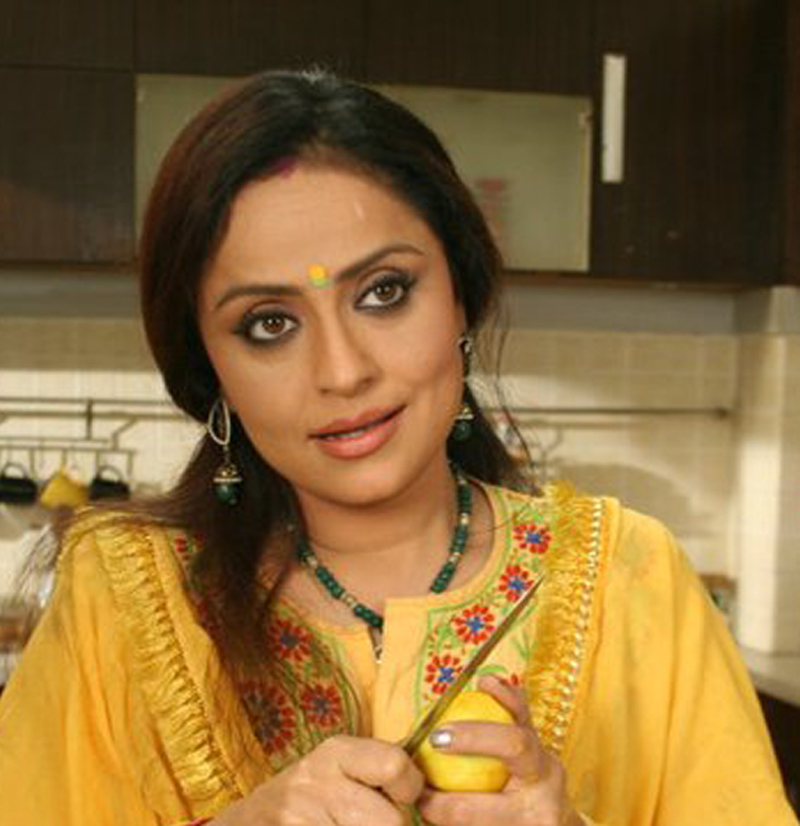
    Playing the lead in Choti Maa.. Ek Anokha Bandhan, Vaishnavi Mahant or Macdonald finds herself on totally new ground. The big budget and strong team aside, it is the challenging title role that is giving this young actress her much needed toehold in the fickle television industry.

    This Madhya Pradesh-born, Hyderabad-bred 25-year-old is deeply spiritual. The turning point in her life, she says, came ten years ago when she had a unique spiritual experience, which changed her from being a ritualistic Hindu to a devout Christian. This strong believer in God goes to church regularly, contributes half her successes and failures to destiny, although she is a disciplined worker herself.

    We meet her on the sets of Suraag-The Clue, the Adhikari Brothers’ hit thriller, being shot at Andheri, suburban Mumbai.

    It has been hectic for Vaishnavi the last few days. She has been shooting continuously and the previous day’s dubbing had stretched till two in the morning. Still, she was on the sets at eight in the morning. Excerpts from an interview held recently with indiantelevision.com’s Harish Patil:

    You look quite refreshed inspite of a hectic schedule ?
    My priorities are quite clear. I don’t mull over unnecessary things, and I don’t lose sleep over trivial matters. I also practise meditation, whenever I can. Of course, if such schedules continue for a while, it reflects on my face. Sleep is the only solution then.

    How did your acting career take off?
    I started my acting career at the age of eight, as a child artiste in Ramsay Brothers’ thriller Veerana and a couple of other films. Veerana was a medium success and my work was appreciated. It was like a picnic for me as everything was new and interesting, and there was hardly any pressure. Then I went back to Hyderabad to pursue my studies. I was set on studying to become a scientist. The desire to do films surfaced in my mind again when I visited Mumbai during a long vacation. With the support of near ones, I prepared a portfolio, which was shown to producers.
    Around that time, Bharat Kapoor was looking for fresh talent for a big budget film Barsaat Ki Raat. I was selected for the role. Inspite of having the best of talent availabale, like choreographer Chinni Prakash, Saroj Khan, cinematographer W B Rao, music composers Laxmikant Pyarelal, it did not work. For some reasons, the schedule stretched on for four years taking the film’s budget to nearly Rs 4 crore (Rs 40 million), and the film turned into a flop.Personally, it was like a school. I made mistakes but also learned a lot. This was the first time that I really looked and tried to understand the art of filmmaking. I started looking at it seriously and enjoyed every moment of it.
    During the same period, I received offers for a few other films. Bambaika Ka Babu, Ladlaa and Danvir … But nothing worked, except that they added to my confidence and maturity.

    My role in Chingari is that of a very strong woman who
    believes in herself. She knows she is right and so stands for what she does. I like to play such roles, which convey some
    message to viewers.
     

    What happened next? How did you turn to television? Was it with a kind of negative mindset?
    No, not at all. True, there was pressure from people around that I should continue only in films and that I would get the right role sometime. This was over four years ago, when moving from films to television was definitely taboo. But I am not the kind of person who will just wait and watch. More importantly, I could not adjust to the kind of atmosphere and “demands” of some of the players in the film industry.
    Luckily or otherwise, I was not branded in films, which would have otherwise been a problem for me while doing television. So I was as good as new for TV audiences. That was the time I got an offer to work in Shaktimaan (Vaishnavi replaced Kitu Gidwani in the fantasy serial).

    It must have been a novel experience to work in a tele-serial after doing four films. What difference do you observe in the two media ?
    The scale is totally different. The budget, time, resources don’t have any constraints in a film. There can be any number of retakes if the director feels that the shot is not ok. Television is very different in that sense.
    But as far as creativity or characterisation goes, I feel television is no lesser than films. It also gives you much needed space and time to settle in the character. On television, you have to be more like what you are unlike in films, where you are larger than life. Even the environment here is much better than in films.

    How was your experience working in Shaktimaan (on national broadcaster Doordarshan’s DD1 channel) as firebrand journalist Geeta Biswas? Does technology overshadow acting prowess in a fantasy serial?
    True, special effects do rule in a fantasy serial. But viewers’ attachment with Shaktimaan and Geeta is intense because the human angle has been developed well. The director keeps hammering into us the fact that we have to be careful with our portrayals since a majority of the audience is children.
    Even in the interior parts of the country, I am known as Geeta Biswas. A few months ago, when my character was put off air due to a change in the storyline, there were thousands of calls and letters to the producers demanding my return. After eight months, they had to call back my character. These are definite receipts of your efforts.
    Vaishnavi has appeared in a couple of episodes of Saturday Suspense on Zee TV, and has co-anchored the show Awaz Ki Duniya (DD1) with Rohan Kapoor, as well as acted in a couple of other serials like Chingari, Gharana and Dushman, which are now either off the air or no longer feature her. In Chingari, she etched a crucial role of a woman of substance.

    What about serials like Dinesh Bansal’s Chingari where you played a strong woman?

    My role in Chingari is that of a very strong woman who believes in herself. She knows she is right and so stands for what she does. I like to play such roles, which convey some message to viewers. The serial did well on Zee TV and my role was appreciated.

    But sometimes, it so happens that you just can’t understand the character. You don’t get the soul, in which case it is very difficult to do justice to that characte

    And how you did you get Choti Maa?
    There were nearly 100 aspirants trying for the role (well known actress Tabu too had been considered at one point). The director, Mohena Singh, had seen the pilot of Naqab made for Ashok Shekhar, in which I am playing a strong character.
    I think my Indian looks and eyes helped me getting the role. I was initially confident of clearing the audition, but got the jitters when I realised that even the channel and the producers would have to approve of me.
    Eventually, I got a call from Mohena asking me to find time for the serial’s shoot, which was already on in Pandharpur (where the early episodes are shot). At that time I was doing Gharana and Shaktimaan. I had a tough time convincing the producers of Gharana. Eventually the character in Gharana was replaced. And I landed in Pandharpur for the shoot ofChoti Maa.

    What was your initial reaction when you got the role?
    Frankly, I was not even aware of Chithi, the original Tamil mega hit serial on Sun TV. So it was like getting just any other role. But eventually when I read about Chithi and heard about it from people, I could understand the magnitude and importance of the project.

    Did you prepare specially for the role?
    I was like a clean slate. I had decided to be as spontaneous as possible. Sharda (i.e Choti Maa) is a unique character. She does not believe in God, but in human power. She believes in the strength and purity in human beings that makes it divine. She is against rituals.
    I had to take much care while portraying her character. My voice is very high and thin, which sounds like a young girl. Sharda is a mature woman with a lot of authority in her voice though she is young, so I have to deliberately keep my voice low, firm and with a strong base. At the same time, it has to be clear and should not sound fussy. For this, I literally take my pitch/voice to the ground, and physically take my hand towards the ground and take it up to the level I want from there. It was a bit difficult initially. I try to feel the character while dubbing too.I have no ego problems. I am always ready to change. My director and others give me a lot of tips, which help me understand the character better.

    There was a courtroom scene in Chingari that was 14 minutes long with three changeovers, totally focused on me. I had the dialogues by heart and I needed only one retake.

    Do you look to Radhika (who played the title role in Chithi) for inspiration or do you have other role models?
    I had not seen the original Chithi even once before I started shooting. The reason was we wanted to do it our way, taking our target audience into consideration. Radhika once came to the Choti Maa sets in Bangalore. She congratulated me on my performance, which I think was very valuable to me. She also gave me some crucial tips on posture and carriage. Such tips are very important for perfect characterisation.
    And I have kept Jesus Christ as my ideal person, because the way he carried himself is quite amazing. So I can identify Sharda’s character with him.

    Who are your favourite directors?
    I like Mani Rathnam and Sanjay Leela Bhansali for their sensitivity in handling the subject. On television, among my favourites is Ravi Rai for the way he handles emotional scenes. Anurag Bose is another of my favourites. I like the way he handles drama and perfect characterisation.

    Do you follow any particular acting pattern?
    I don’t follow any particular school of acting. I have not taken any formal lessons in acting. If the character is close to my nature, it is easy for me to play that. But sometimes, it so happens that you just can’t understand the character. You don’t get the soul, in which case it is very difficult to do justice to that character. And whenever it happens, it puts me off. I compare acting with singing. Each Avatar (character) is like a raga, there are different sur (tune) to play different characters. If you can’t find that sur, the singing is useless.

    Do you believe in living the role?
    Not to a great extent. Whenever I am on the set, I feel like I am playing that character. It is the case with strong characters like Sharda, especially when I shoot continuously. I feel that impact even when I leave the set. Normally I don’t read the script before going to the set. But in the case of Choti Maa, I read the whole story beforehand, which helped me understand the character.


    Shaktimaan Vaishnavi

    I have no ego problems. I am always ready to change. My director and others give me a lot of tips, which help me understand the character better.

    Do you take special efforts to remember dialogue?
    My memory is quite good. Most often, I easily remember dialogues. There was a courtroom scene in Chingari that was 14 minutes long with three changeovers, totally focused on me. I had the dialogues by heart and I needed only one retake. Everybody on the set applauded.

    Who are your favourite actors?
    Renuka Shahane, Sachin Khedekar and Pallavi Joshi are my favourites because of their natural and intense performances. I also liked Shefali Chhaya in Hasratein.

    Which channels do you usually watch?
    I watch Zee and Sony. I particularly watch Hum Pardesi Ho Gaye on Sony and Sarhadein on Zee.

    How do you spend your leisure time?
    Reading is my passion. I read anything that gives knowledge. There is no specific genre that I go for but I am interested in philosophy and spiritualism. I like religious books that deal with spiritual experiences

    Acting, I feel, is making me a self centred person. Everything is me, my, mine. I think we should also look at the people outside our periphery. There are so many people whom you can help to improve life.
     

    So what is Vaishnavi all about?
    I don’t know. I am very difficult to understand. At times, I behave like a kid. I like to laugh a lot. I don’t have ego problems. I am a down to earth person and vibe well with similar people. If I don’t like somebody, I just withdraw from the conversation.

    I am very close to my mother (who handles her career) and my younger sister is my greatest pal. And of course my fiancé (who is in the navy). Whenever I get time I like to spend time with my sister.I believe in God and destiny. I feel every success is 50 per cent hard work and 50 per cent destiny.

    What are your plans for the future?
    I will be pursuing acting as a full-time career for the next two years at least. I am simultaneously working on another project, which might make me give up acting after two years.
    I may take up some acting assignments in between. Acting, I feel, is making me a self centred person. Everything is me, my, mine. I think we should also look at the people outside our periphery. There are so many people whom you can help to improve life. If you can do it, I feel one can really live his life.

    So what is this plan of yours?
    All I will say is that it will not be related to media. (In an interview three years ago, she had spoken of her involvement in church activities, related to slum development and literacy).