
eNews
Yatra.com launches ‘light weight app’ Yatra Mini


MUMBAI: Yatra.com has launched a new mobile application, Yatra Mini, targetting value seeking travellers featuring bus, train and budget hotel bookings. The key feature of the app is that it is extremely lightweight at only approx. 4.5 MB and is fast loading even in poor network areas.
The app is built to cater even to lower end android phones and is supported by Android 4 & above. The other features include multi-lingual travel app in Hindi & English with more regional languages such as Tamil, Bangla, Gujarati, Punjabi, Urdu being added very soon to cater to the non-English audiences across the country.
As per a recent report by Internet and Mobile Association of India (IAMAI), India has 402 million Internet users as of December 2015, thereby overtaking the US in total Internet users. A lot of this growth has come from rural India which has witnessed a 99 percent surge in mobile internet users and now has over 80 million users. the most exciting news in this rural India growth story is the demography: 75 percent of Internet users from rural India are in the age group of 18-30 years and Yatra.com is looking to catch them early in their journey of online travel bookings with the Yatra Mini application.
Yatra.com president Sharat Dhall said, “Yatra is very focused on the needs of the Indian traveller and in this case, we have identified a clear gap in the market with no one catering to a very large and rapidly growing segment of mobile users, who access the internet using their entry level smartphones, and are seeking an app that enables them to make their bookings speedily and does not occupy much memory space. By offering this app in regional languages, we are also tapping into the non-English traveller who is looking to shift to the convenience of online booking. We also researched the needs of this traveller and based on the findings, limited the product offerings to bus, train and budget hotel bookings so that the app is sharply focused on the needs of this segment.”
While India is witnessing a massive rise in smartphone user base, connectivity continues to be a serious limitation for easy usage of internet services. Keeping that in mind Yatra.com claims to have designed the Yatra Mini to work well in poor network and use very little data. It comprises of easy to configure components and can be changed/modified without an app release thus further reducing the data usage.

To make the app user friendly, Yatra Mini offers help to travellers to view their upcoming, completed and cancelled trips .All details of trips will be available like journey date, passenger details, bus operator details, boarding point details, cancellation policy, fare & payment details etc. The app provides flexible cancellation options for bus and train tickets. There are ooptions to resend e-tickets on email and SMS and options to contact the Yatra Helpdesk as well.
Apart from all the above features, Yatra is launching the app with lucrative loyalty offers like option to use earned eCash on trains and bus bookings.
For Train Bookings eCash redemption is 10 percent of booking value
For Bus Bookings eCash redemption is 5 percent of booking value
Also to enable users to share the app with their friends and motivate them to use the app, Yatra is offering ‘refer and earn’ options wherein users can refer their friends and earn 1000 eCash. The friend being referred will also earn 1500 eCash to use on their bookings.





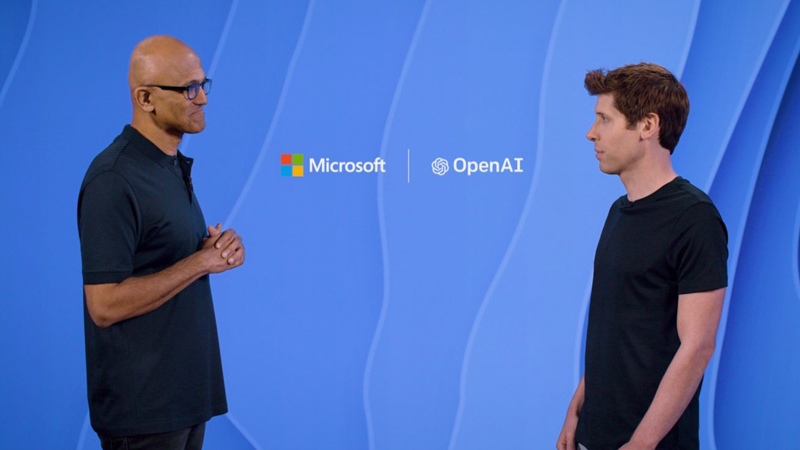
WASHINGTON: At OpenAI, the fight was not about artificial intelligence going rogue—it was about who got the GPUs.
An internal email from Microsoft chief technology officer Kevin Scott, sent on November 19, 2023, offers the clearest account yet of the events that culminated in the sudden firing of Sam Altman as OpenAI’s chief executive. Far from a single ideological rupture, Scott describes a combustible mix of resource wars, bruised egos and a board ill-equipped to manage the world’s hottest AI company.
According to the email, addressed to Microsoft chief executive Satya Nadella, president Brad Smith and other senior leaders, OpenAI co-founder Ilya Sutskever had been “increasingly at odds” with Altman on two fronts.
Read the full email below to find out:
[This document is from Musk v. Altman (2026).]
From: Kevin Scott
Sent: Sunday, November 19, 2023 7:31 AM
To: Frank X. Shaw, Satya Nadella, Brad Smith, Amy Hood, Caitlin McCabe
Frank,
I can help you with the timeline and with our best understanding of what was going on. I think the reality was that a member of the board, llya Sutskever, had been increasingly at odds with his boss, Sam, over a variety of issues.
One of those issues is that there is a perfectly natural tension inside of the company between Research and Applied over resource allocations. The success of Applied has meant that headcount and GPUs got allocated to things like the API and ChatGPT. Research, which is responsible for training new models, could always use more GPUs because what they’re doing is literally insatiable, and it’s easy for them to look at the success of Applied and believe that in a zero sum game they are responsible for them waiting for GPUs to become available to do their work. I could tell you stories like this from every place l’ve ever worked, and it boils down to, even if you have two important, super successful things you’re trying to work on simultaneously, folks rarely think about the global optima. They believe that their thing is more important, and that to the extent that things are zero sum, that the other thing is a cause of their woes. It’s why Sam has pushed us so hard on capacity: he’s the one thing about the global optima and trying to make things non-zero sum. The researchers at OAl do not appreciate that they would not have anywhere remotely as many GPUs as they do have if there were no Applied at all, and that Applied has a momentum all its own that must be fed. So the only reasonable thing to do is what Sam has been doing: figure out how to get more compute.
The second of the issues, and one that’s deeply personal to llya, is that Jakub moreso than Ilya has been making the research breakthroughs that are driving things forward, to the point that Sam promoted Jakub, and put him charge of the major model research directions. After he did that, Jakub’s work accelerated, and he’s made some truly stunning progress that has accelerated in the past few weeks. I think that Ilya has had a very, very hard time with this, with this person that used to work for him suddenly becoming the leader, and perhaps more importantly, for solving the problem that Ilya has been trying to solve the past few years with little or no progress. Sam made the right choice as CEO here by promoting Jakub.
Now, in a normal company, if you don’t like these two things, you’d appeal to your boss, and if he/she tells you that they’ve made their decision and that it’s final, your recourse is accept the decision or quit. Here, and this is the piece that everyone should have been thinking harder about, the employee was also a founder and board member, and the board constitution was such that they were highly susceptible to a pitch by Ilya that portrays the decisions that Sam was making as bad. I think the things that made them susceptible, is that two of the board members were effective altruism folks who all things equal would like to have an infinite bag of money to build AGI-like things, just to study and ponder, but not to do anything with. None of them were experienced enough with running things, or understood the dynamic at OAI well enough to understand that firing Sam not only would not solve any of the concerns they had, but would make them worse. And none of them had experience, and didn’t seek experience out, in how to handle something like a CEO transition, certainly not for the hottest company in the world.
The actual timeline of events through Friday afternoon as I understand them:
Thursday late night, the board let’s Mira know what they’re going to do. By board, it’s Ilya, Tash, Helen, and Adam.
Mira calls me and Satya about 10-15 minutes before the board talks to Sam. This is the first either of us had heard of any of this. Mira sounded like she had been run over by a truck as she tells me.
OAl Board notifies Sam at noon on Friday that he’s out, and that Greg is off the board, and immediately does a blog post.
OAl all hands at 2P to rattled staff.
Greg resigns. He was blindsided and hadn’t been in the board deliberations, and hadn’t agreed to stay.
Jakub and a whole horde of researchers reach out to Sam and Greg trying to understand what happened, expressing loyalty to them, and saying they will resign.
Friday night Jakub and a handful of others resign.
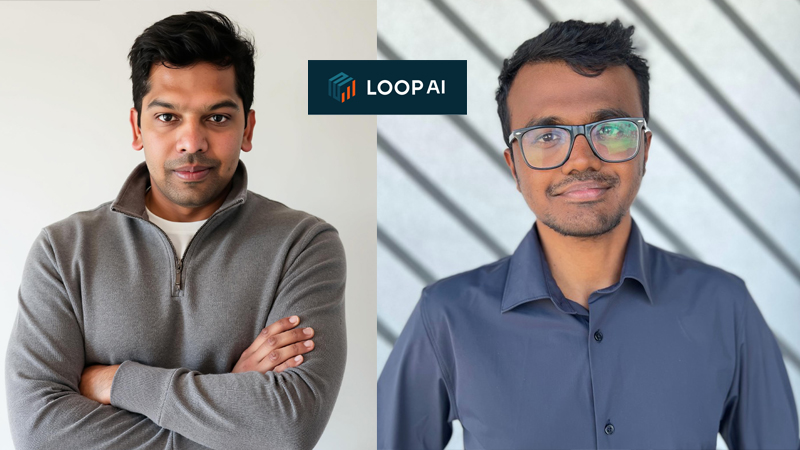
CALIFORNIA: Loop AI has just served itself a sizeable helping of fresh capital. The enterprise AI company focused on the restaurant and retail back office has raised $14 million in a Series A round, led by fintech investor Nyca Partners, signalling growing confidence in the future of food delivery as a profit engine rather than a margin killer.
Alongside the funding, Osama Bedier, former executive at Google and GoDaddy and now an investment partner at Nyca, will take a seat on Loop AI’s board. His arrival adds heavyweight experience as the company enters its next phase of growth.
Loop AI operates where artificial intelligence meets operational grit. Its platform helps restaurants manage the often messy realities of delivery, from margins and workflows to customer behaviour, using what it calls agentic workflows to automate and optimise back-of-house decisions.
Bedier believes the timing could not be better. With restaurants under pressure to deliver better customer experiences while running leaner operations, AI is fast becoming a necessity rather than a nice-to-have. He praised founders Anand Tumuluru and Sundar for building technology he sees as essential to the future of dining.
The backdrop is a delivery market that is ballooning fast. In 2025, the US delivery sector is estimated at $140 billion, accounting for about 10 per cent of the market. By 2035, that figure is expected to swell to $1 trillion, with delivery claiming nearly a third of all restaurant sales. What was once an add-on is quickly becoming the main course.
For Loop AI, delivery is not just another channel, it is the new drive-through. As eating habits tilt ever further towards takeout and doorstep dining, the company’s mission is to help restaurants grow without watching profits evaporate along the way.
Customers appear to be buying into the pitch. California-based casual dining brand Lazy Dog credits Loop AI with helping power rapid growth in its delivery business, while fast-casual chain Starbird says the platform has turned third-party delivery from a necessary evil into a viable growth lever.
Since 2024, Loop AI has grown sixfold and now supports thousands of restaurants. The new funding will be used to expand its product offering and hire across its offices in New York, San Francisco, Tampa and Bangalore.
In an industry where delivery has long been blamed for thin margins and operational headaches, Loop AI is betting that smarter systems can finally make the maths work. For restaurant operators juggling kitchens, couriers and customers, that could be a recipe worth following.
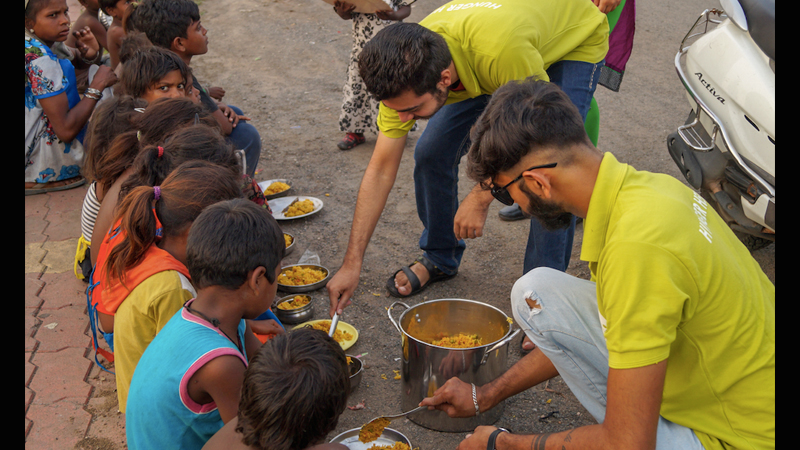
MUMBAI: Hunger may be stubborn, but Feeding India is proving it is not unbeatable. The not-for-profit has served more than 23 crore meals over the past seven years, turning nourishment into a nationwide movement that now spans over 150 cities, according to its Annual Report for FY 2024–25.
Titled A Year of Nourishing Dreams, the report captures a year in which the organisation sharpened its focus from simply filling plates to shaping futures. At the heart of its work is the fight against child malnutrition, with Feeding India now supporting over 1.4 lakh children every day through its partner network.
Its daily feeding programme has grown into a vast ecosystem, covering 1,097 partner schools and 726 Anganwadi centres. These include 275 formal schools, 720 informal learning centres, 58 schools for children with disabilities, and 32 orphan homes. Menus are tailored to local tastes, from rajma chawal in the North to idli sambhar in the South, ensuring meals are nutritious, culturally familiar and widely accepted. Food is provided through a mix of on-site kitchens and centralised cooking facilities.
Recognising that malnutrition often begins long before children enter classrooms, Feeding India has stepped deeper into early childhood care. Across districts such as Gurugram, Kushinagar and Varanasi, the organisation has worked with 726 Anganwadi centres, impacting around 27,000 children aged 0–6 years. More than 30 Anganwadis have been upgraded using Building as Learning Aid concepts, creating brighter, safer and more child-friendly spaces. In Varanasi, a pilot programme now provides full breakfast and lunch meals, a significant shift from the usual supplementary snacks.
The year also tested the organisation’s ability to respond in crisis. During 2024–25, Feeding India distributed nearly 2,000 ration kits following floods in Assam and landslides in Kerala, and served over 1.9 lakh hot meals after the Uttarakhand cloudburst. Relief operations extended to Bihar, Andhra Pradesh and Tamil Nadu in the wake of Cyclone Fengal.
Community participation remains central to the model. Events such as the Zomato Feeding India Concert, featuring Dua Lipa, brought together 28,000 people in 2024, while initiatives like Poshan Potli nutrition kits supported tuberculosis patients during recovery in Varanasi.
Funding patterns underline the power of platforms. Zomato users contributed nearly 80 per cent of total funds, amounting to Rs 74 crore, while Blinkit customers added 15 per cent, or Rs 14 crore. The remaining around 5 per cent came from institutional donors, employees and direct website contributions. Donors can track their impact directly via the Zomato or Blinkit apps, seeing how many meals they have funded and where those meals were served.
The report also highlights tangible outcomes. At the Malvi Educational and Charitable Trust in Gujarat, students recorded an average BMI improvement of 9.50 per cent after daily nutritious meals were introduced.
“Every meal represents hope, dignity and opportunity for a child who might otherwise go hungry,” a Feeding India spokesperson said, adding that the focus remains on nourishing potential through nutrition, infrastructure and care.
As the numbers grow, the message is simple but powerful, feeding a child today is an investment in tomorrow, and Feeding India is determined to keep that promise alive, one meal at a time.


MIB sets OTT accessibility rules, mandates captions and audio description

Boney Kapoor acquires remake rights of Tamil political satire Thalaivar Thambi Thalaimaiyil

Netflix India names Rekha Rane director of films and series marketing

Zabeen signs off from TV9 after shaping the network’s public voice

Dhawan steps up to bat for Delhi’s grassroots sports push

Orient Beverages pops the fizz with steady Q3 gains and rising profits

Cheekatilo shines in the dark with record debut on Prime Video

These ’90s fashion trends are making a comeback in 2017
The final 6 ‘Game of Thrones’ episodes might feel like a full season
According to Dior Couture, this taboo fashion accessory is back
The old and New Edition cast comes together to perform
Phillies’ Aaron Altherr makes mind-boggling barehanded play
Uber and Lyft are finally available in all of New York State
Disney’s live-action Aladdin finally finds its stars
MIB sets OTT accessibility rules, mandates captions and audio description
Boney Kapoor acquires remake rights of Tamil political satire Thalaivar Thambi Thalaimaiyil
Netflix India names Rekha Rane director of films and series marketing
Zabeen signs off from TV9 after shaping the network’s public voice
Dhawan steps up to bat for Delhi’s grassroots sports push
Orient Beverages pops the fizz with steady Q3 gains and rising profits
Cheekatilo shines in the dark with record debut on Prime Video
-

 News Broadcasting1 week ago
Mukesh Ambani, Larry Fink come together for CNBC-TV18 exclusive
-

 News Headline1 month ago
From selfies to big bucks, India’s influencer economy explodes in 2025
-
 iWorld5 months ago
Billions still offline despite mobile internet surge: GSMA
-

 Applications2 months ago
28 per cent of divorced daters in India are open to remarriage: Rebounce
-

 iWorld2 weeks ago
Netflix celebrates a decade in India with Shah Rukh Khan-narrated tribute film
-

 Hollywood6 days ago
The man who dubbed Harry Potter for the world is stunned by Mumbai traffic
-
 I&B Ministry3 months ago
India steps up fight against digital piracy
-
 MAM3 months ago
HoABL soars high with dazzling Nagpur sebut
