
Film Production
Why 2000 episodes later Indian television still has families hooked

MUMBAI: At a time when attention spans are shrinking and screens are multiplying, Indian television continues to defy predictions of its decline. Long-form storytelling, once written off as a relic of appointment viewing, is still drawing families together night after night and nowhere is this more evident than in the rare milestone achieved by Kyunki Saas Bhi Kabhi Bahu Thi, which has completed 2,000 episodes over a remarkable 25-year run. The achievement is more than a number; it is a reminder of television’s enduring ability to mirror lives, anchor routines and create emotional continuity across generations.
Few executives have witnessed and shaped this evolution as closely as Balaji Telefilms EVP for digital and TV Tanusri Dasgupta. With over two decades at the studio, she has navigated shifting audience habits, platform fragmentation and the rise of digital viewing, while remaining rooted in the belief that strong storytelling remains television’s greatest currency. In this conversation, Dasgupta reflects on the legacy of long-running franchises, the changing economics of television, the role of marketing and digital distribution, and why, even in an OTT-first world, daily soaps continue to hold a uniquely powerful place in India’s entertainment ecosystem. More on this in this exclusive interview by Indian Television Dot Com.
On what 2,000 episodes of Kyunki Saas Bhi Kabhi Bahu Thi reveal about India’s love for long-form storytelling.
Television has been an integral part of the household for generations of families across India. Many viewers are emotionally bonded to the characters from long-running dramas or series than to characters from shorter-lived formats. As such, viewers have been following the journey of their favorite characters over a span of two decades, which is a testament to how a viewer’s life parallels a character’s existence. Not only does the country of India continue to support and value these storylines, but they also grow as society continues to change as the years pass. The ability for a viewer to have an emotional attachment to a television show and continue to support that show for so many years indicates how powerful emotionally based television is for audiences, particularly in India.
On how two decades at Balaji Telefilms reshaped your approach to building enduring TV IPs.
Balaji evolve and adapt with the ever-changing market. Television has changed time and again, riding the roller coaster of shifting trends, but what has never changed is the power of a good story. Audiences always find a connection with stories, something that resonates with them consistently works. We have tried to follow that pulse for the past two decades. In today’s time, audiences are far more involved through social media and other platforms, which gives us valuable insights. But eventually, it all comes down to the power of the story and the conviction of the creator.
On the creative and operational discipline needed to keep daily soaps relevant over hundreds of episodes.
The balance between nostalgic viewing compared to current viewing is also part of creating an environment for companies to operate within the guidelines of industry discipline; the need for continual creativity with each episode produced, while also incorporating the hook method in every episode and ensuring that each episode stays true to the characters. More importantly for creators, they must be agile in listening to their viewers’ real-time feedback on what is working and not in terms of plot points. The creative teams want to make their storylines simpler so the Gen Z audience will relate to them as real, so they are looking for more real and authentic content as well. At the same time, the creative teams have found a way to maintain the larger-than-life goals that are still the hallmark of the Balaji brand.
About how marketing legacy television shows has evolved in the age of social media and OTT.
The marketing timeline for television programming was previously based around a 9 p.m. time slot, but now focuses on creating trending topics on social media platforms like X and Instagram. Today, legacy television shows are treated as inter-generational brands, while OTT is viewed as the catch-up medium for busy urban consumers, and social media is the digital town square for dialogue on plot developments. The program is considered the star, while these digital channels are like planets orbiting around it.
On how broadcasters and advertisers now measure success for long-running television shows.
Television ratings continue to be the benchmark for linear broadcast television, but there has been a shift in how advertisers examine the episodic nature of television programming and monitor the consumer’s loyalty. In addition to the ratings, advertisers also view the stickiness of a program as a factor when deciding whether to invest in a new television program. Longstanding franchises have developed a level of trust that new programs do not necessarily experience at their inception. Advertisers gauge success through linear reach as well as digital impressions. When a brand integrates itself into a television program such as Kyunki Saas Bhi Kabhi Bahu Thi, it is not purchasing just an advertising space; it is purchasing the loyalty of the show, and by extension, it is gaining 25 years’ worth of audience loyalty and brand recall across three generations.
About whether established TV franchises are more attractive to marketers than new launches today.
Absolutely. In an era of content clutter, a franchise is a safe harbor. A new launch is a gamble; an established show is a habit. Marketers love predictability because it guarantees a baseline of eyeballs. However, the challenge for us is to keep that predictability from becoming predictable. As a brand, Balaji treats every new season or major leap in a franchise as a re-launch to ensure the brand remains fresh and the marketer’s ROI stays high.
On how digital distribution has extended the life cycle and monetisation of television content.
Television content is immortal because of technology. Previously, television episodes would only air once and then only be remembered; but now, television content has become part of the digital libraries, allowing consumers to binge-watch over 2000 episodes at their convenience. With the advent of this type of monetisation, content produced years ago continues to generate revenue through video-on-demand and subscription video-on-demand after being first aired. This shift has changed the way Balaji thinks about television shows, transforming them from perishable items into long-term assets.
About what television continues to offer that OTT platforms cannot fully replace.
OTT is about instant gratification and solitary bingeing, but television is about communal anticipation. TV builds a slow-burn connection. There is a unique magic in an entire country waiting for a specific wedding or a revelation at a specific hour. TV provides a sense of routine and a shared cultural experience that the watch-anywhere, anytime nature of digital-first formats sometimes dilutes. TV is the comfort food of entertainment.
On how platform strategy influences content creation and marketing across networks today.
At Balaji, we work with multiple networks on content strategy, with Ekta Kapoor continuing to lead the creative vision. While the creator’s conviction always comes first, the research and data shared by networks play an important role in shaping some of our decisions. Insights gathered through audience interactions, market visits, and performance data help us understand what is connecting with viewers and what may need fine-tuning.
Most networks follow a similar approach when it comes to research and data. This gives us a clearer sense of audience preferences and helps us judge which aspects of the story are working. Each network also brings its own perspective and strategy, which supports our overall content direction, along with feedback from ratings and performance.
On whether long-form television can still thrive, or if milestones like 2,000 episodes will become rare.
Although there may be fewer traditional forms of linear long-form storytelling, the craving for long-form storytelling is not going away. As long as families come together and humans look for emotional stories in their daily lives, long-form content will continue to be successful.


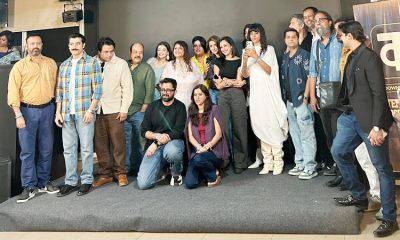










MUMBAI: Warner Bros Discovery has elevated Agnieszka Veriga, widely known as Aga, to vice president, program management for Apac global experiences, placing her at the helm of the company’s fast-expanding experiences business across the region.
Based in Dubai and working closely with teams across Asia Pacific, Veriga will lead Warner Bros Discovery’s portfolio of owned and licensed experiences. Her remit includes the Warner Bros Studio Tours in Tokyo and Shanghai, alongside shaping the company’s long-term growth strategy for experiences in Asia.
The appointment follows a landmark year in which Veriga worked closely with Sarah Roots to deliver the Harry Potter Studio Tour Shanghai project. Developed in partnership with Chinese hospitality major JingJiang, the project marked a major step in Warner Bros Discovery’s global experiences ambitions and stood out for its scale and complexity.
In her new role, Veriga will partner with Tony Qiu and the regional leadership team, focusing on strong programme delivery, clear governance and close collaboration across markets as the experiences portfolio continues to grow.
Veriga brings deep international experience to the position. Prior to joining Warner Bros Discovery, she served as director, strategic project management and business operations for Asia at Paramount, where she led major transformation initiatives and played a key role in launching Paramount Plus in South Korea and Japan. Her earlier career spans senior strategy and operations roles across Asia, Europe and the Middle East within the Discovery ecosystem and beyond.
Sharing the news, Veriga said she was grateful for the trust and support she has received and excited about what lies ahead. With studio tours and immersive entertainment gaining traction across Asia, her expanded mandate signals Warner Bros Discovery’s intent to scale experiences with precision and pace.

MUMBAI: It is safe to say that UFO Moviez is currently identified as a high-flying object in the financial skies, proving that when it comes to the silver screen, they are far from being “eclipsed” by the competition. The digital cinema distribution powerhouse has beamed up a formidable set of financial results for the quarter and nine months ended 31 December 2025, leaving investors feeling like they’ve found the golden ticket in their popcorn tub.
The company’s consolidated net profit for the nine months ended December 2025 reached Rs 20.43 crore, up from Rs 10.27 crore during the same period the previous year, marking a 99 per cent increase. This growth was reflected in the quarterly performance, with the three months ending December 2025 delivering a net profit of Rs 7.52 crore, compared to Rs 15.29 crore in the prior year’s corresponding quarter.
Revenue from operations remained steady, with the consolidated nine-month figure at Rs 343.78 crore, up from Rs 329.37 crore in the previous year. For the quarter, total income from operations stood at Rs 131.88 crore, showing consistent performance in a competitive market.
The company’s growth is supported by strategic restructuring.
The big merger: UFO successfully completed the amalgamation of its wholly-owned subsidiaries, Scrabble Digital Limited (SDL) and UFO Software Technologies Private Limited (USTPL), effective from 1 April 2024. This “pooling of interests” has streamlined operations and strengthened the standalone bottom line, with restated nine-month standalone profits rising to Rs 14.09 crore from Rs 10.76 crore.
Asset liquidation: The company also exited its 48.12 per cent stake in Mukta V N Films Limited, earning a gain of Rs 0.40 crore.
Operational efficiency: Earnings before interest, tax, depreciation, and amortisation (EBITDA) for the nine months stood at Rs 62.04 crore, compared to Rs 47.28 crore in the previous period, reflecting effective cost management.
The auditors at BSR & Co. LLP have given the results an “unmodified” opinion, confirming the accounts are accurate. Meanwhile, the company’s Employee Stock Option Scheme (ESOP 2014) remains active, with 12,225 options available for eligible staff.
As the credits roll on the 2025 calendar year, UFO Moviez India Limited remains a dominant force in the “Cine Media Network,” proving that even in the age of streaming, the big screen, and the big numbers, still hold plenty of magic.
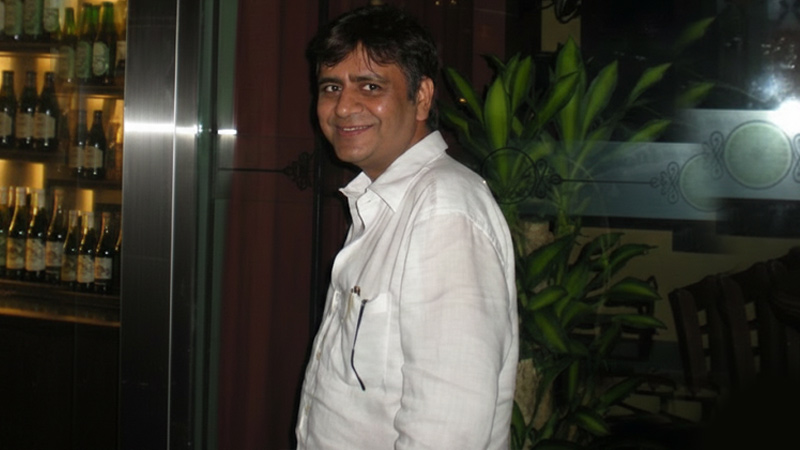
MUMBAI: Deepak Sharma has moved into the corner office at Jio Studios, taking over as ceo production and distribution in a senior appointment that underlines the studio’s ambitions across theatrical and filmed entertainment.
Sharma, an entertainment and media professional with more than 18 years across every major vertical of the film business, began the role in October 2025. He had shared the career update on LinkedIn about a month ago, signalling a transition that has now firmly placed him at the centre of one of India’s most influential studio set-ups.
The appointment caps a long run at PVR Pictures, where Sharma spent over 16 years, most recently as coo, steering operations across film acquisition, distribution and market strategy during a period of rapid change for theatrical cinema. Before that, he held senior leadership roles at Zee Entertainment, overseeing film production, distribution, acquisition and syndication.
Sharma’s career spans the full life cycle of filmmaking. At Sony Pictures Entertainment Films of India, he served as executive producer on Saawariya, handling project planning, budgeting, international coordination and studio reporting. Earlier stints saw him build revenue engines as a distributor for Sony Pictures and other Hollywood majors, experimenting with aggressive marketing, unconventional show timings and sharper negotiation to expand market share.
As a producer, his slate includes titles such as Socha Na Tha, Gulaal, Oh My God, Fox and Shaheed, combining commercial instincts with creative risk. He has also managed film budgeting, talent negotiation, scheduling, financial planning and fund-flow management, including commercial inputs for overseas fund-raising.
At Jio Studios, Sharma is expected to knit production and distribution into a single, tightly run engine, aligning creative ambition with scale, capital and reach. The brief is clear: build films that travel, manage costs with discipline and push harder in a crowded, fast-shifting market.
From the accounting desks of the Gulf to the boardrooms of India’s biggest studios, Sharma’s arc has been long and methodical. At Jio Studios, the pace is about to get faster.

Netflix celebrates a decade in India with Shah Rukh Khan-narrated tribute film

Delhivery chairman Deepak Kapoor, independent director Saugata Gupta quit board

Meta appoints Anuvrat Rao as APAC head of commerce partnerships

Brnd.me enters Europe as haircare brands power global expansion

TechnoSport taps quick commerce with launch on Slikk’s 60-minute platform

Jitendra Singh joins Reliance Industries as senior vice president, special projects

Tinder brings real-world dating experiences to North East India

These ’90s fashion trends are making a comeback in 2017
The final 6 ‘Game of Thrones’ episodes might feel like a full season
According to Dior Couture, this taboo fashion accessory is back
The old and New Edition cast comes together to perform
Phillies’ Aaron Altherr makes mind-boggling barehanded play
Uber and Lyft are finally available in all of New York State
Disney’s live-action Aladdin finally finds its stars
Netflix celebrates a decade in India with Shah Rukh Khan-narrated tribute film
Delhivery chairman Deepak Kapoor, independent director Saugata Gupta quit board
Meta appoints Anuvrat Rao as APAC head of commerce partnerships
Brnd.me enters Europe as haircare brands power global expansion
TechnoSport taps quick commerce with launch on Slikk’s 60-minute platform
Jitendra Singh joins Reliance Industries as senior vice president, special projects
Tinder brings real-world dating experiences to North East India
-
 iWorld3 months ago
Tips Music turns up the heat with Tamil party anthem Mayangiren
-
 iWorld12 months ago
BSNL rings in a revival with Rs 4,969 crore revenue
-
 I&B Ministry3 months ago
India steps up fight against digital piracy
-
 MAM3 months ago
HoABL soars high with dazzling Nagpur sebut
-

 News Headline4 weeks ago
Preeti Sahni set to join TV9 Network in senior leadership role
-

 News Broadcasting5 days ago
Palki Sharma leaves Firstpost: Reports
-
 iWorld3 days ago
Netflix celebrates a decade in India with Shah Rukh Khan-narrated tribute film
-
 News Broadcasting6 months ago
Wion marks Independence Day with global showcase of India’s spirit