
GECs
Video consumption by premium audience on digital exploding: Karan Bajaj

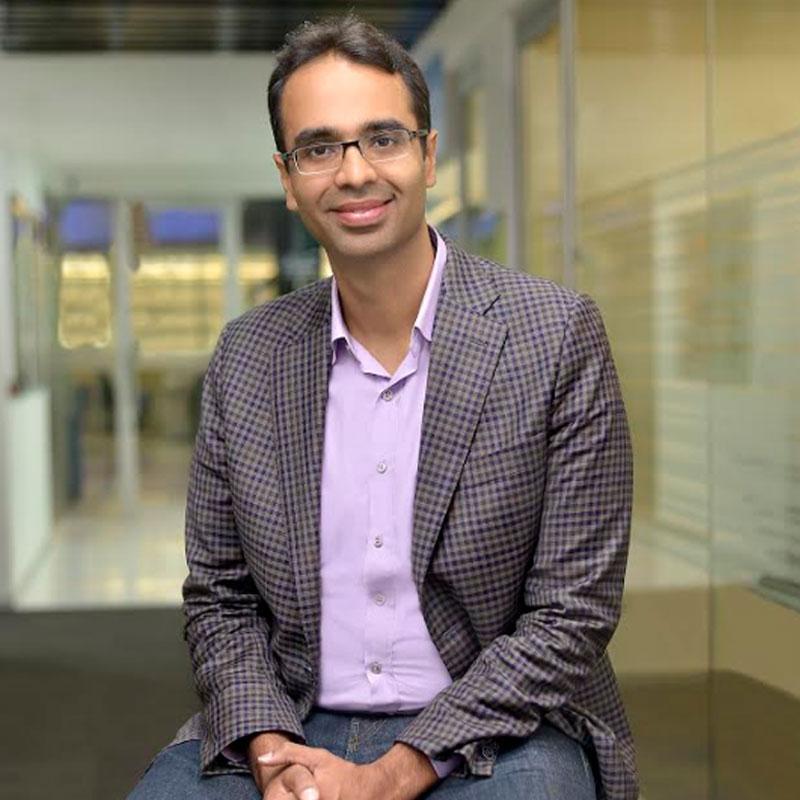
Mumbai: Karan Bajaj, head of India/South Asia at Discovery Communications India, comes across as a curious mind. In an exclusive conversation with Indiantelevision.com, he spoke on a range of topics-from Discovery’s latest digital ventures to the network’s foray into the general entertainment space with the much-awaited Jeet.
In the course of our conversation, Bajaj revealed that TV viewership would grow at a 10 per cent rate in the coming five years. Despite a difficult year for television, he believes that the launch of a GEC like Jeet, which has a differentiated proposition, will give Discovery the benefits of growth.
Here are the excerpts:
How do you see the TV market in India shaping up?
I follow my own thesis and don’t just imitate the market. There are about 250 million households, which can be ranked in a pyramid. The top 15 million households have fixed broadband at home and premium DTH connection, the next 120 million predominantly have cable television connection and mobile phones for their individual snacking consumption. Out of the last 120 million households, 20 million have Free Dish and the remaining 100 million do not have access to television.

While projecting for the next five years, the top layer will grow aggressively from 15 million to 30 million and will move towards the digital space. So, here, television viewership will decline and digital viewership will grow exponentially. In the next 100 million households, television viewership will continue to grow at about 10 per cent rate because the bottom 120 million will enter the space and will aspire to get a cable connection. So, a big chunk at the bottom will be rising to the middle of the pyramid as the middle starts to migrate to the top. My thesis says that in the coming five years, television viewership will grow 10 per cent because of those 120 million households, bottom line people will get TVs at home and Free Dish will grow exponentially. And, this made us launch Jeet, a mass entertainment channel, specifically targetted at the tier 2 and tier 3 audience.
What is your thesis to move to digital space?
My current business is queued towards the top 30 million households, which is migrating to digital. This is the premium category where TV viewership might be going down by 15-20 per cent but their video viewership on digital might be exploding. Again, when we look at TV viewership pie in India, the current arc of English factual and lifestyle content is about 1 per cent of TV viewership in India but on digital, it is about 15 per cent. Things like auto, food, tech, lifestyle, outdoor, military, female comedians or activist comedy are consumed 10 times more significantly on digital.
Now, if I project out for the next five years, I see two successful models that are emerging in digital. One is the aggregator whose role is that it becomes the single point of contact for a wide variety of content, from movies to entertainment to sports etc. There can be maximum three or four aggregators who can make money in the coming ten years but not all the 20-25 aggregators available for consumers. So I decided not to compete in that space. The other space that I find interesting and exciting is the passionate community space. For instance, on YouTube, a Gujarati comedy show emerges as a fast-growing channel in the last six months.
We are starting our own food vertical with Scripps Network Interactive. I get very excited on seeing the niche digital and the passionate community in India for food is a $120 million market with no market leader. We are not launching an OTT channel, but a brand.
What makes a digital community strong?
A digital community is made passionate and strong when there is extremely frequent engagement such as by uploading one video per day because that builds loyalty. Refresh rate has to be high on digital and the quality of content should be delightful content. But if the creator is investing in creating high quality content every day, how he will make money? Brand integration is the way to look forward but it’s tedious. So, here Discovery comes with an advantage. Discovery has 6000 hours of original high quality global content library to edit, curate and create. So, my cost of production is nothing, all I need to put is the cost in editing. Here, I am able to create a very passionate community with my global library.
On top of that, we are producing tent pole content which is amortised across both digital and linear in different formats. For smartphones, the format will be of 7-10 minutes. On Discovery channel, it would be between 30 to 60 minutes. Though we aren’t paying much for 80 per cent of the content volume, we are paying highly for the remaining 20 per cent. It is an attractive financial model and dramatically expands the reach of Discovery Network.
What are the passionate communities you are planning to build on digital?
I am looking to create rabid passionate community on digital including YouTube, Facebook, Jio TV, Airtel and Vodafone. First, we are launching Veer, which is a military passionate brand and Rise an activist female comedy show, both launching on 26 January 2018. Then we are coming up with auto and food with Scripps in March. These are massive scale shows with Veer having 1000 videos a year (average 3 per day) – one from our library and remaining from our tent-pole content. In three to five years, when we will have six to eight such verticals, four of them will become significant like the top military community, auto community, food community, activist comedy community. We are entering in a space where nobody has entered yet. We enjoy the advantage of having fresh global content library while other creators have to get into production first and then distribution later.
What is Veer all about? How does the content for Veer deal digitally?
Veer is a military passionate online brand by Discovery. In our global library, there are 1000 hours of global content in Hindi language dubbed, which we will be putting out as two-three videos a day. We have best hero content while shooting in top commando schools in India. We have top quality Breaking Point that went crazy on digital. Now, we are planning Breaking Point next year in land and under water (part 2) of 45 hours of content. Military content has a passionate community with 12-18 million unduplicated people in India who watched it on digital.
Did demonetisation affect the business of Discovery Networks? What were the after-effects?
The initial six months of demonetisation and GST we were prepping. We did not launch any show between January and June, but after July, we launched Queens of Comedy on TLC and Breaking Point on Discovery and we were not left with space for sponsors to come in. Breaking Point was a six-hour show and Queens of Comedy was four hours. In 2018, we are creating 45 hours of content for both the shows.
How much scale and reach did you get from military content?
We have military at scale. Every month we will be having new military series coming and multiple platforms to launch. Digital has tripled our reach. Historically, the reach of Discovery is 60 million (unduplicated) per week but now it has set a benchmark of 145 million based on our projections. TLC has an unduplicated reach of 35 million but now we are projecting that the channels we are launching across platforms will expand our reach to 105 million.
Do you have an in-house studio to churn out the content or you will outsource it?
Veer and Rise, are structured differently. For Veer, we have our in-house team for editing, cutting and clipping the global content for all the videos at scale. The hero content we are outsourcing from different production houses who are specialists in making military content. We have low to medium cost weekly formats, one is Military Lessons in Life done by a General father and son, and other is Military News.
For Rise, we will outsource the high quality content like Queens of Comedy, Kings vs. Queens and for hygiene content, we have tied up with a bunch of local creators for exclusivity and we will own the IP rights of all.
Tell us about your revenue model for digital ventures?
The military content attracts a powerful set of male advertisers. Our revenue model is built on linear commercial time, TV and digital brand integration, YouTube digital revenue which is the icing on the cake, international syndication revenue and licensing of the content on other digital platforms. The content will appear differently on YouTube and other digital platforms. The arc of the whole story will be portrayed in five to nine minutes packs for various digital formats. We are doing offline and online marketing campaign for Veer and Rise.
What is your thesis for constructing Jeet?
We have learnt from our past attempts that the only way to scale in GEC is through daily viewership. Everything on Jeet is being mounted as a soap opera. We are constructing three to four hours of daily content and two hours of weekend content for the tier-2 and tier 3-town family audience. Overall, in the first year, we are coming up with 1000 hours of original content for a year. We have constructed it as four hours of weekdays content and two hours of weekend content. The core prime time bands will have Swami Ramdev: The Untold Story and Saragarhi. Then, we have shows like Anjaan and Hero Hiralal that are constructed like GECs but their quality is premium as compared to other GECs.
I have realised that in this genre, you need to have IPs, which people refuse. In 120 million households where Jeet will be visible we need ratings or else we won’t have a compelling proposition. The idea is that we are reaching a sophisticated consumer with affinity content not measurable by ratings. When you have that kind of content, ratings sky rocket.
What is so unique about your 1000 hours content?
It is premium. Swami Ramdev: The Untold Story is a dramatised version of real events and is a finite series of 23 minutes every day. Saragarhi is a story of 21 Sikh soldiers, a finite series produced by Contiloe production house. These both series will restrict to 85 episodes. Anjaan and Hero Hiralal are infinite series. The former is a supernatural TV series produced by Lotus Talkies Productions, the production company of Sony TV’s Crime Patrol. It’s a 45 minutes weekday show. Whereas, Hero Hiralal is a conceptual series that revolves around an auto-rickshaw driver and his seven-year-old daughter who needs a heart transplant. The show is been edited by the in-house team of Discovery Communications. For weekends, we have non-fiction comedy shows.
Will Jeet attract advertisers?
Jeet will scrape a good chunk of the premium layer. I don’t want to replicate the competition’s model, rather I wanted to focus on perception selling. I am confident about the scalability of brands and advertisers. The context of the show where you advertise is at times strikingly in contrast to what the brand stands for. So to get scale advertisers have no other option. Typically, if you are a progressive brand, like Ariel that I handled, you end up advertising in a very regressive soap opera as that’s the only way to get scale. Jeet will allow brands to flourish by not only providing them with scale but also premium content that matches the brand philosophy and enough to attract a premium audience.
How will Jeet be packaged to consumers? Will it be an FTA?
Discovery Communication currently has 12 channels and Discovery Jeet is replacing Investigation Discovery channel. Jeet will be available on subscription-based pay TV. We have a very robust affiliate business. For syndicating, we are very singular in our offerings. Jeet is a singular proposition and not like any other GEC, which is replaceable. We have a strong launch plan in which distribution is very important for us. Vijay Rajput is the distribution head of all channels of Discovery Communications India.
The interest in this sort of content is super high and soon we will be announcing our digital partnership. I am swamped by the international syndication request before launch. They are independent affiliate networks who have sampled the content through some other form.
Who is supervising the functions of Jeet?
Discovery Communications vice-president real world products south Asia Sameer Rao is leading Jeet. The middle-east team of Discovery has made a significant offer of syndicating the content globally. Christopher McGrath will be taking care of content syndication globally in Discovery Communication. We have a strong management and sales team in the leadership of Vikram Tanna and Rajput.
Also Read:
Discovery to launch digital channels, ties up with telcos
Discovery launching Hindi GEC in Q4, re-brands ID as Discovery Jeet




CHENNAI: It appears there is still plenty of Sun to go around in the Indian broadcasting landscape, even if a few clouds have drifted across the financial horizon. Sun TV Network Limited, the Chennai-based behemoth that dominates airwaves across seven languages, has tuned into a steady frequency for the quarter ending 31 December 2025. While the numbers show a resilient revenue stream, the company’s latest broadcast reveals a few static-filled spots in its profit margins.
For the quarter in question, Sun TV’s total income climbed by approximately 3.31 per cent, reaching Rs 958.39 crores compared to Rs 927.66 crores in the same period last year. Revenue from operations also saw a healthy bump, rising 4.32 per cent to Rs 827.87 crores.
The real star of the show, however, was domestic subscription revenue, which surged by 8.86 per cent to Rs 472.99 crores. This growth highlights the enduring appetite for Sun’s diverse content, which spans everything from daily soaps in Tamil and Telugu to its burgeoning OTT platform, Sun NXT.
Despite the revenue growth, the picture quality of the profits was slightly blurred by rising costs. Eitda for the quarter stood at Rs 409.79 crores, a dip from the Rs 432.14 crores recorded in the corresponding 2024 quarter.
The profit after tax followed a similar downward trend, settling at Rs 316.44 crores against the previous year’s Rs 347.17 crores. Advertisers also seemed to have switched channels slightly, with advertisement revenues sliding to Rs 291.94 crores from Rs 332.17 crores.
Sun TV isn’t just playing on home turf; its sporting ambitions are becoming increasingly global. The network now owns three major cricket franchises: SunRisers Hyderabad in the IPL, SunRisers Eastern Cape in SA20, and SunRisers Leeds Limited in The Hundred (UK).
The foray into British cricket saw the company acquire a 100 per cent stake in Northern Superchargers Limited (now SunRisers Leeds) for approximately £100 million. While these franchises brought in Rs 14.61 crores this quarter, they also incurred corresponding costs of Rs 19.89 crores. Over the nine-month period, however, the cricket business is a major player, contributing Rs 487.64 crores in income.
The company’s bottom line took a minor hit from exceptional items, including a Rs 4.23 crore charge related to India’s new Labour Codes, which consolidated 29 existing labour laws. Additionally, the consolidated results reflect the amalgamation of Kal Radio Limited with Udaya FM, a move that became effective in May 2025 and required a restatement of previous figures.
To keep investors from reaching for the remote, the Board has declared an interim dividend of 50 per cent, that’s Rs 2.50 per equity share. This comes on top of earlier dividends of 100 per cent (Rs 5.00) and 75 per cent (Rs 3.75) declared in August and November 2025, respectively.
With a massive cash reserve and a dominant position in the South Indian market, Sun TV continues to shine, even if the current quarter required a bit of fine-tuning. For now, shareholders can sit back, relax, and enjoy the show.
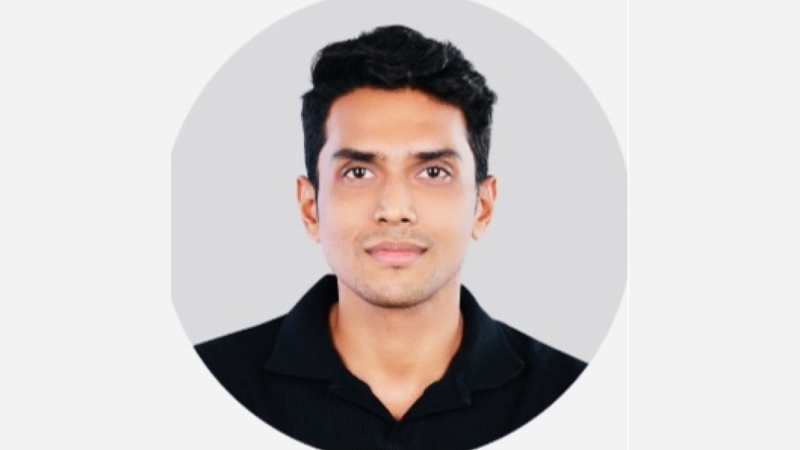
MUMBAI: Sony Pictures Networks India has hired Pradeep M to handle standards and practices for its southern market, bolstering its compliance bench as content rules tighten across platforms.
Pradeep, who has nearly 13 years in the entertainment media industry, takes on responsibility for content standards in a region that is both linguistically diverse and regulatorily sensitive. His brief spans television, OTT, sports and digital platforms.
He specialises in content review and compliance across shows, commercials, on-air promotions and international feeds, ensuring alignment with broadcast, OTT and advertising codes. He has also handled brand approvals and sponsorship integrations for heavily regulated categories—including online gaming, cryptocurrency, NFTs and lottery brands—offering guidance shaped by fast-evolving rules.
Before Sony, Pradeep worked at Jiostar as assistant manager for content regulation from November 2024 to January 2026. Earlier, he spent nearly seven years at Viacom18 Media, rising from senior executive to assistant manager in content regulation between 2018 and 2024. There he served as a key compliance touchpoint for the network.
His career began on the creative side. Between 2013 and 2018, he worked as executive producer on feature films and television shows, gaining hands-on exposure to production. He also had a stint as a non-fiction show director at Star TV Network in 2017. That mix of creative and regulatory experience gives him a dual lens—how content is made and how it must be managed.
As regulators, platforms and advertisers all tighten the screws, broadcasters are investing more in gatekeepers who can keep creativity within the lines. Sony’s latest hire shows where the industry is heading: in the streaming age, compliance is content’s quiet co-star.

MUMBAI: Colors Gujarati has unveiled two new prime-time shows as part of its push to strengthen culturally rooted storytelling for regional audiences. The channel will premiere the devotional saga Gangasati–Paanbai at 7.30 pm, followed by the romantic family drama Manmelo at 9.30 pm from February 2.
Inspired by Gujarat’s spiritual and literary heritage, Gangasati–Paanbai: Shyam Dhun No Navo Adhyay draws from the timeless bhajans and poetry of saint-poetesses Gangasati and Paanbai, weaving devotion and human values into a contemporary narrative aimed at younger viewers.
In contrast, Manmelo explores love and responsibility across social divides, tracing the lives of three middle-class sisters whose relationships with three affluent brothers reshape their futures. The show delves into ambition, emotional conflict and the realities of married life, offering a layered family drama.
A Colors Gujarati spokesperson said the new launches reflect the channel’s commitment to authentic Gujarati entertainment that blends cultural values with modern storytelling.


MIB sets OTT accessibility rules, mandates captions and audio description

Boney Kapoor acquires remake rights of Tamil political satire Thalaivar Thambi Thalaimaiyil

Netflix India names Rekha Rane director of films and series marketing

Zabeen signs off from TV9 after shaping the network’s public voice

Dhawan steps up to bat for Delhi’s grassroots sports push

Orient Beverages pops the fizz with steady Q3 gains and rising profits

Cheekatilo shines in the dark with record debut on Prime Video

These ’90s fashion trends are making a comeback in 2017
The final 6 ‘Game of Thrones’ episodes might feel like a full season
According to Dior Couture, this taboo fashion accessory is back
The old and New Edition cast comes together to perform
Phillies’ Aaron Altherr makes mind-boggling barehanded play
Uber and Lyft are finally available in all of New York State
Disney’s live-action Aladdin finally finds its stars
MIB sets OTT accessibility rules, mandates captions and audio description
Boney Kapoor acquires remake rights of Tamil political satire Thalaivar Thambi Thalaimaiyil
Netflix India names Rekha Rane director of films and series marketing
Zabeen signs off from TV9 after shaping the network’s public voice
Dhawan steps up to bat for Delhi’s grassroots sports push
Orient Beverages pops the fizz with steady Q3 gains and rising profits
Cheekatilo shines in the dark with record debut on Prime Video
-

 News Broadcasting1 week ago
Mukesh Ambani, Larry Fink come together for CNBC-TV18 exclusive
-

 News Headline1 month ago
From selfies to big bucks, India’s influencer economy explodes in 2025
-

 iWorld2 weeks ago
Netflix celebrates a decade in India with Shah Rukh Khan-narrated tribute film
-

 Hollywood5 days ago
The man who dubbed Harry Potter for the world is stunned by Mumbai traffic
-
 I&B Ministry3 months ago
India steps up fight against digital piracy
-
 MAM3 months ago
HoABL soars high with dazzling Nagpur sebut
-
 iWorld12 months ago
BSNL rings in a revival with Rs 4,969 crore revenue
-
 iWorld3 months ago
Tips Music turns up the heat with Tamil party anthem Mayangiren
