
News Headline
#Throwback2020: Programming across OTT & television


MUMBAI/KOLKATA: Life coach and motivational speaker Tony Robbins once remarked that “we aren’t in an information age, we are in an entertainment age.” The past year has shown that Robbins' observation wasn’t far off the mark. As people were bombarded with information from all sides, most of it unpleasant (what with a global pandemic, wildfires, erupting city blocks and violent racial protests, just to name a few), and with cinemas shuttered and live sports cancelled, they retreated to the only safe space left – their television and mobile screens. In fact, 2020 was also remarkable for another fact; TV and OTT saw unprecedented rise in viewership and time spent on the platforms compared to preceding years.
One of the biggest trends that we saw on OTT and television in 2020 was the re-emergence of the golden era of family viewing. A classic example of this was the reruns of Mahabharat and Ramayan on Doordarshan during the lockdown. IndiaToday touted Mahabharat as the “baap of all masala entertainers” and no wonder, everyone in the family – from grandparents to kids – tuned in to the decades-old show. And as streamers were – for a large part of the year – were the only ones where fresh content was in supply, audiences signed up for the services in big numbers.
Programming on television
With people confined to their homes, TV took them to places where they could find some respite, whether in the form of a supernatural show, a murder mystery, Mills & boons romance thriller, an endearing fish-out-of-water comedy, or a very old daily soap. Some shows nailed tricky tones; others offered unforgettable concepts.
The pandemic forced general entertainment channels to go for reruns initially as there was no fresh content production for nearly three months. DD emerged the frontrunner, as, besides Mahabharat and Ramayan, it brought many other iconic shows such as Dekh Bhai Dekh and Shriman Shrimati, thereby raking in massive viewership. Private broadcasters took the same route to entertain audiences. Programmes that had been relegated to sister FTA channels, such as Saath Nibhana Saathiya, Kumkum Bhagya and Ye Rishta Kya Kehlata Hai, made a comeback on the pay platform and attracted a lot of eyeballs.

Daily soaps dominate
A lot of shows focused on family bonding, women taking charge of the household, and the parent-child relationship. Most of these serials tend to have family drama as the core thread with a love story running through it.
Naagin, Chotti Sardaarni, Barrister Babu and the recently launched Shubharambh delivered – and continue to – the bounty for Colors. Zee TV’s Kundali Bhagya and Kumkum Bhagya (both produced by Ekta Kapoor’s Balaji Telefilms) and Guddan Tumse Na Ho Paayega garnered significant eyeballs. Sony TV’s Mere Dad Ki Dulhan, which recently went off air, was centered on the theme of a second chance at love for middle-aged parents.
Audiences across markets opted for a slice of life and family dramas. The overall Hindi GEC (U+R) and the Hindi GEC (U) audiences preferred to watch recently launched shows like Anupama, Imlie, Ghum Hai Kisi ke Pyaar Mein on Star Plus, and Zee TV’s most popular long-running shows Kundali Bhagya and Kumkum Bhagya.
Several experimental shows such as 9 Months Wali Love Story, Kaatelal & Sons also found takers, but there wasn’t much in the way of breakthrough content outside of Anupama. The latter is a regular family drama showcasing the taboo subject of extramarital affairs on Indian television.
Ormax Media partner Keerat Grewal said, "I think the challenge with the category is that experiments with new story ideas are there, but we have not seen any paradigm shift, something that we saw with KBC and Balika Vadhu. Over the last few years non-fiction has had an uptake on HGECs due to the fiction cynicism that’s set in gradually as audiences have been seeing 'more of the same'. This year however non-fiction has struggled as well, with both KBC and Bigg Boss not being able to deliver. Bigg Boss is generally shows an upward trend after a few weeks, once contestant familiarity sets-in."
With production budgets slashed across channels by almost 20-25%, extending this year's Bigg Boss season even with lower than expected ratings, could be a matter commercial feasibility for the channel, she said
Star Plus also managed to get its regional shows successfully remade into Hindi with Anupama and Ghum Hai Kisi Ke Pyaar Mein. This urge to adapt and remake has been picked up by other channels as well.
Non-fiction shows struggled to top the charts
Kaun Banega Crorepati, Bigg Boss, and The Kapil Sharma Show were produced under strict Covid2019 precautions. The drastically smaller production teams innovated on the sets to adhere to protocol and ensure safety of the participants. For instance, there is a restaurant, a shopping mall, a theatre, and a spa inside the Bigg Boss house. In KBC 12, besides the crew, even those who accompany the contestants on the show have socially distanced seating. There was no live audience and the audience poll lifeline was replaced by video-a-friend. The Kapil Sharma Show introduced recorded audience applause, and cut-outs in the background to make the set look lively. The IPL also did the same.
Unlike other years, Bigg Boss – while generating a lot of buzz – has had a relatively subdued season and has not picked up in ratings. The non-fiction show has always been known to pick up from the mid-season where it brings older participants to pump up nostalgia and drama. This year, Colors has decided to extend Bigg Boss 14 till February 2021, with the grand finale scheduled around Valentine's Day. Traditionally, non-fiction shows have always given fiction shows a run for their money.
And while the IPL was a huge production and advertising success, buoying industry sentiment, the same cannot be said for other marquee non-fiction properties, which compete with it.
“I think the challenge is that they keep experimenting with new story ideas but we have not seen any paradigm shift, something that we saw with KBC,” noted Grewal.
The year of OTT
2020 was the year of OTT, as people sampled and adopted them in droves. Likewise, the investment in content has also increased manifold. As more people turned to premium online content, the platforms also experimented with the formats of their new shows.
A new genre on the streaming horizon is musical. Amazon Prime Video’s Bandish Bandits gathered buzz with its music-themed plot depicting the clash between two different worlds of music. Although some viewers found the format cliched, the catchy tunes by composers Shankar-Ehsan-Loy made it extremely appealing. MX Player’s music reality show Times of Music was loved for its unique format – it's a crossover between reality and chat show. Bringing the best composers in the Indian film industry together on one stage, the series included recreations of many celebrated songs. Times of Music charmed Indian music lovers at a time when live musical events had come to a halt.
Experimentation and innovation
More than simply offering a library of content, OTT platforms in India are trying to establish a stronger connection with consumers through interactive content. The trend has not picked up for premium originals yet but broadcaster-led streaming platforms are experimenting with the format for their catch-up content. Zee5 launched Zee5 Super Family League where participants could create their own family by selecting their favourite characters from the network’s popular primetime shows. Voot and SonyLIV also created avenues for immersive experience around tentpole content like Bigg Boss and KBC.
2020 was a series of unusual, new experiments to face the challenges posed by the pandemic. OTTs led the field when it came to producing new shows while sitting at home. Voot devised an innovative content format with locked room murder mystery The Gone Game, shot in cast members' residences. Eros Now also premiered a show made in lockdown – A Viral Wedding. Amazon Prime Video unveiled CU Soon, a film shot entirely during quarantine.
Sequels spell success
For many people, the saving grace of 2020 was their favourite shows returning with new seasons. The hugely popular Mirzapur series generated tons of excitement. Among other much-awaited shows, MX Player’s Aashram, Disney+Hotstar’s Hostages, Amazon Prime Video’s Breathe: Into the Shadows wooed the audience with returning seasons. Other than Indian originals, viewers enjoyed new seasons of international series like Money Heist, Dark and The Mandalorian.
The rise of K-love
Indian audience’s watch list is no longer defined by local content or few American dramas anymore. All things ‘K’ (as in South Korean, not Ekta Kapoor’s defining alphabet) had a major breakthrough in India amid the pandemic. Netflix India witnessed a whopping 370 per cent growth in the viewership of Korean dramas, with The King: Eternal Monarch, Kingdom (S2), It’s Okay to Not Be Okay and Crash Landing on You dominating the trending list for weeks. MX Player also reported considerable growth of Korean drama in its international segment. Interestingly, the K-drama fad is not limited to millennials and gen Z anymore. Other than romances, older audiences also watched other complex genres like Korean historical dramas and thrillers.
OTTs have moved on from male, metro, millennial demographic to an increasing number of female content consumers. As a result, platforms focused on women-centric content representing strong female characters. The shows ranged from comedy to thrillers, romance, and social drama. Pushpavali, Four More Shots Please, Arya, Bulbbul, Masaba Masaba, Churails, Code M were some programmes that appealed to and were loved by women viewers.









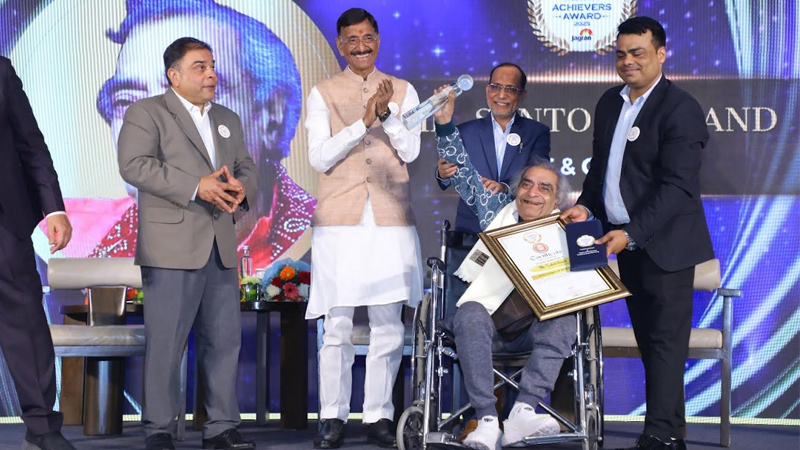
NEW DELHI: Hamdard Laboratories gathered a cross-section of India’s achievers in New Delhi on Friday, handing out the Hakeem Abdul Hameed Excellence Awards to figures who have left their mark across healthcare, education, sport, public service and the arts.
The ceremony, attended by minister of state for defence Sanjay Seth and senior officials from the ministry of Ayush, celebrated individuals whose work blends professional success with a sense of public purpose. It was as much a roll call of achievement as it was a reminder that influence is not measured only in profits or podiums, but in people reached and lives improved.
Among the headline awardees was Alakh Pandey, founder and chief executive of PhysicsWallah, recognised for turning affordable digital learning into a mass movement. On the sporting front, Arjuna Awardee and kabaddi player Sakshi Puniya was honoured for her contribution to the game and for pushing women’s participation onto bigger stages.
The cultural spotlight fell on veteran lyricist and poet Santosh Anand, whose songs have echoed across generations of Hindi cinema. At 97, Anand accepted the honour with characteristic humility, reflecting on a life shaped by perseverance and hope.
Healthcare honours spanned both modern and traditional systems. Manoj N. Nesari was recognised for strengthening Ayurveda’s place in national and global health frameworks. Padma shri Mohammed Abdul Waheed was honoured for his research-backed work in Unani medicine, while padma shri Mohsin Wali received recognition for his long-standing contribution to patient-centred care.
Education and social development also featured prominently. Padma shri Zahir Ishaq Kazi was honoured for decades of work in education, while former Meghalaya superintendent of Police T. C. Chacko was recognised for public service. Goonj founder Anshu Gupta received an award for his dignity-centred rural development initiatives, and the Hunar Shakti Foundation was honoured for empowering women and young girls through skill development.
The Lifetime Achievement Award went to former IAS officer Shailaja Chandra for her long career in public healthcare and governance, particularly in the traditional systems under Ayush.
Speaking at the event, Hamdard chairman Abdul Majeed said the awards were a tribute to those who combine excellence with empathy. “These awardees reflect Hakeem Sahib’s belief that healthcare, education and public service must ultimately serve humanity,” he said.
Minister Seth struck a forward-looking note, saying India’s young population gives the country a unique opportunity to become a global destination for learning, health and wellness by 2047.
The ceremony also featured the trailer launch of Unani Ki Kahaani, an upcoming documentary starring actor Jim Sarbh, set to premiere on Discovery on 11 February.
Instituted in memory of Unani scholar and educationist Hakeem Abdul Hameed, the awards have grown into a national platform that celebrates those building a more inclusive and resilient India. For one evening at least, the spotlight was not just on success, but on service with substance.
MUMBAI: For decades, creative storytelling has been the cornerstone of brand communication. The “big idea” amplified through catchy jingles, striking visuals, and memorable hooks was once the gold standard for relevance and recall. Creativity defined presence, and the loudest, boldest campaigns often won attention.
But the marketing landscape today looks very different.
Audiences are more exposed, more discerning, and far less patient. They are inundated with messages across platforms, formats, and creators, often encountering hundreds of brand touchpoints in a single day. In this environment, creativity alone especially when untethered from real consumer truths is no longer enough to move behaviour. Great ideas are abundant. Meaningful impact is not.
This is where insights matter.
The difference may seem subtle, but it is fundamental. An idea represents what a brand wants to say. An insight reflects what the audience is already thinking, feeling, or experiencing. The most effective campaigns emerge not from cleverness alone, but from the intersection of these two forces.
From creativity to relevance
As the marketing ecosystem becomes increasingly saturated, consumers are growing immune to inflated claims and surface-level storytelling. Even beautifully crafted campaigns can fail if they are disconnected from lived realities. The gap between a brand’s internal enthusiasm and the audience’s actual sentiment can be the difference between attention and indifference.
Insights help bridge this gap. They force brands to pause, listen, and observe to understand emotions, behaviours, cultural contexts, and contradictions. Instead of trying to be remembered through louder branding, insight-led campaigns allow audiences to see their own experiences reflected back at them. When a campaign articulates a problem that feels personal, relevance is created. Trust follows.
Insight is interpretation, not information
It’s important to distinguish between data and insight. Data tells us what is happening. Insight explains why it is happening. While data is measurable and structured, insights are interpretive and dynamic, shaped by real-time sentiment and human behaviour.
Modern consumers are full of contradictions. They demand authenticity while remaining deeply aspirational. They want brands to take a stand but expect nuance, not instruction. They seek transparency, yet are drawn to curated narratives. These tensions are not obstacles, they are opportunities. When understood correctly, they can shape communication that feels timely, credible, and human.
Some of the most effective campaigns today are born not in isolated brainstorm rooms, but through listening to audiences, creators, editors, online communities, and cultural signals. Insights often exist in blurred patterns, but once identified, they can redefine how a brand connects.
A recent campaign we executed for Domino’s illustrates this shift clearly. The brief wasn’t to make a pizza look bigger or louder. Instead, it was rooted in a simple behavioural truth: in Tier 2 and Tier 3 markets, sharing food is an emotional act tied to family, celebration, and value perception. The “Big Big 6-in-1 Pizza” became a canvas for this insight. The campaign leaned into regional voices and real sharing moments, allowing people to show how they experienced the product rather than being told why they should buy it. Influencers and celebrities amplified genuine usage, not scripted endorsements. The impact from engagement to footfall to sales came not from a clever idea, but from understanding how people relate to food in their everyday lives.
Shifting the starting point
Today’s consumer landscape demands a shift in perspective from “What should the brand say?” to “What does the audience need to hear right now?” This marks a move away from inward-led marketing toward communication shaped by behaviour, emotion, and cultural relevance.
Brands leading today are keen observers. They notice when perfection stops resonating. They sense when luxury shifts from aspiration to excess. They recognise when influencer content begins to feel repetitive and trust erodes.
Virality, too, is often misunderstood. It is not a strategy to chase, but an outcome. Campaigns rooted in insight do not aim to go viral; they aim to resonate. When content reflects something familiar, a shared truth, emotion, or tension, it travels organically because people see themselves in it.
Ideas attract attention. Insights build connection.
The evolving role of PR
For PR professionals, this shift has redefined success. Coverage volume alone no longer tells the full story. The more meaningful questions today are: Did the communication influence behaviour? Did it align with cultural conversations? Did it address a real consumer pain point?
Insight-first thinking allows these questions to be answered at the planning stage, rather than corrected midway through execution.
In a world where formats and platforms will continue to evolve, what remains constant is the power of authentic communication. The strongest campaigns today do not begin with a brainstorm, but with observation, interpretation, and empathy. That is not just better marketing, it is more responsible, resilient, and meaningful brand-building.

MUMBAI: Zepto has elevated Ahmad Muneeb to vice president – HR centre of excellence, placing him at the helm of the company’s total rewards, executive compensation and organisational effectiveness as the quick-commerce firm powers through a high-growth phase.
The move follows his stint as senior director of the HR COE, where he played a central role in preparing the company for IPO readiness while scaling its people analytics capabilities. During this period, Muneeb helped align complex performance management structures with more streamlined and scalable employee experience frameworks.
In his new role, he will steer the design of total rewards strategies, executive compensation planning and organisational design, while also overseeing performance management, employee experience initiatives and people analytics programmes.
Before joining Zepto, Muneeb spent nearly three years at Meesho, where he held multiple rewards and HR business partner roles. Earlier in his career, he worked as a senior rewards consultant at Mercer, advising high-tech clients on compensation benchmarking, pay structures and talent-focused reward frameworks.
He began his hr journey at Cognizant, where he supported compensation programmes for nearly two lakh employees across India and worked on m&a compensation alignment and skill-based pay initiatives. Prior to moving into HR, Muneeb started his career as a software engineer at Netcracker, bringing a technical grounding to his people strategy work.
With a mix of consulting rigour, start-up agility and enterprise-scale experience, Muneeb’s elevation signals Zepto’s continued focus on building robust people systems as it races towards its next phase of growth.


Hamdard honours changemakers at Abdul Hameed awards

Why the Best Campaigns Today Start With Insights, Not Ideas

Ahmad Muneeb elevated to VP – HR centre of excellence at Zepto

Fans Take Centre Stage as Zee Cine Awards Turns the Spotlight Around

GUEST COLUMN: How content leaders decide what gets greenlit

The man who dubbed Lord of the Rings in 50 languages is stunned by Mumbai traffic

Dell names Aishwarya Sudhakar director of marketing intelligence

These ’90s fashion trends are making a comeback in 2017
The final 6 ‘Game of Thrones’ episodes might feel like a full season
According to Dior Couture, this taboo fashion accessory is back
The old and New Edition cast comes together to perform
Phillies’ Aaron Altherr makes mind-boggling barehanded play
Uber and Lyft are finally available in all of New York State
Disney’s live-action Aladdin finally finds its stars
Hamdard honours changemakers at Abdul Hameed awards
Why the Best Campaigns Today Start With Insights, Not Ideas
Ahmad Muneeb elevated to VP – HR centre of excellence at Zepto
Fans Take Centre Stage as Zee Cine Awards Turns the Spotlight Around
GUEST COLUMN: How content leaders decide what gets greenlit
The man who dubbed Lord of the Rings in 50 languages is stunned by Mumbai traffic
Dell names Aishwarya Sudhakar director of marketing intelligence
-

 News Broadcasting4 days ago
Mukesh Ambani, Larry Fink come together for CNBC-TV18 exclusive
-
 I&B Ministry3 months ago
India steps up fight against digital piracy
-

 iWorld1 week ago
Netflix celebrates a decade in India with Shah Rukh Khan-narrated tribute film
-
 iWorld12 months ago
BSNL rings in a revival with Rs 4,969 crore revenue
-
 iWorld3 months ago
Tips Music turns up the heat with Tamil party anthem Mayangiren
-
 MAM3 months ago
HoABL soars high with dazzling Nagpur sebut
-

 MAM4 days ago
Nielsen launches co-viewing pilot to sharpen TV measurement
-

 Film Production1 week ago
UFO Moviez rides high on strong Q3 earnings
