
I&B Ministry
The drama unfolding over OTT content self-regulation

KOLKATA: There was a time when no one even believed that over-the-top platforms like Netflix, Amazon Prime Video, Hotstar (now Disney+Hotstar) would go beyond the premium urban audience. The digital fillip that most of India got since Jio’s rollout, and the pandemic and lockdowns has seen streamers not only reach out to nooks and crannies in interior India, but also become a must-have service for hundreds of millions of Indians. The rapid spurt in popularity of the edge-of-the-seat risque content that these platforms have been serving has brought with it some woes as well – the main one being regulatory intervention by the Indian government.
While praise has been showered on them for unlocking creative freedom in terms of stories, the OTTs have been flagellated more than once by an audience set whose sentiment was hurt either on account of some “objectionable” scenes or dialogue. The aggrieved folks fled to the courts and filed public interest litigation after litigation against several series and films as well.
When there’s a hue and cry from a certain section of society, politicians obviously have no option but to take a closer look-see and then force the government to step in. Which is exactly what happened when the Modi-led central government started paying close attention to the streamers and eventually introduced new rules to regulate OTT content at the beginning of this year which came into effect on 26 May.
“That is the first battle we lost. We wanted to resist the government’s interference but the new rules have been introduced,” a senior official with a leading OTT platform commented, on condition of anonymity.
On 27 May, the ministry of information and broadcasting (MIB) sent a letter seeking compliance reports to the new rules from OTT platforms as well as digital news publishers in 15 days. The government is within its rights to ask for the information as the law has been notified. At this juncture, the information it is asking appears to be harmless, albeit the spirit of the law is questionable, a legal expert with a leading law firm explained.

But what is more concerning at the moment is the action that is taking place amongst the various players around the rules. There is the Internet & Mobile Association of India (IAMAI) – under whose umbrella most of the digital publishers and early-mover OTT platforms – had banded over the past few years. The association had been consulted by the authorities for members’ feedback before the new rules were drawn up. And announcements had been made that a structure would be created under it to meet the regulatory requirements. But there was talk all along that all was not well among its members, some of whom were not agreeable with the direction that the legislation was taking.
That there are differing points of views became more than apparent last week when the Indian Broadcasting Foundation (IBF) – the association for linear television broadcasters – announced that it would extend its purview to cover digital streaming platforms under a new name the Indian Broadcasting & Digital Foundation (IBDF). It would also form a self-regulatory body, the Digital Media Content Regulatory Council (DMCRC), as required under a three-tier oversight mechanism.
According to the official quoted earlier, some of the players were not happy with the way the IAMAI was dealing with the situation. With so much back and forth, the body also started losing its relevance before the MIB, he added. Hence, the broadcaster-led OTT platforms like Disney+Hotstar, SonyLIV wanted to look out for other options, especially when the top management of these organisations wanted to ensure their rapidly expanding digital business does not fall foul of the law..
On the other hand, the IAMAI has formed the Digital Publishers Content Grievances Council (DPCGC) as part of the self-regulatory and grievance redressal framework for online curated content [OCC] publishers. Ten OTT platforms including Netflix, Amazon Prime Video have confirmed their allegiance to the IAMAI structure. The reason, the official told us, is that they did not want to be a part of a body that is dominated by broadcasters.
Top MIB officials are today bewildered by the situation that has cropped up. Where earlier, there was a vacuum in terms of industry responding to demands to get its act together on content self-regulation, now it is grappling with problems of plenty. A question that is begging for an answer, according to sources, is should the two bodies be recognized or not?
Although no rule under the new guidelines restricts two independent bodies having oversight over the sector, a part of the ministry is skeptical about the efficacy of such a step. Others however, point out to the news broadcasting vertical – which also has two independent bodies overseeing , one serving the old guard of early newscasters, and the other, the newbies.
In this situation, what is more important for both bodies is to reach out to the ministry with all their compliance reports, an industry observer noted. IBDF has announced that it will file a new content code and self regulatory mechanism that is going to be similar to the Broadcast Content Complaints Council (BCCC) model that the MIB has been asking for.
On the other hand, the OTT platforms are in talks with the ministry asking for more time to fall in line, which it has been loath to do. According to multiple industry sources, the platforms are putting in their best efforts to comply with the timelines. Although digital publishers have challenged the regulation in courts, it is unlikely that OTT platforms will take that route. Moreover, observers believe that MIB will not take any cohesive proactive step against non-compliant platforms in the first instance.
The days ahead will reveal in which direction the OTT sector and the MIB will tilt. In the meanwhile, streamers have achieved what they do best: come sharply under the spotlight, once again.
(Indiantelevision.com reached out to all the players in the streaming sector. No one was willing to speak let alone come on record, keeping in mind how delicately posed the situation is. However, a couple of the platforms finally agreed to share their views with us, but they preferred to stay anonymous.)








I&B Ministry
MIB sets OTT accessibility rules, mandates captions and audio description
Platforms get three years to add features for hearing and visually impaired
NEW DELHI: The government has asked OTT platforms to make their shows easier to watch and hear. A new set of accessibility guidelines from the Ministry of Information and Broadcasting requires streaming services to add features for viewers with hearing and visual impairments.
The move follows the Rights of Persons with Disabilities Act, 2016, and is meant to bring streaming closer to the promise of equal access. In simple terms, if a film or series is coming to an OTT platform, it should not arrive empty-handed. It should come with captions for those who cannot hear well and audio descriptions for those who cannot see clearly.
The guidelines ask platforms to provide at least one accessibility feature each for hearing-impaired and visually-impaired viewers. That could be closed captions, open captions, Indian Sign Language interpretation, or audio description. The aim is to make content understandable without turning the viewing experience into a technical chore.
There is, however, a long runway. Platforms have up to thirty six months from the date of the guidelines to ensure that all newly released content carries these accessibility features. Older titles in their libraries are not under strict timelines, but companies are encouraged to add features gradually.
The rules also go beyond the show itself. User interfaces, whether on mobile apps, smart TVs or websites, must be designed to work with assistive technologies. Accessibility labels such as CC for captions, AD for audio description and ISL for sign language must be displayed clearly so viewers know what to expect before pressing play.
Some content types get a free pass. Live events, music, podcasts, and short form content like ads are exempt because of practical challenges in real time captioning and description.
OTT publishers will also need to file accessibility conformance reports. The first report is due three years from now, followed by quarterly updates. Complaints from viewers will follow a three tier system, starting with the platform itself, moving to self-regulatory bodies, and finally reaching a government monitoring committee if needed.
For the streaming industry, the message is clear. Accessibility is no longer a nice extra tucked away in settings. It is fast becoming part of the main feature, and in a country where streaming audiences run into the hundreds of millions, that could make a very big difference to who gets to enjoy the show.
NEW DELHI: If 2025 was India’s year to make waves, the ministry of information and broadcasting (I&B) was its chief surfboard maker. Prime minister Narendra Modi’s call to “create in India, create for the world” wasn’t just ministerial hot air—it triggered a tsunami of creative dealmaking that swept from Melbourne to Madrid, generating Rs 4,334 crores in potential business discussions and putting Indian creators on every continent’s radar.
The centrepiece was Waves 2025, the World Audio Visual and Entertainment Summit, which drew over 90 countries, 10,000 delegates, and roughly 1 lakh punters through its doors. Modi himself dropped by to glad-hand young creators, describing the event as a “wave of culture, creativity and universal connectivity”—and for once, the hyperbole wasn’t entirely unwarranted.
The summit’s CreatoSphere platform, which sounds like something from a sci-fi novel but is actually a hub for film, VFX, animation, gaming, and digital media, launched the Create in India Challenges. Season one attracted over 1 lakh entries from more than 60 countries across 33 categories. Winners weren’t just handed certificates and sent packing—they performed at Melbourne, exhibited at Tokyo Game Show, and pitched at Toronto International Film Festival. I&B minister Ashwini Vaishnav handed out gongs to 150 creators, cementing the government’s commitment to nurturing what it calls the “creative economy.”
WaveX, the startup arm, proved equally industrious. It coaxed over 200 startups into its embrace, enabled 30 to pitch to Microsoft, Amazon, and Lumikai, and somehow got two of its charges—VYGR News and VIVA Technologies—onto Shark Tank India, where they presumably dodged the usual mauling. The initiative’s KalaaSetu and BhashaSetu challenges, focused on AI-driven video generation and real-time translation respectively, attracted over 100 startups and picked ten for collaboration with government media units.
Waves Bazaar, the “craft-to-commerce” global e-marketplace, went on a roadshow between August and December, hitting 12 international events across four continents and four domestic jamborees. The numbers are eye-watering: over 9,000 B2B meetings, 10 memoranda of understanding signed, three more proposed, and the launch of creative corridors with Japan, Korea, and Australia. The ministry claims Rs 4,334 crores in potential deals—potential being the operative word, though in India’s booming content market, optimism often precedes reality by only a few quarters.
On the bricks-and-mortar front, the Indian Institute of Creative Technology opened its temporary Mumbai campus in July with Rs 391.15 crores in budgetary support. The public-private partnership with Ficci and CII has enrolled over 100 students across 18 courses, incubated eight startups, and signed memoranda with Google, Meta, Nvidia, Microsoft, Apple, Adobe, and WPP—a who’s who of tech giants keen to tap India’s creative reserves. A permanent 10 acre campus at Film City, Goregaon, complete with an immersive AR/VR/XR studio, is in the works.
Elsewhere, the ministry set up a Live Events Development Cell to position India’s concert economy as a growth driver. A single-window clearance system is being built on the India Cine Hub platform to expedite permissions for fire, traffic, and municipal approvals—addressing the red-tape nightmares that have long plagued event organisers. Meanwhile, an inter-ministerial committee is tackling digital piracy, that perennial thorn in the creative economy’s side.
State broadcaster Doordarshan snagged the Election Commission’s media award for voter awareness during the 2024 Lok Sabha elections, presented by the president on National Voters’ Day. Community radio added 22 new stations, bringing the total to 551, with workshops and a national sammelan held during Waves to strengthen local broadcasting.
The 56th International Film Festival of India in Goa screened over 240 films from 81 countries, threw in the country’s first AI Film Festival, and staged a grand parade through Panaji that turned the event into a street-level celebration. The accompanying Waves Film Bazaar drew over 2,500 delegates from 40-plus countries and showcased 320 projects—making it one of South Asia’s largest film markets.
The Central Board of Film Certification modernised too, launching a multilingual certification module that allows multiple language versions under a single application, and mandating 50 per cent women’s participation on examining and revising committees. Digital signatures replaced wet ink, and certificates became downloadable—small victories in the fight against bureaucratic inertia.
India’s I&B ministry ended 2025 having turned content creation into something resembling an industrial policy. Whether Rs 4,334 crores in “potential” business materialises remains to be seen, but the ministry has built the infrastructure, corralled the startups, and put Indian creators on international stages. As Modi might say, the wave has been ridden. Now comes the hard part: keeping the momentum going when the cameras stop rolling.
MUMBAI: The Centre has inched closer to making India’s streaming universe easier to watch, hear and enjoy for everyone. The Ministry of Information and Broadcasting has released draft guidelines that aim to standardise accessibility on OTT platforms, ensuring that viewers with hearing and visual impairments are no longer left out of the country’s digital entertainment boom.
Issued on 7 October and now open for public consultation, the draft rules arrive with constitutional and global backing. Minister of State for Information and Broadcasting L. Murugan told the Rajya Sabha that the framework draws from Article 14, the UN Convention on the Rights of Persons with Disabilities and the Rights of Persons with Disabilities Act, 2016. It also mirrors the Code of Ethics under the IT Rules, 2021.
At the heart of the proposal is a two-phase rollout of mandatory accessibility tools such as same-language closed captions and audio descriptions. The ministry said penalties and enforcement steps will be shaped after the consultation, but compliance will be tracked through progressive targets for OTT content libraries.
Parliament was also reminded that the broadcast sector has walked this path before. In 2019, the government notified accessibility standards for television programming, starting with Prasar Bharati and eventually extending them to private broadcasters.
With OTT viewership climbing across urban and small-town India, the draft rules attempt to bring streaming giants in step with a wider vision of inclusive media. The government hopes the move will help millions of Indians with disabilities press play without barriers.



MIB sets OTT accessibility rules, mandates captions and audio description

Boney Kapoor acquires remake rights of Tamil political satire Thalaivar Thambi Thalaimaiyil

Netflix India names Rekha Rane director of films and series marketing

Zabeen signs off from TV9 after shaping the network’s public voice

Dhawan steps up to bat for Delhi’s grassroots sports push

Orient Beverages pops the fizz with steady Q3 gains and rising profits

Cheekatilo shines in the dark with record debut on Prime Video

These ’90s fashion trends are making a comeback in 2017

Swiggy Instamart’s GOV surges 103 per cent year on year to Rs 7,938 crore
The final 6 ‘Game of Thrones’ episodes might feel like a full season
According to Dior Couture, this taboo fashion accessory is back
The old and New Edition cast comes together to perform
Phillies’ Aaron Altherr makes mind-boggling barehanded play
Uber and Lyft are finally available in all of New York State
MIB sets OTT accessibility rules, mandates captions and audio description
Boney Kapoor acquires remake rights of Tamil political satire Thalaivar Thambi Thalaimaiyil
Netflix India names Rekha Rane director of films and series marketing
Zabeen signs off from TV9 after shaping the network’s public voice
Dhawan steps up to bat for Delhi’s grassroots sports push
Orient Beverages pops the fizz with steady Q3 gains and rising profits
Cheekatilo shines in the dark with record debut on Prime Video
-
 e-commerce4 weeks ago
Swiggy Instamart’s GOV surges 103 per cent year on year to Rs 7,938 crore
-
 iWorld1 year ago
Kuku TV transforms India’s OTT space with vertical microdrama boom
-

 News Headline2 months ago
From selfies to big bucks, India’s influencer economy explodes in 2025
-
 News Headline2 years ago
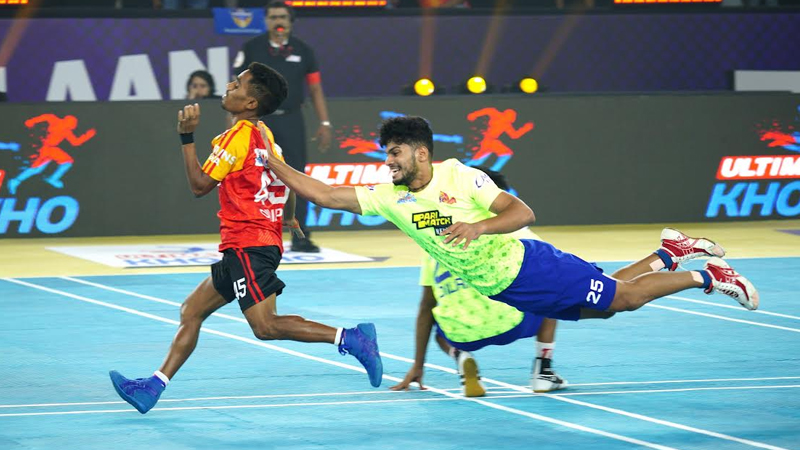
Odisha to host Ultimate Kho Kho Season 2 from December 24
-
 MAM2 years ago
Ultimate Kho Kho raises valuation, secures a series-A PE funding from UK-based BNP group
-
 News Headline2 months ago
Game on again as 2025 powers up a record year and sets the stage for 2030
-

 News Headline2 months ago
2025: The year Indian sports saw chaos, comebacks, and breakthroughs
-
 iWorld6 months ago
Billions still offline despite mobile internet surge: GSMA


