
iWorld
Technological renaissance transforms the music industry


Mumbai: The music industry is undergoing a dramatic transformation propelled by recent technological advancements in artificial intelligence (AI) and machine learning. From music production to distribution and consumption, these technologies are reshaping how music is created, promoted and enjoyed around the world. Many experts describe this phenomenon as a “technological renaissance” for the music industry. The AI music generation industry is projected to achieve a market value of $1.10 billion by 2027, with an anticipated compound annual growth rate (CAGR) of 41.89 per cent.
AI and the creation of music
One of the most groundbreaking applications of AI is its ability to actively participate in the creative process of songwriting. Algorithms can now analyse patterns in existing songs or musical styles and use that data to generate original melodies, harmonies and lyrics. Companies like Amper Music and Popgun use advanced AI to produce customisable, royalty-free music tracks for content creators within minutes. The quality of these AI-generated tracks is impressive and continues to improve each year.
For human artists, AI tools provide songwriting support by suggesting intelligent chord progressions, unique melodies and clever lyrical ideas. Musical skills that once took years to develop can now be augmented with smart technology. Apps like Runway ML and Amadeus Code let artists craft catchy tunes through accessible AI-aided interfaces. With the help of artificial intelligence, both professional and amateur musicians have new ways to actualise their creative visions.
The democratisation of music production

Emerging AI applications are also making music production much more inclusive for creators worldwide. Tools like Splice Studio use machine learning to provide real-time feedback during a recording session, allowing vocalists to hone their performance without extensive studio knowledge. For home producers, apps like Landr and Cvr provide instant online mastering and distribution at the click of a button. Users can upload their tracks to be optimised sonically by an AI mastering engineer and published across leading streaming platforms.
Such innovations are lowering economic barriers and enabling broader participation in music creation. Bedroom artists can now achieve near industry-standard production quality without expensive hardware or audio engineering degrees. With these technologies, musical expression is no longer limited to those with access to professional studios.
Reimagining music distribution
The companies leading music’s technological renaissance also aim to improve how artists reach listeners and achieve commercial success.
Streaming platforms are leveraging artificial intelligence in their distribution and recommendation features. Services like Spotify, YouTube Music and SoundCloud are training algorithms to study users’ listening patterns and musical tastes. They then utilise predictive modelling to recommend relevant new artists that align with an individual’s preferences. For emerging musicians, scoring a top spot on a service’s editorial playlist can mean mass exposure and a platform for sustainable growth.
To increase streaming revenue, artists are also beginning to experiment with lyrics written by AI that target popular searches. Further, blockchain technology also shows potential for transforming music distribution. Smart contracts can facilitate direct payments to artists, allowing them to bypass labels and keep a higher share of streaming royalties. By incorporating blockchain, musical creators gain more control over rights management and unlock new community-driven business models.
The immersive musical experience
As virtual and augmented reality mature, music fans can expect even more immersive listening environments powered by interactive AI capabilities. Spatial audio innovations from Dolby and Sony are bringing dynamic new sonic dimensions to headphone and speaker experiences. Of course, live shows are still irreplaceable for most fans – but virtual concerts hosting 3D holograms of artists could expand access and customisation. Imagine choosing camera angles while watching AI-generated versions of Michael Jackson or Elvis Presley dancing across a stage! For pop stars embracing eligibility, AI imaging lets them appear continuously young and modify their looks to suit different videos or promotions.
Preserving musical heritage
Beyond pioneering new sounds, artificial intelligence opens exciting doors for preserving our existing musical heritage. MIREX organisation hosts annual competitions challenging researchers to build algorithms that can accurately transcribe or detect attributes of specific recordings. Such technologies may soon help digitise archives of classical, folk or traditional music more efficiently. AI transcription also helps map the long cultural impact of seminal artists like the Beatles through tools such as deconstructing their melodic particularities or vocal phrasing nuances over time.
Responsible innovation
However, such seismic change does not come without risks or challenges to overcome. As the application of artificial intelligence transforms this industry, leaders must prioritise transparency and fair practice. Developing guidance around responsible innovation safeguards artists and audiences while allowing helpful disruptions to improve music’s future.
Data protection concerns
The vast data collection powering modern AI does raise critical privacy issues. To create accurate musical insights, companies may utilise personal information or recordings without obtaining full user consent. Artists run the risk of having their brand identity digitally exploited without proper permissions or attribution. Startups should follow strict protocols around announcing data collection policies and securing user sign-off before gathering any musical samples for machine learning development.
Copyright infringement fears
Another area needing governance is establishing protections around copyright violations. Existing songs and sonic works used to train musical prediction algorithms could become replicated through imitative AI attempting new compositions. While these occurrences appear rare currently, standards preventing plagiarism should be instituted as the technology progresses. Companies might submit lyric samples or full tracks to panels gauging substantial similarity before releasing any AI-generated content. Such oversight reduces legal disputes.
Moderating synthetic media
Perhaps the most dangerous misuse lies in AI’s ability to generate synthetic impersonations of real-world artists through manipulated imagery or vocals. Nefarious uses involving political figures also display how easily the technology enables falsification. While debunking tools emerge alongside synthetic media itself, undoubtedly more aggressive identification and reporting mechanisms must counteract malicious attempts. Significant lawsuits or regulations could follow if the technology becomes an outlet for fraud. Progress relies on equitable access paired with accountability.
Preserving creative jobs
Economic anxiety also looms large, as promising automation often prompts fears of technology replacement. Musicians’ unions have already voiced scepticism about enterprises promising to simulate the nuances of human creations through algorithms alone. However, a balanced perspective shows AI will more likely augment roles rather than outright replace creative professions in the years ahead. Just as past production tools expanded options rather than abolished instruments, artificial intelligence can unlock new vocations we have yet to envision.
To conclude
This wave of exponential progress makes today an electrifying period to participate in the music industry. Behind the nerves around any sweeping change rests confidence that new paradigms ultimately shift power closer towards consumer benefit. Fans gain more choice over what they hear and how media gets made. Musicians unlock tools once unthinkable to achieve their creative goals through mass collaboration; funding channels or instant information sharing increase their strategic autonomy. Though the days ahead are not without uncertainty during this technological renaissance, one certainty persists – our cultural fervour for music will only intensify in remarkable ways through artificial intelligence.
The author of this article is TreadBinary founder and director Darshil Shah.









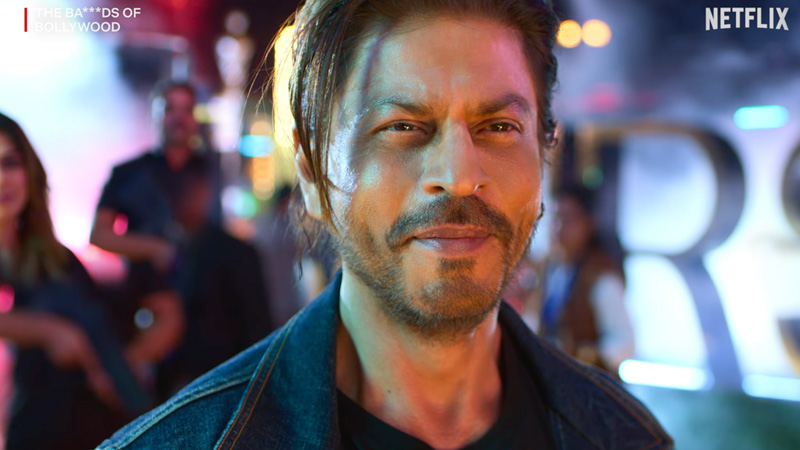
MUMBAI: Netflix is celebrating ten years in India with a slick anniversary film voiced by Shah Rukh Khan, a nostalgic sprint through a decade that rewired how the country watches stories. The campaign doubles as both tribute and reminder: streaming did not just enter Indian homes, it quietly rearranged them.
Roll back to 2016 and television still dictated schedules. Viewers waited weeks, sometimes months, for favourite films to appear on prime time. Family-friendly filters narrowed options further, and piracy often filled the gaps. Then Netflix arrived, softly but decisively, carrying a catalogue of international titles rarely seen in Indian theatres and placing them a click away. Old blockbusters and new releases suddenly coexisted on the same digital shelf.
The platform’s real inflection point came in 2018 with Sacred Games, a breakout series that refused to dilute India’s grit for global comfort. Audiences embraced its unvarnished tone, signalling readiness for stories that did not need box-office validation or censorship compromises. What followed was a steady procession of relatable narratives. Competitive-exam anxiety fuelled Kota Factory. College relationships unfolded in Mismatched. Everyday pressures, not grand spectacle, proved bankable.
Language barriers thinned as foreign series arrived with Hindi, Tamil and Telugu dubbing, expanding viewership beyond urban English-speaking pockets. Marketing mirrored the shift. For global releases such as Squid Game, Netflix leaned on regional creators and influencers to localise buzz and make international content feel native.
The library widened beyond fiction. Documentaries stepped out of festival circuits into living rooms. Stand-up comedians found scale. Established filmmakers, including Sanjay Leela Bhansali with Heeramandi, embraced the platform’s long-form canvas. Subscriber numbers swelled to 12.37 million in India, according to Demandsage, and behaviour followed suit. Late-night binges became routine. Friday release rituals loosened. Watch parties turned solitary screens into social events.
Economics demanded adjustment. Early subscription pricing carried a premium aura that deterred many households. Over time, Netflix recalibrated plans to align with Indian spending sensibilities, conceding that accessibility is as critical as content. To extend momentum around marquee titles, the platform also experimented with split-season releases, stretching anticipation and watch time.
The anniversary film, narrated by Shah Rukh Khan, captures the linguistic shift that mirrors the cultural one: from “Netflix pe kya dekha?” to “Netflix pe kya dekhein?” The question moved from recounting the past to planning the next binge. In ten years, Netflix morphed from foreign entrant to familiar fixture, exporting Indian stories abroad while importing global ones home. The remote no longer waits; it chooses, clicks and moves on. In the streaming age, patience is out, playlists are in, and the next episode is always one tap away.
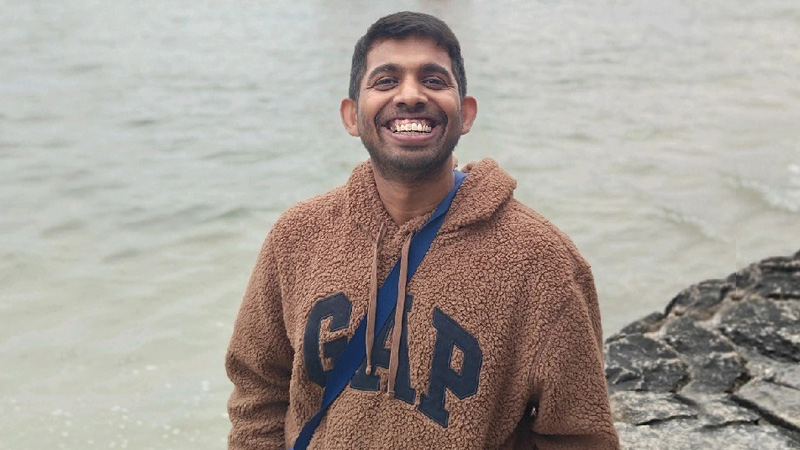
Gurugram: Blinkit has elevated Tulasi Mohan Padavala to associate director, capping a three-year climb inside the quick-commerce firm and signalling confidence in an executive steeped in ecommerce, category management and on-ground sales execution.
Padavala shared the update publicly, saying he was “happy to share” the promotion, a succinct announcement that nevertheless marks a notable step up within one of India’s fastest-moving delivery platforms. The new role follows nearly three years at Blinkit, where he most recently served as senior category manager from February 2023 to January 2026, focusing on strategic sourcing and assortment planning.
The promotion places Padavala in Blinkit’s mid-to-senior leadership tier at a time when the company continues to expand its rapid-delivery footprint and sharpen category economics. His brief tenure as associate director began in January 2026, with responsibilities expected to span category growth, supplier strategy and cross-functional execution.
Before Blinkit, Padavala spent a short but intensive stint as global ecommerce manager at Wholsum Foods, the parent of Slurrp Farm and Millé, between November 2022 and February 2023. There he worked on digital marketplace expansion and online retail operations, adding a direct-to-consumer and international ecommerce layer to his résumé.
A longer stretch at Amazon shaped much of his cross-border commerce experience. As business development manager for Amazon’s India Global Selling programme from February 2021 to October 2022, Padavala helped Indian D2C brands enter the North American market. His remit ranged from seller recruitment and category revenue management to coordination with industry bodies, regulators and logistics partners. Key outcomes included launching more than 50 D2C consumable brands in the United States, driving a cumulative gross merchandise sales figure of $1m in FY21-22, tripling sales for participating brands during Prime Day through marketing and visibility levers, growing the monthly recurring revenue of more than 10 newly launched sellers from zero to an average $20,000 each, and negotiating ecommerce partnerships that reduced initial launch costs by 20 per cent.
Padavala’s earlier career was forged in the field rather than the dashboard. At Coffee Day Group, he spent close to five years across multiple sales leadership roles. As sales manager in the Greater Delhi Area from July 2019 to January 2021, he led vending-machine and consumables sales for small and medium enterprises with a team of more than 15 assistant and territory sales managers, managed over 2,000 clients, drove upselling and cross-selling, maintained channel partnerships and ensured timely collections. Prior to that, he served as area sales manager in Delhi between May 2018 and June 2019, handling south and east Delhi markets, and earlier in Hyderabad from April 2016 to May 2018, where he led Andhra Pradesh sales for the vending division, supervised service and logistics functions and managed a base of more than 600 machines with a four-member team.
His professional arc began with internships that combined analytics and process improvement. At Boehringer Ingelheim in 2015, Padavala analysed the impact of brand extension on the drug Pradaxa, identified key performance indicators through market research and assessed sales forecasts, recommendations that drew positive responses in pilot studies. Earlier, at Genpact in 2014, he automated manual sales-order backlog reporting using VBA and Excel, increasing efficiency by 800 per cent, and worked on benchmarking metrics within supply-chain planning processes.
From automating spreadsheets to scaling cross-border ecommerce and now steering quick-commerce categories, Padavala’s trajectory tracks the evolution of India’s retail economy itself. Blinkit’s bet is clear: blend data, discipline and delivery speed. The promotion formalises what his career already suggests. In the race for instant commerce, experience that moves from warehouse floors to global dashboards is no longer optional. It is the engine.
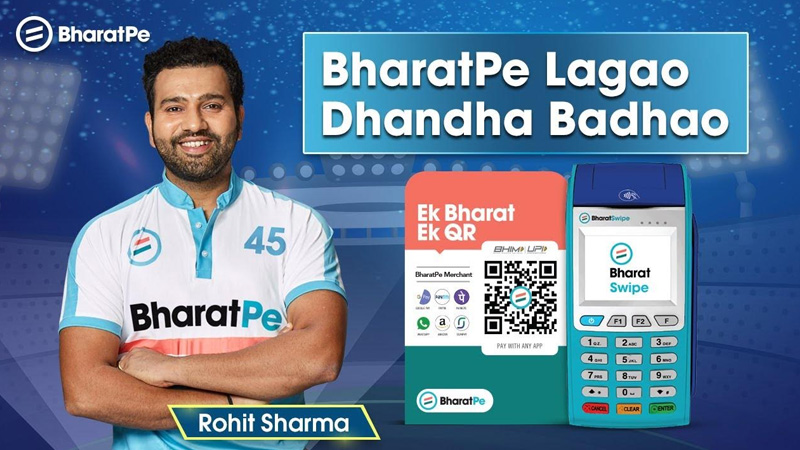
MUMBAI: When the stakes rise and seconds matter, even payments need a match-winning finish. That’s the cue for Bharatpe, which has rolled out Super Over, a nationwide campaign led by Indian cricket captain Rohit Sharma, timed neatly ahead of the ICC Men’s T20 World Cup.
The campaign draws a straight line between the pulse of cricket and the pace of everyday digital payments. A new brand film taps into India’s emotional bond with the game, while positioning UPI as the quiet hero that keeps daily transactions ticking along at match speed.
As part of Super Over, users making payments via Bharatpe UPI can bag daily rewards ranging from match tickets and signed merchandise to a chance to watch a T20 World Cup fixture alongside Rohit Sharma himself. Both consumers and merchants are also assured Zillion Coins on every eligible transaction, adding a little extra sparkle to routine payments.
Behind the scenes, Bharatpe is also batting for safety. The platform is backed by Bharatpe Shield, a fraud-protection layer designed to offer enhanced security, comprehensive coverage and dedicated support aimed at helping users transact with greater confidence as digital payments scale up.
Announcing the campaign, Bharatpe head of marketing Shilpi Kapoor said Super Over mirrors the aspirations of everyday Indians, combining speed, security and instant rewards to make UPI transactions feel both reliable and rewarding.
The campaign will play out across digital platforms, social media and on-ground activations nationwide, staying live through the T20 World Cup season proof that in cricket, as in payments, timing is everything.


Mukesh Ambani, Larry Fink come together for CNBC-TV18 exclusive

Nielsen launches co-viewing pilot to sharpen TV measurement

Netflix celebrates a decade in India with Shah Rukh Khan-narrated tribute film

Delhivery chairman Deepak Kapoor, independent director Saugata Gupta quit board

Meta appoints Anuvrat Rao as APAC head of commerce partnerships

Brnd.me enters Europe as haircare brands power global expansion

TechnoSport taps quick commerce with launch on Slikk’s 60-minute platform

These ’90s fashion trends are making a comeback in 2017
The final 6 ‘Game of Thrones’ episodes might feel like a full season
According to Dior Couture, this taboo fashion accessory is back
The old and New Edition cast comes together to perform
Phillies’ Aaron Altherr makes mind-boggling barehanded play
Uber and Lyft are finally available in all of New York State
Disney’s live-action Aladdin finally finds its stars
Mukesh Ambani, Larry Fink come together for CNBC-TV18 exclusive
Nielsen launches co-viewing pilot to sharpen TV measurement
Netflix celebrates a decade in India with Shah Rukh Khan-narrated tribute film
Delhivery chairman Deepak Kapoor, independent director Saugata Gupta quit board
Meta appoints Anuvrat Rao as APAC head of commerce partnerships
Brnd.me enters Europe as haircare brands power global expansion
TechnoSport taps quick commerce with launch on Slikk’s 60-minute platform
-
 News Broadcasting4 days ago
Mukesh Ambani, Larry Fink come together for CNBC-TV18 exclusive
-
 iWorld1 week ago
Netflix celebrates a decade in India with Shah Rukh Khan-narrated tribute film
-
 MAM3 months ago
HoABL soars high with dazzling Nagpur sebut
-
 MAM4 days ago
Nielsen launches co-viewing pilot to sharpen TV measurement
-
 iWorld12 months ago
BSNL rings in a revival with Rs 4,969 crore revenue
-
 I&B Ministry3 months ago
India steps up fight against digital piracy
-
 iWorld3 months ago
Tips Music turns up the heat with Tamil party anthem Mayangiren
-

 Film Production1 week ago
UFO Moviez rides high on strong Q3 earnings
