
eNews
Senior moments get moving as WalkAbout launches first-of-its-kind games

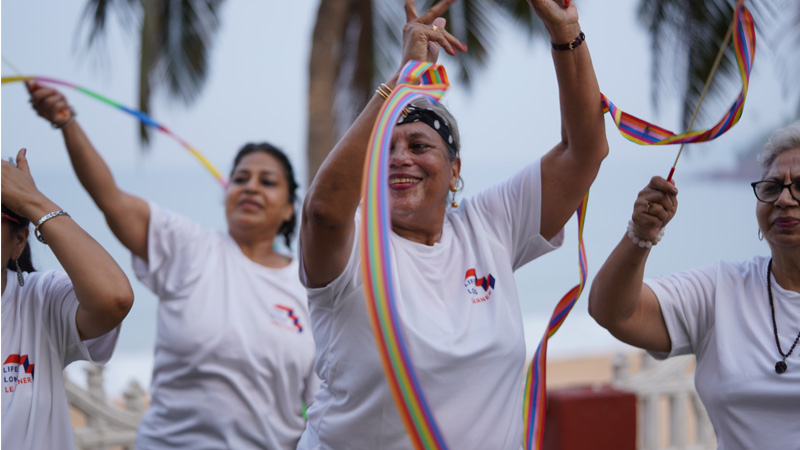
MUMBAI: If you thought “senior moments” meant forgetting your keys, WalkAbout just rewrote the dictionary with sneakers, scorecards, and a stadium-worthy spirit.
India’s first-ever WalkAbout Senior Games are set to debut on 20 December 2025 at Juhu, Mumbai, bringing together more than 200 participants aged 55 plus for a morning of friendly rivalry, community bonding, and pure, unfiltered school-sports nostalgia.
The event revives the classic Sports Day format eight houses, relays, throw challenges, box cricket, skill stations and a guided warm-up but everything is re-engineered for different fitness levels so every participant can move safely, confidently, and joyfully. It is the first sports day in the country created entirely for active agers, and one that dares to say ageing is not a slowdown, but a second sprint.
India is changing, and ageing is changing with it. Today’s older adults are healthier, more independent, and eager for community experiences that add rhythm, purpose, and routine. The Senior Games tap directly into that shift, reinforcing that physical activity is not time-bound, it is a lifelong habit.
Where national programmes like Khelo India have energised young athletes, WalkAbout stretches that momentum across generations, turning participation into a culture rather than an age category.
“India is ready for a new way of looking at ageing,” said WalkAbout founder and CEO Deval Delivala. “Older adults want to move, learn, compete, and stay connected. When we create spaces where people show up as active participants, not passive bystanders, everything changes.”
Delivala added that this isn’t just a sports day, it’s a vision of what ageing in India could look like when movement, community, and purpose intersect. “If we build these habits today,” she said, “we give every Indian the chance to age in place with dignity tomorrow.”
Alongside the Games, WalkAbout has launched the WalkAbout Senior Athlete Program, India’s first initiative to recognise everyday champions of active ageing runners, cyclists, yogis, trekkers and sports enthusiasts who prove that movement after 55 is strength, not exception.
Selected athletes will receive monetary support, exclusive WalkAbout merchandise, leadership opportunities at events, and a national platform to inspire others with their stories.
WalkAbout continues to build what it calls India’s most comprehensive third space for active agers, spanning curated events, wellness programmes, cultural engagements, learning workshops and community-led meetups across major cities.
With the launch of the Senior Games and the Senior Athlete Program, the platform strengthens its mission to reimagine ageing in India not as decline, but as possibility, purpose, and participation.
For now, the starting line is ready. The houses are forming. The warm-up mats are set. And India’s active agers are lacing up proving that the race isn’t over at 55. It’s just getting interesting.
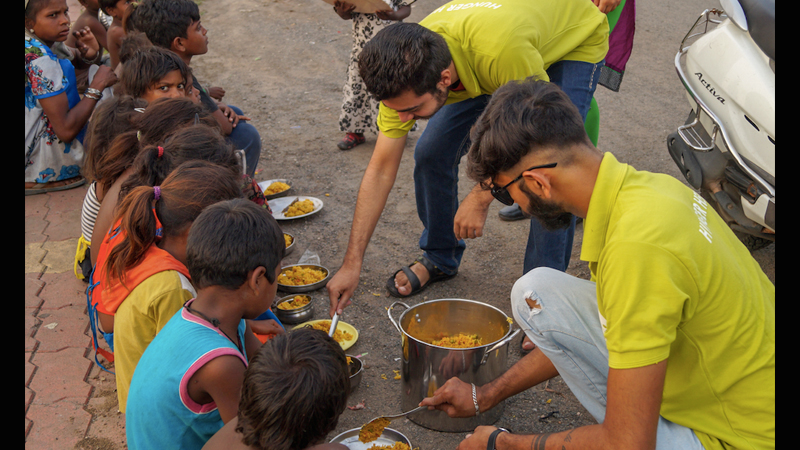
MUMBAI: Hunger may be stubborn, but Feeding India is proving it is not unbeatable. The not-for-profit has served more than 23 crore meals over the past seven years, turning nourishment into a nationwide movement that now spans over 150 cities, according to its Annual Report for FY 2024–25.
Titled A Year of Nourishing Dreams, the report captures a year in which the organisation sharpened its focus from simply filling plates to shaping futures. At the heart of its work is the fight against child malnutrition, with Feeding India now supporting over 1.4 lakh children every day through its partner network.
Its daily feeding programme has grown into a vast ecosystem, covering 1,097 partner schools and 726 Anganwadi centres. These include 275 formal schools, 720 informal learning centres, 58 schools for children with disabilities, and 32 orphan homes. Menus are tailored to local tastes, from rajma chawal in the North to idli sambhar in the South, ensuring meals are nutritious, culturally familiar and widely accepted. Food is provided through a mix of on-site kitchens and centralised cooking facilities.
Recognising that malnutrition often begins long before children enter classrooms, Feeding India has stepped deeper into early childhood care. Across districts such as Gurugram, Kushinagar and Varanasi, the organisation has worked with 726 Anganwadi centres, impacting around 27,000 children aged 0–6 years. More than 30 Anganwadis have been upgraded using Building as Learning Aid concepts, creating brighter, safer and more child-friendly spaces. In Varanasi, a pilot programme now provides full breakfast and lunch meals, a significant shift from the usual supplementary snacks.
The year also tested the organisation’s ability to respond in crisis. During 2024–25, Feeding India distributed nearly 2,000 ration kits following floods in Assam and landslides in Kerala, and served over 1.9 lakh hot meals after the Uttarakhand cloudburst. Relief operations extended to Bihar, Andhra Pradesh and Tamil Nadu in the wake of Cyclone Fengal.
Community participation remains central to the model. Events such as the Zomato Feeding India Concert, featuring Dua Lipa, brought together 28,000 people in 2024, while initiatives like Poshan Potli nutrition kits supported tuberculosis patients during recovery in Varanasi.
Funding patterns underline the power of platforms. Zomato users contributed nearly 80 per cent of total funds, amounting to Rs 74 crore, while Blinkit customers added 15 per cent, or Rs 14 crore. The remaining around 5 per cent came from institutional donors, employees and direct website contributions. Donors can track their impact directly via the Zomato or Blinkit apps, seeing how many meals they have funded and where those meals were served.
The report also highlights tangible outcomes. At the Malvi Educational and Charitable Trust in Gujarat, students recorded an average BMI improvement of 9.50 per cent after daily nutritious meals were introduced.
“Every meal represents hope, dignity and opportunity for a child who might otherwise go hungry,” a Feeding India spokesperson said, adding that the focus remains on nourishing potential through nutrition, infrastructure and care.
As the numbers grow, the message is simple but powerful, feeding a child today is an investment in tomorrow, and Feeding India is determined to keep that promise alive, one meal at a time.
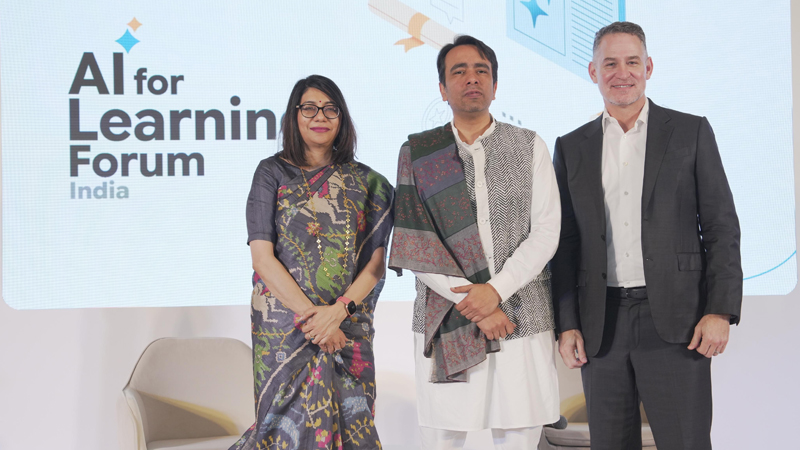
MUMBAI: If skills are the engine of Viksit Bharat, artificial intelligence is being fitted firmly under the bonnet. The Ministry of Skill Development and Entrepreneurship has announced a collaboration with Google Cloud and Chaudhary Charan Singh University to build a national framework for modernising India’s vocational and higher education ecosystem using cloud and AI technologies.
Unveiled at Google’s AI for Learning Forum in Delhi, the initiative positions CCSU, Meerut as a national pilot institution that will test how AI can be embedded into everyday teaching, administration and skill development. The announcement was made in the presence of Jayant Chaudhary, alongside senior officials from the Ministries of Skill Development and Education.
At the heart of the pilot is the use of Google Cloud’s Gemini Enterprise platform to address real-world challenges faced by universities. These include automating administrative workflows, improving staff efficiency, supporting research, and enabling personalised learning through AI tutors and skill-gap analysis. The aim is to make learning more adaptive, efficient and aligned with evolving workforce needs.
The programme is designed to act as an equaliser. By enabling vernacular language support and personalised AI-driven mentorship, it seeks to extend access to high-quality learning tools to students in regional institutions who are often constrained by geography, language or resources. Faculty members will also be supported with AI tools to design curriculum content, simulations and multilingual teaching aids tailored to different learning speeds.
Beyond classrooms, the initiative focuses on operational reform. Intelligent document processing and automated workflows are expected to reduce administrative load, allowing institutions to function more efficiently while improving service delivery to students.
Crucially, the CCSU pilot will feed into a larger ambition. Insights from the project will be used by MSDE to develop a National Best Practice Framework that can guide more than 50,000 colleges and over 1,200 universities in adopting AI responsibly and self-certifying as “AI-enabled universities”.
As a designated Centre of Excellence, CCSU will also host knowledge-sharing sessions to demonstrate how AI can be scaled across India’s diverse education landscape. The goal is clear: ensure that future-ready skills are not confined to elite campuses, but become part of the everyday learning experience for students across the country.

MUMBAI: It is January 28, 2026. Today, the world observes Data Privacy Day. But let’s be honest: for the other 364 days of the year, we are usually too busy scrolling to care. We click “Accept All Cookies” to read an article. We trade our email addresses for 10% off a pair of sneakers. We spill our deepest thoughts to AI chatbots without wondering where that data goes.
The result? You are leaving a trail of “digital exhaust” that is being vacuumed up, packaged, and sold to the highest bidder.
Today is the day we hit the brakes. Privacy is no longer a luxury for the paranoid; it is a necessity for the free. Here is why this matters right now, and how you can fix it fast.
The New Threat: It’s not just hackers anymore
In the past, we worried about criminals stealing our credit card numbers. In 2026, the game has changed. The entity hungry for your data isn’t just a hoodie-wearing hacker in a basement—it’s the legitimate apps on your phone and the algorithms training on your behavior.
• The AI Mirror: Every prompt you type into a public AI model can theoretically become part of its brain. Your distinct writing style, your problems, and your ideas are the fuel.
• Biometric Overload: We pay with our faces and unlock doors with our fingerprints. If a password gets stolen, you change it. If your biometric data gets stolen, you can’t change your face.
• The “Free” Trap: If an app is free, you aren’t the customer; you are the product. Your location history, health stats, and spending habits are the inventory.
The 15-minute privacy sprint
You don’t need to go off the grid or move to a cabin in the woods. You just need to tighten the bolts. Here is your rapid-fire action plan for today:
1. Kill the zombies
We all have “zombie accounts”—old logins for fitness apps we used once in 2021 or shopping sites we forgot about. These are security holes waiting to happen.
The Fix: If you haven’t logged in for 12 months, delete the account. Not the app—the account.
2. Starve the chatbot
AI is useful, but it doesn’t need to know your secrets.
The Fix: Turn off “Chat History” in your AI settings where possible. Never enter financial details, legal documents, or medical info into a public Generative AI tool.
3. The “location” audit
Does your flashlight app need to know you are in a coffee shop? Does your calculator need your contact list? Absolutely not.
The Fix: Go to Settings > Privacy > Location Services (on iOS or Android). Change permissions from “Always Allow” to “While Using” or, even better, “Never” for non-essential apps.
4. Ditch the SMS two-factor
Hackers can swap SIM cards easier than they can crack passwords. Receiving your 2FA codes via text message is the weak link in 2026.
The Fix: Switch to an Authenticator App or use a physical security key (like a YubiKey). It takes five minutes to set up and multiplies your security by ten.
The bottom line
Data Privacy Day isn’t about fear; it’s about agency.
Your data is an extension of your physical self. It is your identity, your history, and your future. By taking control of it, you aren’t just securing a device; you are reclaiming your right to be a person, rather than a data point.
Don’t wait for next January. Make privacy a habit, starting now.

Netflix celebrates a decade in India with Shah Rukh Khan-narrated tribute film

Delhivery chairman Deepak Kapoor, independent director Saugata Gupta quit board

Meta appoints Anuvrat Rao as APAC head of commerce partnerships

Brnd.me enters Europe as haircare brands power global expansion

TechnoSport taps quick commerce with launch on Slikk’s 60-minute platform

Jitendra Singh joins Reliance Industries as senior vice president, special projects

Tinder brings real-world dating experiences to North East India

These ’90s fashion trends are making a comeback in 2017
The final 6 ‘Game of Thrones’ episodes might feel like a full season
According to Dior Couture, this taboo fashion accessory is back
The old and New Edition cast comes together to perform
Phillies’ Aaron Altherr makes mind-boggling barehanded play
Uber and Lyft are finally available in all of New York State
Disney’s live-action Aladdin finally finds its stars
Netflix celebrates a decade in India with Shah Rukh Khan-narrated tribute film
Delhivery chairman Deepak Kapoor, independent director Saugata Gupta quit board
Meta appoints Anuvrat Rao as APAC head of commerce partnerships
Brnd.me enters Europe as haircare brands power global expansion
TechnoSport taps quick commerce with launch on Slikk’s 60-minute platform
Jitendra Singh joins Reliance Industries as senior vice president, special projects
Tinder brings real-world dating experiences to North East India
-
 iWorld3 months ago
Tips Music turns up the heat with Tamil party anthem Mayangiren
-
 iWorld12 months ago
BSNL rings in a revival with Rs 4,969 crore revenue
-
 I&B Ministry3 months ago
India steps up fight against digital piracy
-
 MAM3 months ago
HoABL soars high with dazzling Nagpur sebut
-
 iWorld2 days ago
Netflix celebrates a decade in India with Shah Rukh Khan-narrated tribute film
-
 News Broadcasting6 months ago
Wion marks Independence Day with global showcase of India’s spirit
-
 iWorld3 months ago
The Night Manager returns with new secrets, new spies and old scars
-

 I&B Ministry2 months ago
Centre drafts OTT rules to boost access for hearing disabled