
News Headline
Self-certification of ads: A deeper legal perspective


Mumbai: The Indian advertising industry, like any other market of the world, plays a significant role in shaping consumer sentiment towards products and services available in the market. Correspondingly, it is essential to have adequate regulation and supervision of the sector for ensuring that advertisements do not result in manipulation of consumer behaviour based on fallacious claims. The supreme court recently in Indian Medical Association vs Union of India addressed concerns surrounding misleading advertisements in the case where Indian Medical Association (IMA) filed a petition accusing Patanjali Ayurveda of issuing misleading advertisements and passing critical remarks against allopathy. The court highlighted the responsibility of both advertisers and endorsers in instances of misleading advertisements.
Advertisements, misleading advertisements, related terms and concerns
Advertisements: An advertisement, under Advertising Standards Council of India (“ASCI”) code for self-regulation of advertising content in India, is defined as a paid-for communication, addressed to the public or a section of it, the purpose of which is to promote, directly or indirectly, the sale or use of goods and services to whom it is addressed. Any communication which in the normal course may or may not be recognised as advertisement by the general public, but is paid for, or owned or authorised by the advertiser or their advertising agency would be included in the definition.
The Consumer Protection Act, 2019 (“CPA”) defines an advertisement as any audio or visual publicity, representation, endorsement or pronouncement made by means of light, sound, smoke, gas, print, electronic media, internet or website and includes any notice, circular, label, wrapper, invoice or such other documents.
According to the Central Consumer Protection Authority’s (“CCPA”) Notification dated June 2022:

a. “advertiser” means a person who designs, produces and publishes advertisements either by his own effort or by entrusting it to others in order to promote the sale of his goods, products or services and includes a manufacturer and service provider of such goods, products or services.
b. “advertising agency” means a person or an establishment providing services in designing and production of advertisements or other related services for a commission or fee;
Misleading advertisements: A ‘misleading advertisement’ is an advertisement that contains false, inaccurate and deceptive claims and representations about the product/service being represented, in a manner that is likely to accord to a potential buyer/consumer incorrect understanding about the product/service, thereby wrongfully influencing their purchase and usage decisions. Section 2(28) of the CPA defines misleading advertisement as any product or service which—
(i) falsely describes such product or service; or
(ii) gives a false guarantee to, or is likely to mislead the consumers as to the nature, substance, quantity or quality of such product or service; or
(iii) conveys an express or implied representation which, if made by the manufacturer or seller or service provider thereof, would constitute an unfair trade practice; or
(iv) deliberately conceals important information
Celebrities and endorsers: ASCI defines a celebrity as anyone who (a) gets compensated Rs 40 lakh or equivalent value annually for appearing in advertisements or campaigns on any medium and any format; or (b) has a social media followership of 500,000 or more on any single social media handle. Celebrities or influencers (an individual or a group or an institution) who make endorsement of any goods, product or service can be defined as endorsers. An endorser has the power to affect/influence their audiences’ purchasing decisions or opinions about a product, service, brand or experience, because of their authority, knowledge, position, or relationship with their audience, and also accord credibility and reliability to the brand in view of their association therewith.
Under the current legal framework, the penalties for taking part in creation and publication of misleading advertisements are:
1. A first offence under the Drug and Magic Remedies (Objectionable Advertisements) Act (DOMA), 1954 could lead to imprisonment for six months and/or a fine. For subsequent offences, the punishment may extend to one year.
2. The CPA imposes stricter consequences, with a potential imprisonment term of upto two years and a fine of around Rs 10 lakh for violations. Repeat offences escalate to a five-year imprisonment term and a fine of approximately Rs 50 lakh.
In view of the alarming rise in misleading advertisements in the market, the supreme court as well as various governmental and private bodies have issued regulations and guidelines directed towards endorsers/influencers, advertisers and advertisement agencies in relation to publication to advertisements. A glimpse of such directions, guidelines and regulations have been provided below.
A. Guidelines issued by courts for endorsers concerning misleading advertisements:
The bench of Justices Hima Kohli and Ahsanuddin Amanullah in the aforementioned Patanjali case stated that “advertisers/advertising agencies and endorsers are equally responsible for issuing false and misleading advertisements. Such endorsements that are routinely made by public figures, influencers, celebrities etc. go a long way in promoting a product. It is imperative for them to act with a sense of responsibility when endorsing any product and take responsibility for the same …”.
The bench further stated that persons who endorse a product should have adequate information or experience with such specific product to be endorsed, and it must be ensured that it must not be deceptive. Celebrities and social media influencers will be equally liable for misleading advertisements, if they endorse any deceptive product or service.
Concerning misleading advertisements, the court issued the following directions:
1 Broadcasters or print media have to file a self-declaration form before carrying any advertisements, assuring that the advertisement to be carried on its platform complies with Cable Network Rules, Advertising Code etc.
2 Ministries were directed to set up a specific procedure which will encourage the consumer to lodge a complaint and for the said complaint to be taken to a logical conclusion instead of simply being endorsed or marked.
3 Persons who endorse a product should have adequate information or experience with specific product to be endorsed, and it must be ensured that it is must not be deceptive.
4 Celebrities and social media influencers will be equally liable for misleading advertisements, if they endorse any deceptive product or service.
5 The ministry of consumer affairs, was ordered to file a fresh affidavit on action taken by CCPA on false or misleading advertisements,
B. Guidelines under various statutes and governmental and private bodies
1. ASCI self-regulation guidelines for endorsers and advertisers
ASCI, established in 1985, is committed to the cause of self-regulation in advertising, ensuring protection of the interests of consumers. It seeks to ensure that advertisements conform to its code for self-regulation, which requires these to be legal, decent, honest and truthful, and not hazardous or harmful, while observing fairness in competition. Some core tenets of ASCI guidelines with reference to celebrities in advertising are–
1 Advertisements with celebrities should not violate any guideline of the ASCI code.
2 It is an obligation of the advertiser to make a celebrity aware of the code.
3 Representations by a celebrity must be genuine and must be based on adequate information or experience.
4 Due diligence necessary by the celebrity to ensure that representations made in the advertisements are objectively true and are not misleading or deceptive.
5 Celebrities should not participate in any advertisement of products that are prohibited for advertising under the law. Examples include products under the Drugs and Cosmetic Act 1940.
6 A celebrity should not endorse a product for which a health warning is required to be issued.
7 A celebrity may seek ‘advertising advice’ from ASCI on potential violations by an ad.
In a bid to address misleading advertisements and safeguard consumers from unfair trade practices, especially arising out of celebrity endorsements, ASCI has laid out certain guidelines for celebrities/ influencers listing out their responsibilities while involving themselves in such marketing campaigns.
The guidelines (dated July 13th, 2023) lay down the following –
1 Celebrities endorsing products must adhere to the ASCI codes. Testimonials and endorsements should genuinely reflect the individual’s current opinion, grounded in sufficient knowledge or experience with the advertised product or service.
2 It’s upon the advertisers and agencies to ensure that celebrities are well-informed about these codes. Celebrities must rigorously verify the accuracy of claims and comparisons in advertisements they endorse, ensuring they’re objectively substantiated and not misleading.
3 They must abstain from endorsing products prohibited under the Drugs & Magic Remedies Act or requiring health warnings, as mandated by the Drugs & Cosmetics Act.
4 Celebrities have the option to seek endorser due diligence (EDD) from ASCI to be compliant with the ASCI code and other relevant legal statutes, to protect themselves from any potential violations or litigations down the line.
However, ASCI being a private self-regulating body, lacks the authority to compel businesses to adhere to the ASCI guidelines in a meaningful manner.
2. Central Consumer Protection Authority (CCPA)’s guidelines on false or misleading advertisements
CCPA, unlike ASCI does have that power to compel businesses to adhere to their guidelines and their guidelines for misleading advertisements and endorsements, 2022 (“guidelines”), state the following-
1 These guidelines obligated, inter alia, businesses to comply with stringent regulations governing misleading advertisements.
2 The guidelines require that the endorsement in an ad must reflect the genuine and reasonably current opinion of the endorser, that includes celebrity or influencer, and must be based on adequate information about, or experience with, the identified goods or service and should not be deceptive.
3 Adherence to the guidelines is essential for celebrities and influencers to maintain transparency and authenticity with their audience. Not only is this supposed to hold the endorsers responsible but also helps the consumers make informed decisions.
The guidelines state that individuals or groups who have access to an audience and the power to affect their audiences’ purchasing decisions or opinions about a product, service, brand, or experience, because of the influencer’s or celebrity’s authority, knowledge, position, or relationship with their audience must disclose to the audience if the endorsement is a result of benefit or incentive from the advertiser. That is, if the endorser (including celebrities and influencers) is endorsing a product for which they have received some monetary/non-monetary compensation or any other form of sponsorship from the advertiser, the endorsement must clearly and prominently disclose the same. Following are the specific requirements and mandates to be followed by endorsers and influencers:
i With respect to different formats used for endorsement, the guidelines stipulate the following rules for disclosure:
1. For images: disclosures should be superimposed over the image enough for viewers to notice.
2. For videos: disclosures should be placed in the video and be made in both audio and video format.
3. For live streams: disclosures should be displayed continuously and prominently during the entire stream.
ii The disclosure must be made in simple and clear language.
The disclosure must be made in simple and clear language. Terms such as “advertisement”, “sponsored”, “collaboration” or “paid promotion” can be used. Further, the disclosure should be made in the same language as the endorsement. Also, disclosures should not be mixed with a group of hashtags or links. The Guidelines specify that individuals must not endorse any product or service that they have not personally used or experienced or in which due diligence has not been done by them.
iii Endorsers are liable for legal action if they do not disclose endorsement.
The endorsers will be liable for legal consequences if they fail to disclose any material connection and/or upon non-compliance with the CPA and the associated rules. A material connection is any connection between an advertiser and endorser that may affect the weight or credibility of the representation made by the endorser. Material connection could include but is not limited to benefits and incentives, such as monetary or other compensation, free products with or without any conditions attached including those received unsolicited, discounts, gifts, contest and sweepstakes entries, trips or hotel stays, media barters, coverage, awards or any family or employment relationship, etc. According to Section 21 of the Act–
(2) Notwithstanding the order passed under sub-section (1), if the Central Authority is of the opinion that it is necessary to impose a penalty in respect of such false or misleading advertisement, by a manufacturer or an endorser, it may, by order, impose on manufacturer or endorser a penalty which may extend to ten lakh rupees: Provided that the Central Authority may, for every subsequent contravention by a manufacturer or endorser, impose a penalty, which may extend to fifty lakh rupees.
(3) Notwithstanding any order under sub-sections (1) and (2), where the Central Authority deems it necessary, it may, by order, prohibit the endorser of a false or misleading advertisement from making endorsement of any product or service for a period which may extend to one year: Provided that the Central Authority may, for every subsequent contravention, prohibit such endorser from making endorsement in respect of any product or service for a period which may extend to three years.
3. The ministry of consumer affairs’, guidelines – endorsements know-hows!’ for celebrities, influencers and virtual influencers on social media platforms)
The ministry of consumer affairs on 20 Jan, 2023, issued its guidelines (titled endorsements know-hows!’ for celebrities, influencers and virtual influencers on social media platforms) specifically pertaining to celebrity/ influencer endorsements.
1 It emphasizes on the requirement of providing clear disclosures of any material connection with advertisers and straightforward language in endorsements; whereby, ‘material connection’ is deemed to be any connection between an advertiser and endorser that may affect the weight or credibility of the representation made by the endorser; and could include without being limited to benefits and incentives, such as monetary or other compensation, free products with or without any conditions attached including those received unsolicited, discounts, gifts, contest and sweepstakes entries, trips or hotel stays, media barters, coverage, awards or any family or employment relationship, etc.
2 Terms like “advertisement” or “sponsored” should denote paid promotions. Endorsers must avoid promoting products they haven’t personally used.
3 Aligned with the CPA, the guidelines prohibit misleading advertisements and outlines responsibilities for manufacturers, service providers, advertisers, and agencies.
4 It reinforces guidelines for valid advertisements and addresses celebrity and endorser responsibilities.
4. The ministry of information & broadcasting’s advisory to endorsers on restriction on promoting, advertising, endorsing, even through surrogate marketing, offshore betting and gambling
The ministry of information and broadcasting, on 21 March, 2024, issued an advisory directed towards endorsers and online influencers, restricting them from promoting, advertising, endorsing, even though surrogate marketing, offshore betting and gambling to the consumers, especially the youth. It states that –
1 Emphasizing the significant financial and socio-economic implications, particularly on youth, the advisory also warns online advertisement intermediaries against targeting Indian audiences with such content.
2 Social media platforms are urged to sensitize users and abstain from hosting such promotions.
3 Non-compliance may result in actions under the CPA, including removal of the impugned post or account as well as penal measures.
4 While Section 79 of the IT Act, 2000 exempts intermediaries from liability, failure to promptly remove unlawful content upon notification can restrict application of this exemption.
5 The directive aligns with the CCPA’s previous guidelines, expressing concerns over endorsements of betting/gambling platforms by celebrities and influencers, subjecting such advertisements to stringent scrutiny.
Not only in recent times, but celebrities have been under the scanner even in the past for being part of misleading advertisements. For instance, in 2015, a resident of Delhi filed a complaint in the District Consumer Disputes Redressal Forum of Central Delhi about the ‘Fair and Handsome Cream’, (world’s number one Fairness Cream for Men) being manufactured by Emami.
The complainant contended that he had used the product as per directions for use mentioned on the labelling and packaging of the product, but it had failed to show any results as claimed. He also argued that Emami had been using Shahrukh Khan as its brand ambassador for the promotion of the product and made false claims and promises that the product provides fairness in just three weeks. The court ruled that the advertisements by Shahrukh Khan were misleading and directed Emami to pay an amount of Rs. 15 lakhs as punitive damages to the consumer welfare fund. It also directed the company to pay the complainant a sum of Rs.10,000 and withdrawal of the advertisement.
Apart from this, there have also been many media reports of cases filed against celebrities like Amitabh Bachchan, Madhuri Dixit, and Preity Zinta for promoting Nestle’s Maggi Noodles when the product was banned when found to contain taste enhancer MSG and the chemical lead beyond permissible limits, which are harmful to humans.
A controversy regarding a pan masala advertisement occurred in 2016 when the former James Bond actor, Pierce Brosnan, appeared in an advertisement for Pan Bahar, a pan masala brand popular in India. Pan masala is a mixture of specific kinds of nuts, seeds, and spices, often chewed for its stimulating effects, but it has been associated with health risks, including oral cancer. Pierce Brosnan was severely criticized for endorsing a product that adversely affected health. Brosnan later clarified that he was misled about the nature of the product, believing it to be a breath freshener or tooth whitener rather than a tobacco product. He also stated that his contract specified that he was promoting a “breath freshener/tooth whitener,” and he felt betrayed by the company’s use of his image to promote a pan masala product. The celebrities and media agencies were requested not be a part of surrogate advertisements of tobacco in the name of pan masala, tea, elaichi or other goods as these are prohibited under section 5 of the Cigarettes and Other Tobacco Products Act (COTPA), 2003 (“COPTA”). COPTA bans all kinds of direct and indirect advertisements of tobacco products. The controversy sparked discussions about celebrity endorsements and ethical considerations regarding the endorsement of Indian products that could be harmful to health, irrespective of the nationality of the endorser.
5 Ministry of information & broadcasting (MIB) mandate to advertisers/advertising agencies to furnish a ‘self-declaration certificate’ before airing or publishing any advertisement
The Supreme Court, in furtherance to abovementioned guidelines for the endorsers, has issued a directive in its order dated 7 May 2024 whereby all advertisers and advertising agencies are mandated to furnish a ‘self-declaration certificate’ before airing or publishing any advertisement. The MIB has published a press release announcing a new feature facilitating self-declaration by advertisers and advertising agencies from print, broadcast as well as digital media starting 18 June 2024 (“Press Release”).
This certificate, signed by an authorized representative of the advertiser or advertising agency, must be submitted through designated portals, as stated by MIB in an official recent press release. The supreme court took note of the absence of a “robust mechanism” to oversee whether advertisers are fulfilling the obligations stipulated under the guidelines released by the CCPA. The supreme court further clarified that these directions were to be treated as the law declared under Article 141 of the Constitution of India. The supreme court in Sahara India Real Estate Corp Ltd. v. SEBI stated that the Constitution of India contemplates, that law declared by it, is binding on all courts within the territory of India. It also mandates, that an order made by the supreme court, is enforceable throughout the territory of India.
Such self-declaration certificate shall be submitted through a designated portal activated on 4 June, 2024. The MIB has introduced a new feature on the Broadcast Seva Portal of the MIB for TV and Radio Advertisements and on Press Council of India’s portal for print and digital/internet advertisements. The self-declaration certificate is mandatory for all advertisers/advertising agencies for all advertisements going live 18 June 2024 onwards, to be provided before broadcasting/publishing of such advertisement. For sake of clarity, the directive by Supreme Court and the following press release is not retrospective in nature and shall not be applicable on the advertisements that are already live. The salient aspects and observations in relation to the mechanism of self-declaration are provided hereinbelow:
i Roadmap to Self-Declaration Certificate
a. An authorized representative of the advertiser/advertising agency must sign and submit the self-declaration certificate, ensuring accountability and authenticity of the certificate.
b. The authorized representative is required to provide comprehensive information about the advertised product or service, including advertisement title, description, script, and proposed date of first broadcast/publishing.
c. The said submission of the certificate necessitates a letter of authorization, full advertisement script, video/audio file, and, if available and applicable, GST details and a CBFC certificate. The letter of authorization shall mandatorily be on the company letterhead of the advertiser/advertising agency and should be signed by the head of the company along with company seal.
d. The certification includes affirmation of compliance with relevant regulatory guidelines, including those in Rule 7 of the Cable Television Networks Rules, 1994, and the Norms of Journalistic Conduct of Press Council of India and aims to ensure that advertisements do not contain any misleading claims.
e. The Advertisers are required to ensure accuracy and completeness of the details, before uploading the self-declaration certificate.
f. The successful submission of the details generates an acknowledgment receipt.
g. Advertiser shall be required to provide proof of uploading the self-declaration certificate to the relevant broadcaster, printer, publisher, or electronic media platform for their records. As per the supreme court’s directive and the press release, no advertisement will be permitted to run on television, print media, or the internet without a valid self-declaration certificate.
ii Elucidation required by MIB on the Self-Declaration requirement:
Among several obscurities in the Press Release, listed below are few major concerns:
a. Ambiguity on terms used in the press release by MIB:
No clarity has been given either in the order or the press release, as to who will be considered as an ‘advertiser’ or an ‘advertising agency’. However, in the absence of clarifications, reliance is being laid on the definitions given under the guidelines. Furthermore, MIB requires a self-Declaration certificate to certify that the advertisement does not contain “misleading claims”, but the press release lacks clarity on what is considered as a “misleading claim”. Reference could be drawn from the CPA, and the definition of “misleading advertisement” included therein as mentioned hereinabove. However, based on assumptions, one cannot be certain if avoiding a “misleading advertisement” would fulfil the criteria of not being considered as a “misleading claim”.
b. Ambiguity on requirement of separate certificates for uploading one advertisement in different languages:
There is no clarity on this aspect, however, drawing an analogy with CBFC certification, where a different CBFC certification is required when a movie is to be released in a different language, so that the committee can examine if any translated dialogue would fall foul of its earlier criteria for certification, it would be prudent for advertisers to procure separate self-declaration certificates for different languages of the same advertisement.
c. Ambit of the MIB press release and question over inclusion of social media
According to the order and the press release, digital/internet-based advertisements would also require a self-declaration certificate. Digital media is defined as a means of communication that can be transmitted over the internet or digital networks and includes communication received, stored, transmitted, edited or processed by a digital media platform. Digital Media includes but not limited to (i) internet (advergames, sponsored posts, branded content, promotional blogs, paid-for links, gamification, in-game advertising, teasers, viral advertising, augmented reality, native advertising, connected devices, influencers, etc.); (ii) On-demand across platforms including near video on demand, subscription video-on-demand, near movie on-demand, free video. On-demand, transactional video on demand, advertising video on demand, video on demand, pay per view, etc.; (iii) Mobile broadcast, mobile, communications content, websites, blogs, apps, etc. / Digital TV (including digital video broadcasting handheld and terrestrial), etc.; (iv) NSTV (non-standard television); (v) DDHE (digital delivery home entertainment); (vi) DTT (digital terrestrial television)
Although the MIB press release is not free from ambiguity on its applicability to social media such as Instagram, Facebook, X, YouTube, etc., it would be sagacious to adhere to the directives and the Press Release to avoid potential legal repercussions in future, and ensure that there is no scope for claims to arise, in instances where the content so created and exploited constitutes an advertisement as per the foregoing definitions.
iii Exclusions and Exceptions to the Self Declaration Requirement
It was directed by the supreme court that no advertisements would be permitted on relevant channels (assuming channels on TV and radio), print media, or the internet without a self-declaration certificate. However, the MIB carves out exceptions for classifieds, personal advertisements, statutory advertisements, public information notices, tenders, and advertisements related to public functions. However, with respect to classifieds, classified advertisements directly related to consumer products and services will come under the ambit of self-declaration certification. Additionally, the MIB press release is not retrospective in nature and shall not be applicable to ongoing advertisements currently. The new advertisements (which are to be published after 18 June, 2024 whether made prior to 18 June or made after 18 June) would require a self-declaration certificate.
Conclusion
Celebrity endorsements offer increased brand visibility, credibility, and influence over consumer behaviour, often affecting sales and revenue of the brand in relation to the product/service advertised. However, legal liabilities arise if endorsements are misleading, as per several guidelines, statutes and judicial precedents. The recent Patanjali judgment highlights the responsibility of both advertisers and endorsers in combating misleading advertisements. The court’s stance on the liability of celebrities and social media influencers for endorsing misleading ads underscores the importance of ethical advertising practices and prioritizes consumer welfare. The order in this case, therefore, may widen the ambit of liability for endorsers such as celebrities or influencers, and thereby, result in greater due diligence required by such endorsers, to avoid falling foul of the law. The supreme court’s directive requiring self-declaration certificates from advertisers and advertising agency before airing advertisements on all modes is a measure to combat misleading advertisements and safeguard consumer interest, however, it shall increase the burden of compliance for various companies and brands engaging in advertisements. Lack of proper monitoring mechanism for such compliance especially for a vast space like digital media, it would be interesting to see how the ministries would ensure adherence of the directives by the advertisers and advertising agencies.
Mukherjee is a senior associate and Verma is an associate with law firm ANM Global. The views expressed in this article are entirely their own and Indiantelevision.com need not subscribe to them.










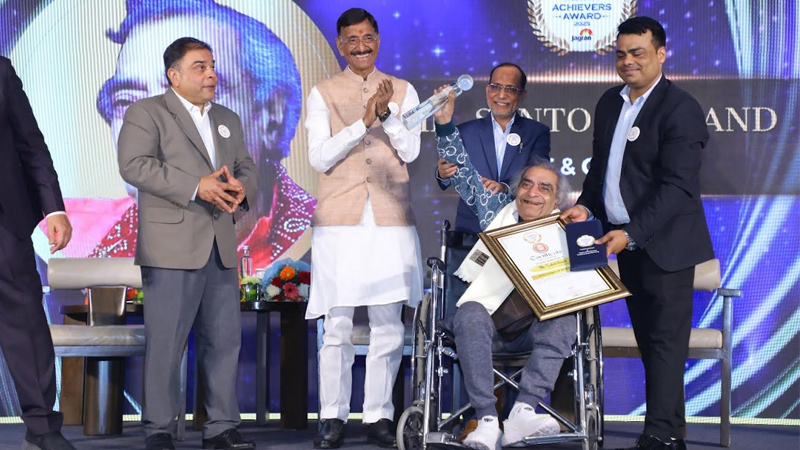
NEW DELHI: Hamdard Laboratories gathered a cross-section of India’s achievers in New Delhi on Friday, handing out the Hakeem Abdul Hameed Excellence Awards to figures who have left their mark across healthcare, education, sport, public service and the arts.
The ceremony, attended by minister of state for defence Sanjay Seth and senior officials from the ministry of Ayush, celebrated individuals whose work blends professional success with a sense of public purpose. It was as much a roll call of achievement as it was a reminder that influence is not measured only in profits or podiums, but in people reached and lives improved.
Among the headline awardees was Alakh Pandey, founder and chief executive of PhysicsWallah, recognised for turning affordable digital learning into a mass movement. On the sporting front, Arjuna Awardee and kabaddi player Sakshi Puniya was honoured for her contribution to the game and for pushing women’s participation onto bigger stages.
The cultural spotlight fell on veteran lyricist and poet Santosh Anand, whose songs have echoed across generations of Hindi cinema. At 97, Anand accepted the honour with characteristic humility, reflecting on a life shaped by perseverance and hope.
Healthcare honours spanned both modern and traditional systems. Manoj N. Nesari was recognised for strengthening Ayurveda’s place in national and global health frameworks. Padma shri Mohammed Abdul Waheed was honoured for his research-backed work in Unani medicine, while padma shri Mohsin Wali received recognition for his long-standing contribution to patient-centred care.
Education and social development also featured prominently. Padma shri Zahir Ishaq Kazi was honoured for decades of work in education, while former Meghalaya superintendent of Police T. C. Chacko was recognised for public service. Goonj founder Anshu Gupta received an award for his dignity-centred rural development initiatives, and the Hunar Shakti Foundation was honoured for empowering women and young girls through skill development.
The Lifetime Achievement Award went to former IAS officer Shailaja Chandra for her long career in public healthcare and governance, particularly in the traditional systems under Ayush.
Speaking at the event, Hamdard chairman Abdul Majeed said the awards were a tribute to those who combine excellence with empathy. “These awardees reflect Hakeem Sahib’s belief that healthcare, education and public service must ultimately serve humanity,” he said.
Minister Seth struck a forward-looking note, saying India’s young population gives the country a unique opportunity to become a global destination for learning, health and wellness by 2047.
The ceremony also featured the trailer launch of Unani Ki Kahaani, an upcoming documentary starring actor Jim Sarbh, set to premiere on Discovery on 11 February.
Instituted in memory of Unani scholar and educationist Hakeem Abdul Hameed, the awards have grown into a national platform that celebrates those building a more inclusive and resilient India. For one evening at least, the spotlight was not just on success, but on service with substance.

MUMBAI: For decades, creative storytelling has been the cornerstone of brand communication. The “big idea” amplified through catchy jingles, striking visuals, and memorable hooks was once the gold standard for relevance and recall. Creativity defined presence, and the loudest, boldest campaigns often won attention.
But the marketing landscape today looks very different.
Audiences are more exposed, more discerning, and far less patient. They are inundated with messages across platforms, formats, and creators, often encountering hundreds of brand touchpoints in a single day. In this environment, creativity alone especially when untethered from real consumer truths is no longer enough to move behaviour. Great ideas are abundant. Meaningful impact is not.
This is where insights matter.
The difference may seem subtle, but it is fundamental. An idea represents what a brand wants to say. An insight reflects what the audience is already thinking, feeling, or experiencing. The most effective campaigns emerge not from cleverness alone, but from the intersection of these two forces.
From creativity to relevance
As the marketing ecosystem becomes increasingly saturated, consumers are growing immune to inflated claims and surface-level storytelling. Even beautifully crafted campaigns can fail if they are disconnected from lived realities. The gap between a brand’s internal enthusiasm and the audience’s actual sentiment can be the difference between attention and indifference.
Insights help bridge this gap. They force brands to pause, listen, and observe to understand emotions, behaviours, cultural contexts, and contradictions. Instead of trying to be remembered through louder branding, insight-led campaigns allow audiences to see their own experiences reflected back at them. When a campaign articulates a problem that feels personal, relevance is created. Trust follows.
Insight is interpretation, not information
It’s important to distinguish between data and insight. Data tells us what is happening. Insight explains why it is happening. While data is measurable and structured, insights are interpretive and dynamic, shaped by real-time sentiment and human behaviour.
Modern consumers are full of contradictions. They demand authenticity while remaining deeply aspirational. They want brands to take a stand but expect nuance, not instruction. They seek transparency, yet are drawn to curated narratives. These tensions are not obstacles, they are opportunities. When understood correctly, they can shape communication that feels timely, credible, and human.
Some of the most effective campaigns today are born not in isolated brainstorm rooms, but through listening to audiences, creators, editors, online communities, and cultural signals. Insights often exist in blurred patterns, but once identified, they can redefine how a brand connects.
A recent campaign we executed for Domino’s illustrates this shift clearly. The brief wasn’t to make a pizza look bigger or louder. Instead, it was rooted in a simple behavioural truth: in Tier 2 and Tier 3 markets, sharing food is an emotional act tied to family, celebration, and value perception. The “Big Big 6-in-1 Pizza” became a canvas for this insight. The campaign leaned into regional voices and real sharing moments, allowing people to show how they experienced the product rather than being told why they should buy it. Influencers and celebrities amplified genuine usage, not scripted endorsements. The impact from engagement to footfall to sales came not from a clever idea, but from understanding how people relate to food in their everyday lives.
Shifting the starting point
Today’s consumer landscape demands a shift in perspective from “What should the brand say?” to “What does the audience need to hear right now?” This marks a move away from inward-led marketing toward communication shaped by behaviour, emotion, and cultural relevance.
Brands leading today are keen observers. They notice when perfection stops resonating. They sense when luxury shifts from aspiration to excess. They recognise when influencer content begins to feel repetitive and trust erodes.
Virality, too, is often misunderstood. It is not a strategy to chase, but an outcome. Campaigns rooted in insight do not aim to go viral; they aim to resonate. When content reflects something familiar, a shared truth, emotion, or tension, it travels organically because people see themselves in it.
Ideas attract attention. Insights build connection.
The evolving role of PR
For PR professionals, this shift has redefined success. Coverage volume alone no longer tells the full story. The more meaningful questions today are: Did the communication influence behaviour? Did it align with cultural conversations? Did it address a real consumer pain point?
Insight-first thinking allows these questions to be answered at the planning stage, rather than corrected midway through execution.
In a world where formats and platforms will continue to evolve, what remains constant is the power of authentic communication. The strongest campaigns today do not begin with a brainstorm, but with observation, interpretation, and empathy. That is not just better marketing, it is more responsible, resilient, and meaningful brand-building.

MUMBAI: Zepto has elevated Ahmad Muneeb to vice president – HR centre of excellence, placing him at the helm of the company’s total rewards, executive compensation and organisational effectiveness as the quick-commerce firm powers through a high-growth phase.
The move follows his stint as senior director of the HR COE, where he played a central role in preparing the company for IPO readiness while scaling its people analytics capabilities. During this period, Muneeb helped align complex performance management structures with more streamlined and scalable employee experience frameworks.
In his new role, he will steer the design of total rewards strategies, executive compensation planning and organisational design, while also overseeing performance management, employee experience initiatives and people analytics programmes.
Before joining Zepto, Muneeb spent nearly three years at Meesho, where he held multiple rewards and HR business partner roles. Earlier in his career, he worked as a senior rewards consultant at Mercer, advising high-tech clients on compensation benchmarking, pay structures and talent-focused reward frameworks.
He began his hr journey at Cognizant, where he supported compensation programmes for nearly two lakh employees across India and worked on m&a compensation alignment and skill-based pay initiatives. Prior to moving into HR, Muneeb started his career as a software engineer at Netcracker, bringing a technical grounding to his people strategy work.
With a mix of consulting rigour, start-up agility and enterprise-scale experience, Muneeb’s elevation signals Zepto’s continued focus on building robust people systems as it races towards its next phase of growth.


MIB sets OTT accessibility rules, mandates captions and audio description

Boney Kapoor acquires remake rights of Tamil political satire Thalaivar Thambi Thalaimaiyil

Netflix India names Rekha Rane director of films and series marketing

Zabeen signs off from TV9 after shaping the network’s public voice

Dhawan steps up to bat for Delhi’s grassroots sports push

Orient Beverages pops the fizz with steady Q3 gains and rising profits

Cheekatilo shines in the dark with record debut on Prime Video

These ’90s fashion trends are making a comeback in 2017
The final 6 ‘Game of Thrones’ episodes might feel like a full season
According to Dior Couture, this taboo fashion accessory is back
The old and New Edition cast comes together to perform
Phillies’ Aaron Altherr makes mind-boggling barehanded play
Uber and Lyft are finally available in all of New York State
Disney’s live-action Aladdin finally finds its stars
MIB sets OTT accessibility rules, mandates captions and audio description
Boney Kapoor acquires remake rights of Tamil political satire Thalaivar Thambi Thalaimaiyil
Netflix India names Rekha Rane director of films and series marketing
Zabeen signs off from TV9 after shaping the network’s public voice
Dhawan steps up to bat for Delhi’s grassroots sports push
Orient Beverages pops the fizz with steady Q3 gains and rising profits
Cheekatilo shines in the dark with record debut on Prime Video
-

 News Broadcasting1 week ago
Mukesh Ambani, Larry Fink come together for CNBC-TV18 exclusive
-

 News Headline1 month ago
From selfies to big bucks, India’s influencer economy explodes in 2025
-
 iWorld5 months ago
Billions still offline despite mobile internet surge: GSMA
-

 Applications2 months ago
28 per cent of divorced daters in India are open to remarriage: Rebounce
-

 iWorld2 weeks ago
Netflix celebrates a decade in India with Shah Rukh Khan-narrated tribute film
-

 Hollywood7 days ago
The man who dubbed Harry Potter for the world is stunned by Mumbai traffic
-

 News Headline2 months ago
Game on again as 2025 powers up a record year and sets the stage for 2030
-
 I&B Ministry3 months ago
India steps up fight against digital piracy
