
Fiction
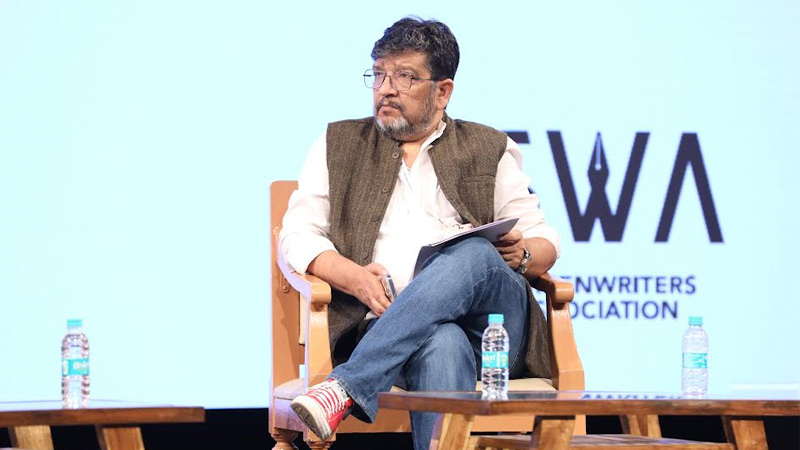
Scriptwriter Satyam Tripathi passes on

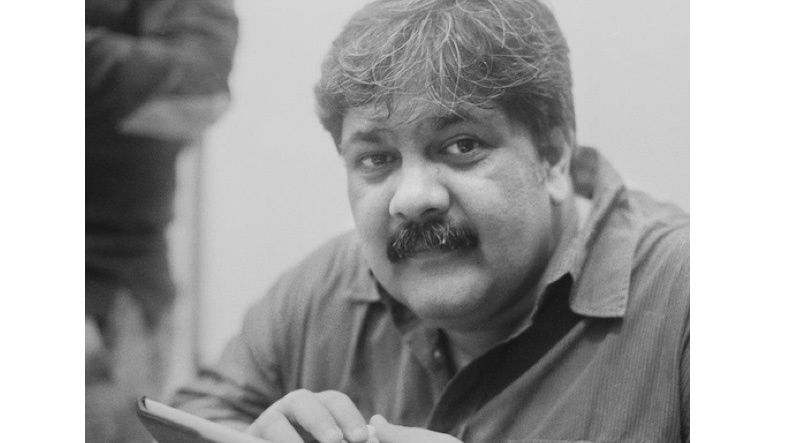
MUMBAI: On Christmas morning, whilst most of Mumbai slept off festive cheer, Satyam Tripathi’s heart gave out. 25 December proved cruelly ironic for a man who’d spent his career crafting drama—this time, there would be no second take. He was only 57.
Tripathi was a scriptwriter’s scriptwriter. Within India’s chaotic television industry, where writers are treated rather like spare parts, he’d carved out something rare: respect. For years, he sat on the executive committee of the Screen Writers Association, helping transform along with other leaders, what was once a talking shop into an organisation with teeth. When writers’ rights were little more than punchlines, Tripathi helped pen a different ending.
His credits read like a greatest hits of Indian telly: Hitler Didi, 12/24 Karol Bagh, Ek Mutthi Aasman, Parvarrish Kuchh Khattee Kuchh Meethi. Millions laughed, cried and switched channels to his work. He also championed the association’s Screen Writing Awards, ensuring that good writing didn’t go unnoticed in an industry obsessed with ratings and revenue.
Those who knew him speak of an affable soul, generous with time and advice. In a cut-throat business, Tripathi was that rarest of creatures: genuinely helpful.
His remains were cremated the same evening in the presence of industry associates and friends. The credits rolled quickly. But his final script—a better deal for India’s writers—continues to play out. That’s the sort of ending he’d have appreciated.
(Scriptwriters, producers and friends will be getting together to honour Satyam Kumud Tripathi’s memory and to hold a prayer meeting on 29 December. The location: Shri Guru Singh Sabha Gurudwara, 4 Bungalows, Andheri West, Mumbai. The time: between 3:30 PM and 5:00 PM.)




ATHENS: Greece has become the latest country to embrace one of Japan’s most emotionally charged television dramas. Mother, a series that tackles the harrowing subject of child abuse through the story of a teacher who kidnaps her student to save her from domestic violence, premiered on Alpha TV on September 25th.
The Greek adaptation, titled Na me les mama (Call me mom), marks the 11th international remake of the Nippon TV original—making it the most globally adapted Asian scripted format on record. Filmiki, the Greek production company behind the series, worked closely with Nippon TV to maintain the show’s emotional core whilst adapting it for local audiences.
“Mother is a story that has transcended cultures,” said Nippon TV scripted format sales and licensing executive Sally Yamamoto. The series has already conquered markets across Asia, Europe and the Middle East, with versions airing in South Korea, Turkey, Ukraine, Thailand, China, France, Spain, Saudi Arabia, Mongolia and the Philippines.
The original Japanese drama follows a woman in her mid-thirties who lives an apathetic existence until she discovers one of her pupils is being abused at home. Unable to understand her own impulses, she kidnaps the child and attempts to raise her as her own daughter whilst on the run from authorities.
Alpha TV programme director Christos Kompos described the series as “one of these stories that we feel really honoured to share with our audience.” The adaptation will stream simultaneously on Alpha TV’s HbbTV platform.
The show’s unflinching examination of society’s tendency to ignore child abuse has struck a chord with international audiences, proving that some stories need no translation to resonate across cultural boundaries.

VENICE: Television’s finest have been crowned at the Venice TV Awards 2025, with productions from 32 countries proving that quality programming knows no boundaries. The ceremony, backed by the Association of Commercial Television and Video on Demand Services in Europe, the International Music + Media Centre, and the European Group of Television Advertising, celebrated another bumper year for the box.
Britain emerged as a standout performer, claiming four categories including the coveted documentary prize for The Man Who Definitely Didn’t Steal Hollywood from Wonderhood Studios and the BBC. The corporation also triumphed in comedy with Ludwig, starring David Mitchell, whilst securing wins in performing arts and children’s programming.
Japan flexed its creative muscles with three victories, including the television film award for Driving into the Storm and animation honours for Luka and the Flower of the Sun. The country’s technical prowess shone through in the cinematography category with Deep Ocean: Kingdom of the Coelacanth.
Canada’s Empathy from Trio Orange took the series crown, whilst South Korea’s Couple Palace dominated light entertainment. France claimed both sport and technology categories, with Canal+’s Giroud and TF1’s innovative 8 May 1945 respectively.
The awards spanned 18 categories, from traditional documentary and news coverage to cutting-edge cross-platform content and branded entertainment. America’s CBS News won recognition for its Red Sea reporting, whilst NBCUniversal’s Peacock platform scored with its Paris Olympics coverage.
Smaller television markets also punched above their weight. Finland’s Queen of Fucking Everything earned the direction prize, whilst Germany’s film school production If I could fly claimed the new talent award.
The ceremony underscored television’s resilience and creativity in an increasingly fragmented media landscape. As streaming platforms continue to reshape viewing habits, traditional broadcasters and digital natives alike demonstrated that compelling storytelling remains the industry’s beating heart.
With productions ranging from hard-hitting documentaries to frothy entertainment, the winners reflected television’s remarkable breadth and ambition in 2025.
Fiction
The return of Tulsi: Why Kyunki Saas Bhi Kabhi Bahu Thi will still hook India 25 years later

MUMBAI: It’s been 25 years since Tulsi Virani first walked into our living rooms, but the magic of Kyunki Saas Bhi Kabhi Bahu Thi hasn’t dimmed a bit. Ekta Kapoor and Balaji Telefilms’ magnum opus remains as endearing today as it was when it first aired — a reminder of the power of family ties in an increasingly fragmented modern India.
A Family Portrait in an Age of Isolation
For those of us who grew up in bustling joint families, watching the Viranis feels like coming home. Their laughter, their rituals, even their quarrels — all echo a world that’s slowly slipping away. Today, nuclear households dominate India’s urban landscape. Parents are often left in old-age homes, siblings are scattered across cities and time zones, and “quality time” has been replaced with curated Instagram reels. Yet, as the Viranis gather under the palatial roof of Shantiniketan, the series offers a bittersweet reminder of what we’ve lost — and why we still yearn for it.
Old Tropes, New Resonance
Yes, the show is steeped in traditional tropes: Mihir as the patriarch, Tulsi shouldering the emotional and domestic burdens. But there’s nuance beneath the surface. Mihir is not a dictator but a partner — one who values Tulsi’s opinions, especially on their daughter Pari’s life choices. Their partnership reflects a subtle but important evolution in how couple dynamics are portrayed: mutual respect in a traditional framework.
A Gripping Opening
The revival wastes no time. From the very first episode, where preparations are underway for the Virani elders’ 38th wedding anniversary, viewers are swept back into the grand world of Shantiniketan. The writing is crisp, the camerawork fluid, the lighting lush, and the casting absolutely on point. Balaji’s signature flair for scale and detail is intact.
The Sacrifices of Tulsi
In the first two episodes, Tulsi remains the selfless heart of the household. She attends her anniversary party without a care for glamour, even giving away her saree to a relative. Midway through the celebration, she dashes to rescue her son Angad after a car accident, promising him she won’t tell Mihir. She returns to the festivities as though nothing happened, her own emotional turmoil buried under duty. These sacrifices define Tulsi — the glue of the Virani family.
Cracks Beneath the Perfect Surface
Of course, no Virani gathering is without its shadows. A jealous sister-in-law simmers in resentment, praying for Tulsi’s downfall. And in the third episode, a sensitive issue surfaces: Tulsi, older and heavier, worries about her fading youth next to Mihir’s enduring vitality. His tender reassurance — that she is the pillar on which Shantiniketan stands — transforms the moment into one of the show’s most moving exchanges.
A Timeless Winner
With just three episodes, it’s clear that Star Plus, Ekta Kapoor, and Balaji Telefilms have another winner on their hands. More than a television drama, Kyunki Saas Bhi Kabhi Bahu Thi is a cultural touchstone — a reminder that while lifestyles may change, our hunger for love, loyalty, and family never will.
As the Viranis sit down together under the glowing chandeliers of Shantiniketan, one thing is certain: some sagas don’t just entertain us — they become part of who we are.

Netflix celebrates a decade in India with Shah Rukh Khan-narrated tribute film

Delhivery chairman Deepak Kapoor, independent director Saugata Gupta quit board

Meta appoints Anuvrat Rao as APAC head of commerce partnerships

Brnd.me enters Europe as haircare brands power global expansion

TechnoSport taps quick commerce with launch on Slikk’s 60-minute platform

Jitendra Singh joins Reliance Industries as senior vice president, special projects

Tinder brings real-world dating experiences to North East India

These ’90s fashion trends are making a comeback in 2017
The final 6 ‘Game of Thrones’ episodes might feel like a full season
According to Dior Couture, this taboo fashion accessory is back
The old and New Edition cast comes together to perform
Phillies’ Aaron Altherr makes mind-boggling barehanded play
Uber and Lyft are finally available in all of New York State
Disney’s live-action Aladdin finally finds its stars
Netflix celebrates a decade in India with Shah Rukh Khan-narrated tribute film
Delhivery chairman Deepak Kapoor, independent director Saugata Gupta quit board
Meta appoints Anuvrat Rao as APAC head of commerce partnerships
Brnd.me enters Europe as haircare brands power global expansion
TechnoSport taps quick commerce with launch on Slikk’s 60-minute platform
Jitendra Singh joins Reliance Industries as senior vice president, special projects
Tinder brings real-world dating experiences to North East India
-
 iWorld3 months ago
Tips Music turns up the heat with Tamil party anthem Mayangiren
-
 iWorld12 months ago
BSNL rings in a revival with Rs 4,969 crore revenue
-
 I&B Ministry3 months ago
India steps up fight against digital piracy
-
 MAM3 months ago
HoABL soars high with dazzling Nagpur sebut
-
 iWorld2 days ago
Netflix celebrates a decade in India with Shah Rukh Khan-narrated tribute film
-
 News Broadcasting6 months ago
Wion marks Independence Day with global showcase of India’s spirit
-
 iWorld3 months ago
The Night Manager returns with new secrets, new spies and old scars
-

 Brands2 months ago
Luma powers up with massive 900m dollar raise