
News Headline
Real estate in 2025: from momentum to maturity


MUMBAI: If 2024 was about recovery, 2025 was about conviction. As the curtain falls on this year, India’s real estate sector is celebrating one of its strongest years in recent memory, a year that fundamentally transformed the industry’s character from speculation-driven transactions to value-based investments. From Mumbai’s infrastructure boom to Bengaluru’s price surges, and from the rise of alternative capital to the emergence of service-led housing, 2025 has rewritten the playbook for Indian real estate.
The end-user era arrives
Perhaps the most defining feature of 2025 was the decisive shift towards genuine homebuyer demand, displacing the speculative fervour that had characterised previous cycles. Director at ArisUnitern, Navin Dhanuka, captured this transformation aptly: “2025 has been a strong and steady year for Indian real estate, driven by committed end-user demand, confident buyers, rising capital flows, and a clear move toward structured, data-based advisory. This year reinforced that real value in real estate comes from disciplined planning, sound capital management, and transparent governance, not just from launches or transactions”.
This wasn’t merely a sentiment, it played out dramatically across India’s major metros. In Mumbai, the shift was particularly pronounced. Co-Founder of Sarvam Properties, Dhaval Hemani, described 2025 as “a watershed year for Mumbai’s real estate landscape,” explaining that “end-user demand drove the market more than speculative buying, with a clear shift toward larger, amenity-rich homes across the MMR”.
Mumbai’s micro-markets told the story of infrastructure-led transformation. Thane, Wadala, Chembur, and Goregaon emerged as standout performers, with buyers demonstrating a clear preference for connectivity and quality of life over traditional central locations. Hemani noted that “Mumbai homebuyers are prioritising liveability, trust in developers, and long-term value, strengthening the city’s overall residential stability”.
Bengaluru’s remarkable price journey
Whilst Mumbai consolidated, Bengaluru witnessed one of the year’s most striking developments, a dramatic repricing of its mid-segment housing market. Managing Director of Sowparnika Projects, Ramji Subramaniam, revealed that “prices of 2 and 3 BHK apartments increase by nearly 40 per cent, rising from INR 65 lakh in 2022 to INR 95 lakh in 2025.”
Far from deterring buyers, this appreciation reflected genuine demand fundamentals. Subramaniam observed sustained interest in micro-markets such as Hoskote, Sarjapur Road, and Whitefield, “driven by strong infrastructure developments, new employment hubs and tech parks, healthy rental yields, and improved mobility.”
He noted that first-time homebuyers and young families continue to dominate, “choosing projects that combine affordability with modern, lifestyle amenities”.
The Bengaluru experience illustrated a broader trend across Indian cities—buyers were willing to pay premium prices, but only for homes that delivered tangible value through intelligent design and community amenities. As Subramaniam put it, “homebuyers are prioritizing intelligent layouts, efficient use of space, community-driven amenities, and long-term value creation.”
Luxury goes mainstream
If there was one segment that truly came of age in 2025, it was premium and luxury housing. What was once a niche category targeting ultra-high-net-worth individuals became a mainstream investment choice for India’s expanding affluent class.
CMD of Sumadhura Group, Madhusudhan G, characterised the shift: “Premium and luxury housing is emerging as a mainstream investment, driven by rising incomes, lifestyle aspirations, and sustained NRI participation.” He highlighted that Bengaluru and Hyderabad exemplified this trend, with “Bengaluru’s tech-led economy fuels demand for spacious, future-ready homes, while Hyderabad’s infrastructure-rich western corridors attract buyers seeking connectivity and quality living”.
The premium segment’s expansion wasn’t just about larger homes—it represented a fundamental change in buyer psychology. Founder & CEO of Property First, Bhavesh Kothari, explained that “homebuyers today are far more investment-conscious—they’re prioritising financially solid developers, strong project fundamentals, and long-term asset value.”
This sophistication extended to design preferences as well. Madhusudhan G noted that “lifestyle-led design, green spaces, and smart amenities are now benchmarks, while rising ticket sizes reflect a mature mindset prioritising durability, credibility, and long-term value”.
Year-end rush delivers win-win scenario
The closing months of 2025 witnessed the traditional year-end momentum, but with greater intensity than previous years. Executive Director of Vaishnavi Group, Kishan Govindaraju, explained the dynamics: “The year-end is traditionally an opportune time for homebuyers to invest in property, benefiting both buyers and developers. While homebuyers gain from attractive deals, flexible payment plans, and tax advantages before the financial year closes, developers are able to accelerate sales and clear inventory to meet annual targets”.
He noted that “the momentum that begins during the festive season continues through year-end, supported by improved buyer sentiment, bonus payouts, and rising disposable incomes,” creating what he termed “a win-win scenario, empowering buyers to make strategic investments and enabling developers to strengthen cash flows.”
Commercial sector embraces the flexible future
Whilst residential dominated headlines, 2025 also marked a significant evolution in India’s commercial real estate landscape. The hybrid work model, rather than fading as some predicted, became permanently embedded in corporate strategies, fundamentally reshaping workspace requirements.
Co-founder of SpazeOne, Sijo Jose, reported that “India’s commercial real estate sector demonstrated strong resilience, supported by steady occupier demand and expanding business activity.” More significantly, he noted that “managed office solutions gained significant traction, with even traditional enterprises increasingly adopting flexible, plug-and-play formats to support hybrid work strategies”.
The commercial story extended beyond metros. Sijo Jose highlighted that “Tier-2 cities also witnessed accelerated growth, driven by cost efficiencies, improving infrastructure and talent availability”—a development that could reshape India’s economic geography in coming years.
Construction activity data supported this optimism. MD & CEO of NCCCL, Mahesh Mudda, confirmed that “construction activity remained steady across housing and commercial segments, supported by a steady demand for premium residential and commercial spaces.” He cited the Knight Frank–NAREDCO Sentiment Index, with its Current Score of 59 and Future Score of 61, noting it “points to sustained optimism among developers and investors”.
The alternative capital revolution
Perhaps no development in 2025 will prove more consequential for the sector’s future than the explosive growth of alternative capital and private credit. Chairman & Managing Director of Nisus Finance, Amit Goenka, provided striking numbers: “AIF commitments in India are rising sharply and total investments reached over INR 5.3 trillion by March 2025, up 32% year-on-year as investors diversify beyond traditional asset classes.”
This wasn’t merely about quantum. It represented a structural shift in how Indian real estate gets financed. Goenka explained that “India is also emerging as one of the fastest-advancing private credit markets in the Asia-Pacific region, with real estate private credit surging as developers seek flexible, structured financing solutions that banks and traditional lenders are unable to provide”.
The implications extend far beyond developer balance sheets. This capital influx is “clear evidence of growing institutional and global interest in asset-backed strategies with strong governance and risk control at their core,” according to Goenka—precisely the kind of disciplined capital that can sustain long-term sector growth.
Financial Discipline Takes Centre Stage
The emphasis on discipline wasn’t confined to development finance. Across the real estate ecosystem, 2025 marked a year when efficiency and accountability moved from buzzwords to operational imperatives.
Co-Founder & CEO of Epsilon Money, Abhishek Dev, observed that “2025 reinforced the importance of structured, goal-oriented financial planning as investors navigated market volatility and shifting interest-rate cycles”. He noted “a clear move away from ad-hoc investing towards diversified portfolios backed by professional advice and long-term discipline.”
Even in seemingly mundane operational areas, the focus on precision intensified. CEO of FuelBuddy, Sunil Maddala, and CFO, Saransh Narula, reported that “in FY2025, fuel-dependent operations across sectors began reassessing what efficiency really means,” with a shift “from confirming fuel delivery to ensuring complete accountability at the litre level”. They warned that “small inefficiencies, even a 1–2% discrepancy in fuel handling can escalate into meaningful operational and financial exposure when repeated across sites and time periods”.
The services-led future emerges
Amidst the financial metrics and transaction volumes, 2025 also witnessed the emergence of a fundamentally new conception of what real estate can be—one that transcends physical structures to deliver ongoing services and outcomes.
Managing Director of Primus Senior Living, Adarsh Narahari, articulated this vision: “Real estate will decisively move from being a product-led business to a services-led one. Homes will no longer be defined only by location and construction quality and RE brand, but by the services, care and outcomes they enable”.
This wasn’t abstract theorising. Narahari explained that “we are already seeing technology get embedded into homes to proactively track health, reduce risk and improve healthspan—from smart monitoring to preventive wellness infrastructure”. For senior living in particular, he noted that “the focus will move from ownership to longevity, independence and quality of life”.
What 2026 holds
As industry leaders look ahead to 2026, the consensus points towards deepening institutionalisation and continued momentum, albeit with greater sophistication.
Director at ArisUnitern, Navin Dhanuka, expects “the industry is clearly moving into a more institutional and performance-led phase,” with “technology adoption, sustainability, and focused asset optimisation” guiding business growth. He anticipates “stronger institutional participation, sharper deployment of capital, and higher dependence on partners who bring together analytics, financial modelling, and strong on-ground execution”.
Infrastructure will remain a crucial catalyst. Co-Founder of Sarvam Properties, Dhaval Hemani, predicted that “2026 is expected to usher in a phase of smart, infrastructure-led growth across MMR,” with “the Trans Harbour Link, Metro network expansion, and new road corridors becoming operational,” positioning “emerging hubs for accelerated appreciation”.
The premium segment’s trajectory appears secure. Founder & CEO of Property First, Bhavesh Kothari, forecast that “with interest rates expected to remain stable and liquidity improving, we foresee accelerated demand in luxury and upper-mid segments across Bengaluru, Mumbai, and Goa”.
Alternative capital deployment will intensify. Chairman & Managing Director of Nisus Finance, Amit Goenka, expects “deeper capital deployment, consolidation and continued innovation in fund structures, with an intensified focus on execution excellence, risk-adjusted returns and sustainable long-term value creation.”
For the all-important mid-segment, Managing Director of Sowparnika Projects, Ramji Subramaniam, anticipates it will “remain the backbone of residential demand,” with “continuous infrastructure growth, increased digital adoption in construction, and a greater focus on sustainable, community living” driving further interest.
Commercial real estate’s outlook remains positive. Co-founder of SpazeOne, Sijo Jose, sees “continued demand for quality assets, flexible workplace solutions and sustainability-led development shaping the next phase of commercial real estate growth.”
In wealth management, Co-Founder & CEO of Epsilon Money, Abhishek Dev, expects “investor focus to sharpen on personalised wealth solutions, digital advisory platforms and prudent risk management, with trust, transparency and financial education emerging as key drivers of sustainable wealth creation.”
A sector transformed
As 2025 draws to a close, India’s real estate sector stands fundamentally transformed from where it began the year. The speculation-to-value shift, the mainstreaming of luxury, the commercial flexibility revolution, the alternative capital influx, and the emergence of services-led models, each represents not a temporary trend but a structural evolution.
Director at ArisUnitern, Navin Dhanuka, perhaps summed it up best: “The sector is entering a cycle where informed choices, operational excellence, and long-term vision will shape leadership and create lasting impact”.
Managing Director of Sowparnika Projects, Ramji Subramaniam, offered an equally apt conclusion: the coming year “will continue to be a year of balancing affordability with aspiration, driving design innovation, and reiterating confidence in India’s housing story”.
After a year defined by discipline, transparency, and genuine demand, India’s real estate sector enters 2026 not with the manic optimism of a speculative boom, but with the confident maturity of an industry coming of age.



MUMBAI: Netflix is celebrating ten years in India with a slick anniversary film voiced by Shah Rukh Khan, a nostalgic sprint through a decade that rewired how the country watches stories. The campaign doubles as both tribute and reminder: streaming did not just enter Indian homes, it quietly rearranged them.
Roll back to 2016 and television still dictated schedules. Viewers waited weeks, sometimes months, for favourite films to appear on prime time. Family-friendly filters narrowed options further, and piracy often filled the gaps. Then Netflix arrived, softly but decisively, carrying a catalogue of international titles rarely seen in Indian theatres and placing them a click away. Old blockbusters and new releases suddenly coexisted on the same digital shelf.
The platform’s real inflection point came in 2018 with Sacred Games, a breakout series that refused to dilute India’s grit for global comfort. Audiences embraced its unvarnished tone, signalling readiness for stories that did not need box-office validation or censorship compromises. What followed was a steady procession of relatable narratives. Competitive-exam anxiety fuelled Kota Factory. College relationships unfolded in Mismatched. Everyday pressures, not grand spectacle, proved bankable.
Language barriers thinned as foreign series arrived with Hindi, Tamil and Telugu dubbing, expanding viewership beyond urban English-speaking pockets. Marketing mirrored the shift. For global releases such as Squid Game, Netflix leaned on regional creators and influencers to localise buzz and make international content feel native.
The library widened beyond fiction. Documentaries stepped out of festival circuits into living rooms. Stand-up comedians found scale. Established filmmakers, including Sanjay Leela Bhansali with Heeramandi, embraced the platform’s long-form canvas. Subscriber numbers swelled to 12.37 million in India, according to Demandsage, and behaviour followed suit. Late-night binges became routine. Friday release rituals loosened. Watch parties turned solitary screens into social events.
Economics demanded adjustment. Early subscription pricing carried a premium aura that deterred many households. Over time, Netflix recalibrated plans to align with Indian spending sensibilities, conceding that accessibility is as critical as content. To extend momentum around marquee titles, the platform also experimented with split-season releases, stretching anticipation and watch time.
The anniversary film, narrated by Shah Rukh Khan, captures the linguistic shift that mirrors the cultural one: from “Netflix pe kya dekha?” to “Netflix pe kya dekhein?” The question moved from recounting the past to planning the next binge. In ten years, Netflix morphed from foreign entrant to familiar fixture, exporting Indian stories abroad while importing global ones home. The remote no longer waits; it chooses, clicks and moves on. In the streaming age, patience is out, playlists are in, and the next episode is always one tap away.

Gurugram: Delhivery’s boardroom is being reset. Deepak Kapoor, chairman and independent director, has resigned with effect from April 1 as part of a planned board reconstitution, the logistics company said in an exchange filing. Saugata Gupta, managing director and chief executive of FMCG major Marico and an independent director on Delhivery’s board, has also stepped down.
Kapoor exits after an eight-year stint that included steering the company through its 2022 stock-market debut, a period that saw Delhivery transform from a venture-backed upstart into one of India’s most visible logistics platforms. Gupta, who joined the board in 2021, departs alongside him, marking a simultaneous clearing of two senior independent seats.
“Deepak and Saugata have been instrumental in our process of recognising the need for and enabling the reconstitution of the board of directors in line with our ambitious next phase of growth,” said Sahil Barua, managing director and chief executive, Delhivery. The statement frames the exits less as departures and more as deliberate succession, a boardroom shuffle timed to the company’s evolving scale and strategy.
The resignations arrive amid broader governance recalibration. In 2025, Delhivery appointed Emcure Pharmaceuticals whole-time director Namita Thapar, PB Fintech founder and chairman Yashish Dahiya, and IIM Bangalore faculty member Padmini Srinivasan as independent directors, signalling a tilt towards consumer, fintech and academic expertise at the board level.
Kapoor’s tenure spanned Delhivery’s most defining years, rapid network expansion, public listing and the push towards profitability in a bruising logistics market. Gupta’s presence brought FMCG and brand-scale perspective during a period when ecommerce volumes and last-mile delivery economics were being rewritten.
The twin exits, effective from the new financial year, underscore a familiar corporate rhythm: founders consolidate, veterans rotate out, and fresh voices are ushered in to script the next chapter. In India’s hyper-competitive logistics race, even the boardroom does not stand still.
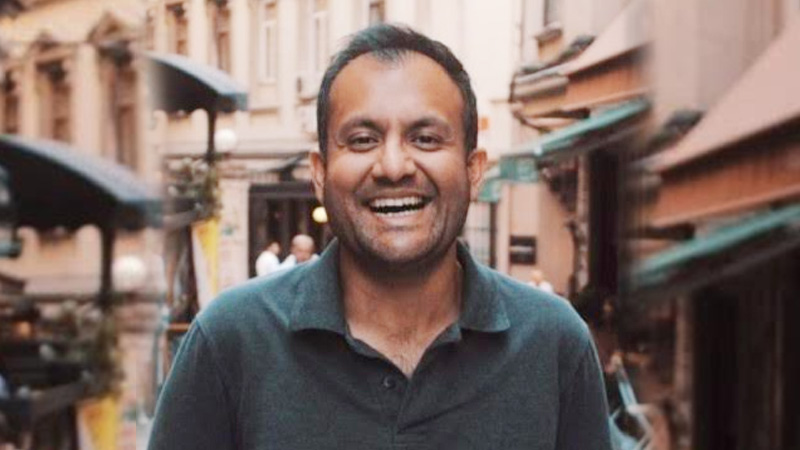
At Locofy.ai, Rao helped convert a three-year free beta into a paid engine, clocking 1,000 subscribers and 15 enterprise clients within ten days of launch in September 2024. The low-code startup, backed by Accel and top tech founders, is famed for turning designs into production-ready code using proprietary large design models.
Before that, Rao founded generative AI venture 1Bstories, which was acquired by creative AI platform Laetro in mid-2024, where he briefly served as managing director for APAC. Alongside operating roles, he has been an active investor and advisor since 2020, backing startups such as BotMD, Muxy, Creator plus, Intellect, Sealed and CricFlex through a creator-economy-led thesis.
Rao spent over eight years at Google, holding senior partnership roles across search, assistant, chrome, web and YouTube in APAC, and earlier cut his teeth in strategy consulting at OC&C in London and investment finance at W. P. Carey in Europe and the US.

Netflix celebrates a decade in India with Shah Rukh Khan-narrated tribute film

Delhivery chairman Deepak Kapoor, independent director Saugata Gupta quit board

Meta appoints Anuvrat Rao as APAC head of commerce partnerships

Brnd.me enters Europe as haircare brands power global expansion

TechnoSport taps quick commerce with launch on Slikk’s 60-minute platform

Jitendra Singh joins Reliance Industries as senior vice president, special projects

Tinder brings real-world dating experiences to North East India

These ’90s fashion trends are making a comeback in 2017
The final 6 ‘Game of Thrones’ episodes might feel like a full season
According to Dior Couture, this taboo fashion accessory is back
The old and New Edition cast comes together to perform
Phillies’ Aaron Altherr makes mind-boggling barehanded play
Uber and Lyft are finally available in all of New York State
Disney’s live-action Aladdin finally finds its stars
Netflix celebrates a decade in India with Shah Rukh Khan-narrated tribute film
Delhivery chairman Deepak Kapoor, independent director Saugata Gupta quit board
Meta appoints Anuvrat Rao as APAC head of commerce partnerships
Brnd.me enters Europe as haircare brands power global expansion
TechnoSport taps quick commerce with launch on Slikk’s 60-minute platform
Jitendra Singh joins Reliance Industries as senior vice president, special projects
Tinder brings real-world dating experiences to North East India
-
 iWorld3 months ago
Tips Music turns up the heat with Tamil party anthem Mayangiren
-
 iWorld12 months ago
BSNL rings in a revival with Rs 4,969 crore revenue
-
 I&B Ministry3 months ago
India steps up fight against digital piracy
-
 MAM3 months ago
HoABL soars high with dazzling Nagpur sebut
-

 MAM2 months ago
Best Lightweight Sunscreens for Daily Use in India
-

 AD Agencies1 month ago
Divya Parkhi steps into client lead role at WPP Media
-

 Brands3 months ago
Casio times it right for modern love this wedding season
-

 Brands3 months ago
TCS unveils Team SDG Universe for young learners