
News Headline
News Channel:2004 – The Year that was


News (channels) continued to make news. And, that seemed to be the underlying theme throughout 2004 for the news genre. Whether it was the revised uplinking norms for news channels or intense poaching of personnel (mostly from Aaj Tak) or the ratings warfare, the news channels were in the thick of action. There was no dearth of events too — from the general elections (where most news channels got their calculations wrong) to Sonia Gandhi’s refusal of the prime ministership despite being the head of the single largest political party to court room dramas to natural disasters, they were all there keeping the likes Aaj Tak, NDTV India, Zee News, NDTV 24×7 and Sahara Samay busy.
RULING THE HINDI HEARTLAND
To give you a glimpse of the action-oriented year that was, here’s a fast rewind.
 Continuing its stranglehold over the top slot amongst Hindi news channel in the country, Aaj Tak turned three on 31 December, 2003 and almost ended up throwing a gala bash on its fourth birthday. Though Star News, launched in a new avtaar early 2003 was in the eye of the storm for all the wrong reasons, finally got the government nod for uplinking on 1 January, 2004. Within a fortnight of this development, came the news that TV Today
  Television Network news director Uday Shankar was all set to join Star News as editor and director of news from February, 2004. Later in the day (August to be precise), Shankar became the officiating CEO of MCCS, the company that manages Star News, with Star News’ president Ravina Raj Kohli’s exit (some say it was a very sweet parting, though professionally may be a bit humiliating).
 Taking a leaf out of telecom czar Sunil Mittal’s philosophy to be present in every nook and corner of the country with his cellular network, NDTV India went ballistic promoting its new tagline ‘Zubaan Pe Sach, Dil Mein India’ to connect with the Hindi heartland early 2004. Country’s first Hindi news
  channel, Zee News, too was looking to do the same, but through its programming, especially during the general elections that was held in three phases and gave ample chance to news channels to display their talents or the lack of it.
 Thankfully, Doordarshan News, which always lives in the shadow of a sudden death depending on the whims and fancies of the government of the day, managed to hold its own despite generating some controversies over hiring and firing of people from private satellite channels. The channel did undergo a face-lift in January when the general elections loomed large, which included personnel from the private sector, slightly modified logo, new graphics, montage and several new shows.
Then came the news, early this year that Shri Adhikari Brothers owned SAB TV was firming up plans to start a current affairs channel with Madhavi Mutatkar (former president of Zee TV) at the helm of affairs. Considering the Adhikari brothers adeptness at being on the right side of the powers that be, rumours were rife that Hindustan Times debonair editor Vir Sanghvi, Karan Thapar and Smriti Z Iraani would be roped in for similar shows on the new channel. However, no official comment from the company was forthcoming. Though the likes of Sanghvi and former home minister LK Advani’s daughter Pratibha host shows on Sab TV, neither new rumours nor the current affairs channel surfaced in 2004.
 |
| Al-Jazeera MD Wadah Khanfar and India TV chairman Rajat Sharma |
While various mini dramas were being enacted all over the news genre, a new player stepped in quietly in the already cluttered Hindi news channel space when Rajat Sharma turned a broadcaster from a TV content producer by launching India TV. The channel’s claimed USP was that it was different from other news channels that got amplified in its anchors too – controversial promoter of Tehelka, Tarun Tejpal, and former union minister and environment activist Maneka Gandhi host shows for India TV. Coupled with a wide network of reporters, state-of-the-art infrastructure and a late-year exclusive content agreement with the controversial Arabic-language Al Jazeera, India TV wanted to storm into Aaj Tak and NDTV India’s bastion.
All these efforts definitely got India TV wah-wahs and some ratings too, but the distribution continues to remain a problem, though it is one of the news channels that is on the country’s first DTH platform.

At the top, they say, it can become quite lonely at times. So, watching from above, Aaj Tak started feeling a bit left out and decided to give itself a face lift that was affected in September wherein it changed its logo too. The plan being to emerge with a fresh new image, spirit and getting on to the next level of news broadcasting with a bottom-up approach to reach the class after having conquered the mass.
 Subhash Chandra’s Zee Telefilms Limited first soft-launched its business news channel on Zee’s direct-to-home (DTH) television service, Dish TV, in July, but on being challenged by the government on the clearance front, it hastily withdrew the channel. Finally, on 30 November, Zee Business went on air without much hullabaloo again on all platforms, but after having got the necessary permissions that came after the news channel business was hived off into a separate company called zee News Ltd. Is it being seen widely? Sometimes keeping mum is the better part of diplomacy.
 Sahara continued to be predictable. It flattered to deceive after its news channels slumped post early histrionics. Early December, Sahara effected further changes and merged all the bureaux of the region-specific and national news channels in order to bring in more synergy and avoid duplication of responsibilities.
IT ALL BOILS DOWN TO BEING ON TOP
Jo Jita wohi Sikander (he who wins is Alexander). Certain aberrations and phases, notwithstanding, Aaj Tak continued to rule, though it’s another story that competition is snapping at its heels and is too close for comfort.
Coming to the channel shares of the Hindi news channel through January to December 2004, Aaj Tak began the year with a channel share of 1.71 in January in the CS4+ Hindi speaking markets (HSM), according to Tam data. NDTV India, on the other hand, began the year modestly with a channel share of 0.8 in the above mentioned market. Star News and Zee News captured a channel share of 0.71 and 0.67, respectively. Sahara Samay National stood with a score of 0.38 per cent and DD News had a channel share of 0.7.
A trend that was seen in the channel shares of Aaj Tak and NDTV India from February to April was that while Aaj Tak’s share dipped through the three months, NDTV India’s picked up. From 1.71 per cent in January, Aaj Tak’s channel share dipped to 1.67, whereas NDTV India climbed from 0.8 to 1.18 (its highest in the year) during the same time period.
The hot months of April and May saw competition hotting up as far as the Hindi news channels Aaj Tak, NDTV India and Star News were concerned. The general elections in May saw Congress emerging as the undisputed leader; Aaj Tak too followed suit as far as the Hindi news channels were concerned. The channel garnered a share of 2.28 in May (the highest ever in 2004 as far as any news channel was concerned). NDTV India on the other hand managed a share of 1.7, Star News got 1.29, Zee News 1.04, DD News 0.83, whereas Sahara Samay National had a channel share of 0.62, according to data provided by Tam. On the other hand, Rajat Sharma’s India TV, which launched around the same time, managed a channel share of 0.01 per cent.
The month of June saw a dip in the overall channel shares of Hindi news channels with the exception of India TV (0.06). From June onwards, NDTV India was northward bound and ate into Aaj Tak’s share. However, the market leader managed to hold on. When we look at the disparity in the channel shares of NDTV India and Aaj Tak from the beginning to the end of the year 2004, the picture definitely tells a tale. NDTV India started in January with a channel share of 0.8 per cent and ended the year in December with 1.16. In contrast, Aaj Tak, which began 2004 with a share of 1.71, ended at 1.75.
Star News did manage to appreciate a little, but the promise with which it had started could not be maintained. Starting with a channel share of 0.71 per cent in January, it climbed the ladder to close with 1.03 per cent in December. Zee News, on the other hand, managed to get its act together to end the year with a channel share of 0.9 per cent in December, riding on the Gudiya episode that saw its ratings go up, though many felt that Zee News had turned a serious affair into a mockery. Sahara Samay National remained more or less constant in its share through the year.
THE ENGLISH PLAYERS BAT IT OUT
 Coming to the English news channels scenario in the country where the race for the top spot was prominently between NDTV 24×7 and Headlines Today. In September, Aaj Tak’s English sibling, which was lying low on the media front until now, rolled up its sleeves and geared up for competition by
  launching a 360 degrees media campaign. The campaign was focused on six metros and had a consistent message of ‘News, crisply told’ across all media and executions. Coupled with some aggressive distribution initiatives, Headlines Today built upon its image of news with accuracy, integrity and speed, but minus lengthy analysis.
 CNBC- TV 18 beefed up its evening line-up early this year. The business channel underwent a programming revamp and focused on the 6:30 pm to 11 pm band through current affairs programming hosted by the likes of Karan Thapar and veteran journalist MJ Akbar.
NDTV 24×7, on the other hand, went the business way in August and made good use of time to try out business programming before the launch of its business channel that is slated to happen on 17 January. This initiative not only bring it almost at par with the country’s then only business news channel, CNBC -TV18, but gave its personnel and staffers enough time to hone their talents at business related programming.
THE ENGLISH SCORE CARD
The introduction of NDTV 24×7’s new business slot brought it close to CNBC. According to Tam data for August, while CNBC TV 18 was ahead almost throughout the month with a channel share of 40.4 per cent in the CS4+ segment for the time period 9 am to 4 pm on weekdays, towards end-August, NDTV 24×7 managed to break the stranglehold to command a channel share of 33.3 per cent.
 The foreign news channels continued to be fringe players in the space with BBC World’s channel share standing at 0.1 per cent, whereas CNN was down the ladder with 0.06 per cent.
Since July this year, there has been no looking back for NDTV 24×7 as it continued to maintain its top position in the English news channel space. In December, the channel commanded a share of 0.47 as opposed to CNBC’s 0.23 in the CS AB 15+ five metros (excluding Chennai) as per Tam data. Headlines Today, on the other hand was a close third with a channel share of 0.21.
BREAKING NEWS
If 2003 was the year when a slew of general news channels were launched, late 2004 and 2005 would see similar activity in the business news channel segment.
TV18 and NDTV have announced their foray into the Hindi business news channel space and spruced up Hindi programming on their respective channels to gear up for the same. While TV18’s new channel, in association with CNBC, will be called Awaaz, NDTV’s will be called Profit. The former also announced in May that it would raise Rs 500 million to boost expansion plans and roped in Sahara Samay’s star anchor Shireen for the new venture. Profit, on the other hand, will be headed by Vikram Chandra and is aiming at giving more of the same, but with a lot of credibility.
The print media companies too seem to have been dazzled by the glamour of the electronic medium as several of them made forays into this space. First, Madhya Pradesh-based Bhaskar group started a cable-delivered channel and then its competition, the Uttar Pradesh-based Dainik Jagran Group, announced launching a Hindi news channel in March 2005. The company has roped in former Sahara Samay national news channel head Arup Ghosh as the director of news for its yet-to-be-named news channel, which will be uplinked through an Insat satellite from Noida.
Apart from this, The Times of India Group also announced its plans to venture into the business and news channels space. Though activity in this proposed business news channel is at a nascent stage, barring few appointments being made, it has an experienced person at the helm of affairs – former NDTV news editor Arnab Goswami as the vice president – news and editor. The Rs 25-billion Delhi-based Senior Group of Companies announced its plans to launch a channel, but the plans were put into the backburner after the promoters had differences with editorial head, Santosh Bharatiya.
SPECIAL ENDEAVOURS
Moving away to some of the special endeavours that news channels undertook, while other players in the news genre were haggling over male eyeballs, Sahara Samay looked at roping in women and children viewers to broaden its viewership base. Sahara Samay Mumbai beefed up its afternoon band from 12 January 2004 and rolled out programmes targeted at women audiences.
 Towards the latter half of 2004, Star News launched a show with a difference that was a take off on the mush and gush on the entertainment channels. Saas Bahu Aur Saazish – Kyunki Har Serial Kuch Kehta Hai on Star News, again targeted at women, is doing well as far as ratings go.
Crime shows on news channels, on the other hand, were the talk of the town as far as this year was concerned. Almost all news channels rolled out more than one crime special which rated high in the numbers game. It is another thing that most of these crime shows focus more on the flesh trade and murders in various smaller towns, which, according to the police in some places, has added to their problems.
HARD FACTS
The issue of news channels uplinking from India, revised and announced in March 2003, continued to simmer throughout 2004 with an ambivalent government aiding media companies in getting more time to conform to the revised guidelines that cap foreign investments in news channel ventures at 26 per cent.
The deadline has been extended already twice and soon may become a laughing stock. Unless the government pulls out an ace in the form of a comprehensive regulatory legislation.
It also hasn’t been a bad year for new listings. The Aroon Purie-controlled TV Today Network was listed on the Bombay Stock Exchange (BSE) on 16 January, 2004 and was over subscribed 35 times. NDTV’s Rs 1 billion IPO, which opened on 21 April, was oversubscribed 36+ times when it closed on 28 April. And, having made an audacious bid for the Indian cricket telecast rights for $ 308 million, Zee Telefilms too played the markets well.
THE 2005 TREND
Ideally critics would say that this should be the time for shakeout and some consolidation, but the way things are going shakeout seems to be still quite a distance away. Take, for example, Media Content and Communications Services India Pvt. Ltd’s (a joint venture between ABP TV and the Star Group) decision to start a Bengali news channel and follow it up with a crime news channel. Still in the realm of speculation, but these are indications that launches would not abate in 2005. Not to mention a Bengali channel from the Sahara stable too.
How many of these new launches are more influenced by political decisions is anybody’s guess, considering both the promoters of Sahara and ABP group (the majority partners in MCCS) are politically connected and would like to leverage such connections.
However, 2005 should see some radical changes taking place in the news channels’ editorial policy. A stunt here and a stunt there may have brought in the ratings, but the news channels have to decide once and for all whether they would like to increase their credibility, a la BBC, or continue to reduce the concept of ‘breaking news’ and ‘exclusives’ to the level of a joke. Gustakhi maaf, news is certainly not a laughing matter. Especially not when it concerns the fate of a child torn between two men in his mother’s life or pandering to political bosses’ whims.
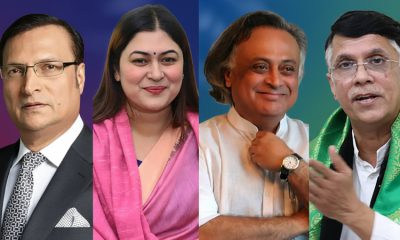

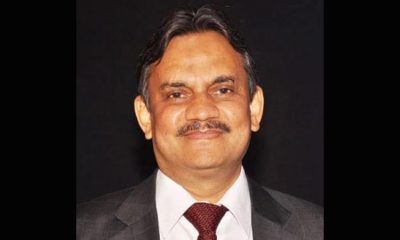


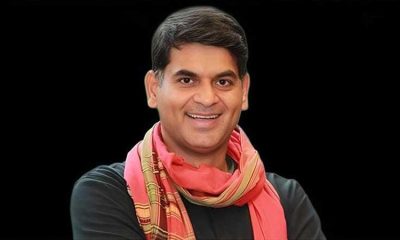



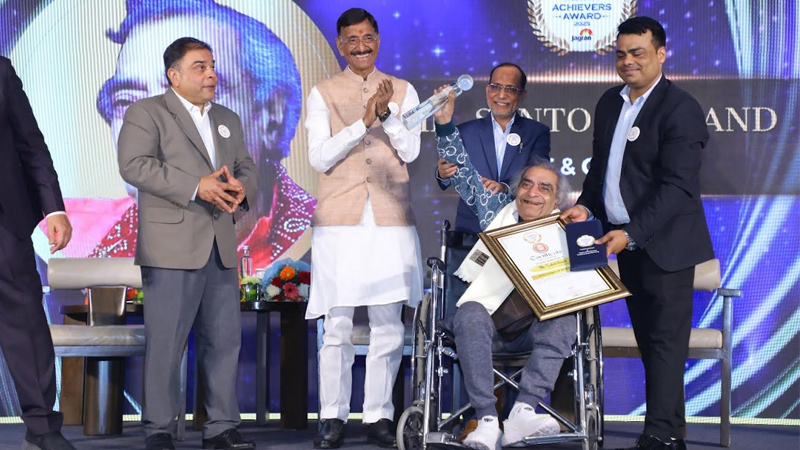
NEW DELHI: Hamdard Laboratories gathered a cross-section of India’s achievers in New Delhi on Friday, handing out the Hakeem Abdul Hameed Excellence Awards to figures who have left their mark across healthcare, education, sport, public service and the arts.
The ceremony, attended by minister of state for defence Sanjay Seth and senior officials from the ministry of Ayush, celebrated individuals whose work blends professional success with a sense of public purpose. It was as much a roll call of achievement as it was a reminder that influence is not measured only in profits or podiums, but in people reached and lives improved.
Among the headline awardees was Alakh Pandey, founder and chief executive of PhysicsWallah, recognised for turning affordable digital learning into a mass movement. On the sporting front, Arjuna Awardee and kabaddi player Sakshi Puniya was honoured for her contribution to the game and for pushing women’s participation onto bigger stages.
The cultural spotlight fell on veteran lyricist and poet Santosh Anand, whose songs have echoed across generations of Hindi cinema. At 97, Anand accepted the honour with characteristic humility, reflecting on a life shaped by perseverance and hope.
Healthcare honours spanned both modern and traditional systems. Manoj N. Nesari was recognised for strengthening Ayurveda’s place in national and global health frameworks. Padma shri Mohammed Abdul Waheed was honoured for his research-backed work in Unani medicine, while padma shri Mohsin Wali received recognition for his long-standing contribution to patient-centred care.
Education and social development also featured prominently. Padma shri Zahir Ishaq Kazi was honoured for decades of work in education, while former Meghalaya superintendent of Police T. C. Chacko was recognised for public service. Goonj founder Anshu Gupta received an award for his dignity-centred rural development initiatives, and the Hunar Shakti Foundation was honoured for empowering women and young girls through skill development.
The Lifetime Achievement Award went to former IAS officer Shailaja Chandra for her long career in public healthcare and governance, particularly in the traditional systems under Ayush.
Speaking at the event, Hamdard chairman Abdul Majeed said the awards were a tribute to those who combine excellence with empathy. “These awardees reflect Hakeem Sahib’s belief that healthcare, education and public service must ultimately serve humanity,” he said.
Minister Seth struck a forward-looking note, saying India’s young population gives the country a unique opportunity to become a global destination for learning, health and wellness by 2047.
The ceremony also featured the trailer launch of Unani Ki Kahaani, an upcoming documentary starring actor Jim Sarbh, set to premiere on Discovery on 11 February.
Instituted in memory of Unani scholar and educationist Hakeem Abdul Hameed, the awards have grown into a national platform that celebrates those building a more inclusive and resilient India. For one evening at least, the spotlight was not just on success, but on service with substance.
MUMBAI: For decades, creative storytelling has been the cornerstone of brand communication. The “big idea” amplified through catchy jingles, striking visuals, and memorable hooks was once the gold standard for relevance and recall. Creativity defined presence, and the loudest, boldest campaigns often won attention.
But the marketing landscape today looks very different.
Audiences are more exposed, more discerning, and far less patient. They are inundated with messages across platforms, formats, and creators, often encountering hundreds of brand touchpoints in a single day. In this environment, creativity alone especially when untethered from real consumer truths is no longer enough to move behaviour. Great ideas are abundant. Meaningful impact is not.
This is where insights matter.
The difference may seem subtle, but it is fundamental. An idea represents what a brand wants to say. An insight reflects what the audience is already thinking, feeling, or experiencing. The most effective campaigns emerge not from cleverness alone, but from the intersection of these two forces.
From creativity to relevance
As the marketing ecosystem becomes increasingly saturated, consumers are growing immune to inflated claims and surface-level storytelling. Even beautifully crafted campaigns can fail if they are disconnected from lived realities. The gap between a brand’s internal enthusiasm and the audience’s actual sentiment can be the difference between attention and indifference.
Insights help bridge this gap. They force brands to pause, listen, and observe to understand emotions, behaviours, cultural contexts, and contradictions. Instead of trying to be remembered through louder branding, insight-led campaigns allow audiences to see their own experiences reflected back at them. When a campaign articulates a problem that feels personal, relevance is created. Trust follows.
Insight is interpretation, not information
It’s important to distinguish between data and insight. Data tells us what is happening. Insight explains why it is happening. While data is measurable and structured, insights are interpretive and dynamic, shaped by real-time sentiment and human behaviour.
Modern consumers are full of contradictions. They demand authenticity while remaining deeply aspirational. They want brands to take a stand but expect nuance, not instruction. They seek transparency, yet are drawn to curated narratives. These tensions are not obstacles, they are opportunities. When understood correctly, they can shape communication that feels timely, credible, and human.
Some of the most effective campaigns today are born not in isolated brainstorm rooms, but through listening to audiences, creators, editors, online communities, and cultural signals. Insights often exist in blurred patterns, but once identified, they can redefine how a brand connects.
A recent campaign we executed for Domino’s illustrates this shift clearly. The brief wasn’t to make a pizza look bigger or louder. Instead, it was rooted in a simple behavioural truth: in Tier 2 and Tier 3 markets, sharing food is an emotional act tied to family, celebration, and value perception. The “Big Big 6-in-1 Pizza” became a canvas for this insight. The campaign leaned into regional voices and real sharing moments, allowing people to show how they experienced the product rather than being told why they should buy it. Influencers and celebrities amplified genuine usage, not scripted endorsements. The impact from engagement to footfall to sales came not from a clever idea, but from understanding how people relate to food in their everyday lives.
Shifting the starting point
Today’s consumer landscape demands a shift in perspective from “What should the brand say?” to “What does the audience need to hear right now?” This marks a move away from inward-led marketing toward communication shaped by behaviour, emotion, and cultural relevance.
Brands leading today are keen observers. They notice when perfection stops resonating. They sense when luxury shifts from aspiration to excess. They recognise when influencer content begins to feel repetitive and trust erodes.
Virality, too, is often misunderstood. It is not a strategy to chase, but an outcome. Campaigns rooted in insight do not aim to go viral; they aim to resonate. When content reflects something familiar, a shared truth, emotion, or tension, it travels organically because people see themselves in it.
Ideas attract attention. Insights build connection.
The evolving role of PR
For PR professionals, this shift has redefined success. Coverage volume alone no longer tells the full story. The more meaningful questions today are: Did the communication influence behaviour? Did it align with cultural conversations? Did it address a real consumer pain point?
Insight-first thinking allows these questions to be answered at the planning stage, rather than corrected midway through execution.
In a world where formats and platforms will continue to evolve, what remains constant is the power of authentic communication. The strongest campaigns today do not begin with a brainstorm, but with observation, interpretation, and empathy. That is not just better marketing, it is more responsible, resilient, and meaningful brand-building.
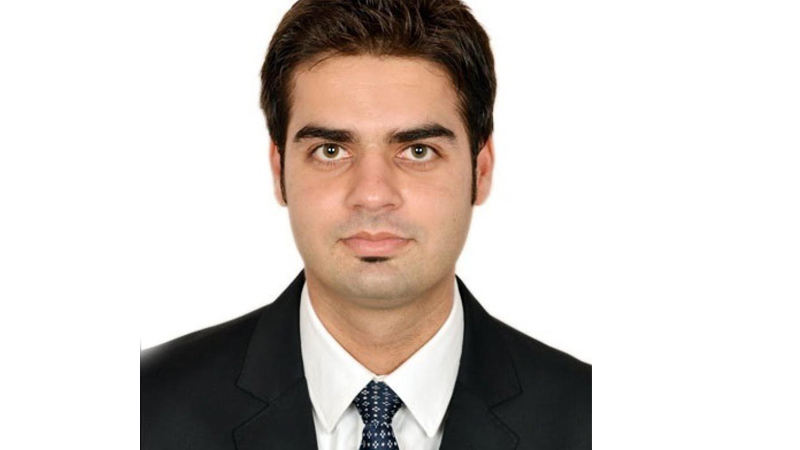
MUMBAI: Zepto has elevated Ahmad Muneeb to vice president – HR centre of excellence, placing him at the helm of the company’s total rewards, executive compensation and organisational effectiveness as the quick-commerce firm powers through a high-growth phase.
The move follows his stint as senior director of the HR COE, where he played a central role in preparing the company for IPO readiness while scaling its people analytics capabilities. During this period, Muneeb helped align complex performance management structures with more streamlined and scalable employee experience frameworks.
In his new role, he will steer the design of total rewards strategies, executive compensation planning and organisational design, while also overseeing performance management, employee experience initiatives and people analytics programmes.
Before joining Zepto, Muneeb spent nearly three years at Meesho, where he held multiple rewards and HR business partner roles. Earlier in his career, he worked as a senior rewards consultant at Mercer, advising high-tech clients on compensation benchmarking, pay structures and talent-focused reward frameworks.
He began his hr journey at Cognizant, where he supported compensation programmes for nearly two lakh employees across India and worked on m&a compensation alignment and skill-based pay initiatives. Prior to moving into HR, Muneeb started his career as a software engineer at Netcracker, bringing a technical grounding to his people strategy work.
With a mix of consulting rigour, start-up agility and enterprise-scale experience, Muneeb’s elevation signals Zepto’s continued focus on building robust people systems as it races towards its next phase of growth.



MIB sets OTT accessibility rules, mandates captions and audio description

Boney Kapoor acquires remake rights of Tamil political satire Thalaivar Thambi Thalaimaiyil

Netflix India names Rekha Rane director of films and series marketing

Zabeen signs off from TV9 after shaping the network’s public voice

Dhawan steps up to bat for Delhi’s grassroots sports push

Orient Beverages pops the fizz with steady Q3 gains and rising profits

Cheekatilo shines in the dark with record debut on Prime Video

These ’90s fashion trends are making a comeback in 2017

Swiggy Instamart’s GOV surges 103 per cent year on year to Rs 7,938 crore
The final 6 ‘Game of Thrones’ episodes might feel like a full season
According to Dior Couture, this taboo fashion accessory is back
The old and New Edition cast comes together to perform
Phillies’ Aaron Altherr makes mind-boggling barehanded play
Uber and Lyft are finally available in all of New York State
MIB sets OTT accessibility rules, mandates captions and audio description
Boney Kapoor acquires remake rights of Tamil political satire Thalaivar Thambi Thalaimaiyil
Netflix India names Rekha Rane director of films and series marketing
Zabeen signs off from TV9 after shaping the network’s public voice
Dhawan steps up to bat for Delhi’s grassroots sports push
Orient Beverages pops the fizz with steady Q3 gains and rising profits
Cheekatilo shines in the dark with record debut on Prime Video
-
 e-commerce1 month ago
Swiggy Instamart’s GOV surges 103 per cent year on year to Rs 7,938 crore
-
 iWorld1 year ago
Kuku TV transforms India’s OTT space with vertical microdrama boom
-

 News Headline2 months ago
From selfies to big bucks, India’s influencer economy explodes in 2025
-
 News Headline1 year ago
TRAI puts a ‘stop’ to unsolicited calls and messages
-
 News Headline1 year ago
Abhishek Bachchan joins as co-owner of European T20 Premier League
-
 Comedy2 years ago
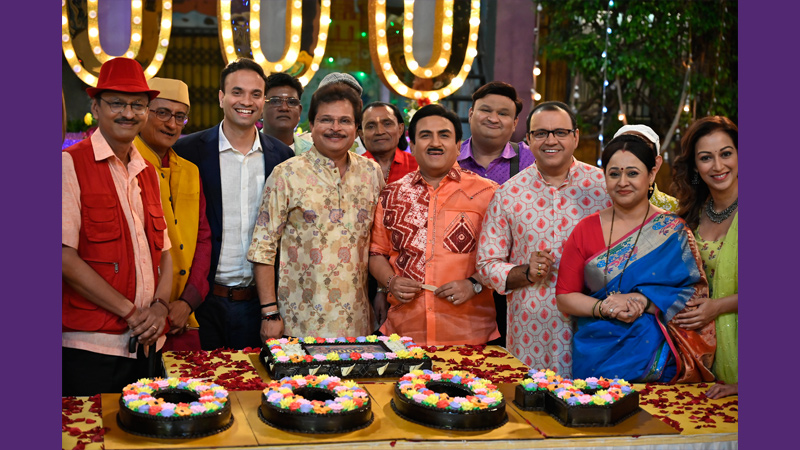
Taarak Mehta Ka Ooltah Chashmah celebrates 4,000 episodes
-
 MAM2 years ago
OpenAI joins C2PA steering committee
-
 News Headline2 years ago
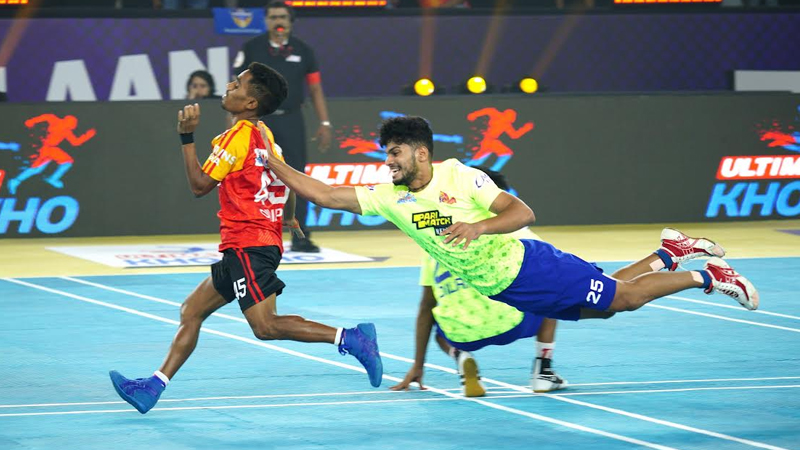
Odisha to host Ultimate Kho Kho Season 2 from December 24


