
Kids
Kids channels’ mantra: “Go local”

MUMBAI: If there is one genre on Indian television today that is growing at a rapid speed, it is the kids channel space.
Sample some facts:
*There are 310 million kids in India out of which, 130 million are TV viewing kids.
*The Indian kids market is equivalent to the Western European kids market
*The Indian kids’ discretionary spending power is $5 billion
In such a dynamic scenario, more and more kids channels are entering the hitherto untapped arena.
The Frames session on Kido-Logy saw Hungama TV programming head Zarina Mehta, Walt Disney Asia managing director (Branded TV) Nicky Parkinson, Lowe vice president Sanjai Srivastava, Turner Entertainment Network Asia senior vice president and general manager Ian Diamond and Millward Brown Services, IMRB International vice president and head (South Asia) Prasun Basu urging Urging the industry to ‘go local’ via programming if they wanted to make their presence felt in the country.

In 1981, there was just one kids’ show on Doordarshan, Magic Lamp, which was India’s first kids show. Between 1981 and 1985, came shows like Contact, which was the mathemagic show on DD. Then came the golden era of the Ramayana and Mahabharat from 1985 – 1990, which, in the strictest sense, cannot be dubbed kids programming.
After that, television was bombarded with kids’ special shows like Snakes & Ladders (Zee TV), Shaktimaan (DD) and Hip Hip Hurray (Zee TV).
The present day scenario is not only there are various kids-focused shows like ShakaLaka Boom Boom, Son Pari and Sharaarat, to name a few, there are even evening kids’ bands on general entertainment channels like Star Plus, Sony and Zee.
Year 1995 could be termed as a new beginning. The first
international kids channel, Cartoon Network, launched in India. In 1999, Nickelodeon launched and, in 2000, Cartoon Network went the Hindi way. Nickelodeon followed suit in 2003 when it relaunched as Nick in Hindi. Then the Indian television space saw a slew of kids channels launching — Animax, POGO and finally Hungama TV. Last year, the Walt Disney International set eyes on India and launched two channels here with Hindi content.
Said Parkinson, “The Indian and the UK kids market is very similar to Each other. The way forward in this scenario is by going local. One must think local and act local.”
In the first two months after the launch of the Disney channels in India, the company produced 200 hours of original programming, which has been one of the single largest programming efforts undertaken by any broadcaster.
The Disney channels are available in 10 different languages across the Globe. In India, the channel has about 2,000 hours of Hindi and Tamil programming. Disney also plans to have locally adapted versions of its popular interactive shows like That’s so Raven in India. “Our approach lies in our company’s promise to deliver belief in our content,” Parkinson said. Concurring with Parkinson, Turner’s Diamond too had the same advice of going local. “The underlying principle of a successful channel is in knowing your audience. We believe in investing in research of the evolving media habits of the kids in India. With the help of our research, we felt the need to launch Pogo And that was how Pogo was born in India,” said he.
While the kids’ space is still at a nascent stage in India, it is growing at a very rapid pace. “Knowing your content and providing quality premium content is a key factor. It is essential to invest heavily in content and localization is the key to ensure that your product is recognised by your audience,” Diamond added.
Cartoon Network and Pogo have taken several local initiatives in India. These include 100 per cent Desi Toons, Pogo Amazing Kids Choice Awards, Toon Tamasha in Hindi, English and Tamil, Prime Pogo slot, Toon Cricket, customised shows on special occasions like Diwali, Holi, Raksha Bandhan and Pongal, Teacher’s Day and Mother’s Day specials.
“Make sure that your audience gets a complete brand experience through different events, contests and media. One should encourage different types of thought processes. That really will be the way forward,” stressed Diamond.
One of Cartoon Network’s special initiatives was to urge kids to
develop their own cartoon character, which the network would animate and develop. The first such cartoon character was – Leo – The Magic Pencil. “We will open our network and give a voice to the kids. They should have an ownership towards the channel,” he added.
Pointing out that Turner has been in the market for 10 years, Diamond said the lesson that has been learnt states innovate, invest and evolve in the market.
Predicting some future trends in the kids channel space, Hungama TV’s Mehta said that the exponential growth in revenues will come from advertising and subscription money. “There will be a push from marketing, content and technology and I believe, there will be 20 dedicated kids’ channels, which will cater to individual age groups, girls and boys,” Mehta said.
Also, according to her, there is a possibility of regional language channels for kids coming up. Interactive gaming channels and kids specific radio stations will also be something to watch out for.
Basu, on the other hand, threw light on how kids and brands were inseparable. Throwing up some staggering figures on the importance of kids between 8 – 14 year old, Basu said they control $1.88 trillion a year globally.
“The tweens love brands, they are different and they are the first truly interactive generation, which is driven by pester power,” he said.
Delving into the reasons as to why this lot was important, Basu said, “These 8-14 year olds are departing from the playground and they are subjected to almost 20,000 ads a year. Apart from this, they are also more affluent and are growing in number.”
Sample these figures of the percentage of kids in some countries who are driven by peer pressure:
* Germany – 71 per cent
*China – 81 per cent
* India – 81 per cent
* Brazil – 89 per cent
“India is a very dynamic market and kids here have a very high
competitive spirit. 92 per cent of kids enjoy creating things, 80 per cent can’t wait to grow up and almost 90 per cent want to be famous,” said Basu.
Lowe’s Srivastava questioned the need to use kids in advertisements of products that they have very little or nothing to do with. “The center of our universe is changing as consumers and parents. We have let the kids get the better of us and
the balance of power has clearly shifted. The marketers’ new mantra and weapon is that if you can’t convince them, manipulate them,” he said.




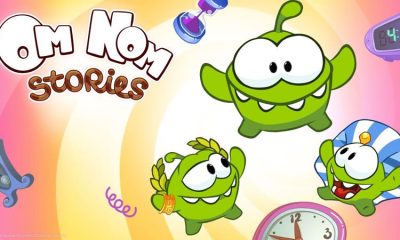



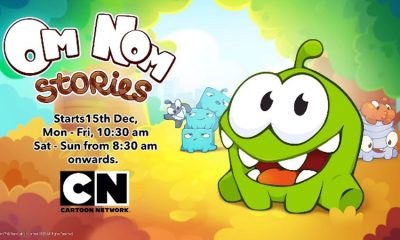

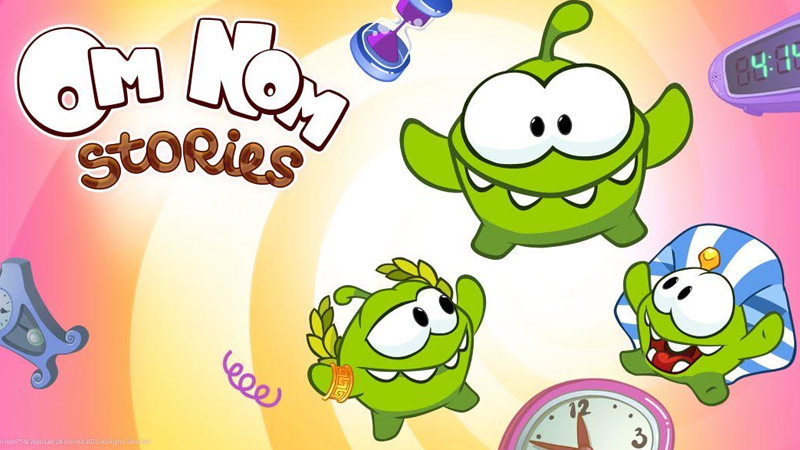
MUMBAI: The little green hero is making a big leap east. Zeptolab has struck a major distribution deal with Warner Bros. Discovery, bringing its hit animated series Om Nom Stories to audiences across the Indian subcontinent.
Under the agreement, Warner Bros. Discovery has acquired the series for exclusive Pay TV broadcast and non-exclusive digital streaming in India, Pakistan, Bangladesh, Bhutan, Nepal and Sri Lanka. The move marks a significant expansion for Zeptolab as it pushes one of its most successful original IPs into one of the world’s fastest-growing entertainment markets.
As part of the deal, all 26 seasons of Om Nom Stories will be rolled out across Cartoon Network, Pogo, Discovery Kids and Discovery+, offering both linear and digital access to the franchise’s slapstick humour and expressive, dialogue-free storytelling.
“We’re incredibly excited to partner with Warner Bros. Discovery to bring Om Nom Stories to the Indian subcontinent,” said Zeptolab executive producer Manaf Hassan, noting that the broadcaster’s reach and legacy make it a strong fit for the series’ growing global fanbase.
Warner Bros. Discovery, meanwhile, sees the acquisition as a natural addition to its children’s portfolio. Warner Bros. Discovery head of factual entertainment, lifestyle and kids for South Asia Sai Abishek, said the series aligns with the network’s focus on cheerful, imaginative and universally appealing content for families across the region.
The timing adds an extra layer of significance. The expansion coincides with Om Nom’s 15th anniversary, underlining the franchise’s staying power and its evolution from a mobile game character into a global animation brand. With this latest bite at the Indian subcontinent, Om Nom’s adventures look set to find a whole new generation of fans.
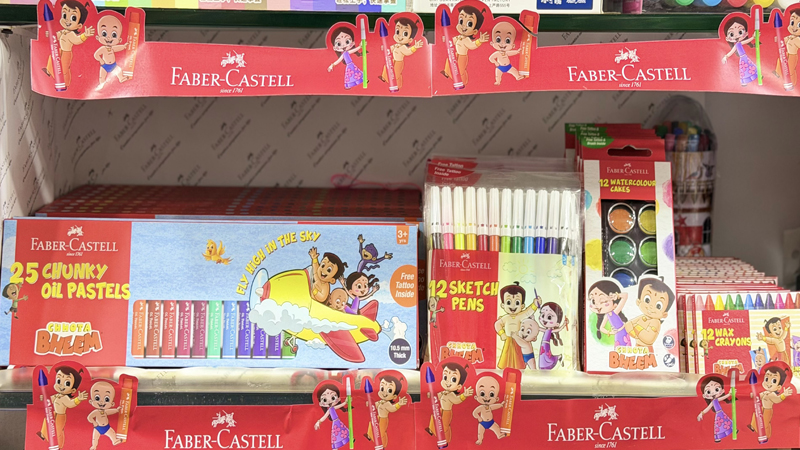
MUMBAI: If childhood memories had a colour palette, Chhota Bheem would likely be right in the middle of it and now, quite literally, in children’s pencil boxes too. Green Gold Animation has announced a landmark licensing partnership with Faber-Castell India, marking the global stationery major’s first-ever licensed character collaboration. The association brings Chhota Bheem to a specially curated range of student art and creative products, blending everyday learning tools with one of India’s most recognisable homegrown characters.
The move is a notable expansion of Chhota Bheem’s footprint beyond screens, reinforcing the character’s status as a multi-generational IP that has steadily grown from a television favourite into a cultural constant. For Green Gold Animation, the partnership signals a sharpened focus on extending its intellectual property into daily touchpoints, where entertainment meets education and habit.
In its first phase, the collaboration will roll out Chhota Bheem-themed products across key student art categories, including watercolour cakes, wax crayons, poster colours, sketch pens, oil pastels and creative bundling kits. The range is aimed squarely at school-going children, tapping into Bheem’s strong emotional connect while encouraging imagination, creativity and hands-on expression.
Green Gold Animation founder and CEO Rajiv Chilaka noted that Chhota Bheem’s journey has long moved beyond episodic storytelling. He said the partnership reflects a deliberate attempt to embed the character into moments of learning and creativity, while building a more purpose-led licensing ecosystem around Indian IP through collaboration with a globally established brand.
From Faber-Castell India’s perspective, the tie-up marks a strategic first. Faber-Castell India director marketing Sonali Shah said the collaboration opens a new chapter by pairing the brand’s long-standing reputation for quality and safety with a character that already commands trust and affection among Indian children. The aim, she added, is to make creativity more engaging and relatable without diluting product standards.
The launch will be backed by a 360-degree promotional push, spanning digital campaigns, social media storytelling, creative usage content and on-ground retail activations across select markets. Both companies have confirmed that this is only the starting point, with additional Chhota Bheem-themed products across new categories planned in the months ahead.
Headquartered in Hyderabad, Green Gold Animation continues to scale its ambition of building globally competitive Indian IPs, with Chhota Bheem leading the charge. This latest collaboration suggests that the brand’s next phase of growth may be less about what children watch and more about what they create.
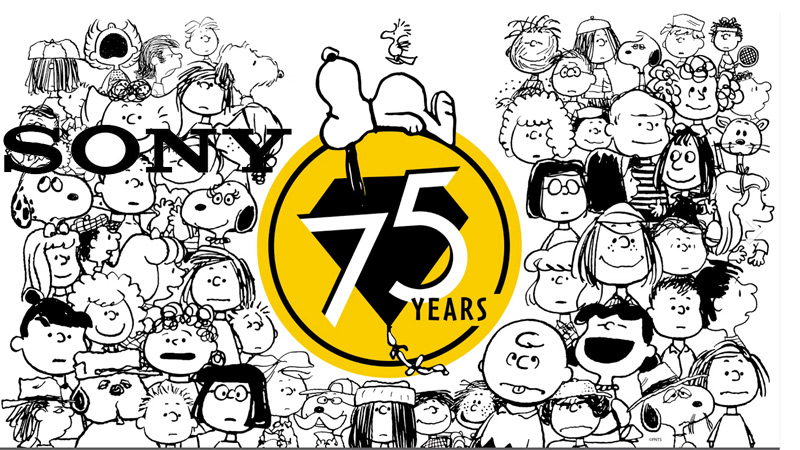
JAPAN: Sony has doubled down on the power of legacy brands, snapping up a majority stake in the Peanuts intellectual property in a late-year deal valued at about $457 million.
Sony Pictures Entertainment and Sony Music Entertainment Japan have acquired the roughly 41 per cent holding in Peanuts Holdings LLC previously owned by Canadian children’s entertainment company WildBrain. The move lifts Sony’s ownership to 80 per cent, with the Schulz family retaining the remaining 20 per cent.
The deal brings one of pop culture’s most durable franchises, home to Charlie Brown, Snoopy and the rest of the Peanuts gang, firmly under the Sony umbrella. The characters were created by Charles M Schulz, whose daily comic strip ran for half a century before ending in 2000.
Sony had already been a long-time partner in the business. The latest transaction consolidates control and sharpens the group’s hand as it looks to keep the characters front and centre across film, television, music and consumer products.
President and group ceo of Sony Music Entertainment Japan, Shunsuke Muramatsu, said the additional stake would allow Sony to further elevate the Peanuts brand by drawing on the group’s global reach and creative expertise, while preserving the legacy of Schulz and his family.
President and ceo of Sony Pictures, Ravi Ahuja, said the combined ownership gives Sony the ability to protect and shape the future of the characters for new generations, expanding their relevance without diluting their charm.
Peanuts long ago escaped the confines of the comic strip, cementing its place in popular culture through perennial television specials such as A Charlie Brown Christmas and It’s the Great Pumpkin, Charlie Brown. More recently, WildBrain kept the franchise active with animated series including Snoopy in Space and The Snoopy Show.
Now, with Sony firmly in control, the message is unmistakable. In an industry obsessed with the next big thing, nostalgia still sells and Sony is betting big on a doghouse that refuses to age.



MIB sets OTT accessibility rules, mandates captions and audio description

Boney Kapoor acquires remake rights of Tamil political satire Thalaivar Thambi Thalaimaiyil

Netflix India names Rekha Rane director of films and series marketing

Zabeen signs off from TV9 after shaping the network’s public voice

Dhawan steps up to bat for Delhi’s grassroots sports push

Orient Beverages pops the fizz with steady Q3 gains and rising profits

Cheekatilo shines in the dark with record debut on Prime Video

Swiggy Instamart’s GOV surges 103 per cent year on year to Rs 7,938 crore

These ’90s fashion trends are making a comeback in 2017
The final 6 ‘Game of Thrones’ episodes might feel like a full season
According to Dior Couture, this taboo fashion accessory is back
The old and New Edition cast comes together to perform
Phillies’ Aaron Altherr makes mind-boggling barehanded play
Uber and Lyft are finally available in all of New York State
MIB sets OTT accessibility rules, mandates captions and audio description
Boney Kapoor acquires remake rights of Tamil political satire Thalaivar Thambi Thalaimaiyil
Netflix India names Rekha Rane director of films and series marketing
Zabeen signs off from TV9 after shaping the network’s public voice
Dhawan steps up to bat for Delhi’s grassroots sports push
Orient Beverages pops the fizz with steady Q3 gains and rising profits
Cheekatilo shines in the dark with record debut on Prime Video
-
 e-commerce1 month ago
Swiggy Instamart’s GOV surges 103 per cent year on year to Rs 7,938 crore
-
 iWorld1 year ago
Kuku TV transforms India’s OTT space with vertical microdrama boom
-
 News Headline1 year ago
TRAI puts a ‘stop’ to unsolicited calls and messages
-

 News Headline2 months ago
From selfies to big bucks, India’s influencer economy explodes in 2025
-
 MAM2 years ago
OpenAI joins C2PA steering committee
-
 Comedy2 years ago
Taarak Mehta Ka Ooltah Chashmah celebrates 4,000 episodes
-
 News Headline2 years ago
Odisha to host Ultimate Kho Kho Season 2 from December 24
-
 News Headline1 year ago
Abhishek Bachchan joins as co-owner of European T20 Premier League


