
Documentary
Javed Jafferi takes to documentary making


MUMBAI: With the formation of his new company Indian Documentary Foundation, noted comedian Javed Jaaferi has taken a plunge into documentary making.
“Indian Documentary Foundation is a non-profit organisation that will help raise funds for financing and marketing documentary films, create awareness and raise the bar for Indian documentaries,” Javed said.
Earlier, he was the co-producer of Inshallah, Football, a documentary on the game of soccer. Now, Jaaferi hopes to create a market for such movies that act as an eye-opener and share hard-hitting information.
“Documentaries act as an eye-opener and say a lot about society, whether it`s Malegaon Ka Superhero or Final Solution. These films provide some amazing and hard-hitting information in a condensed form. There are so many different areas that they touch upon, which people are not actually aware of,” he observed.
The 48-year-old Jaaferi blames the ‘escapist’ attitude of people for the dwindling state of documentary filmmaking.

Jafferi, son of veteran comedian Jagdeep, has been the mainstay of films like Double Dhamaal, Hello Darling, Lafangey Parindey, 3 Idiots, Daddy Cool: Join the Fun and Kambakkht Ishq, among others.








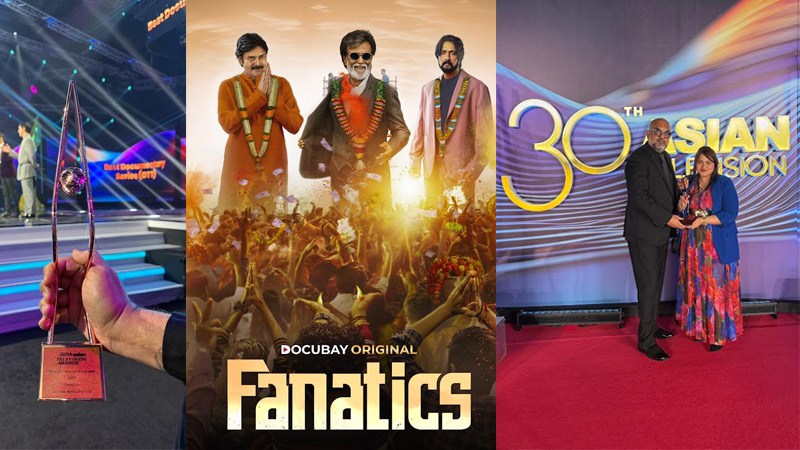
INDONESIA: DocuBay’s original documentary Fanatics has made history by becoming the first Indian film to win Best Documentary Programme (OTT) at the 30th Asian Television Awards 2025 in Indonesia. The win marks a milestone for the streaming platform, part of The Epic Company, which is known for bold, culturally rooted, and globally resonant storytelling.
Produced by Arpita Chatterjee under Studio 9 and directed by Aryan D Roy, Fanatics delves into the extreme devotion surrounding South Indian cinema. The documentary captures how actors are often treated like deities, and how fan loyalty, fuelled by emotion, pride and rivalry, can sometimes have real-life consequences. Through intimate personal stories and rare insights, the film presents an unfiltered look at the psychology of fandom in a region where cinema is nothing short of religion.
Featuring interviews with stars such as Allu Arjun and Kiccha Sudeep, the documentary also explores the role of social media in amplifying both solidarity and conflict among fans.
The category was highly competitive, featuring acclaimed international entries including Bitter Sweet Ballad (China), Polar Alarm (Taiwan), Life on the Millennia Old Grand Canal (China), Modern Masters: SS Rajamouli (India), and Echoes of Life (China). DocuBay distinguished itself with three nominations from its originals, Kargil 1999: The Untold Story of Indian Air Force, The Dupatta Killer, and Fanatics, cementing its place in impactful nonfiction storytelling.
The award was accepted at the ceremony in Indonesia by Samar Khan, chief content officer, DocuBay, and Adita Jain, VP – acquisition & syndication, The Epic Company. Fanatics’ win celebrates both the devotion of cinema fans and India’s rising influence in global documentary filmmaking.
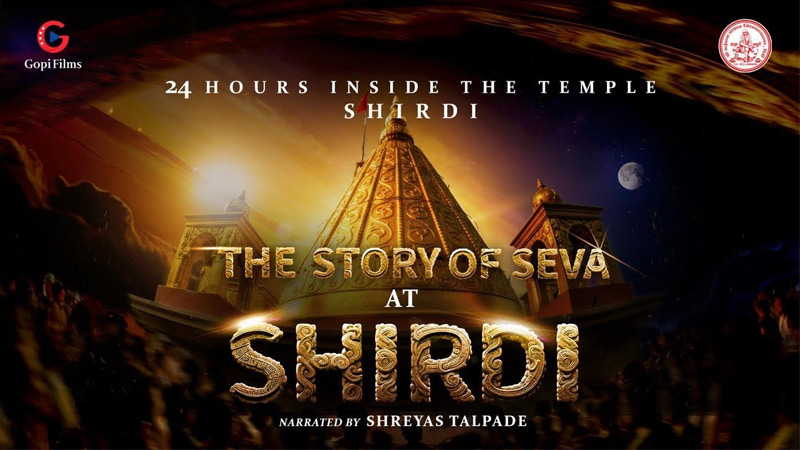
MUMBAI: Gopi Films, in collaboration with the Shri Saibaba Sansthan Trust, Shirdi, has unveiled 24 Hours Inside the Temple – Shirdi, a soulful documentary that captures a full day in the life of one of India’s most revered spiritual centres.
Directed by Harsh Pandya and Shekhar Jha, the film takes viewers on a mesmerising journey through a complete 24-hour cycle at the sacred Shri Sai Baba Temple, from the first light of dawn to the quiet reverence of midnight prayers. It offers a rare, behind-the-scenes look at the seamless rhythm of faith, devotion and seva (selfless service) that sustains Shirdi’s spiritual heartbeat.
More than a visual diary of rituals, the film reflects the humanity and humility that define true service. As the filmmakers describe it, every frame pays tribute to the countless individuals who work quietly, sincerely and selflessly to keep the temple alive around the clock.
Lending his voice to the film’s trailer in both Hindi and English, actor Shreyas Talpade called the experience “a feeling, not a performance.” He said, “This documentary isn’t just about rituals; it’s about the heartbeat of faith that never stops. Lending my voice helped me experience the devotion and discipline that define Seva.”
Produced as a non-commercial project, 24 Hours Inside the Temple – Shirdi is an offering of gratitude rather than a production for profit. Shri Saibaba Sansthan Trust chief executive officer Goraksha Gadilkar said, “The Shirdi Sansthan’s service system is devotion in action. This project captures that living spirit of Seva which continues, day and night, without expectation.”
Set to premiere in January 2026 on the official digital platforms of the Shri Saibaba Sansthan Trust, the documentary is a gentle reminder that true devotion isn’t found only in prayer, it’s alive in every act of service.
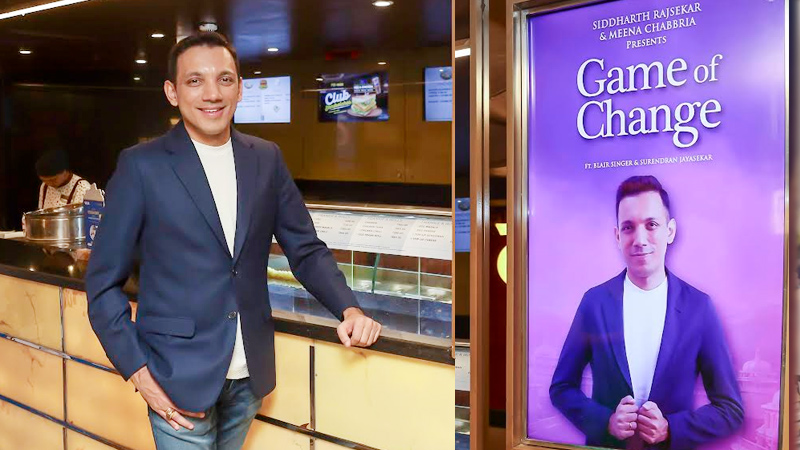
In a media landscape dominated by fiction and celebrity, Game of Change is flipping the script. Premiered across Mumbai, Hyderabad, and Chennai, this new-age docufilm series brings real stories, real people, and real transformation to the big screen. But this isn’t just a movie — it’s the beginning of a movement.
Helmed by Siddharth Rajsekar, digital coach and founder of the Internet Lifestyle Hub, Game of Change blends documentary realism with cinematic storytelling to deliver what mainstream cinema rarely attempts: authenticity. The first installment, featuring eight powerful stories of personal and community-based transformation, is already being hailed as a genre-defining moment in Indian content creation.
“We’re not here to entertain alone,” said Siddharth Rajsekar at his annual online event Reboot 2025, where he unveiled a video with his long-term vision for Game of Change. “We’re here to remind India how to learn — by returning to purpose, community, and inner alignment.”
Rewriting the Script of Education
At the heart of Game of Change lies a critique — and a call to action. The current education system, digital reformer Siddharth Rajsekar argues, is a colonial relic that trains compliance, not creativity. In contrast, the film series draws on India’s ancient learning heritage — from Nalanda, Takshashila, Kanchipuram, Madurai, Nabadwip to Udupi — where knowledge was passed down through community interaction, mentorship, and lived experience.
The docufilm envisions a modern-day gurukul for the digital age: a hybrid model that fuses storytelling with technology, personal growth with AI-powered scalability.
From Documentary to Docu-Movement
The cinematic format of Game of Change is deliberately unconventional. It features real-life individuals — not actors — who’ve risen above circumstances to lead, serve, and inspire. These are stories of educators, entrepreneurs, and community leaders who’ve become modern role models in an age of celebrity saturation.
“Gen Z and Gen Alpha don’t just want to be entertained. They want to see themselves in the story,” said Siddharth Rajsekar. “They’re not looking for fantasy. They’re looking for alignment.”
Strategic Rollout, Cultural Relevance
The decision to premiere the film in three major metros wasn’t just for visibility — it was part of a place-based strategy to ignite community-led action. Each screening was followed by emotional applause and discussions, underscoring the film’s power to spark real dialogue and introspection.
With versions already dubbed in Hindi, Tamil, Telugu, and English — and others like Kannada underway — the creators are preparing for a nationwide theatrical rollout and a subsequent OTT release.
Cinema Meets Community
Perhaps the most striking aspect of Game of Change is how it turns viewers into participants. Through its growing online ecosystem — including webinars, learning journeys, and coaching communities — the film invites its audience to move beyond passive consumption.
“We’re not building fans,” Siddharth noted. “We’re building a family of change-makers.”
This model aligns with current trends in participatory media, where communities around content become more valuable than the content itself. It also reflects a shift in youth media engagement — from binge-watching to belonging.
What’s Next: Scaling the Movement
Building on the momentum, the team announced plans for the next installment of Game of Change — a full-length feature film currently in production. While the current version serves as a pilot with a modest budget of 1.5 CR, the upcoming film will expand on its core themes in a 90–120 minute cinematic journey.
Looking ahead, Game of Change plans to integrate AI and emerging tech into future installments — not for spectacle, but to explore how technology and ancient wisdom can co-exist. This narrative isn’t about resisting innovation; it’s about humanizing it.
With this vision, Game of Change enters the rare space where storytelling becomes system-building — offering not just inspiration but infrastructure for social transformation.


Hamdard honours changemakers at Abdul Hameed awards

Why the Best Campaigns Today Start With Insights, Not Ideas

Ahmad Muneeb elevated to VP – HR centre of excellence at Zepto

Fans Take Centre Stage as Zee Cine Awards Turns the Spotlight Around

GUEST COLUMN: How content leaders decide what gets greenlit

The man who dubbed Lord of the Rings in 50 languages is stunned by Mumbai traffic

Dell names Aishwarya Sudhakar director of marketing intelligence

These ’90s fashion trends are making a comeback in 2017
The final 6 ‘Game of Thrones’ episodes might feel like a full season
According to Dior Couture, this taboo fashion accessory is back
The old and New Edition cast comes together to perform
Phillies’ Aaron Altherr makes mind-boggling barehanded play
Uber and Lyft are finally available in all of New York State
Disney’s live-action Aladdin finally finds its stars
Hamdard honours changemakers at Abdul Hameed awards
Why the Best Campaigns Today Start With Insights, Not Ideas
Ahmad Muneeb elevated to VP – HR centre of excellence at Zepto
Fans Take Centre Stage as Zee Cine Awards Turns the Spotlight Around
GUEST COLUMN: How content leaders decide what gets greenlit
The man who dubbed Lord of the Rings in 50 languages is stunned by Mumbai traffic
Dell names Aishwarya Sudhakar director of marketing intelligence
-

 News Broadcasting4 days ago
Mukesh Ambani, Larry Fink come together for CNBC-TV18 exclusive
-

 iWorld1 week ago
Netflix celebrates a decade in India with Shah Rukh Khan-narrated tribute film
-
 MAM3 months ago
HoABL soars high with dazzling Nagpur sebut
-

 MAM4 days ago
Nielsen launches co-viewing pilot to sharpen TV measurement
-
 iWorld12 months ago
BSNL rings in a revival with Rs 4,969 crore revenue
-
 I&B Ministry3 months ago
India steps up fight against digital piracy
-
 iWorld3 months ago
Tips Music turns up the heat with Tamil party anthem Mayangiren
-

 Film Production1 week ago
UFO Moviez rides high on strong Q3 earnings
