
News Headline
India’s telecom regulator tightens grip as 5G subscribers hit 250 million

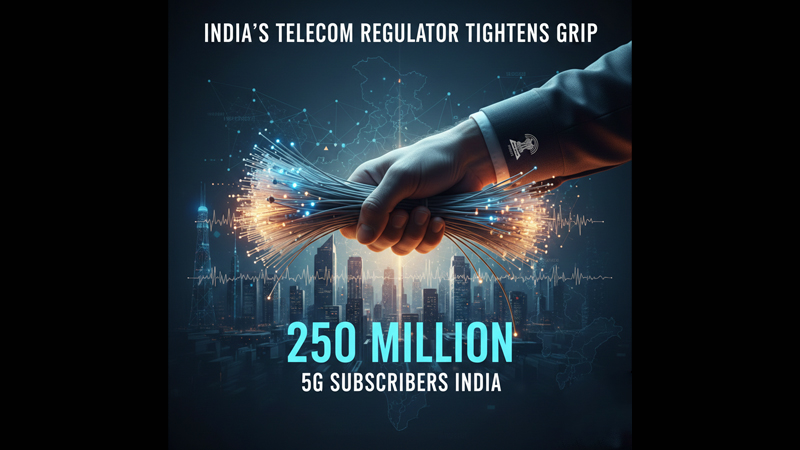
NEW DELHI: India’s telecommunications watchdog has emerged from a whirlwind year of regulatory upheaval, pushing through sweeping reforms whilst clamping down hard on spam calls that have plagued the country’s 1.2 billion telephone subscribers.
The Telecom Regulatory Authority of India, led by chairman Anil Kumar Lahoti, issued recommendations in September 2024 for a complete revamp of India’s licensing framework under the freshly minted Telecommunications Act 2023. The proposals introduce a unified service authorisation—dubbed “One Nation – One Authorisation”—allowing operators to provide mobile, internet, broadband and long-distance services under a single pan-India licence. Entry fees have been slashed dramatically: access service authorisations now cost Rs 50 lakh per telecom circle, down from Rs 1 crore, whilst virtual network operators pay just Rs 25 lakh instead of Rs 50 lakh.
The regulator’s anti-spam crusade proved equally forceful. After issuing a stern directive in August 2024 to disconnect telecom resources of unregistered telemarketers, TRAI blacklisted more than 1,150 entities and disconnected over 188,000 telephone numbers. Complaints against spam calls tumbled from 189,419 in August to 116,221 by March 2025—a 38 per cent drop. Fresh regulations issued in February 2025 now allow subscribers to register spam complaints within seven days of receiving unwanted calls, up from three days, without needing to register preferences first.
India’s 5G rollout continued at breakneck speed. The network now covers 99.6 per cent of districts with 469,000 base stations installed since launch in October 2022. Some 250 million subscribers have adopted 5G services, making it one of the world’s fastest network deployments. Mobile broadband users reached 944 million, up from 924 million the previous year. Average monthly data consumption per user surged to 27.5 gigabytes, a compound annual growth rate of 19.5 per cent over five years, reflecting India’s voracious appetite for streaming video, social media and digital services.
The broader subscriber landscape showed mixed trends. Overall telephone subscribers stood at 1.2 billion, edging up by just 1.5 million during the year. Wireless subscriptions actually dipped by 8.5 million to 1.157 billion, whilst wireline connections jumped 9.6 per cent to 37 million. A new category of wireless fixed-access subscribers using 5G technology reached 6.8 million by March 2025, with Reliance Jio commanding 82 per cent market share and Bharti Airtel holding the remainder. Tele-density slipped slightly to 85.04 per cent from 85.69 per cent, with urban areas at 131.45 per cent and rural regions at 59.06 per cent.
Rural connectivity saw notable gains despite the overall wireless decline. Wireline subscribers in rural areas jumped 21.7 per cent to 3.5 million, suggesting a shift towards fixed broadband in countryside regions. Rural wireless subscribers stood at 528.68 million, representing 45.69 per cent of total wireless users. Reliance Jio led with 39.51 per cent rural market share, followed by Bharti Airtel at 36.40 per cent, Vodafone Idea at 18.45 per cent, and state-owned Bharat Sanchar Nigam Limited at 5.64 per cent.
Internet subscribers reached 969 million, with broadband accounting for 944 million of these connections. Narrowband subscribers continued their decline, dropping to 25 million from 30.3 million the previous year as users migrated to faster connections. Monthly mobile data usage during the fourth quarter hit 59,447 petabytes, underscoring the scale of India’s digital consumption.
The unified licensing framework represents TRAI’s most ambitious regulatory overhaul in years. Beyond the unified service authorisation, the regulator proposed separate licences for internet services, long-distance services combining national and international operations, satellite-based telecommunications merging commercial VSAT and global mobile personal communications services, and machine-to-machine wide-area network services. All main service authorisations can be granted in two sub-categories: network service operator and virtual network operator, with virtual operators now permitted to source connectivity from multiple network operators for wireline services.
The framework eliminates entry fees at renewal time and merges financial and performance bank guarantees into a single instrument. Service providers can now take telecommunication resources from cloud service providers empanelled by the Ministry of Electronics and Information Technology or authorised under the Telecommunications Act 2023. Infrastructure sharing among all service providers—both active and passive—has been explicitly permitted.
For auxiliary services such as public mobile radio trunking, enterprise communications and machine-to-machine connectivity, TRAI recommended light-touch regulation with significantly reduced or eliminated entry fees. Captive services including closed user group networks and captive non-public networks would require separate authorisations with spectrum assignment from the central government.
The regulator also tackled the thorny issue of international traffic definition. In recommendations issued in December 2024, TRAI defined international SMS messages to include any application-to-person message that cannot be generated, transmitted or received without using electronic devices, computer systems or applications located outside India. This closes a loophole exploited by overseas spam operators who routed messages through foreign servers to Indian recipients.
Spectrum policy saw significant movement. TRAI recommended in February 2025 that frequency bands between 37 and 40 gigahertz be auctioned for international mobile telecommunications with a 100 megahertz block size and 20-year validity. Reserve prices ranged from Rs 3 lakh per megahertz in north-eastern states to Rs 76 lakh in Delhi, with internet service providers and machine-to-machine operators permitted to participate alongside traditional access providers. The 42.5 to 43.5 gigahertz range was deemed premature for auction due to the absence of device ecosystems.
More adventurously, TRAI opened the terahertz spectrum range from 95 gigahertz to 3 terahertz for experimental use. The proposed Tera Hertz Experimental Authorisation would cost just Rs 1,000 for five years, allowing Indian entities to conduct research, testing and demonstrations whilst marketing experimental devices via direct sale. Specific frequency bands—116 to 123 gigahertz, 174.8 to 182 gigahertz, 185 to 190 gigahertz, and 244 to 246 gigahertz—would be authorisation-free and assignment-exempt. The 77 to 81 gigahertz band was earmarked for automotive radar systems to enhance vehicle safety.
Infrastructure sharing received a major boost. TRAI recommended in April 2024 that telecommunication licensees be allowed to share all passive and active infrastructure elements, including buildings, towers, dark fibre and radio access networks. Universal service projects funded by the government’s Digital Bharat Nidhi must now include provisions for infrastructure sharing with at least two other service providers. Inter-band spectrum sharing between access providers would be permitted within individual service areas, whilst spectrum leasing among access providers was explicitly endorsed.
The regulator proposed exploring authorised shared access techniques, where spectrum assigned to government agencies in globally harmonised international mobile telecommunications bands could be shared with access providers as secondary users. A field trial of this technology was recommended under Department of Telecommunications supervision.
Indian Railways secured additional spectrum. TRAI recommended in December 2024 that Railways receive an additional 5 megahertz of paired spectrum in the 700 megahertz band, taking its total allocation to 10 megahertz for safety and security applications along railway tracks. The regulator also pushed for radio access network sharing trials between Indian Railways and the National Capital Region Transport Corporation to determine feasibility of multi-operator core networks in overlapping coverage areas.
Number portability saw operational improvements. During the year, 156.4 million subscribers requested mobile number portability, bringing cumulative requests since January 2011 to 1.12 billion. The reporting of porting statistics continued through TRAI’s monthly press releases, with zone-wise breakdowns showing Maharashtra leading with 111.9 million cumulative requests, followed by Uttar Pradesh East at 84 million and Uttar Pradesh West at 72.7 million.
Quality-of-service regulations underwent their most comprehensive revision in over a decade. The Standards of Quality of Service of Access and Broadband Service Regulations 2024, effective from October, superseded three previous regulations covering basic telephone, cellular mobile and wireless data services. The new framework prescribes 31 parameters for wireless access service, 22 for wireline access and 18 for wireline broadband, with benchmarks aligned to global standards.
Key changes include mandating service providers to display technology-wise mobile coverage maps on their websites, publish quality-of-service performance against prescribed parameters, and conduct monthly reporting instead of quarterly for wireless services. Measurement methodologies shifted from averages to percentile basis for critical parameters like packet drop rates, latency and point-of-interconnection congestion. Parameters such as jitter and maximum bandwidth utilisation between radio and core networks were introduced for the first time.
Benchmarks were tightened in a graded manner over six months to two-and-a-half years. Network availability requirements became stricter, with separate tracking of cumulative downtime and worst-affected cells. Call drop rate thresholds were lowered, whilst latency benchmarks aligned with global standards to support emerging applications in telemedicine, virtual reality and industrial automation.
Financial disincentives for non-compliance follow a graduated structure: Rs 1 lakh for first violations, Rs 2 lakh for second consecutive violations, and Rs 3 lakh for subsequent breaches per parameter. If payment is delayed beyond 21 days, interest accrues at 2 percentage points above State Bank of India’s marginal cost of lending rate, compounded annually. TRAI imposed Rs 30 lakh in penalties during 2024-25 whilst collecting Rs 81.25 lakh from previous years.
Service providers must now adopt Six Sigma quality management plans for continuous improvement. Monthly audits by TRAI-appointed agencies verify performance monitoring reports, with service providers required to facilitate live quality-of-service data downloads. Independent drive tests conducted by TRAI’s agency assess actual user experience across all 22 licensed service areas, with monthly reports published covering cities, highways, railway routes and coastal areas.
The spam control framework received its most significant upgrade since 2018. The Telecom Commercial Communications Customer Preference Regulations, amended in February 2025, introduced several consumer-friendly measures. Subscribers can now register complaints against unregistered telemarketers without first registering do-not-disturb preferences. The complaint window expanded from three to seven days after receiving unwanted communications.
Mobile applications operated by telecom providers must now display complaint registration options prominently on home screens, with auto-capture of call logs and SMS details after obtaining subscriber permission. Screenshot-based complaint registration was made mandatory. Promotional messages must include mandatory opt-out options, with senders prohibited from requesting fresh consent for 90 days after a customer opts out.
Message headers now carry standardised identifiers: “-P” for promotional, “-S” for service, “-T” for transactional, and “-G” for government messages. Consent for ongoing transactions remains valid for just seven days, preventing businesses from indefinitely contacting customers on outdated permissions. Service commercial communications can only continue for the contract duration, requiring explicit fresh consent thereafter.
The threshold for action against unregistered telemarketers was lowered from 10 complaints in seven days to five complaints in 10 days. For registered senders, financial penalties start at Rs 2 lakh for the first instance of misreporting unsolicited commercial communication counts, escalating to Rs 5 lakh for the second instance and Rs 10 lakh for subsequent violations. Access providers face separate penalties for invalid complaint closures and failure to meet obligations regarding message header and content template registration.
Senders found guilty of repeated violations face escalating consequences. First violations trigger 15-day suspensions of outgoing services on all telecom resources. Subsequent violations result in one-year disconnections across all access providers and blacklisting. Communications intended to deceive customers are classified as unsolicited commercial communications, enabling swift regulatory action including disconnection.
Restrictions on telemarketing through regular 10-digit numbers took effect, with the 140 series continuing for promotional calls and the newly allocated 1600 series designated for transactional and service calls. Access providers must analyse call and SMS patterns—including unusually high volumes, short call durations and low incoming-to-outgoing ratios—to flag potential spammers in real time. Honeypot numbers that attract and log spam enable pre-emptive action against suspected offenders.
Principal entity and telemarketer traceability became mandatory, with limits on intermediaries between principals and telemarketers ensuring full message tracking. Senders and telemarketers must undergo physical verification, biometric authentication and unique mobile number linking during registration. Access providers must maintain comprehensive records of complaints and sender details.
The impact proved dramatic. Following the August 2024 directive, access providers blacklisted more than 1,150 entities and disconnected over 188,000 telephone numbers. Monthly complaints dropped from 189,419 in August to 116,221 by March—a 38 per cent reduction. Complaints against unregistered telemarketers fell even more steeply, from 163,167 in September to 105,102 in February, a 36 per cent decline.
TRAI’s international engagement expanded significantly. The authority hosted the International Conference of Telecom Regulators in October 2024 on the sidelines of the ITU World Telecom Standardization Assembly and India Mobile Congress, drawing 143 participants including 88 international delegates from 27 countries. Topics included regulatory perspectives on standardisation, frameworks for non-terrestrial networks, and regulatory outlooks for over-the-top communication services.
The authority also hosted the 25th meeting of the South Asian Telecommunication Regulators’ Council in November 2024, with 83 to 90 participants. Lahoti was elected chair of the council for 2025. In January 2025, TRAI organised a spectrum workshop in Goa with 85 participants including 57 delegates from member countries, focusing on spectrum management challenges across South Asia.
Bilateral agreements multiplied. TRAI signed a memorandum of understanding with Saudi Arabia’s Communications, Space & Technology Commission in October 2024 for joint programmes and projects in communication and information technologies. Meetings were held with regulators from Nigeria, South Africa, Egypt, Mexico and France on the sidelines of various international conferences. GSMA delegations visited TRAI three times during the year for bilateral discussions on mobile development and public policy.
Chairman Lahoti maintained an active international presence, delivering keynote addresses at conferences in Seoul, Riyadh, Brussels and Barcelona. He participated virtually in the 24th Asia-Pacific Telecommunity Policy and Regulatory Forum, speaking on conducive information and communications technology policies for inclusive digital landscapes. Officers attended conferences in London, Geneva, Kampala, Chiang Mai and other cities, with TRAI continuing its sector membership of the International Telecommunication Union.
The broadcasting sector proved less dynamic. Active pay direct-to-home subscribers fell to 56.9 million from 62 million the previous year, though DD Free Dish maintained its estimated 49 million households. India’s media and entertainment sector grew a modest 3.3 per cent to Rs 2.5 trillion, with the contribution to gross domestic product at 0.73 per cent. Television subscription revenue reached Rs 38,500 crore whilst advertising contributed Rs 29,400 crore. The sector is projected to grow 7.2 per cent in 2025, reaching Rs 2.7 trillion.
Private satellite television channels permitted by the Ministry of Information and Broadcasting numbered around 918 as of March 2025, provided by approximately 329 broadcasters. Pay television channels included 232 standard-definition and 101 high-definition offerings. The distribution infrastructure comprised 845 multi-system operators, one headend-in-the-sky operator, four pay direct-to-home operators and 53 internet protocol television operators. Registered local cable operators numbered 81,706 as of January 2022.
Private FM radio stations numbered 388, operating in 113 cities through 33 operators. Advertisement revenue reached Rs 1,818.71 crore, nearly recovering to pre-pandemic levels after dropping to Rs 941.47 crore in 2020-21. Community radio stations numbered 531 operational out of 639 permissions issued, serving rural and remote communities with locally relevant content.
TRAI issued several broadcasting-related recommendations during the year. In June 2024, it provided inputs for formulating a National Broadcasting Policy, outlining vision, mission and goals under three broad categories: propelling growth, promoting content and protecting interests. Strategies covered technology adoption, content creation, consumer protection and sector development over a 10-year horizon with special focus on the next five years.
Recommendations in July 2024 addressed electronic programme guide listings and DD Free Dish upgradation. The regulator proposed that the Ministry of Information and Broadcasting require broadcasters to declare primary language and sub-genre for each channel, with this information displayed on the Broadcast Seva portal to help distribution platform operators place channels appropriately in guides for easy consumer navigation.
TRAI recommended phased upgradation of DD Free Dish to an addressable system, starting with encryption of private satellite television channel signals at the headend before uplinking. A roadmap was provided for transitioning from non-addressable to addressable platforms, with Prasar Bharati authorising manufacturers and distributors for sales and after-sales service of set-top boxes. This aims to prevent unauthorised re-transmission, combat piracy and maintain subscriber records.
In January 2025, TRAI issued recommendations on regulatory frameworks for ground-based broadcasters, proposing that provisions for traditional satellite-based broadcasters be adapted for terrestrial communication media. Ground-based broadcasters would be permitted to deliver channels to distribution platform operators using any terrestrial technology without restrictions, with the option to additionally or alternatively use satellite media after obtaining central government permission. The service area would be national.
A separate consultation explored digital radio broadcast policy for private broadcasters, examining strategies for deploying digital radio in the Indian market. The Authority sought stakeholder views on advantages such as superior sound quality, spectrum efficiency and multimedia service delivery, alongside challenges including interoperability with existing analogue networks for smoother transitions.
Broadcasting tariff regulations were amended in July 2024, removing distinctions between high-definition and standard-definition channels for carriage fee purposes to simplify the regime and make it technology-neutral. Distribution platform operators were permitted to offer discounts up to 45 per cent whilst forming bouquets, increased from the previous 15 per cent limit, providing greater flexibility in creating attractive consumer offers.
Network capacity fee ceilings of Rs 130 for 200 channels and Rs 160 for more than 200 channels were eliminated, placing fees under forbearance to make them market-driven and equitable. Service providers may now charge different fees based on channel numbers, regions, customer classes or combinations thereof, with mandatory publication and consumer communication requirements plus reporting to TRAI.
The regulator mandated that pay channels available at no subscription fee on DD Free Dish must be declared free-to-air for all addressable distribution platforms to ensure a level playing field. Distribution platform operators must declare platform service tariffs separately, categorise platform service channels under the “Platform Services” genre in electronic programme guides, and display respective maximum retail prices against each service whilst providing activation and deactivation options.
Quality-of-service amendments relaxed certain regulatory compliances for small distribution platform operators. Charges for installation, activation, visiting, relocation and temporary suspension previously prescribed under regulation were placed under forbearance, though operators must publish charges for transparency. Duration of all prepaid subscriptions must be specified in days only for greater consumer clarity. Distribution platform operators may display distributor retail prices in electronic programme guides alongside maximum retail prices.
Audit-related provisions came under review following a consultation paper issued in August 2024. TRAI sought stakeholder views on amendments to Interconnection Regulation 2017 audit provisions and the Digital Addressable Systems Audit Manual, particularly regarding enabling provisions for infrastructure sharing. During 2024-25, a total of 518 audits of digital addressable systems were conducted by 44 auditors empanelled by TRAI and Broadcast Engineering Consultants India Limited.
The regulator issued show cause notices to 31 distribution platform operators in May 2024 for non-compliance with mandatory digital addressable system audit requirements for 2023. Financial disincentive orders followed in April 2024 against six operators for similar non-compliance covering calendar years 2020, 2021 and 2022. A reminder letter issued in August 2024 directed all operators to complete audits by December 2024 to avoid penalties.
Certification and deployment of conditional access systems and subscriber management systems became mandatory. All distribution platform operators were directed to deploy new systems tested by accredited labs and certified by the Telecommunications Engineering Centre or designated agencies from March 2024 onwards. Existing systems must be upgraded and certified by March 2025, though this deadline was subsequently extended to October 2025 following industry requests.
Consumer protection remained a priority across both telecom and broadcasting sectors. TRAI organized 46 consumer outreach programmes during the year through its regional offices, focusing on empowering underprivileged and marginalised groups including farmers, fishermen, specially-abled persons, self-employed rural women, weavers, tribal students and anganwadi workers. Six capacity-building workshops were conducted for consumer organisations registered with TRAI, in Bhopal, Chandigarh, Jaipur, Kolkata and two in Hyderabad.
Consumer awareness programmes conducted by registered consumer organisations numbered 329 out of 377 approved, with financial support from TRAI’s Telecommunication Consumers Education and Protection Fund. The fund’s utilisation committee, chaired by the secretary, met twice during the year—in December 2024 to approve audited accounts for 2023-24 and review ongoing activities, and in March 2025 to finalise activities and budget estimates for 2025-26.
Educational materials were produced in multiple languages. A short video on TRAI’s digital inclusion efforts was created in Hindi and dubbed in 11 regional languages including Assamese, Bengali, English, Gujarati, Kannada, Malayalam, Marathi, Odia, Punjabi, Tamil and Telugu. Two existing videos on unsolicited commercial communications were dubbed in 10 regional languages. Monthly newsletters were published for registered consumer organisations, with eight editions during the financial year.
Six seminars addressed contemporary issues: “5G Use Cases in the Health Care Sector” in Tirupati in May 2024; “Telecom Networks Quality of Service: Understanding connectivity experience & In building Solution” in Sonipat in May; “Digital Connectivity Infrastructure for QoS Improvement in Buildings and Housing Complexes” in Meerut in September; “Technology Trends – 5G Use cases in Education, Manufacturing, Smart Infrastructure, Life science & Healthcare, Agriculture” in Ranchi in September and Surat in October; and “Balancing Innovation and Consumer Protection: The Dual Challenge of Unsolicited Commercial Communication and Spam Calls in the Modern Telecom Landscape” in Indore in March 2025.
TRAI mobile applications underwent continuous enhancement. The DND 3.0 app, developed in-house and available on Google Play Store and Apple’s App Store, enables subscribers to register preferences for blocking or allowing commercial communications whilst empowering easy spam complaint registration. Recent updates aligned the app with amended regulations, allowing spam complaints against unregistered telemarketers without prior preference registration and extending the complaint window to seven days.
The MySpeed app allows subscribers to measure wireless data speed experience with results sent to TRAI, capturing coverage, data speed and network information along with device location. The portal displays comparison of wireless data speeds across service providers in each licensed service area. The MyCall app measures call quality through crowdsourcing, helping users rate their voice call experience in real time whilst gathering customer experience data alongside network data.
A comprehensive information technology ecosystem is under development. The detailed project report has been prepared covering overall requirements of TRAI and stakeholders, complete information technology roadmap, detailed scope of work and tentative architecture. A request for proposal is being published for engaging a solution provider for development, implementation and maintenance of the system for data reporting, analytics and process automation.
The tariff filing portal is being redeveloped with the latest technology stack, leading to enhanced performance, better security and seamless integration with modern tools and frameworks. The new portal will provide tariff information of various service providers to consumers on a single platform, ensuring timely filing of tariffs in compliance with regulatory requirements.
TRAI’s website was redeveloped following Government Information Gateway 3.0 guidelines, incorporating social media sharing features to facilitate dissemination of regulatory information. The website offers comprehensive information on telecom and broadcasting regulations, policies, laws, statistics and trends, easily accessible to public, stakeholders, researchers and international audiences. Integration with Bhashini enables support for multiple regional languages, whilst a chatbot named TARA (Telecom Authority Responsive Advisor) facilitates interactive search.
A Digital Connectivity Rating Portal is planned under the Rating of Properties for Digital Connectivity Regulations 2024 issued in October. This centralised platform will connect TRAI, digital connectivity rating agencies, property managers and users. The regulations aim to address digital connectivity quality inside buildings by providing star ratings based on infrastructure readiness.
Property managers of buildings meeting minimum specified size can register on the platform and apply for rating after paying prescribed fees. Ratings will be based on criteria including availability of digital connectivity infrastructure, coverage quality, backhaul connectivity and compliance with Model Building Bye Laws issued by the Ministry of Housing and Urban Affairs. Digital connectivity rating agencies empanelled by TRAI will evaluate properties and assign scores, with ratings ranging from one to five stars.
No telecom service provider may enter exclusive arrangements with property managers for development or access of digital connectivity infrastructure. The framework promotes collaborative approaches between property developers, infrastructure providers and service operators. Provisions encourage co-creation of digital connectivity infrastructure as part of development activities, with ratings intended to incentivise property managers to provide good connectivity experiences.
Infrastructure developments took a significant step forward. TRAI relocated to its own purpose-built premises at Tower-F of the NBCC World Trade Centre in Nauroji Nagar, New Delhi, in June 2024 after functioning from rented accommodation since its 1997 establishment. The Government of India through the Department of Telecommunications approved acquisition in November 2020. NBCC India Limited allocated 115,982 square feet of super built-up area including 85,545 square feet of carpet area across the fourth to seventh floors in February 2021.
A memorandum of understanding signed with NBCC Services Limited in November 2022 covered planning, design and execution of interior fit-out, renovation and furnishing works. These were substantially completed by May 2024 when the site was handed over. The relocation enables TRAI to operate from dedicated accommodation, ending decades of rental payments and providing appropriate facilities for its expanding functions.
Residential accommodation for staff remains a work in progress. Employees on deputation are permitted to retain General Pool Residential Accommodation subject to special licence fee payment by TRAI until superannuation or completion of tenure. As an interim solution, TRAI entered a memorandum of understanding with MTNL and BSNL for a pool of residential quarters on lease basis for allotment to employees as required.
Current eligibility for General Pool Residential Accommodation is restricted to officers posted in TRAI’s Delhi secretariat who were already eligible prior to joining, with the authority bearing special licence fees payable to the Directorate of Estates. The Directorate does not currently allocate accommodation or permit continued retention for absorbed officers and staff. TRAI has approached the Directorate and Ministry of Housing and Urban Affairs seeking extension of facilities to all employees—whether on deputation, recruited directly, or absorbed permanently—irrespective of prior eligibility.
Staff strength at headquarters stood at 197 as of March 2025 against sanctioned strength of 237. The complement includes one secretary, 16 principal advisors, 14 advisors, 23 joint advisors, 10 deputy advisors, three senior principal private secretaries, 30 senior research officers, five technical officers (operating temporarily as senior research officer posts), 22 technical officers, four principal private secretaries, 16 section officers, 48 assistants, 12 personal assistants, 18 junior Hindi translators, seven lower division clerks, and various driver and multi-tasking staff positions.
Details of senior officers include secretary Atul Kumar Chaudhary and principal advisors Abhay Shanker Verma for broadcasting and cable services, D Manoj for financial and economic analysis, Sheo Bhadra Singh for networks, spectrum and licensing, and Pushpendra Kumar Singh for quality of service, consumer affairs and information technology. Advisors comprise Yatinder Agrohi for administration and international relations, Akhil Saxena for legal affairs, Deepali Sharma for broadcasting and cable services, Abdul Kayum for broadband and policy analysis, Vivek Khare for consumer affairs, Vijay Kumar for financial and economic analysis, Archna Ahlawat for information technology, Sameer Gupta and Akhilesh Kumar Trivedi for networks, spectrum and licensing, and Tejpal Singh and Deepak Sharma for quality of service.
Regional offices function at six locations on a pilot basis as part of TRAI’s capacity-building project, continuing until March 2028. Bengaluru office covers Karnataka, Kerala, Maharashtra and Mumbai. Bhopal handles Madhya Pradesh, Uttar Pradesh East and Uttar Pradesh West. Delhi oversees Delhi, Himachal Pradesh and Jammu & Kashmir. Hyderabad manages Andhra Pradesh, Tamil Nadu including Chennai, and Odisha. Jaipur covers Rajasthan, Gujarat, Haryana and Punjab. Kolkata handles West Bengal, Kolkata, North-East, Assam and Bihar.
Regional office functions include ensuring compliance of tariff-related guidelines, effective monitoring of retail tariffs for telecommunications and broadcasting services, coordination with service providers on regulatory and marketing aspects, quality-of-service monitoring and consumer grievance handling. Offices organise open house discussions and consumer advocacy group meetings, coordinate audits and surveys by independent agencies appointed by TRAI, develop consumer advocacy groups up to district and block levels, organise consumer education workshops, and interact closely with Term Cells of the Department of Telecommunications.
Recruitment of 11 assistants through Staff Selection Commission was completed during the year, with recruitment of six personal assistants under process. Direct recruitment of technical officers through open examination conducted by a government agency or institution has been initiated. Training programmes covered diverse topics including artificial intelligence frameworks, cybersecurity in telecom, digital personal data protection, procurement management, financial management, leadership effectiveness, emotional intelligence, and digital transformation through e-governance.
Officers participated in international training programmes covering key regulatory aspects of telecommunications, media and technology industries, including digital connectivity, policy and regulatory best practices, artificial intelligence advancements and 5G network technologies. Domestic training included programmes at Indian Institutes of Management, National Power Training Institute, National Centre for Good Governance, and other premier institutions.
ISO 9001:2015 certification was maintained through surveillance audits by the Bureau of Indian Standards, with the latest audit conducted in September and October 2024. TRAI has 32 internal quality auditors for conducting internal audits. Quality Management Review meetings are taken by the secretary on a quarterly basis, with an annual management review meeting by top management ensuring requirements of ISO 9001:2015 are met.
Official language implementation received attention through the Official Language Implementation Committee chaired by the secretary, with quarterly meetings held in April, July, October 2024 and February 2025. Hindi Pakhwada was observed from 14 to 28 September 2024, with competitions including essay writing, noting and drafting, extempore speaking, song singing, poem recitation, Hindi typing, story writing, question papers on official language provisions, general knowledge quiz, and Hindi dictation and calligraphy for drivers and multi-tasking staff. Prize distribution occurred in October under the chairman’s leadership.
An annual incentive scheme awards 10 cash prizes to officers and officials for conducting maximum official work in Hindi throughout the year. Four Hindi workshops were organised during the year to facilitate officers and officials in working in the official language. The authority published educational and publicity materials in Hindi, English and various regional languages to ensure wide accessibility.
Vigilance Awareness Week was observed from 28 October to 3 November 2024 with the theme “Culture of Integrity for Nation’s Prosperity”. All officers and staff took an integrity pledge led by chairman Lahoti on 28 October. An awareness session on prevention of sexual harassment at workplace was organised in December 2024. International Women’s Day was commemorated on 8 March with sessions and interactive programmes for women officers and employees, focusing on the theme “Invest in women: Accelerate progress”.
Financial performance showed total expenditure of Rs 109.09 crore including depreciation for the year. Major expense heads were salaries at Rs 60.25 crore, administrative expenses at Rs 47.57 crore, and depreciation at Rs 1.27 crore. Income comprised grants of Rs 97 crore from the Department of Telecommunications, interest earned of Rs 41.29 lakh, and other income of Rs 47,371. The deficit of Rs 11.67 crore was carried to the corpus/capital fund, bringing the cumulative deficit to Rs 24.29 crore.
Fixed assets totalled Rs 9.72 crore net of depreciation, with gross block additions of Rs 5.03 crore during the year. Current assets, loans and advances stood at Rs 102.55 crore, dominated by fixed deposits of Rs 37.06 crore with Union Bank of India for the building account and Rs 13.80 crore for the main account, plus bank balances of Rs 37.34 crore in TRAI General Fund current accounts and Rs 21.15 crore in building fund accounts.
Current liabilities and provisions totalled Rs 50.79 crore, including provisions for gratuity of Rs 14.97 crore, accumulated leave encashment of Rs 20.68 crore, and provisions for expenses of Rs 13.69 crore. The building fund showed a balance of Rs 85.77 crore, having received no fresh grants during the year but carrying forward Rs 101.56 crore from the previous year and incurring capital expenditure of Rs 9.13 crore and revenue expenditure of Rs 6.66 crore.
The Comptroller and Auditor General of India’s audit opinion noted that financial statements give a true and fair view of TRAI’s financial position as of March 2025 and performance for the year. The separate audit report highlighted that current liabilities do not include Rs 3.50 crore payable to NBCC Services Limited for final bills received for interior work, resulting in understatement of both current liability and fixed assets. Old provisions of expenses amounting to Rs 2.74 crore no longer required were not written back, causing overstatement of provisions and understatement of income.
Prior period expenses of Rs 1.27 crore were not separately shown, preventing accurate determination of current year surplus or deficit. TRAI imposed financial disincentives of Rs 44.98 crore on service providers during the year against which Rs 1.37 crore was recovered, but did not disclose total disincentives imposed or amounts pending recovery from earlier years in notes to accounts.
Internal control system weaknesses were noted. Accounting transactions frequently involved direct bank voucher payments mentioning vendor names in narration rather than first recording with journal vouchers and posting separate payment entries, preventing proper ledger maintenance for all vendor transactions. Internal audit of regional offices was not being conducted. The internal audit department was inadequately staffed with only one officer managing the entire function. Fixed assets amounting to Rs 27.93 crore lacked adequate supporting records of physical verification and reconciliation.
Tax deducted at source defaults including short deduction and interest aggregated to Rs 51.52 lakh till the financial year. Out of grants-in-aid of Rs 106.99 crore for capital expenditure including unspent balance and interest, TRAI utilised Rs 32.59 crore, leaving Rs 74.40 crore unutilised. Out of Rs 118.40 crore revenue grants including unspent balance, TRAI utilised Rs 104.35 crore, leaving Rs 14.05 crore unutilised.
The Contributory Provident Fund account maintained separately showed members’ balances of Rs 45.53 crore, reserves of Rs 68.21 lakh, and current liabilities of Rs 25.12 lakh. Investments comprised Rs 20.91 crore in government securities and Rs 24.47 crore in fixed deposits. Interest earned during the year was Rs 1.60 crore whilst interest paid to members was Rs 3.09 crore. The fund served 102 members as of March 2025, down from 105 at the start of the year after five retirements and two new joiners.
Right to Information Act compliance remained strong, with 610 applications and 55 appeals received during the year, all dealt with promptly within stipulated timeframes. The authority maintained its commitment to transparency in regulatory processes through extensive stakeholder consultations, open house discussions and public disclosure of decisions and rationale.
The Forum of Indian Regulators provided a platform for cross-sectoral collaboration. TRAI proposed formation of a working group to study faster adoption of 5G and associated technologies across industry verticals including ports, airports, power, petroleum and natural gas, real estate and food processing. Three meetings of the technical working group were held during the year, examining opportunities and challenges in sector-specific and common applications.
The Joint Committee of Regulators, a TRAI initiative, brought together sectoral regulators from telecommunications, information technology, consumer affairs, and financial and insurance sectors to address cross-sectoral regulatory issues in the digital world. Members leveraged this platform to reinforce regulatory frameworks and ensure effective implementation, particularly regarding unsolicited commercial communications and digital-era challenges.
Litigation remained substantial, with 513 cases pending before various courts as of March 2025—158 in the Supreme Court, 207 in high courts, 59 in the Telecom Disputes Settlement and Appellate Tribunal, 38 in district courts, 37 in consumer forums, and 14 in other tribunals. During the year, 150 new cases were filed whilst 95 were disposed of. Some 343 cases were heard across different forums during the financial year.
Notable judgements included the Supreme Court’s September 2024 dismissal of petitions challenging SMS limits in Telecom Commercial Communications Customer Preference Regulations 2011 as infructuous, since fresh 2018 regulations prescribed no SMS caps. The Delhi High Court in January 2025 ruled that TRAI’s authority to request information from service providers is confined to regulatory functions under the TRAI Act and does not extend to accessing customer-specific information solely for dissemination under the Right to Information framework.
The Kerala High Court in October 2024 dismissed challenges to provisions requiring free-to-air declaration of channels available without subscription on DD Free Dish, holding that regulations provided a level playing field between broadcasters and subscribers. A division bench in November upheld this decision, noting that challenges to regulations based on fundamental rights violations should be addressed before the Telecom Disputes Settlement and Appellate Tribunal rather than through writ jurisdiction.
Looking ahead, TRAI faces the challenge of keeping pace with rapidly evolving technology whilst maintaining its delicate balance between promoting industry growth and protecting consumer interests. The unified licensing framework promises to simplify market entry and operations, potentially attracting new players and intensifying competition. Spectrum opening in higher frequency bands could enable new services and applications, particularly in enterprise and industrial segments.
The spam control mechanisms, now substantially strengthened, will require continued vigilance and adaptation as spammers develop new techniques. Quality-of-service enforcement with tightened benchmarks and graded financial penalties should drive network improvements, though compliance costs may prove burdensome for smaller operators. The shift to monthly reporting for wireless services will provide more granular performance visibility but increase administrative overhead.
Broadcasting sector challenges differ. The continued decline in pay direct-to-home subscribers amidst the rise of over-the-top platforms suggests fundamental shifts in consumer viewing habits. DD Free Dish’s dominance with 49 million households underscores the price sensitivity of much of India’s television audience. The move towards addressable systems and digital radio will require substantial investment from broadcasters and distribution platform operators.
Infrastructure sharing recommendations, if implemented, could significantly reduce network deployment costs and accelerate coverage expansion, particularly in rural and remote areas. Mandatory sharing of government-funded infrastructure and roaming requirements may face operator resistance but serve broader connectivity goals. The terahertz spectrum opening and experimental authorisation framework could position India as a hub for next-generation wireless technology development.
With mobile data consumption showing no signs of slowing and 5G adoption accelerating, India’s telecommunications infrastructure will require continuous capacity augmentation. The regulator’s ability to balance spectrum availability, infrastructure investment incentives, competitive intensity and consumer pricing will determine whether India realises its digital economy ambitions. TRAI’s restructuring proposal, pending government approval since March 2023, would add posts to handle expanding responsibilities—assuming the finance ministry and cabinet eventually concur.
Meanwhile, 1.2 billion telephone subscribers, 944 million broadband users and 250 million 5G adopters generate more data, lodge more complaints and demand higher quality than any regulator’s staff of 197 could reasonably handle. The authority’s move to its own premises symbolises permanence and stability. Whether its regulatory framework can keep pace with technological disruption and market evolution remains the billion-subscriber question.











MUMBAI: Netflix is celebrating ten years in India with a slick anniversary film voiced by Shah Rukh Khan, a nostalgic sprint through a decade that rewired how the country watches stories. The campaign doubles as both tribute and reminder: streaming did not just enter Indian homes, it quietly rearranged them.
Roll back to 2016 and television still dictated schedules. Viewers waited weeks, sometimes months, for favourite films to appear on prime time. Family-friendly filters narrowed options further, and piracy often filled the gaps. Then Netflix arrived, softly but decisively, carrying a catalogue of international titles rarely seen in Indian theatres and placing them a click away. Old blockbusters and new releases suddenly coexisted on the same digital shelf.
The platform’s real inflection point came in 2018 with Sacred Games, a breakout series that refused to dilute India’s grit for global comfort. Audiences embraced its unvarnished tone, signalling readiness for stories that did not need box-office validation or censorship compromises. What followed was a steady procession of relatable narratives. Competitive-exam anxiety fuelled Kota Factory. College relationships unfolded in Mismatched. Everyday pressures, not grand spectacle, proved bankable.
Language barriers thinned as foreign series arrived with Hindi, Tamil and Telugu dubbing, expanding viewership beyond urban English-speaking pockets. Marketing mirrored the shift. For global releases such as Squid Game, Netflix leaned on regional creators and influencers to localise buzz and make international content feel native.
The library widened beyond fiction. Documentaries stepped out of festival circuits into living rooms. Stand-up comedians found scale. Established filmmakers, including Sanjay Leela Bhansali with Heeramandi, embraced the platform’s long-form canvas. Subscriber numbers swelled to 12.37 million in India, according to Demandsage, and behaviour followed suit. Late-night binges became routine. Friday release rituals loosened. Watch parties turned solitary screens into social events.
Economics demanded adjustment. Early subscription pricing carried a premium aura that deterred many households. Over time, Netflix recalibrated plans to align with Indian spending sensibilities, conceding that accessibility is as critical as content. To extend momentum around marquee titles, the platform also experimented with split-season releases, stretching anticipation and watch time.
The anniversary film, narrated by Shah Rukh Khan, captures the linguistic shift that mirrors the cultural one: from “Netflix pe kya dekha?” to “Netflix pe kya dekhein?” The question moved from recounting the past to planning the next binge. In ten years, Netflix morphed from foreign entrant to familiar fixture, exporting Indian stories abroad while importing global ones home. The remote no longer waits; it chooses, clicks and moves on. In the streaming age, patience is out, playlists are in, and the next episode is always one tap away.

Gurugram: Delhivery’s boardroom is being reset. Deepak Kapoor, chairman and independent director, has resigned with effect from April 1 as part of a planned board reconstitution, the logistics company said in an exchange filing. Saugata Gupta, managing director and chief executive of FMCG major Marico and an independent director on Delhivery’s board, has also stepped down.
Kapoor exits after an eight-year stint that included steering the company through its 2022 stock-market debut, a period that saw Delhivery transform from a venture-backed upstart into one of India’s most visible logistics platforms. Gupta, who joined the board in 2021, departs alongside him, marking a simultaneous clearing of two senior independent seats.
“Deepak and Saugata have been instrumental in our process of recognising the need for and enabling the reconstitution of the board of directors in line with our ambitious next phase of growth,” said Sahil Barua, managing director and chief executive, Delhivery. The statement frames the exits less as departures and more as deliberate succession, a boardroom shuffle timed to the company’s evolving scale and strategy.
The resignations arrive amid broader governance recalibration. In 2025, Delhivery appointed Emcure Pharmaceuticals whole-time director Namita Thapar, PB Fintech founder and chairman Yashish Dahiya, and IIM Bangalore faculty member Padmini Srinivasan as independent directors, signalling a tilt towards consumer, fintech and academic expertise at the board level.
Kapoor’s tenure spanned Delhivery’s most defining years, rapid network expansion, public listing and the push towards profitability in a bruising logistics market. Gupta’s presence brought FMCG and brand-scale perspective during a period when ecommerce volumes and last-mile delivery economics were being rewritten.
The twin exits, effective from the new financial year, underscore a familiar corporate rhythm: founders consolidate, veterans rotate out, and fresh voices are ushered in to script the next chapter. In India’s hyper-competitive logistics race, even the boardroom does not stand still.

At Locofy.ai, Rao helped convert a three-year free beta into a paid engine, clocking 1,000 subscribers and 15 enterprise clients within ten days of launch in September 2024. The low-code startup, backed by Accel and top tech founders, is famed for turning designs into production-ready code using proprietary large design models.
Before that, Rao founded generative AI venture 1Bstories, which was acquired by creative AI platform Laetro in mid-2024, where he briefly served as managing director for APAC. Alongside operating roles, he has been an active investor and advisor since 2020, backing startups such as BotMD, Muxy, Creator plus, Intellect, Sealed and CricFlex through a creator-economy-led thesis.
Rao spent over eight years at Google, holding senior partnership roles across search, assistant, chrome, web and YouTube in APAC, and earlier cut his teeth in strategy consulting at OC&C in London and investment finance at W. P. Carey in Europe and the US.

Netflix celebrates a decade in India with Shah Rukh Khan-narrated tribute film

Delhivery chairman Deepak Kapoor, independent director Saugata Gupta quit board

Meta appoints Anuvrat Rao as APAC head of commerce partnerships

Brnd.me enters Europe as haircare brands power global expansion

TechnoSport taps quick commerce with launch on Slikk’s 60-minute platform

Jitendra Singh joins Reliance Industries as senior vice president, special projects

Tinder brings real-world dating experiences to North East India

These ’90s fashion trends are making a comeback in 2017
The final 6 ‘Game of Thrones’ episodes might feel like a full season
According to Dior Couture, this taboo fashion accessory is back
The old and New Edition cast comes together to perform
Phillies’ Aaron Altherr makes mind-boggling barehanded play
Uber and Lyft are finally available in all of New York State
Disney’s live-action Aladdin finally finds its stars
Netflix celebrates a decade in India with Shah Rukh Khan-narrated tribute film
Delhivery chairman Deepak Kapoor, independent director Saugata Gupta quit board
Meta appoints Anuvrat Rao as APAC head of commerce partnerships
Brnd.me enters Europe as haircare brands power global expansion
TechnoSport taps quick commerce with launch on Slikk’s 60-minute platform
Jitendra Singh joins Reliance Industries as senior vice president, special projects
Tinder brings real-world dating experiences to North East India
-
 iWorld3 months ago
Tips Music turns up the heat with Tamil party anthem Mayangiren
-
 iWorld12 months ago
BSNL rings in a revival with Rs 4,969 crore revenue
-
 I&B Ministry3 months ago
India steps up fight against digital piracy
-
 MAM3 months ago
HoABL soars high with dazzling Nagpur sebut
-
 News Broadcasting6 months ago
Wion marks Independence Day with global showcase of India’s spirit
-
 iWorld2 days ago
Netflix celebrates a decade in India with Shah Rukh Khan-narrated tribute film
-
 iWorld3 months ago
The Night Manager returns with new secrets, new spies and old scars
-
 iWorld6 months ago
Naseeruddin Shah steps into J.R.D. Tata’s shoes in Amazon MX Player’s Made in India – A Titan Story