
Box Populi
India’s Creative Sector Demands Unified Policy Framework to Unlock $100bn Potential

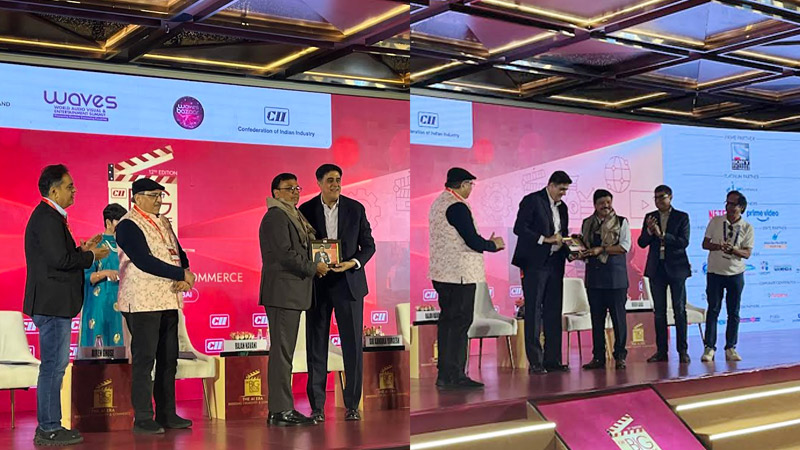
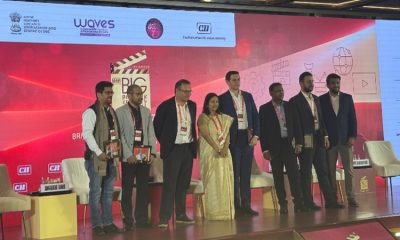
MUMBAI: India’s media and entertainment sector stands on the brink of exponential growth, yet fragmented regulations and outdated funding mechanisms threaten to stifle its path to a $100 billion future, industry leaders warned at the opening plenary of the Confederation of Indian Industries’ Big Picture Summit 2025.
In a hard-hitting session titled “Unlocking the $100 Billion Future: A Regulatory Roadmap for India’s M&E Transformation,” panellists exposed deep structural challenges that risk undermining the sector’s ambitions despite surging consumer demand and technological innovation.
The regulatory maze
Yatish Mehrishi, Chief Executive Officer of Entertainment Network India Ltd (Radio Mirchi), delivered perhaps the session’s most pointed critique of India’s licensing labyrinth.
“We do events. We do radio. In an event, you need so many licences,” Mehrishi said. “You go to PPL. You go to IPRS. You go to Norway. It becomes so complex to do an event.”
His verdict was stark: “I think if we can sit together and get a unified policy framework, then $100 billion will become a milestone and not a target. It will be much more difficult.”
The complaint echoed across the panel. Biren Ghose, Founder & CEO of Astra Studios, pointed to outdated frameworks hampering growth: “When you guys speak about radio policies, I’m sure you’re talking about new policies that were formed two decades back in India… Those policies don’t stand in compliance.”
The funding crisis
Beyond regulatory complexity, institutional funding emerged as the sector’s critical bottleneck—a challenge that traditional financial mechanisms appear ill-equipped to address.
Hiren Gada, Chief Executive Officer of Shemaroo Entertainment, identified two pivotal areas requiring urgent attention: “I think one is the entire funding mechanism… Institutional funding is still a huge challenge for our industry across the board, across sectors.”
The problem, Gada explained, stems from fundamental misalignment between creative industries and conventional assessment frameworks. “This is not a traditional industry and how traditional industries, the manufacturing industry gets funded… Here, most of it is unknown and still a regulatory framework needs to happen.” He added bluntly: “We cannot scale without funding.”
Ghose expanded on the knowledge gap preventing creators from accessing capital markets effectively. “If I was to ask creators the following questions, I would start writing it down. What are cap tables? How many software engineers do you need to build a new idea in AI? How do you reach out to investors? What is liquidation preference?”
These terms, he noted, “are not words in the creative industry or in the technology industry.”
AI as a regulatory imperative
Gada called on the government to enable rather than constrain AI innovation: “How government can and the regulatory, regulators can be the enablers of the coming AI revolution… If we read a lot of things, India, there is a lot of catch up that India needs to do.” He identified AI and funding mechanisms as the two areas that “can unlock that 100 billion vision in a very big way.”
Dynamic policies for a fast-moving sector
The pace of technological change demands a fundamental rethinking of policy timeframes, panellists argued.
“We have always made 5-year policies. But with technology changing, the policy is not good enough for 5 years anymore,” Ghose said. “So we need to be very dynamic and maybe do it in real time in some other way.”
Session chair Rajan Navani, Co-Chair of CII’s National Council on Media & Entertainment and MD & CEO of Jetsynthesys, framed the stakes: “What we are doing today through AI is showing that not only is it democratised at a global level, at a country level, at a state level… but really at an enterprise and individual level as well.”
The possibilities, he suggested, are unprecedented: “One person could create a unicorn. I am sure you are going to see a day where one individual is going to say, “this is a unicorn, we have created a billion dollar company with only one employee.”
Youth voices missing from policy
Mehrishi made what he termed an “unpopular” observation about India’s policy making structures: “I think we are in the 50s. We can’t be making policies for the next 20-30 years for youngsters who are 20 years old and want to build a country of their own. We don’t understand that logic.”
The comment underscored a generational disconnect, particularly acute in a sector where consumer behaviour is racing ahead of regulation. “The consumer is already looking at it. The way a consumer is consuming content is very different… The youngest population, such a large population with the data cost, media consumption is at a different level.”
De-Risking creative investment
Ghose challenged the sector’s “hit and miss” reputation, arguing that modern tools enable more rigorous validation before major investment.
“Because it is perceived to be a hit and miss, how do you de-risk that?” he asked. “You de-risk that by making sure that you have your own algorithms… You have your own markers to make sure that you start prototyping and testing things at a very early stage at $5,000 and $20,000, $30,000 and not just go because now I have an actor. Now I have a director. Now I’ll make this big movie.”
He cited historical precedent: “When people were making movies for very large budgets, Hiren was creating animation movies 20 years back. At a fraction of the cost of everybody. And he was the only guy who was actually making money on them.”
Beyond borders: ‘Imagination Diplomacy’
Ghose positioned the sector’s potential in geopolitical terms, arguing that creative industries transcend traditional economic metrics.
“Every single industry today requires imagery and simulation. No matter whether you are automotive or you are hospital or you are tourism,” he said, adding that XR (extended reality) technologies are transforming tourism from “a journey” into “an experience.”
His conclusion was striking: “I would like to think that this is beyond economics and I would like to say from this platform that I think what we are trying to create is an imagination diplomacy for the country.”
State-centre coordination
Sri Kandula Durgesh, Hon’ble Minister of Tourism, Culture and Cinematography for the Government of Andhra Pradesh, supported the call for national-level policy frameworks that states could adapt locally.
“Nowadays all the films are in the pan area. Not only films, OTT platforms also,” the minister noted. “We need a unified policy at the central level. And basing on the central level policy, we… keeping in view the state’s importance, state’s issues and other things, we can also modify it and we have to adapt it.”
He also cautioned against technology overwhelming narrative craft: “Technology should be there, AI and other things we have to use. But at the same time, human importance is always human importance. Creativity with human importance is more important.”
Sri Kandula Durgesh outlined Andhra Pradesh’s ambitions under the Swarna Andhra Vision 2047, targeting a ₹25,000 crore private investment through its tourism policy and positioning the state as the “Andhra Valley” for creative industries with world-class studios and post-production facilities.
Shifting from distribution to creation
Navani articulated the fundamental policy pivot required: “Earlier our policies were largely drafted around distribution… because that was what was controlled in multiple ways. Today distribution is democratised. What we need to focus on is IP creation or creation on the creativity part.”
This shift, he suggested, demands “a Create in India mission” representing “a complete 180 degree shift” from previous approaches.
The China challenge and regulatory interference
Avinash Pandey, Secretary General of the Indian Broadcasting & Digital Foundation, drew a stark comparison with regional competitors, warning that India risks falling behind. “We still need to make many changes,” Pandey said, pointing to how China is advancing in advertising, animation and other creative sectors whilst India lags.
More concerningly, he highlighted the impact of government interference on the sector’s health, noting that three major channels had been forced to shut down in India due to direct regulatory intervention—a development that underscores the fragility of the current framework.
The path ahead
The session concluded with a clear message: India’s $100 billion media and entertainment target is achievable, but only if policymakers move with unprecedented speed and flexibility whilst avoiding the heavy-handed interference that has already claimed casualties in the broadcasting sector.
“This is innovation in motion,” Navani said, framing the challenge. “What are those non-negotiables that are needed to make that unlock that scale?”
With China advancing rapidly in key creative sectors, consumer behaviour outpacing regulation, AI democratising creative tools, and younger generations consuming content in entirely new ways, the window for decisive action may be narrowing.
The CII Big Picture Summit 2025 runs from 1st to 2nd December in Mumbai, with further sessions exploring critical challenges facing India’s creative economy.






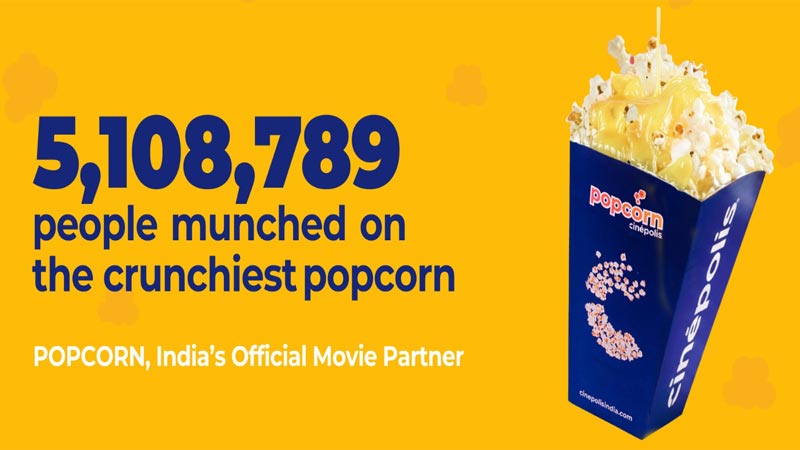
MUMBAI:If there is a soundtrack to cinema-going, it is the crackle of popcorn and in 2025, audiences at Cinépolis India clearly couldn’t get enough of it. The multiplex chain has revealed its annual popcorn consumption data, showing that moviegoers across its network devoured close to five million tubs of popcorn last year. Broken down, that works out to around 570 tubs every hour, or roughly 10 tubs disappearing every single minute, enough to keep the kernels popping almost non-stop.
In sheer volume terms, Cinépolis sold around 12,000 tonnes of popcorn during the year, underlining just how central the snack has become to the big-screen ritual. Long after the opening credits roll and before the end credits fade, popcorn remains the constant companion.
To celebrate National Popcorn Day on January 19, 2026, the cinema chain is now turning the spotlight on the snack itself. From January 20 to January 31, Cinépolis will run a nationwide “Popcorn Happy Hour”, offering a buy one get one free deal on popcorn across its locations. The limited-period promotion is designed to add a little extra crunch to the moviegoing experience, without adding to the bill.
“Popcorn is the official movie partner, and at Cinépolis, it is the sensory anchor of the cinema experience,” said Cinépolis India managing director Devang Sampat. “With the Popcorn Happy Hour offer, we are making it easier for audiences to add that to their visit, without compromising on quality.”
Sampat added that the consumption data is more than just a fun statistic. Tracking what patrons buy and when they buy it helps the chain refine its food and beverage offerings and shape the overall in-cinema experience. “Our 2025 data helps us understand what patrons are choosing, so we can keep improving the menu and the experience,” he said.
The popcorn push sits within Cinépolis India’s broader Foovies framework, an in-house strategy that treats food and beverages as a core part of cinema-going rather than a side order. The approach focuses on curated menus, value-led campaigns and data-driven decisions, using consumer behaviour to guide what lands at the concession counter.
As theatres continue to compete not just with streaming platforms but with every other leisure option vying for attention, the numbers suggest one thing remains rock-solid: when the lights dim, popcorn still rules the aisle. And with millions of tubs already behind it, Cinépolis is betting that the humble kernel will keep audiences coming back for another bite and another show.
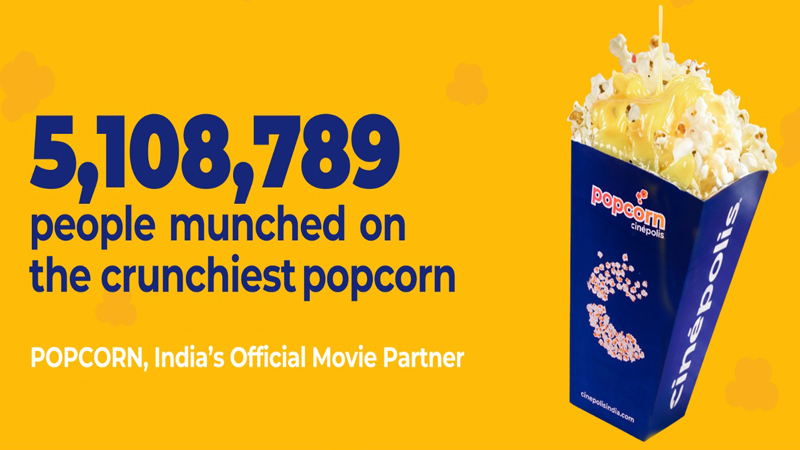
NEW DELHI: Cinépolis India sold nearly five million popcorn tubs in 2025, roughly one every six seconds, underscoring how firmly snacks are stitched into the cinema experience. Data released by the multiplex chain shows patrons bought around 570 tubs an hour, or 10 a minute, translating into 12,000 tonnes of popcorn consumed across its theatres last year.
To capitalise on the numbers and mark National Popcorn Day on January 19, Cinépolis will sell select popcorn variants at Rs 19 across all locations and showtimes, subject to availability. The push will roll into a longer “Popcorn Happy Hour” from 20 to 31 January, offering a buy-one-get-one-free deal nationwide.
Cinépolis India managing director Devang Sampat, said popcorn remains the “sensory anchor” of the big-screen experience and that value-led offers were designed to make it easier for audiences to add food to their visit without diluting quality. He added that proprietary food-and-beverage data helps the chain refine menus and improve the overall cinema experience.
The campaign sits within Cinépolis India’s Foovies strategy, which treats food and beverage not as an add-on but as a core driver of footfalls and consumption, backed by data-led menu development and targeted value promotions.
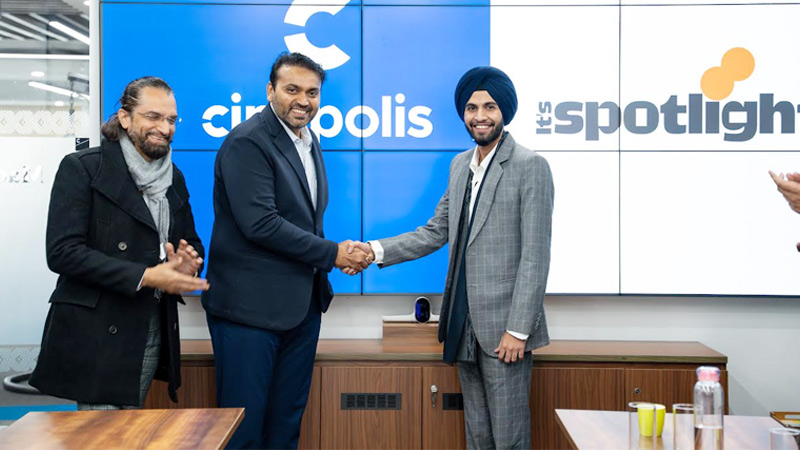
NATIONAL: Cinépolis India is moving decisively into cinema advertising, rolling out a nationwide network of digital screens across its multiplex lobbies in a partnership with dooh specialist It’s spotlight.
The deal will see more than 350 led screens, video walls and digital displays switched on across 101 Cinépolis properties in 63 cities and 23 states and union territories, creating one of the largest in-cinema advertising networks in the country.
Under the arrangement, It’s spotlight will operate and commercialise the inventory, giving brands access to programmatic buying, real-time optimisation and performance metrics such as impressions, audience profiles and footfall data.
“Cinema environments offer advertisers access to audiences in a focused, lean-forward setting which is distinct from outdoor and transit media,” said Cinépolis India managing director Devang Sampat. As dooh gathers momentum and brands look beyond cluttered social and digital platforms, he said, cinemas offer a sharper way to reach young and urban consumers.
The timing is deliberate. India’s out-of-home advertising market was worth Rs 5,920 crore in 2024, according to the EY-Ficci M&E report, with digital OOH expected to rise from 12 per cent to 17 per cent of total revenues by 2027.
It’s spotlight founder and director Virkaran Singh, said cinema screens sit “at the intersection of attention, intent and experience”, offering advertisers premium, highly engaged audiences at national scale through a single buy.
With 449 screens already under its Cinépolis, Cinépolis VIP and Fun Cinemas brands, the exhibitor is betting that its lobbies can become as valuable to advertisers as its auditoriums, turning footfall into a high-impact media channel.

Netflix celebrates a decade in India with Shah Rukh Khan-narrated tribute film

Delhivery chairman Deepak Kapoor, independent director Saugata Gupta quit board

Meta appoints Anuvrat Rao as APAC head of commerce partnerships

Brnd.me enters Europe as haircare brands power global expansion

TechnoSport taps quick commerce with launch on Slikk’s 60-minute platform

Jitendra Singh joins Reliance Industries as senior vice president, special projects

Tinder brings real-world dating experiences to North East India

These ’90s fashion trends are making a comeback in 2017
The final 6 ‘Game of Thrones’ episodes might feel like a full season
According to Dior Couture, this taboo fashion accessory is back
The old and New Edition cast comes together to perform
Phillies’ Aaron Altherr makes mind-boggling barehanded play
Uber and Lyft are finally available in all of New York State
Disney’s live-action Aladdin finally finds its stars
Netflix celebrates a decade in India with Shah Rukh Khan-narrated tribute film
Delhivery chairman Deepak Kapoor, independent director Saugata Gupta quit board
Meta appoints Anuvrat Rao as APAC head of commerce partnerships
Brnd.me enters Europe as haircare brands power global expansion
TechnoSport taps quick commerce with launch on Slikk’s 60-minute platform
Jitendra Singh joins Reliance Industries as senior vice president, special projects
Tinder brings real-world dating experiences to North East India
-
 iWorld3 months ago
Tips Music turns up the heat with Tamil party anthem Mayangiren
-
 iWorld12 months ago
BSNL rings in a revival with Rs 4,969 crore revenue
-
 I&B Ministry3 months ago
India steps up fight against digital piracy
-
 MAM3 months ago
HoABL soars high with dazzling Nagpur sebut
-

 MAM2 months ago
Best Lightweight Sunscreens for Daily Use in India
-

 AD Agencies1 month ago
Divya Parkhi steps into client lead role at WPP Media
-

 Brands3 months ago
Casio times it right for modern love this wedding season
-

 Brands3 months ago
TCS unveils Team SDG Universe for young learners