
Education
How to turn writing into a habit


The problem with modernity is that we threw out the baby with the bathwater. Horrified by the excess and savagery of the past, we decided to place a stigma on what is seen as old. The word “wisdom” is rarely used in its literal sense or taken literally.
The problem of disciplining yourself and getting better at a craft is not new. It has been with us since the start, and sadly, the modern world tends to view things backward. A classic understanding of discipline is rooted in much more truth than the recent pop-psych self-help advice industry.
How to write every day? Well, you have to develop a habit.
Aristotle’s advice
As mentioned, we decided to throw out the baby with the bathwater at some point. So, we intuitively think that getting better at dieting, working out, or writing is all about motivation. After all, “motivation coaching” and motivation videos are a multi-million (if not billion) dollar industry.

Developing good writing habits is no different from any other habit formation.
Relying on motivation is a terrible idea. It is an emotion, just like any other. And similar to all other emotions, it is unpredictable and tough to maintain. Just try it for yourself: pick an emotion or a state of mind, and try to have it consistently.
We all fall into this trap. Due to a documentary or a YouTube video, we swear to ourselves that we will lose weight, start writing, or learn to play the piano. The passion and fire burn within us as we start, but then fade away after a few days.
Ever since the ancient world, people understood that men are creatures of routine, reflex, and instinct. To quote Aristotle: “ Excellence is a habit.”
There is nothing inherently wrong with chasing that motivational high, but we have to understand that it is fleeting. The essence of maturity is learning to do things when you do not feel like it.
At first, the “pain” of forcing yourself to write daily will be significant. But with time, a habit will form. To put things simply: to get good at writing you have to practice daily writing. And to write daily, a habit must be burned into both your body and mind.
Did you ever notice how hard it is to kick a bad habit? Well, the opposite is also true. Good habits also tend to stick around if they are hard-wired into your mind. People who are used to working out feel bad if they have to skip a week. Ex-military people still make their beds, iron their shirts, and sit with their backs straight.
To some extent, you are a programmable creature. Every culture was aware of this fact and used it to its advantage.
Beware of Dopamine extremes
Writing every day is a commitment. But it does not necessarily have to be very unpleasant.
Try to do the following experiment: eat a strawberry. Tastes good, right?
Now, eat a piece of cake, then eat a strawberry after. The very same strawberry now tastes extremely sour. Why is that?
Well, your taste buds adjusted themselves to the extremely sweet cake piece. Compared to the diabetes-inducing cake, the mildly-sweet strawberry tasted like a lemon.
This long analogy is important because the very same thing happens to your emotions. Your body is designed to produce pleasure during every small victory.
Making your bed, going for a run, eating a healthy meal, or just seeing someone smiling at you should give you a hit of feel-good juice inside your head. Finishing a page should normally give you a small rush of satisfaction.
Basically, modern people live in a type of luxury that would make pharaohs blush. Every TV program, commercial, video game, movie, or song is designed to produce as much pleasure as possible.
Your brain is so drenched in pleasure chemicals, that you develop a very high tolerance for pleasure. To use our analogy, you can’t taste the strawberry (writing) because you’re eating 5 pounds of extra-sweet cake.
Going on a dopamine detox for a few weeks will help you not just with writing time, but any other type of discipline. Try to stay away from extreme and artificial sources of pleasure such as substance abuse or digital entertainment.
Daily writing tips and motivational videos are fine, but without discipline, your writing habit will be neglected just like your gym routine or guitar lessons.
This is why many modern people are always in a funk or a foul mood. Normal daily things and the resulting pleasure are dulled, so we feel like we have to drag ourselves to do anything. The motivation centers of the brain are fried.
Third-parties
If you do not want to become a writer and just want to pass a class, you can buy a research paper for college on the internet. Some sites specialize in selling papers of all types, from CVs to Cover and essays.
Finding the best writing service for you is not that hard. But you should only consider this option if you don’t intend on becoming a good writer long-term. Having someone else do your work will spare you from some discomfort, but you are short-changing yourself in the long run.
Conclusion
Emotions are great for short bursts of creativity. However, it is not uncommon for people to go through half a dozen states per day, so you cannot rely on these bursts for consistent mastery of a craft like writing.
An ideal game plan would be to use the motivation to get started and practice daily until a habit or reflex is formed. If you find yourself consistently burdened by having to write, consider cutting out the more intense pleasures from your life, at least for a while to re-calibrate your hyper-stimulated pleasure centers.





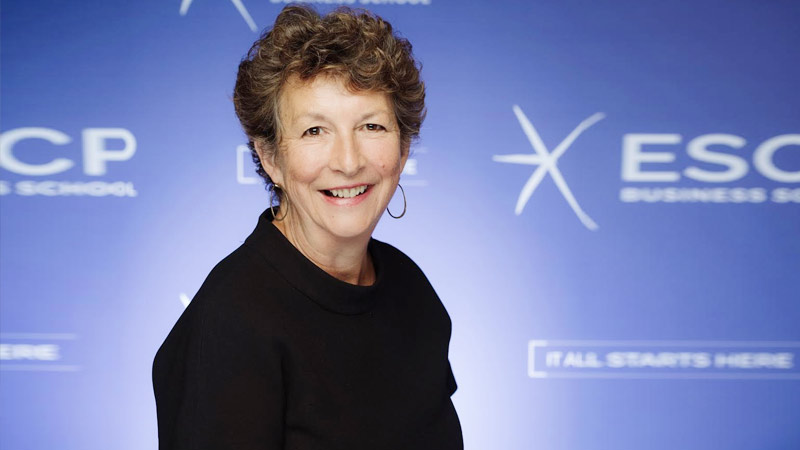
LONDON: ESCP Business School has appointed Professor Marie Taillard as dean of its London campus, effective December 19, 2025, as the institution sharpens its expansion and academic ambitions in the UK.
Taillard, who previously served as interim dean, will take on the role for a three-year term. Her appointment comes as ESCP seeks to strengthen its position in London and expand its academic, industry and societal engagement across the UK.
ESCP Business School executive president and dean Leon Laulusa, said Taillard’s expertise in creativity and marketing, combined with her long association with the institution, made her well placed to shape the campus’s next phase. He credited her with launching the MSc in Marketing & Creativity, now one of the school’s flagship programmes.
ESCP London chairman of the board of trustees Lord David Gold, said Taillard would build on the campus’s recent momentum, citing her academic leadership and international outlook.
A L’Oréal professor of creativity marketing and former UK head of faculty, Taillard has been central to ESCP’s push for innovative pedagogy that bridges academic research and professional practice. She was recently shortlisted for the Times Higher Education’s Most Innovative Teacher of the Year award.
Taillard said her focus would be on expanding the programme portfolio, strengthening lifelong learning and deepening links between academia, industry and local communities, aligned with ESCP’s Bold & United strategy.
She holds an MBA from Columbia Business School and a PhD from the University of London, and has held several senior leadership roles at ESCP since joining its permanent faculty in 2007. The London campus currently serves more than 1,900 students and executive participants each year and is ranked second in the UK by the Financial Times.
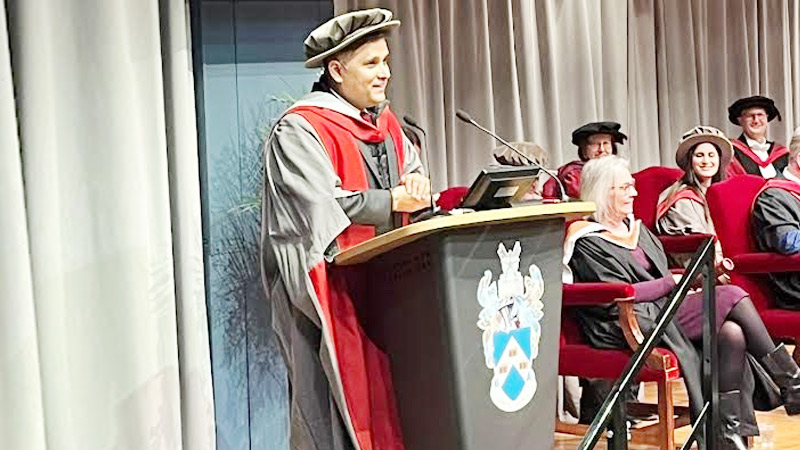
YORK: Bestselling author and former diplomat Amish Tripathi has added a new title to his name, Doctor of the University.
The University of York in the United Kingdom has conferred on Tripathi an honorary doctorate, honouris causa, recognising his contribution to Indian literature and his role in carrying Indian culture to audiences around the world.
In its citation, the University described Tripathi as the fastest-selling author in Indian publishing history. His 12 books have sold over eight million copies globally, earning him a regular place on Forbes India’s list of influential celebrities.
Beyond the printed page, Tripathi is a familiar voice and face to viewers. A seasoned broadcaster, he has hosted acclaimed documentaries, including the award-winning Legends of the Ramayan. He is also co-founder of Tara Gaming, the studio behind Age of Bhaarat, billed as India’s first AAA video game. Before returning to full-time creative work, he served as minister for Culture and Education at the Indian High Commission in London.
The honorary degree was presented at the University of York’s winter graduation ceremony in the second week of January 2026, in the presence of students, faculty and guests from across the world. In awarding the honour, the University praised Tripathi for deepening global understanding of Indian values, traditions and storytelling.
He was joined in this year’s roll of honour by three other distinguished figures: renowned mathematician professor Simon Donaldson, ecologist professor Sue Hartley OBE, and dame Amanda Blanc DBE, group chief executive officer of Aviva.
The University of York awards its honorary doctorates to individuals whose achievements show exceptional distinction and reflect the institution’s values. For Tripathi, it marks another chapter in a career that continues to blend myth, modernity and meaningful dialogue across cultures.
NEW DELHI / SAN FRANCISCO: Niit learning systems limited’s managed training arm, niit mts, has bought 100 per cent of Sweetrush Inc in a deal worth up to $26 million, tightening its grip on the USA and sharpening its ai-led learning offer.
The acquisition, completed through Niit (USA) inc, includes performance-linked earn-outs over five years. Sweetrush, founded in 2001 by Arturo Schwartzberg and Andrei Hedstrom and headquartered in San Francisco, employs more than 100 people across the United States and Costa Rica, with a wider bench of learning specialists.
Niit MTS is betting that Sweetrush’s award-winning, human-centred learning design, spanning certification-driven content and a fast-growing talent solutions practice, will plug neatly into its global, ai-enabled managed learning platform for Global 1000 clients. The aim: turn project work into sticky, annuity-like contracts and lift wallet share across enterprises, professional associations and not-for-profits.
Niit MTS chief executive officer and executive director Sapnesh Lalla, said the tie-up brings “human-centred learning craft and global operational scale, powered by technology and AI, under one roof”.
Sweetrush chief executive officer Danielle Hart, said joining niit offers a bigger global runway while preserving the firm’s culture of care and innovation.
Niit MTS vice chairman and managing director Vijay K Thadani, called the deal a boost to its outcome-focused portfolio, marrying strategic learning interventions with delivery at scale.
Sweetrush’s founders struck a similar note. Arturo Schwartzberg said the teams and culture would remain intact, now backed by Niit’s heft, while Andrei Hedstrom said the combined ecosystem would “amplify” the firms’ impact on mission-critical learning.



MIB sets OTT accessibility rules, mandates captions and audio description

Boney Kapoor acquires remake rights of Tamil political satire Thalaivar Thambi Thalaimaiyil

Netflix India names Rekha Rane director of films and series marketing

Zabeen signs off from TV9 after shaping the network’s public voice

Dhawan steps up to bat for Delhi’s grassroots sports push

Orient Beverages pops the fizz with steady Q3 gains and rising profits

Cheekatilo shines in the dark with record debut on Prime Video

These ’90s fashion trends are making a comeback in 2017

Swiggy Instamart’s GOV surges 103 per cent year on year to Rs 7,938 crore
The final 6 ‘Game of Thrones’ episodes might feel like a full season
According to Dior Couture, this taboo fashion accessory is back
The old and New Edition cast comes together to perform
Phillies’ Aaron Altherr makes mind-boggling barehanded play
Uber and Lyft are finally available in all of New York State
MIB sets OTT accessibility rules, mandates captions and audio description
Boney Kapoor acquires remake rights of Tamil political satire Thalaivar Thambi Thalaimaiyil
Netflix India names Rekha Rane director of films and series marketing
Zabeen signs off from TV9 after shaping the network’s public voice
Dhawan steps up to bat for Delhi’s grassroots sports push
Orient Beverages pops the fizz with steady Q3 gains and rising profits
Cheekatilo shines in the dark with record debut on Prime Video
-
 e-commerce4 weeks ago
Swiggy Instamart’s GOV surges 103 per cent year on year to Rs 7,938 crore
-

 News Headline2 months ago
From selfies to big bucks, India’s influencer economy explodes in 2025
-
 News Headline2 years ago
Odisha to host Ultimate Kho Kho Season 2 from December 24
-
 iWorld1 year ago
Kuku TV transforms India’s OTT space with vertical microdrama boom
-
 MAM2 years ago
Ultimate Kho Kho raises valuation, secures a series-A PE funding from UK-based BNP group
-
 iWorld6 months ago
Billions still offline despite mobile internet surge: GSMA
-

 News Headline2 months ago
2025: The year Indian sports saw chaos, comebacks, and breakthroughs
-

 News Broadcasting3 weeks ago
Mukesh Ambani, Larry Fink come together for CNBC-TV18 exclusive


