
GECs
How to get your story on screen?


MUMBAI: The key to survival in the cut-throat world of television programming is creativity and conviction. At a time when writers and good ones at that, are available nineteen to a dozen, television channels are picky-choosy about the scripts and scriptwriting talent that they hire. In such a scenario, many a scriptwriters with fire in their belly and the desire to be successful are left with no choice but to taken the route of becoming a producer by roping in investors.
With a focus on how new age writers also have to don the hat of a producer not out of choice but out of compulsion, The Content Hub 2016’s session ‘The Age of Creative Producers’ set the ball rolling by focussing on issues of show-runners, C driving creativity as well as writers and directors turning producers.
The session was attended by writers, producers, directors and broadcasters alike from the television industry. The session was chaired by Bodhi Tree Multimedia co-owner Sukesh Motwani and the panellists included Neela Telefilms owner Asit Modi, The House of Originals director Nivedita Basu, Sony SAB programming head Saeed Akhtar and Swastik Pictures founder Siddharth Tewary.
Shedding light on the issue of writers and directors becoming producers, Tewary said, “Writers have no other option than to become producers because many a times, production houses don’t agree to produce their stories. So writers are left with no choice but to manage their funds and produce it on their own.”
Basu opined, “The concept of writers and directors collaborating with production houses is nothing new. It already existed in the industry. Moreover, the collaboration between writer and production house as well as between the production house and channel has become a key factor.”

For the smooth shooting for any television show, a ‘show-runner’ is a must. The show-runner is responsible for the show’s creative and financial aspects and also looks after the overall creative authority and management responsibility for television programs. Emphasising the importance of having an able ‘show-runner’ to helm the television show, Basu added, “Nowadays having a good concept is nothing. It’s all about how you build the characters. It is good to have a very experienced person as a show-runner by a channel.”
Elaborating on the concept of show-runner, Modi opined, “It is important to have somebody who has knowledge about all aspects of creation rather than writing. Thus it is important to have a show-runner who has a better idea, vision and understanding about what the audience wants.”
Broadcasters play a pivotal role in getting the content out on television and highlighting the criteria that broadcasters look for while choosing a show, Sony SAB programming head Saeed Akhtar opined, “An individual should have a vision on what they are creating. Today, a lot of shows on television are infinite, and thus it is very important to have a vision about the show as for broadcasters, the show is a product, which they need to sell to advertisers as well as the viewers. One should choose the right person internally to drive a particular kind of brand and maintain brand hygiene. If the channel identifies a person who has the capability to drive a particular idea into a good show and everyone’s conviction is on that show, then broadcasters helps in creating an ecosystem so that the essence of the core idea always stays.”










CHENNAI: It appears there is still plenty of Sun to go around in the Indian broadcasting landscape, even if a few clouds have drifted across the financial horizon. Sun TV Network Limited, the Chennai-based behemoth that dominates airwaves across seven languages, has tuned into a steady frequency for the quarter ending 31 December 2025. While the numbers show a resilient revenue stream, the company’s latest broadcast reveals a few static-filled spots in its profit margins.
For the quarter in question, Sun TV’s total income climbed by approximately 3.31 per cent, reaching Rs 958.39 crores compared to Rs 927.66 crores in the same period last year. Revenue from operations also saw a healthy bump, rising 4.32 per cent to Rs 827.87 crores.
The real star of the show, however, was domestic subscription revenue, which surged by 8.86 per cent to Rs 472.99 crores. This growth highlights the enduring appetite for Sun’s diverse content, which spans everything from daily soaps in Tamil and Telugu to its burgeoning OTT platform, Sun NXT.
Despite the revenue growth, the picture quality of the profits was slightly blurred by rising costs. Eitda for the quarter stood at Rs 409.79 crores, a dip from the Rs 432.14 crores recorded in the corresponding 2024 quarter.
The profit after tax followed a similar downward trend, settling at Rs 316.44 crores against the previous year’s Rs 347.17 crores. Advertisers also seemed to have switched channels slightly, with advertisement revenues sliding to Rs 291.94 crores from Rs 332.17 crores.
Sun TV isn’t just playing on home turf; its sporting ambitions are becoming increasingly global. The network now owns three major cricket franchises: SunRisers Hyderabad in the IPL, SunRisers Eastern Cape in SA20, and SunRisers Leeds Limited in The Hundred (UK).
The foray into British cricket saw the company acquire a 100 per cent stake in Northern Superchargers Limited (now SunRisers Leeds) for approximately £100 million. While these franchises brought in Rs 14.61 crores this quarter, they also incurred corresponding costs of Rs 19.89 crores. Over the nine-month period, however, the cricket business is a major player, contributing Rs 487.64 crores in income.
The company’s bottom line took a minor hit from exceptional items, including a Rs 4.23 crore charge related to India’s new Labour Codes, which consolidated 29 existing labour laws. Additionally, the consolidated results reflect the amalgamation of Kal Radio Limited with Udaya FM, a move that became effective in May 2025 and required a restatement of previous figures.
To keep investors from reaching for the remote, the Board has declared an interim dividend of 50 per cent, that’s Rs 2.50 per equity share. This comes on top of earlier dividends of 100 per cent (Rs 5.00) and 75 per cent (Rs 3.75) declared in August and November 2025, respectively.
With a massive cash reserve and a dominant position in the South Indian market, Sun TV continues to shine, even if the current quarter required a bit of fine-tuning. For now, shareholders can sit back, relax, and enjoy the show.
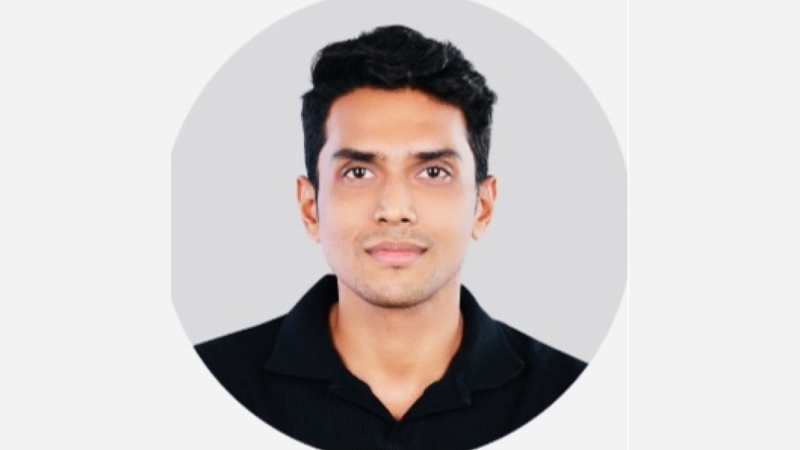
MUMBAI: Sony Pictures Networks India has hired Pradeep M to handle standards and practices for its southern market, bolstering its compliance bench as content rules tighten across platforms.
Pradeep, who has nearly 13 years in the entertainment media industry, takes on responsibility for content standards in a region that is both linguistically diverse and regulatorily sensitive. His brief spans television, OTT, sports and digital platforms.
He specialises in content review and compliance across shows, commercials, on-air promotions and international feeds, ensuring alignment with broadcast, OTT and advertising codes. He has also handled brand approvals and sponsorship integrations for heavily regulated categories—including online gaming, cryptocurrency, NFTs and lottery brands—offering guidance shaped by fast-evolving rules.
Before Sony, Pradeep worked at Jiostar as assistant manager for content regulation from November 2024 to January 2026. Earlier, he spent nearly seven years at Viacom18 Media, rising from senior executive to assistant manager in content regulation between 2018 and 2024. There he served as a key compliance touchpoint for the network.
His career began on the creative side. Between 2013 and 2018, he worked as executive producer on feature films and television shows, gaining hands-on exposure to production. He also had a stint as a non-fiction show director at Star TV Network in 2017. That mix of creative and regulatory experience gives him a dual lens—how content is made and how it must be managed.
As regulators, platforms and advertisers all tighten the screws, broadcasters are investing more in gatekeepers who can keep creativity within the lines. Sony’s latest hire shows where the industry is heading: in the streaming age, compliance is content’s quiet co-star.

MUMBAI: Colors Gujarati has unveiled two new prime-time shows as part of its push to strengthen culturally rooted storytelling for regional audiences. The channel will premiere the devotional saga Gangasati–Paanbai at 7.30 pm, followed by the romantic family drama Manmelo at 9.30 pm from February 2.
Inspired by Gujarat’s spiritual and literary heritage, Gangasati–Paanbai: Shyam Dhun No Navo Adhyay draws from the timeless bhajans and poetry of saint-poetesses Gangasati and Paanbai, weaving devotion and human values into a contemporary narrative aimed at younger viewers.
In contrast, Manmelo explores love and responsibility across social divides, tracing the lives of three middle-class sisters whose relationships with three affluent brothers reshape their futures. The show delves into ambition, emotional conflict and the realities of married life, offering a layered family drama.
A Colors Gujarati spokesperson said the new launches reflect the channel’s commitment to authentic Gujarati entertainment that blends cultural values with modern storytelling.


MIB sets OTT accessibility rules, mandates captions and audio description

Boney Kapoor acquires remake rights of Tamil political satire Thalaivar Thambi Thalaimaiyil

Netflix India names Rekha Rane director of films and series marketing

Zabeen signs off from TV9 after shaping the network’s public voice

Dhawan steps up to bat for Delhi’s grassroots sports push

Orient Beverages pops the fizz with steady Q3 gains and rising profits

Cheekatilo shines in the dark with record debut on Prime Video

These ’90s fashion trends are making a comeback in 2017
The final 6 ‘Game of Thrones’ episodes might feel like a full season
According to Dior Couture, this taboo fashion accessory is back
The old and New Edition cast comes together to perform
Phillies’ Aaron Altherr makes mind-boggling barehanded play
Uber and Lyft are finally available in all of New York State
Disney’s live-action Aladdin finally finds its stars
MIB sets OTT accessibility rules, mandates captions and audio description
Boney Kapoor acquires remake rights of Tamil political satire Thalaivar Thambi Thalaimaiyil
Netflix India names Rekha Rane director of films and series marketing
Zabeen signs off from TV9 after shaping the network’s public voice
Dhawan steps up to bat for Delhi’s grassroots sports push
Orient Beverages pops the fizz with steady Q3 gains and rising profits
Cheekatilo shines in the dark with record debut on Prime Video
-

 News Broadcasting1 week ago
Mukesh Ambani, Larry Fink come together for CNBC-TV18 exclusive
-

 News Headline1 month ago
From selfies to big bucks, India’s influencer economy explodes in 2025
-

 iWorld2 weeks ago
Netflix celebrates a decade in India with Shah Rukh Khan-narrated tribute film
-
 Hollywood6 days ago
The man who dubbed Harry Potter for the world is stunned by Mumbai traffic
-
 I&B Ministry3 months ago
India steps up fight against digital piracy
-
 MAM3 months ago
HoABL soars high with dazzling Nagpur sebut
-
 iWorld12 months ago
BSNL rings in a revival with Rs 4,969 crore revenue
-
 iWorld5 months ago
Billions still offline despite mobile internet surge: GSMA
