
Broadband
Hathway focuses on high data usage consumers to grow broadband

MUMBAI: Hathway Cable and Datacom Ltd (HCDL), which has been one of the major players both in broadband and cable business, could be most vulnerable to the changes in the ecosphere given that much of its business is urban-centric. Now, the company is focusing on high data usage customers (more than 80 GB per month users) to remain relevant in the competition and the company will roll out more plans around this segment very soon. To have a more stable and loyal subscriber base, apart from 30,000 regular churn, it had 57,000 forced churn from low speed, low data consumption consumers.
The company had to take the step of forced regular churn because it did not want to utilize capex for them. Low pricing data plans from networks can easily lure the customers who use less than 40 GB data per month increasing the churn rate of the service provider. Especially, the bucket of 0-20 GB data has more low pricing deal seeking tendency as HCDL MD Rajan Gupta said in an earnings call. Though the company is focusing on retaining 80 GB data users, he also mentioned there’s no stress in the bucket of more than 40 GB usage.
“These customers, who were anyway not using the network, are suddenly getting the same 12-20 GB for Rs 200 even on post-paid, even with the reputed number 1 and number 2 players. So these people from January- February started asking for more and more deals. So we had two options. We could have given them deals and maintained them at Rs 300 ARPU. But then I’m blocking my capex, my CMTS, my network hubs, my data centre, which will prevent me from giving that sort of quality service to all my high data users, or I have to put much more capex. We didn’t want either of the scenarios,” Gupta explained the logic behind cleaning up “non-productive base”.
While the company currently stands with 5.5 million home passes, for the rest of this financial year it will not expand home passes any more. The focus will be on adding high usage customers within the current network. The strategy is to initially invest in growing this base through a mix of FTTH, pay TV, OTT and IoT services. In few select cities, the plan of offering home services bundling solutions along with high-speed data has already been rolled out on a four-month plan. Gupta claims to see 10 per cent increase in gross addition in those particular geographies while six to seven per cent current consumers are upgrading to it.
But before coming up with extravagant marketing strategy, it wants to get the right product first. In the next three to four months, the company will master the product and overall service. However, while ARPU has declined to Rs 690 this quarter, the initial focus is on adding value to the service of high usage customers rather than expecting a return in ARPU. Basically, the plan is revolving around J-curve growth strategy where the initial focus on service will lead to harvesting revenue and higher EBITDA growth.

Jio Giga Fiber has already lured customers with several additional amenities including Jio Giga TV set top box. In this changing scenario, Airtel and BSNL have already revised their plans. The giant DTH player Tata Sky has recently rolled out its broadband service in 12 cities. Another MSO DEN Networks has chalked out plans of working more closely with local cable operators to get a hold of last mile competition.
However, like many other experts in the industry Gupta also emphasised that with the entry of large players, the awareness about fibre to home, high speed broadband will increase because of the PR and marketing efforts. He mentioned that out of the current 17 million wire and broadband base, only 5 million is high speed broadband. On an optimistic note, he thinks eventually this 5 million will become 17 million.
“We want to make sure, in every market we operate, we have the best of solutions; either the ability to give even 1,000 GB to a consumer at a very low price or the ability to give speeds of 200-300 Mbps. On ARPU we’ll see 2-3 per cent reduction every quarter,” he added.
While the company which itself is focusing so much on broadband business sensing the demand, the question rises how OTT is affecting the churn in its cable business wing. Gupta says a high number of consumers are still sticking to cable and DTH because of low monthly pricing. He adds that OTT and cable or DTH will more and more start complimenting each other over a period.
“We don’t believe these are two very separate spaces. We believe our expertise is the last mile. We have access to consumers. Now if consumers want broadband, we are pretty much there. If consumers want OTT, we will be there. And if consumers want linear TV, which again, is not showing any sign of drop, we are already there,” he added.
In the cable TV segment, the company plans to increase phase III, phase IV ARPU by about 15 per cent. While 6 per cent has already come in Q1 owing to the price implementation, balance effect is expected to come in Q2. In the case of the first two phases, the plan is to increase ARPU by 7 per cent. As all the price changes have been implemented from the month of August, it hopes to stabilise it by September.
The company plans to have 25,000-28,000 gross additions per month in the next 9 months of FY19. Alongside that, the company is also focusing on doing underground fibre to increase the service to customers. As the entire fixed broadband business ecosystem gradually picks up thanks to more Indian, vernacular content on OTT platforms, Hathway is also taking more aggressive moves in the segment.











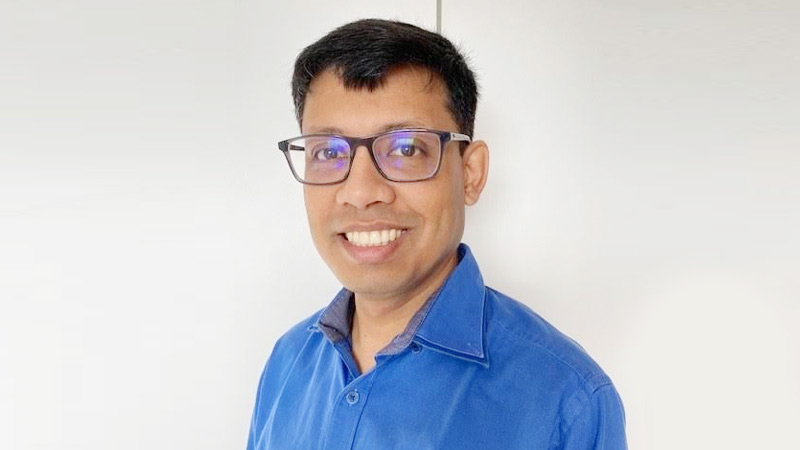
PUNE: Airtel has appointed Rabi Shankar Mishra as chief executive officer, based in Pune, marking a sharp leadership shift as the telco sharpens its focus on growth, execution and market momentum.
Mishra moves into the role after leading Airtel’s Guwahati operations, where he built a reputation for tight execution and cross-functional leadership. In Pune, he will drive business strategy, operational excellence and expansion, drawing on deep expertise across sales, scale and complex, multi-market operations.
Before joining Airtel, Mishra held senior leadership roles across global consumer giants. He served as sales director at the Hershey company, vice president at Diageo, and held multiple associate vice president and associate director roles at Mondelēz International and Cadbury India Ltd, overseeing large, high-value businesses and teams across regions.
His earlier career at Pepsico India and Cavinkare laid a strong foundation in sales, customer development and route-to-market strategy across fast-moving consumer businesses.
With a rare blend of FMCG rigour and telecom scale, Mishra arrives in Pune to push Airtel harder, faster and deeper into its next phase of growth.

MUMBAI: Global broadband subscribers surged past 1.52 billion in the first quarter of 2025, marking a 1.21 per cent quarterly rise as South and East Asia drove expansion, according to Point Topic data. Yet the picture remains patchy, with 22 countries—up from 14 in the previous quarter—seeing subscriber numbers fall as consumers shift to mobile broadband or grapple with economic headwinds and market saturation.
India topped the largest 20 fixed broadband markets with a blistering 4.7 per cent quarterly growth rate, whilst Britain stood out as an outlier, suffering a 0.3 per cent decline as fibre rollout failed to offset broader connection losses.
Fibre-to-the-home and building connections now command 72.34 per cent of global fixed broadband subscriptions, cementing the technology’s dominance. Other fixed technologies saw their market shares shrink, bar satellite and fixed wireless access, which bucked the trend with spectacular annual growth of 47.4 per cent and 29.9 per cent respectively.
The satellite boom was largely driven by Starlink breaching the 5 million customer mark, though growth has slowed due to capacity constraints and pricing pressures. Competition is set to intensify as Amazon’s Project Kuiper prepares for launch by year-end, with Britain expected among the first markets to go live following Ofcom approvals. Residential plans currently start at around £75 monthly.
Fixed wireless access is reshaping rural connectivity, particularly in America and India, with aggressive investments from Reliance, Bharti, T-Mobile, Verizon and AT&T driving adoption.
Industry consolidation is accelerating, with potential mega-deals including Charter’s merger with Cox in America and a possible carve-up of France’s SFR among Orange, Bouygues and Iliad. Meanwhile, sub-Saharan Africa represents untapped potential, attracting significant infrastructure investment targeting broadband expansion.

MUMBAI: Act Fibernet has struck a streaming sweet spot. The wired internet major has teamed up with Amazon Prime to offer its users a fresh set of broadband plans bundled with Prime Lite — a compact yet power-packed version of Amazon’s popular subscription service.
Designed for digital-first consumers who want speed and spectacle in equal measure, the new ACT plans include high-speed fibre connectivity along with Prime Lite benefits: HD access to Prime Video’s catalogue of originals, films, and TV shows on one device, unlimited Same-Day/Next-Day deliveries, early bird access to marquee sales like Prime Day, and exclusive shopping deals.
Act’s subscribers, both new and existing, can access the bundle by signing up for six-month (or longer) plans. Once onboard, Prime Lite perks remain active for as long as the eligible Act subscription is live.
Act VP, head of brands, content and partnerships, Naveen Nahar, said, “At Act Fibernet, our brand promise is simple — Feel the Advantage. It’s about going beyond the fast internet to deliver real, everyday value to our customers. With the launch of Amazon Prime Lite on our platform, we’re giving our users the best of entertainment, shopping, and convenience — all in one seamless experience. Whether its world class shows, free express deliveries, or early access to deals, this partnership ensures our customers don’t just stay connected, they stay ahead.”
“At Prime Video, we remain committed to offering easy and convenient access to our much-loved Originals, movies, series, and more to customers across India,” said Prime Video India director & head, SVOD Business, Shilangi Mukherji said, “This strategic collaboration with Act Fibernet not only simplifies access to Prime Video’s extensive content selection but also delivers other shopping & shipping benefits of Prime Lite, like unlimited free ‘Same-day/Next-Day’ delivery across millions of products, early access to exclusive deals, and much more.”
With this move, Act is no longer just a broadband provider — it’s a bundled convenience powerhouse. For subscribers, it’s all the streaming, scrolling, and shopping — at the speed of light.
Below is a list of cities and their corresponding starting rates for Prime Lite with ACT Plans:




MIB sets OTT accessibility rules, mandates captions and audio description

Boney Kapoor acquires remake rights of Tamil political satire Thalaivar Thambi Thalaimaiyil

Netflix India names Rekha Rane director of films and series marketing

Zabeen signs off from TV9 after shaping the network’s public voice

Dhawan steps up to bat for Delhi’s grassroots sports push

Orient Beverages pops the fizz with steady Q3 gains and rising profits

Cheekatilo shines in the dark with record debut on Prime Video

Swiggy Instamart’s GOV surges 103 per cent year on year to Rs 7,938 crore

These ’90s fashion trends are making a comeback in 2017
The final 6 ‘Game of Thrones’ episodes might feel like a full season
According to Dior Couture, this taboo fashion accessory is back
The old and New Edition cast comes together to perform
Phillies’ Aaron Altherr makes mind-boggling barehanded play

ATN International brings ATN Bangla to Canada
MIB sets OTT accessibility rules, mandates captions and audio description
Boney Kapoor acquires remake rights of Tamil political satire Thalaivar Thambi Thalaimaiyil
Netflix India names Rekha Rane director of films and series marketing
Zabeen signs off from TV9 after shaping the network’s public voice
Dhawan steps up to bat for Delhi’s grassroots sports push
Orient Beverages pops the fizz with steady Q3 gains and rising profits
Cheekatilo shines in the dark with record debut on Prime Video
-
 e-commerce1 month ago
Swiggy Instamart’s GOV surges 103 per cent year on year to Rs 7,938 crore
-
 iWorld1 year ago
Kuku TV transforms India’s OTT space with vertical microdrama boom
-
 News Headline1 year ago
TRAI puts a ‘stop’ to unsolicited calls and messages
-

 News Headline2 months ago
From selfies to big bucks, India’s influencer economy explodes in 2025
-
 Comedy2 years ago
Taarak Mehta Ka Ooltah Chashmah celebrates 4,000 episodes
-
 MAM2 years ago
OpenAI joins C2PA steering committee
-
 News Headline2 years ago
Odisha to host Ultimate Kho Kho Season 2 from December 24
-
 News Headline1 year ago
Abhishek Bachchan joins as co-owner of European T20 Premier League


