
News Broadcasting
Grand launch of ABP Network’s ‘The Southern Rising’ Summit

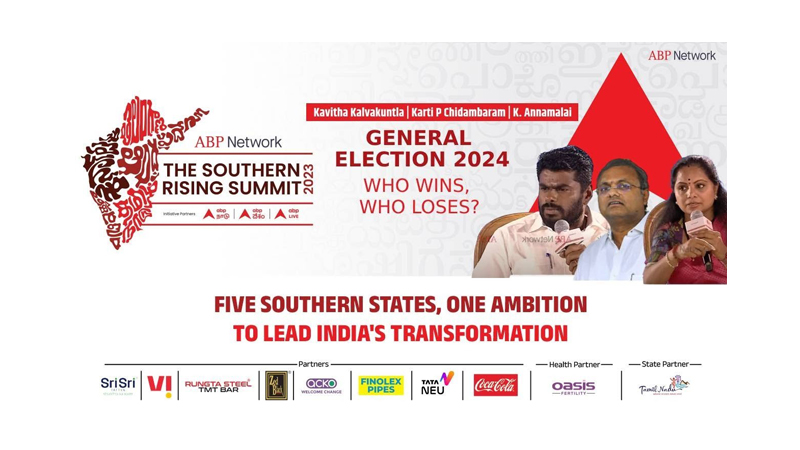
Mumbai: Strengthening the endeavour to celebrate the collective progress and sociocultural richness of India’s Southern states, the first-ever edition of the ‘The Southern Rising’ Summit has launched in Chennai.
Sharing the context and setting the overview of The Southern Rising Summit ABP Network CEO Avinash Pandey said, “The South has already risen. It tells us that when Governance is dedicated to people to improve their health and education; it will be a success. The Southern states have the highest GDP and lowest population growth rates. The story of South is the story of the human spirit.”
Speaking on the role of the governor, Dr Tamilisai Soundararajan, Hon’ble Governor of Telangana and Lieutenant Governor of Puducherry, said, “The Governor is a bridge and a bridge not only to the central and state governments but also to the people. There should be a good relationship between the CM and Governor.”
In his keynote address, Govt of Tamil Nadu, Minister for Youth Welfare and Sports Development, Udhayanidhi Stalin said, “A bigger conspiracy is being hatched to punish the Southern States for their good performance through the impending delimitation exercise of Lok Sabha Constituencies. In the 1970s, the Union Government promoted the population control program. The South Indian states implemented the program effectively. Their population growth rate slowed in comparison to states that did not implement the program well, whose population continued to grow at a higher rate. This effectively reduced the population share of the South Indian States. Today, this is being used against us. As you all would know, the Constitution mandates that each state must receive seats in proportion to its population, and constituencies should be of roughly equal size to the population.”
The event also witnessed the presence of renowned actor, Rana Daggubati, popular actress and director Revathy, and music composer, environmentalist and 3 times Grammy Award Winner Ricky Kej who shared their thoughts on a wide-ranging issue during the Summit.
Speaking during a session titled ‘India on the World Stage: Rhythm Divine’, Ricky Kej, said,” When it comes to climate change, India is making significant strides. Concern in India on climate change is much larger than anywhere in the world.”
As the summit’s attendees hung on to every word, noted public intellectual, author, and commentator, Gurcharan Das’s session delivered an impassioned address on the pivotal role that freedom plays in shaping human progress. He eloquently stated, “A lot of people, like me, are in the middle of the political spectrum; and I am a liberal. Being a liberal, you are on a lonely road, as there’s no one to vote for.”
Amid the grandeur of Summit, an extraordinary musical journey unfolded in the form of “Making Music: Crafting A New Style.” Featuring the brilliant talents of Mahesh Raghvan and Nandini Shankar, two musical luminaries who have left an indelible mark on the world of music, this session enthralled the audience with its unique blend of tradition and innovation.
As the audience leaned in, P. Thiaga Rajan, Hon’ble Minister of Information Technology & Digital Services, Tamil Nadu, delved into the manifold benefits of federalism, remarked advocating for federalism in India stating, “The notion of democracy is that a thousand voices should be heard. We should try and figure out policies; if that doesn’t work, we should recalibrate and readjust.”
The compelling panel of political visionaries, converged to explore the future of India in a session titled “Whose New India? Past, Imperfect, or Fast Forward.” The panel, featuring John Brittas, Narayanan Thirupathy, and M V Rajeev Gowda, delivered a mosaic of contrasting viewpoints.
John Brittas, a Member of Parliament (CPIM), said, “India is a multi-religious country and you can only have democracy when you have free and independent media. ” He further adds, “India has a rich history of welcoming all cultures and boasts a diverse heritage. South India is the home of reformists. With 18% of the population, we contribute 35% to the GDP.
BJP Vice President Narayanan Thirupathy said, ” Many say BJP can’t have a foothold in Tamil Nadu. In the last 60 years, it is the BJP that has been growing in the state more than other parties. We have done very well; our booth committee is very strong. There is a big vacuum in the absence of Jayalalitha and Karunanidhi, and BJP will definitely fill the vacuum. Definitely, the BJP is going to form the government in 2026.”
Contributing to the discussion and presenting a unique angle M V Rajeev Gowda, Vice Chairperson, State Institute for Transformation of Karnataka and Ex-Member of Parliament, Rajya Sabha (INC) said “We are experiencing a BJP-free South India. In Karnataka, we saw corruption. The contractors wrote letters to the PM complaining about corruption. We need to provide people with fair prices and a safety net. This is something Congress will continue in the country. The Nyay scheme is also a safety net for people. We are expected to win Rajasthan, Madhya Pradesh, and Chhattisgarh in a spectacular way.”
Countering to that John added, “The BJP can maintain its optimism, as everyone has the right to dream of coming to power in Tamil Nadu in 2026.”
In the session, “Mahatma Forever: Why We Need Him Now,” Prof. Gopalkrishna Gandhi, former Governor of West Bengal clarified that Gandhi did not seek immortality or was not keen on being relevant.
“It was the people from South India who propelled Mahatma Gandhi and Kasturba Gandhi in South Africa towards’ struggle for India’s dignity in South Africa.” Prof. Gopalkrishna Gandhi said speaking about the South Indian connection with Gandhi. He outlined, “No South India in South Africa, no freedom struggle led by Gandhi in India”
In a world where social media exerts a profound influence, ABP Network’s ‘The Southern Rising’ Summit unfolded a captivating session, provocatively titled “Social Media: Playground or Business School?”
Speaking at the session, Chaithania Prakash, a digital content creator, shared her perspective, saying, “As influencers, we have a responsibility to ensure that nothing negative impacts our followers. We make sure the content we provide is of high quality to avoid any negative influence on our followers.”
Digital content creator Ardhra Sajan spoke about her journey, stating, “Initially, we didn’t know what to do on social media. Our follower count gradually increased, which brought a sense of responsibility.”
Highlighting challenges, Deepika Venkatachalam, another noted digital content creator said, “Some influencers are promoting betting apps, which negatively affect people’s lives, and I find this distressing. Everything is becoming digital, and people are seeking shortcuts. We have a responsibility to follow laws and use hashtags for paid collaborations to make it clear to viewers that it is a promotional partnership.”
During the session, “Women in Politics: A Different Kind of Leader,” Ms. Jothimani Sennimalai said, “To empower women in politics, there’s a need for fundamental changes in the party structure. At the party level, men are present in various positions starting from the local government to the district level. If such opportunities are given opportunities, especially to women through that experience they can perform better even when they come to power”
In the session, “General Election 2024: Who Wins, Who Loses?” political heavyweights intensely debated the upcoming elections.
K. Annamalai, State President of the Bharatiya Janata Party (BJP) for Tamil Nadu, said, “BJP Tamil Nadu is an ambitious party, and we are determined to reach our goals. The upcoming 2024 elections are pivotal, with just seven months to go. BJP’s comeback in Tamil Nadu in 2024 will solidify our party’s position.”
To this, Kavitha Kalvakuntla, Member of Legislative Council (MLC) – Kamareddy & Nizamabad, Former Member of Parliament (MP), BRS Party countered, “People don’t want power-hungry parties. The people want a decisive Government. She further added, “We are neither with Congress nor BJP. I.N.D.I.A, the alliance will crumble. Post-poll alliances have historically worked, while pre-poll alliances have not. I believe every party will need to rethink their strategy.”
On being asked that India alliance may crumble, Karti P Chidambaram, Member of Parliament for Sivaganga (INC), “It is the Congress party which is present in all 5 southern states. The alliance will not crumble. In these 5 states, INC will perform exceptionally well.”
Speaking at the session, “Making New Myths – Recreating the Old”, Suhasini recalled how Maniratnam made the historic epic Ponniyin Selvan. “I asked him not to make this film. After the failure of some of the politic-historic films we make, I was uncertain, if this idea would work,” she revealed and further added, “The thing that worked for the success of PS, was the fact that the story of Ponniyin Selvan has been there in our culture. People loved it even before we made it.”
Speaking at the session, ‘Reinvention and Resurgence – Staying Alive in the Movies’, the celebrated actress turned politician, Kushboo Sundar, shared a reflection from her personal life, “I slept like a log after coming out in the open of being a victim of child sexual abuse. There’s nothing for me to be ashamed of.”
The Southern Rising Summit was conceptualised and instituted by ABP Network as a tribute to the exceptional growth, cultural opulence, and societal harmony exemplified by the southern states of India. It aimed to celebrate the spirit and richness of southern states, united on a singular mission of driving a transformative journey for India. The summit witnessed profound deliberations and sharing of insights by the movers and shakers of South Indian states and Union Territories.









News Broadcasting
Mukesh Ambani, Larry Fink come together for CNBC-TV18 exclusive
Reliance and BlackRock chiefs map the future of investing as global capital eyes India

MUMBAI: India’s capital story takes centre stage today as Mukesh Ambani and Larry Fink sit down for a rare joint television conversation, bringing together two of the most powerful voices in global business at a moment of economic churn and opportunity.
The Reliance Industries chief and the BlackRock boss will speak with Shereen Bhan, managing editor of CNBC-TV18, in an exclusive interaction airing from 3:00 pm on February 4. The timing is deliberate. Geopolitics are tense, technology is disruptive and capital is choosier. India, meanwhile, is pitching itself as a long-term bet.
The pairing is symbolic. Reliance straddles energy transition, digital infrastructure and consumer growth in the world’s fastest-expanding major economy. BlackRock, the world’s largest asset manager, oversees more than $14 tn in assets and sits at the nerve centre of global capital flows. When the two talk, markets tend to listen.
Fink’s appearance marks his third India visit, a signal of the country’s rising strategic weight for the Wall Street-listed firm, which carries a market value above $177 bn. His earlier 2023 trips included an October stop in New Delhi, where he met both Ambani and Narendra Modi.
India is now central to BlackRock’s expansion plans, notably through its joint venture with Jio Financial Services. Announced in July 2023, the 50:50 venture, JioBlackRock, commits up to $150 mn each from the partners to build a digital-first asset-management platform aimed at India’s swelling investor class.
The backdrop is robust. BlackRock ended 2025 with record assets under management of $14.04 tn, helped by $698 bn in net inflows, including $342 bn in the fourth quarter alone. Scale gives Fink both heft and a long lens on where money is moving.
He has been openly bullish on India. At the Saudi-US Investment Summit in Riyadh last year, Fink argued that the “fog of global uncertainty is lifting”, with capital returning to dynamic markets such as India, drawn by reforms, demographics and durable return potential.
Expect the conversation to range beyond balance sheets, into technology’s role in finance, access to capital and the mechanics of sustainable growth in a fracturing world order. For investors and policymakers alike, it is a snapshot of how big money is thinking about India.
At a time when capital is cautious and growth is contested, India wants to be the exception. When Ambani and Fink share a stage, it is less a chat and more a signal. The world’s money is still looking for its next big story, and India intends to be it.
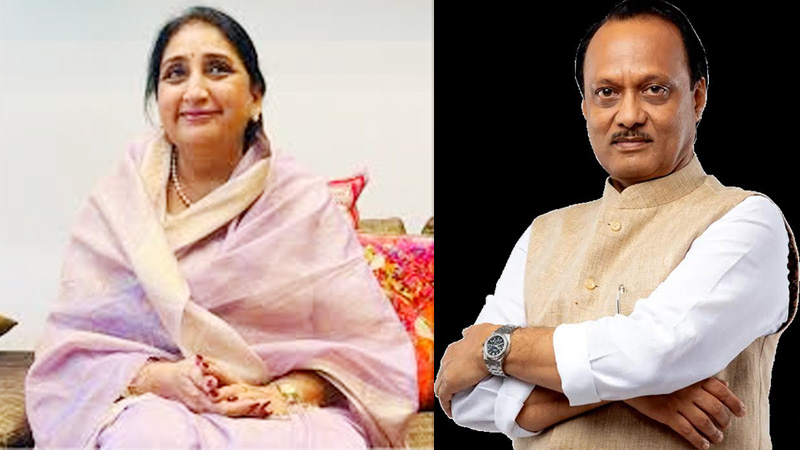
MUMBAI: Sunetra Pawar, wife of the late Ajit Pawar, will take oath as Maharashtra’s deputy chief minister on Saturday, media reports say, two days after his death in a plane crash.
According to reports, the Nationalist Congress Party (NCP) has summoned a legislature party meeting at 2pm on Saturday, where Sunetra Pawar, a Rajya Sabha member, is expected to be elected as leader. She is then likely to be sworn in as deputy chief minister at around 5pm at Raj Bhavan, as preparations are underway at the governor’s residence.
Ajit Pawar, Maharashtra’s deputy chief minister and a veteran NCP leader, died when a chartered Learjet 45 carrying him and four others crashed near Baramati on 28 January. The aviation regulator confirmed that all on board were killed when the aircraft burst into flames during a second landing attempt.
The sudden loss of one of Maharashtra’s most experienced politicians has prompted swift consultation among NCP leaders. Party figures, including working president Praful Patel, have been involved in talks on succession and organisational continuity. Reports suggest that several senior leaders support Sunetra Pawar’s elevation, viewing it as a unifying choice at a fraught moment.
According to party allies, Sunetra Pawar may also be considered for additional responsibilities within the state government. Some sources indicate that she would oversee portfolios such as excise and sports, while the finance brief could move to chief minister Devendra Fadnavis. Observers see this as a pragmatic division of duties intended to balance governance and political stability.
The transition unfolds against the backdrop of wider speculation over the future of the NCP, including talks about reconciling rival factions that split in recent years. Close aides of Ajit Pawar had been exploring avenues to bring the party’s different strands back together before his death, and that conversation may now gain fresh impetus.
Ajit Pawar’s demise has left a notable vacuum in Maharashtra politics. As a long-serving deputy chief minister, he had overseen key portfolios, including finance and planning, and played a central role in the state’s coalition government. His unexpected death has triggered intense reflection among allies and critics alike on both his legacy and the path ahead.
As Maharashtra prepares for Sunetra Pawar’s swearing-in, the NCP faces its most urgent test in years: turning tragedy into cohesion and navigating a new chapter in state leadership.
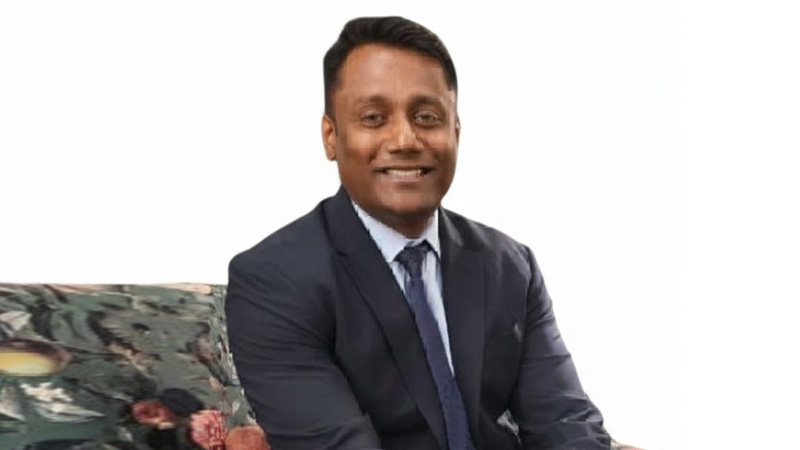
NEW DELHI: According to media reports, Firstpost has appointed senior journalist Binoy Prabhakar as its new chief content officer, bringing seasoned editorial expertise on board as the digital news platform embarks on its next phase of growth.
Prabhakar joins from Hindustan Times, where he spent nearly three years as chief content officer, shaping editorial strategy and guiding content for a rapidly evolving digital audience.
Earlier, he served as editor at Moneycontrol and CNBCTV18.com, and spent over a decade at The Economic Times in senior editorial roles. His career also includes leadership positions at Network18, The Indian Express and The Times of India.
A fellow of the Tow Knight Center for Entrepreneurial Journalism in New York, Prabhakar combines newsroom experience with a keen understanding of digital storytelling.
At Firstpost, he is expected to strengthen editorial depth, sharpen the platform’s voice, and drive content innovation as readers increasingly look for clarity in a crowded news landscape.

Mukesh Ambani, Larry Fink come together for CNBC-TV18 exclusive

Nielsen launches co-viewing pilot to sharpen TV measurement

Netflix celebrates a decade in India with Shah Rukh Khan-narrated tribute film

Delhivery chairman Deepak Kapoor, independent director Saugata Gupta quit board

Meta appoints Anuvrat Rao as APAC head of commerce partnerships

Brnd.me enters Europe as haircare brands power global expansion

TechnoSport taps quick commerce with launch on Slikk’s 60-minute platform

These ’90s fashion trends are making a comeback in 2017
The final 6 ‘Game of Thrones’ episodes might feel like a full season
According to Dior Couture, this taboo fashion accessory is back
The old and New Edition cast comes together to perform
Phillies’ Aaron Altherr makes mind-boggling barehanded play
Uber and Lyft are finally available in all of New York State
Disney’s live-action Aladdin finally finds its stars
Mukesh Ambani, Larry Fink come together for CNBC-TV18 exclusive
Nielsen launches co-viewing pilot to sharpen TV measurement
Netflix celebrates a decade in India with Shah Rukh Khan-narrated tribute film
Delhivery chairman Deepak Kapoor, independent director Saugata Gupta quit board
Meta appoints Anuvrat Rao as APAC head of commerce partnerships
Brnd.me enters Europe as haircare brands power global expansion
TechnoSport taps quick commerce with launch on Slikk’s 60-minute platform
-
 iWorld4 days ago
Netflix celebrates a decade in India with Shah Rukh Khan-narrated tribute film
-
 I&B Ministry3 months ago
India steps up fight against digital piracy
-
 iWorld3 months ago
Tips Music turns up the heat with Tamil party anthem Mayangiren
-
 iWorld12 months ago
BSNL rings in a revival with Rs 4,969 crore revenue
-
 MAM3 months ago
HoABL soars high with dazzling Nagpur sebut
-

 News Broadcasting2 months ago
CNN-News18 dominates Bihar election coverage with record viewership
-
 News Broadcasting11 hours ago
Mukesh Ambani, Larry Fink come together for CNBC-TV18 exclusive
-
 MAM3 months ago
Kapil Sethi joins Network18 as head of technology