
Gaming
Game on: Finding balance between user experience and security

KOLKATA: A few years ago, online gaming was regarded as a mere recreational activity in India. With the digital ecosystem reaching a new pinnacle, the gaming industry has observed rapid expansion in terms of users as well as investment. To keep users hooked and grow the existing base, the industry is shifting its focus to quality user experience. Alongside that, the stakeholders are increasing investment in security too.
In a panel discussion at GEMS 2020, ‘Building a robust backend and infrastructure network’, moderated by indiantelevision.com founder, CEO and editor-in-chief Anil Wanvari, industry experts weighed in on factors that should be considered for user engagement and platform security.
Name of the game is user experience
With India being one of the top five mobile gaming markets in the world, Indian players are acquainted with buttery-smooth gameplay and immersive user interface, courtesy global giants like Tencent, Activision etc. If an app is in any way inferior to this golden standard, the consumers would reject it, said GOQII founder and CEO Vishal Gondal. Loco VP engineering Viral Mehta added that keeping users engaged outside of the core game should be of top priority.
Tata Communications media and entertainment services sales BD head Anand Pimprikar underscored that equal importance be accorded to pre-game and end-game experience. To this end, the use of multi-CDN and the good peering relation of delivery networks can benefit gaming platforms. Moreover, since bandwidth issue has always been a stumbling block in the Indian market, platforms should actively monitor the network to track performance and direct traffic accordingly, he said.
“Serving things through CDN helps a lot and I think a major part is that you have to write some really good fall back mechanisms. Let’s say your user has a really good 4G network and he is travelling and keeps going from 2G to 3G to 4G, you need to have a really good fallback on your backend and client both. And you render less information on his screen when he is on a lower network to make sure the critical part is always there to give him the experience of playing, ” POCKET52 co-founder and chief technology officer Satyam Verma elaborated.
Enhancing security: A work in progress
When there are more fish in the sea, the sharks gather to feast. DDoS attacks are par for the course, but attackers are becoming more and more sophisticated, said Verma. According to him, they read patterns to discover vulnerabilities; in fact, attackers are able to identify and exploit threats even before platforms flag them.
Read more news on the Gaming industry
“Hence, you are the best judge for yourself to decide what is healthy traffic. You can identify these are my healthy URLs, healthy traffic, the patterns of traffic. If something is crossing that, it goes into the bad cluster, then we can put some restrictions,” Verma advised.
GAMES24X7 chief technology officer Sandeep Agarwal said there has been not a day without DDoS attack. Agarwal said that his team protects the platform at all levels using advanced software tools. Hosting an open source software on the cloud service provider has greatly helped the company. Overall, the security situation is steadily improving, Agarwal assured.
The strength of a program’s security depends on the ignorance of the user. But pirates are smart, enterprising and persistent. They cannot be eliminated, but that doesn’t mean developers are about to throw up their hands in despair.
“We keep analysing what sort of threat and attacks could come our way and the infrastructure we need to put in place in order to safeguard ourselves. We have third party services keeping those threats away. We have a team that keeps analysing those threats. It’s a continuous development,” Winzo lead backend developer Rahul Sharma said.
‘Social media and security risks go hand-in-hand’
The industry is more concerned about attackers resorting to social media networks to orchestrate security breach, GOQII’s Gondal said. Using social media, attackers can hack user credentials, compromise computers and smartphones with malware, and use phishing tactics to steal credit card, banking and other sensitive information.
Moreover, fake apps are mushrooming as well. Already, over 500 copycat Fauji apps have popped up on the Android and Apple app stores.
“We are massively struggling to get that down. These platforms don’t take any of these requests seriously. Also, there are several accounts on Instagram, Facebook, Twitter that sell you fake ids. At one end, while there is the whole server-side security, the bigger security risk is on the social network side where people are getting fooled. Frauds are happening in real money gaming also through passwords, OTPs,” he added.
The need for cybersecurity in gaming
Online gaming has a unique kind of duality when it comes to cybersecurity. A gamer is a software user just like any other; he or she is subject to the same security risks and threats as any other user. The same security principles are just as effective and important. However, each threat also involves a unique twist, adding a complication that isn’t seen in any other field.
As security threats pose a grave challenge for all parties involved, Supercric co-founder and CEO Arvind Sivdas finds that it is better to formulate a security plan while development is in the nascent stages.
Often, gaming companies tend to overlook security aspects at the initial juncture due to funding concerns, but following the Fortnite fiasco in 2018, they should know better. Even if they cannot fix the threats at that stage, conversations such as this panel at GEMS today may direct them in the proper direction.
“When you understand a pattern of threat, attackers will come up with a new pattern. You can’t overdesign security,” Pimprikar added.
Today, attackers have more options to compromise a player’s security at their disposal than ever before. By knowing which aspects of security are the same and which are different, game companies and their customers can protect themselves, and stay safe in a way of life that’s “just for fun” while avoiding potential for real loss.









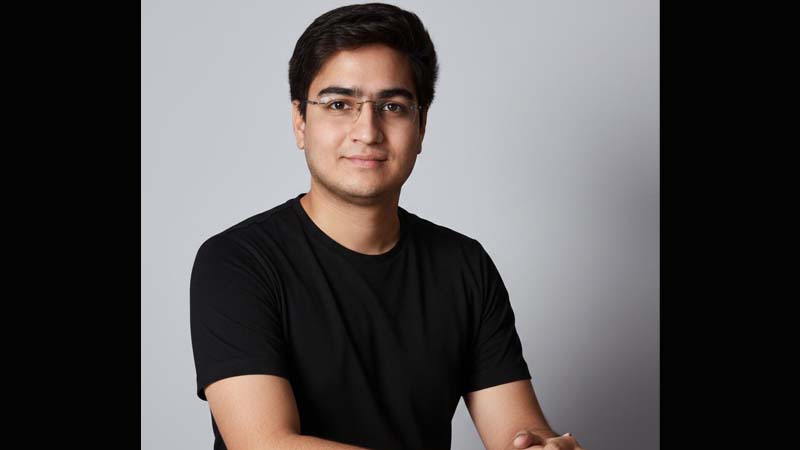
Ahmedabad: MetaNinza, a rewards-first gaming and esports platform, has onboarded Anand Mishra as co-founder and chief of staff, signalling an ambitious push to scale its ecosystem across India and South East Asia.
Anand, a serial entrepreneur with 7+ years in consumer tech, blockchain and gaming, previously founded and led Glazer Labs, where he built Glazer Games and THRYL, a rewards-centric gamer engagement platform. Under his leadership, Glazer Games delivered 400 million+ impressions for 50+ brands, drove 10 million+ user acquisitions, executed hundreds of creator partnerships, and launched new esports IPs. THRYL amassed nearly half a million users in just two months. Anand also founded HECOD Blockchain, serving 400+ B2B clients globally and scaling to 8 million+ active users, with a $4.2 million ARR.
At MetaNinza, Anand will oversee growth, user acquisition, creator ecosystem building, tournaments and rewards distribution, and ensure alignment between product, tech, marketing and operations. His blockchain expertise is expected to strengthen secure, fair and anti-abuse reward systems across the platform.
“MetaNinza is building something truly differentiated by combining competitive esports, rewards-first daily engagement and community-led growth. What drew me most was their clarity of vision: to go beyond tournaments and build a full participation ecosystem where gamers engage meaningfully every day and are rewarded fairly,” said Anand Mishra.
The appointment comes as MetaNinza strengthens its platform foundations and expands its offerings, including tournaments, scrims, quests, coin wallets, offerwalls and anti-abuse frameworks. The company has also launched 16score.com, a global esports news platform aimed at boosting organic community growth. MetaNinza currently serves India-first users but plans to scale across South East Asia, targeting 600 million gaming enthusiasts in the region over the next three years.
“Anand brings a rare combination of ecosystem insight and execution discipline. His experience in building scalable gaming platforms is exactly what we need as MetaNinza enters its next growth phase,” said Sudhansu Sinha, founder and CEO of MetaNinza.
MetaNinza is positioning itself as a full-stack, community-first esports brand, combining competitive tournaments, teams, technology, content and social engagement into one end-to-end platform.
Gaming is no longer just play. With Anand on board, MetaNinza is turning competition, rewards and community into a high-speed growth engine.
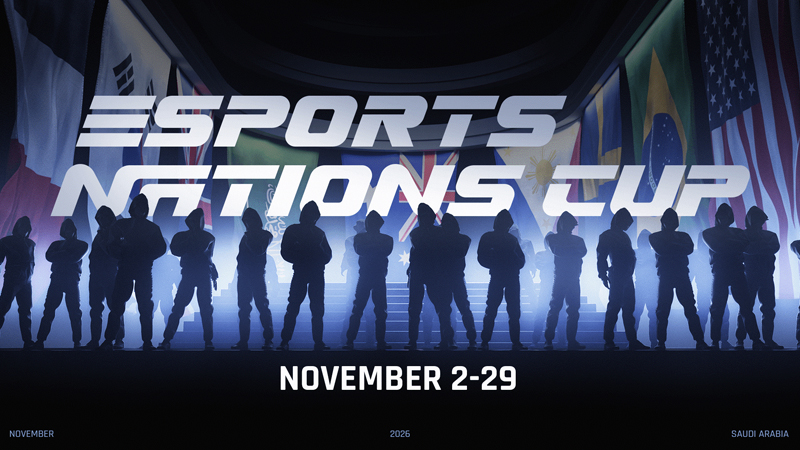
MUMBAI: When esports trades club colours for national flags, the stakes get personal. The Esports Nations Cup 2026 is set to make its global debut in Riyadh from November 2 to 29, 2026, adding a fresh, nation-first twist to competitive gaming.
Announced by the Esports World Cup Foundation, the new tournament is designed to sit alongside the club-based Esports World Cup, giving players the rare chance to represent their countries and fans a reason to cheer with identity and pride firmly in play.
The numbers are hard to ignore. ENC 2026 is backed by a $45 million, three-part funding model, aimed at strengthening the entire esports ecosystem. Of this, 20 million dollars will be paid directly as prize money to players and coaches across 16 game titles. A further $5 million has been earmarked as incentives for esports clubs that release their professional players for national duty, with payouts linked to player performance.
Another $20 million will flow through the ENC Development Fund, supporting national teams with logistics, travel, operations, marketing and long-term pathway development signalling that this is as much about future pipelines as present-day podiums.
The competition introduces a placement-based prize framework that keeps things simple and transparent. Every qualified player is guaranteed prize money and at least three matches. A gold-medal finish earns $50,000 per player, silver takes $30,000, and bronze pays $15,000. The same placement pays the same amount across all titles, whether solo or team-based, with team payouts scaling by roster size. Coaches are rewarded alongside players for identical finishes.
“National teams bring a powerful new layer to esports, rooted in identity and pride,” said Esports World Cup Foundation CEO Ralf Reichert, adding that the model is designed to reward performance while remaining fair and sustainable for players, clubs and national programmes alike.
While Riyadh hosts the inaugural edition, the ENC is planned as a biennial event with a rotating host-city format, taking nation-based esports to major cities around the world.
Several titles are already locked in. Mobile Legends: Bang Bang, Trackmania, and Dota 2 have been confirmed for 2026, with more games expected to be announced shortly.
For esports fans, it is no longer just about who plays best but which nation plays proudest.

MUMBAI: It seems Amazon’s gaming division has finally met its final boss. After nearly eight years at the helm, Christoph Hartmann is reportedly packing up his controller and heading for the exit. The news, first reported by Bloomberg’s Jason Schreier, marks the end of an era for the man who steered the New World and Lost Ark ships into the choppy waters of the MMO market.
While Hartmann’s departure might look like a simple game over, it is actually part of a massive tactical pivot. Amazon appears to be retreating from the costly, high-stakes world of traditional AAA console and PC development. Instead of chasing the next blockbuster epic, the company is looking skyward by focusing its energy on Amazon Luna, its dedicated cloud gaming service.
This leadership shuffle coincides with a broader wave of 16,000 redundancies across the Amazon empire. For gamers, the most poignant bit of lag is the news that New World: Aeternum is set to go offline permanently in January 2027. It appears the company is no longer interested in building digital worlds from scratch, but rather in providing the cloud-based pipes to stream them.
Hartmann leaves behind a legacy of taking Amazon from a struggling studio to a genuine, if brief, contender in the PC gaming space. Looking forward, the hardware focus is shifting entirely to Luna infrastructure. Rumours suggest the new-look Amazon Games will be heavily bolstered by AI-integrated experiences rather than traditional software. Whether this move is a masterstroke or a massive misclick remains to be seen. For now, the Amazon Games office is looking a little bit emptier, and the cloud is looking a lot more crowded.

Mukesh Ambani, Larry Fink come together for CNBC-TV18 exclusive

Nielsen launches co-viewing pilot to sharpen TV measurement

Netflix celebrates a decade in India with Shah Rukh Khan-narrated tribute film

Delhivery chairman Deepak Kapoor, independent director Saugata Gupta quit board

Meta appoints Anuvrat Rao as APAC head of commerce partnerships

Brnd.me enters Europe as haircare brands power global expansion

TechnoSport taps quick commerce with launch on Slikk’s 60-minute platform

These ’90s fashion trends are making a comeback in 2017
The final 6 ‘Game of Thrones’ episodes might feel like a full season
According to Dior Couture, this taboo fashion accessory is back
The old and New Edition cast comes together to perform
Phillies’ Aaron Altherr makes mind-boggling barehanded play
Uber and Lyft are finally available in all of New York State
Disney’s live-action Aladdin finally finds its stars
Mukesh Ambani, Larry Fink come together for CNBC-TV18 exclusive
Nielsen launches co-viewing pilot to sharpen TV measurement
Netflix celebrates a decade in India with Shah Rukh Khan-narrated tribute film
Delhivery chairman Deepak Kapoor, independent director Saugata Gupta quit board
Meta appoints Anuvrat Rao as APAC head of commerce partnerships
Brnd.me enters Europe as haircare brands power global expansion
TechnoSport taps quick commerce with launch on Slikk’s 60-minute platform
-
 News Broadcasting1 day ago
Mukesh Ambani, Larry Fink come together for CNBC-TV18 exclusive
-
 iWorld5 days ago
Netflix celebrates a decade in India with Shah Rukh Khan-narrated tribute film
-
 I&B Ministry3 months ago
India steps up fight against digital piracy
-
 iWorld3 months ago
Tips Music turns up the heat with Tamil party anthem Mayangiren
-
 MAM1 day ago
Nielsen launches co-viewing pilot to sharpen TV measurement
-
 iWorld12 months ago
BSNL rings in a revival with Rs 4,969 crore revenue
-
 MAM3 months ago
HoABL soars high with dazzling Nagpur sebut
-

 News Broadcasting2 months ago
CNN-News18 dominates Bihar election coverage with record viewership