
e-commerce
Future group inks pact with Amazon India


MUMBAI: Future Group has entered into a strategic partnership with the online retail giant Amazon India under which the e-tailer will sell the retail group’s products online.
The deal will leverage the product knowledge, brand portfolio and sourcing base of the Future Group, and the e-commerce platform, customer base and reach of Amazon.in. The deal comes soon after Amazon CEO Jeff Bezos visit to India during which he met Future Group group CEO Kishore Biyani.
Talking about the collaboration Biyani comments, “The bottom line in each of our retail success stories is ‘know your customer’. Insights into the soul of Indian consumers – how they operate, think, dream and live – helps us innovate and create functionally differentiating products and experiences. Partnership with Amazon, which obsesses to be earth’s most customer centric company, will enable us to leverage their strengths, investments and innovations in technology to reach out to wider set of consumers across India.”
According to the joint statement issued by the companies, the partnership will initially focus on the Future’s Group fashion brands and will subsequently cover all other categories. The company’s current portfolio has over 40 brands and around 10,000 unique styles that will be exclusively retailed online through Amazon.in platform. Once operational, customers on Amazon.in platform can buy Future Group’s fashion brands Lee Cooper, Converse, Indigo Nation, Scullers or Jealous21, among others.

Moreover, Amazon India will also assist Future Group in accelerating new product development in categories that are currently not served by traditional retailers.
Commenting on the latest alliance in the e-commerce space, Trust Research Advisory (TRA) CEO N Chandramouli reckons, “Today the e-commerce space is no longer limited by geographic boundaries in a sense as fixed as it used to be a few years ago. With its current offering Amazon already caters to a massive Indian.
“Future group which has been a leading retailer in the country understands the soul of Indian consumers. As one of India’s retail pioneers with multiple retail formats, they connect a diverse and passionate community of Indian buyers, sellers and businesses. The collective impact on business is staggering: Around 300 million customers walk into Future group stores each year and choose products and services supplied by over 30,000 small, medium and large entrepreneurs and manufacturers from across India, so with the Amazon tie up, this number is set to grow and venture into the on line spectrum,” he adds.
Partnership between the two organisations will bring together the best of consumer insight from the online and offline world and create the omni channel approach to serving customers, according to the company statement.
According to Team Pumpkin co-founder Swati Nathani, “The partnership is definitely a win win situation for both the companies. Amazon will get the support of millions of Indian consumers who have already trusted Future Group brands and Future Group will foray into e-commerce space again, but this time with the support of global leaders in this category. This partnership will not only lead to more people to purchase their favourite brands online, but will also get another door for Future Group to generate .”
“This definitely calls for more competition and harder marketing techniques. Future Group has been at the forefront of offline retail in India and its presence on amazon.in shall definitely be a cause of worry to some other leading e-commerce players,” she adds.
Amazon.in will also collaborate with Future Group brands in promoting the existing and new brands in markets, explore co-branding opportunities and accelerate new product development in categories which are currently not served by retailers. The companies will also explore synergies in areas such as distribution network, customer acquisition and cross promotions, the statement added.
Commenting on the new partnership, Amazon India vice president and country manager Amit Agarwal said, “We are excited to collaborate, leverage each other’s unique strengths and serve customers across India. The product portfolio of Future Group, their innate understanding of the Indian consumer mind set and our ability to serve and deliver a convenient, easy, trusted and reliable delivery experience to a nationwide set of customers is a win win for all.”
Amazon.in started its Diwali sale on 10 Oct, but did not go with the kind of heavy discounts that Flipkart and Snapdeal did last week.
“This is the coming together of two trusted brands, Amazon and Future. Even more, they are in complementary spaces of businesses which is bound to create a strength much larger than the sum of the individuals. Not only will Amazon get leadership due to the extremely well oiled supply chain, but Future will get a business outlet, that may be larger than many of its retail stores together. I am sure the competition is beating themselves as to why they didn’t think of this one,” Chandramouli comments.
“The partnership must not be seen as an attempt at ‘indianisation’ of Amazon. It is much more than that – this partnership stands on extremely strong business logic,” he adds.
Future Retail is the flagship company of Future Group and owns the Big Bazaar chain of retail stores. Future Lifestyle Fashions has a portfolio of over two dozen fashion and lifestyle brands.
Biyani recently criticised Flipkart and other e-commerce retailers in India for the deep discounts they offered during a promotional sale for the festival of Diwali, saying it would hurt other retail channels.
“Kishore Biyani reportedly lashed out against Flipkart.com, due to selling of goods below cost price, which according to him was unfair. He doesn’t seem to be against the e-commerce concept per se. Future Group already had its own portal www.futurebazaar.com, which was one of the first online e-commerce portals in India, “Nathani opines.
The Future Group’s electronics store, Ezone, already has an online presence and adopts a hybrid approach to sales involving both online as well as traditional brick and mortar stores. The group has also been speaking about ramping up its presence online.
In September, Tata Group Company Infiniti Retail, which operates consumer durables and information technology (IT) retail chain Croma, and Snapdeal.com also announced a similar strategic partnership through which goods available at Croma stores were made available for purchase through Snapdeal.com.
Amazon chief Bezos, during his visit to India, spoke about the potential he saw for the fashion industry in the online space and the deal with Future Group could help boost its battle against Indian competitors like Flipkart that acquired online fashion retailer Myntra. Amazon is also reportedly in talks to acquire online fashion retailer Jabong.












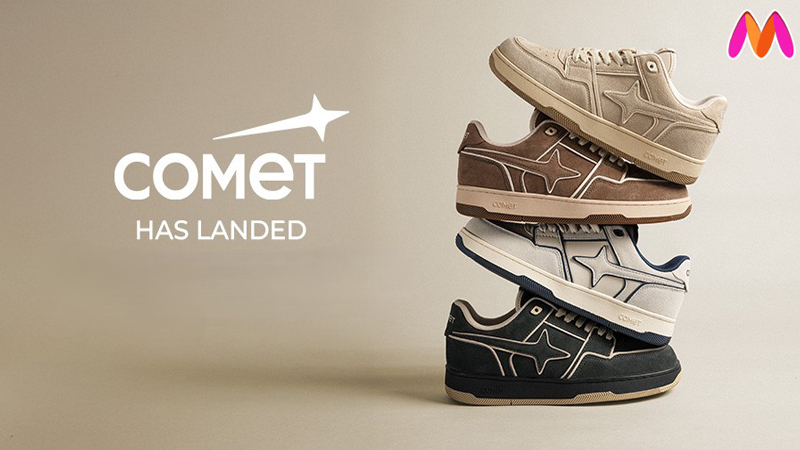
BENGALURU: Culture-first sneaker label Comet has entered Indian e-commerce with its debut on Myntra, bringing over 40 footwear styles to the fashion platform’s 75 million monthly active users. The move marks Comet’s first online retail partnership as it looks to scale beyond its direct-to-consumer roots.
The launch features the brand’s popular ranges including X Lows, Aeon V2 and Alter, alongside an exclusive new design, X Lows Polaris, available only on Myntra. The collaboration strengthens Myntra’s growing sneaker portfolio aimed at Gen Z and millennial consumers drawn to streetwear culture and design-led brands.
Myntra head of category and revenue Ritesh Mishra, said Comet’s sharp design language and community-driven approach aligned with the platform’s focus on trend-forward labels shaping India’s contemporary sneaker culture.
Comet co-founders Utkarsh Gupta and Dishant Daryani said the partnership would help the brand reach a wider audience while staying rooted in its product-first philosophy and close customer engagement.
Built on the ethos “Never shy, never sorry”, Comet has gained traction for bold silhouettes, vibrant colourways and limited-edition drops inspired by cultural nostalgia and storytelling. The Myntra debut signals the brand’s next phase of growth in India’s fast-evolving sneaker and streetwear market.
SEATTLE: Amazon has closed 2025 with robust fourth-quarter growth across its core businesses, even as spending on sales, marketing and infrastructure continued to climb. The company reported a 14 per cent rise in Q4 net sales to $213.4 billion, driven by solid momentum in North America, International markets and a sharp acceleration at AWS.
Sales and marketing expenses rose 8.7 per cent year on year to $14.3 billion in the quarter, reflecting sustained investment in customer acquisition and brand reach. For the full year, the bill climbed 7.3 per cent to $47.1 billion.
AWS remained the standout performer, with revenue jumping 24 per cent to $35.6 billion in the quarter, its fastest pace in more than three years. North America sales grew 10 per cent to $127.1 billion, while International revenues climbed 17 per cent to $50.7 billion, aided partly by favourable currency movements.
Operating income rose to $25.0 billion in Q4, up from $21.2 billion a year earlier, though the figure was weighed down by special charges linked to tax settlements in Italy, severance costs and asset impairments tied largely to physical stores. Excluding these, operating profit would have reached $27.4 billion.
Net income increased to $21.2 billion, or $1.95 per share, compared with $20.0 billion a year ago.
For the full year 2025, Amazon posted 12 per cent growth in net sales to $716.9 billion. AWS revenues climbed 20 per cent to $128.7 billion, while North America and International segments grew 10 per cent and 13 per cent respectively. Operating income expanded to $80.0 billion, with AWS contributing more than half of the total.
Cash generation strengthened, with operating cash flow rising 20 per cent to $139.5 billion. Free cash flow, however, fell sharply to $11.2 billion as capital spending surged, largely reflecting heavy investment in artificial intelligence infrastructure.
President and chief executive officer Andy Jassy, said demand across cloud services, advertising, retail and emerging technologies such as AI chips, robotics and low-earth-orbit satellites remained strong. He added that Amazon plans to invest around $200 billion in capital expenditure in 2026 to support long-term growth.
The company also pointed to a wave of new AWS partnerships, spanning clients such as OpenAI, Visa, the NBA, BlackRock, Salesforce, Adobe, HSBC and the London Stock Exchange Group, underscoring cloud demand across industries.
e-commerce
Flipkart elevates Aditya Maheshwari as head of category and P and L for toys, stationery and babycare
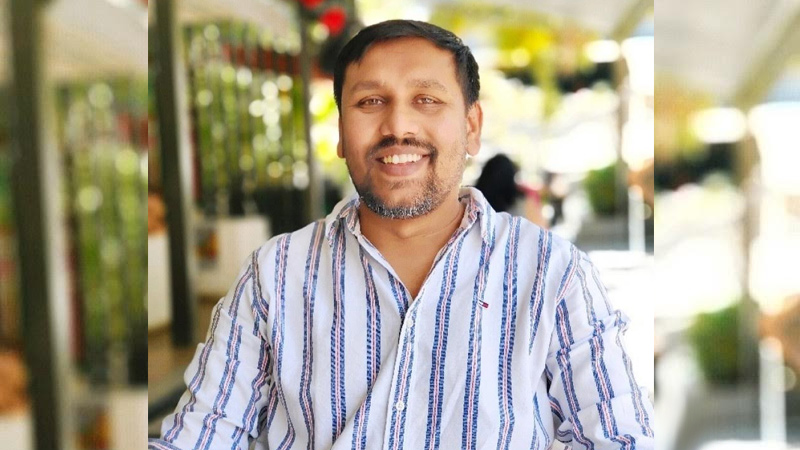
BENGALURU: Flipkart has elevated Aditya Maheshwari to head of category and P and L for toys, stationery and babycare, placing him in charge of end-to-end business strategy and financial performance across the high-growth segments.
The move follows a four-year stint at the e-commerce major, where Maheshwari served as category head for toys and stationery and associate director for beauty and personal care. During this period, he played a key role in strengthening Flipkart’s position across multiple consumer categories through scale-driven portfolio management.
Maheshwari brings deep experience across India’s startup and e-commerce ecosystem. Prior to his current elevation, he previously worked at Flipkart as a category manager and business development lead in the early phase of his career.
He is also the co-founder of Packflea.com and has held leadership roles including head of alliances at Xoxoday and head buyer at Gozefo.com. His early experience in procurement and sourcing spans platforms such as Giftxoxo.com and buytheprice.com.
With a strong track record of managing large P&Ls and building scalable category businesses, Maheshwari is now set to spearhead Flipkart’s strategic expansion in toys and babycare.


Hamdard honours changemakers at Abdul Hameed awards

Why the Best Campaigns Today Start With Insights, Not Ideas

Ahmad Muneeb elevated to VP – HR centre of excellence at Zepto

Fans Take Centre Stage as Zee Cine Awards Turns the Spotlight Around

GUEST COLUMN: How content leaders decide what gets greenlit

The man who dubbed Lord of the Rings in 50 languages is stunned by Mumbai traffic

Dell names Aishwarya Sudhakar director of marketing intelligence

These ’90s fashion trends are making a comeback in 2017
The final 6 ‘Game of Thrones’ episodes might feel like a full season
According to Dior Couture, this taboo fashion accessory is back
The old and New Edition cast comes together to perform
Phillies’ Aaron Altherr makes mind-boggling barehanded play
Uber and Lyft are finally available in all of New York State
Disney’s live-action Aladdin finally finds its stars
Hamdard honours changemakers at Abdul Hameed awards
Why the Best Campaigns Today Start With Insights, Not Ideas
Ahmad Muneeb elevated to VP – HR centre of excellence at Zepto
Fans Take Centre Stage as Zee Cine Awards Turns the Spotlight Around
GUEST COLUMN: How content leaders decide what gets greenlit
The man who dubbed Lord of the Rings in 50 languages is stunned by Mumbai traffic
Dell names Aishwarya Sudhakar director of marketing intelligence
-

 News Broadcasting4 days ago
Mukesh Ambani, Larry Fink come together for CNBC-TV18 exclusive
-

 iWorld1 week ago
Netflix celebrates a decade in India with Shah Rukh Khan-narrated tribute film
-
 MAM3 months ago
HoABL soars high with dazzling Nagpur sebut
-

 MAM4 days ago
Nielsen launches co-viewing pilot to sharpen TV measurement
-
 iWorld12 months ago
BSNL rings in a revival with Rs 4,969 crore revenue
-
 I&B Ministry3 months ago
India steps up fight against digital piracy
-
 iWorld3 months ago
Tips Music turns up the heat with Tamil party anthem Mayangiren
-

 Film Production1 week ago
UFO Moviez rides high on strong Q3 earnings
