
e-commerce
Flipkart’s influencer army hits it out of the e-park in sale season

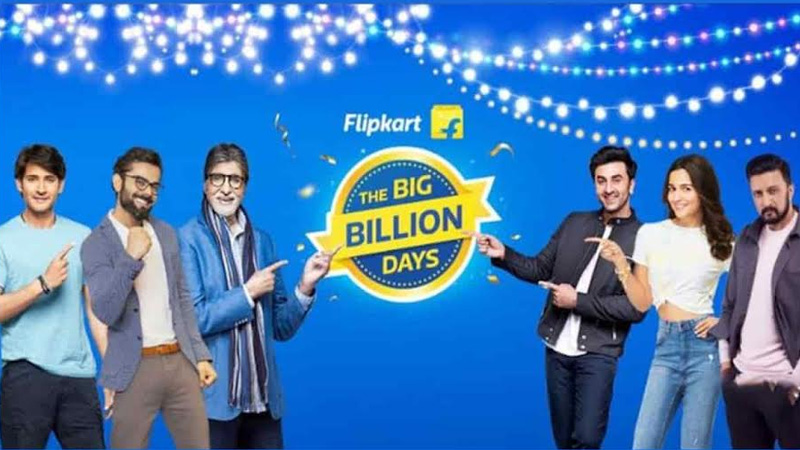
MUMBAI: This Independence Day, the real fireworks aren’t just in the skies, they’re lighting up Instagram, Youtube, and your Reels tab. In a head-turning report released by influencer marketing SaaS platform Klugklug, Flipkart and Amazon’s contrasting influencer strategies for their big sales reveal two vastly different playbooks and one clear early leader.
On Day One of the festive e-commerce face-off, Flipkart appears to be “batting bigger”, deploying influencers at three times the scale of Amazon. Flipkart commanded 75.89 per cent of the influencers and 71.01 per cent of total posts, while Amazon trailed with 24.11 per cent of influencers and 28.99 per cent of posts.
But while Flipkart is flooding the field with content, Amazon is playing the precision game.
“The Independence Day sales are a battleground for e-commerce and brands,” said Klugklug co-founder & CEO Kalyan Kumar. “Flipkart’s aggressive, high-volume influencer deployment strategy is clearly leading in terms of reach and overall engagement at this stage.”
Indeed, Flipkart’s influencer army is delivering big on reach and engagement. The platform’s creators garnered a whopping 136.91 million views, 1.56 million likes, 423.19K comments, and 31.4K shares adding up to a massive 2.02 million in total engagement.
Amazon’s numbers, while more modest, point to a different kind of victory. The platform clocked 11.73 million total views, with 806.07K likes, 226.5K comments, and 16.89K shares, totalling 1.05 million engagements. However, its overall engagement rate was a notable 3.02 per cent, more than double Flipkart’s 1.32 per cent.
“Amazon is demonstrating a more surgical approach,” explained Klugklug co-founder & CPO Vaibhav Gupta. “While their influencer deployment is smaller, their engagement rates are higher driven by mega-influencers. Flipkart, meanwhile, is casting a wider net, creating a splashy buzz with a mass rollout.”
Flipkart’s biggest win seems to lie with its nano to macro influencers, who are showing solid engagement. The platform’s nano creators saw an impressive 4.70 per cent engagement rate, while Amazon’s mega influencers delivered a strong 3.50 per cent.
However, when it comes to mega influencers, Flipkart is steamrolling the competition. These top-tier content creators alone generated 121.64 million views for Flipkart, dwarfing Amazon’s combined 10.77 million views from mega influencers and 11.98 million views from macro influencers.
The numbers reflect the sheer difference in scale: Flipkart has gone all in, while Amazon is strategically picking its bets.
“Both strategies have merit,” said Gupta. “It will be fascinating to see which proves more effective as the sale progresses big splash or deep connect?”
As the sale rolls on, the scoreboard is far from final. But if the first day is anything to go by, Flipkart is swinging for the fences while Amazon is quietly building innings. Either way, the real winner is your feed, which is now a cricket field of commerce.











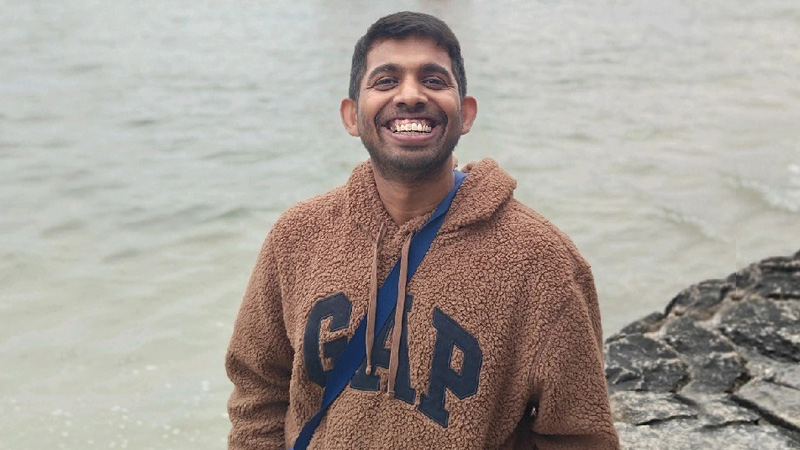
Gurugram: Blinkit has elevated Tulasi Mohan Padavala to associate director, capping a three-year climb inside the quick-commerce firm and signalling confidence in an executive steeped in ecommerce, category management and on-ground sales execution.
Padavala shared the update publicly, saying he was “happy to share” the promotion, a succinct announcement that nevertheless marks a notable step up within one of India’s fastest-moving delivery platforms. The new role follows nearly three years at Blinkit, where he most recently served as senior category manager from February 2023 to January 2026, focusing on strategic sourcing and assortment planning.
The promotion places Padavala in Blinkit’s mid-to-senior leadership tier at a time when the company continues to expand its rapid-delivery footprint and sharpen category economics. His brief tenure as associate director began in January 2026, with responsibilities expected to span category growth, supplier strategy and cross-functional execution.
Before Blinkit, Padavala spent a short but intensive stint as global ecommerce manager at Wholsum Foods, the parent of Slurrp Farm and Millé, between November 2022 and February 2023. There he worked on digital marketplace expansion and online retail operations, adding a direct-to-consumer and international ecommerce layer to his résumé.
A longer stretch at Amazon shaped much of his cross-border commerce experience. As business development manager for Amazon’s India Global Selling programme from February 2021 to October 2022, Padavala helped Indian D2C brands enter the North American market. His remit ranged from seller recruitment and category revenue management to coordination with industry bodies, regulators and logistics partners. Key outcomes included launching more than 50 D2C consumable brands in the United States, driving a cumulative gross merchandise sales figure of $1m in FY21-22, tripling sales for participating brands during Prime Day through marketing and visibility levers, growing the monthly recurring revenue of more than 10 newly launched sellers from zero to an average $20,000 each, and negotiating ecommerce partnerships that reduced initial launch costs by 20 per cent.
Padavala’s earlier career was forged in the field rather than the dashboard. At Coffee Day Group, he spent close to five years across multiple sales leadership roles. As sales manager in the Greater Delhi Area from July 2019 to January 2021, he led vending-machine and consumables sales for small and medium enterprises with a team of more than 15 assistant and territory sales managers, managed over 2,000 clients, drove upselling and cross-selling, maintained channel partnerships and ensured timely collections. Prior to that, he served as area sales manager in Delhi between May 2018 and June 2019, handling south and east Delhi markets, and earlier in Hyderabad from April 2016 to May 2018, where he led Andhra Pradesh sales for the vending division, supervised service and logistics functions and managed a base of more than 600 machines with a four-member team.
His professional arc began with internships that combined analytics and process improvement. At Boehringer Ingelheim in 2015, Padavala analysed the impact of brand extension on the drug Pradaxa, identified key performance indicators through market research and assessed sales forecasts, recommendations that drew positive responses in pilot studies. Earlier, at Genpact in 2014, he automated manual sales-order backlog reporting using VBA and Excel, increasing efficiency by 800 per cent, and worked on benchmarking metrics within supply-chain planning processes.
From automating spreadsheets to scaling cross-border ecommerce and now steering quick-commerce categories, Padavala’s trajectory tracks the evolution of India’s retail economy itself. Blinkit’s bet is clear: blend data, discipline and delivery speed. The promotion formalises what his career already suggests. In the race for instant commerce, experience that moves from warehouse floors to global dashboards is no longer optional. It is the engine.
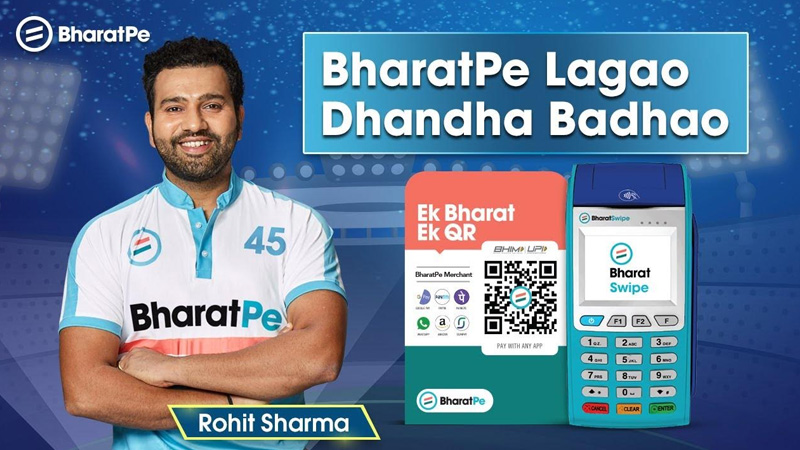
MUMBAI: When the stakes rise and seconds matter, even payments need a match-winning finish. That’s the cue for Bharatpe, which has rolled out Super Over, a nationwide campaign led by Indian cricket captain Rohit Sharma, timed neatly ahead of the ICC Men’s T20 World Cup.
The campaign draws a straight line between the pulse of cricket and the pace of everyday digital payments. A new brand film taps into India’s emotional bond with the game, while positioning UPI as the quiet hero that keeps daily transactions ticking along at match speed.
As part of Super Over, users making payments via Bharatpe UPI can bag daily rewards ranging from match tickets and signed merchandise to a chance to watch a T20 World Cup fixture alongside Rohit Sharma himself. Both consumers and merchants are also assured Zillion Coins on every eligible transaction, adding a little extra sparkle to routine payments.
Behind the scenes, Bharatpe is also batting for safety. The platform is backed by Bharatpe Shield, a fraud-protection layer designed to offer enhanced security, comprehensive coverage and dedicated support aimed at helping users transact with greater confidence as digital payments scale up.
Announcing the campaign, Bharatpe head of marketing Shilpi Kapoor said Super Over mirrors the aspirations of everyday Indians, combining speed, security and instant rewards to make UPI transactions feel both reliable and rewarding.
The campaign will play out across digital platforms, social media and on-ground activations nationwide, staying live through the T20 World Cup season proof that in cricket, as in payments, timing is everything.

MUMBAI: As the Union Budget 2026 looms, India’s crypto tax regime is back in the spotlight, and not in a flattering way. A new report by KoinX suggests that for many investors, the taxman walked away with more cheer than their portfolios did.
According to India’s Crypto Tax Story 2025, nearly half of Indian crypto investors ended FY25 in the red. Yet many still paid taxes. The report draws on anonymised data from close to seven lakh Indian users and paints a picture of a system that taxes activity rather than outcomes.
At the heart of the debate is the 1 per cent tax deducted at source. While the levy has improved transaction reporting, KoinX argues it has also frozen capital by skimming every trade, profit or loss notwithstanding. The result is a growing dependence on refunds and a steady squeeze on liquidity.
In FY25 alone, total TDS collected across the crypto ecosystem stood at Rs 511.83 crore. KoinX users contributed Rs 130.16 crore of this amount, but their actual tax liability was only Rs 91.64 crore. That leaves an estimated Rs 38.52 crore locked up as excess deductions.
The burden is unevenly shared. Less than 5 per cent of traders accounted for 87 percent of total TDS collections. Thin margins mean even high volume traders often overpay upfront, while smaller investors feel the pinch in proportion.
KoinX founder and CEO Punit Agarwal said the solution is not scrapping TDS but resizing it. He advocates a uniform cut to 0.1 percent, arguing it would free trapped capital, reduce the drift to offshore platforms and keep compliance intact.
The bigger fault line, however, lies in capital gains taxation. The report shows a near perfect split in outcomes. Around 51 per cent of users posted net gains, while 49 percent booked net losses. Yet taxable gains ballooned to Rs 3,722 crore because losses cannot be set off.
As a result, investors who collectively lost Rs 1,178 crore still paid tax on Rs 180 crore of gains. In plain terms, many paid capital gains tax without any capital gains to show for it.
Agarwal calls this a break from first principles. Across asset classes, no net gain means no capital gains tax. Treating crypto differently, he warns, distorts behaviour and risks driving both traders and liquidity offshore.
As policymakers fine tune the Budget 2026 numbers, KoinX hopes its data offers a timely nudge. The message is simple. A tax system that moves with outcomes, not just volumes, could make crypto less taxing for everyone.

Mukesh Ambani, Larry Fink come together for CNBC-TV18 exclusive

Nielsen launches co-viewing pilot to sharpen TV measurement

Netflix celebrates a decade in India with Shah Rukh Khan-narrated tribute film

Delhivery chairman Deepak Kapoor, independent director Saugata Gupta quit board

Meta appoints Anuvrat Rao as APAC head of commerce partnerships

Brnd.me enters Europe as haircare brands power global expansion

TechnoSport taps quick commerce with launch on Slikk’s 60-minute platform

These ’90s fashion trends are making a comeback in 2017
The final 6 ‘Game of Thrones’ episodes might feel like a full season
According to Dior Couture, this taboo fashion accessory is back
The old and New Edition cast comes together to perform
Phillies’ Aaron Altherr makes mind-boggling barehanded play
Uber and Lyft are finally available in all of New York State
Disney’s live-action Aladdin finally finds its stars
Mukesh Ambani, Larry Fink come together for CNBC-TV18 exclusive
Nielsen launches co-viewing pilot to sharpen TV measurement
Netflix celebrates a decade in India with Shah Rukh Khan-narrated tribute film
Delhivery chairman Deepak Kapoor, independent director Saugata Gupta quit board
Meta appoints Anuvrat Rao as APAC head of commerce partnerships
Brnd.me enters Europe as haircare brands power global expansion
TechnoSport taps quick commerce with launch on Slikk’s 60-minute platform
-
 News Broadcasting1 day ago
Mukesh Ambani, Larry Fink come together for CNBC-TV18 exclusive
-
 iWorld5 days ago
Netflix celebrates a decade in India with Shah Rukh Khan-narrated tribute film
-
 I&B Ministry3 months ago
India steps up fight against digital piracy
-
 iWorld3 months ago
Tips Music turns up the heat with Tamil party anthem Mayangiren
-
 MAM1 day ago
Nielsen launches co-viewing pilot to sharpen TV measurement
-
 iWorld12 months ago
BSNL rings in a revival with Rs 4,969 crore revenue
-
 MAM3 months ago
HoABL soars high with dazzling Nagpur sebut
-
 News Broadcasting2 months ago
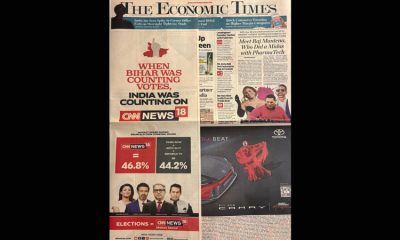
CNN-News18 dominates Bihar election coverage with record viewership