
Education
ESCP Business School names Marie Taillard as UK dean amid London push

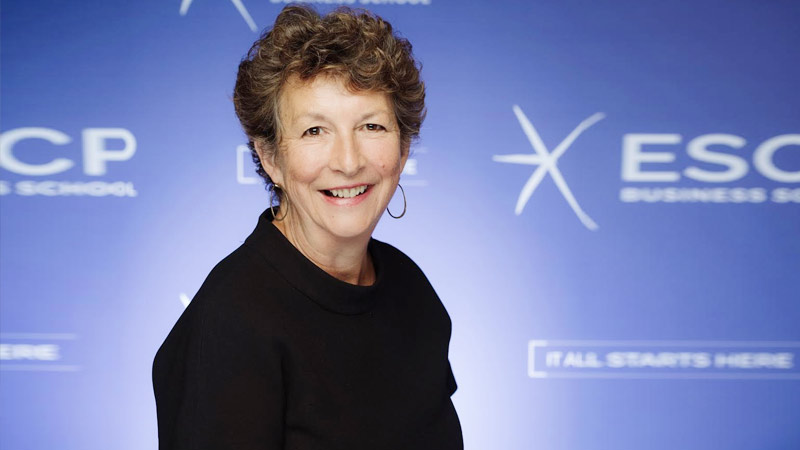
LONDON: ESCP Business School has appointed Professor Marie Taillard as dean of its London campus, effective December 19, 2025, as the institution sharpens its expansion and academic ambitions in the UK.
Taillard, who previously served as interim dean, will take on the role for a three-year term. Her appointment comes as ESCP seeks to strengthen its position in London and expand its academic, industry and societal engagement across the UK.
ESCP Business School executive president and dean Leon Laulusa, said Taillard’s expertise in creativity and marketing, combined with her long association with the institution, made her well placed to shape the campus’s next phase. He credited her with launching the MSc in Marketing & Creativity, now one of the school’s flagship programmes.
ESCP London chairman of the board of trustees Lord David Gold, said Taillard would build on the campus’s recent momentum, citing her academic leadership and international outlook.
A L’Oréal professor of creativity marketing and former UK head of faculty, Taillard has been central to ESCP’s push for innovative pedagogy that bridges academic research and professional practice. She was recently shortlisted for the Times Higher Education’s Most Innovative Teacher of the Year award.
Taillard said her focus would be on expanding the programme portfolio, strengthening lifelong learning and deepening links between academia, industry and local communities, aligned with ESCP’s Bold & United strategy.
She holds an MBA from Columbia Business School and a PhD from the University of London, and has held several senior leadership roles at ESCP since joining its permanent faculty in 2007. The London campus currently serves more than 1,900 students and executive participants each year and is ranked second in the UK by the Financial Times.











YORK: Bestselling author and former diplomat Amish Tripathi has added a new title to his name, Doctor of the University.
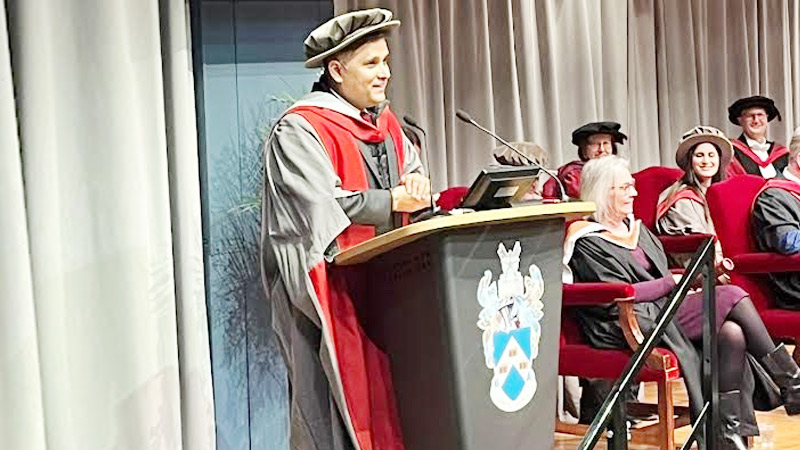
The University of York in the United Kingdom has conferred on Tripathi an honorary doctorate, honouris causa, recognising his contribution to Indian literature and his role in carrying Indian culture to audiences around the world.
In its citation, the University described Tripathi as the fastest-selling author in Indian publishing history. His 12 books have sold over eight million copies globally, earning him a regular place on Forbes India’s list of influential celebrities.
Beyond the printed page, Tripathi is a familiar voice and face to viewers. A seasoned broadcaster, he has hosted acclaimed documentaries, including the award-winning Legends of the Ramayan. He is also co-founder of Tara Gaming, the studio behind Age of Bhaarat, billed as India’s first AAA video game. Before returning to full-time creative work, he served as minister for Culture and Education at the Indian High Commission in London.
The honorary degree was presented at the University of York’s winter graduation ceremony in the second week of January 2026, in the presence of students, faculty and guests from across the world. In awarding the honour, the University praised Tripathi for deepening global understanding of Indian values, traditions and storytelling.
He was joined in this year’s roll of honour by three other distinguished figures: renowned mathematician professor Simon Donaldson, ecologist professor Sue Hartley OBE, and dame Amanda Blanc DBE, group chief executive officer of Aviva.
The University of York awards its honorary doctorates to individuals whose achievements show exceptional distinction and reflect the institution’s values. For Tripathi, it marks another chapter in a career that continues to blend myth, modernity and meaningful dialogue across cultures.
NEW DELHI / SAN FRANCISCO: Niit learning systems limited’s managed training arm, niit mts, has bought 100 per cent of Sweetrush Inc in a deal worth up to $26 million, tightening its grip on the USA and sharpening its ai-led learning offer.
The acquisition, completed through Niit (USA) inc, includes performance-linked earn-outs over five years. Sweetrush, founded in 2001 by Arturo Schwartzberg and Andrei Hedstrom and headquartered in San Francisco, employs more than 100 people across the United States and Costa Rica, with a wider bench of learning specialists.
Niit MTS is betting that Sweetrush’s award-winning, human-centred learning design, spanning certification-driven content and a fast-growing talent solutions practice, will plug neatly into its global, ai-enabled managed learning platform for Global 1000 clients. The aim: turn project work into sticky, annuity-like contracts and lift wallet share across enterprises, professional associations and not-for-profits.
Niit MTS chief executive officer and executive director Sapnesh Lalla, said the tie-up brings “human-centred learning craft and global operational scale, powered by technology and AI, under one roof”.
Sweetrush chief executive officer Danielle Hart, said joining niit offers a bigger global runway while preserving the firm’s culture of care and innovation.
Niit MTS vice chairman and managing director Vijay K Thadani, called the deal a boost to its outcome-focused portfolio, marrying strategic learning interventions with delivery at scale.
Sweetrush’s founders struck a similar note. Arturo Schwartzberg said the teams and culture would remain intact, now backed by Niit’s heft, while Andrei Hedstrom said the combined ecosystem would “amplify” the firms’ impact on mission-critical learning.

When hair fall becomes chronic, most people look for external fixes—switching shampoos, applying oils, trying serums. But hair fall is often just the visible symptom of a deeper issue happening inside the body.
Instead of asking “Which product will stop my hair fall?”, a more helpful question might be, “Why is my body allowing this to happen in the first place?”
Hair: The Body’s Early Warning System
Hair is considered a non-essential tissue. This means that when your body is low on nutrients or under stress, it focuses its energy on more important functions—like keeping your heart, liver, and brain working well. Hair, unfortunately, gets pushed down the priority list.
This is why hair fall often shows up as a first sign of internal imbalance—before fatigue, acne, or weight changes.
What Kind of Imbalances Are We Talking About?
Hair loss isn’t caused by just one issue. It usually results from a combination of small imbalances that add up over time.
Some of the most common ones include:
. Nutritional deficiencies
Low levels of iron, vitamin D, B12, and protein can reduce the strength and lifespan of your hair strands.
. Digestive issues
Even if your diet looks good on paper, problems like bloating, constipation, or acidity can prevent your body from absorbing nutrients properly.
. Hormonal shifts
Thyroid conditions, PCOS, post-pregnancy changes, and high DHT (in men) can all disrupt the hair cycle.
. Sleep and stress imbalance
Chronic stress or poor sleep raises cortisol, which can push follicles into a resting phase, leading to more shedding.
. Inflammation
Internal inflammation—often caused by poor gut health, allergies, or chronic infections—can irritate the scalp and weaken follicles.
Each of these may seem small on its own, but together, they create an environment where hair cannot grow optimally.
External Products Can’t Fix Internal Problems
This is why most quick fixes don’t work. If the root cause of your hair fall is low iron or a sluggish gut, no shampoo or serum will solve it.
These products may reduce breakage or make hair look shinier for a while, but the underlying problem continues unless addressed from the inside.
The key is not to reject external care—but to support it with internal correction.
How to Tell If Your Hair Fall Is an Internal Issue
Here are a few signs that point to an internal imbalance:
. Hair fall continues even after switching products
. Other symptoms like tiredness, poor sleep, or digestion problems
. Diffuse thinning (all over the scalp) rather than patchy loss
. Hair fall triggered by a life event (stress, illness, medication)
. A family history of hormone-related conditions like PCOS or thyroid
If more than one of these apply to you, it’s worth digging deeper than surface-level treatment.
What to Do Instead
Start by looking at your daily habits:
. Are you eating protein at every meal?
. Do you sleep 7–8 hours a night?
. Is your digestion regular and comfortable?
. Are you dealing with constant stress or anxiety?
If the answer is “no” to more than a few of these, addressing those patterns can often reduce hair fall significantly.
You don’t need to overhaul everything at once. Small improvements, done consistently, work better than big but temporary changes.
A Personalised, Root-Cause Approach
Some platforms have begun to take this more comprehensive route. For example, Traya doesn’t just offer topical treatments. They assess your nutrition, gut health, hormone levels, and daily routine to find out why your hair is falling-and then build a plan that addresses it step by step.
When you work from the inside out, results take time—but they last longer.
Final Thoughts
Hair fall is rarely just a hair problem. It’s often your body waving a small flag that something inside needs attention. The good news? Most of these issues are reversible once you identify and correct them.
So, if you’re tired of switching products and seeing little change, maybe it’s time to listen to what your hair is really trying to say.

Netflix celebrates a decade in India with Shah Rukh Khan-narrated tribute film

Delhivery chairman Deepak Kapoor, independent director Saugata Gupta quit board

Meta appoints Anuvrat Rao as APAC head of commerce partnerships

Brnd.me enters Europe as haircare brands power global expansion

TechnoSport taps quick commerce with launch on Slikk’s 60-minute platform

Jitendra Singh joins Reliance Industries as senior vice president, special projects

Tinder brings real-world dating experiences to North East India

These ’90s fashion trends are making a comeback in 2017
The final 6 ‘Game of Thrones’ episodes might feel like a full season
According to Dior Couture, this taboo fashion accessory is back
The old and New Edition cast comes together to perform
Phillies’ Aaron Altherr makes mind-boggling barehanded play
Uber and Lyft are finally available in all of New York State
Disney’s live-action Aladdin finally finds its stars
Netflix celebrates a decade in India with Shah Rukh Khan-narrated tribute film
Delhivery chairman Deepak Kapoor, independent director Saugata Gupta quit board
Meta appoints Anuvrat Rao as APAC head of commerce partnerships
Brnd.me enters Europe as haircare brands power global expansion
TechnoSport taps quick commerce with launch on Slikk’s 60-minute platform
Jitendra Singh joins Reliance Industries as senior vice president, special projects
Tinder brings real-world dating experiences to North East India
-
 iWorld3 months ago
Tips Music turns up the heat with Tamil party anthem Mayangiren
-
 iWorld12 months ago
BSNL rings in a revival with Rs 4,969 crore revenue
-
 I&B Ministry3 months ago
India steps up fight against digital piracy
-
 MAM3 months ago
HoABL soars high with dazzling Nagpur sebut
-
 iWorld2 days ago
Netflix celebrates a decade in India with Shah Rukh Khan-narrated tribute film
-
 News Broadcasting6 months ago
Wion marks Independence Day with global showcase of India’s spirit
-
 iWorld3 months ago
The Night Manager returns with new secrets, new spies and old scars
-

 News Headline2 months ago
Shaji Prabhakaran named chief advisor to GOAT India Tour – Messi