
Legal and Policies
Early gratuity, WFH provision, gender-neutral wages: Centre enacts new labour codes


NEW DELHI: The Government of India brought all four Labour Codes into effect from 21 November 2025, triggering the most comprehensive reform of the country’s labour legislation in decades.The Ministry of Labour and Employment issued official notifications confirming the enforcement of the Code on Wages, Industrial Relations Code, Social Security Code, and the Occupational Safety, Health and Working Conditions Code.
The new regime consolidates 29 Central labour laws into four streamlined Codes, which the Centre described as a “historic modernisation” intended to simplify compliance, reduce fragmentation, and extend social protection to a wider workforce.
According to the Government, many of India’s earlier labour laws were framed before or soon after Independence and no longer reflected current economic realities. The unified Codes introduce universal minimum wages, mandatory timely payment of wages, and compulsory appointment letters for all categories of workers.
Workers across sectors, including gig, platform, contract, migrant, women and MSME workers, will now be covered under a harmonised framework of rights and protections. ESIC (Employees’ State Insurance Corporation) coverage has been expanded nationwide, including to establishments employing even one worker engaged in hazardous processes. Fixed-term employees will be eligible for gratuity after one year, instead of the earlier five-year threshold.
The new framework also mandates gender-neutral wages, permits women to work night shifts subject to prescribed safety measures, and provides free annual health check-ups for workers above 40. Gig and platform workers will, for the first time, receive social-security benefits financed partly through aggregator contributions.
Compliance has been made easier through a single registration, single licence, and single return, replacing the need for multiple filings. A new inspector-cum-facilitator system will focus on guidance instead of only enforcement, while faster industrial tribunals aim to speed up dispute resolution.
The Industrial Relations Code has also been overhauled to simplify how disputes are handled, how unions are recognised, and how companies manage workforce flexibility without compromising worker protection. It formalises work-from-home arrangements in the services sector, expands the definition of “worker,” and introduces two-member tribunals to speed up conflict resolution. Retrenched workers will additionally receive 15 days’ wages through a new reskilling fund to help support job transitions.
Sector-specific rules include double wages for overtime, stricter safety standards for mines and hazardous industries, and mandatory safety committees in larger workplaces. Additional protections extend to IT/ITES, plantations, ports, export units, beedi and cigar units, textiles, and audio-visual media.
The Government said these changes bring India’s labour system closer to global standards and support the “Aatmanirbhar Bharat” goal by improving both worker welfare and industry productivity. During the transition, older laws will remain in force until the new rules under each Code are finalised after consultations.
The Centre noted that India’s social-security coverage has risen from 19 per cent of the workforce in 2015 to over 64 per cent in 2025, and said implementation of the labour codes represents the next major step in building a “protected, productive and future-ready workforce.”






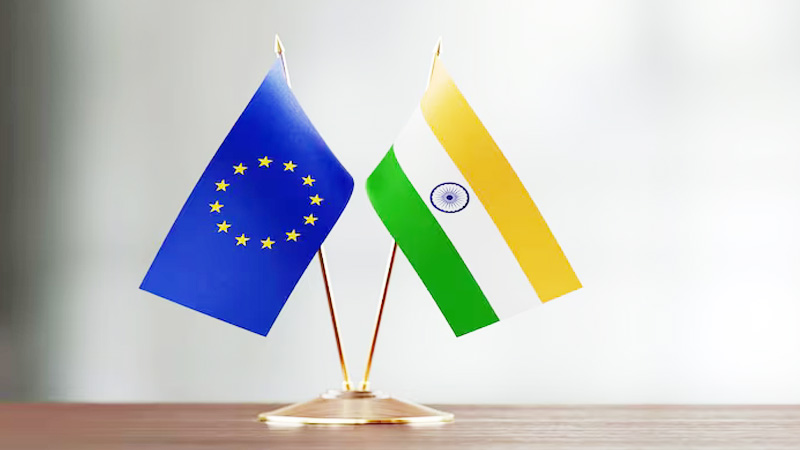
New Delhi: India and the European Union have inked a landmark free trade agreement, a deal being hailed as the “mother of all” pacts. It promises duty-free access for over 90 per cent of Indian goods, integrates a market of nearly two billion consumers, and accounts for around a quarter of global GDP.
Commerce secretary Rajesh Agrawal confirmed negotiators had concluded an “ambitious, balanced, forward-looking and mutually beneficial” agreement. Prime Minister Narendra Modi announced the signing on Tuesday during a summit with European Council President Antonio Costa and European Commission President Ursula von der Leyen, who were chief guests at India’s Republic Day celebrations.
The deal is expected to turbocharge India-EU trade, particularly in labour-intensive sectors such as textiles, leather, chemicals, electronics and jewellery—industries that have long struggled to compete with duty-free imports from least developed countries.
The pact also sends a signal beyond Europe. The US, uneasy over India’s oil trade with Russia amid the Ukraine conflict, has taken notice. Analysts say the FTA positions India as a counterweight to protectionist policies that rattled global trade under Donald Trump.
“This is a perfect example of a partnership between two major economies…representing 25 per cent of global GDP and a third of world trade,” Modi said, adding that the deal reinforces shared commitments to democracy and the rule of law.
#WATCH | Prime Minister Narendra Modi says, “This agreement empowers our shared commitment towards democracy and rule of law. This Free Trade Agreement with the European Union will also complement Britain and EFTA’s agreements…I congratulate the people of the nation for this”… pic.twitter.com/30d2fYMxAc
— ANI (@ANI) January 27, 2026
Negotiations, relaunched in June 2022 after nearly a decade-long hiatus, now yield a pact that could redefine global commerce—India and Europe are not just trading partners, they are rewriting the rules of the game.
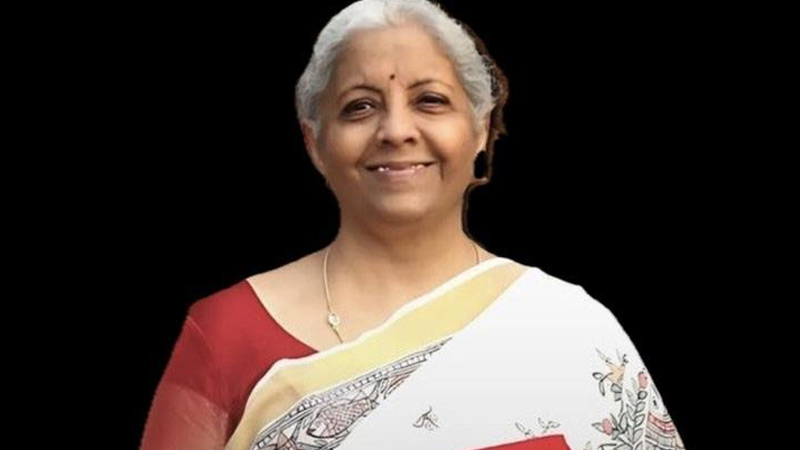
NEW DELHI: India’s biggest financial day may arrive with a weekend twist. The Union Budget 2026–27 is likely to be presented on 1 February, which falls on a Sunday, according to media reports, after the Cabinet Committee on Parliamentary Affairs approved the Parliament calendar. If confirmed, it would mark the first time the budget is delivered on a Sunday, giving tradition a gentle nudge aside.
The budget Session of Parliament will begin on January 28 with the President’s address to a joint sitting of both Houses. The Economic Survey, which sets the mood music for budget day, is scheduled to be tabled on January 29.
All eyes will again be on Finance Minister Nirmala Sitharaman, who is poised to present her eighth consecutive Union Budget. That feat would make her the first finance minister in India’s history to deliver eight budgets in a row. The upcoming exercise will also be the 80th Union Budget since Independence.
Since 2017, the budget has been presented on February 1 at 11 am, a shift designed to speed up the rollout of policies from the start of the new financial year. While a Sunday budget would be a first, weekend presentations are not entirely new. Sitharaman presented the 2025 budget on a Saturday, and former finance minister Arun Jaitley delivered budgets on Saturdays in 2015 and 2016.
With eight budgets, Sitharaman moves closer to the record held by Morarji Desai, who presented 10 budgets across two stints. Among more recent finance ministers, P Chidambaram presented nine budgets, while Pranab Mukherjee delivered eight.
Appointed India’s first full-time woman finance minister in 2019, Sitharaman has retained the portfolio through three consecutive terms of the Narendra Modi government. If the Sunday schedule holds, budget day this year will come with fewer office commutes, but no shortage of attention.

NEW DELHI: Indian workers could soon enjoy something revolutionary: the legal right to ignore their boss after clocking off. The Right to Disconnect Bill, 2025, a private member’s bill introduced in the Lok Sabha by NCP MP Supriya Sule during the Winter Session, proposes freeing employees from the digital leash that keeps them tethered to office communications beyond working hours.
The legislation tackles what many have experienced firsthand: the relentless ping of work emails at dinner time, late-night calls about tomorrow’s meeting, and the Sunday morning message asking for “just one quick thing.” Sule’s bill proposes the creation of an Employees’ Welfare Authority, which would ensure that workers face no repercussions for switching their phones to silent after deciding their workday has ended.
Companies with more than 10 employees would be required to negotiate clear after-hours communication norms with unions or employee representatives. If work beyond fixed hours becomes unavoidable, employers must compensate employees at normal wage rates. Firms that fail to comply with the rules could face a proposed penalty amounting to 1% of their total employee remuneration.
A complementary proposal came from MP Shashi Tharoor, who introduced an amendment bill seeking stronger safeguards against overwork. In Parliament, Tharoor referenced the death of Anna Sebastian Perayil, a 26-year-old EY professional whose case reignited public debate on exploitative working hours, arguing that unchecked overwork undermines both physical and mental health.
The Bill goes beyond boundary-setting. It calls for access to counselling services and the establishment of digital detox centres to address rising workplace afflictions such as “telepressure,” the compulsion to respond instantly, and “info-obesity,” a state of constant message monitoring. Comparable protections already exist in France (law introduced in 2016), Portugal (implemented January 2022), and Australia (right-to-disconnect amendments passed in 2024 with staged rollout).
However, as a private member’s bill, its path ahead is steep. Parliament rarely passes such bills; in fact, none have become law since 1970. Most are withdrawn after the government responds or stall without debate. Still, the introduction of Sule’s bill has sparked necessary conversations about workplace well-being in an increasingly hyper-connected economy.
For now, the proposal remains just that, a proposal. But its very presence on the floor of Parliament signals a growing recognition of a simple truth: genuine rest requires genuine disconnection. Whether lawmakers choose to act on that truth remains to be seen.

Netflix celebrates a decade in India with Shah Rukh Khan-narrated tribute film

Delhivery chairman Deepak Kapoor, independent director Saugata Gupta quit board

Meta appoints Anuvrat Rao as APAC head of commerce partnerships

Brnd.me enters Europe as haircare brands power global expansion

TechnoSport taps quick commerce with launch on Slikk’s 60-minute platform

Jitendra Singh joins Reliance Industries as senior vice president, special projects

Tinder brings real-world dating experiences to North East India

These ’90s fashion trends are making a comeback in 2017
The final 6 ‘Game of Thrones’ episodes might feel like a full season
According to Dior Couture, this taboo fashion accessory is back
The old and New Edition cast comes together to perform
Phillies’ Aaron Altherr makes mind-boggling barehanded play
Uber and Lyft are finally available in all of New York State
Disney’s live-action Aladdin finally finds its stars
Netflix celebrates a decade in India with Shah Rukh Khan-narrated tribute film
Delhivery chairman Deepak Kapoor, independent director Saugata Gupta quit board
Meta appoints Anuvrat Rao as APAC head of commerce partnerships
Brnd.me enters Europe as haircare brands power global expansion
TechnoSport taps quick commerce with launch on Slikk’s 60-minute platform
Jitendra Singh joins Reliance Industries as senior vice president, special projects
Tinder brings real-world dating experiences to North East India
-
 iWorld3 months ago
Tips Music turns up the heat with Tamil party anthem Mayangiren
-
 iWorld12 months ago
BSNL rings in a revival with Rs 4,969 crore revenue
-
 I&B Ministry3 months ago
India steps up fight against digital piracy
-
 MAM3 months ago
HoABL soars high with dazzling Nagpur sebut
-
 iWorld2 days ago
Netflix celebrates a decade in India with Shah Rukh Khan-narrated tribute film
-
 News Broadcasting6 months ago
Wion marks Independence Day with global showcase of India’s spirit
-
 iWorld3 months ago
The Night Manager returns with new secrets, new spies and old scars
-

 Brands2 months ago
Luma powers up with massive 900m dollar raise