
Fiction
Dubbing comes to a standstill; subtitling goes on

MUMBAI: The outbreak of Covid2019 has not only brought the film and TV production industry to a halt, but even the associated sectors. The dubbing industry is one.
However, the pandemic hasn't stopped people from consuming content. In fact, people are consuming content more than ever. According to a recent study conducted by KPMG, there has been a perceptible increase in media consumption during the last few weeks as people have remained homebound.
With no new content in the making, most dubbing and subtitling companies are suffering huge losses.
Business Of Languages (BOL) founder and CEO Rahul Bhatia says, “Currently, the dubbing industry has completely shut down. In this case, working from home is also not possible. We, in fact, tried doing it with artists with setups available at home but the outcome was not that great. So, technically everything is shut down as far as dubbing is concerned.”Prime Focus Technologies AVP Dubbing Bipin Doshi said, "Creating fresh viewing content requires lot of personal interaction which in the current scenario is neither permitted nor advisable. This means localizing existing or older content is the only option to ensure that audience currently ensconced at home gets entertained. Traditional method of dubbing currently is on a halt due to the restrictions in place but PFT is working on couple of approaches to start the dubbing process without endangering health of team or talent."
Bhatia says that though dubbing is not happening, other kinds of works like e-learning content where video reference is not required are going on. It can be recorded on the phone and shared with the client. Apart from that, IVR and audiobox projects are also being conducted from the confines of people's homes.

Even for dubbing content in the regional language, Bhatia says it is not possible without studios and proper artists.
Mega Media Studio MD John Joseph says that nobody is approaching for dubbing work right now. Most of the films are halfway through and those which are lined up do not have a release date.
"Covid2019 has immensely affected our studio. Nothing is happening right now on the production side but post-production work is slowly happening. We are just continuing with films which were happening in the studio before lockdown."
According to Joseph, unless films are completed, they cannot go ahead with the dubbing work.
Doshi begun taking tentative steps for remote dubbing last year and managed to do a couple of tests just before the lockdown came into place. According to him voice quality is something that will take a while in addressing. The output will get homogenised to a certain extent and better quality can be achieved if talent can acoustically treat their rooms, mics are used etc so that voice quality can be monitored. It is important to solve for change in room tonality which is inherently found when audio is recorded in different setups.
He adds, "Although we have begun using remote dubbing solutions it has lot of technical and user end challenges as this industry has never tried it before."
Fakt Marathi Enterr10 MD Shirish Pattanshetty, however, says that the dubbing industry is making use of some other sectors to survive.
"As far as industry norm goes people have been deferred from operating dubbing studios but some large corporates are using dubbing to their benefit to tap various content for different languages to ensure there is freshness in the content to cater to the audiences so that the retention level is high," he says.
As the lockdown continues, no new episodes are being made. So, Pattanshetty thinks that the second-best option would be to dub the existing projects into native languages that are demanded by the audiences. He also believes that dubbing content is a beter option that showing OTT shows on TV.
On the contrary, subtitling is happening with the help of cloud-based platforms where artists are translating the content and sharing on the platform. The cloud-based solutions enable them to download and transfer easily and quality issues do not come into play like they do for audio in dubbing.
Cloud-based solutions enable editors also to work from home as long as they have stable broadband connectivity. Prime Focus Technologies has a cloud-based solution on its flagship product called CLEAR for content sharing, viewing and reviewing of the same at the other end. For localization, the options of reviewing multi-language audio tracks without creation of additional video screeners is a lifesaving facility. "Ability to give access through independent user IDs with watermarking of the content ensures online viewing of the files without having to send them to any one separately," Doshi adds.
While different states are mulling over various lockdown-lifting strategies, Bhatia says, “We have to wait till the government grants permission to resume work. We work with a lot of professional dubbing artists but due to the lockdown most of them are in their hometown. So, we are waiting for permission so that people could travel. As of now we are completely clueless what is going to happen next.”
Pattanshetty thinks that even if Mumbai remains shut there would be dubbing studios based out of Pune, Kolhapur or Sangli who could ensure work is delivered to other connecting places. If Delhi becomes fully functional, Hindi content can take help from Delhi studios.
Bhatia also points out that even after the lockdown is lifted clients will cut down the numbers of hours of dubbing. As cost-cutting measures, they might want to have only 20 hours of dubbed content rather than 50 hours.
Joseph says, "We are currently suffering as there is no payment coming in. Initially, we would be finishing three to four movies a month and now we are restricted to just one."
In a recent announcement, Kerala cultural affairs minister AK Balan said that the Malayalam film industry will soon resume the post-production work of pending films. Meanwhile, FEFSI association president RK Selvamani has requested the Tamil Nadu government to grant them the permission to resume post-production works such as dubbing, re-recording and editing for films and TV soaps. Additionally, the Karnataka government has also granted indoor shoot permission with minimal 18 to 20 people. While there were rumours that the Maharashtra government was likely to give some leeway, the sudden spurt in the number of cases has closed that door.
ZEEL executive vice president and cluster head South business Siju Prabhakaran says, “We are waiting for the Maharashtra government to grant permission to resume post-production work. In the meantime it is a good opportunity for people to use footages of short-form content which is pending for a long time.”
Although new shows are not in production, ZEEL says it has certain shows as backup which will be used in the content pipeline for future. Prabhakaran adds that audiences know short-form content are sometimes shot on the phone and there is a possibility that it will have a technical snag. As far as a proper TV serial or a film is concerned, it requires a dubbing studio.
For now, the dubbing industry doesn't have a way out and industry players are waiting for a revival strategy.



MUMBAI: As audiences spread across TV, OTT, and short-form platforms, deciding what gets greenlit has become more strategic than ever. Content leaders now weigh clarity of concept, platform fit, pacing, and distinctiveness to ensure a story connects with the right audience in the right format.
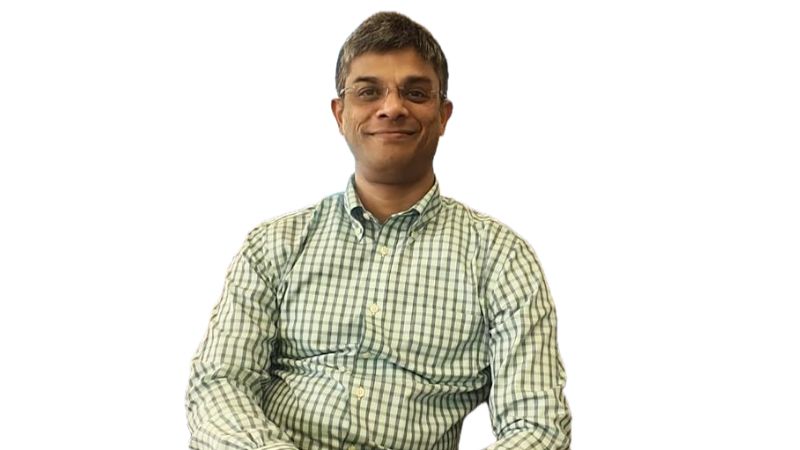
In this piece, Dhruv R Jain content head TV at Rose Audio Visuals, explains how greenlighting decisions are shaped by concept strength, platform behaviour, and the need for unique storytelling. Drawing from his experience at Rose Audio Visuals, he outlines how these factors influence which ideas move from pitch to production.
In recent times the Indian entertainment landscape has changed in many ways leading us to also modify our process in deciding what should be greenlit in terms of content. As the options for audiences to view content change from the traditional TV space to OTT and even social media the stories that are told on different platforms also differ. Multiple factors play a part in deciding not just the story told but also the way they will be told.
Firstly the primary filter in the process is the clarity of concept. Whenever content leaders approach a story they tend to simplify it in terms of it being written and told through the screen. The crew involved in making the story should have an inside out idea of all the factors of the story for it to resonate and be understood by the audiences. We dissect the story into the smallest components to spread it through the writing and format the story in a way that would build intrigue giving it hooks, drops points and defined execution. A concept that is executed properly with details will be understood and appreciated by the audience irrespective of its genre.
The content that is being chosen to be greenlit also highly depends on the platform it is being made for. Different mediums like TV channels, Ott platforms and short format apps etc have different sections of audiences that look for a specific kind of story to watch depending on multiple factors again. So while choosing a story for them one needs to study their audience, the structure that works for the platform, the pacing in which the story will be understood and the kinds of story that would fit the platform. While TV is a medium which is highly expository in its telling with slower pacing, on the other hand Ott platforms give us a space to tell a story with the approach of less is more with faster pacing of the story itself. This becomes an important factor in choosing stories and their way of telling.
Another factor that plays an important role is the distinctiveness of a concept. A concept with a unique approach, set up and characters bring freshness. At Rose we have always attempted to tell stories that stand out with our most recent Itti Si Khushi by setting up the show in a unique location like Kotachiwadi, a historic unique set up in the south of Mumbai that has not been shown on TV before we gave the already iconic Shameless an interesting Indian twist. At the same time the show in itself follows an unique storyline that brought something different to the medium of TV. So telling a different and unique story that stands out always brings in curious audiences which we sustain then with strong characters, hooks and plot points.
In addition to these factors many others become prominent in deciding what gets greenlit. It is on the content leaders to find the right time and space for the concept that they believe will be received well by the audiences. One needs to be a multitasker to understand, organise and execute a project properly.
Note: The views expressed in this article are solely the author’s and do not necessarily reflect our own.

PARIS & LILLE, FRANCE: Series Mania Forum has named the Republic of Korea as its first-ever Country of Honour, marking a major milestone for the European television industry gathering set to run alongside the Series Mania Festival in Lille in March 2026.
The announcement was made by Laurence Herszberg, founder and general director of Series Mania, underscoring Korea’s rising influence in global content creation and distribution.
As part of the initiative, the Korea Creative Content Agency (KOCCA) will bring a delegation of eight leading companies to the forum, including Channel A Corporation, CJ ENM, EO Content Group, KBS Media, MBC, SLL Joongang, Studio S and Whynot Media. The programme will feature dedicated sessions spotlighting upcoming Korean projects, high-level conference panels, networking events and industry showcases.
The move is backed by France’s CNC following a memorandum of understanding signed with Kocca at Series Mania 2024, aimed at strengthening co-production, investment and cultural exchange between the two countries.
The honour coincides with the 140th anniversary of diplomatic relations between France and Korea and follows last year’s Broadcast Worldwide event in Seoul, which highlighted France as its guest country.
Korea’s content market was valued at $43.169 billion in 2024, up 5.7 per cent from the previous year, ranking eighth globally. Demand for Korean series in France has surged, with Netflix reporting viewing time up more than 200 per cent year on year.
Herszberg said the initiative reflects Korea’s recognised excellence in film and television, while Kocca France general director Moonju Kim, said the partnership would deepen cooperation across production and investment.
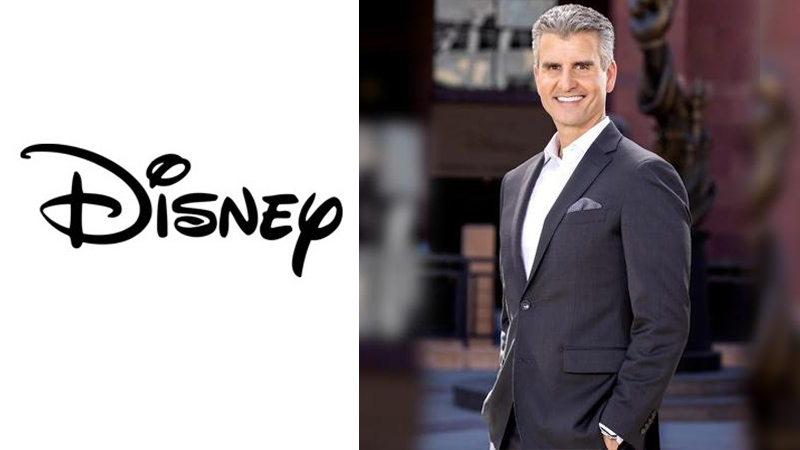
CALIFORNIA: Disney has finally named its next ruler and slapped a glossy price tag on the throne.
Josh D’Amaro, heir to Bob Iger, steps into the chief executive role on a base salary of $2.5m, before the real money kicks in. His annual bonus target is set at a punchy 250 per cent of salary, with long-term stock awards worth $26.2m a year. Add a one-off incentive grant of $9.7m to mark the promotion and D’Amaro’s opening package lands at about $38m.
Dana Walden, the other front-runner, does not leave empty-handed. Elevated to president and chief creative officer under a contract running to March 2030, she will earn a $3.75m base salary, with a performance bonus targeted at 200 per cent. Annual stock awards are valued at $15.75m, topped by a one-time incentive of $5.26m. All told, her first-year take comes to roughly $24m.
The board’s decision ends a two-year succession drama that has hovered over Disney’s share price and morale. D’Amaro, previously in charge of parks and consumer products, gets the top job. Walden, until now co-chair of Disney Entertainment, is handed a newly minted creative super-role, reporting directly to him.
Both appointments take effect on March 18, at Disney’s annual meeting. Iger slides into the background as senior adviser and board member, before bowing out for good in December.
The message from Burbank is unmistakable. Continuity, creativity and a very expensive handover. In the House of Mouse, the magic still pays.


MIB sets OTT accessibility rules, mandates captions and audio description

Boney Kapoor acquires remake rights of Tamil political satire Thalaivar Thambi Thalaimaiyil

Netflix India names Rekha Rane director of films and series marketing

Zabeen signs off from TV9 after shaping the network’s public voice

Dhawan steps up to bat for Delhi’s grassroots sports push

Orient Beverages pops the fizz with steady Q3 gains and rising profits

Cheekatilo shines in the dark with record debut on Prime Video

These ’90s fashion trends are making a comeback in 2017
The final 6 ‘Game of Thrones’ episodes might feel like a full season
According to Dior Couture, this taboo fashion accessory is back
The old and New Edition cast comes together to perform
Phillies’ Aaron Altherr makes mind-boggling barehanded play
Uber and Lyft are finally available in all of New York State
Disney’s live-action Aladdin finally finds its stars
MIB sets OTT accessibility rules, mandates captions and audio description
Boney Kapoor acquires remake rights of Tamil political satire Thalaivar Thambi Thalaimaiyil
Netflix India names Rekha Rane director of films and series marketing
Zabeen signs off from TV9 after shaping the network’s public voice
Dhawan steps up to bat for Delhi’s grassroots sports push
Orient Beverages pops the fizz with steady Q3 gains and rising profits
Cheekatilo shines in the dark with record debut on Prime Video
-

 News Broadcasting1 week ago
Mukesh Ambani, Larry Fink come together for CNBC-TV18 exclusive
-

 News Headline1 month ago
From selfies to big bucks, India’s influencer economy explodes in 2025
-
 iWorld5 months ago
Billions still offline despite mobile internet surge: GSMA
-

 Applications2 months ago
28 per cent of divorced daters in India are open to remarriage: Rebounce
-

 iWorld2 weeks ago
Netflix celebrates a decade in India with Shah Rukh Khan-narrated tribute film
-
 Hollywood6 days ago
The man who dubbed Harry Potter for the world is stunned by Mumbai traffic
-

 News Headline2 months ago
Game on again as 2025 powers up a record year and sets the stage for 2030
-
 I&B Ministry3 months ago
India steps up fight against digital piracy
