
I&B Ministry
Draft National Broadcasting Policy ready for consultation

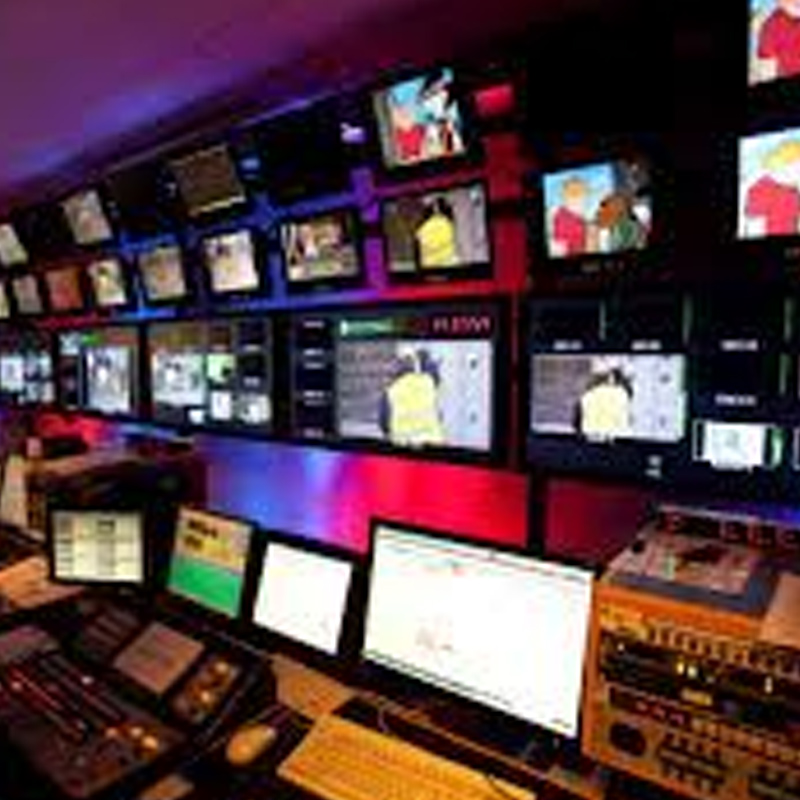
NEW DELHI/KOLKATA: A bid to showcase Brand India to the world, more FDI, push for indigenous manufacturing of consumer premises equipment, and self-regulation – these are key propositions of the draft National Broadcasting Policy (NBP), which the government has proposed for the growth of India’s broadcasting sector.
Stakeholders and policymakers have long felt the need for a comprehensive broadcasting policy to update the existing provisions to meet the newer challenges. Last month, the ministry of information and broadcasting (MIB) had intimated that work on the new policy was in full swing. The draft has now been finalised and shared with Prasar Bharati CEO Shashi Shekhar Vempati and other scientific ministries for further consultations.
Indiantelevision.com has accessed the draft and here are some of the key takeaways from it:
Quality content, affordable and accessible to all
The draft policy aims to incentivise the creation of high quality content which is accessible and affordable to the widest audience possible. This will be done by ramping up local and regional production of broadcast content. DD will be leveraged to promote content that preserves cultural diversity and Indian value system.

The reach of public broadcaster Prasar Bharati will be maximised across the country. The policy also suggests a review and audit of ‘must provide’ and ‘must carry’ provisions in broadcasting rules and regulations, wherever applicable, to ensure availability of content everywhere. Community radio stations would also get a boost under the new draft policy. They will be able to source news and current affairs content exclusively from AIR to transmit in the local languages. The policy also makes key provisions to ensure that persons with disabilities have access to television programmes. The accessibility standards laid down by MIB will be implemented in this regard.
It also envisages the setting up of a common independent body for prompt and effective settlement of public grievances for all broadcasting platforms.
Adoption of state of the art technologies and digital switchover
In line with the Digital India initiative, the draft policy lays down strategies for wider adoption of digital technologies for terrestrial platforms. This includes phased expansion of digital terrestrial TV (DTT), roll out of a digital radio policy and cutting down costs of digital radio receivers and DTT set top boxes to spur adoption for at least three years. The I&B ministry is also looking to finally open the DTT to the private sector. The policy also aims to achieve complete transition to broadband-ready cable infrastructure by enabling upgradation to fully digital infrastructure and infrastructure sharing among distribution platform operators.
Pitch for Make in India
The policy aims to indigenise the production of consumer premises equipment including the set-top boxes, which is heavily import dependent. This will be done by setting up a self-reliant local manufacturing ecosystem. Bureau of Indian Standards (BIS) and other agencies will be roped in to publish the quality benchmark. Measures will also be taken to rationalise the import tariffs and provide preference to domestically manufactured electronic products and mandate increasing deployment of indigenous equipment.
Infrastructure status to broadcasting
MIB is prioritising the policies for granting infrastructure status to mass-manufactured equipment and components of broadcasting distribution services. As a part of the initiative, the ministry will prescribe minimum eligibility requirements to bring in parity with other sectors like telecom. Last month, MIB additional secretary Neerja Shekhar had also sought the industry’s support in getting infrastructure status and called on industry bodies like CII to conduct "good periodic surveys and research" on media consumption patterns that would help the ministry in formulating policies.
Greater FDI in the broadcasting sector
In its effort to catalyse the growth of the booming broadcasting industry, MIB has been focusing on foreign direct investment (FDI) policies. To attract greater FDI in the sector, it has envisaged creating an investor toolkit explaining the broadcasting supply chain with relevant rules and regulations. It also envisages establishing a liaison cell within the ministry to work on foreign investment-related complexities.
The ministry is also looking to ease the licensing and permissions regime. It will also review existing governance frameworks for both television and radio segments to ensure time-bound clearances. The policy also suggests review mechanisms for notice, disclosure, reporting of interconnection agreements between broadcasters and distribution platform operators. It will also push liberalisation in extant conditions for mergers and acquisition in the FM radio sector.
Strengthen self-regulation
The draft policy also highlighted that self-regulation is emerging as the preferred option for content governance globally and India would make efforts to strengthen it. The ministry is working to amend the old Cable TV Act and revisit content restrictions on live events on radio on the basis of consumer demand and national security considerations. The policy will also provide statutory recognition to Programme Code and guidelines administered by the Broadcast Content Complaint Council, as well as News Broadcasting Standards Authority.
Back in December, MIB joint secretary Vikram Sahay had allayed regulatory concerns from digital players by stating that it will not strangulate creative freedom and will be in touch with the industry to iron out a model that is acceptable to all parties. However, the Centre is trying "to ensure that our consumers are protected in all ways" from fake news and other unacceptable content.
Review the current audience measurement system
In view of the recent controversy around TV viewership measurement, the policy also plans to review the current system of ratings to improve credibility. It also suggests developing a tool kit on good data practices. It will also look at SoPs for responding to cyber-security incidents for DPOs and audience measurement agencies.
Expand global footprint of Indian satellites
Of all the private satellite TV channels, around 70 per cent channels are being uplinked from foreign satellites. MIB is prioritising the matter of migration of Indian broadcasters to Indian satellites in the draft policy. To make this a reality, the ministry will look at rationalising license conditions, incentivising the migration, taking note of the industry’s requirement for Indian satellites’ footprints.
Taking the public broadcaster beyond Indian territory
MIB is upbeat about Prasar Bharati’s international expansion with the launch of Doordarshan international channel, strengthening AIR’s external services division. Among other provisions, the ministry is highly focusing on content security and content protection, fostering competition to create the level playing field, catalysing skill upgradation and development to foster better quality content, adapt with new technologies, extending the scope for co-production, student-exchange with foreign countries.







I&B Ministry
MIB sets OTT accessibility rules, mandates captions and audio description
Platforms get three years to add features for hearing and visually impaired
NEW DELHI: The government has asked OTT platforms to make their shows easier to watch and hear. A new set of accessibility guidelines from the Ministry of Information and Broadcasting requires streaming services to add features for viewers with hearing and visual impairments.
The move follows the Rights of Persons with Disabilities Act, 2016, and is meant to bring streaming closer to the promise of equal access. In simple terms, if a film or series is coming to an OTT platform, it should not arrive empty-handed. It should come with captions for those who cannot hear well and audio descriptions for those who cannot see clearly.
The guidelines ask platforms to provide at least one accessibility feature each for hearing-impaired and visually-impaired viewers. That could be closed captions, open captions, Indian Sign Language interpretation, or audio description. The aim is to make content understandable without turning the viewing experience into a technical chore.
There is, however, a long runway. Platforms have up to thirty six months from the date of the guidelines to ensure that all newly released content carries these accessibility features. Older titles in their libraries are not under strict timelines, but companies are encouraged to add features gradually.
The rules also go beyond the show itself. User interfaces, whether on mobile apps, smart TVs or websites, must be designed to work with assistive technologies. Accessibility labels such as CC for captions, AD for audio description and ISL for sign language must be displayed clearly so viewers know what to expect before pressing play.
Some content types get a free pass. Live events, music, podcasts, and short form content like ads are exempt because of practical challenges in real time captioning and description.
OTT publishers will also need to file accessibility conformance reports. The first report is due three years from now, followed by quarterly updates. Complaints from viewers will follow a three tier system, starting with the platform itself, moving to self-regulatory bodies, and finally reaching a government monitoring committee if needed.
For the streaming industry, the message is clear. Accessibility is no longer a nice extra tucked away in settings. It is fast becoming part of the main feature, and in a country where streaming audiences run into the hundreds of millions, that could make a very big difference to who gets to enjoy the show.
NEW DELHI: If 2025 was India’s year to make waves, the ministry of information and broadcasting (I&B) was its chief surfboard maker. Prime minister Narendra Modi’s call to “create in India, create for the world” wasn’t just ministerial hot air—it triggered a tsunami of creative dealmaking that swept from Melbourne to Madrid, generating Rs 4,334 crores in potential business discussions and putting Indian creators on every continent’s radar.
The centrepiece was Waves 2025, the World Audio Visual and Entertainment Summit, which drew over 90 countries, 10,000 delegates, and roughly 1 lakh punters through its doors. Modi himself dropped by to glad-hand young creators, describing the event as a “wave of culture, creativity and universal connectivity”—and for once, the hyperbole wasn’t entirely unwarranted.
The summit’s CreatoSphere platform, which sounds like something from a sci-fi novel but is actually a hub for film, VFX, animation, gaming, and digital media, launched the Create in India Challenges. Season one attracted over 1 lakh entries from more than 60 countries across 33 categories. Winners weren’t just handed certificates and sent packing—they performed at Melbourne, exhibited at Tokyo Game Show, and pitched at Toronto International Film Festival. I&B minister Ashwini Vaishnav handed out gongs to 150 creators, cementing the government’s commitment to nurturing what it calls the “creative economy.”
WaveX, the startup arm, proved equally industrious. It coaxed over 200 startups into its embrace, enabled 30 to pitch to Microsoft, Amazon, and Lumikai, and somehow got two of its charges—VYGR News and VIVA Technologies—onto Shark Tank India, where they presumably dodged the usual mauling. The initiative’s KalaaSetu and BhashaSetu challenges, focused on AI-driven video generation and real-time translation respectively, attracted over 100 startups and picked ten for collaboration with government media units.
Waves Bazaar, the “craft-to-commerce” global e-marketplace, went on a roadshow between August and December, hitting 12 international events across four continents and four domestic jamborees. The numbers are eye-watering: over 9,000 B2B meetings, 10 memoranda of understanding signed, three more proposed, and the launch of creative corridors with Japan, Korea, and Australia. The ministry claims Rs 4,334 crores in potential deals—potential being the operative word, though in India’s booming content market, optimism often precedes reality by only a few quarters.
On the bricks-and-mortar front, the Indian Institute of Creative Technology opened its temporary Mumbai campus in July with Rs 391.15 crores in budgetary support. The public-private partnership with Ficci and CII has enrolled over 100 students across 18 courses, incubated eight startups, and signed memoranda with Google, Meta, Nvidia, Microsoft, Apple, Adobe, and WPP—a who’s who of tech giants keen to tap India’s creative reserves. A permanent 10 acre campus at Film City, Goregaon, complete with an immersive AR/VR/XR studio, is in the works.
Elsewhere, the ministry set up a Live Events Development Cell to position India’s concert economy as a growth driver. A single-window clearance system is being built on the India Cine Hub platform to expedite permissions for fire, traffic, and municipal approvals—addressing the red-tape nightmares that have long plagued event organisers. Meanwhile, an inter-ministerial committee is tackling digital piracy, that perennial thorn in the creative economy’s side.
State broadcaster Doordarshan snagged the Election Commission’s media award for voter awareness during the 2024 Lok Sabha elections, presented by the president on National Voters’ Day. Community radio added 22 new stations, bringing the total to 551, with workshops and a national sammelan held during Waves to strengthen local broadcasting.
The 56th International Film Festival of India in Goa screened over 240 films from 81 countries, threw in the country’s first AI Film Festival, and staged a grand parade through Panaji that turned the event into a street-level celebration. The accompanying Waves Film Bazaar drew over 2,500 delegates from 40-plus countries and showcased 320 projects—making it one of South Asia’s largest film markets.
The Central Board of Film Certification modernised too, launching a multilingual certification module that allows multiple language versions under a single application, and mandating 50 per cent women’s participation on examining and revising committees. Digital signatures replaced wet ink, and certificates became downloadable—small victories in the fight against bureaucratic inertia.
India’s I&B ministry ended 2025 having turned content creation into something resembling an industrial policy. Whether Rs 4,334 crores in “potential” business materialises remains to be seen, but the ministry has built the infrastructure, corralled the startups, and put Indian creators on international stages. As Modi might say, the wave has been ridden. Now comes the hard part: keeping the momentum going when the cameras stop rolling.
MUMBAI: The Centre has inched closer to making India’s streaming universe easier to watch, hear and enjoy for everyone. The Ministry of Information and Broadcasting has released draft guidelines that aim to standardise accessibility on OTT platforms, ensuring that viewers with hearing and visual impairments are no longer left out of the country’s digital entertainment boom.
Issued on 7 October and now open for public consultation, the draft rules arrive with constitutional and global backing. Minister of State for Information and Broadcasting L. Murugan told the Rajya Sabha that the framework draws from Article 14, the UN Convention on the Rights of Persons with Disabilities and the Rights of Persons with Disabilities Act, 2016. It also mirrors the Code of Ethics under the IT Rules, 2021.
At the heart of the proposal is a two-phase rollout of mandatory accessibility tools such as same-language closed captions and audio descriptions. The ministry said penalties and enforcement steps will be shaped after the consultation, but compliance will be tracked through progressive targets for OTT content libraries.
Parliament was also reminded that the broadcast sector has walked this path before. In 2019, the government notified accessibility standards for television programming, starting with Prasar Bharati and eventually extending them to private broadcasters.
With OTT viewership climbing across urban and small-town India, the draft rules attempt to bring streaming giants in step with a wider vision of inclusive media. The government hopes the move will help millions of Indians with disabilities press play without barriers.


MIB sets OTT accessibility rules, mandates captions and audio description

Boney Kapoor acquires remake rights of Tamil political satire Thalaivar Thambi Thalaimaiyil

Netflix India names Rekha Rane director of films and series marketing

Zabeen signs off from TV9 after shaping the network’s public voice

Dhawan steps up to bat for Delhi’s grassroots sports push

Orient Beverages pops the fizz with steady Q3 gains and rising profits

Cheekatilo shines in the dark with record debut on Prime Video

These ’90s fashion trends are making a comeback in 2017
The final 6 ‘Game of Thrones’ episodes might feel like a full season
According to Dior Couture, this taboo fashion accessory is back
The old and New Edition cast comes together to perform
Phillies’ Aaron Altherr makes mind-boggling barehanded play
Uber and Lyft are finally available in all of New York State
Disney’s live-action Aladdin finally finds its stars
MIB sets OTT accessibility rules, mandates captions and audio description
Boney Kapoor acquires remake rights of Tamil political satire Thalaivar Thambi Thalaimaiyil
Netflix India names Rekha Rane director of films and series marketing
Zabeen signs off from TV9 after shaping the network’s public voice
Dhawan steps up to bat for Delhi’s grassroots sports push
Orient Beverages pops the fizz with steady Q3 gains and rising profits
Cheekatilo shines in the dark with record debut on Prime Video
-

 News Broadcasting2 weeks ago
Mukesh Ambani, Larry Fink come together for CNBC-TV18 exclusive
-

 News Headline1 month ago
From selfies to big bucks, India’s influencer economy explodes in 2025
-
 iWorld5 months ago
Billions still offline despite mobile internet surge: GSMA
-

 Applications2 months ago
28 per cent of divorced daters in India are open to remarriage: Rebounce
-

 iWorld2 weeks ago
Netflix celebrates a decade in India with Shah Rukh Khan-narrated tribute film
-
 News Headline2 months ago
Game on again as 2025 powers up a record year and sets the stage for 2030
-
 Hollywood1 week ago
The man who dubbed Harry Potter for the world is stunned by Mumbai traffic
-
 I&B Ministry3 months ago
India steps up fight against digital piracy
