
Kids
Disney’s Q1 numbers ride on parks and resorts segment


BENGALURU: The Walt Disney Company (Disney) reported 3.8 per cent year-on-year (yoy) increase in revenue and 0.5 per cent yoy increase in operating income before taxes for the quarter ended 31 December 2017 (Q1 2018, the quarter under review) as compared with the corresponding year ago quarter (quarter ended 31 December 2016, Q1 2017). Net income attributable to Disney, however, increased by 78.4 per cent yoy. Diluted earnings per share (EPS) for the quarter increased by 88 per cent to USD 2.91 from USD 1.55 in the prior-year quarter. Excluding a USD 1.6 billion one-time net tax benefit associated with new US federal income tax legislation (tax act) and certain other items affecting comparability, EPS for the quarter rose by 22 per cent to USD 1.89 from USD 1.55 in the prior-year quarter.
Four segments—media networks, parks and resorts, studio entertainment, and consumer products and interactive media—contribute to Disney’s numbers. Except for the parks and entertainment segment, the other three segments reported a decline in segment income. Disney’s total revenue for the quarter under review was USD 15,351 million as compared with USD 14,784 million. Revenue from services increased by 4.7 per cent yoy to USD 12,984 million from USD 12,406 million while revenue from products declined by 0.5 per cent yoy to USD 2,367 million from USD 2,378 million.
Segment operating income in Q1 2018 was USD 3,745 million as compared to USD 3,725 million in Q1 2017. Net income attributable to Disney in the quarter under review was USD 4,423 million as compared to USD 2,479 million in Q1 2017.
Media Networks
Two divisions contribute to Media Networks numbers – cable networks, and broadcasting. Media networks’ revenue for the quarter was flat at USD 6,243 million in Q1 2018 as compared to USD 6,233 million. Segment operating income declined 12.4 per cent yoy in Q1 2018 to USD 1,193 million from USD 1,162 million.

Cable networks revenue increased 1.5 per cent yoy to USD 4,493 million from USD 4,428 million, while income declined 0.7 per cent yoy to USD 858 million from USD 864 million. The company says that lower operating income was due to a loss at BAMTech and a decline at ESPN, partially offset by growth at the Disney channels and Freeform. The decrease at ESPN was due to lower advertising revenue, partially offset by affiliate revenue growth and lower programming costs. Lower advertising revenue was due to a decrease in impressions and lower rates. Growth at the Disney channels and Freeform was driven by higher affiliate revenue and lower marketing costs. Affiliate revenue growth was due to contractual rate increases, partially offset by a decline in subscribers.
The broadcasting division’s revenue for the quarter under review declined by 3 per cent yoy to USD 1,750 million in Q1 2018 from USD 1,805 million. Income decreased by 24.8 percent yoy to USD 285 million from USD 379 million. The company said that the decrease in operating income was due to lower advertising revenue, higher production cost write-downs, and a decline in programme sales income. These decreases were partially offset by affiliate revenue growth due to rate increases. Advertising revenue reflected fewer network impressions and lower political advertising at Disney-owned television stations, partially offset by higher network rates.
Parks and resorts
Revenue from parks and resorts for the quarter increased by 13.2 per cent yoy in Q1 2018 to USD 5,154 million from USD 4,555 million while segment operating income increased by 21.4 per cent yoy to USD 1,347 million. The company said that operating income growth for the quarter was due to increase at Disney’s domestic parks and resorts, cruise line and vacation club businesses as well as at Disneyland Paris.
Domestic results benefited from the comparison to the impact of Hurricane Matthew, which occurred in the prior-year quarter. Higher operating income at domestic parks and resorts was driven by guest-spending growth and
an increase in attendance, partially offset by higher costs. Guest-spending growth was due to higher average ticket prices, food, beverage and merchandise spending and average daily hotel room rates.
Studio entertainment
Studio entertainment revenue dipped by 0.6 per cent yoy to USD 2,504 million in Q1 2018 from USD 2,520 million and segment operating income declined 1.5 per cent yoy to USD 829 million from USD 842 million. The company said that an increase in theatrical distribution results was more than offset by decreases in home entertainment and TV/SVOD distribution results as well as lower income from consumer products and interactive media segment revenue share.
Consumer products and interactive media
Revenue declined by 1.8 per cent yoy to USD 1,450 million in Q1 2018 from USD 1,456 million and segment operating income declined by 3.9 per cent yoy to USD 617 million from USD 642 million. The company said that operating income reduced due to decreases at Disney’s merchandise licencing and retail businesses, partially offset by an increase at its games business. The decrease in merchandise licencing was due to unfavourable timing of minimum guarantee shortfall recognition and lower licencing revenue from merchandise based on Frozen and Finding Nemo/Dory, partially offset by increases from merchandise based on Cars and Star Wars. Disney’s retail business was affected by unfavourable foreign currency fluctuations. The increase at Disney’s games business was due to licencing revenue from Star Wars Battlefront II, which was released in the current quarter, whereas there was no comparable release in the prior-year quarter.
Company speak
“The strategic investments we’ve made have driven meaningful growth over the long term, and we remain confident in our ability to continue to deliver significant shareholder value,” said Disney’s chairman and CEO Robert A Iger, “We’re excited about what lies ahead, with a robust film slate, the launch of our ESPN direct-to-consumer business, new investments in our theme parks, and our pending acquisition of Twenty-First Century Fox.”
Also Read:
Disney to buy 21st Century Fox assets for $52.4 billion
Disney to launch English GEC HD on 29 Oct






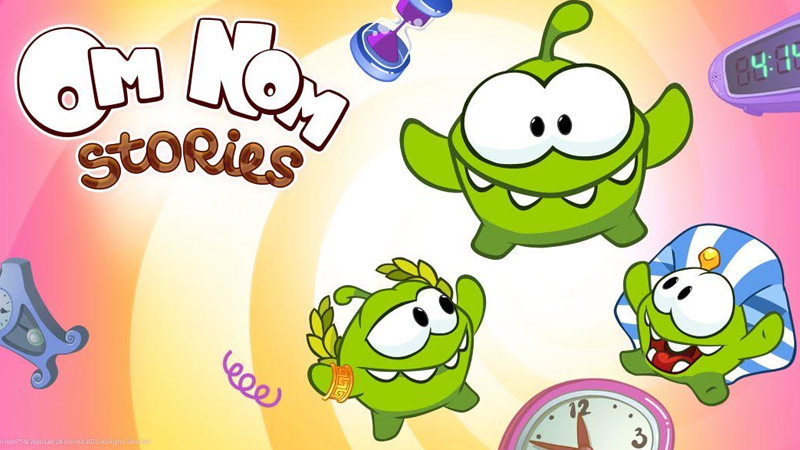
MUMBAI: The little green hero is making a big leap east. Zeptolab has struck a major distribution deal with Warner Bros. Discovery, bringing its hit animated series Om Nom Stories to audiences across the Indian subcontinent.
Under the agreement, Warner Bros. Discovery has acquired the series for exclusive Pay TV broadcast and non-exclusive digital streaming in India, Pakistan, Bangladesh, Bhutan, Nepal and Sri Lanka. The move marks a significant expansion for Zeptolab as it pushes one of its most successful original IPs into one of the world’s fastest-growing entertainment markets.
As part of the deal, all 26 seasons of Om Nom Stories will be rolled out across Cartoon Network, Pogo, Discovery Kids and Discovery+, offering both linear and digital access to the franchise’s slapstick humour and expressive, dialogue-free storytelling.
“We’re incredibly excited to partner with Warner Bros. Discovery to bring Om Nom Stories to the Indian subcontinent,” said Zeptolab executive producer Manaf Hassan, noting that the broadcaster’s reach and legacy make it a strong fit for the series’ growing global fanbase.
Warner Bros. Discovery, meanwhile, sees the acquisition as a natural addition to its children’s portfolio. Warner Bros. Discovery head of factual entertainment, lifestyle and kids for South Asia Sai Abishek, said the series aligns with the network’s focus on cheerful, imaginative and universally appealing content for families across the region.
The timing adds an extra layer of significance. The expansion coincides with Om Nom’s 15th anniversary, underlining the franchise’s staying power and its evolution from a mobile game character into a global animation brand. With this latest bite at the Indian subcontinent, Om Nom’s adventures look set to find a whole new generation of fans.
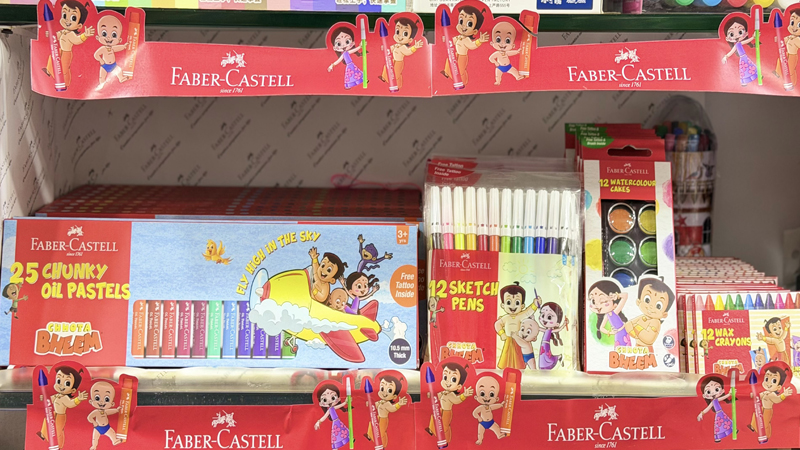
MUMBAI: If childhood memories had a colour palette, Chhota Bheem would likely be right in the middle of it and now, quite literally, in children’s pencil boxes too. Green Gold Animation has announced a landmark licensing partnership with Faber-Castell India, marking the global stationery major’s first-ever licensed character collaboration. The association brings Chhota Bheem to a specially curated range of student art and creative products, blending everyday learning tools with one of India’s most recognisable homegrown characters.
The move is a notable expansion of Chhota Bheem’s footprint beyond screens, reinforcing the character’s status as a multi-generational IP that has steadily grown from a television favourite into a cultural constant. For Green Gold Animation, the partnership signals a sharpened focus on extending its intellectual property into daily touchpoints, where entertainment meets education and habit.
In its first phase, the collaboration will roll out Chhota Bheem-themed products across key student art categories, including watercolour cakes, wax crayons, poster colours, sketch pens, oil pastels and creative bundling kits. The range is aimed squarely at school-going children, tapping into Bheem’s strong emotional connect while encouraging imagination, creativity and hands-on expression.
Green Gold Animation founder and CEO Rajiv Chilaka noted that Chhota Bheem’s journey has long moved beyond episodic storytelling. He said the partnership reflects a deliberate attempt to embed the character into moments of learning and creativity, while building a more purpose-led licensing ecosystem around Indian IP through collaboration with a globally established brand.
From Faber-Castell India’s perspective, the tie-up marks a strategic first. Faber-Castell India director marketing Sonali Shah said the collaboration opens a new chapter by pairing the brand’s long-standing reputation for quality and safety with a character that already commands trust and affection among Indian children. The aim, she added, is to make creativity more engaging and relatable without diluting product standards.
The launch will be backed by a 360-degree promotional push, spanning digital campaigns, social media storytelling, creative usage content and on-ground retail activations across select markets. Both companies have confirmed that this is only the starting point, with additional Chhota Bheem-themed products across new categories planned in the months ahead.
Headquartered in Hyderabad, Green Gold Animation continues to scale its ambition of building globally competitive Indian IPs, with Chhota Bheem leading the charge. This latest collaboration suggests that the brand’s next phase of growth may be less about what children watch and more about what they create.
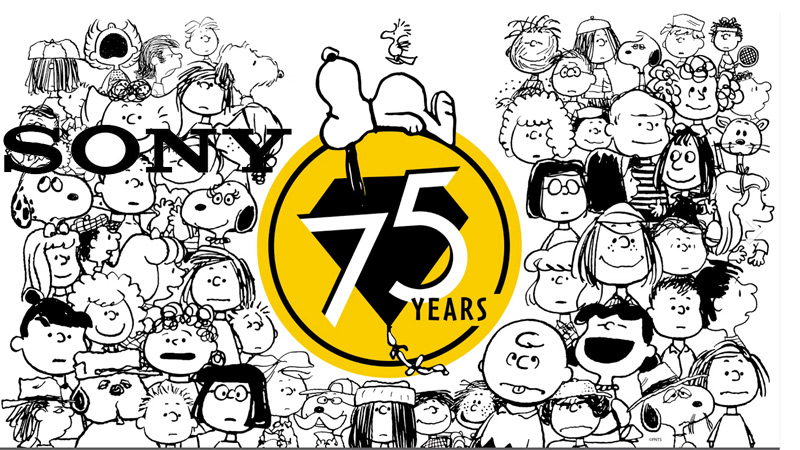
JAPAN: Sony has doubled down on the power of legacy brands, snapping up a majority stake in the Peanuts intellectual property in a late-year deal valued at about $457 million.
Sony Pictures Entertainment and Sony Music Entertainment Japan have acquired the roughly 41 per cent holding in Peanuts Holdings LLC previously owned by Canadian children’s entertainment company WildBrain. The move lifts Sony’s ownership to 80 per cent, with the Schulz family retaining the remaining 20 per cent.
The deal brings one of pop culture’s most durable franchises, home to Charlie Brown, Snoopy and the rest of the Peanuts gang, firmly under the Sony umbrella. The characters were created by Charles M Schulz, whose daily comic strip ran for half a century before ending in 2000.
Sony had already been a long-time partner in the business. The latest transaction consolidates control and sharpens the group’s hand as it looks to keep the characters front and centre across film, television, music and consumer products.
President and group ceo of Sony Music Entertainment Japan, Shunsuke Muramatsu, said the additional stake would allow Sony to further elevate the Peanuts brand by drawing on the group’s global reach and creative expertise, while preserving the legacy of Schulz and his family.
President and ceo of Sony Pictures, Ravi Ahuja, said the combined ownership gives Sony the ability to protect and shape the future of the characters for new generations, expanding their relevance without diluting their charm.
Peanuts long ago escaped the confines of the comic strip, cementing its place in popular culture through perennial television specials such as A Charlie Brown Christmas and It’s the Great Pumpkin, Charlie Brown. More recently, WildBrain kept the franchise active with animated series including Snoopy in Space and The Snoopy Show.
Now, with Sony firmly in control, the message is unmistakable. In an industry obsessed with the next big thing, nostalgia still sells and Sony is betting big on a doghouse that refuses to age.


MIB sets OTT accessibility rules, mandates captions and audio description

Boney Kapoor acquires remake rights of Tamil political satire Thalaivar Thambi Thalaimaiyil

Netflix India names Rekha Rane director of films and series marketing

Zabeen signs off from TV9 after shaping the network’s public voice

Dhawan steps up to bat for Delhi’s grassroots sports push

Orient Beverages pops the fizz with steady Q3 gains and rising profits

Cheekatilo shines in the dark with record debut on Prime Video

These ’90s fashion trends are making a comeback in 2017
The final 6 ‘Game of Thrones’ episodes might feel like a full season
According to Dior Couture, this taboo fashion accessory is back
The old and New Edition cast comes together to perform
Phillies’ Aaron Altherr makes mind-boggling barehanded play
Uber and Lyft are finally available in all of New York State
Disney’s live-action Aladdin finally finds its stars
MIB sets OTT accessibility rules, mandates captions and audio description
Boney Kapoor acquires remake rights of Tamil political satire Thalaivar Thambi Thalaimaiyil
Netflix India names Rekha Rane director of films and series marketing
Zabeen signs off from TV9 after shaping the network’s public voice
Dhawan steps up to bat for Delhi’s grassroots sports push
Orient Beverages pops the fizz with steady Q3 gains and rising profits
Cheekatilo shines in the dark with record debut on Prime Video
-

 News Broadcasting7 days ago
Mukesh Ambani, Larry Fink come together for CNBC-TV18 exclusive
-
 I&B Ministry3 months ago
India steps up fight against digital piracy
-

 iWorld2 weeks ago
Netflix celebrates a decade in India with Shah Rukh Khan-narrated tribute film
-
 MAM3 months ago
HoABL soars high with dazzling Nagpur sebut
-

 Hollywood4 days ago
The man who dubbed Harry Potter for the world is stunned by Mumbai traffic
-
 iWorld12 months ago
BSNL rings in a revival with Rs 4,969 crore revenue
-
 iWorld3 months ago
Tips Music turns up the heat with Tamil party anthem Mayangiren
-

 MAM7 days ago
Nielsen launches co-viewing pilot to sharpen TV measurement
