
Kids
Disney gives 2D characters physical form

MUMBAI: Disney Research has reportedly developed a method based on cable-driven mechanisms that can help artists give physical form and motion to two-dimensional characters. It uses assemblies of joints and cables to make poses and desired motions in a character.
Cables can only exert force in one direction – by pulling – so fully actuated joints demand two cables to move in both directions, PTI reported. In using the method to design and constructing its 2D “Fighter,” US researchers showed that the mechanical character was able to achieve the desired poses with accuracy. The design for the lower body initially included 1,600 cables; the number was eventually reduced in 25 seconds to eight; further refinement took just 181 seconds to reduce the number of cables to three. The 2D gripper they designed and built was able to pick up the light objects it was designed to lift. The robotic hand, with three fingers and a thumb, demonstrated that the method could be used to combine cable drives in more than one plane.
Assemblies of joints and cables are capable of helping in achieving desired poses and motions in a character, even when artistic preferences dictate limb sizes that make it infeasible to place motors at each joint, PTI reported. The cable-driven mechanism is also suitable for devices such as robotic hands, that must be lightweight and small to function.
The Disney team, supported by researchers from the MIT (Massachusetts Institute of Technology), ETH Zurich and the University of Toronto developed the method which was presented at Symposium on Computer Animation (SCA) 2017 in Los Angeles (U.S.). The team developed a method in which a user designs a skeletal frame or other assembly of rigid hinges and links and then specifies a set of target poses for those assemblies.
Research scientist Moritz Bacher says that the advent of consumer-level 3D printing and off-the-shelf yet affordable electronic components gave artists the machinery to make physical and articulated versions of animated characters. He says his approach eliminated much of the complexity of designing those mechanisms.

US researchers from MIT demonstrated their method by designing a 2D puppet-like version of an animated character that is able to assume several desired fighting stances. They also used it to design a gripper for picking up light objects and a simple robotic hand with an opposable thumb.
Disney Research VP Markus Gross says that a number of design tools developed over the past 30 years had enabled artists to instill life into animated characters, creating expressions by posing a hierarchical batch of rigid links. In the age of animatronics and robotics, he says, one needs to give hobbyists and artists similar tools to make animated physical characters just as expressive.
The Disney team, in this case, designed devices that were not intended to interact with people. They sought to minimise the number of cables, and eventually incorporated springs into the joints to move them in the opposite direction when the cable tension was eased.
The method computes a cable network that can reproduce those poses, first generating a large set of cables – typically a thousand or more – with randomly chosen routing points. Redundant cables are then gradually removed. The routing points are then refined to take into account the path between poses, and further reduce the number of cables and the amount of force necessary to control them.
ALSO READ :
Doordarshan in talks with Disney for kiddy content in evening slots
DishTV launches Disney active service
Telly awards: Mediaboss, Discovery, Disney, Fox & Viacom among winners










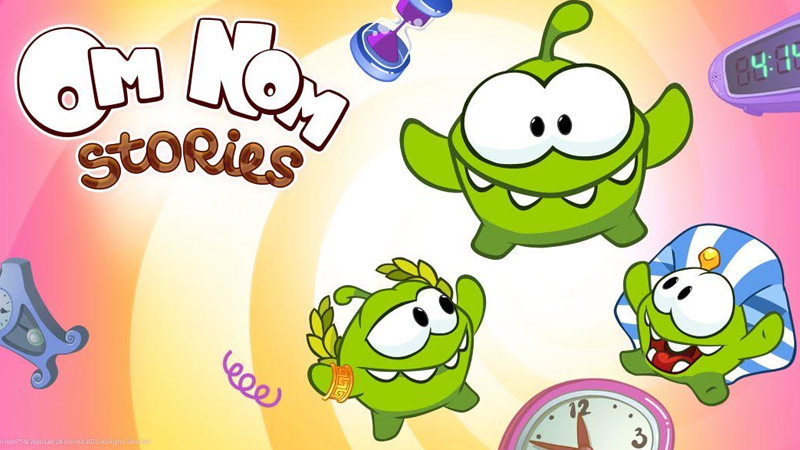
MUMBAI: The little green hero is making a big leap east. Zeptolab has struck a major distribution deal with Warner Bros. Discovery, bringing its hit animated series Om Nom Stories to audiences across the Indian subcontinent.
Under the agreement, Warner Bros. Discovery has acquired the series for exclusive Pay TV broadcast and non-exclusive digital streaming in India, Pakistan, Bangladesh, Bhutan, Nepal and Sri Lanka. The move marks a significant expansion for Zeptolab as it pushes one of its most successful original IPs into one of the world’s fastest-growing entertainment markets.
As part of the deal, all 26 seasons of Om Nom Stories will be rolled out across Cartoon Network, Pogo, Discovery Kids and Discovery+, offering both linear and digital access to the franchise’s slapstick humour and expressive, dialogue-free storytelling.
“We’re incredibly excited to partner with Warner Bros. Discovery to bring Om Nom Stories to the Indian subcontinent,” said Zeptolab executive producer Manaf Hassan, noting that the broadcaster’s reach and legacy make it a strong fit for the series’ growing global fanbase.
Warner Bros. Discovery, meanwhile, sees the acquisition as a natural addition to its children’s portfolio. Warner Bros. Discovery head of factual entertainment, lifestyle and kids for South Asia Sai Abishek, said the series aligns with the network’s focus on cheerful, imaginative and universally appealing content for families across the region.
The timing adds an extra layer of significance. The expansion coincides with Om Nom’s 15th anniversary, underlining the franchise’s staying power and its evolution from a mobile game character into a global animation brand. With this latest bite at the Indian subcontinent, Om Nom’s adventures look set to find a whole new generation of fans.
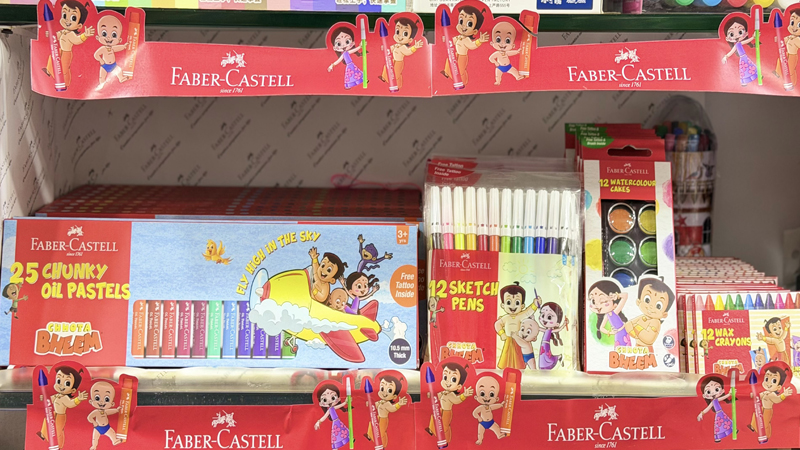
MUMBAI: If childhood memories had a colour palette, Chhota Bheem would likely be right in the middle of it and now, quite literally, in children’s pencil boxes too. Green Gold Animation has announced a landmark licensing partnership with Faber-Castell India, marking the global stationery major’s first-ever licensed character collaboration. The association brings Chhota Bheem to a specially curated range of student art and creative products, blending everyday learning tools with one of India’s most recognisable homegrown characters.
The move is a notable expansion of Chhota Bheem’s footprint beyond screens, reinforcing the character’s status as a multi-generational IP that has steadily grown from a television favourite into a cultural constant. For Green Gold Animation, the partnership signals a sharpened focus on extending its intellectual property into daily touchpoints, where entertainment meets education and habit.
In its first phase, the collaboration will roll out Chhota Bheem-themed products across key student art categories, including watercolour cakes, wax crayons, poster colours, sketch pens, oil pastels and creative bundling kits. The range is aimed squarely at school-going children, tapping into Bheem’s strong emotional connect while encouraging imagination, creativity and hands-on expression.
Green Gold Animation founder and CEO Rajiv Chilaka noted that Chhota Bheem’s journey has long moved beyond episodic storytelling. He said the partnership reflects a deliberate attempt to embed the character into moments of learning and creativity, while building a more purpose-led licensing ecosystem around Indian IP through collaboration with a globally established brand.
From Faber-Castell India’s perspective, the tie-up marks a strategic first. Faber-Castell India director marketing Sonali Shah said the collaboration opens a new chapter by pairing the brand’s long-standing reputation for quality and safety with a character that already commands trust and affection among Indian children. The aim, she added, is to make creativity more engaging and relatable without diluting product standards.
The launch will be backed by a 360-degree promotional push, spanning digital campaigns, social media storytelling, creative usage content and on-ground retail activations across select markets. Both companies have confirmed that this is only the starting point, with additional Chhota Bheem-themed products across new categories planned in the months ahead.
Headquartered in Hyderabad, Green Gold Animation continues to scale its ambition of building globally competitive Indian IPs, with Chhota Bheem leading the charge. This latest collaboration suggests that the brand’s next phase of growth may be less about what children watch and more about what they create.
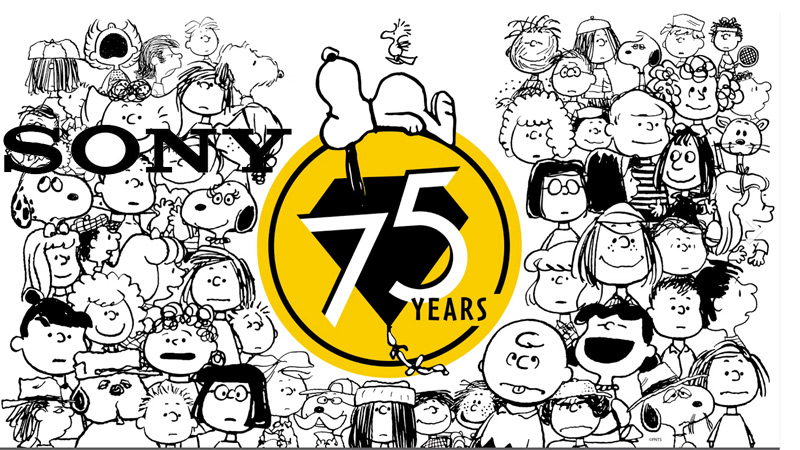
JAPAN: Sony has doubled down on the power of legacy brands, snapping up a majority stake in the Peanuts intellectual property in a late-year deal valued at about $457 million.
Sony Pictures Entertainment and Sony Music Entertainment Japan have acquired the roughly 41 per cent holding in Peanuts Holdings LLC previously owned by Canadian children’s entertainment company WildBrain. The move lifts Sony’s ownership to 80 per cent, with the Schulz family retaining the remaining 20 per cent.
The deal brings one of pop culture’s most durable franchises, home to Charlie Brown, Snoopy and the rest of the Peanuts gang, firmly under the Sony umbrella. The characters were created by Charles M Schulz, whose daily comic strip ran for half a century before ending in 2000.
Sony had already been a long-time partner in the business. The latest transaction consolidates control and sharpens the group’s hand as it looks to keep the characters front and centre across film, television, music and consumer products.
President and group ceo of Sony Music Entertainment Japan, Shunsuke Muramatsu, said the additional stake would allow Sony to further elevate the Peanuts brand by drawing on the group’s global reach and creative expertise, while preserving the legacy of Schulz and his family.
President and ceo of Sony Pictures, Ravi Ahuja, said the combined ownership gives Sony the ability to protect and shape the future of the characters for new generations, expanding their relevance without diluting their charm.
Peanuts long ago escaped the confines of the comic strip, cementing its place in popular culture through perennial television specials such as A Charlie Brown Christmas and It’s the Great Pumpkin, Charlie Brown. More recently, WildBrain kept the franchise active with animated series including Snoopy in Space and The Snoopy Show.
Now, with Sony firmly in control, the message is unmistakable. In an industry obsessed with the next big thing, nostalgia still sells and Sony is betting big on a doghouse that refuses to age.


Mukesh Ambani, Larry Fink come together for CNBC-TV18 exclusive

Nielsen launches co-viewing pilot to sharpen TV measurement

Netflix celebrates a decade in India with Shah Rukh Khan-narrated tribute film

Delhivery chairman Deepak Kapoor, independent director Saugata Gupta quit board

Meta appoints Anuvrat Rao as APAC head of commerce partnerships

Brnd.me enters Europe as haircare brands power global expansion

TechnoSport taps quick commerce with launch on Slikk’s 60-minute platform

These ’90s fashion trends are making a comeback in 2017
The final 6 ‘Game of Thrones’ episodes might feel like a full season
According to Dior Couture, this taboo fashion accessory is back
The old and New Edition cast comes together to perform
Phillies’ Aaron Altherr makes mind-boggling barehanded play
Uber and Lyft are finally available in all of New York State
Disney’s live-action Aladdin finally finds its stars
Mukesh Ambani, Larry Fink come together for CNBC-TV18 exclusive
Nielsen launches co-viewing pilot to sharpen TV measurement
Netflix celebrates a decade in India with Shah Rukh Khan-narrated tribute film
Delhivery chairman Deepak Kapoor, independent director Saugata Gupta quit board
Meta appoints Anuvrat Rao as APAC head of commerce partnerships
Brnd.me enters Europe as haircare brands power global expansion
TechnoSport taps quick commerce with launch on Slikk’s 60-minute platform
-
 News Broadcasting4 days ago
Mukesh Ambani, Larry Fink come together for CNBC-TV18 exclusive
-
 iWorld1 week ago
Netflix celebrates a decade in India with Shah Rukh Khan-narrated tribute film
-
 MAM3 months ago
HoABL soars high with dazzling Nagpur sebut
-
 MAM4 days ago
Nielsen launches co-viewing pilot to sharpen TV measurement
-
 iWorld12 months ago
BSNL rings in a revival with Rs 4,969 crore revenue
-
 I&B Ministry3 months ago
India steps up fight against digital piracy
-
 iWorld3 months ago
Tips Music turns up the heat with Tamil party anthem Mayangiren
-

 Film Production1 week ago
UFO Moviez rides high on strong Q3 earnings
